Upper Town: The Hill of Saint Mark
90 min · 1 km · moderate
Zagreb rewards one walking day split cleanly in three: a morning on the hilltop of Gradec (the Upper Town), a midday drop into the market seam where the old rival towns joined, and a long afternoon looping the green squares of the Lower Town. The city center is compact and almost entirely on foot, so a single well-paced day covers the noon cannon, Saint Mark's tiled roof, Dolac market, the cathedral, and the U-shaped chain of parks known as the Green Horseshoe, ending near the National Theatre by evening. Below is the hour-by-hour route, with the Zagreb walking tours that narrate each stretch as you go.
The short answer: one day, three walks, all on foot
Start high and come down. Morning belongs to Gradec, the older hilltop town, reached by the short funicular from Tomiceva Street or by a two-minute stair climb. Time your morning so you are near Lotrscak Tower just before noon, when its cannon fires (a daily signal since 1877). Midday, descend through the Stone Gate and Dolac market into the seam between the two old towns. Afternoon, walk the Green Horseshoe of Lower Town squares at a relaxed pace and finish near the Croatian National Theatre. Nothing here needs a car, and the three self-guided routes stack end to end without backtracking.
The whole day is roughly 6 kilometers of easy walking spread across many hours, with long sit-down breaks built in. You can shorten it by skipping the Lower Town loop, or stretch it by adding museum interiors.
Morning (roughly 9:00 to 12:30): Gradec, the Upper Town
Hear a stop from this walk
St Mark's Church: The Roof That Flies the Kingdom
Begin at the bottom of Tomiceva Street, where the funicular climbs the hill. The ride is a small paid fare and takes under a minute, or you can walk up the adjacent steps for free. Either way you arrive beside Lotrscak Tower, a medieval watchtower whose cannon marks noon every day. Watching and hearing the shot from the street costs nothing; climbing the tower for the viewpoint is a separate paid ticket.
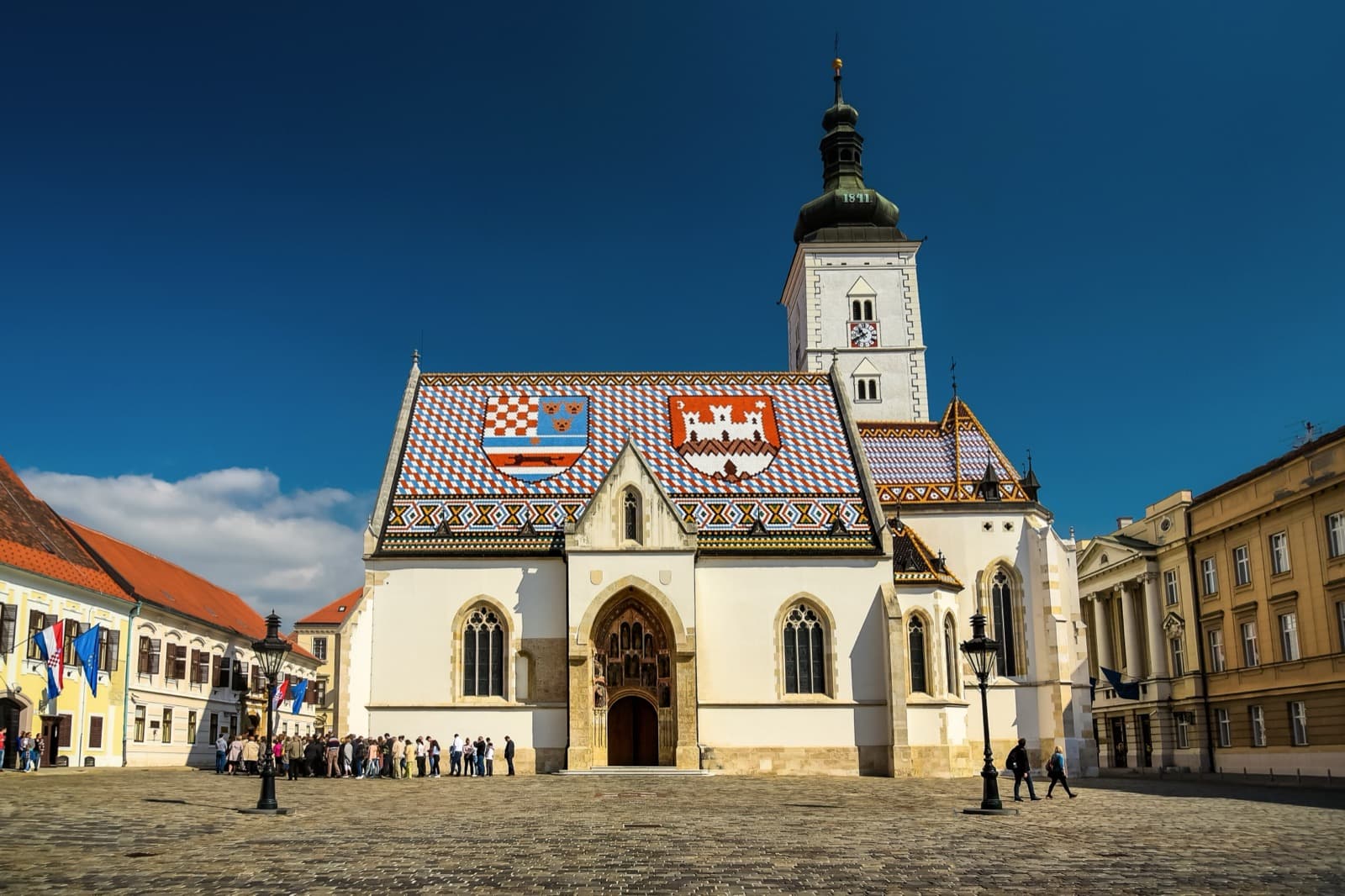
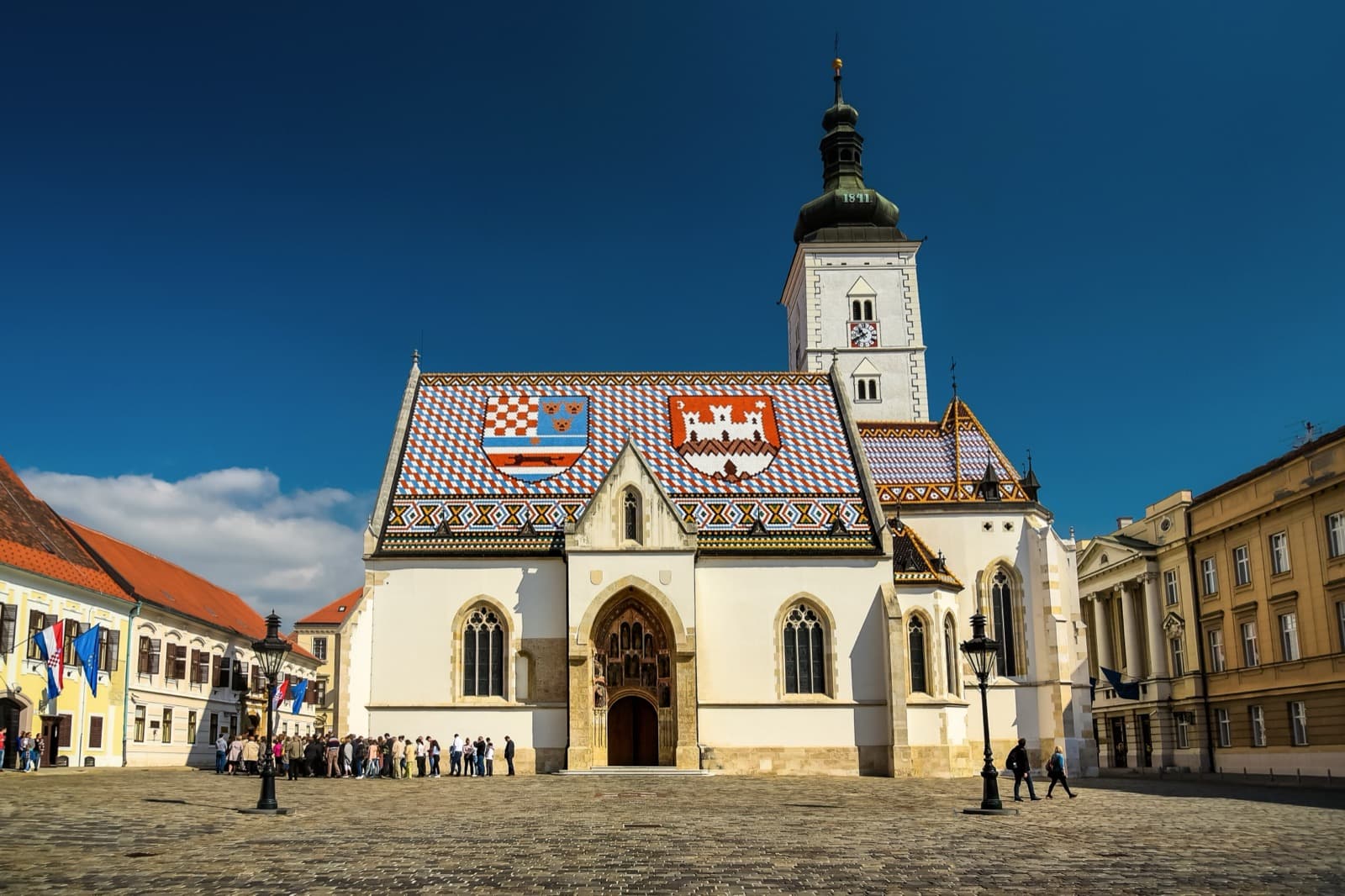
From the tower it is a flat two-minute walk to Saint Mark's Square, the political heart of Croatia, where the parliament (the Sabor) and the government sit facing each other. In the middle stands Saint Mark's Church, famous for a tiled roof that spells out two coats of arms in color. You cannot always enter (the interior opens mainly around Mass), but the roof and square are free and open all day.
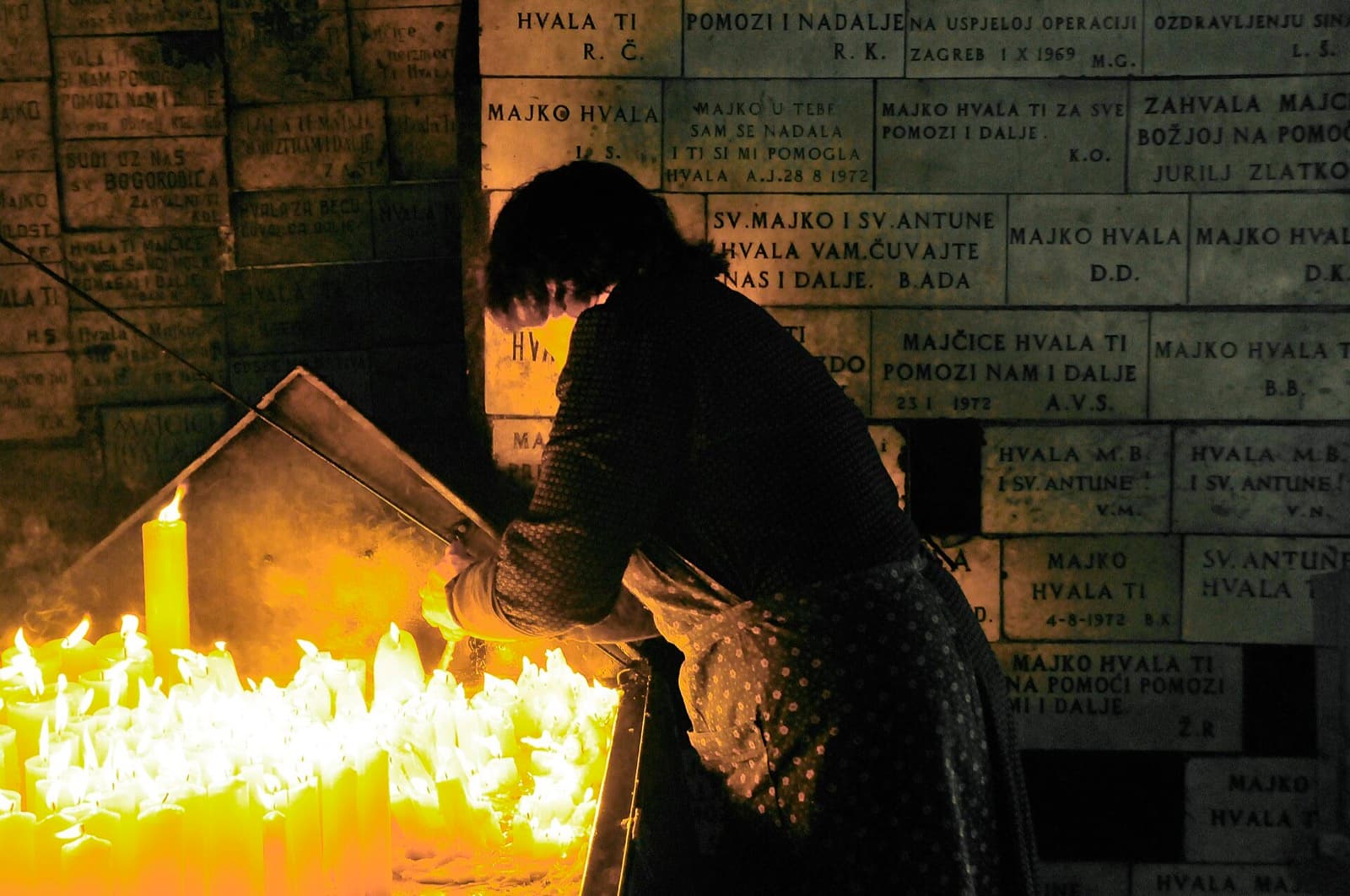
Loop north to the Stone Gate (Kamenita vrata), the last surviving town gate, now an active shrine where candles burn to a painting said to have survived a fire. Nearby sit Saint Catherine's Church and, on the lane toward the funicular, the Museum of Broken Relationships, a genuinely original collection of donated objects and their stories. The museum is ticketed and open daily from morning; the square outside is free. This whole hilltop is the ground covered by the Gradec Upper Town self-guided tour, which runs about 90 minutes at a slow pace over roughly one kilometer.
Midday (roughly 12:30 to 14:00): the market seam and the cathedral
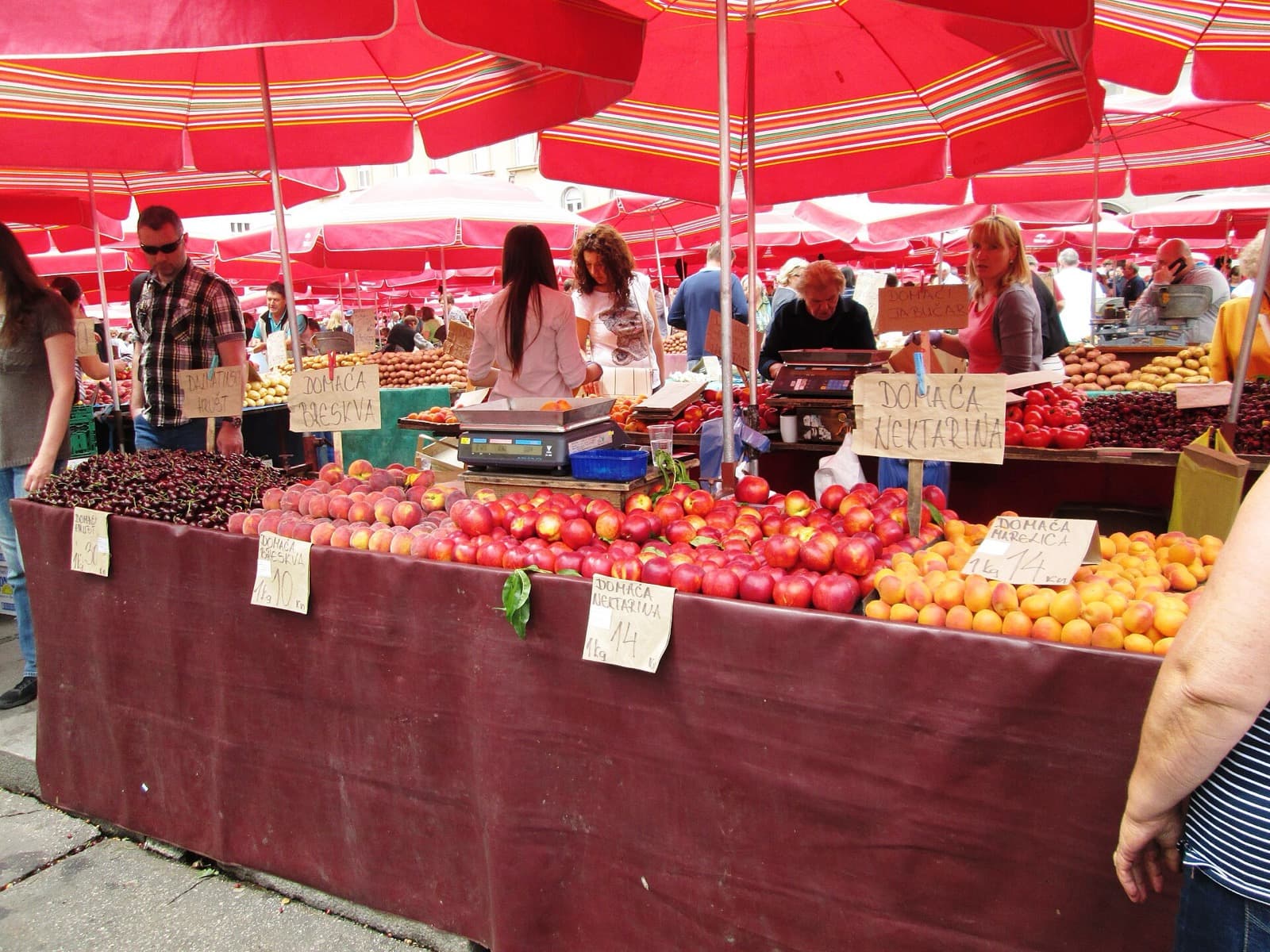
Come down off the hill toward Dolac market, the raised open-air market with its signature red parasols. Dolac runs Monday through Saturday from early morning to mid-afternoon and Sunday until early afternoon, but it thins out after lunch, so aim to arrive before 1:00 pm for the fullest stalls. This is the practical spot for a cheap, fresh lunch: fruit, cheese, burek, and bread bought stall to stall.
From the market you are steps from Ban Jelacic Square, the city's central plaza and tram hub, and from Tkalciceva Street, a pedestrian lane of cafes that follows the buried course of the old Medvescak stream. The short passage called Krvavi most, the Bloody Bridge, marks where merchant Gradec and the bishop's Kaptol once feuded across that water. A few minutes east stands Zagreb Cathedral. Damaged badly in the March 2020 earthquake, which brought down the top of one spire, it reopened to visitors in April 2026 after long reconstruction and is generally open to the public through the day; entry is free, and access can still be limited by ongoing works. This midday stretch is the Kaptol and Dolac self-guided tour, about 100 minutes over a little more than a kilometer, and it is the easiest walking of the day.
Afternoon and evening (roughly 14:00 to 18:00): the Green Horseshoe
The Lower Town, or Donji Grad, is the planned nineteenth-century city, and its signature is the Green Horseshoe: a U-shaped chain of tree-lined squares and gardens that the young Habsburg-era capital drew through its grid. Walk it slowly. Start at Zrinjevac, the leafy square with a music pavilion and fountains, pass the Croatian Academy and its Strossmayer Gallery of old masters, and continue to the ochre Art Pavilion, which has been closed for earthquake repairs (the exterior is still worth the look).
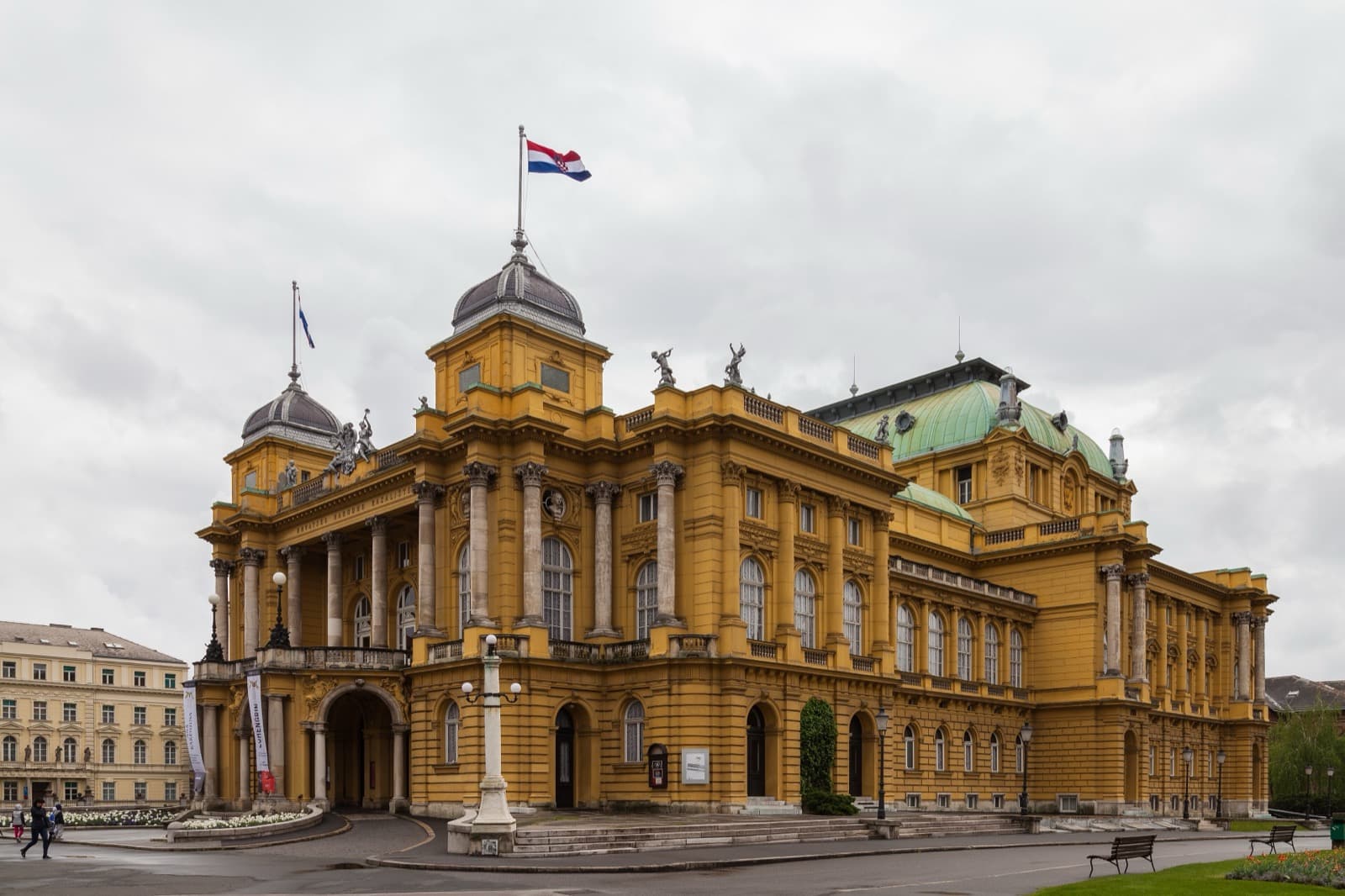
Cross to King Tomislav Square in front of the grand main railway station, then swing west toward the Botanical Garden. The garden is free and a calm green pause, but it keeps seasonal hours and takes a winter rest, typically reopening in late February, so confirm before you plan an off-season visit. Close the loop at the Croatian National Theatre, a butter-yellow neo-Baroque landmark, with the bronze Well of Life fountain out front. Nearby sits the Mimara Museum, also closed for post-earthquake reconstruction at the time of writing. This full afternoon is the Donji Grad Green Horseshoe self-guided tour, the longest of the three at about two hours over 3.3 kilometers, still rated easy because it is flat.
By early evening you are back among cafes and restaurants around the theatre and Flower Square (Cvjetni trg), well placed for dinner.
Practical notes: transport, tickets, and money
Zagreb's core is small enough that you will walk nearly everything. Trams (run by ZET) are useful mainly for longer hops or tired feet; a short single ticket costs well under a euro, and 24-hour and 72-hour passes exist for heavier use. Croatia uses the euro, so budget in euros rather than the old kuna you may still see quoted online.
Most of this itinerary is free: the squares, the market to browse, the churches, the promenades, and the noon cannon from the street. The paid extras are optional and modest: the funicular fare, the Lotrscak tower viewpoint, and museum admissions. Because opening hours and prices shift by season, treat any figure you read as approximate and check the official site the week you travel. Zagreb is a calm, walkable capital with the usual big-city awareness needed around the busy central square and tram stops; there is nothing about this route that calls for special caution beyond normal city sense.
To run the day hands-free, the three Roamer tours are GPS-triggered, so the narration plays as you reach each stop and you can pause, reorder, or skip at will. Browse them all from the Zagreb walking tours hub or the city page at /croatia/zagreb.
Sources
Frequently asked questions
- Can you see Zagreb in one day?
- Yes. Zagreb's center is compact and almost entirely walkable, so one day covers the Upper Town (Gradec), Dolac market, the cathedral, and the Green Horseshoe parks of the Lower Town. A comfortable pace is about 6 kilometers of walking spread across the day with long café and lunch breaks. You will not exhaust the museums, but you will see the city's main squares and landmarks.
- Do I need to pay for the Zagreb funicular, and what time does the noon cannon fire?
- The funicular from Tomiceva Street to the Upper Town charges a small fare, or you can climb the adjacent stairs for free in about two minutes. The cannon at Lotrscak Tower fires every day at noon, a tradition since 1877, and watching from the street costs nothing. Climbing the tower itself is a separate paid ticket.
- Is Zagreb Cathedral open to visitors in 2026?
- Yes. After severe damage in the March 2020 earthquake and years of reconstruction, Zagreb Cathedral reopened to visitors in April 2026 and is generally open to the public through the day, with entry free. Because works continue, access can still be limited on some days, so check locally before you go.
- What are Dolac market's opening hours?
- Dolac open-air market runs Monday through Saturday from early morning until mid-afternoon and Sunday until early afternoon. Stalls are fullest in the morning and thin out after lunch, so arrive before 1:00 pm for the best selection. It is a good, inexpensive spot for a fresh market lunch.
- How do I get around Zagreb, and what currency does it use?
- Most of the central itinerary is done on foot. Trams run by ZET help with longer distances, and a short single ticket costs well under a euro, with 24-hour and 72-hour passes available. Croatia adopted the euro in 2023, so budget in euros even though older guides may still quote kuna.
- What is the Green Horseshoe in Zagreb?
- The Green Horseshoe is a U-shaped chain of tree-lined squares and gardens laid out through the Lower Town grid in the nineteenth century. It links Zrinjevac, King Tomislav Square, the Botanical Garden, and the area around the Croatian National Theatre. It makes a flat, easy afternoon walk of a little over 3 kilometers.
Ready to experience it?
Upper Town: The Hill of Saint Mark
90 min · 1 km · moderate
More from Zagreb
Explore more at your own pace.
Two Hills and a Horseshoe: How Zagreb Became a City
Dolac Market and the Seam That Made Zagreb One City
St Mark's Church in Zagreb: The Roof That Flies a Whole Kingdom
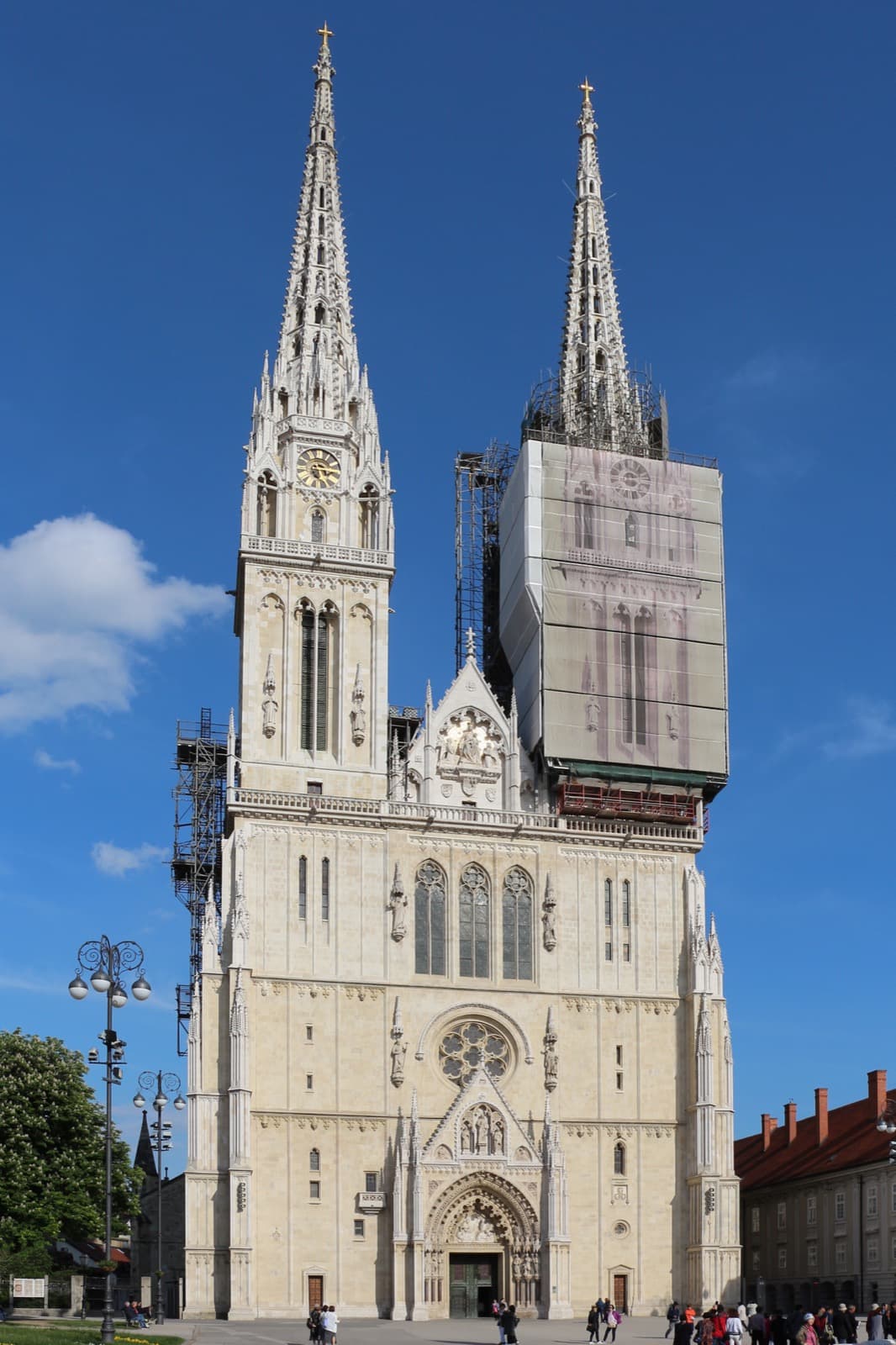
Zagreb Cathedral: The Twin-Spired Church That Keeps Rebuilding Itself
Zagreb's Botanical Garden: The Living Corner of the Green Horseshoe