Upper Town: The Hill of Saint Mark
90 min · 1 km · moderate
Zagreb rewards two unhurried days on foot: the compact old core sits on two low hills you can cross in half an hour, the euro is the currency, trams cover the rest for pocket change, and the honest safety picture is calm rather than dramatic. This guide answers what most travelers actually type into a search bar before they arrive, then points you to the self-guided Zagreb walking tours that turn that planning into an actual route.
How many days do you need in Zagreb?
Two full days is the sweet spot. Zagreb is a walking city, not a checklist city, and its center is genuinely small: the medieval Upper Town, the Lower Town of parks and museums, and the market and cathedral quarter between them all sit within a 30-minute stroll end to end.
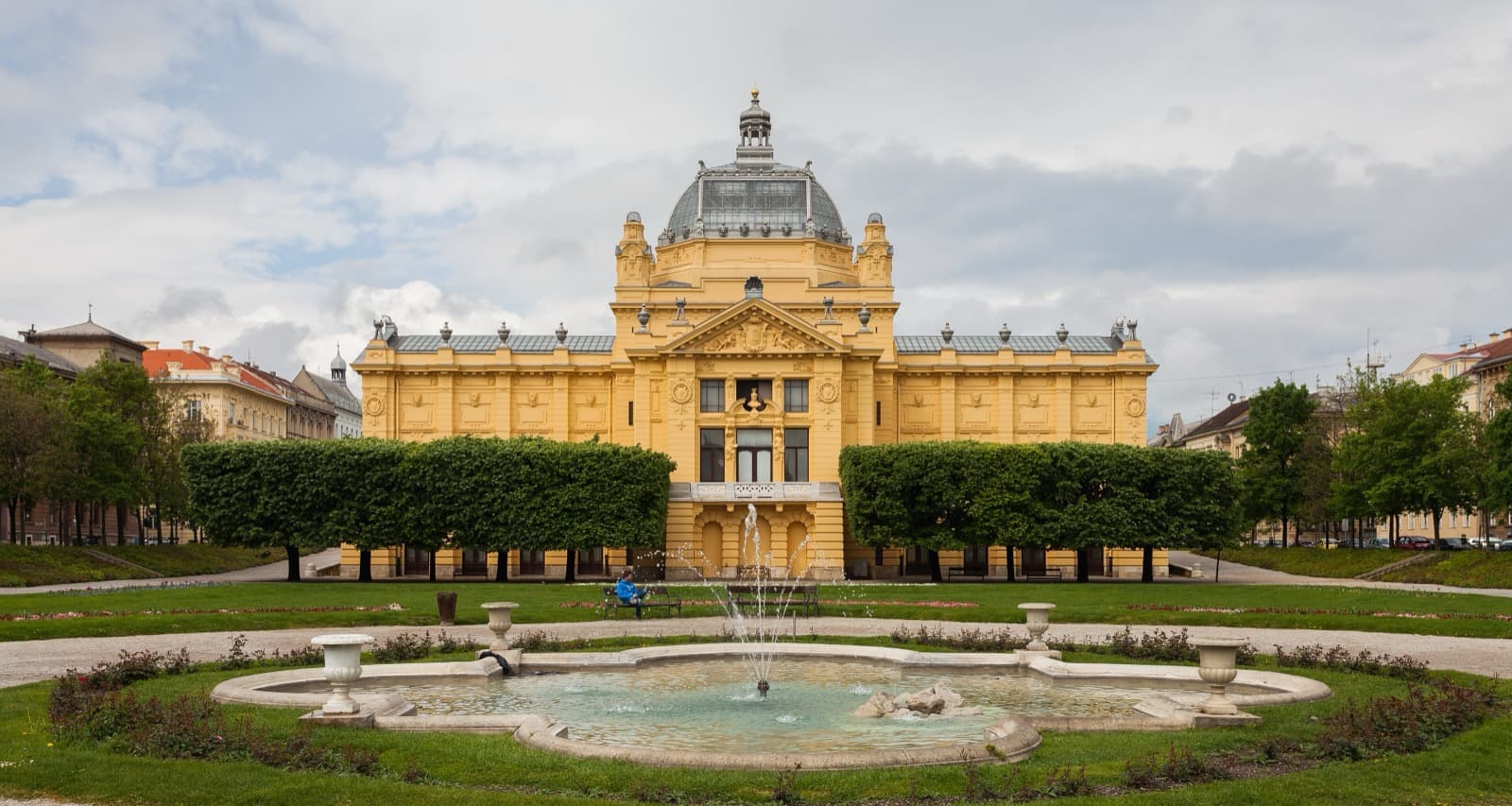
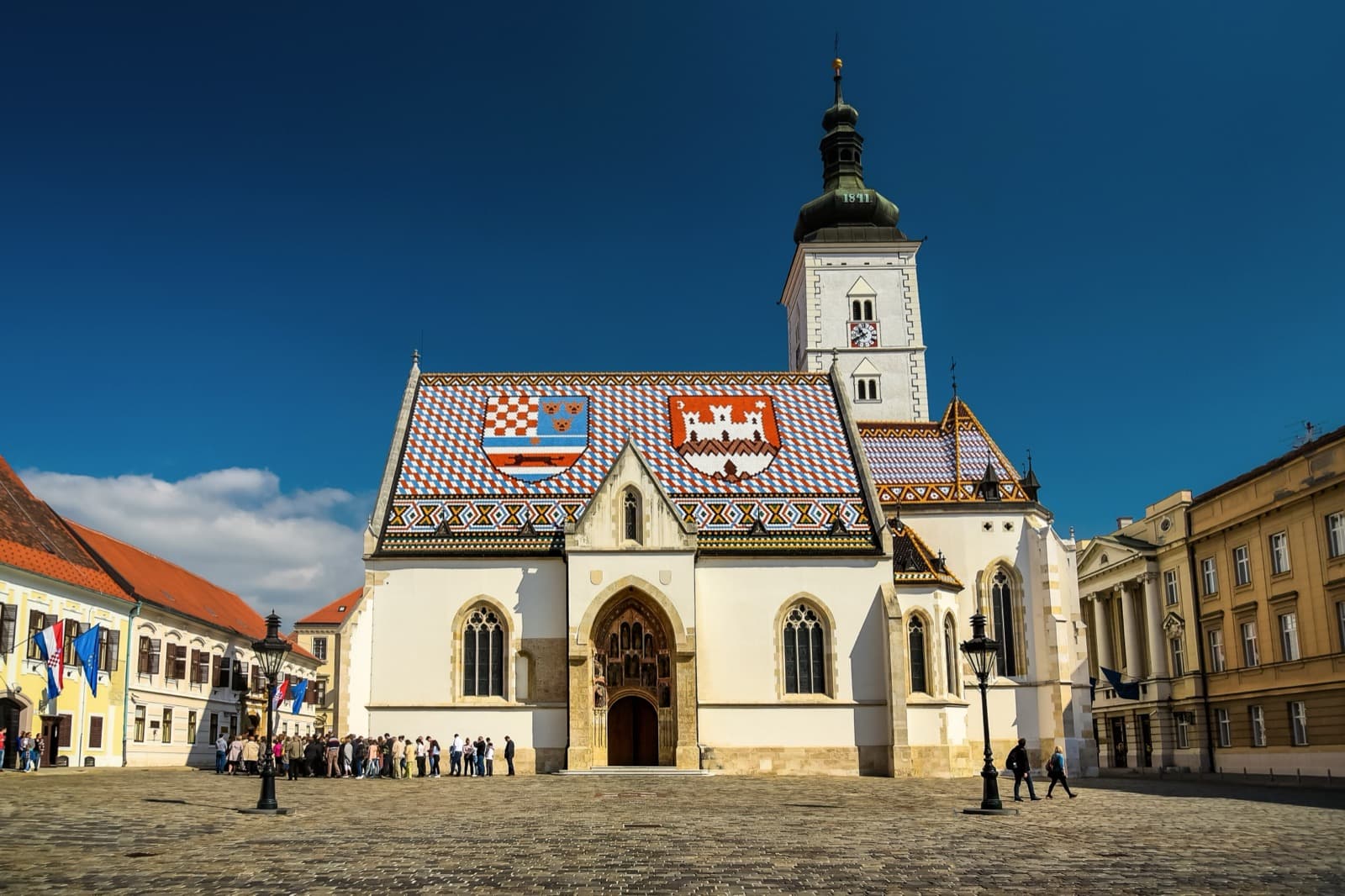
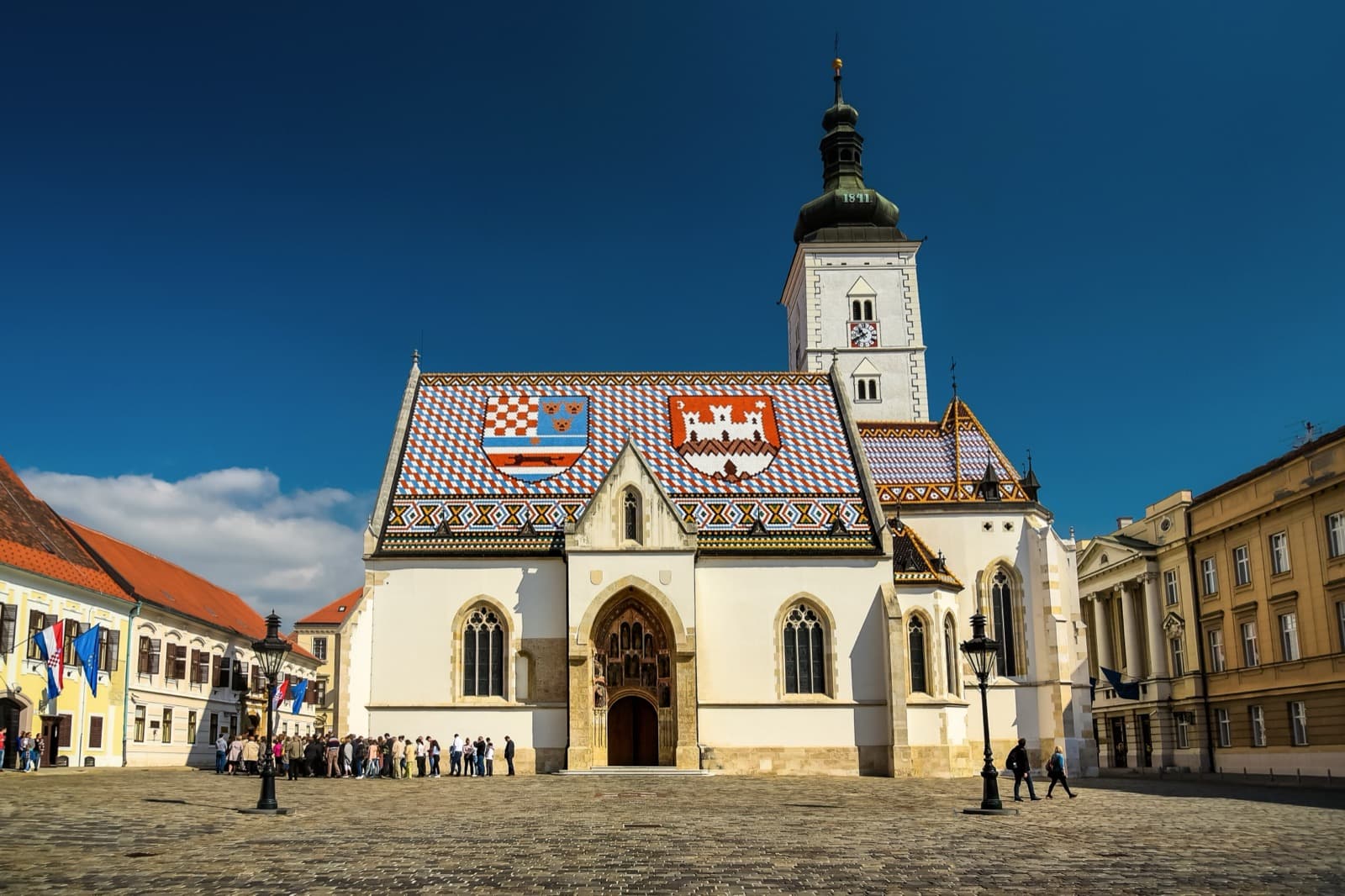
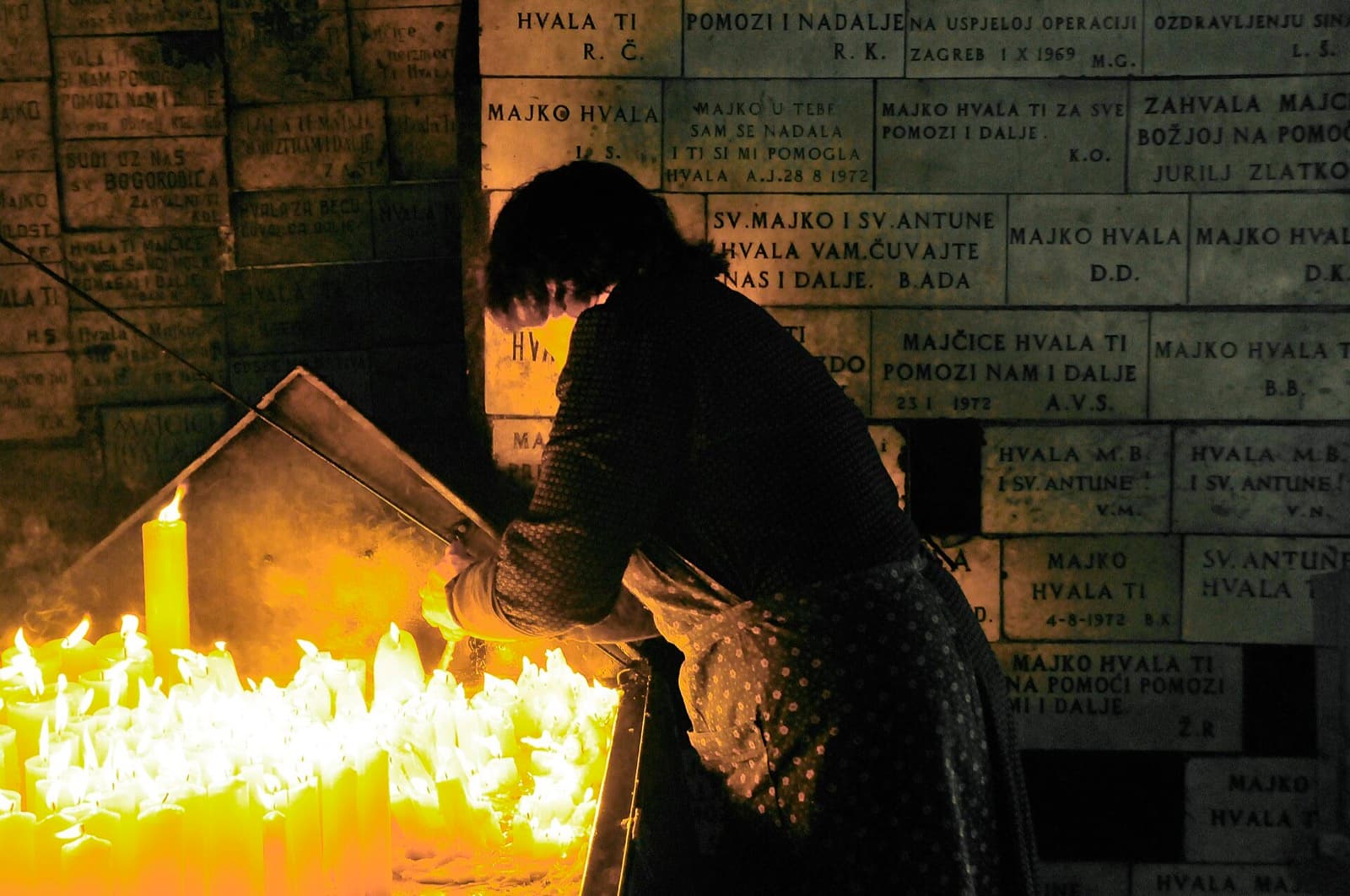
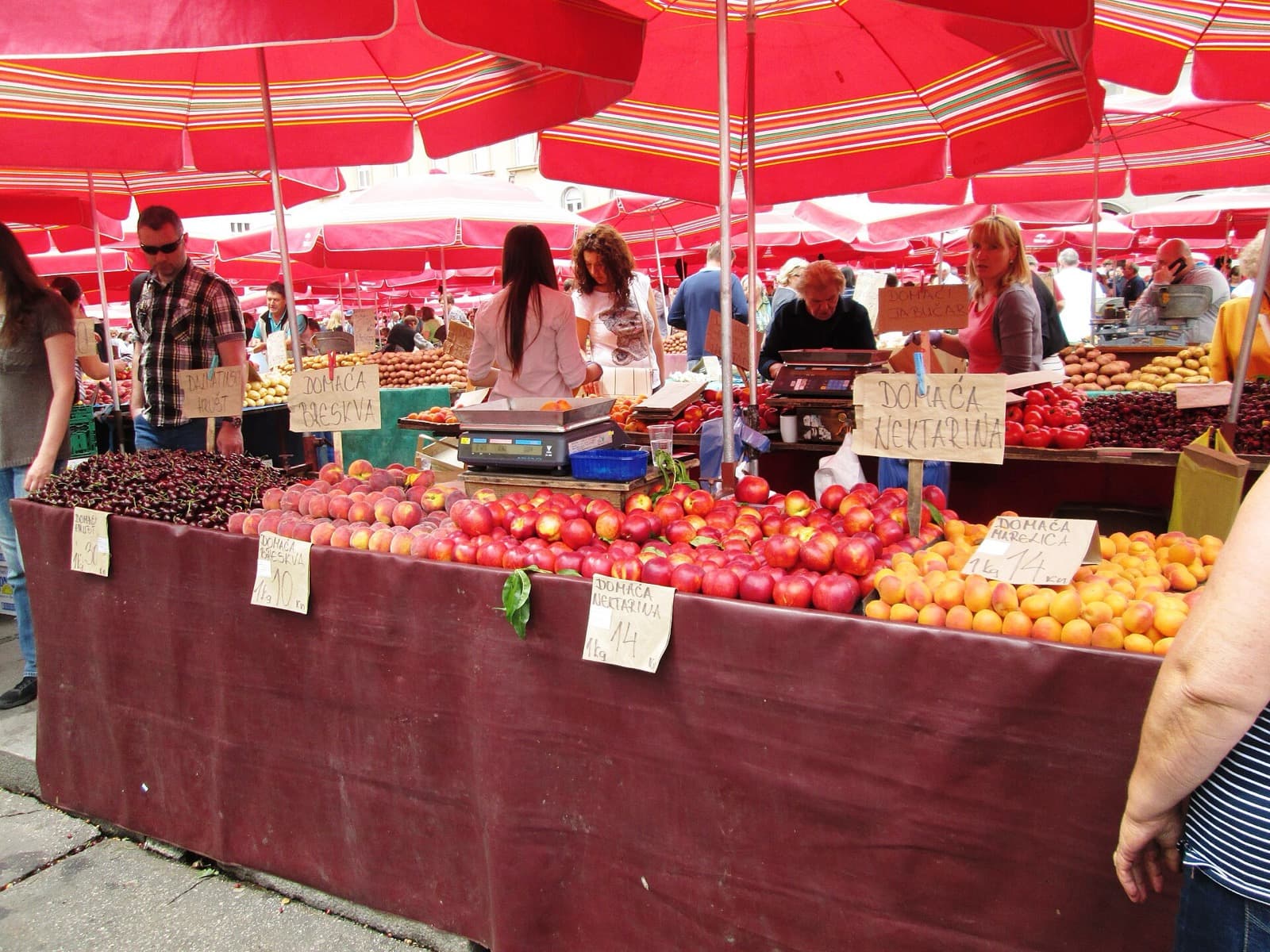
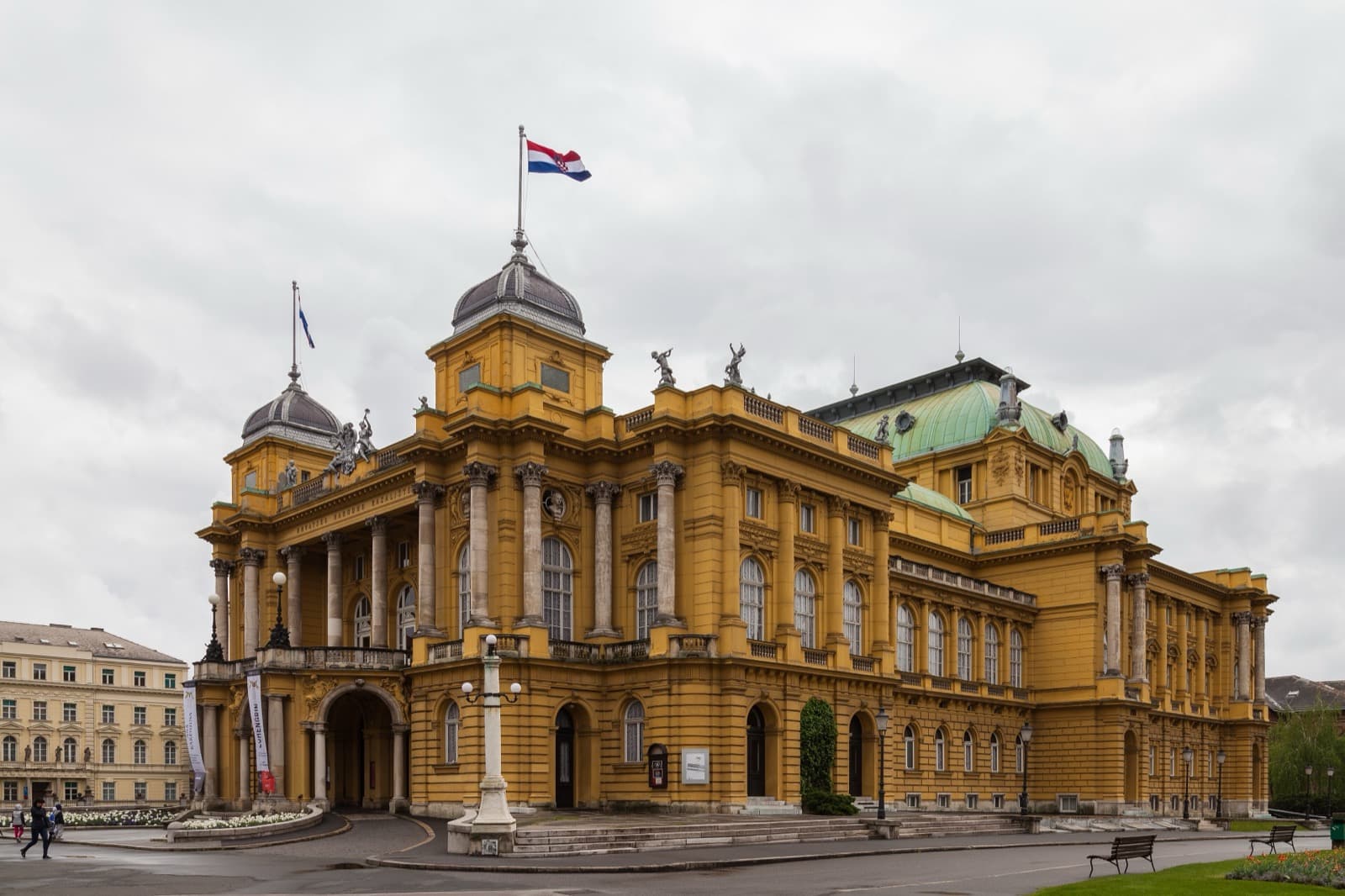
A workable rhythm looks like this. Day one, take the two hills slowly. Start with Gradec, the older hilltop town, where the Gradec Upper Town tour walks you past the Lotrscak Tower, the tiled roof of St Mark's Church, the working shrine inside the Stone Gate, and the Strossmayer Promenade with its statue of the poet Antun Gustav Matos sitting on a bench. Then drop down into the seam between the two founding towns: the Kaptol and Dolac tour follows Ban Jelacic Square, the open-air Dolac Market, cafe-lined Tkalciceva Street, and the cathedral. Day two, walk the Lower Town. The Donji Grad Horseshoe tour threads the U-shaped chain of leafy squares, past the Art Pavilion, King Tomislav Square, the Botanical Garden, and the Croatian National Theatre.
If you only have one day, do one hill and the market. If you have three, add a half-day trip out to Maksimir Park or Mirogoj cemetery, both reachable by tram.
How do you get around Zagreb?
Hear a stop from this walk
St Mark's Church: The Roof That Flies the Kingdom
On foot for the sightseeing, and by tram for everything else. The blue trams run by ZET are frequent, cheap, and cover the whole center, and Zagreb has used the euro since January 2023, so there is no separate local currency to change.
Single ZET tickets are time-based and inexpensive: around 0.53 euros for a 30-minute ticket, roughly 0.93 euros for 60 minutes, and about 1.33 euros for 90 minutes as of early 2026. Buying from the driver costs more, so use a kiosk, a ZET ticket office, or the MojZET app. If you plan to hop on and off, a daily ticket at about 4 euros gives 24 hours of unlimited rides, and a 3-day ticket runs around 9.50 euros. Validate paper tickets when you board.
For the one bit of Zagreb you will not want to walk, the funicular links the Lower Town to Gradec in under a minute for a small fare (around 0.66 euros). It is a fun ride and a genuine calf-saver, though the stairs alongside are quick too. Taxis and ride apps work fine but you rarely need them inside the center.
When is the best time to visit Zagreb?
May and September are the two clear winners: mild days in the high teens to low twenties Celsius, gardens and terraces open, and none of the summer heat. April, early October, and June are close behind.
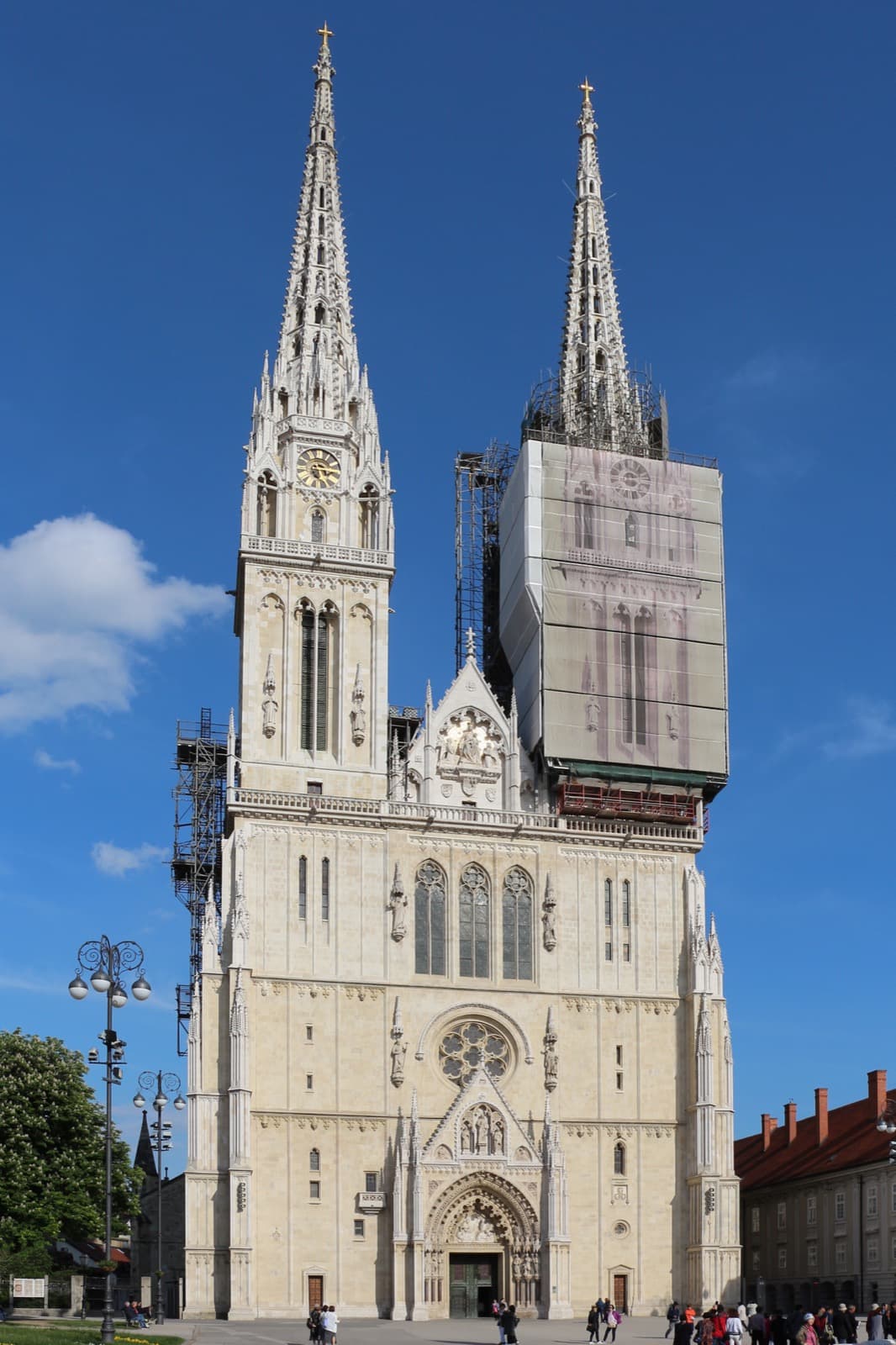
Summer (July and August) is warm, often climbing past 30 degrees Celsius, and many locals leave for the coast, which can make the capital feel quieter. Winter is cold, sometimes below freezing, with the chance of snow. The one winter exception worth planning around is December: Zagreb's Advent runs from late November into early January and has been repeatedly voted Europe's best Christmas market, with light installations and stalls spread across Zrinjevac, King Tomislav Square, and the Upper Town. It is lovely, but hotels fill and prices climb, so book early. One practical note for any season: the Zagreb Cathedral lost both its spires to the March 2020 earthquake and spent six years under reconstruction, reopening to visitors in April 2026, so the skyline you photograph today is the newly restored one.
Is Zagreb safe?
Yes, for ordinary travelers Zagreb is one of the calmer capitals in Europe, and the honest risks are minor rather than alarming. Violent crime against tourists is uncommon, and the well-lit center is comfortable to walk day and night.
The realistic concern is petty theft. Pickpockets work crowded settings, so keep a hand on your bag on packed trams, at Dolac Market, and in the December Advent crowds. Standard city sense covers it: front pockets for phones, zipped bags, and awareness in a jostle. The only spots where locals suggest a little extra caution late at night are the immediate surroundings of the main train and bus stations, which can draw loiterers after hours. Solo and solo-female travelers generally report feeling at ease here. Tap water is safe to drink, and the fountains you pass on a walk are drinkable.
What does a trip to Zagreb cost?
Zagreb is inexpensive by Western European standards, and a lot of its best hours are free. Walking the two hills, browsing Dolac, sitting on Tkalciceva, and strolling the Lower Town's green horseshoe cost nothing, and most churches you pass are free to enter.
Where money goes is coffee, food, and a few ticketed interiors. Croatian coffee culture is a sit-down ritual, so budget for a couple of leisurely cafe stops a day. Museums and galleries carry modest entry fees, and a few sites are still shaped by earthquake recovery: the Art Pavilion and the Mimara Museum have been closed for post-2020 reconstruction, so check before you plan around them. Public transport is the cheap part, as the ticket prices above show. A frugal traveler can enjoy a full day here on very little; a comfortable day with sit-down meals and a museum or two is still gentle on the wallet.
Turning the plan into a walk
Once you know your days, your season, and your tram fare, the last step is the route itself. Each of the three self-guided Zagreb walking tours is built to be paused, skipped, and taken at your own pace: the Gradec origin story on the older hill, the hidden seam of Kaptol and Dolac where two rival towns became one city, and the Lower Town horseshoe of parks and grand civic buildings. Start wherever you are standing, and let the city unfold hill by hill.
Sources
Frequently asked questions
- How many days do you need in Zagreb?
- Two full days is the sweet spot. The center is compact enough to cross on foot in about 30 minutes, so one day covers the two old hills and the market quarter, and a second day covers the Lower Town's parks and museums. With three days you can add Maksimir Park or Mirogoj cemetery, both reachable by tram.
- What currency does Zagreb use and how much are tram tickets?
- Croatia has used the euro since January 2023. ZET tram tickets are time-based and cheap: roughly 0.53 euros for 30 minutes, about 0.93 euros for 60 minutes, and around 1.33 euros for 90 minutes as of early 2026. A daily ticket is about 4 euros and a 3-day ticket around 9.50 euros. Buying from the driver costs more than a kiosk or the MojZET app.
- When is the best time to visit Zagreb?
- May and September are the best months, with mild days in the high teens to low twenties Celsius and manageable crowds. Summer can pass 30 degrees Celsius and winter is cold. December is a notable exception: Zagreb's Advent runs from late November into early January and has been repeatedly voted Europe's best Christmas market, though hotels fill and prices rise.
- Is Zagreb safe for tourists?
- Yes. Zagreb is one of the calmer European capitals, and violent crime against tourists is uncommon. The realistic risk is petty theft, so keep a hand on your bag on crowded trams, at Dolac Market, and in December Advent crowds. The well-lit center is comfortable day and night, with a little extra caution suggested late at night near the train and bus stations.
- Do you need the funicular in Zagreb?
- You do not need it, but it is a fun one-minute ride between the Lower Town and the Gradec hilltop for a small fare of around 0.66 euros. Stairs run alongside it and are quick to climb, so the funicular is more a novelty and calf-saver than a necessity.
- Can you visit Zagreb Cathedral in 2026?
- Yes. The cathedral lost both its spires in the March 2020 earthquake and spent six years under reconstruction, reopening to visitors in April 2026. The Art Pavilion and Mimara Museum, however, have been closed for post-2020 earthquake reconstruction, so check their status before planning around them.
Ready to experience it?
Upper Town: The Hill of Saint Mark
90 min · 1 km · moderate
More from Zagreb
Explore more at your own pace.
One Day in Zagreb: A Walkable Morning-to-Evening Itinerary
Two Hills and a Horseshoe: How Zagreb Became a City
Dolac Market and the Seam That Made Zagreb One City
Zagreb Cathedral: The Twin-Spired Church That Keeps Rebuilding Itself
Zagreb's Botanical Garden: The Living Corner of the Green Horseshoe