Zagreb's Botanical Garden is a working university teaching garden that sits at the lower turn of the Green Horseshoe, and it is the one link in that famous chain of squares built from ponds, glasshouses, and living plants rather than stone facades. Everywhere else on the Horseshoe, a young capital argued for its arrival with palaces, pediments, and a grand railway front. Here, at Marulicev trg near the tracks, the argument softens into something you can smell: damp soil, cut grass, the green shade of an arboretum. This is where the promenade of parks catches its breath.
What you are standing in
The garden was founded in 1889 by Professor Antun Heinz of the University of Zagreb, and it opened to the public in 1891. Those two dates matter more than they look. The Horseshoe was still filling itself in during those years, square by square, and the Botanical Garden was the piece that gave the whole planned district a genuinely living anchor. It was never designed as a decorative park. It is run by the Faculty of Science, which means it is a laboratory as much as it is a place to sit. The plants around you are collected, labeled, and studied. You are wandering through a public park and a scientific instrument at the same time.
That double identity shapes how the space feels. The layout is mostly naturalistic, in the English-landscape manner, with informal winding paths and an arboretum that lets trees grow into their own shapes. Near the greenhouse, the mood shifts to a more formal French-style floral parterre, the kind of geometric flower bed that reads like a diagram. There are two small artificial ponds, a glasshouse, and a pergola, spread across roughly five hectares. By some counts the collection runs close to ten thousand plant species, gathered from around the world. You will not take that in on one visit, and you are not meant to. The point of a teaching garden is that it rewards return.
The one thing to understand here
Hear a stop from this walk
The Mimara and the Museum-City Read Whole
If you carry a single idea into this garden, let it be this: the Botanical Garden is the hinge of the Green Horseshoe, the calm bottom of the U where the two arms of the design meet and turn. To see why that matters, it helps to know what the Horseshoe actually is.
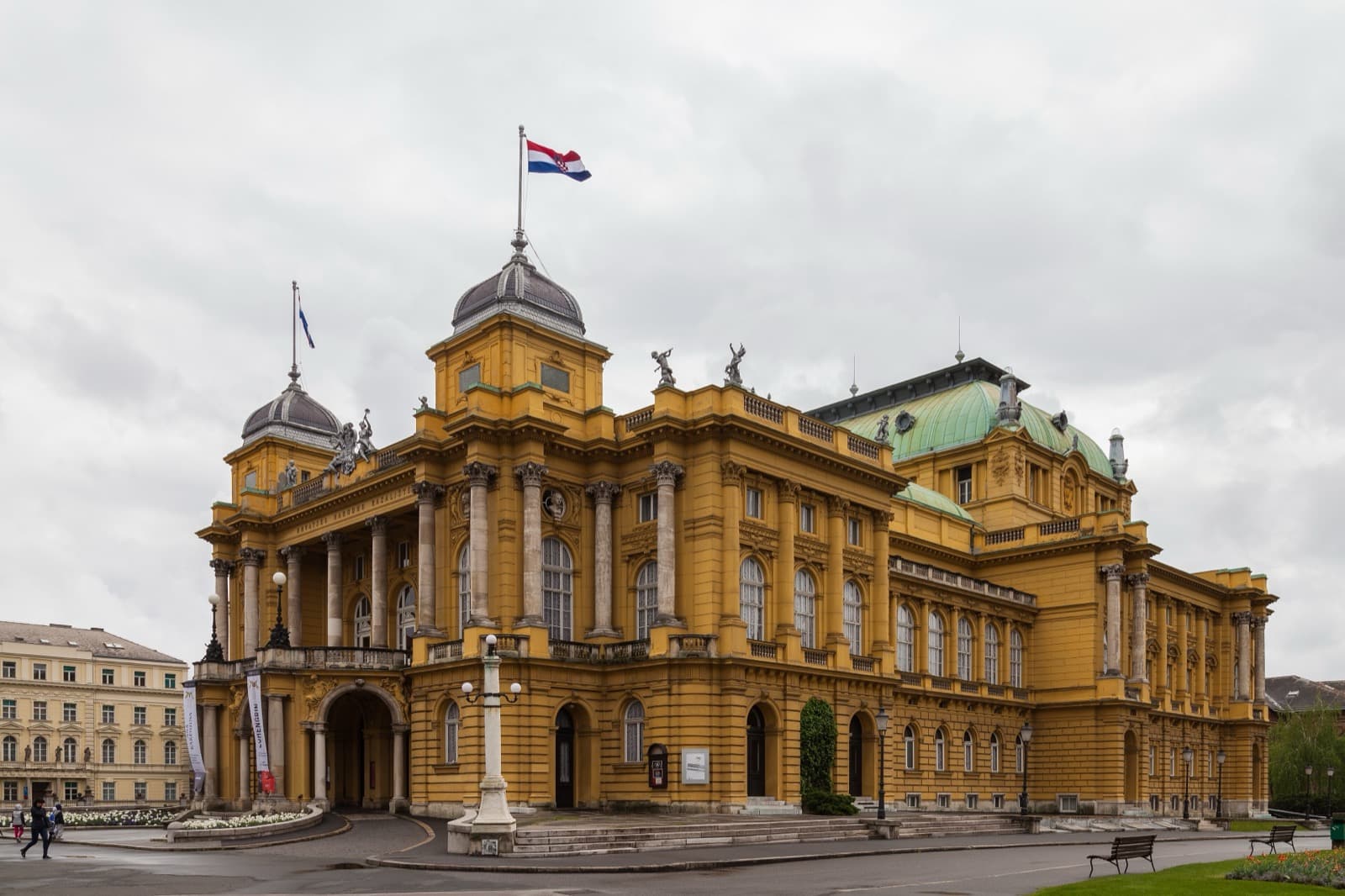
In the late nineteenth century, Zagreb was a young capital boxed in below its two medieval hills, and it decided to prove it belonged among European cities. Not with one monument, but with a whole planned district. Planners laid out the Lower Town, or Donji Grad, on a grid, and threaded through it a U-shaped chain of leafy squares lined with an academy, museums, a theatre, an exhibition pavilion, and this garden. People now call that promenade of parks the Green Horseshoe, or the Lenuci Horseshoe, after the urbanist Milan Lenuci, who conceived the scheme beginning in 1882. Walk the full loop and you read a city's ambition, park by park.
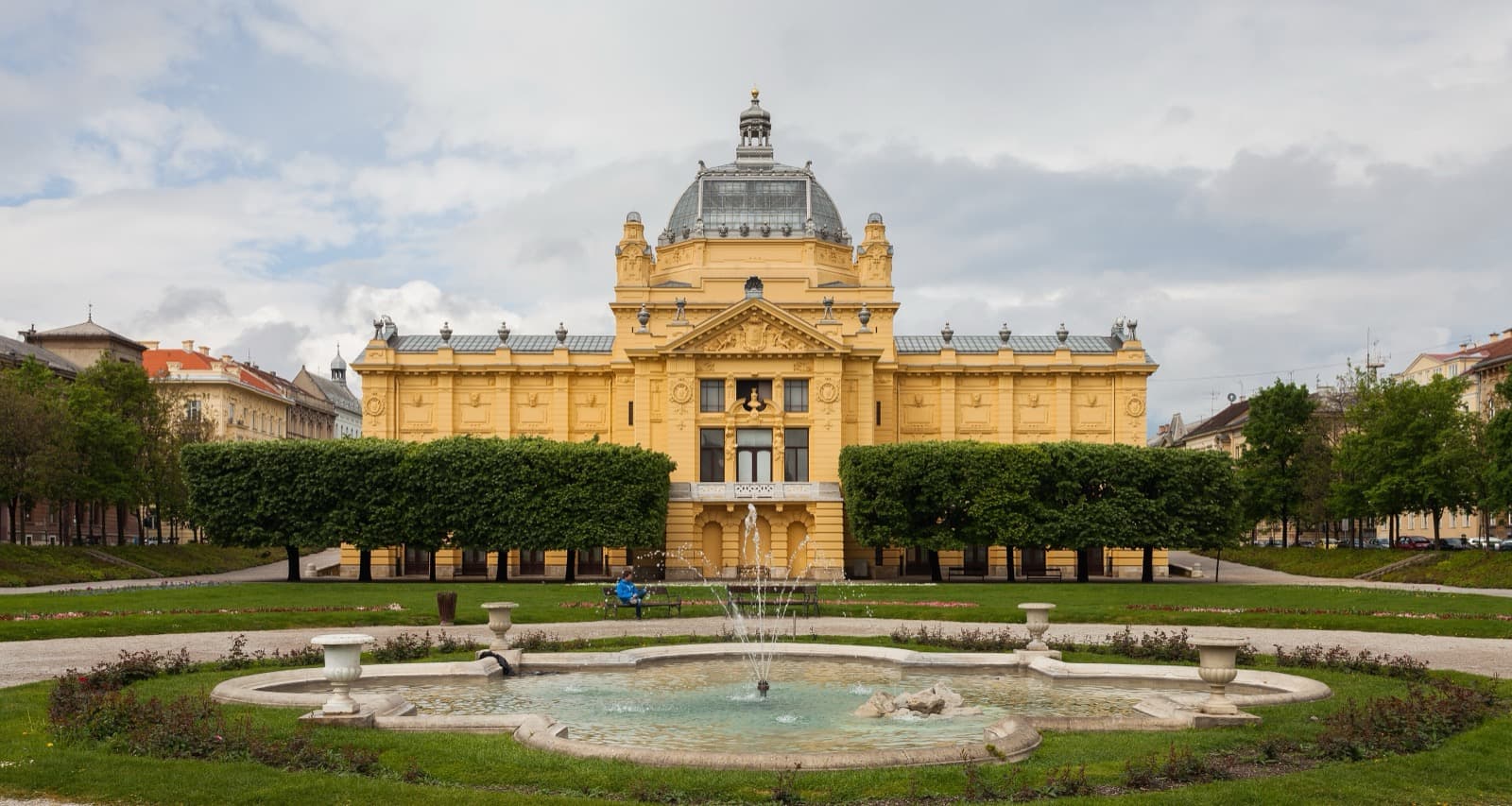
Most of those stops are made of ceremony. Zrinjevac rings a plane-tree avenue with civic palaces. King Tomislav Square points a bronze king straight at a grand railway station. The National Theatre lifts a bright neo-Baroque bulk over a fountain about the phases of human life. It is all argument, all arrival, all facade. The Botanical Garden is the exception, and that is exactly its job. It is the place in the design where a walker is supposed to stop performing tourism and simply sit by a pond. The plane trees and pediments elsewhere are the city talking about itself. The garden is the city breathing.
There is a quiet dignity to that role being taken seriously. Since 1971 the garden has carried statutory protection as a monument of both culture and nature, a rare pairing. Most protected sites are one or the other, a building or a landscape. This one is recognized as both at once: a designed cultural artifact and a living natural collection. That status is the official version of what your feet already tell you. This green corner is not filler between museums. It is a deliberate, protected part of how the Lower Town was meant to work.
Reading the garden as you walk it
Come in warmer months if you can. This is a teaching garden, so it keeps seasonal hours and generally closes through the winter, when the collections rest. Entry is free, so the one thing on this walk worth checking before you count on it is the gate itself, since the days and hours narrow in the shoulder seasons and shut over deep winter. Late spring through early autumn is when the arboretum is in full leaf and the parterre near the greenhouse is at its most graphic.
Once inside, slow down deliberately. Follow a winding path into the arboretum and let the trees do their work, then double back to the formal beds by the greenhouse to feel the register change from wild to geometric. Sit at one of the ponds. This is the restful pivot of the entire Horseshoe, the spot where the promenade of parks is designed to catch its breath before turning back up toward the theatre and the museums on the western arm. If you have walked the stone half of the loop first, you will feel the contrast land the moment you step through the gate. The whole planned district was an argument for arrival, and this is the paragraph where the argument pauses to let you rest.
When you leave, you are standing at the lower turn of the U, with the western arm rising ahead of you toward the National Theatre and the Mimara. That geography is the whole reason to walk the Horseshoe as a route rather than visiting its parts at random.
The best way to feel the garden as a hinge, and not just a park, is to walk the full loop that surrounds it. Roamer's self-guided audio tour The Green Horseshoe threads all seven stops in order, so you arrive at the Botanical Garden having already read the stone squares that make its greenery mean something. Browse the Zagreb walking tours to see how this route sits among the city's others, or start from the Zagreb city page and follow the Lower Town from Zrinjevac down to this quiet corner and back up.
Sources
- Zagreb Botanical Garden, Wikipedia. Founding date, five-hectare area, species count, and 1971 protected status.
- History, Botanicki vrt, University of Zagreb Faculty of Science. Official account of the garden's founding by Antun Heinz and its role as a teaching garden.
- Location, visiting hours and tickets, Botanicki vrt, University of Zagreb. Seasonal opening hours, winter closure, and free entry.
- Roamer tour, The Green Horseshoe (fact-audited tour transcript). Verified detail on the garden's place in the Lenuci Horseshoe and the design of the Lower Town.
Ready to experience it?
Lower Town: The Green Horseshoe
120 min · 3.3 km · easy
More from Zagreb
Explore more at your own pace.
One Day in Zagreb: A Walkable Morning-to-Evening Itinerary
Two Hills and a Horseshoe: How Zagreb Became a City
Dolac Market and the Seam That Made Zagreb One City
St Mark's Church in Zagreb: The Roof That Flies a Whole Kingdom
Zagreb Cathedral: The Twin-Spired Church That Keeps Rebuilding Itself