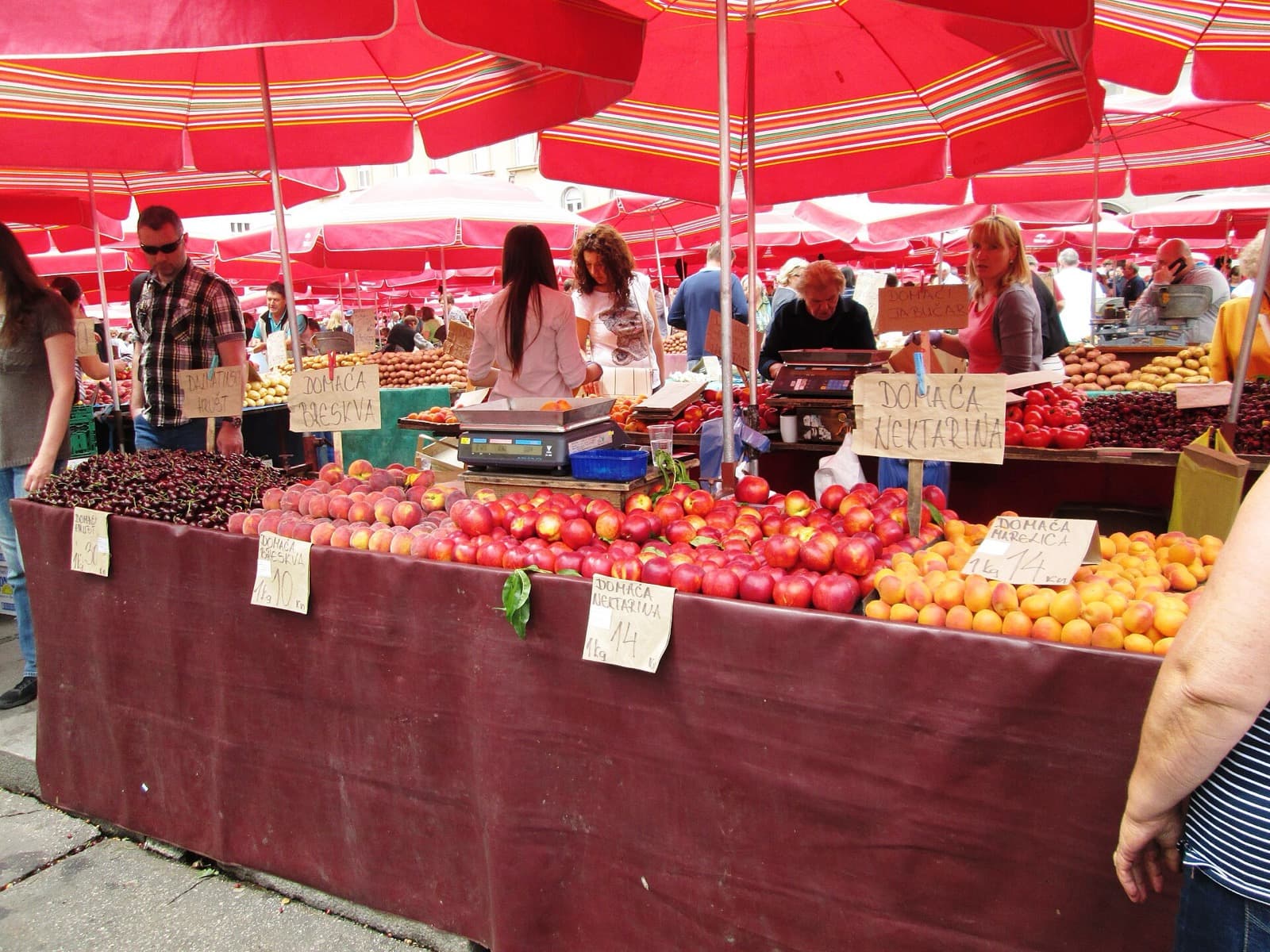
Dolac Market sits on the exact seam where two feuding towns became one Zagreb. On a raised terrace between Ban Jelacic Square, Kaptol, and the Upper Town, the field of red parasols spreads out over ground that was once a boundary, not a meeting place. The merchant town of Gradec rose on one hill. The bishop's town of Kaptol rose on the other. A narrow stream ran between them, and for centuries that watercourse was a border that men crossed with suspicion. The market you walk today grew up directly on that old dividing line. Understanding this one stop is the fastest way to understand the whole city.
A market built on a border
Dolac opened on the first of September, nineteen thirty, in a ceremony attended by the mayor Stjepan Srkulj. At the time it was praised as one of the most modern marketplaces in Europe. To build it, older houses on the boundary zone were cleared away, so the market physically occupies the seam between Gradec, Kaptol, and the lower town. That is not a poetic flourish. It is a fact of the terrain. The two levels of the market make the geography legible: up in the open air is the famous field of red parasols, rows of umbrella stalls shading farmers and their produce, while below, under shelter, work the butchers, the fishmongers, and the dairy sellers offering the local sir i vrhnje, the cheese and cream that Zagreb families carry home.
People call Dolac the belly of Zagreb, and the nickname fits a place that has fed the city for generations. At the edge of the market stands a small bronze figure, a market woman named Kumica Barica. A kumica is a market vendor. This one was sculpted by Stjepan Gracan and has stood here since two thousand six, modeled on a real longtime seller named Djurdjica Jancec. She is worth a pause. She stands for the countless women who carried baskets up to this terrace at dawn, on the very line where two towns once glared at each other across a creek.
The stream that divided everything
Hear a stop from this walk
Zagreb Cathedral: the twin spires of the church-town
To see why Dolac matters, you have to see the stream that is no longer there. That is where the surrounding stops come in. Just west of the market runs Tkalciceva Street, a bright pedestrian lane laid directly over the covered bed of the Medvescak creek. This creek was the frontier between Gradec and Kaptol, and for most of Zagreb's early history it was also the engine of the settlement. Its water turned watermills that served cloth-making, soap, paper, and liquor, and along its banks worked the tanners who cured animal skins, a trade that continued right up until nineteen thirty-eight.
Because the creek was so valuable, it caused disputes, and disputes needed rules. A peace treaty made in thirteen ninety-two between the two towns forbade building any new watermills along the shared border, leaving just two mills standing, both in monastic hands, simply to stop the endless quarreling over who could build on this contested line. A stream so contested that rivals had to sign a treaty about waterwheels. Around eighteen ninety-eight the creek was finally covered over, and the street on top was first called Ulica Potok, or Creek Street. In nineteen thirteen it was renamed for the nineteenth-century Zagreb historian Ivan Tkalcic.
The Bloody Bridge and the long feud
A short lane nearby carries one of the bluntest names in the city: Krvavi most, the Bloody Bridge. Today it runs for about three hundred metres between Radiceva and Tkalciceva, but it is named for a real wooden bridge that once crossed the Medvescak at the exact frontier between the two towns. When the creek was covered and the stream closed at the end of the century, the bridge became useless and was pulled down in eighteen ninety-nine. The name stayed because the name tells the truth. The rivalry between merchant Gradec and the bishop's Kaptol was not a passing squabble. The clashes began in the fourteenth century and flared on and off until peace was finally established in the eighteenth, roughly four hundred years of neighbors who could not settle their differences. Tradition holds that fighting near the end of the fourteenth century grew so severe that spilled blood colored the creek, though that detail belongs to folk memory rather than proven record. What the documents show is that the name Bloody Bridge first appears in the records in sixteen sixty-seven, tied to a battle on the seventeenth of November that year.
Once you grasp this, Dolac reads differently. The market did not simply appear on convenient flat-ish ground. It was built on the healed wound between two towns that spent centuries at odds.
Both halves of the story
Climb to Kaptol and you meet the bishop's town directly. The name comes from the Latin capitulum, the body of canons who governed the church-town. The Diocese of Zagreb was established here in ten ninety-four by King Ladislaus, and the slope filled with Baroque residences for the canons, the curiae, standing alongside the archbishop's palace. Renaissance walls and round towers built between fifteen twelve and fifteen twenty still partly enclose the cathedral. That cathedral, formally the Cathedral of the Assumption of the Blessed Virgin Mary, is the tallest sacral building in Croatia, its twin neo-Gothic spires climbing to about one hundred and eight metres each. A medieval church was consecrated here in twelve seventeen, damaged in the Mongol invasion of twelve forty-two, and rebuilt under Bishop Timothy from around twelve sixty-three. After an earthquake on the ninth of November, eighteen eighty, the architect Hermann Bolle rebuilt it in neo-Gothic form between eighteen eighty and nineteen oh two, giving it the twin spires you see. Another quake on the twenty-second of March, twenty twenty, broke the tip off the southern spire, and repair continues.
The full walk begins in Ban Jelacic Square, which took its name in eighteen forty-eight, and ends at Cvjetni trg, the Flower Square, where the old rivalry dissolves into the local ritual of an unhurried coffee. That arc, from feud to shared café tables, is the argument Dolac makes in miniature every morning. If you want to trace it in order, browse the Zagreb walking tours and plan your route through Zagreb.
Come to Dolac in the morning, when the red parasols are full and the stalls are loud. Bring a little cash, because small vendors may not take cards. Stand at the edge, find Kumica Barica, and remember what the ground under your feet used to be: the border between two towns that took treaties, a paved-over creek, and four hundred years to become one city.
Sources
- Dolac Market, Wikipedia. Founding date, terrace location on the seam, and the two-level layout of the market.
- 87 Years of Dolac Market, Total Croatia News. Opening date of the first of September nineteen thirty and the mayor Stjepan Srkulj at the opening ceremony.
- Dolac Market, AymoCha. The market's standing at the time as one of the most modern marketplaces in Europe.
- Tkalciceva Street, Wikipedia. The buried Medvescak creek, its mills and tanneries to nineteen thirty-eight, and the thirteen ninety-two treaty leaving two monastic mills.
- Krvavi Most and Zagreb Cathedral, Wikipedia. The Bloody Bridge lane, the wooden bridge and the sixteen sixty-seven record, and the cathedral's ten ninety-four diocese, rebuilds, and neo-Gothic spires.
Ready to experience it?
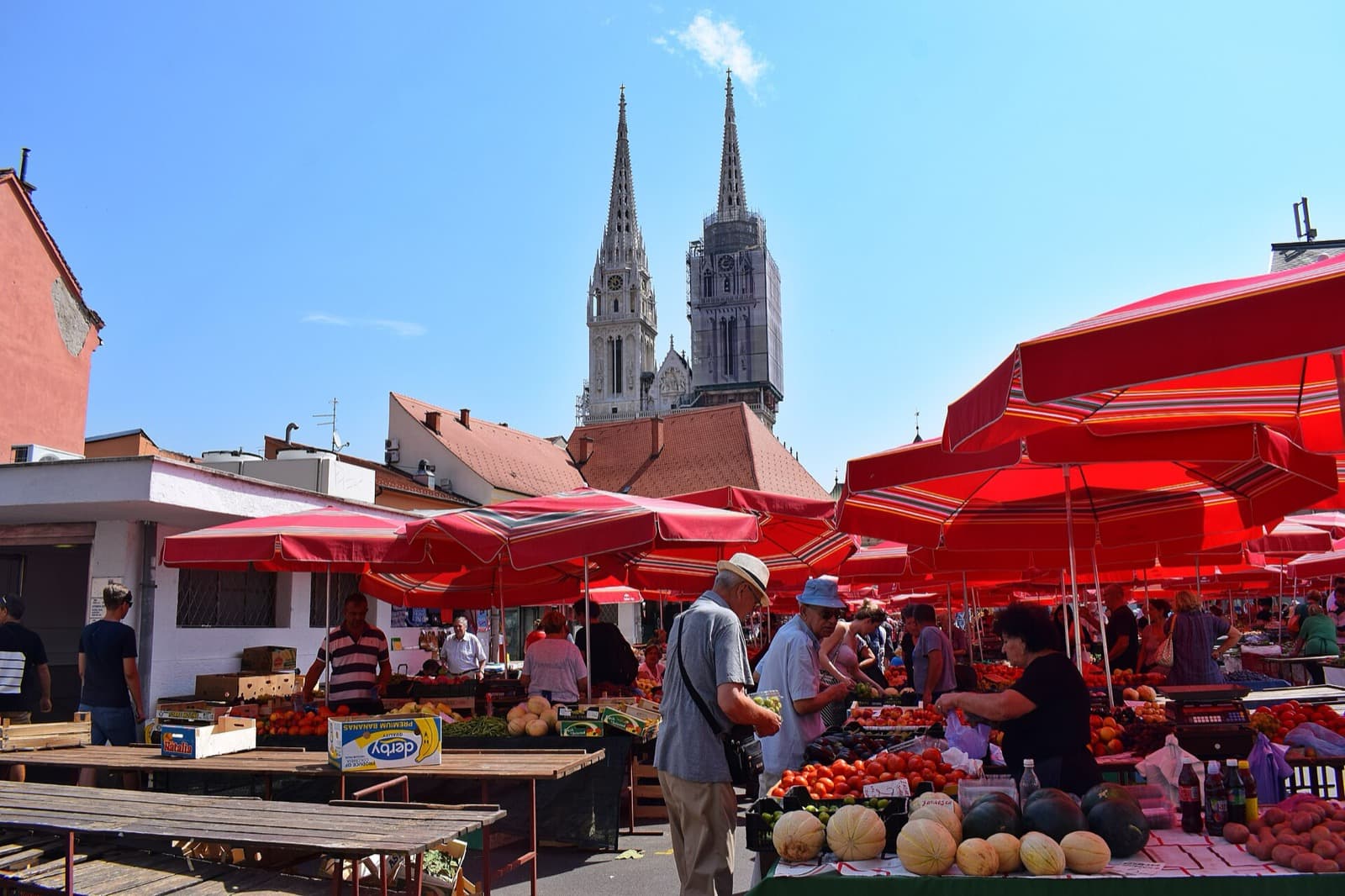
Kaptol and Dolac Market: The Other Hill
100 min · 1.3 km · easy
More from Zagreb
Explore more at your own pace.
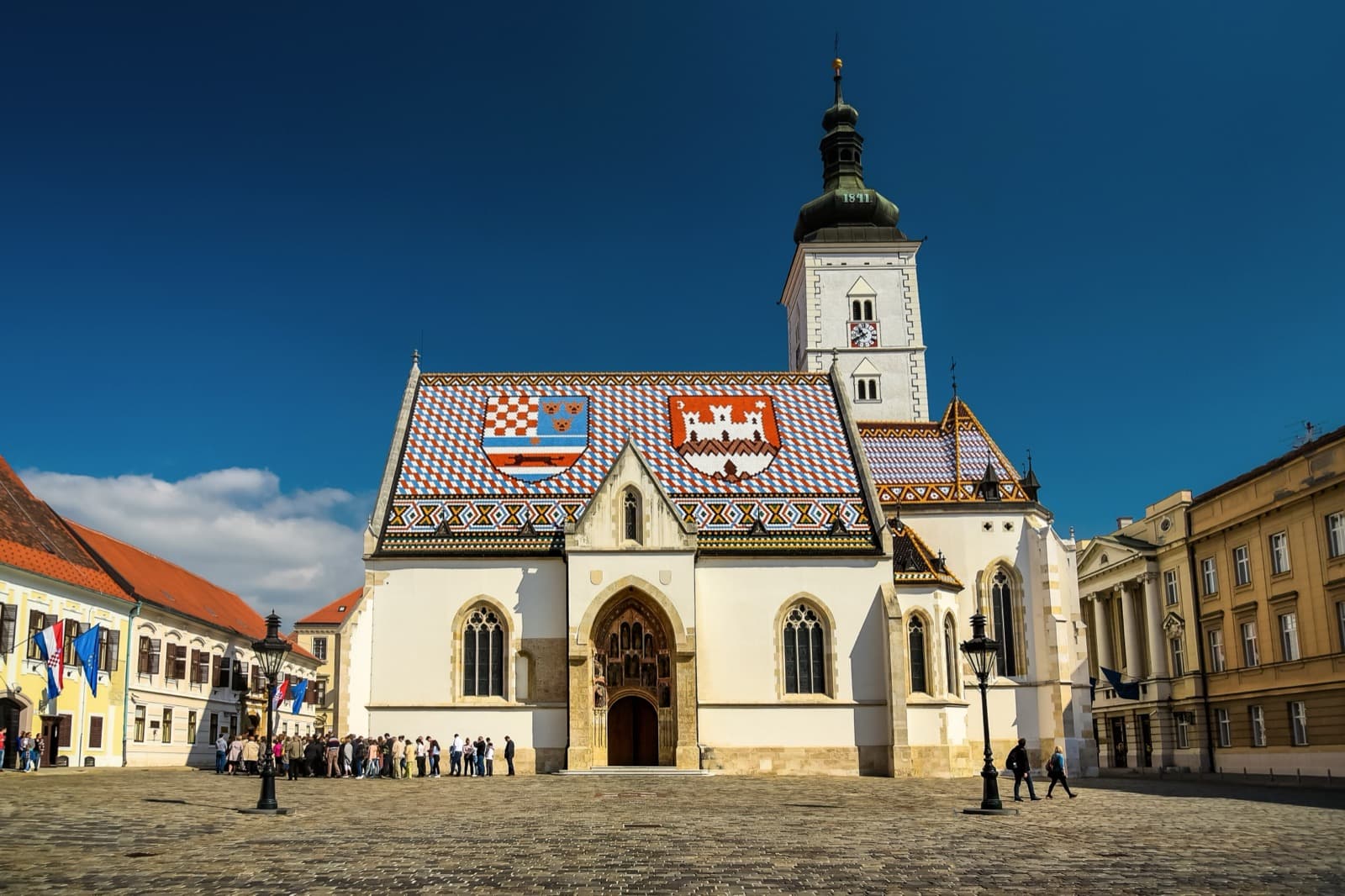
One Day in Zagreb: A Walkable Morning-to-Evening Itinerary
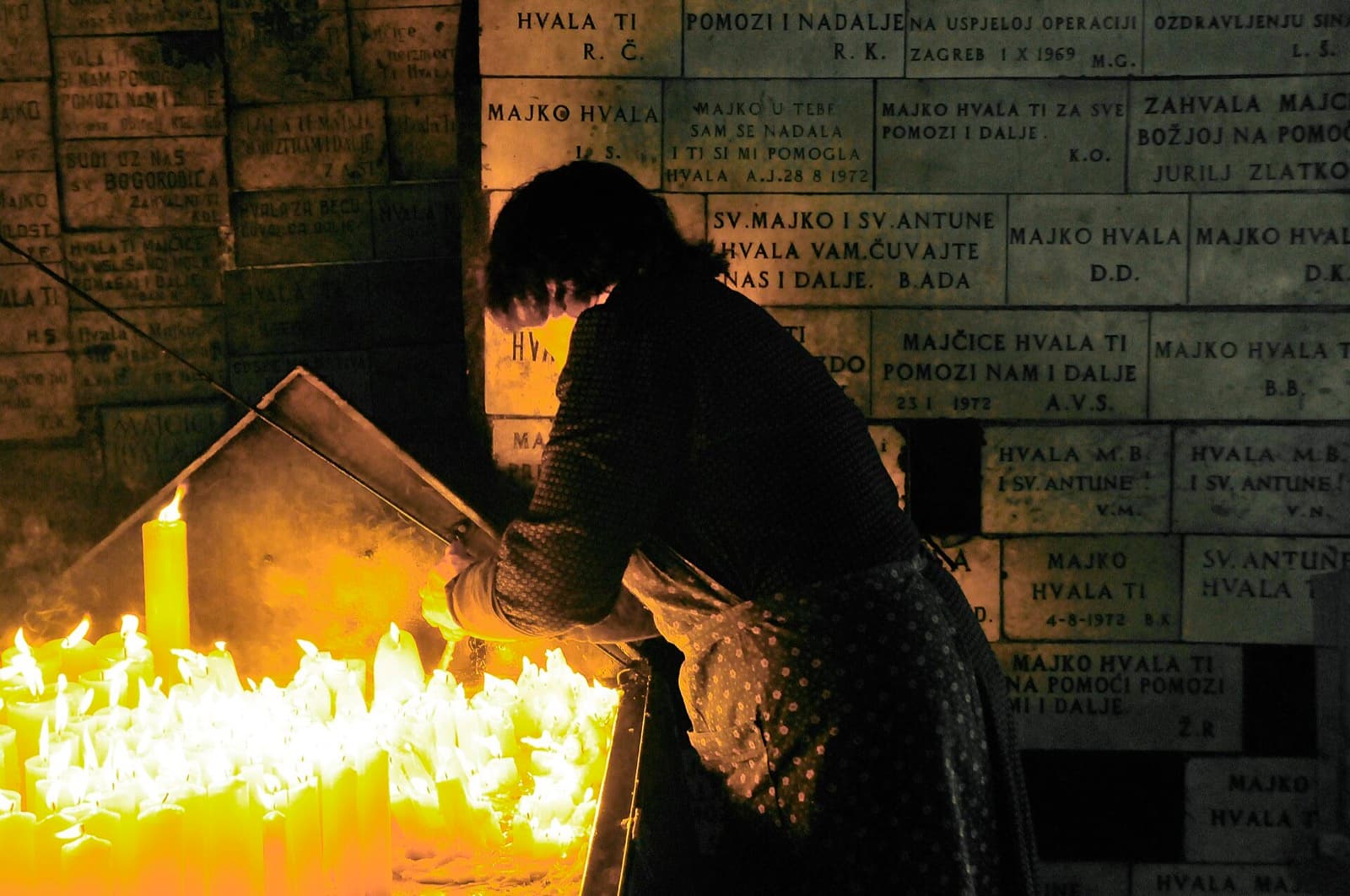
Two Hills and a Horseshoe: How Zagreb Became a City
St Mark's Church in Zagreb: The Roof That Flies a Whole Kingdom
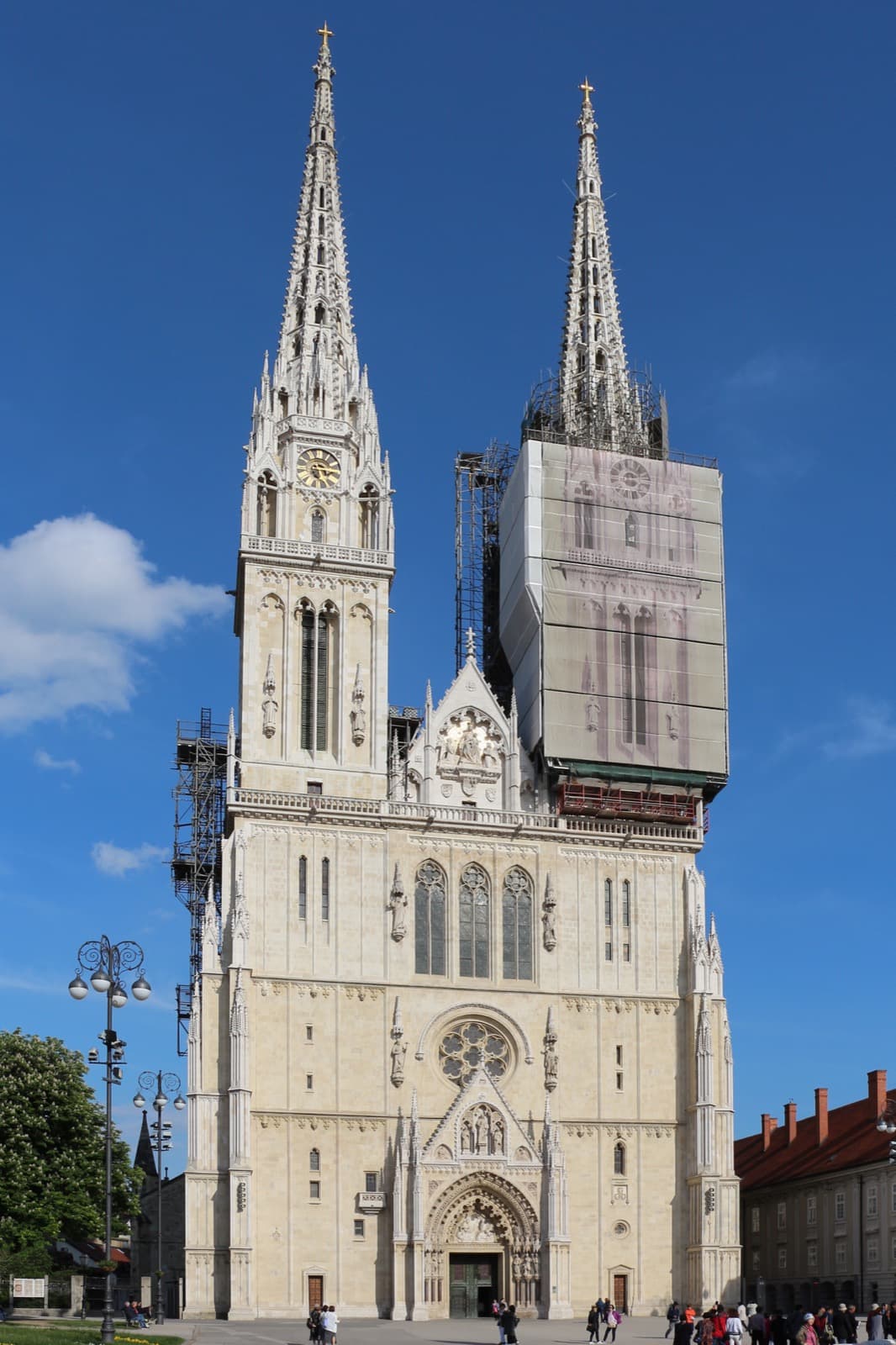
Zagreb Cathedral: The Twin-Spired Church That Keeps Rebuilding Itself
Zagreb's Botanical Garden: The Living Corner of the Green Horseshoe