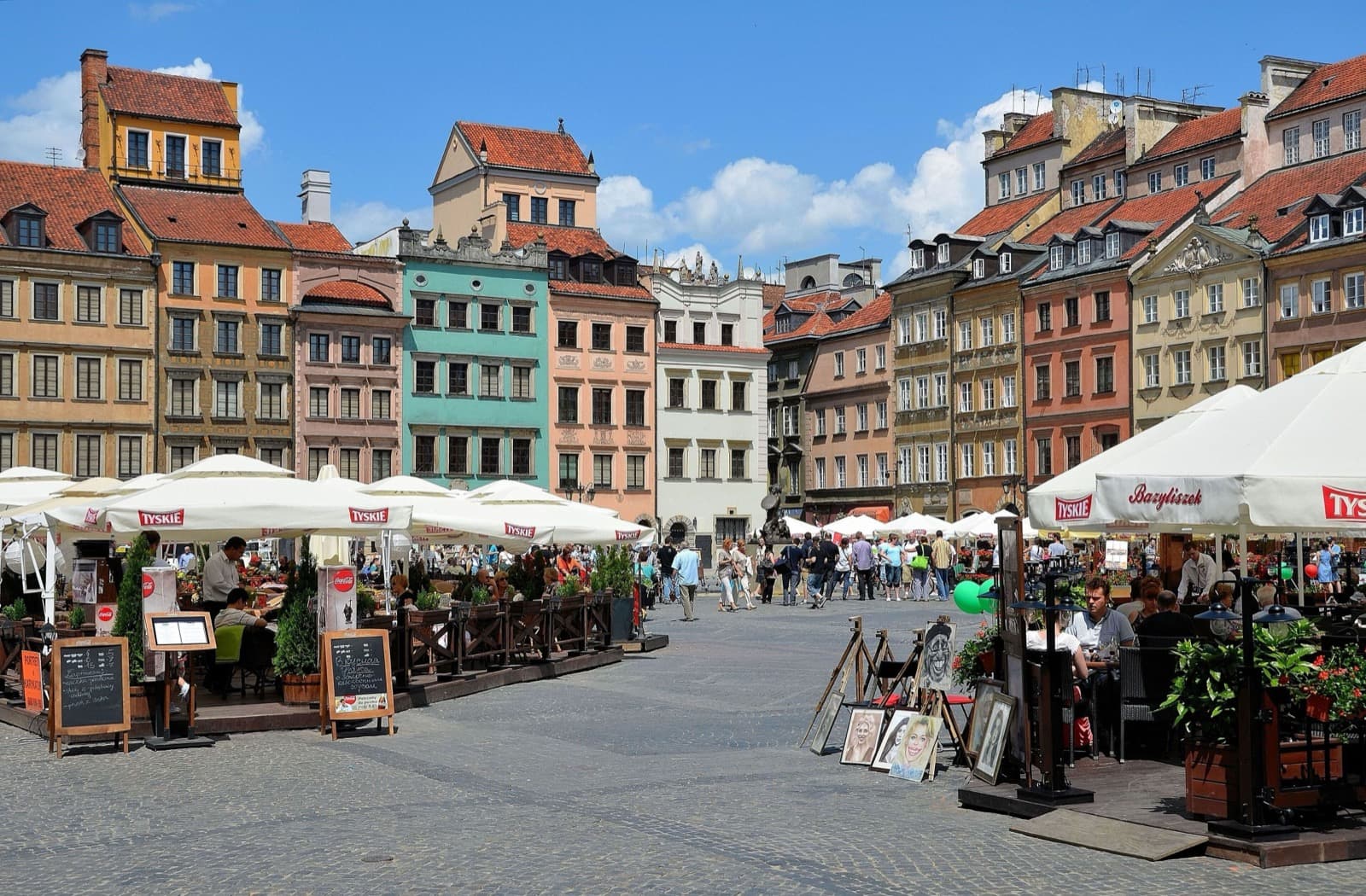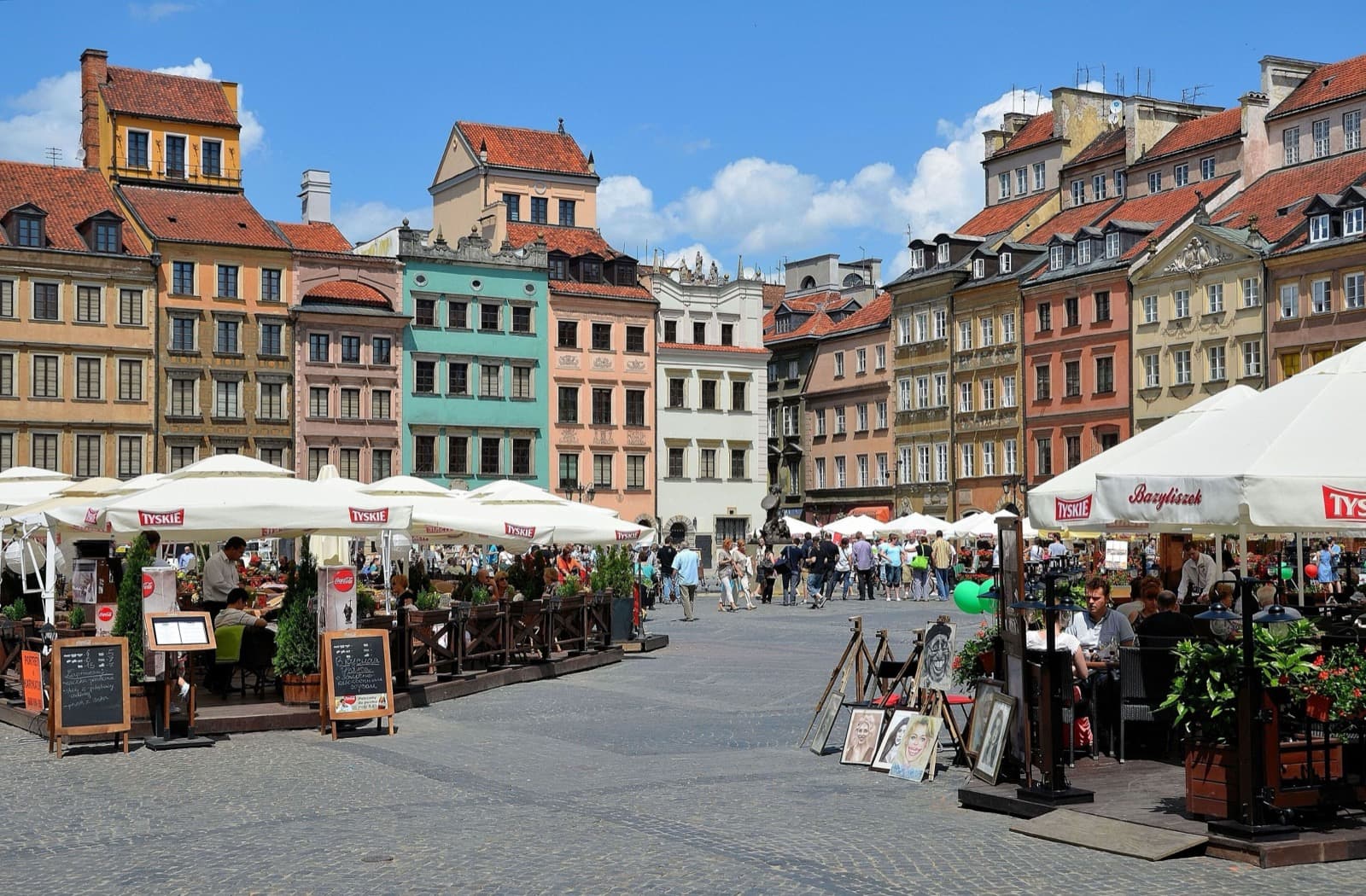
Old Town: The City Rebuilt From Rubble
90 min · 2.2 km · easy
Warsaw's food is potato dumplings sold from jars, sour rye soup, and counter-service canteens the state still helps pay for. To eat the way locals do, start with pierogi and pyzy, warm up with a bowl of żurek, order a two-course lunch at a milk bar, and time a pączek or a piece of pańska skórka to the calendar. Below is what each dish is, where the tradition comes from, and how to order it without hesitating at the counter.
You can taste most of this within a short walk of the sights on our two self-guided routes. See the full set of Warsaw walking tours, or jump to the city page at /poland/warsaw.
Pierogi: the dumpling to order first
Pierogi are boiled or pan-fried dough parcels with a savory or sweet filling, and they are the safest first order in the city. The most common savory version is pierogi ruskie, filled with potato, farmer's cheese, and fried onion, usually served with sour cream or melted butter. Other fillings run from minced meat and sauerkraut-with-mushroom to sweet fruit like plum or blueberry for dessert.
To order like a local, look for a "pierogarnia," a shop that specializes in handmade pierogi rather than a general restaurant. Savory pierogi are sold by the portion, often six to nine pieces, and you pick your filling. If you want the full range in one sitting, ask for a mixed plate.
Pyzy: Warsaw's own dumpling, served from a jar
Hear a stop from this walk
The Memory of the Warsaw Uprising: Sixty-Three Days
Pyzy are the dish that belongs to Warsaw specifically, and in particular to the Praga district across the river. They are large, round potato dumplings, made from a mix of raw grated and cooked mashed potato, and the Warsaw version is filled with cooked beef and topped with crisp bacon. Their probable origin is the Podlasie region to the northeast, but they became a Praga signature at Bazar Różyckiego, a street market that opened in 1882 and is one of Warsaw's oldest surviving markets.
The tradition worth knowing: for generations, vendors sold pyzy hot from glass jars, sometimes wrapped in newspaper to hold the heat, eaten standing next to the stall. You can still find pyzy served this way in Praga, and ordering a jar is part of the experience, not a gimmick. Praga sits east of the Vistula, so this is a deliberate detour from the Old Town rather than something you pass on the main tourist spine.
Żurek: the sour rye soup to warm up with
Żurek is a soup built on fermented rye flour, which gives it a distinctive tang, and it is a Polish classic strongly tied to Easter. A standard bowl carries sausage, potato, and a hard-boiled egg, sometimes with bacon. Restaurants often serve it inside a hollowed-out bread bowl, which you eat down to the crust.
Order it as a starter before pierogi, or as a light meal on its own with bread. If you see it in a bread bowl on the menu, that is the version most visitors remember, though a plain deep bowl is just as authentic and easier to finish.
Bar mleczny: how to eat cheaply, the local way
A "bar mleczny," or milk bar, is a counter-service canteen serving traditional Polish home cooking at low prices, and it is the single most useful thing to understand about eating in Warsaw on a budget. The first one opened in 1896 on Nowy Świat street, founded by Stanisław Dłużewski, and the "milk" in the name comes from the early menus built on dairy, flour, and eggs rather than meat. These places became a fixture during the communist era, and they still run today.
Crucially, milk bars are still partly subsidized by the Polish state, which is why the prices stay so low. The government's 2025 budget set aside about 61.4 million zloty (roughly 14 million euros) for the program, down from 71 million the year before, covering a share of ingredient costs for qualifying dishes at around seventy businesses nationwide. They are treated as both a service for pensioners and students and a cultural institution.
How to order: you queue at the counter, read the handwritten menu on the wall, pay with cash (many still do not take cards), collect your tray, and clear your own table. Expect pierogi ruskie, potato pancakes (placki ziemniaczane), stuffed cabbage rolls (gołąbki), and several soups. Most close in the early evening, often around 7 pm, so treat a milk bar as a lunch plan, not a dinner one. Nowy Świat, where the first milk bar opened, is a stop on our Royal Route walk, so this fits neatly into that day.
Pączki and pańska skórka: sweets tied to the calendar
Two Warsaw sweets are worth timing to the date. A pączek is a deep-fried, filled doughnut, and the most traditional filling is rose or rosehip jam under a sugar or citrus-zest glaze. Pączki took on their modern sweet form in the eighteenth century, when French pastry chefs at the Polish court lightened the dough, and they peak on Fat Thursday (Tłusty Czwartek), the last Thursday before Lent, when Poles eat them by the millions and lines form outside every "pączkarnia," a shop that makes doughnuts as its main product. You can buy a good pączek year-round, so you do not have to wait for the holiday.
Pańska skórka is a chewy pink-and-white taffy that is almost entirely a Warsaw thing, and it is tied to All Saints' Day (November 1). The name was recorded in a Polish dictionary in 1908, and the candy has long been sold from makeshift stalls outside the city's cemeteries at the start of November. It is considered part of Warsaw's local heritage. If you are in the city around that date, buy a piece near a cemetery gate; the rest of the year it is hard to find.
How to plan an eating day around the walks
A workable order for a first visit: żurek as a starter, pierogi or a milk-bar plate for the main, a pączek for something sweet, and a Praga detour for pyzy if you have a second day. Both self-guided routes keep you close to good stops. The Old Town Rebuilt walk runs through the Market Square and New Town, where pierogi restaurants cluster, and the Royal Route walk follows Nowy Świat, the street where the milk bar tradition began. Bring some cash for the milk bars and the Praga stalls, since not every counter takes cards. Warsaw is a comfortable city to walk and eat in, and none of this requires a reservation.
Sources
- Warsaw Food Guide: 13 Traditional Polish Dishes, Walkative
- Warsaw Milk Bars: History and Practical Guide, Walkative
- Polish government cuts subsidies for milk bar cafeterias, Notes From Poland
- Where to find the best pyzy and flaki in Warsaw, Urban Adventures
- Pańska Skórka, an icon of Warsaw, tourwarsaw
Frequently asked questions
- What food is Warsaw known for?
- Warsaw is known for pierogi (filled dumplings), pyzy (large potato dumplings traditionally sold from jars in the Praga district), and żurek (a sour rye soup). The city is also famous for its milk bars, cheap counter-service canteens serving traditional Polish home cooking. Seasonal sweets include pączki doughnuts and the local All Saints' Day taffy pańska skórka.
- What is a milk bar (bar mleczny) in Warsaw and how do you order?
- A milk bar is a self-service canteen serving traditional Polish dishes at low prices, kept cheap partly by Polish state subsidies. You queue at the counter, order from a handwritten wall menu, usually pay with cash, collect your tray, and clear your own table. Most milk bars close in the early evening, often around 7 pm, so they suit lunch rather than dinner.
- Are Warsaw milk bars still subsidized in 2026?
- Yes. Milk bars are privately owned but still partly subsidized by the Polish government, which covers a share of ingredient costs for qualifying dishes. The 2025 state budget set aside about 61.4 million zloty (roughly 14 million euros), down from 71 million the previous year, for around seventy businesses nationwide. The support keeps prices low and treats milk bars as a cultural institution.
- What are pyzy and where do you eat them in Warsaw?
- Pyzy are large round potato dumplings, and the Warsaw version is filled with cooked beef and topped with crisp bacon. They are a specialty of the Praga district east of the Vistula, historically sold hot from glass jars at Bazar Różyckiego, a market that opened in 1882. You can still find them served from jars in Praga, which is a deliberate detour from the Old Town.
- What is żurek and how is it served?
- Żurek is a Polish soup made with fermented rye flour, which gives it a sour, tangy flavor. It usually contains sausage, potato, and a hard-boiled egg, and is strongly associated with Easter. Restaurants often serve it inside a hollowed-out bread bowl that you eat down to the crust, though a plain deep bowl is just as traditional.
- When should I eat pączki and pańska skórka?
- A pączek is a filled doughnut, most traditionally with rose or rosehip jam, and its peak day is Fat Thursday (Tłusty Czwartek), the last Thursday before Lent, though good ones are sold year-round. Pańska skórka is a pink-and-white taffy sold mainly around All Saints' Day (November 1) from stalls near Warsaw's cemeteries, and it is hard to find at other times of year.
Ready to experience it?
Old Town: The City Rebuilt From Rubble
90 min · 2.2 km · easy
More from Warsaw
Explore more at your own pace.
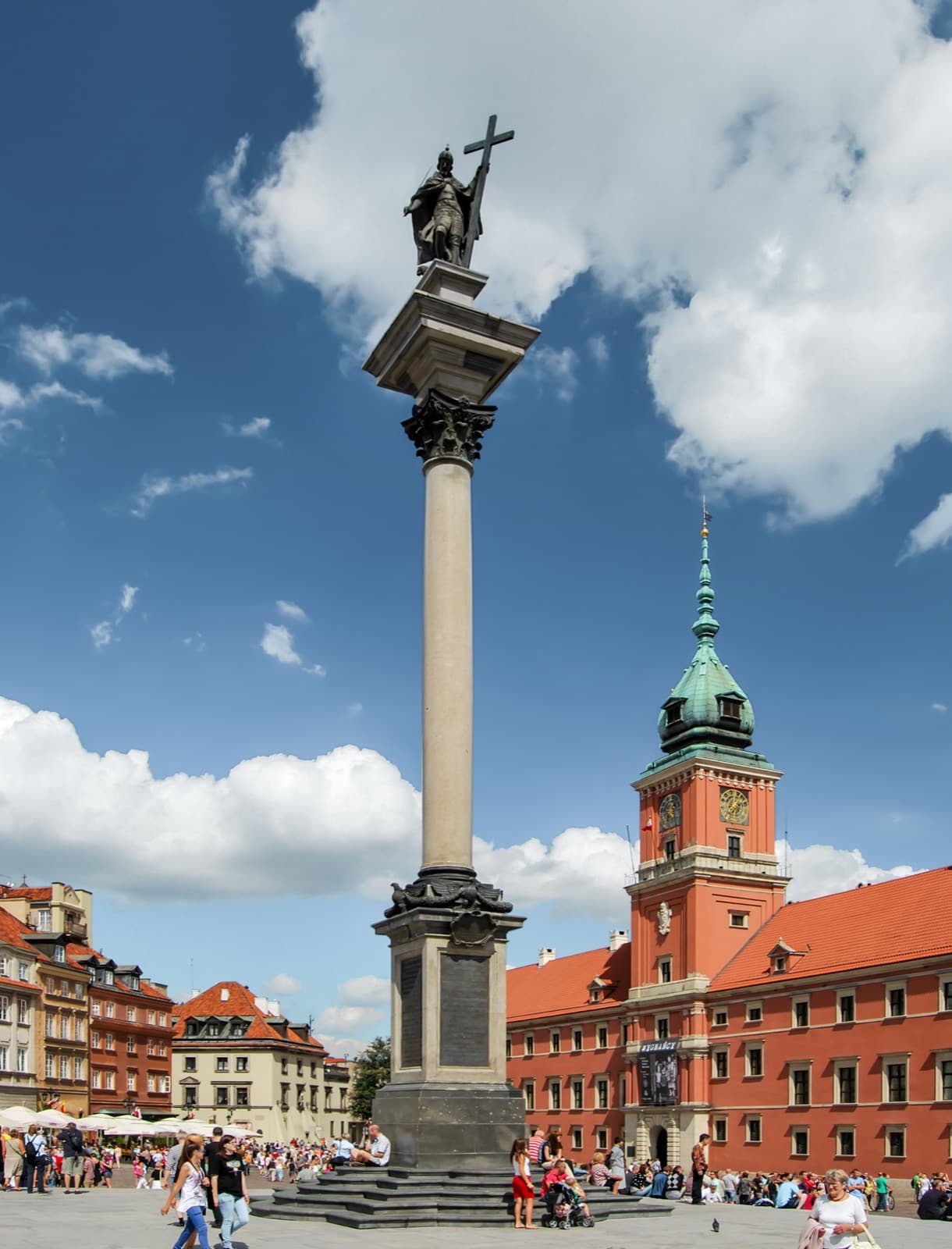
One Day in Warsaw: A Walkable Itinerary from the Old Town to Łazienki
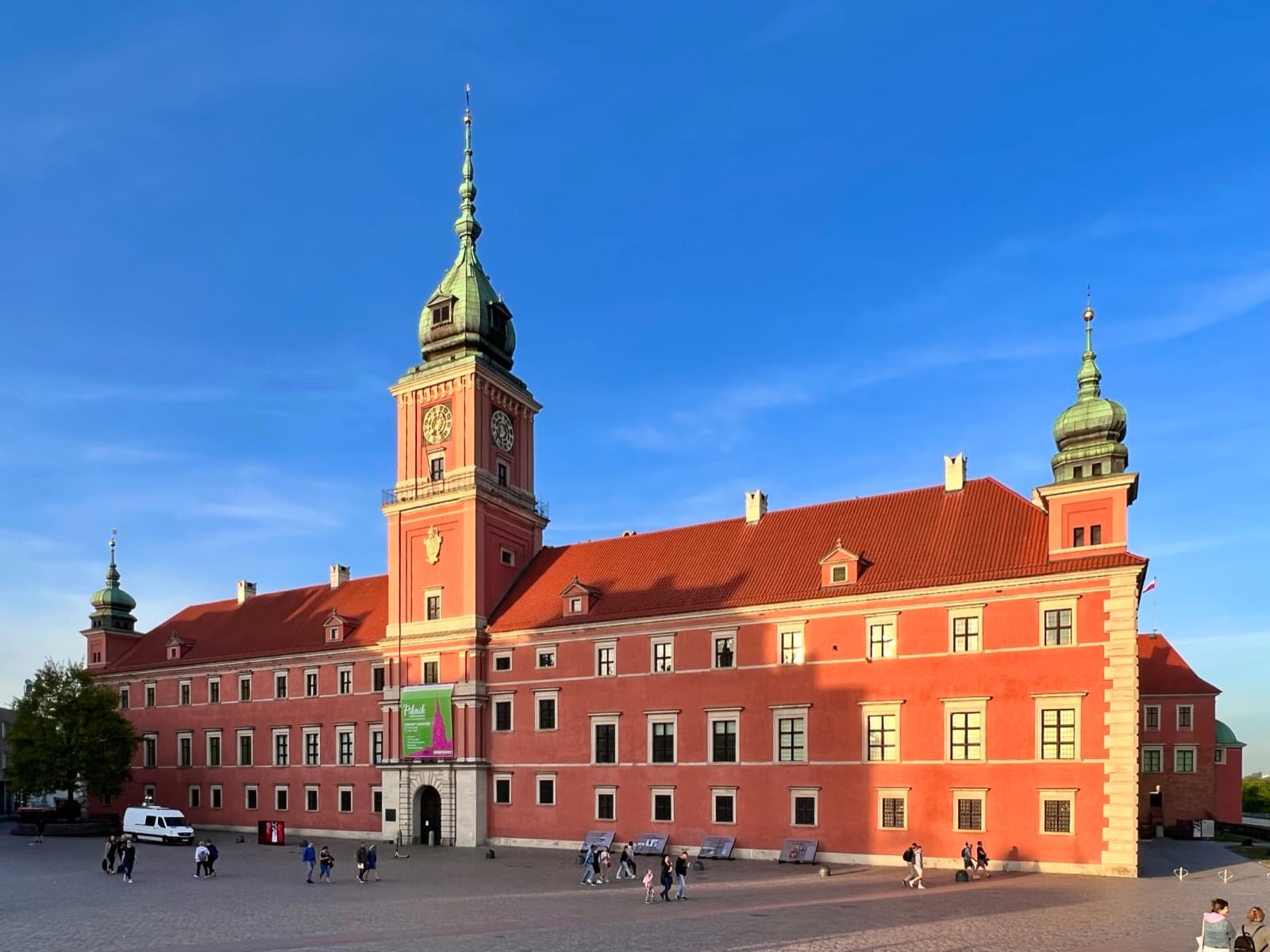
Warsaw Rebuilt: Reading a Reconstructed Capital on Foot
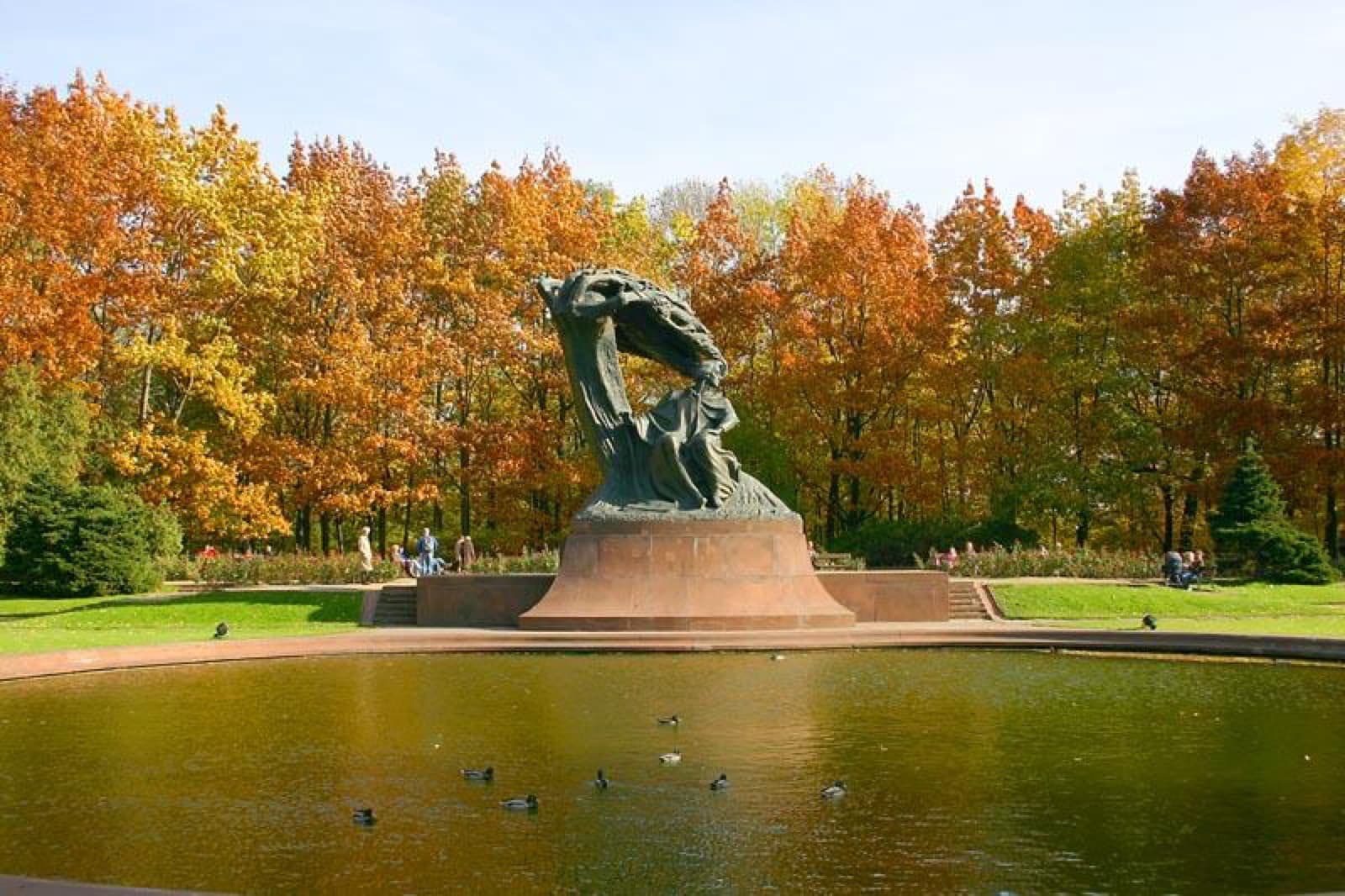
The Chopin Monument in Lazienki Park: Where Warsaw's Royal Route Ends
The Royal Castle That Poland Rebuilt From Rubble

Holy Cross Church and Chopin's Heart on Warsaw's Royal Route