Old Town: The City Rebuilt From Rubble
90 min · 2.2 km · easy
Two focused days handle Warsaw's core comfortably: give one to the rebuilt Old Town and one to the Royal Route south to Lazienki Park, and get around almost entirely on foot plus the cheap tram and metro network. Warsaw is a compact, walkable capital where the marquee sights sit close together, transit is inexpensive and easy to read, and the real planning question is less "how do I move" than "how much time do I leave to stand still." This guide answers the practical things travelers actually search: how many days, how to get around, when to come, what it costs, and an honest word on safety.
If you want the walks themselves, both self-guided audio routes below are laid out stop by stop on the Warsaw walking tours hub, and every tour and starting point lives on the Warsaw city page.
How many days do you need in Warsaw?
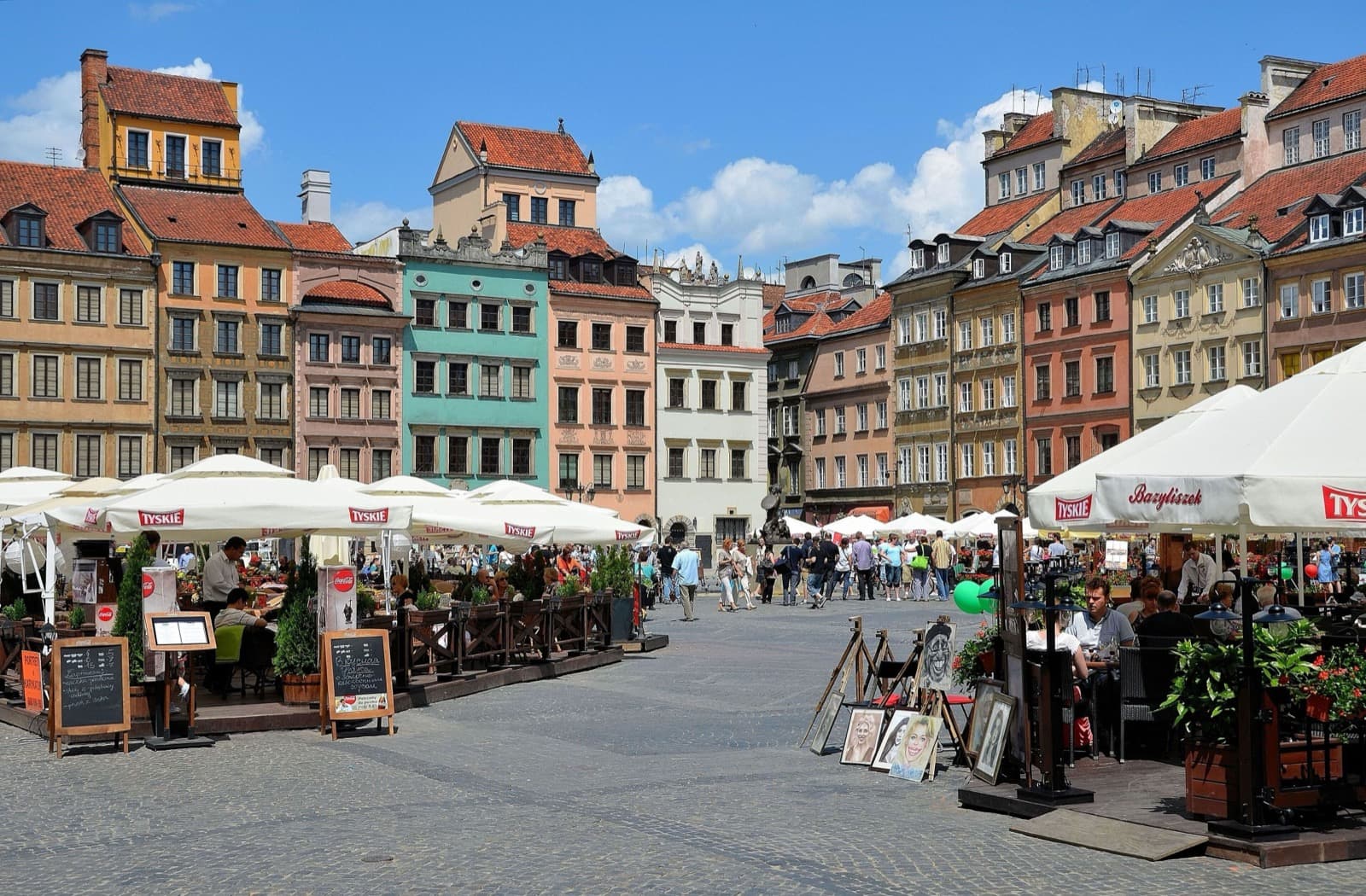
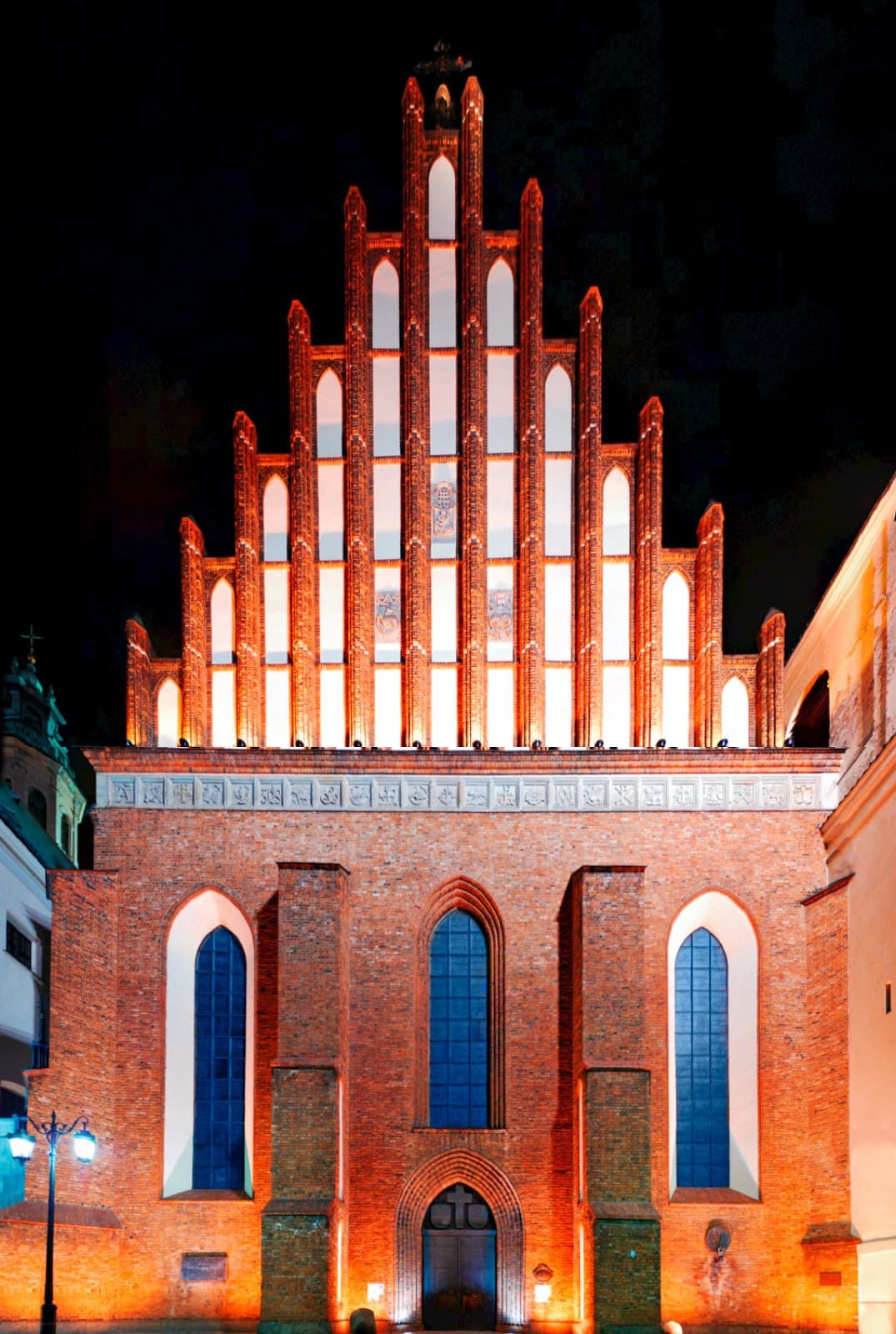
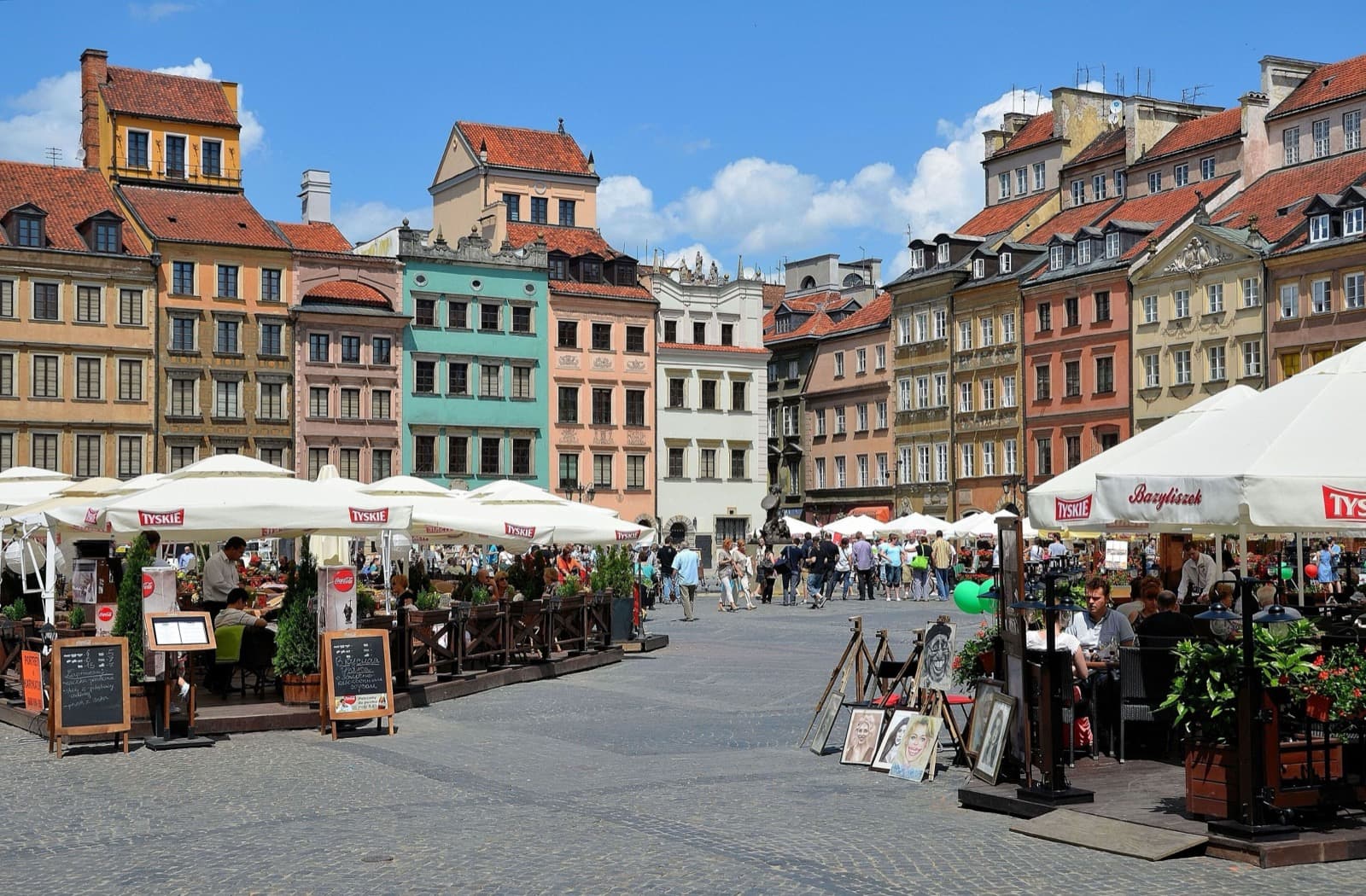
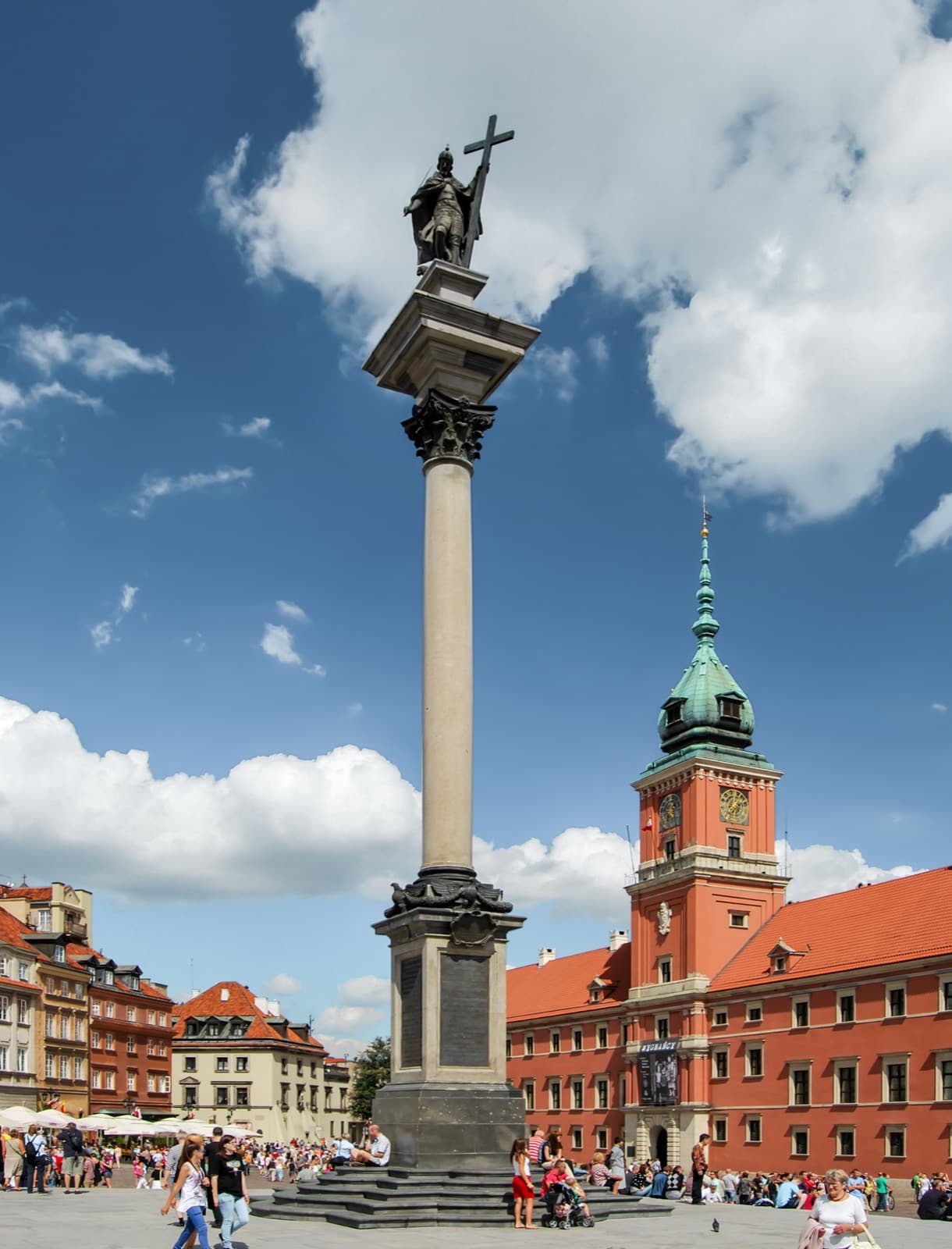
Two full days is the honest answer for the historic core. Day one is the Old Town and New Town: Castle Square, the Royal Castle, St John's Archcathedral, the Old Town Market Square with its mermaid, the Barbican, and out to the New Town where Marie Curie was born, finishing at the Warsaw Uprising memorial ground near Krasinski Square. That loop runs about 2.2 kilometres and reads as a single story, because almost everything you see was rebuilt by hand after 1944.
Day two is the Royal Route, the ceremonial spine the kings once travelled south from the castle. It runs roughly 4.6 kilometres from St Anne's Church down Krakowskie Przedmiescie and Nowy Swiat, past Holy Cross Church (which holds Chopin's heart in a pillar of the nave), through Three Crosses Square and the embassy avenue of Ujazdow, ending in the green expanse of Lazienki Park. Give it about two hours at an easy pace, and leave a margin at the end for the park.
A third day is worth it if you want the heavier museums the walks pass but don't enter: the Warsaw Uprising Museum, POLIN Museum of the History of Polish Jews, or the Royal Castle interior. If you only have one day, do the Old Town walk and taste the Royal Route as far as Nowy Swiat.
How to get around Warsaw
Hear a stop from this walk
The Memory of the Warsaw Uprising: Sixty-Three Days
Walk the two historic routes, then use trams, buses, the metro, and SKM commuter trains for everything else. All four modes share one ticket system run by the city transport authority (ZTM, branded WTP). A single 20-minute ticket costs 3.40 zloty and covers one short hop with no transfers. A 75-minute ticket costs 4.40 zloty and gives you unlimited transfers across every mode inside that window, which is the one most visitors want. Buy from the yellow machines at stops and stations, from onboard machines, or in a mobile ticketing app, and validate the moment you board or fines apply.
From Warsaw Chopin Airport, the airport sits inside fare zone 1, so the standard city ticket works. SKM and Mazovia Railways trains run several times an hour and reach the central stations (Warszawa Centralna and Warszawa Srodmiescie) in roughly 25 minutes. A single 75-minute ticket covers the whole ride. Taxis and ride-hailing apps also serve the airport and are reasonable, but the train is faster in traffic.
One note on money: Poland uses the zloty, not the euro. Card payments are accepted almost everywhere, including transit machines, but carry a little cash for small church donations and park kiosks.
Best time to visit Warsaw
Come in May or September for the best balance of weather, daylight, and thinner crowds. Late spring through early autumn gives the longest days and the most life in the squares, with the trees along Ujazdow Avenue in full leaf. Peak summer (July and August) is warm and busy, and July tends to be the hottest, most humid stretch, which crowds the Old Town Market Square.
If Chopin matters to you, time a Sunday. Free open-air Chopin recitals are held at the base of the Chopin Monument in Lazienki Park on summer Sundays at noon and 4 pm, running through late September. In 2026 the live season around the monument begins on July 5 because of conservation work at the statue, with recorded performances filling the earlier Sundays. Arrive early for a spot on the grass.
Winter is cold but atmospheric, and the reconstruction reads powerfully under grey skies with fewer visitors and cheaper rooms. Whatever the season, the New Town and Krasinski Square stay quiet at almost any hour, so start early if you want the Old Town squares to yourself.
What does Warsaw cost?
Warsaw is inexpensive by Western European standards, and both self-guided walks are built to work for free from the street. Almost every stop on the two routes is a public square, monument, or church exterior with no entry fee. The optional ticketed interiors are the Royal Castle, the Marie Curie birthplace museum on Freta Street, St Anne's tower terrace, and the Palace on the Isle in Lazienki, each charged in zloty.
If you do want to go inside the Royal Castle, it is closed on Mondays and offers free admission on Wednesdays for select routes, so plan a midweek visit to save the ticket. Confirm the current route prices and hours on the castle's own site before you go, since they vary by which apartments and galleries you choose.
Budget for transit at a few zloty per ride, or a day pass if you plan many hops. Meals in the center range from cheap milk-bar lunches to mid-range restaurant dinners, and the walks pass plenty of both. The largest single expense is usually your hotel, which is why the May and September shoulder seasons help.
Is Warsaw safe?
Yes. Warsaw is a low-crime capital, and violent crime against visitors is rare. The central districts, including Srodmiescie and the Old Town, are well lit and comfortable to walk in the evening, and solo travelers, including women, generally report feeling secure.
The one real precaution is ordinary pickpocketing in crowds. It concentrates exactly where tourists gather: the Old Town Market Square, the length of the Royal Route, packed trams, and metro stations at rush hour, and it peaks in summer. Keep your bag zipped and closed to your body, carry a phone and wallet in a front pocket, and stay aware in the busiest crush. That is the same discipline you would use in any large European city.
Two smaller notes from the walks themselves. The Old Town and New Town are paved in cobblestones and old brick that turn slippery when wet, so wear stable shoes. And the war memory here is not abstract: St John's Archcathedral is an active church, and the Warsaw Uprising ground carries real weight, so approach both with quiet and give yourself space if you find them moving.
Turning the plan into two walks
The cleanest way to use this city is to let the two routes structure your days. Start with the Old Town walk from Castle Square, reading the seams where salvaged old stone meets post-war brick, then take the Royal Route south on your second morning and finish among the peacocks and pianos of Lazienki. Both are self-paced, so you stop when a facade or a memorial holds you and move on when you are ready. You can preview the full stop lists on the Warsaw walking tours hub and launch either one from the Warsaw city page.
Sources
- Ticket tariff, Warszawski Transport Publiczny (official WTP/ZTM)
- Airports transport, Warszawski Transport Publiczny (official)
- The Royal Castle in Warsaw, muzea.waw.pl (official museum portal)
- 2026 Chopin Concerts, Royal Lazienki Park (official)
- Is Warsaw Safe? 2026 Safety Rating, Travel Safe Abroad
Frequently asked questions
- How many days do you need in Warsaw?
- Two full days cover the historic core comfortably. One day handles the rebuilt Old Town and New Town, a roughly 2.2 kilometre loop, and the second follows the 4.6 kilometre Royal Route south from the castle to Lazienki Park. Add a third day if you want to go inside heavier museums like the Warsaw Uprising Museum, POLIN, or the Royal Castle interior.
- How do you get around Warsaw?
- Walk the two historic routes and use trams, buses, the metro, and SKM trains for longer hops, all on one ZTM ticket system. A single 20-minute ticket costs 3.40 zloty and a 75-minute ticket with unlimited transfers costs 4.40 zloty. Buy tickets at yellow machines or a mobile app and validate on boarding.
- How do you get from Chopin Airport to the city center?
- The airport is in fare zone 1, so a standard city ticket works. SKM and Mazovia Railways trains run several times an hour and reach the central stations in about 25 minutes. A single 75-minute ticket at 4.40 zloty covers the whole ride, and taxis or ride-hailing apps are also available.
- When is the best time to visit Warsaw?
- May and September give the best mix of mild weather, long daylight, and thinner crowds. Peak summer is warm and busy, with July the hottest and most humid month. Free open-air Chopin recitals play at the Lazienki Park monument on summer Sundays at noon and 4 pm through late September, with the 2026 live season starting July 5 due to conservation work at the statue.
- Is Warsaw safe for tourists?
- Yes. Warsaw is a low-crime capital where violent crime against visitors is rare and central areas are comfortable to walk in the evening, including for solo travelers. The main precaution is pickpocketing in crowds, which concentrates in the Old Town Market Square, along the Royal Route, and on packed trams and metros, peaking in summer. Keep bags zipped and valuables in front pockets.
- What does a trip to Warsaw cost?
- Warsaw is inexpensive by Western European standards, and both self-guided walks work for free from the street since most stops are public squares, monuments, or church exteriors. Optional ticketed interiors like the Royal Castle, the Marie Curie birthplace, and the Palace on the Isle are charged in zloty. The Royal Castle is closed Mondays and free on Wednesdays for select routes.
Ready to experience it?
Old Town: The City Rebuilt From Rubble
90 min · 2.2 km · easy
More from Warsaw
Explore more at your own pace.
One Day in Warsaw: A Walkable Itinerary from the Old Town to Łazienki
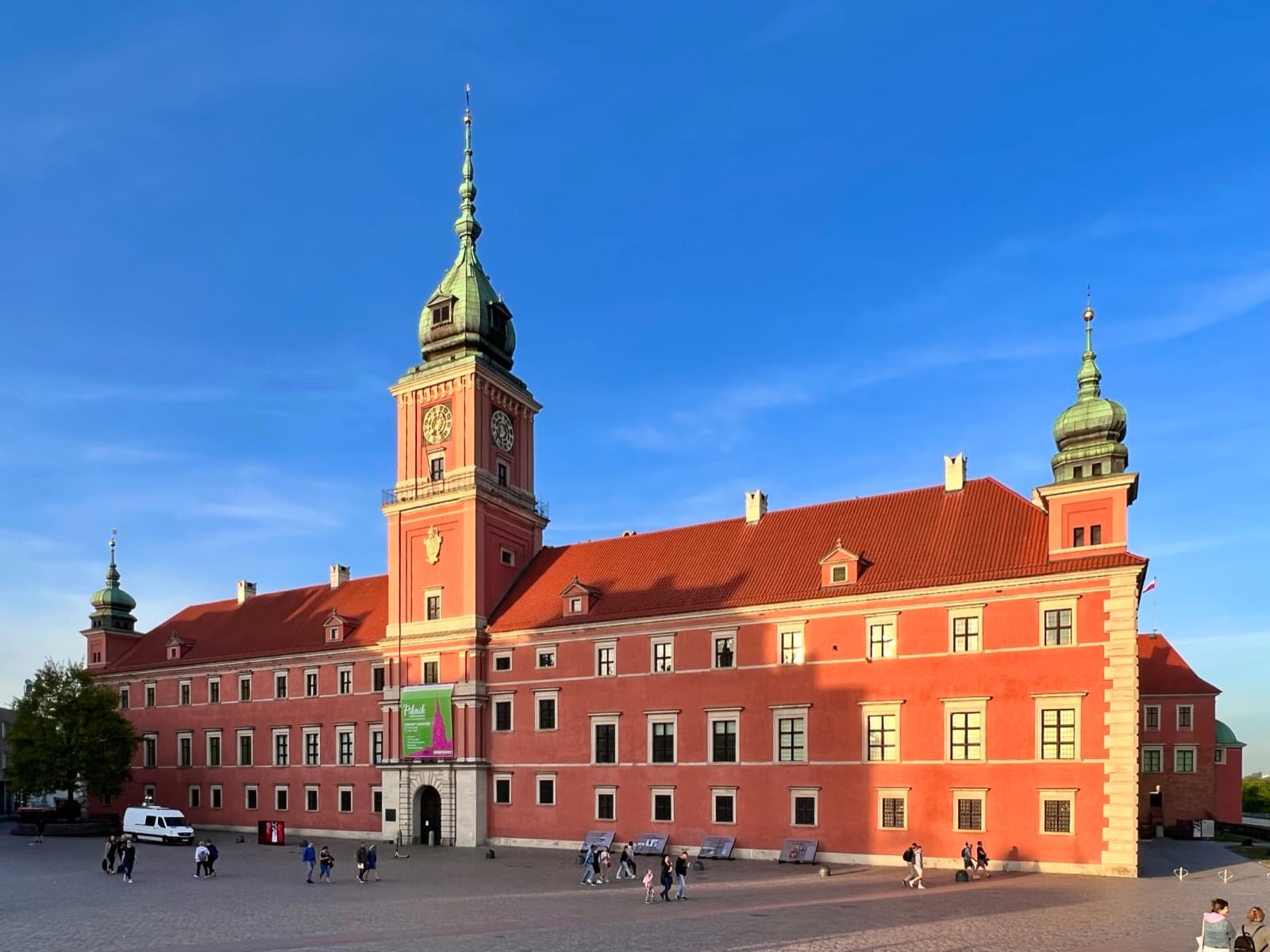
Warsaw Rebuilt: Reading a Reconstructed Capital on Foot
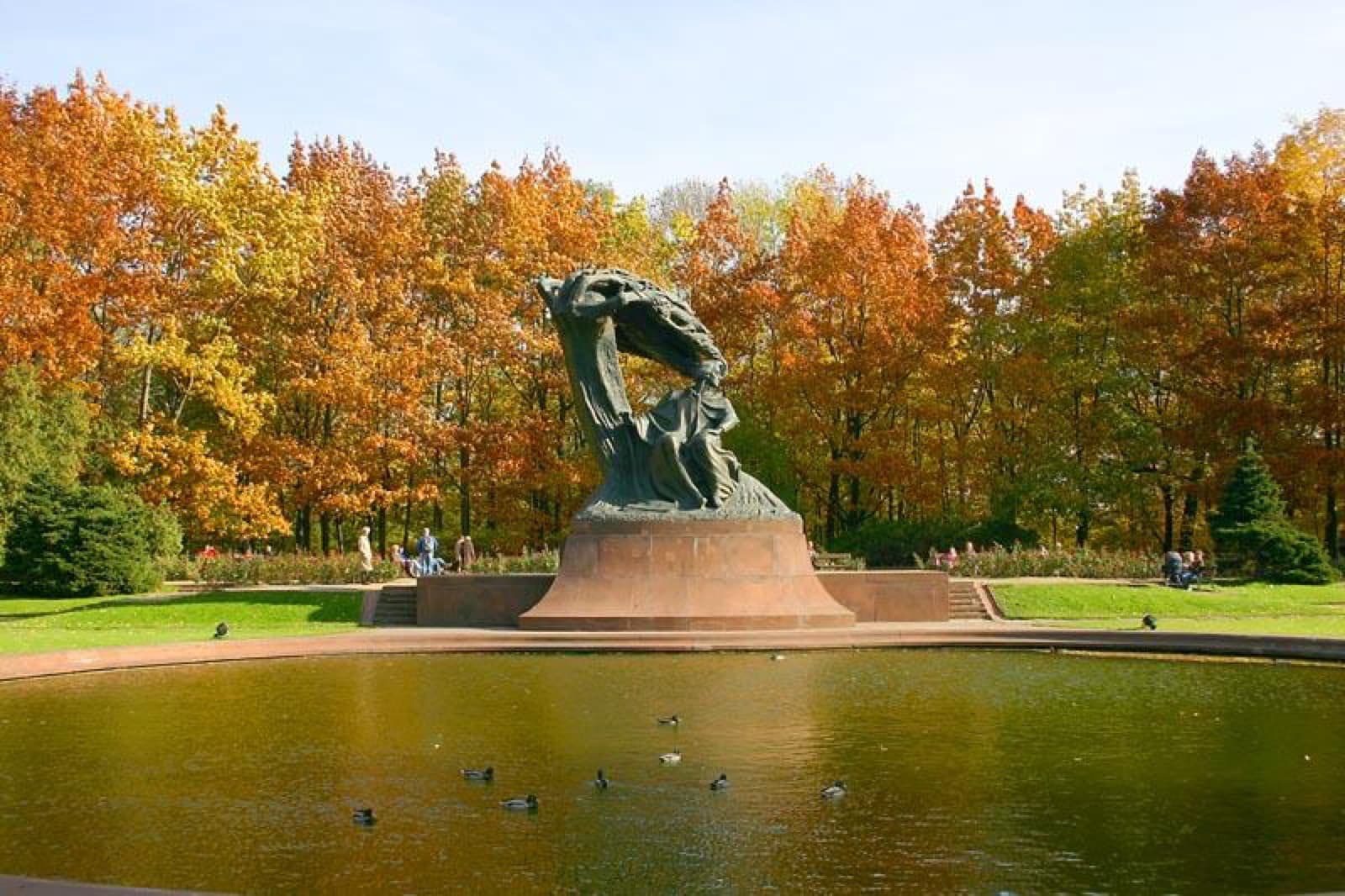
The Chopin Monument in Lazienki Park: Where Warsaw's Royal Route Ends
The Royal Castle That Poland Rebuilt From Rubble
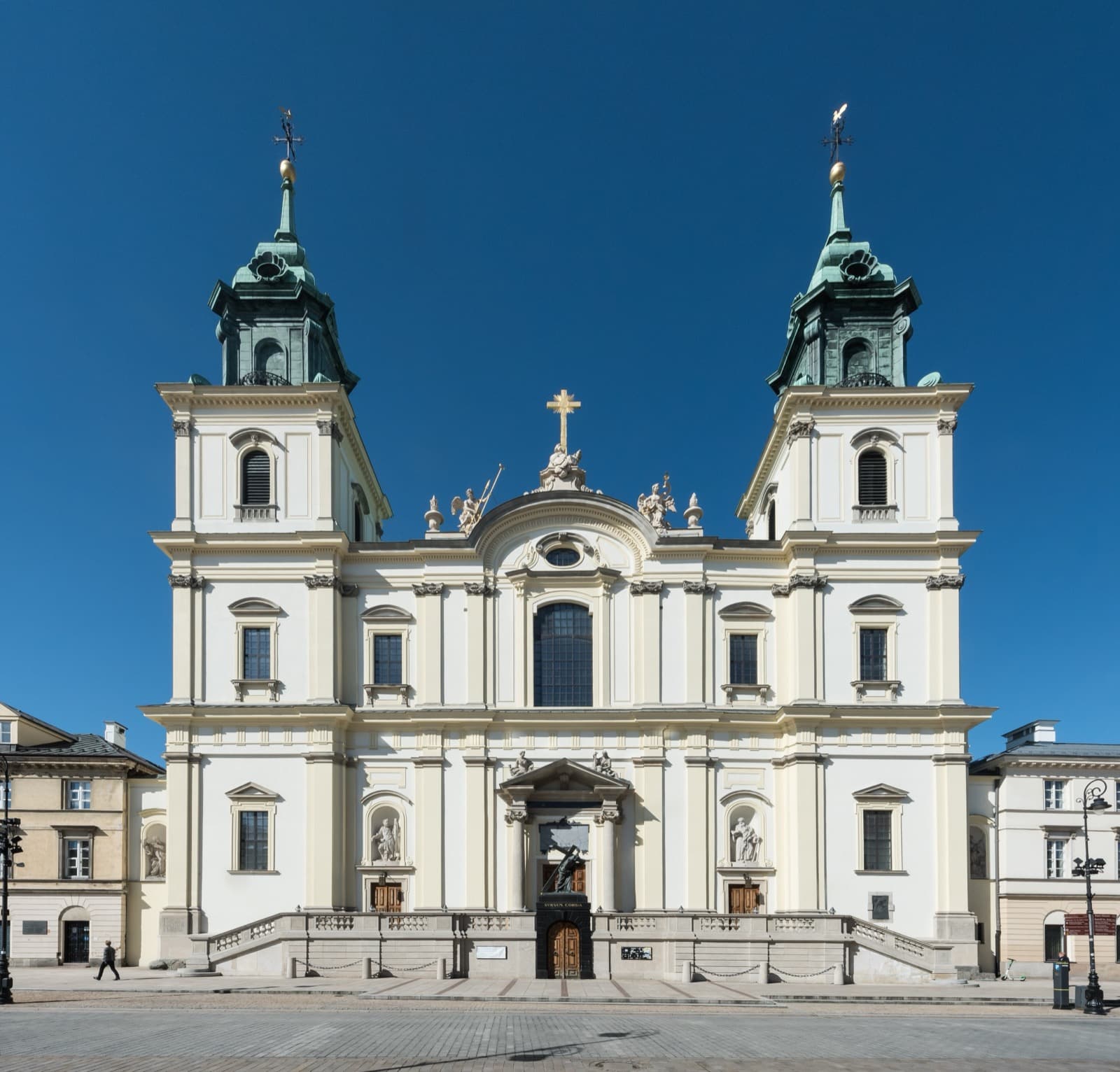
Holy Cross Church and Chopin's Heart on Warsaw's Royal Route