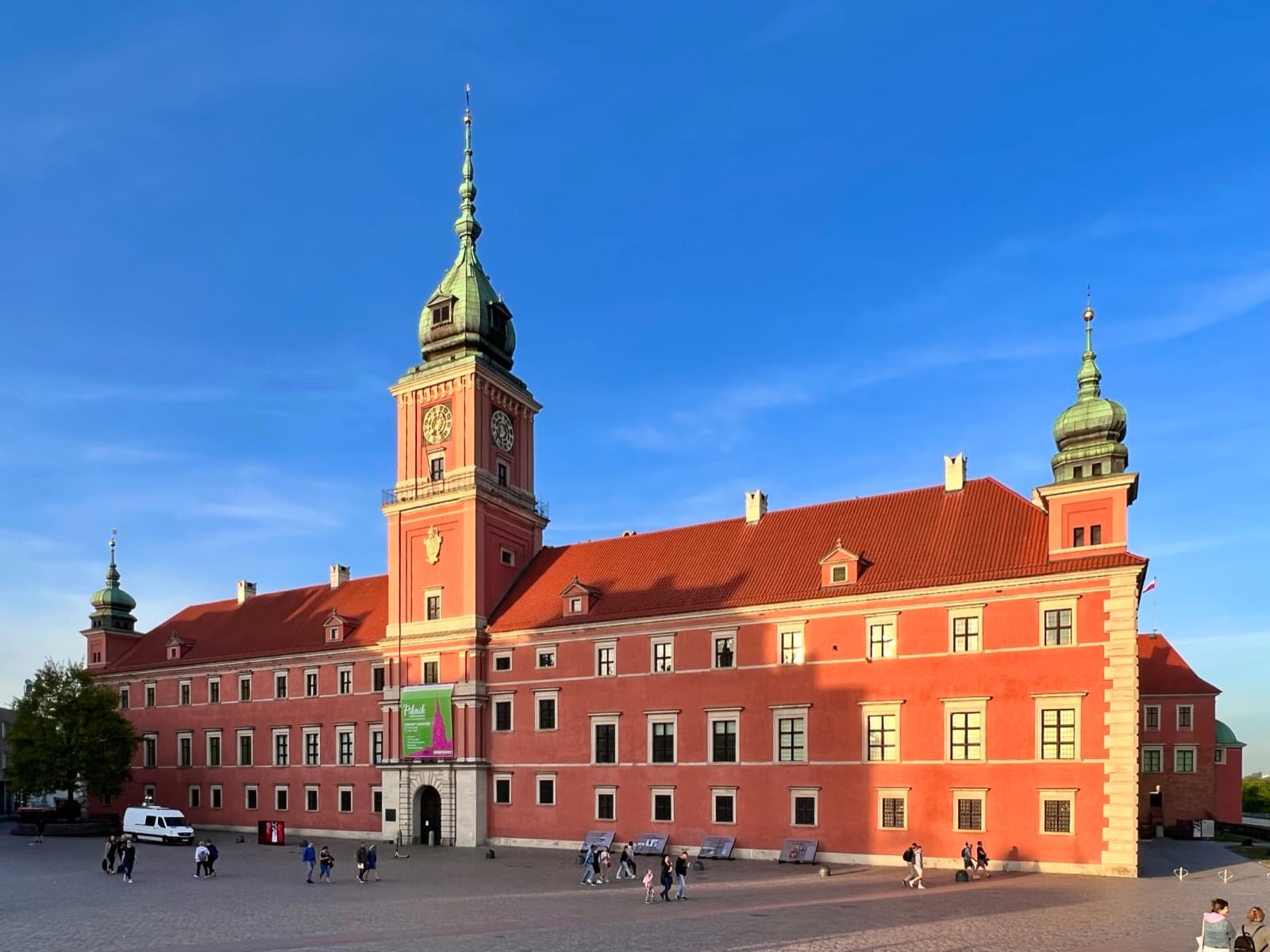
Warsaw's Royal Castle was blown to rubble on Hitler's order and rebuilt largely by public donations, and reading that single act of deliberate reconstruction is the way into a whole Old Town that a nation chose to remake rather than forget. The brick and stone facade that faces Castle Square today looks like an unbroken inheritance of Polish monarchy. It is not. It is a decision, made by ordinary people, to raise a ruin back into a palace. Understand what happened on this one plot of ground and you understand the paradox that governs every street beyond it.
A residence, a parliament, and a demolition
The castle became the crown's chief seat when Sigismund the Third brought the royal household north from Krakow. For centuries it was both the official residence of Poland's monarchs and the home of the Sejm, the parliament. The business of a kingdom ran inside these walls.
Then the war reached it in stages. German shelling struck the castle in September 1939, in the first weeks of the invasion. Soon after, Hitler personally ordered it destroyed, and the order stood on the record as early as October 1939. The full demolition came later, after the failure of the Warsaw Uprising in 1944. German sappers packed the ruin with explosives and detonated it from within. When the smoke cleared, only fragments of two walls remained. A building that had held kings and lawmakers was a heap of stone.
That sequence matters because it was not an accident of battle. The castle was targeted, emptied, and blown apart as a deliberate act. The choice to rebuild it was an answer aimed directly back at that intent.
Rebuilt by a nation's donations
Hear a stop from this walk
The Memory of the Warsaw Uprising: Sixty-Three Days
The castle you see was reconstructed between 1971 and 1984, and here is the fact that anchors the whole walk: it was funded largely by public donations, money given by people across the country to raise their castle again. This was not a state monument decreed from above and paid for out of a ministry budget. It was, in a literal sense, a palace paid back into existence by the public. Stand at the base of the wall and that changes what you are looking at. Every course of brick represents a small collective refusal to accept the demolition as final.
The interior carries its own quiet proof. In the room now called the Canaletto Room hang eighteenth-century views of Warsaw painted by Bernardo Bellotto, the nephew of the painter known as Canaletto. Bellotto worked with an almost photographic precision, and his canvases had been rescued from the war. Decades later, that precision did practical work: the paintings helped guide the rebuilding of streets and squares outside the castle walls. The city was, in part, painted back into being. You do not need to buy a ticket to feel the weight of this. The interior is a ticketed museum, but standing outside, knowing this facade was rubble and is now whole, is the point.
The paradox spreads outward
Once you have read the castle correctly, the rest of the Old Town falls into place, because the same thing happened everywhere around it. This is why the anchor stop opens a full route rather than a single monument.
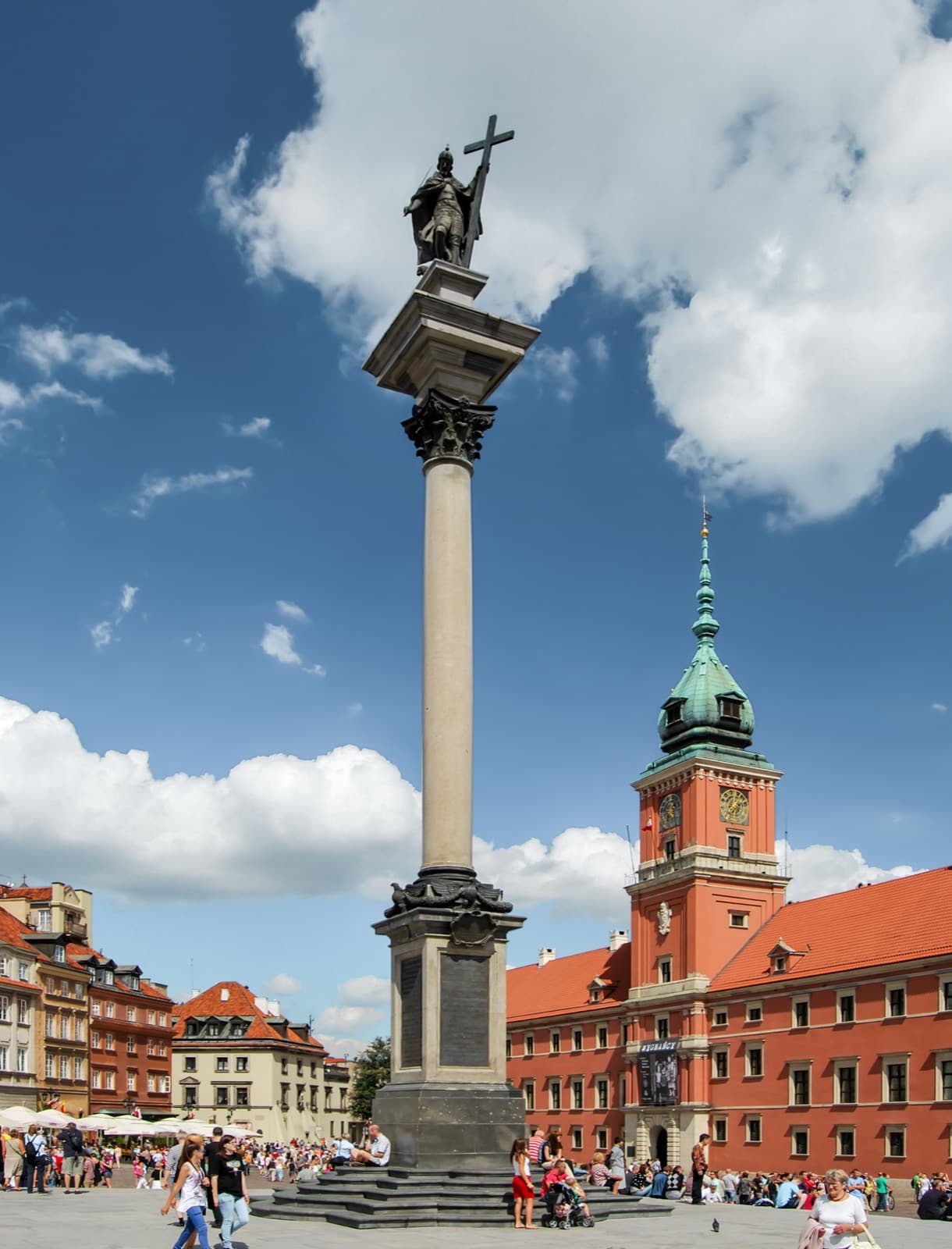
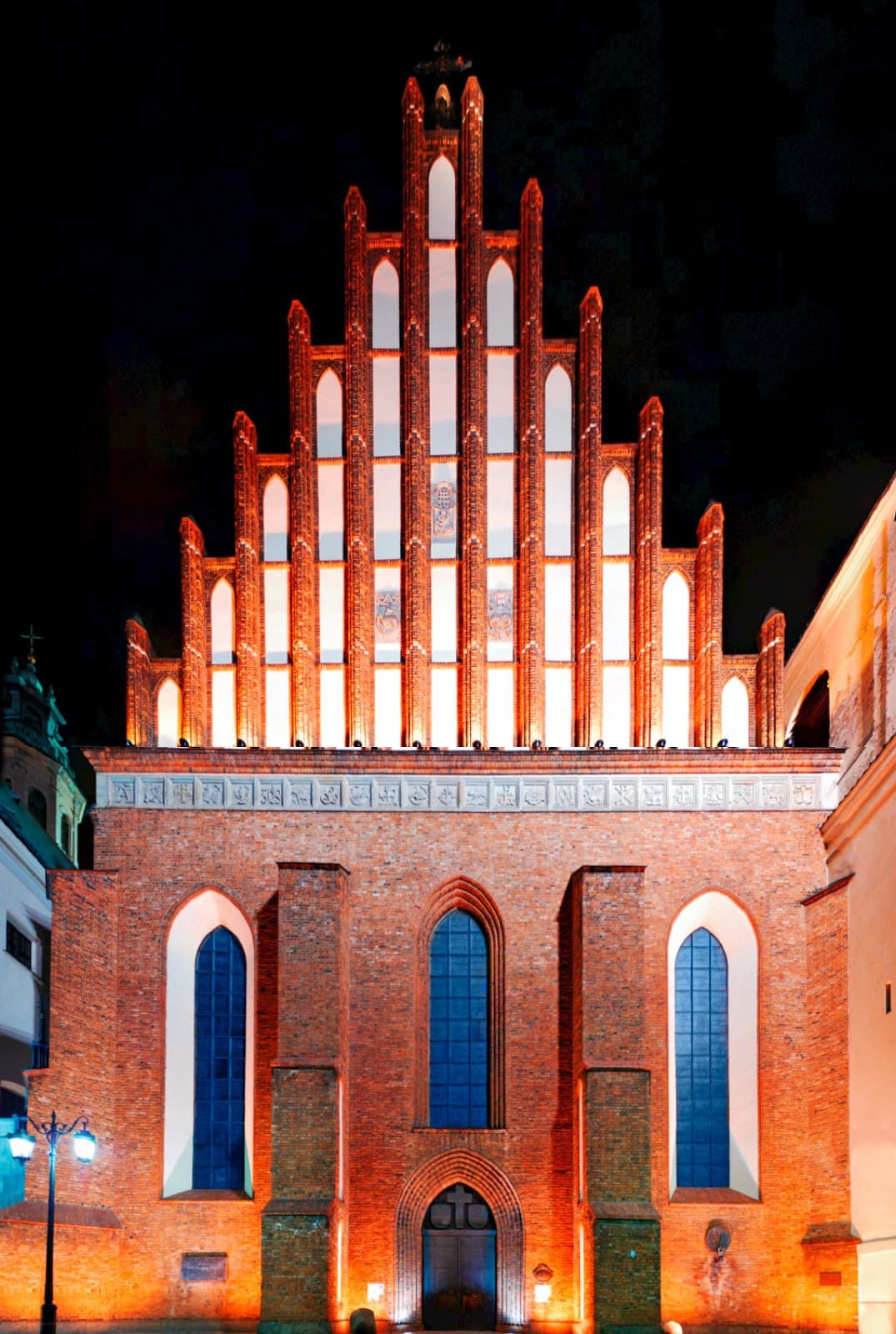
Cross Castle Square and Sigismund's Column tells the same story in miniature. The tall bronze king, raised in 1644 to honour Sigismund the Third, the ruler who moved the capital to Warsaw in 1596, was toppled by the German army in early September 1944. It was set up again in 1949 on a new granite shaft, with the shattered old shafts kept nearby as a plain witness to what happened. Walk on to St John's Archcathedral, the oldest church in Warsaw and the place where the last king, Stanislaw August Poniatowski, was crowned in 1764. About ninety percent of its walls came down in the 1944 fighting, brought low in part by a Goliath, a small tracked demolition mine driven inside and detonated. What stands now is a Gothic form rebuilt after the war, modelled on how the fourteenth-century church is believed to have looked, because so little of the original survived to copy.
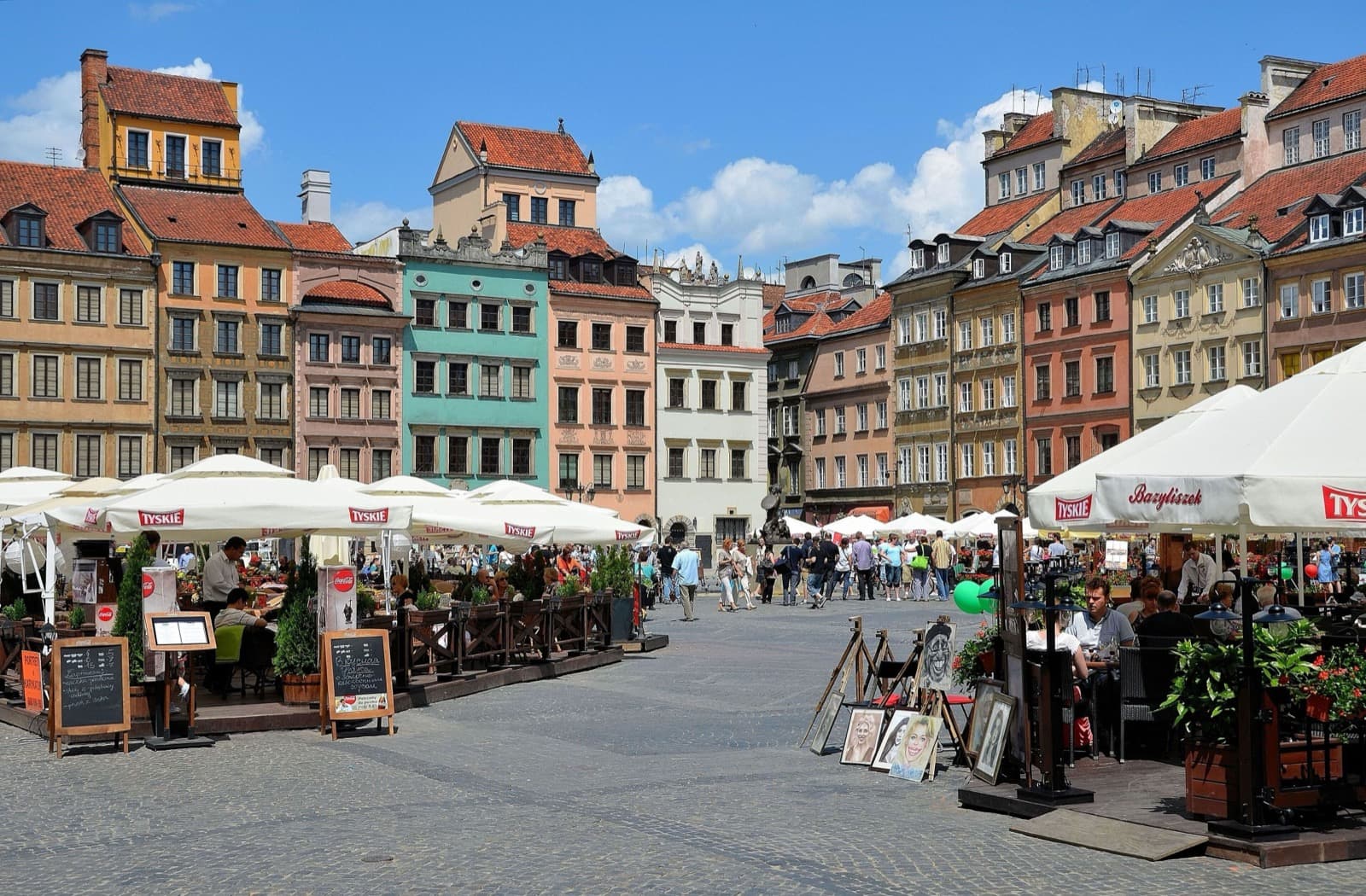
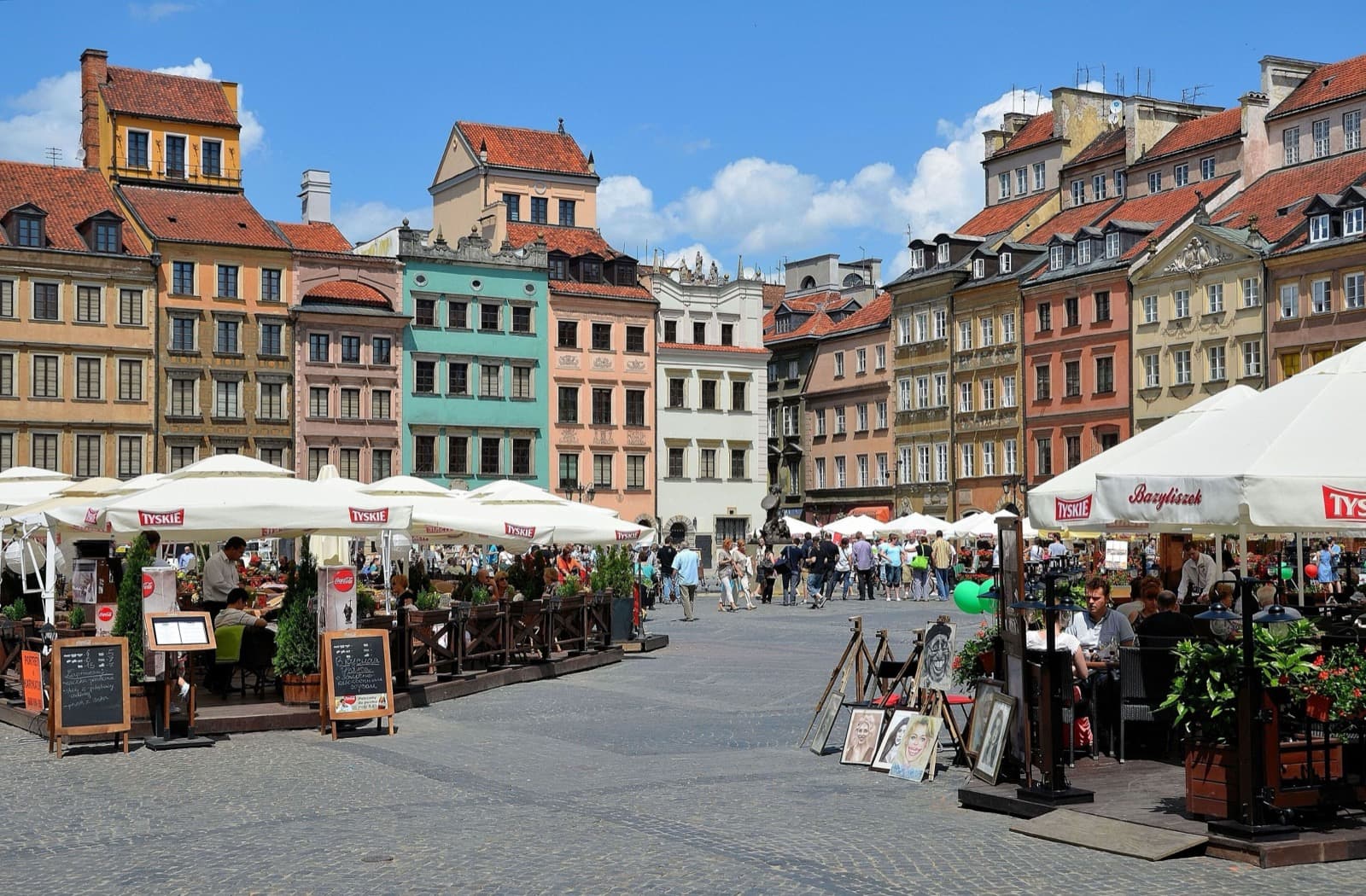
The pattern reaches its climax at the Old Town Market Square. The merchant houses ringing it, brightly painted and seemingly medieval, were rebuilt between 1948 and 1953 to their seventeenth-century appearance after the German army blew them up. At the centre stands the bronze Warsaw Mermaid, sword and shield raised, the city's symbol, a copy of Konstanty Hegel's 1855 original now kept in the Museum of Warsaw. A guardian over a place destroyed, defended, and made again.
Beyond the Barbican, a rounded brick gate built in 1540 and itself reconstructed from salvaged brick in the 1950s, the New Town holds a different kind of survival. At sixteen Freta Street, Marie Sklodowska-Curie was born on the seventh of November 1867, into a Warsaw then under Russian rule, in a Poland that had been partitioned off the map of Europe. She became the only person ever to win Nobel Prizes in two different sciences, Physics in 1903 and Chemistry in 1911. A child born in an occupied, dismembered country changed the whole of physics and chemistry.
Where the walk lands
The route ends at Krasinski Square, before the Warsaw Uprising Monument, and it is there that the castle's story receives its full context. The uprising began on the first of August 1944 and lasted sixty-three days. The United States Holocaust Memorial Museum records that the number of victims exceeded one hundred and eighty thousand people, and that afterward German troops destroyed the majority of the city, the Royal Castle among the buildings they demolished. Around eighty-five percent of Warsaw lay in ruins by the war's end. The monument, unveiled on the first of August 1989, shows insurgents surging from a collapsing building and fighters descending into a sewer manhole, because the resistance really did move through the sewers beneath these streets. (Keep it distinct from the earlier Warsaw Ghetto Uprising of April 1943, a separate act of desperate courage.)
Begin at the castle and you carry its lesson to that final square: everything you walked through was lost in those sixty-three days, and everything was made again. If you want the full sequence in order, the self-guided route runs a little over two kilometres from Castle Square to Krasinski Square, cobbled and gentle, about ninety minutes at your own pace. Browse the other Warsaw walking tours or start from the Warsaw city page, and let the Royal Castle be the door you walk through first.
Sources
- Royal Castle, Warsaw (Wikipedia): destruction on Hitler's order, 1971 to 1984 reconstruction funded by public donations, and the Bellotto paintings in the Canaletto Room.
- Warsaw: a twofold approach (The UNESCO Courier): the reconstruction of the historic centre and its inscription as an example of near-total rebuilding.
- The Warsaw Polish Uprising (USHMM Holocaust Encyclopedia): the 1944 uprising, the victim figure exceeding 180,000, and the destruction of the city including the Royal Castle.
- Marie Curie (Wikipedia): her 1867 birth in Warsaw under Russian rule and her Nobel Prizes in Physics (1903) and Chemistry (1911).
- St. John's Archcathedral, Warsaw (Wikipedia): the 1764 coronation of Stanislaw August Poniatowski and the wartime destruction and Gothic rebuilding.
Ready to experience it?
Old Town: The City Rebuilt From Rubble
90 min · 2.2 km · easy
More from Warsaw
Explore more at your own pace.
One Day in Warsaw: A Walkable Itinerary from the Old Town to Łazienki
Warsaw Travel Guide: Days, Transport, Cost, and Safety
Warsaw Rebuilt: Reading a Reconstructed Capital on Foot
The Chopin Monument in Lazienki Park: Where Warsaw's Royal Route Ends
Holy Cross Church and Chopin's Heart on Warsaw's Royal Route