Old Town: The City Rebuilt From Rubble
90 min · 2.2 km · easy
Warsaw is the site of one of the most complete rebuildings of any city on earth. Germany destroyed roughly eighty-five percent of the Polish capital during the Second World War, and after the Warsaw Uprising of nineteen forty-four German troops razed the historic centre almost deliberately. What stands today is a meticulous post-war reconstruction, guided in places by eighteenth-century paintings, which UNESCO inscribed precisely as an outstanding example of near-total rebuilding. To read Warsaw at your own pace is to walk two lines: the rebuilt Old Town, and the kings' road that runs south from the castle to the last king's garden. Read those two lines and you read a city that chose to raise itself again rather than forget.
A quarter that is both ancient and new
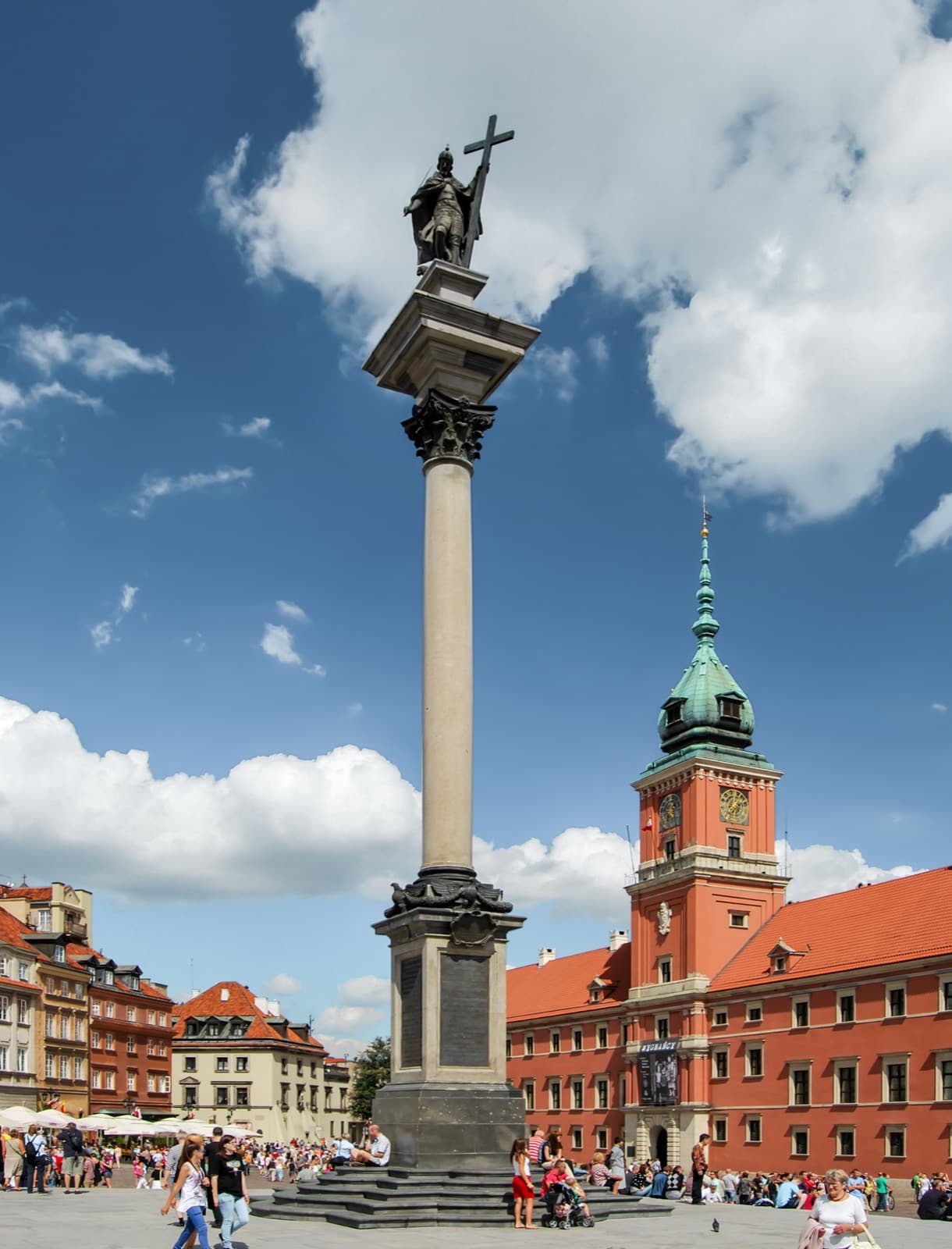
The Old Town: The City Rebuilt From Rubble turns on one strange fact: almost everything you see is both old and new. Start on Castle Square beneath Sigismund's Column. The column was completed in sixteen forty-four, commissioned by King Wladyslaw the Fourth to honour his father, Sigismund the Third of the Vasa dynasty, who in fifteen ninety-six moved the royal residence from Krakow to Warsaw. The German army toppled the column on the first of September nineteen forty-four; it was raised again on new granite in nineteen forty-nine, with the old shattered shafts kept nearby as a plain reminder of what happened.
Behind it stands the Royal Castle, the residence of Poland's monarchs and the seat of the Sejm. Shelled in September nineteen thirty-nine, it was later blown up by German sappers on Hitler's order after the uprising, until only fragments of two walls remained. The castle you see was rebuilt between nineteen seventy-one and nineteen eighty-four, funded largely by public donations gathered from ordinary people across the country. Inside hang the eighteenth-century views of Warsaw painted by Bellotto, nephew of the painter known as Canaletto, whose almost photographic detail later helped guide the rebuilding of the streets and squares outside. The city was, in part, painted back into being.
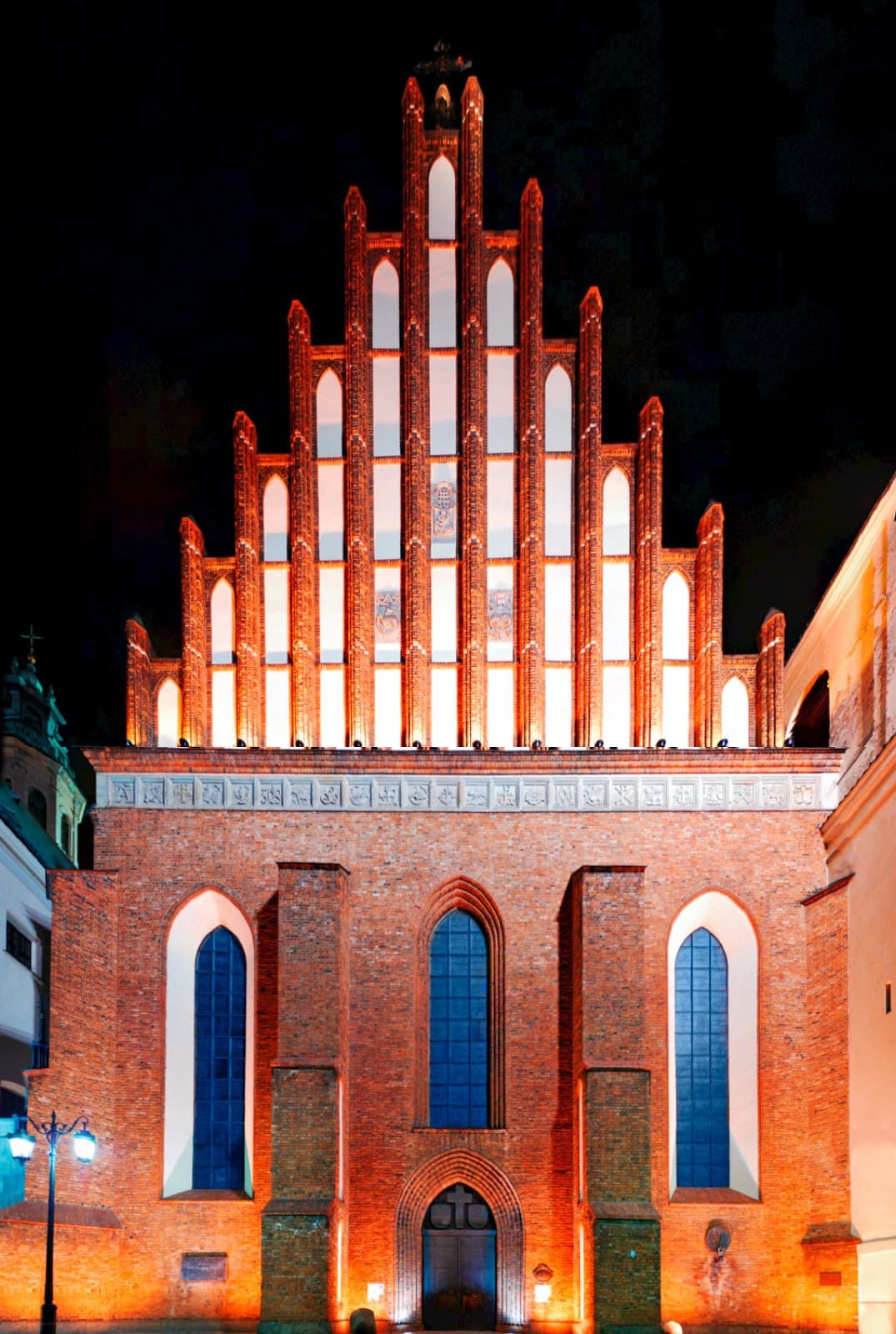
The pattern repeats at St John's Archcathedral, Warsaw's oldest church, first built in the fourteenth century in brick Masovian Gothic. It was the coronation church of the last king, Stanislaw August Poniatowski, crowned here in seventeen sixty-four, and the place where he later repeated his oath to the constitution of the third of May, seventeen ninety-one. In the nineteen forty-four uprising the Germans detonated explosives inside it, including a small tracked Goliath mine, and about ninety percent of the walls came down. It was rebuilt in restored Gothic form. In its crypts rest the last king, the pianist and statesman Ignacy Jan Paderewski, and the novelist Henryk Sienkiewicz.
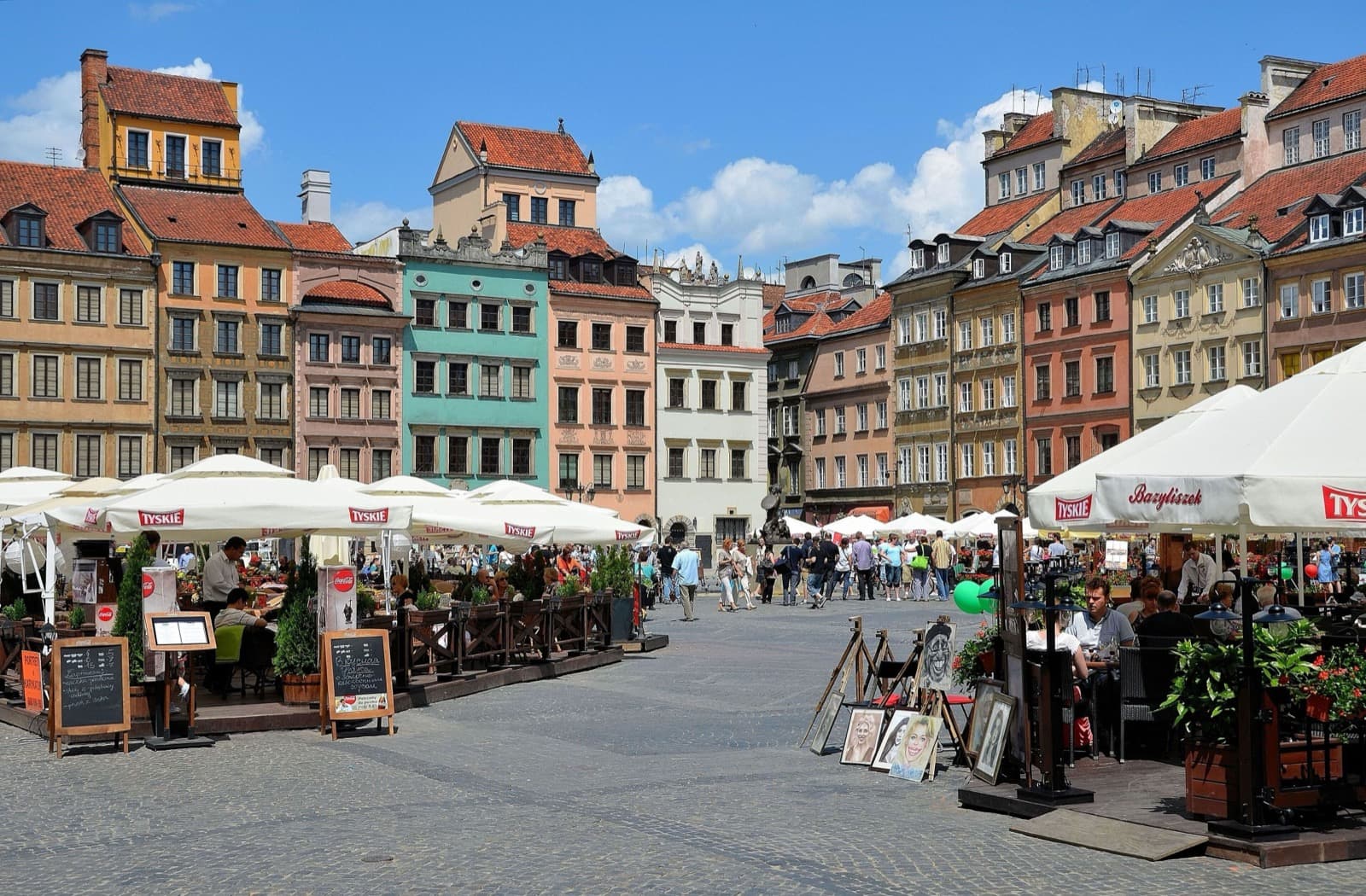
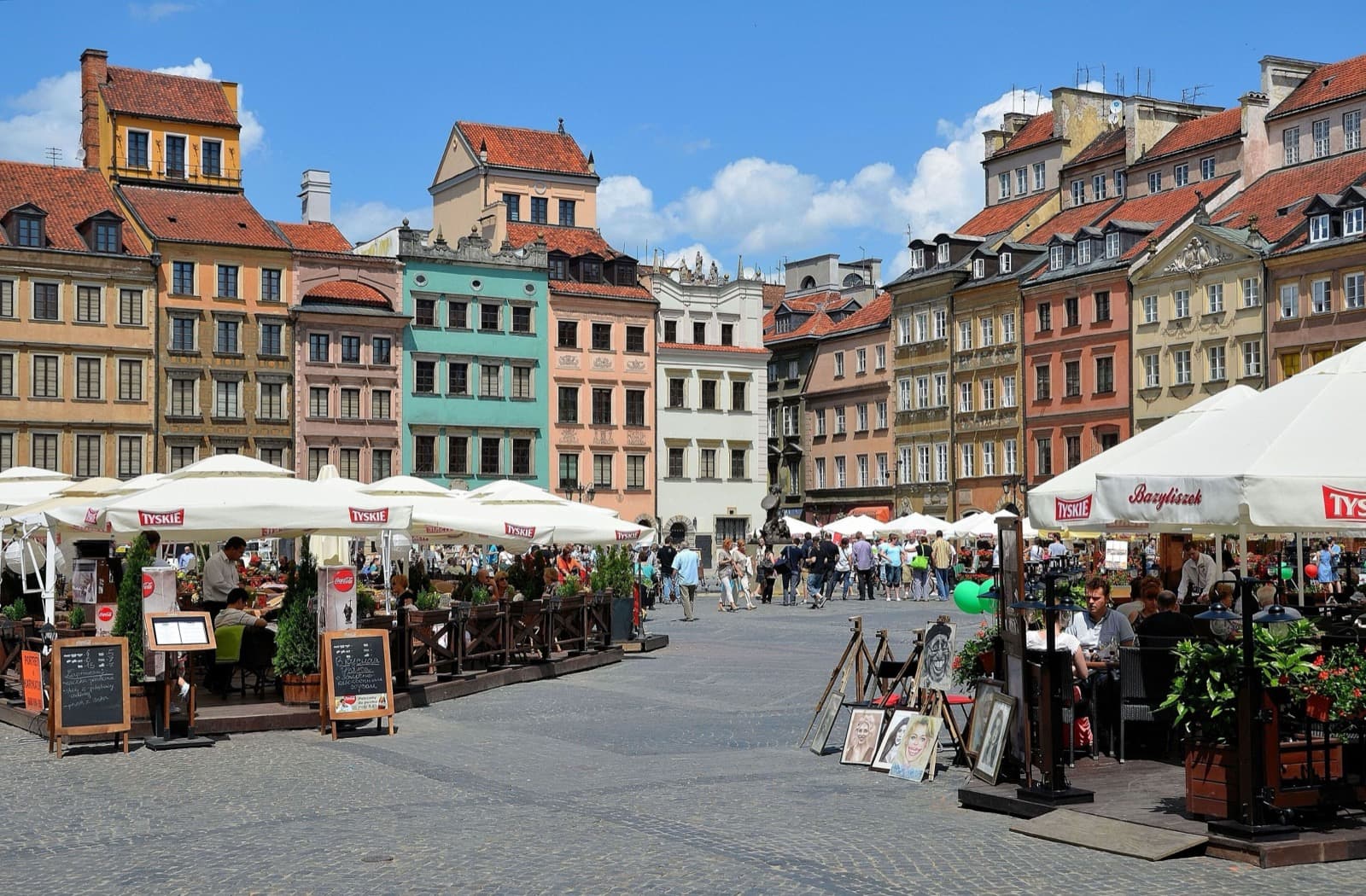
The climax is the Old Town Market Square, dating to the late thirteenth century and measuring about ninety by seventy-three metres. The German army systematically blew up its townhouses after the uprising, and the ring of merchant houses you see was rebuilt between nineteen forty-eight and nineteen fifty-three, restored to its seventeenth-century appearance rather than its nineteen thirty-nine look. At the centre stands the bronze Warsaw Mermaid, the Syrenka, armed with a raised sword and shield, the city's symbol on its coat of arms. The design goes back to eighteen fifty-five, when Konstanty Hegel sculpted the original now kept in the Museum of Warsaw. A guardian who watches over a place that was destroyed, defended, and made again.
Beyond the square, the Warsaw Barbican, a semicircular brick gate built in fifteen forty by the Italian architect known as Jan Baptist the Venetian, was reconstructed between nineteen fifty-two and nineteen fifty-four using bricks salvaged from demolished buildings in other Polish towns. The reconstruction was, quite literally, assembled from the rubble of the wider country. Through the gate lies the New Town, older than it sounds, separated from the Old Town by Duke Janusz the First in fourteen oh eight. At sixteen Freta Street, Marie Sklodowska-Curie was born on the seventh of November, eighteen sixty-seven, in a Poland then partitioned off the map. She became the only person ever to win Nobel Prizes in two different sciences, in Physics in nineteen oh three and Chemistry in nineteen eleven.
The walk ends on Krasinski Square at the Warsaw Uprising Monument, unveiled on the first of August, nineteen eighty-nine, forty-five years to the day after the uprising began. The uprising, led by the Home Army, lasted sixty-three days. Historians estimate that the civilian dead of those weeks ran as high as roughly one hundred and eighty thousand people, and the United States Holocaust Memorial Museum records that German forces razed the centre of the city to the ground afterward. This nineteen forty-four uprising is distinct from the earlier Warsaw Ghetto Uprising of April nineteen forty-three, and each deserves to be named for what it was.
The kings' road, rebuilt street by street
Hear a stop from this walk
The Memory of the Warsaw Uprising: Sixty-Three Days
The Royal Route: From the Castle to the King's Garden follows the ceremonial spine the kings once travelled south, and its lesson is the same one at a larger scale. This convincingly historic boulevard was reduced to rubble in nineteen forty-four and rebuilt street by street in one of the great reconstructions of the twentieth century.
It begins at Krakowskie Przedmiescie, about one kilometre of palaces and churches. Beside Castle Square rises St Anne's Church, founded in fourteen fifty-four by Duchess Anna of Masovia, its neoclassical facade built between seventeen eighty-six and seventeen eighty-eight by the architect Chrystian Piotr Aigner, a name that recurs down the whole route. A short walk south stands the Presidential Palace, rebuilt in neoclassical form by Aigner and completed in eighteen eighteen. This one building carries both weights of the twentieth century: the Warsaw Pact was signed here on the fourteenth of May nineteen fifty-five, and in nineteen eighty-nine the same palace hosted the Round Table talks that helped end communism.
Further south, the University of Warsaw, founded on the nineteenth of November eighteen sixteen, faces Holy Cross Church, baroque, built between sixteen seventy-nine and sixteen ninety-six. Frederic Chopin died in Paris in eighteen forty-nine, and at his own wish an urn holding his heart was immured in a pillar of this church, set in place in eighteen eighty-two. The Germans blew the church up in January nineteen forty-five, and it was rebuilt afterward, but the intention it holds is genuine and old.
Where the boulevard becomes Nowy Swiat stands the Nicolaus Copernicus Monument, by the Danish sculptor Bertel Thorvaldsen, unveiled in eighteen thirty. Nowy Swiat itself was almost completely destroyed in the uprising and rebuilt in a uniform early-nineteenth-century neoclassical style under the architect Zygmunt Stepinski, its facades pared back to a chosen period rather than restored to their pre-war look. Three Crosses Square follows, its domed St Alexander's Church, a rotunda modelled loosely on the Pantheon in Rome and also the work of Aigner, rebuilt between nineteen forty-nine and nineteen fifty-two to its simpler original design.
From here Ujazdow Avenue opens, about one and a half kilometres of nineteenth-century villas and the embassies of many nations, including Switzerland, the United States and the United Kingdom. The road ends in a garden: Lazienki Park, seventy-six hectares and Warsaw's largest, the creation of Stanislaw August Poniatowski, the last reigning king, who acquired the estate in seventeen sixty-four. At its edge stands the Art Nouveau Chopin Monument by Waclaw Szymanowski, unveiled on the fourteenth of November nineteen twenty-six. It was the first Warsaw monument the Germans destroyed, on the thirty-first of May nineteen forty, and it was recast in nineteen fifty-eight. Since nineteen fifty-nine, free Chopin piano recitals have played at its base on summer Sunday afternoons.
Why walk it yourself
Both routes are heavily group-toured, yet neither needs a group or a schedule. The story they tell rewards standing still: at the broken shafts kept beside Sigismund's Column, at the pillar holding Chopin's heart, at the uprising monument on Krasinski Square. Reading the two lines slowly, and looking for the seams where new brick meets salvaged old stone, turns an ordinary stroll into a reading of the city's survival. For the full set of self-guided routes, see the Warsaw walking tours hub.
Sources
- UNESCO World Heritage Centre, Historic Centre of Warsaw inscription (near-total reconstruction).
- The Royal Castle in Warsaw, official history of the wartime destruction and reconstruction.
- Museum of Warsaw, Old Town Market Square and the Warsaw Mermaid (Syrenka).
- Nobel Prize organisation, Marie Curie biography (Physics 1903, Chemistry 1911).
- United States Holocaust Memorial Museum, the Warsaw Uprising of 1944.
Frequently asked questions
- How much of Warsaw was destroyed in the Second World War?
- By the war's end around eighty-five percent of Warsaw lay in ruins. Germany destroyed the majority of the city, and after the Warsaw Uprising of nineteen forty-four German troops razed the historic centre almost deliberately. What stands today is a large-scale post-war reconstruction.
- Why is Warsaw's Old Town a UNESCO World Heritage Site?
- UNESCO inscribed the Historic Centre of Warsaw precisely as an outstanding example of near-total reconstruction. The Old Town was rebuilt after the war, in places guided by eighteenth-century paintings by Bellotto, nephew of the painter known as Canaletto, whose detailed views helped restore the streets and squares.
- Where is Chopin's heart in Warsaw?
- An urn holding Frederic Chopin's heart is immured in a pillar of Holy Cross Church on Krakowskie Przedmiescie, along the Royal Route. Chopin died in Paris in eighteen forty-nine, and at his own wish his heart returned to Warsaw; the urn was set into the pillar in eighteen eighty-two.
- What is the Royal Route in Warsaw?
- The Royal Route is the ceremonial road the kings once travelled south from the Royal Castle toward their summer palaces. It runs from Krakowskie Przedmiescie past the Presidential Palace, the University of Warsaw and Holy Cross Church, down Nowy Swiat and Ujazdow Avenue, and ends at Lazienki Park, the water garden of Poland's last king.
- Was the Royal Castle in Warsaw really rebuilt from rubble?
- Yes. German sappers blew up the Royal Castle on Hitler's order after the nineteen forty-four uprising, leaving only fragments of two walls. It was reconstructed between nineteen seventy-one and nineteen eighty-four, funded largely by public donations gathered from people across Poland.
Ready to experience it?
Old Town: The City Rebuilt From Rubble
90 min · 2.2 km · easy
More from Warsaw
Explore more at your own pace.
One Day in Warsaw: A Walkable Itinerary from the Old Town to Łazienki
Warsaw Travel Guide: Days, Transport, Cost, and Safety
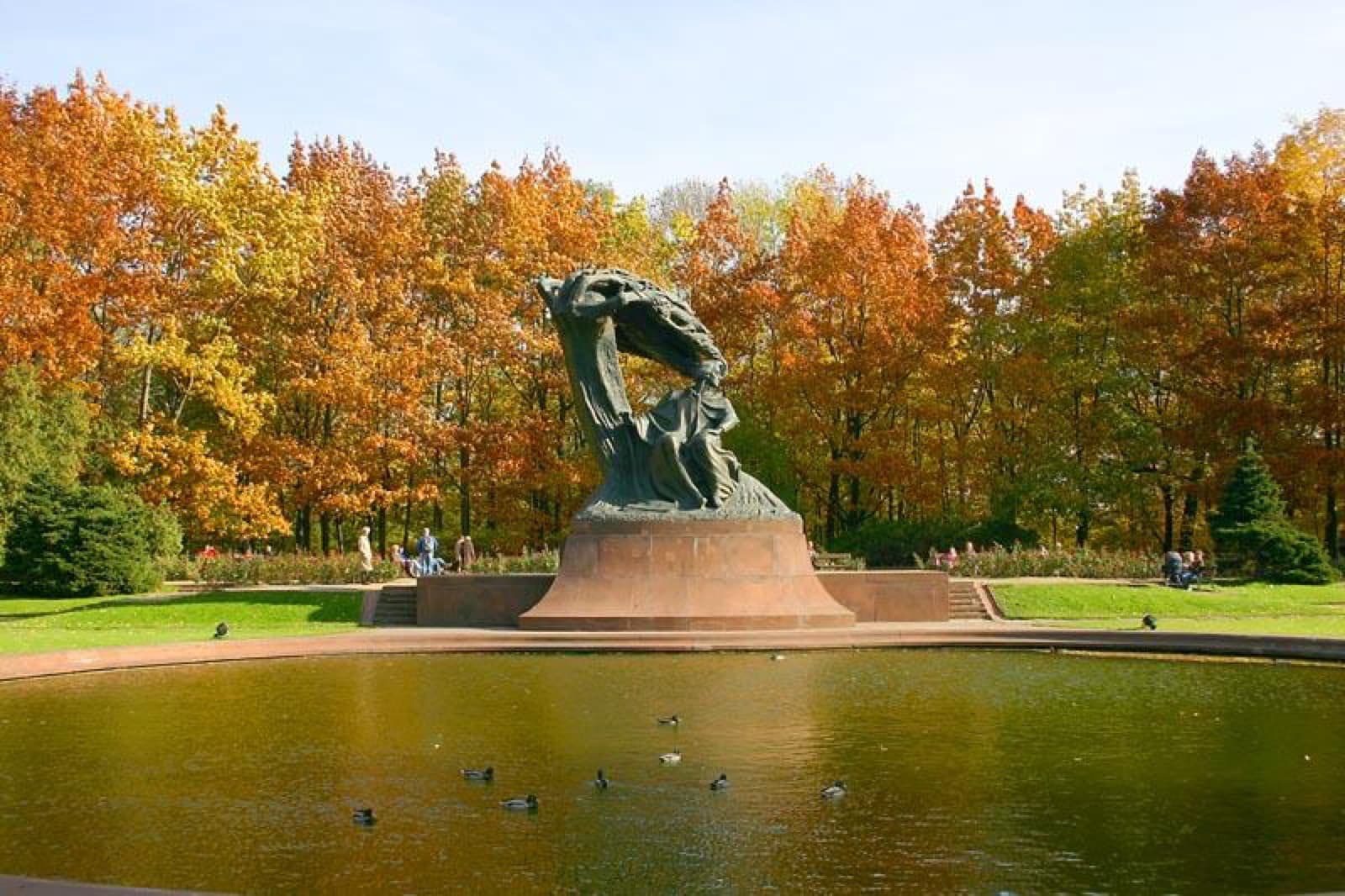
The Chopin Monument in Lazienki Park: Where Warsaw's Royal Route Ends
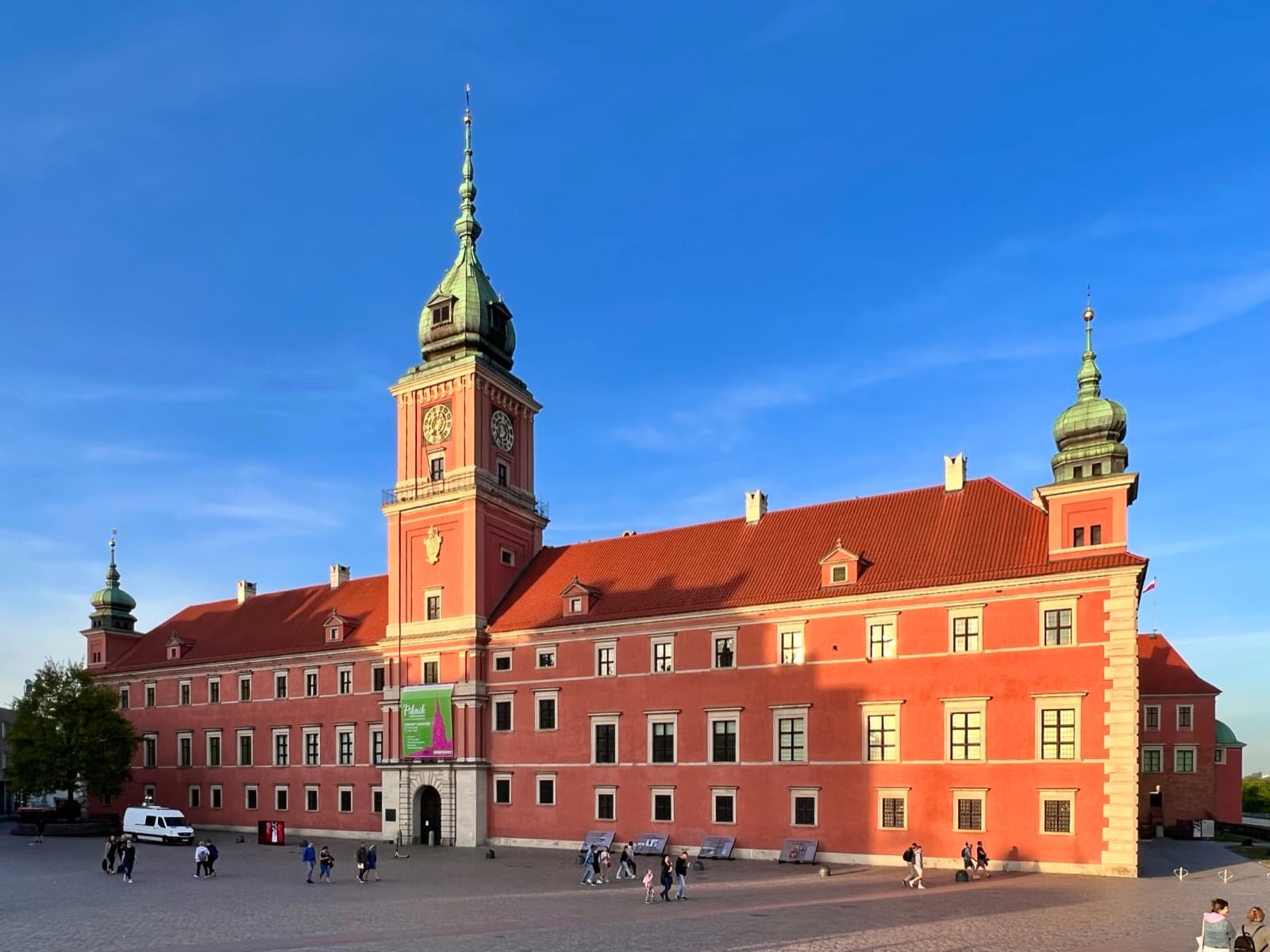
The Royal Castle That Poland Rebuilt From Rubble
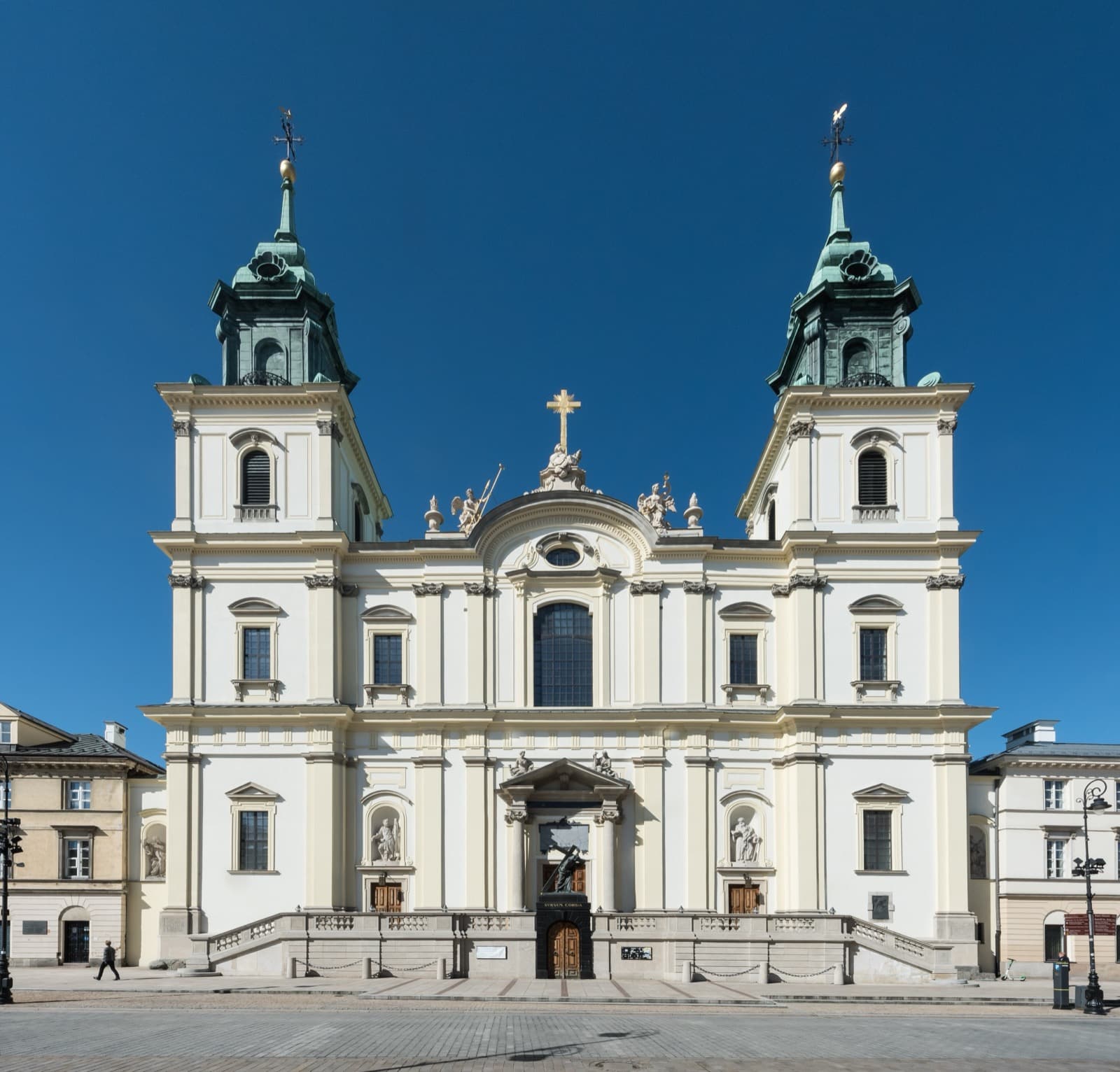
Holy Cross Church and Chopin's Heart on Warsaw's Royal Route