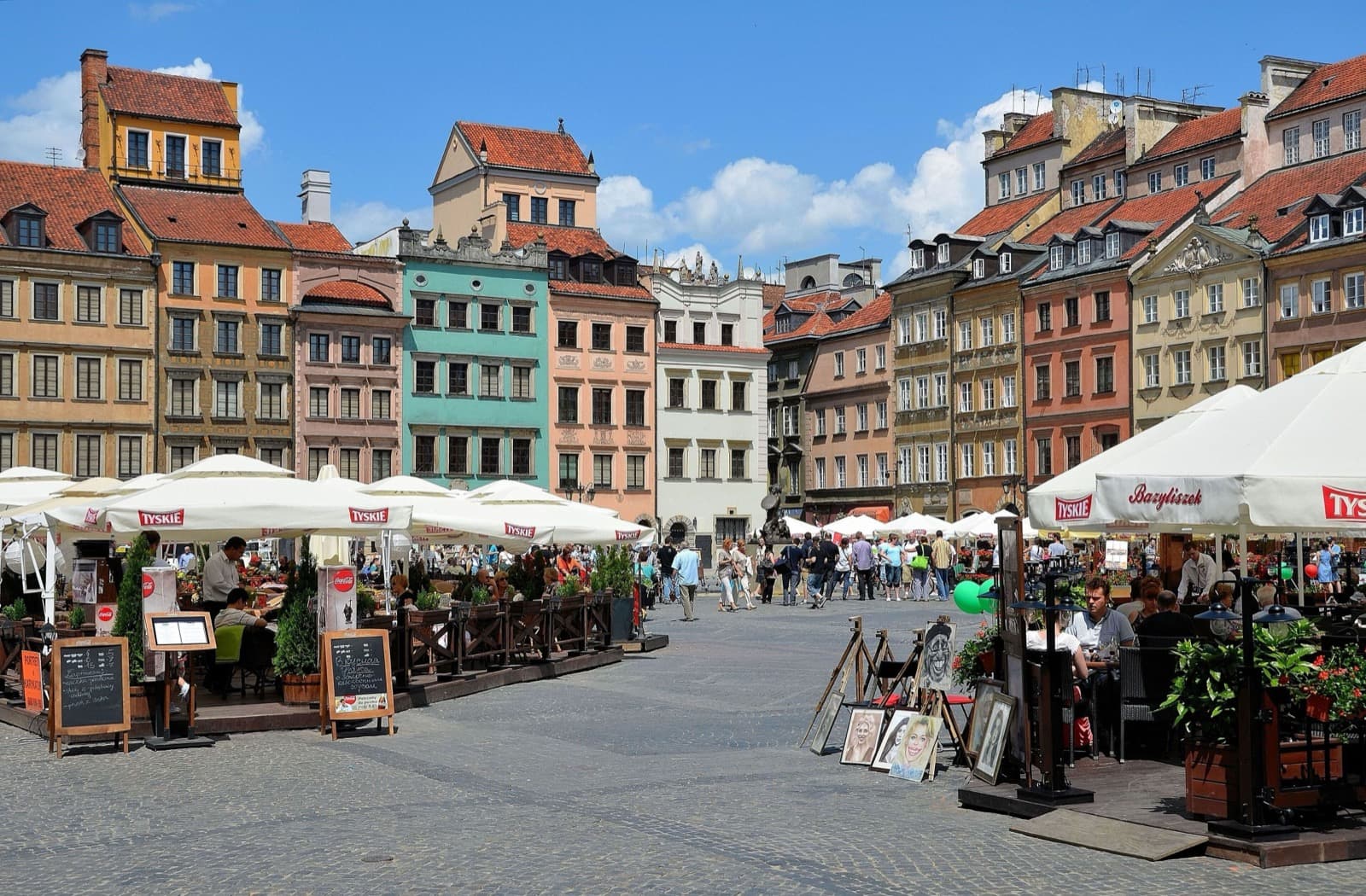
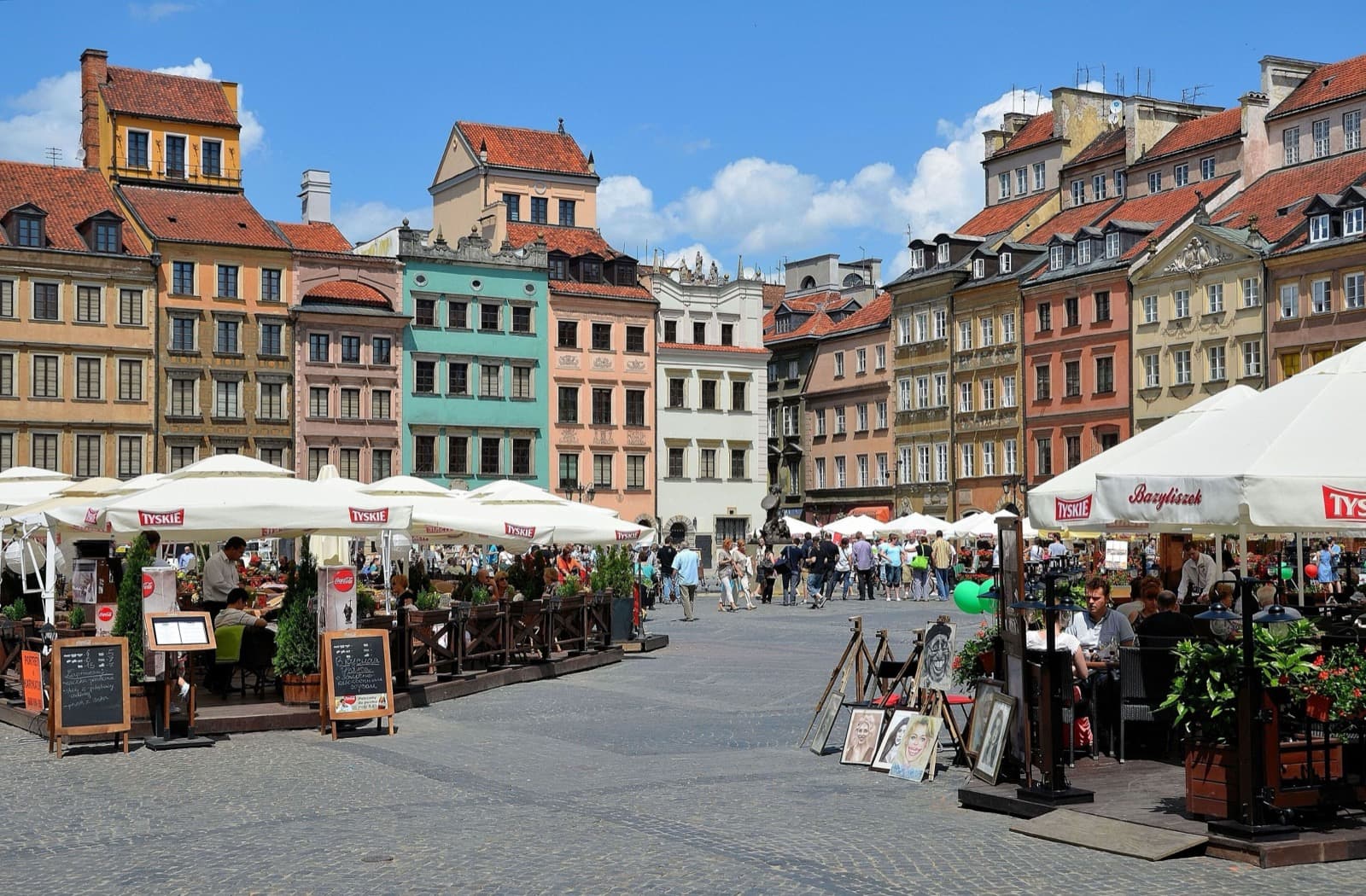
Almost none of the walls around the Old Town Market Square are old. The colourful merchant houses that ring this square on four sides, the picture of a preserved medieval Warsaw, were blown up by the German army after the 1944 Warsaw Uprising and rebuilt between 1948 and 1953. What you stand inside is a medieval square whose fabric is barely seventy years old, restored not to how it looked in 1939 but to its seventeenth-century appearance. This is the sharpest expression of Warsaw's central paradox: a quarter that a nation chose to reconstruct by hand rather than let the war have the last word. Standing under the bronze Mermaid at the centre, sword raised, you are looking at the one thing a visitor should understand here, that authenticity in Warsaw is a decision, not an accident of survival.
A square older than it can prove
The Old Town Market Square dates to the late thirteenth century. Its proportions, roughly ninety by seventy-three metres, framed the commercial and civic life of the town for centuries: the market, the guild business, the arrivals and departures of a walled trading centre on the Masovian plain. For a long stretch of its life this was simply the middle of Warsaw, the place everything else oriented around.
Each of the four sides carries the name of an eighteenth-century figure, a habit that tells you how layered the square's memory is even before the war enters the story. On the Dekert side stands the Museum of Warsaw, which occupies a run of the townhouses and keeps the city's record, including the object at the square's centre. The houses are tall, narrow, and brightly painted, the classic burgher pattern of a European market square. Walk the perimeter slowly and the effect is seamless. It is meant to be. The seamlessness is the achievement, and also the problem, because it hides how much of this was reassembled from nothing.
What the reconstruction actually reached for
Hear a stop from this walk
The Memory of the Warsaw Uprising: Sixty-Three Days
The detail that repays attention is the date of the model. When the townhouses were rebuilt in the early 1950s, the planners did not aim for the square as it appeared on the eve of the Second World War. They reached further back, restoring the buildings to their seventeenth-century appearance, past several later remodellings that had accumulated over three hundred years. That is a deliberate editorial choice about which Warsaw to bring back, and it separates this square from ordinary restoration.
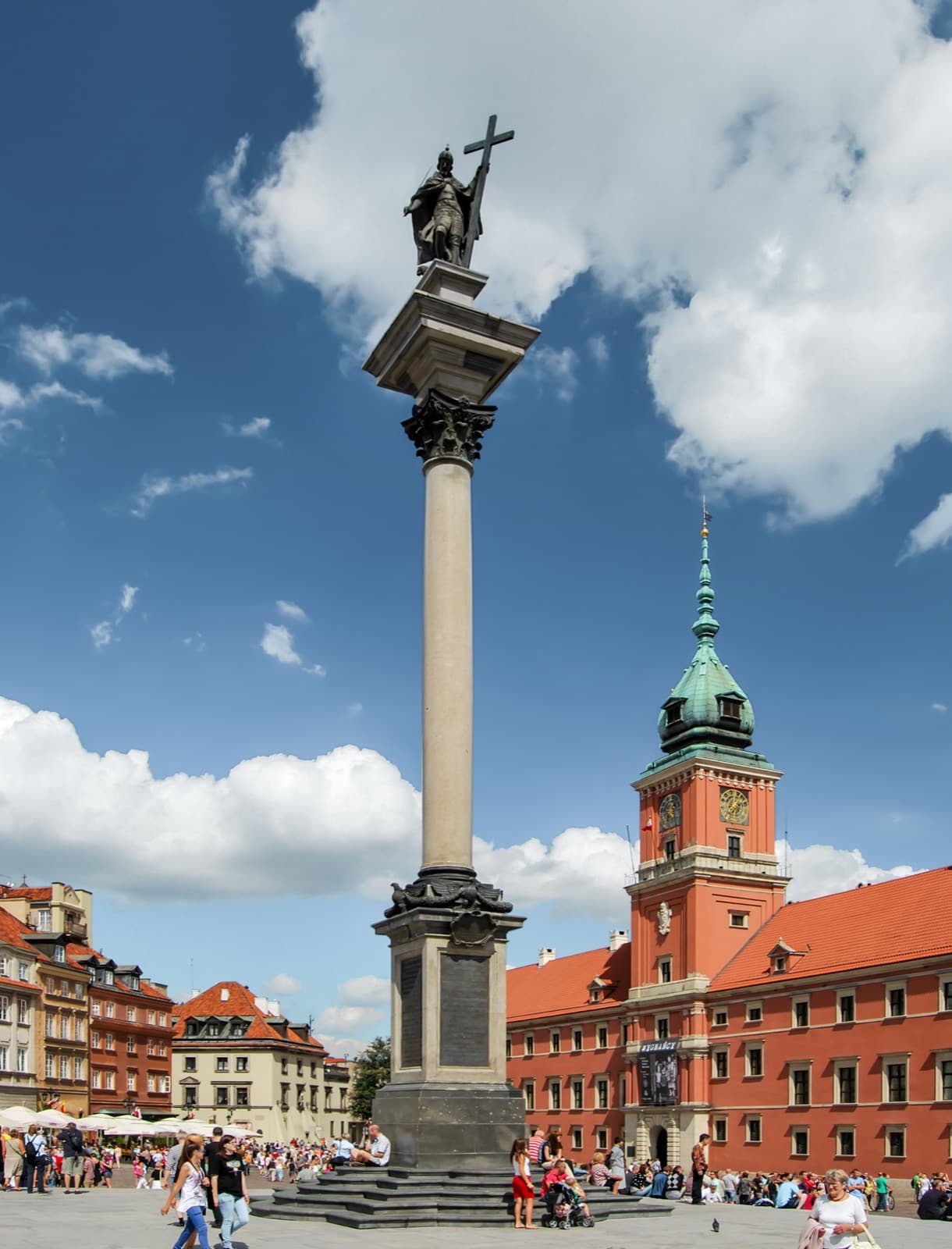
Elsewhere on the walk the same instinct shows itself. The Royal Castle, a short distance downhill, was blown up on Hitler's order after the uprising and rebuilt between 1971 and 1984, funded largely by public donations from across the country. Inside it hang the eighteenth-century views of Warsaw painted by Bellotto, the nephew of the painter known as Canaletto, whose almost photographic detail later helped guide the rebuilding of the streets outside. The city was, in part, painted back into being from surviving canvases. The Market Square belongs to the same programme of recovery, and to understand it is to understand why UNESCO inscribed the whole quarter as an outstanding example of near-total reconstruction rather than as a surviving medieval town.
The Mermaid at the centre
Turn to the middle of the square and there is the Warsaw Mermaid, the Syrenka, cast in bronze and armed with a raised sword and a shield. She is not a decoration. She is a guardian, and she is the symbol of the city, carried on its coat of arms. The design goes back to 1855, when Konstanty Hegel sculpted the original that is now kept in the Museum of Warsaw. The figure standing in the square today is a faithful copy of that work, which fits the logic of the place exactly: an original preserved indoors, a truthful copy set out in the open, the whole square built on the same principle.
The legend behind her is worth carrying as you stand there. As the story goes, a mermaid once swam up the Vistula, the river that threads through Warsaw, and was captured. Fishermen, charmed by her song, set her free, and ever since she has guarded the city with sword and shield ready. It is a story, not a record. But it belongs here more than almost any real fact could, because the square she watches over was destroyed, defended, and made again, and a guardian with a drawn sword is the correct emblem for a place that refused to stay in ruins.
Standing in the square
The one thing to hold, standing on the cobbles with the painted facades on every side, is that beauty and loss are not opposites here. This square is beautiful because of what was done to it and then for it. The German army systematically demolished these houses after the 1944 uprising, and Polish builders spent five years, from 1948 to 1953, putting a seventeenth-century square back together stone by stone. That sequence, destruction followed by patient, communal rebuilding, is the argument the whole quarter makes. The Market Square is where the argument is loudest, because nowhere else does the reconstruction look so completely, so convincingly whole.
For the calmest reading of it, come early. In the first hours of the morning the square is nearly empty, and you can stand under the Mermaid with the painted houses to yourself before the day's crowds arrive. Late spring through early autumn gives the longest light on the rebuilt brick, though it also brings the largest crowds. Winter is cold but atmospheric, and the reconstruction reads powerfully under grey skies, when the seams between what was salvaged and what was made new feel closest to the surface.
The square is one stop on a route that carries this idea from Castle Square through the coronation cathedral, out past the Barbican to the New Town where Marie Curie was born, and finally to the memory of the uprising that cost the city its old life. Walking it in order lets the paradox build rather than arrive all at once. You can read the full introduction and the other stops in our guide to Warsaw walking tours, and plan the wider visit from the Warsaw city page. The self-guided walk means you set the pace: linger under the Mermaid as long as the square holds you, then move on when you are ready.
Sources
- Muzeum Warszawy (Museum of Warsaw), official pages on the Old Town and New Town: institutional source for the square and for the original Hegel Mermaid held in its collection.
- Mermaid Monument (Old Town, Warsaw), Wikipedia: sculpture history, the 1855 Konstanty Hegel original, and the copy standing in the square.
- Royal Castle, Warsaw, Wikipedia: wartime destruction and the 1971 to 1984 reconstruction funded by public donations, plus the Bellotto views used in rebuilding.
- The UNESCO Courier, "Warsaw: a twofold approach": the UNESCO framing of the Old Town as an outstanding example of near-total post-war reconstruction.
Ready to experience it?
Old Town: The City Rebuilt From Rubble
90 min · 2.2 km · easy
More from Warsaw
Explore more at your own pace.
One Day in Warsaw: A Walkable Itinerary from the Old Town to Łazienki
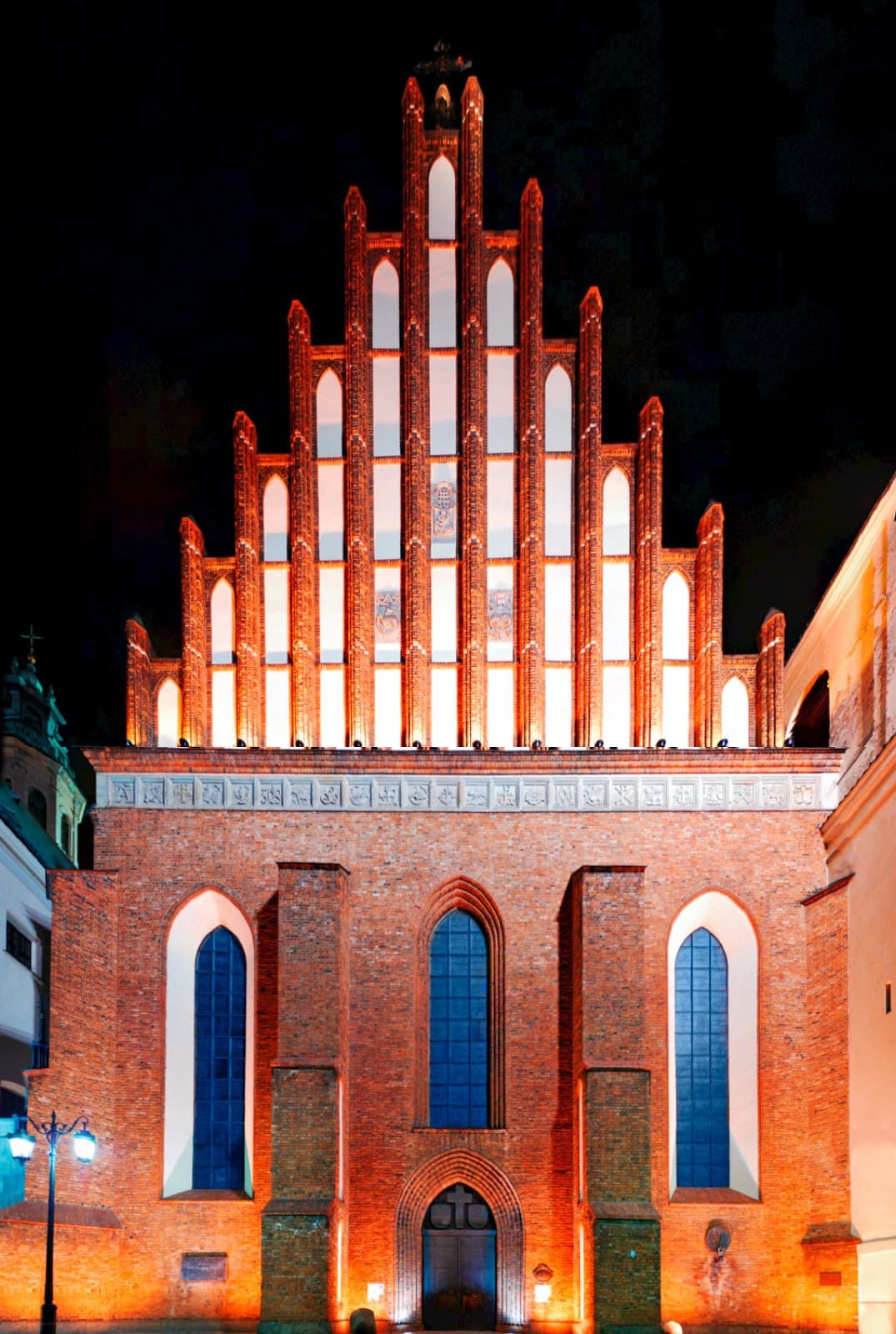
Warsaw Travel Guide: Days, Transport, Cost, and Safety
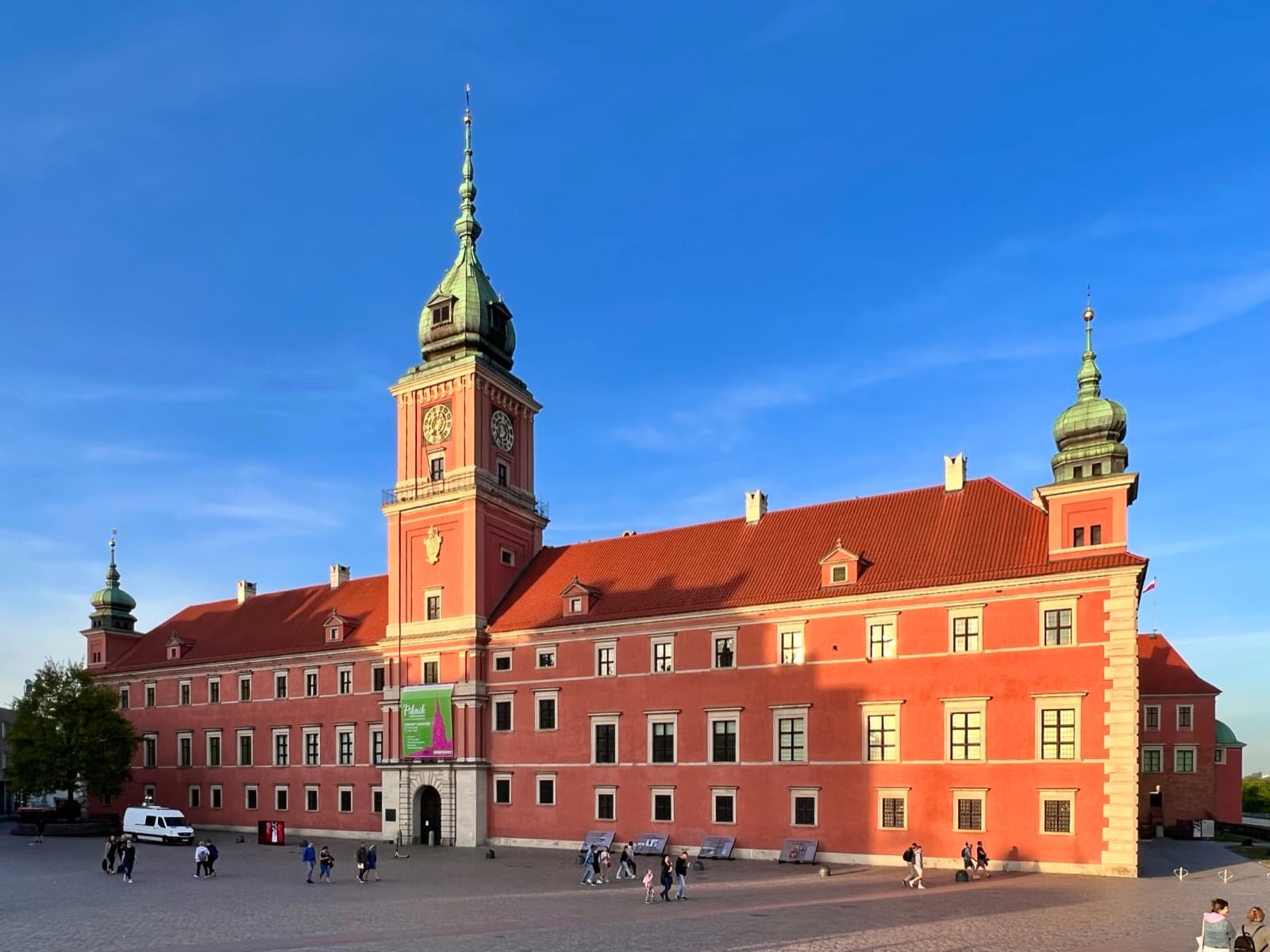
Warsaw Rebuilt: Reading a Reconstructed Capital on Foot
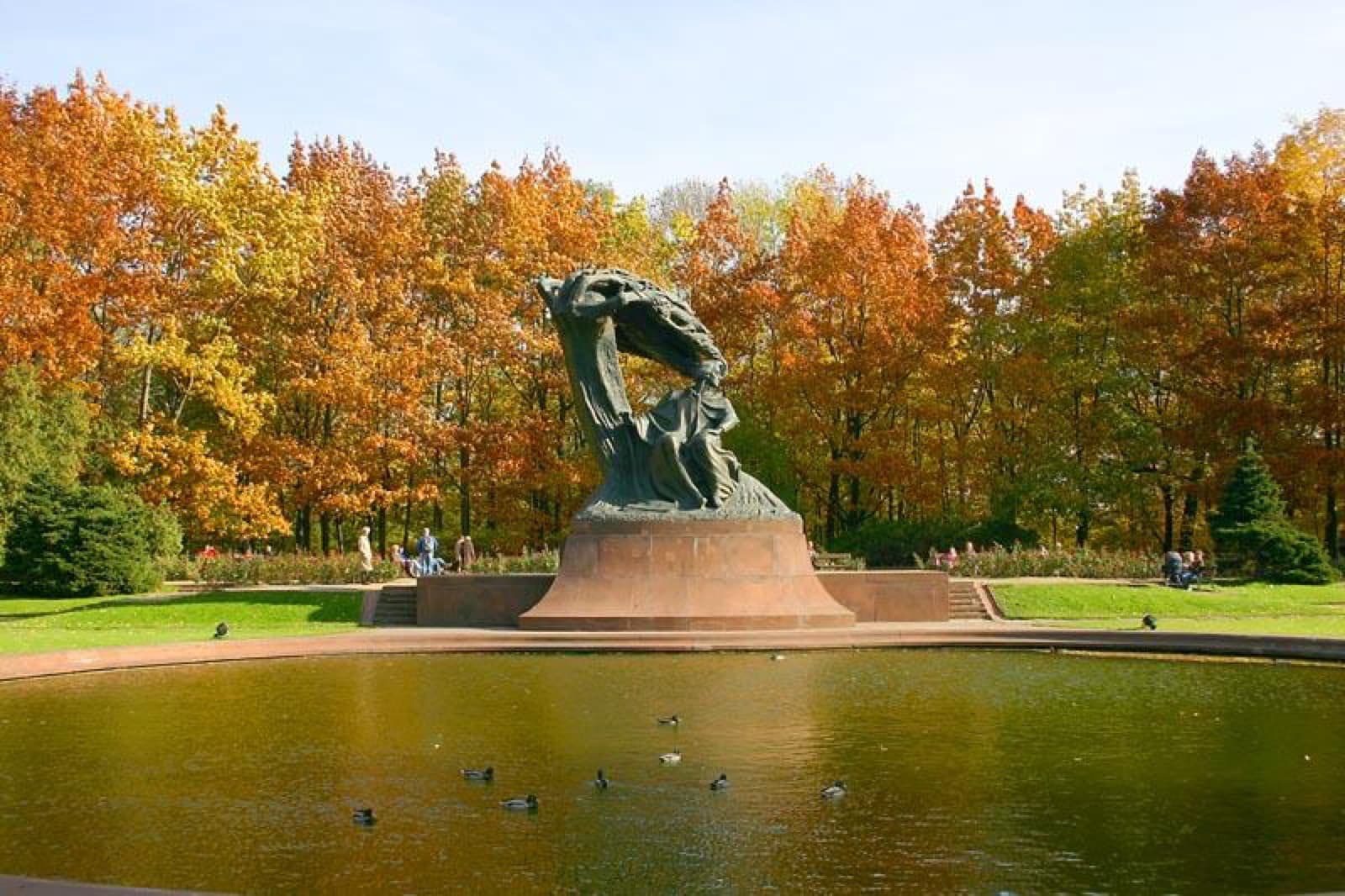
The Chopin Monument in Lazienki Park: Where Warsaw's Royal Route Ends
The Royal Castle That Poland Rebuilt From Rubble