The Palace People Never Left
90 min · 0.7 km · easy
In Split you eat Dalmatian food: slow-braised pašticada with gnocchi, black squid ink risotto, a shaken fisherman's stew called brudet, and meat or octopus cooked for hours under a bell-shaped lid called peka. The tradition comes from the sea in front of the city and the stony hinterland behind it, and the way to order like a local is to walk away from the palace walls, sit down in a family-run konoba, and ask what came off the boat that morning. This guide names the specific dishes, where each one comes from, and how to order without getting the tourist version.
The food here is coastal and unhurried, built on olive oil, fresh fish, lamb, wine, and whatever the season delivered to the market that week. Split has two markets that tell you exactly what a local kitchen will cook, and both sit a few steps from the Roman core. Reading them first makes every menu in town legible.
Start at the two markets, because they set the menu
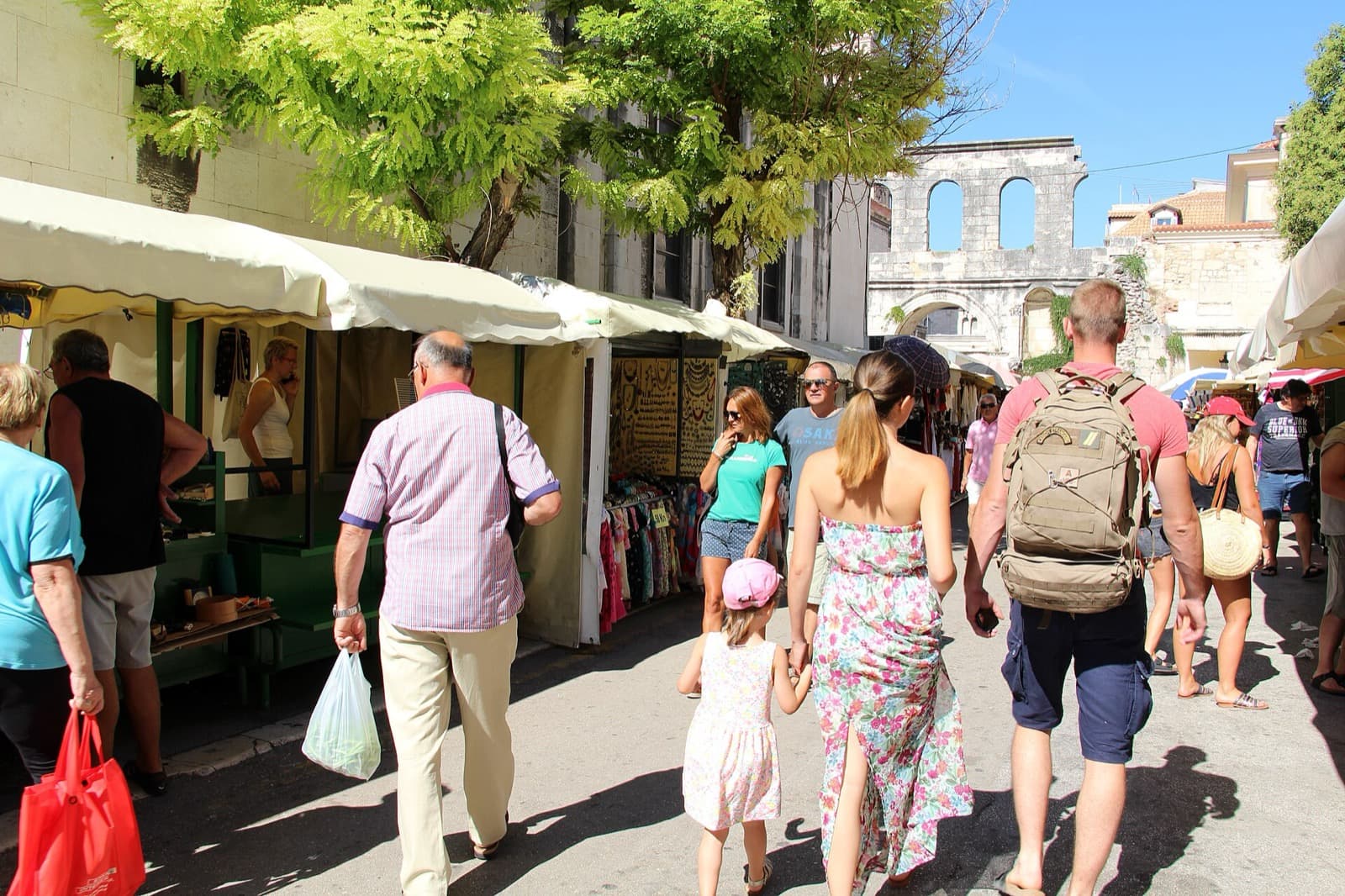
The Pazar, Split's open-air green market, runs directly against the eastern wall of Diocletian's Palace, just outside the Silver Gate. Farmers from the Dalmatian hinterland set up in the morning, roughly from around six until the early afternoon, weekends included, and what they sell is strictly seasonal: tomatoes, peppers, peaches, and courgettes in high summer, cabbages and citrus in winter. If a dish is on a konoba menu, its vegetables almost certainly came from a table like this one.
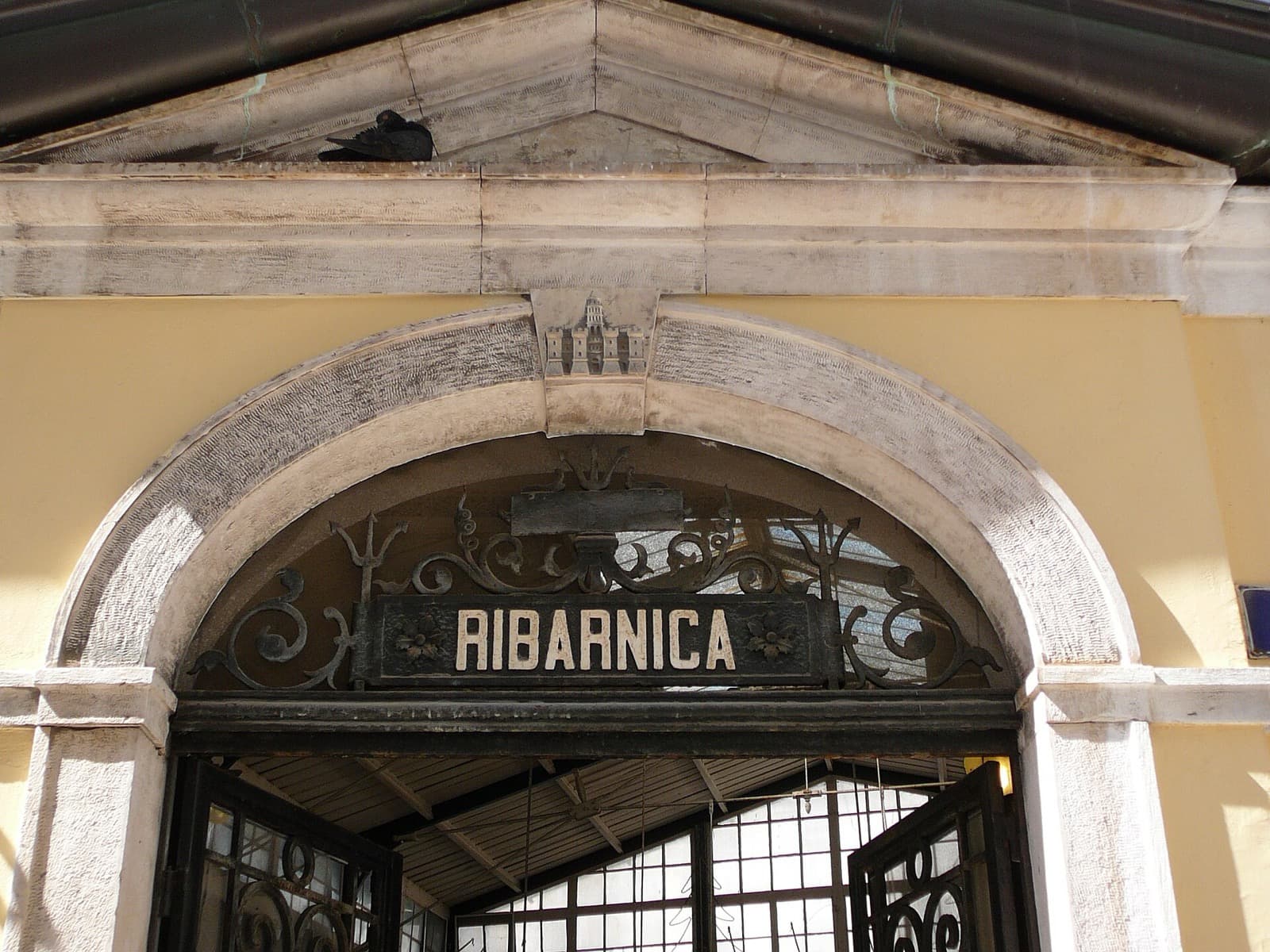
A short walk west is the Ribarnica, the covered fish market, a Secession-style hall (the local branch of Art Nouveau) that has stood for more than a hundred years. On its marble slabs you see the day's Adriatic catch: sardines, mackerel, and picarel for everyday eating, and prized fish like scorpionfish and dentex for a special meal. Seeing the raw ingredients tells you which restaurant dishes are honest. Both markets are on the market and Bacvice walk, which threads the green market, the fish hall, the fishermen's slip at Matejuska, and the beach where the game of picigin was born.
The dishes to seek out, and where each one comes from
Hear a stop from this walk
The Golden Gate: The Emperor's Threshold and the Bishop of the Common Tongue
Pašticada is Split's celebration dish and the one most worth planning a long lunch around. It is beef larded with garlic and bacon, marinated in wine vinegar, then braised for hours in a sweet-and-sour sauce built from onions, prunes, and prošek, the Dalmatian dessert wine. It is served with homemade gnocchi that soak up the sauce. The origins are debated: the oldest known written recipe for Dalmatian pašticada dates to the fifteenth century and was documented in Dubrovnik, and food historians point to both French influence from the Napoleonic period and Venetian ties (the Veronese horse-meat braise pastissáda de cavál is a frequent comparison). Every family from Split to Dubrovnik makes it a little differently.
Crni rižot, black risotto, is stained with squid or cuttlefish ink and cooked with the cephalopod itself, garlic, and white wine. It arrives glossy and dark, and yes, it will color your teeth. Order it when you want something unmistakably Adriatic.
Brudet is the fisherman's stew: mixed seafood simmered with tomato, wine, and herbs, traditionally never stirred, only shaken, so the fish stays whole. It is served with polenta to catch the sauce. Gregada is its older, plainer cousin, a poached-fish-and-potato stew tied to the island of Hvar and often described as the oldest way of cooking fish in Dalmatia, possibly carried in by Greek settlers more than two thousand years ago. If a konoba lists gregada, that is a good sign about the kitchen.
Peka is a method more than a single dish: veal, lamb, or octopus with potatoes, cooked slowly under a bell-shaped iron lid buried in hot coals. The meat comes out falling apart and faintly smoky. Because it takes hours, peka almost always must be ordered in advance, often when you book the table or by phone that morning. Do not expect to walk in and get it.
Dishes from the hinterland and the sweet end
Soparnik is a thin, savory pie of Swiss chard, onion, garlic, and olive oil pressed between two sheets of unleavened dough and baked on the embers of an open hearth. It comes from the Poljica region between Split and Omis, and it carries an EU Protected Geographical Indication granted in 2016, which is rare recognition for a peasant fasting food. You will find it at markets and festivals more than at white-tablecloth restaurants.
For dessert, rožata is Dalmatia's crème caramel, a baked custard traditionally scented with a local rose liqueur that gives the dish its name; it has been documented in Dalmatia for centuries. Fritule are small fried dough balls, often laced with rum and raisins and dusted with sugar, most associated with Christmas but sold year-round at stalls. Either one closes a meal without drama.
How to order like a local
The single most useful rule: walk away from the Riva promenade and the immediate perimeter of the palace before you choose where to eat. The serious cooking happens in konobas, family-run taverns that keep the same recipes for decades. Ask what fish is fresh that day rather than ordering off a laminated photo menu. Fish is frequently sold by weight (per kilogram), so it is normal for the waiter to bring the whole fish to the table before cooking so you can approve the size and price.
On the bill: many sit-down places add a small cover charge called kuver, usually a euro or two, for bread and the spreads that arrive at the start. That is standard, not a scam. Tipping is modest and not obligatory. In a konoba, locals often just round up or leave about five to ten percent for good service, in cash left on the table. Croatia switched to the euro in 2023, so prices are in euros, and card payment is widely accepted (if you want to add the tip to the card, ask the waiter before they charge you).
Time it right and the food follows the day: markets in the morning, a long konoba lunch built around pašticada or fresh fish, peka in the evening if you called ahead. When you are ready to walk it off, the market-and-beach route starts at the same green market, and you can browse every Split route and time your visit around market mornings from the Split city page.
Sources
Frequently asked questions
- What is the most famous dish to eat in Split?
- Pašticada is Split's most celebrated dish: beef larded with garlic and bacon, marinated in wine vinegar, and braised for hours in a sweet-and-sour sauce of onions, prunes, and prošek dessert wine, served with homemade gnocchi. The oldest known written recipe for Dalmatian pašticada dates to the fifteenth century and was documented in Dubrovnik. It is a celebration dish, so plan a long lunch around it.
- Where should I eat in Split to avoid tourist traps?
- Walk away from the Riva promenade and the immediate perimeter of Diocletian's Palace and look for a konoba, a family-run tavern. Konobas keep the same traditional recipes for decades and cook what is fresh that day. Ask what fish came off the boat rather than ordering from a photo menu.
- What seafood dishes are typical in Split?
- Crni rižot (black risotto stained with squid or cuttlefish ink), brudet (a mixed seafood stew shaken rather than stirred and served with polenta), and gregada (a poached fish-and-potato stew tied to the island of Hvar) are the core seafood dishes. Gregada is often called the oldest way of cooking fish in Dalmatia. Fish is frequently sold by weight, so the waiter may show you the whole fish before cooking.
- Do I need to order peka in advance in Split?
- Yes. Peka is meat such as veal, lamb, or octopus with potatoes, cooked slowly under a bell-shaped iron lid covered in hot coals. Because it takes several hours, restaurants almost always require you to order it ahead, often when booking the table or by phone earlier the same day.
- How much should I tip at a restaurant in Split?
- Tipping in Croatia is modest and not obligatory. In a konoba, locals often round up the bill or leave roughly five to ten percent for good service, usually in cash left on the table. Many sit-down places also add a small cover charge called kuver, typically a euro or two, for the bread and spreads served at the start.
- What sweets or market foods should I try in Split?
- Try soparnik, a thin chard-and-onion pie from the Poljica region baked on hearth embers that holds an EU Protected Geographical Indication granted in 2016. For dessert, rožata is Dalmatia's rose-scented crème caramel, and fritule are small fried dough balls with rum and raisins. Visit the Pazar green market in the morning to see the seasonal produce that local kitchens cook that day.
Ready to experience it?
The Palace People Never Left
90 min · 0.7 km · easy
More from Split
Explore more at your own pace.
One Day in Split: A Walkable Morning-to-Evening Itinerary
Split: The City That Moved Into an Emperor's Palace
Marjan Summit: Why Split's Green Hill Is the Walk That Turns Its Back on the Palace
The Cathedral of Saint Domnius: How a Persecutor's Tomb Became His Victim's Church
The Peristyle in Split: The Roman Court Where an Emperor Played God