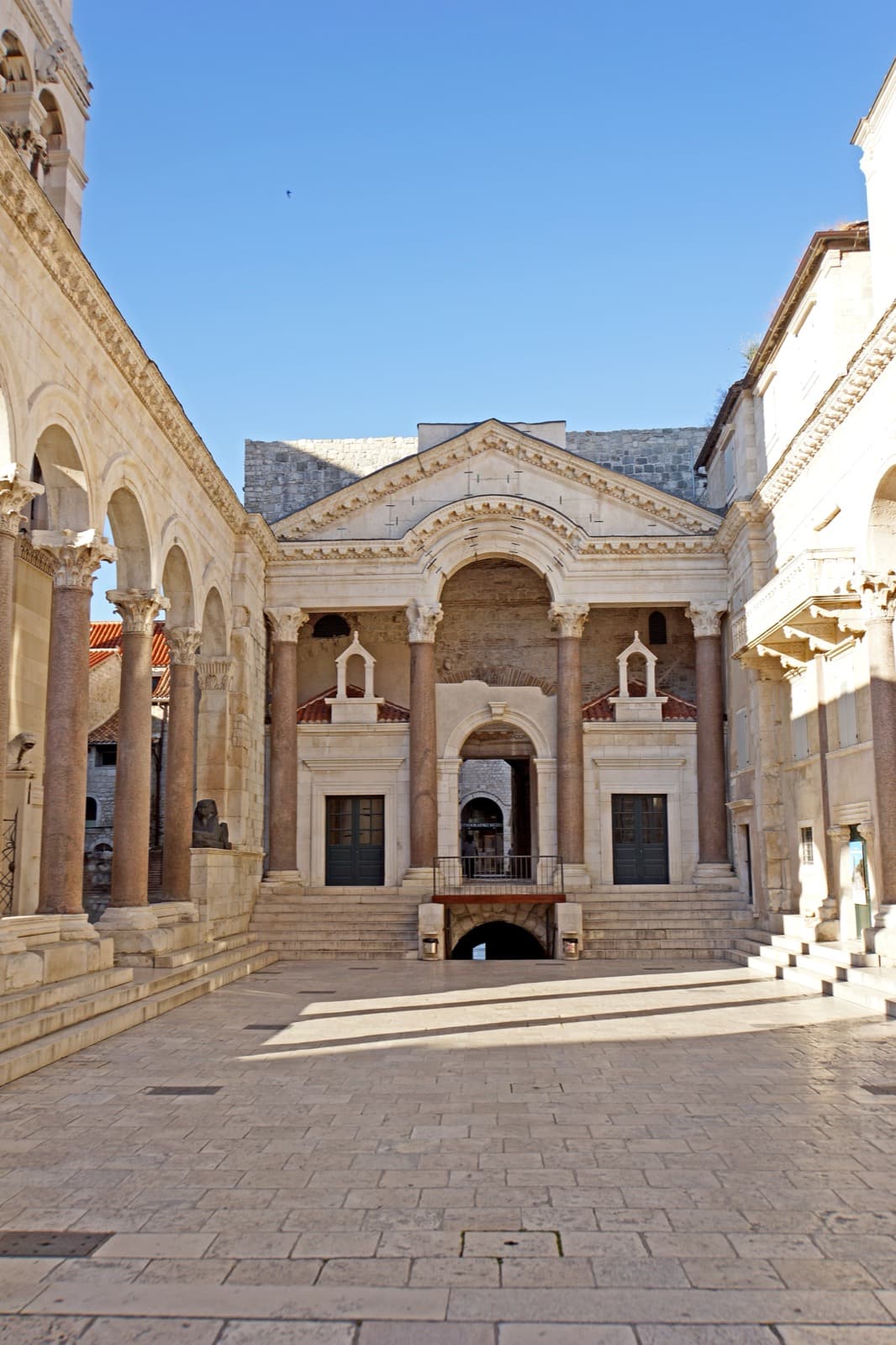
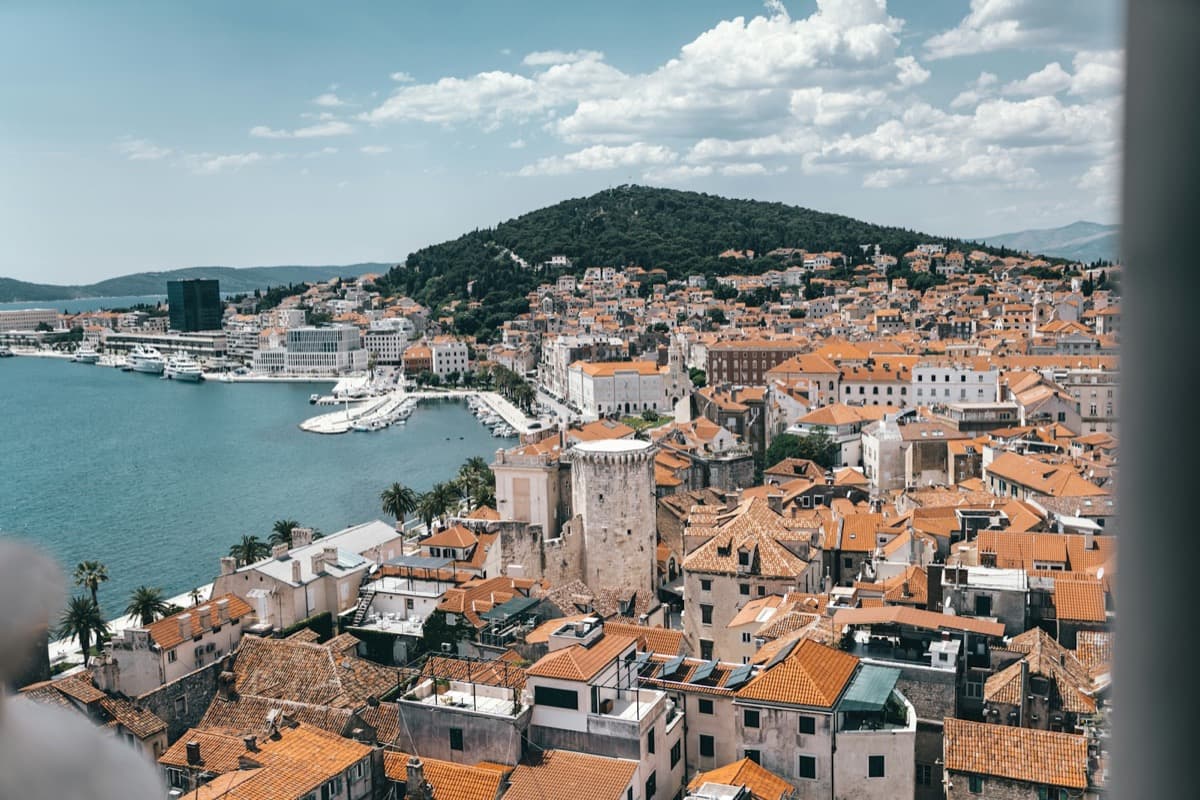
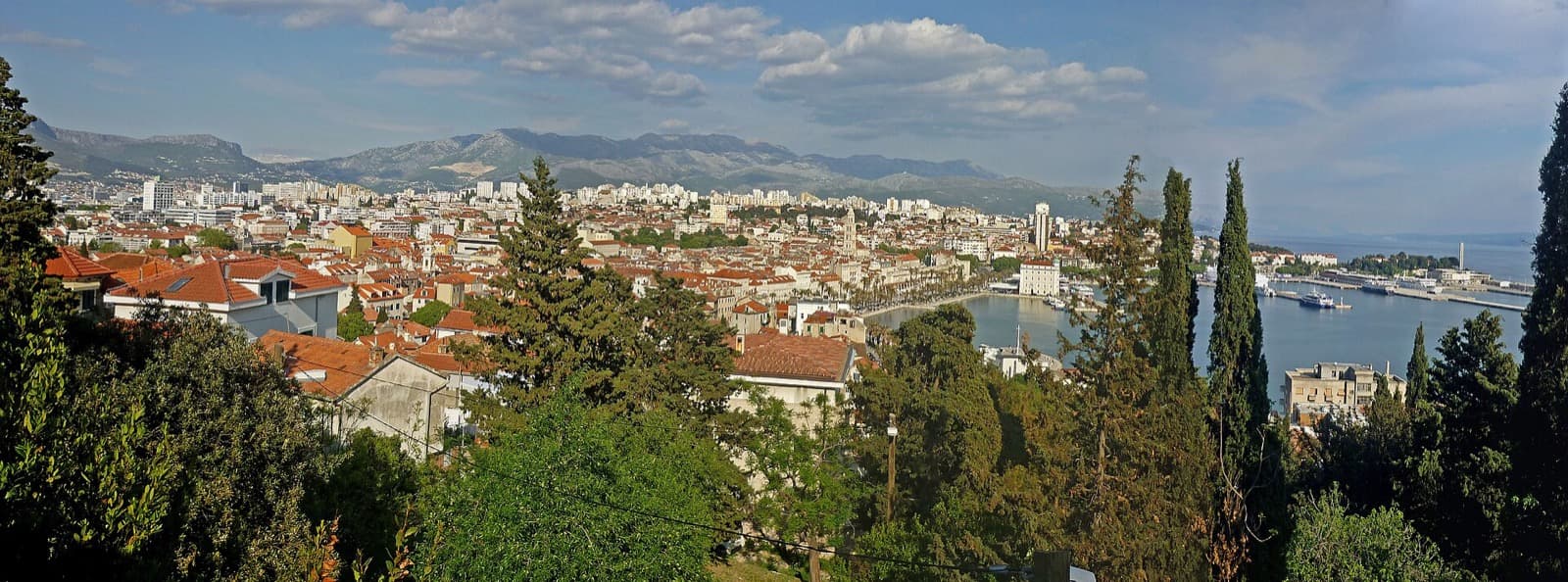
Every other Roman imperial palace on earth is a ruin behind a rope. In Split, Diocletian's Palace is a neighbourhood you walk through, because the people moved in and never left.
Start · The Golden Gate: The Emperor's Threshold and the Bishop of the Common Tongue
DirectionsStops
- 1
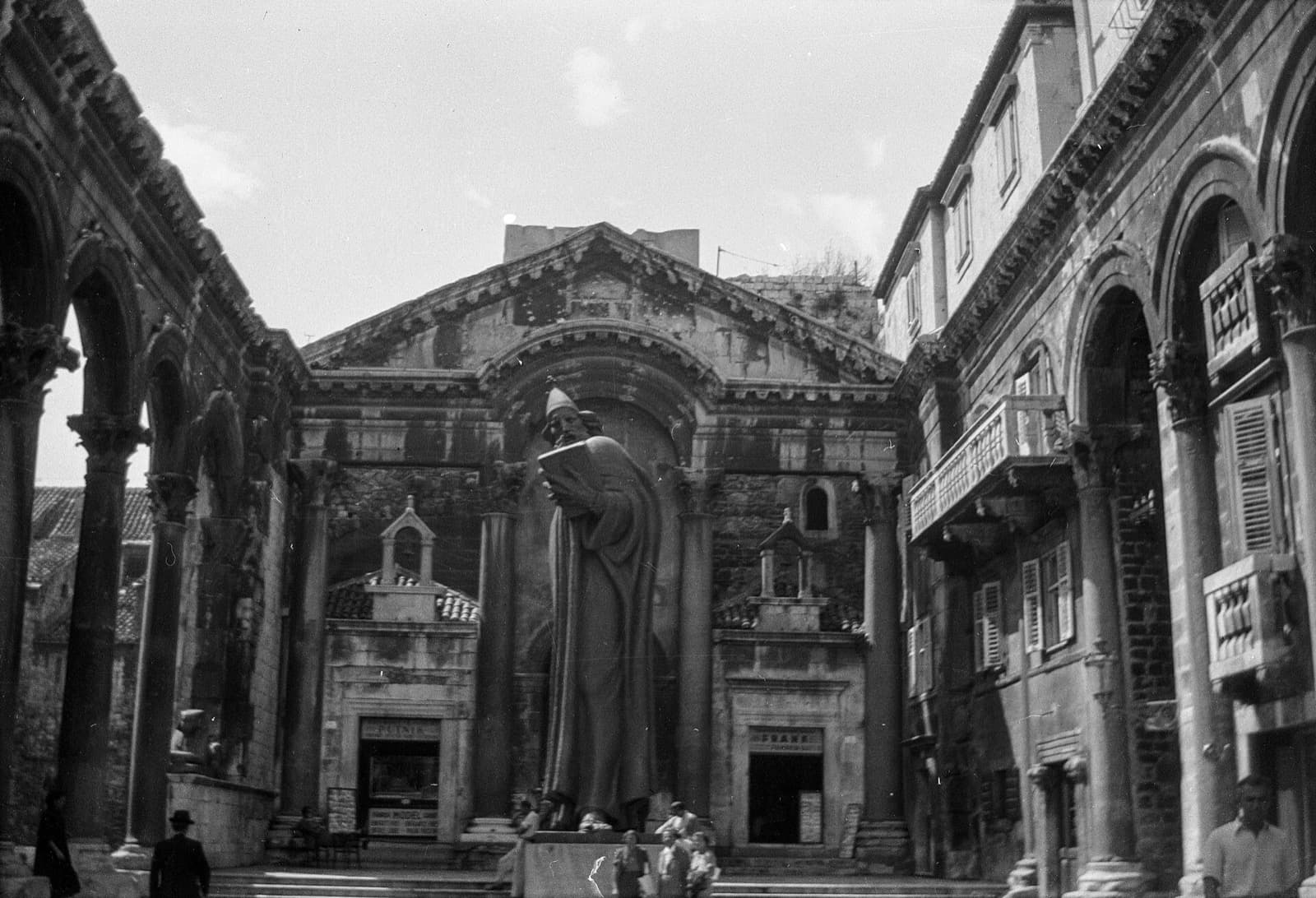
The Golden Gate: The Emperor's Threshold and the Bishop of the Common Tongue
The grandest of the palace's four gates, where the emperor entered his retirement, watched over now by a towering bronze bishop whose big toe shines from generations of hopeful hands.
- 2
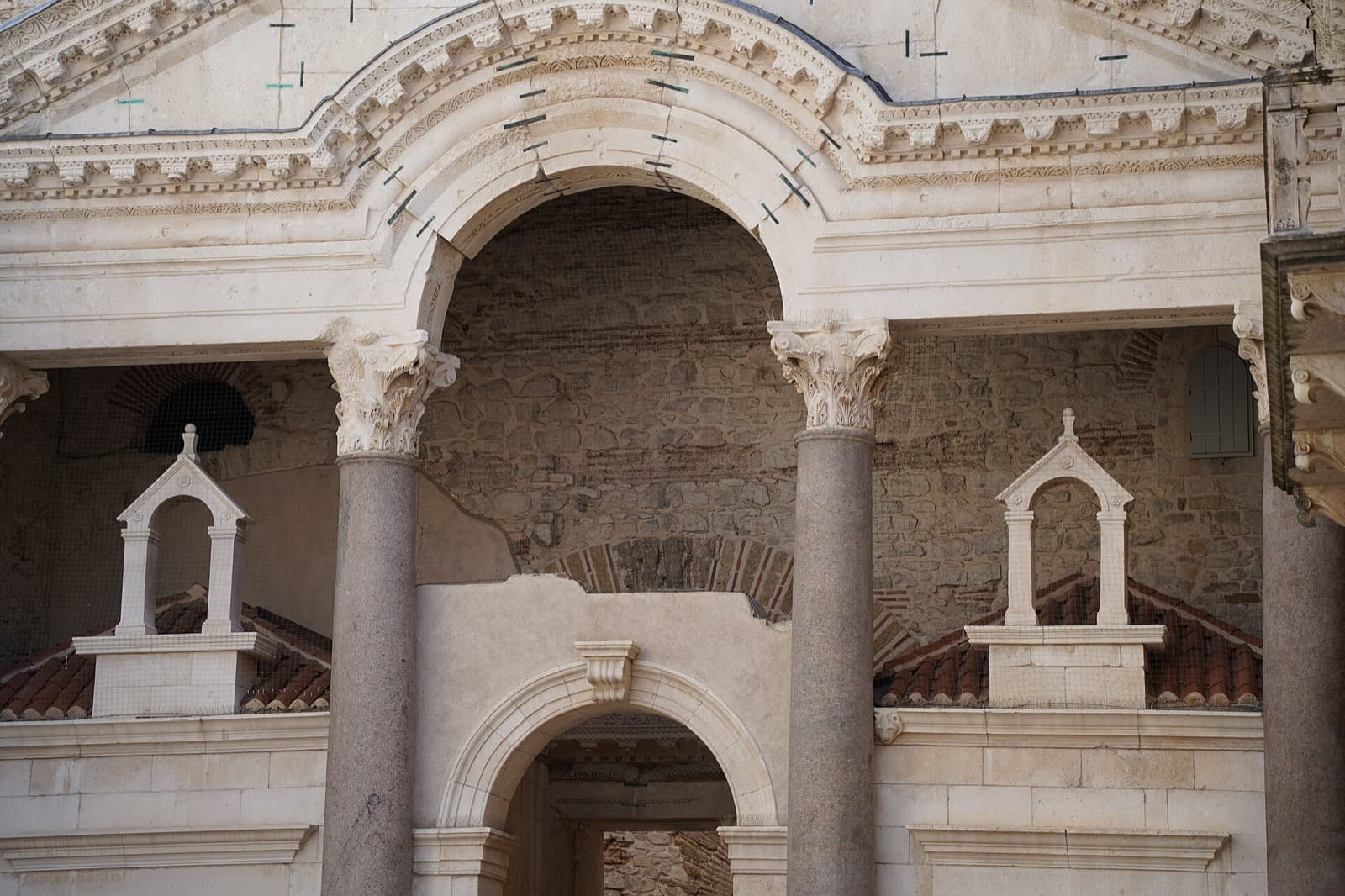
The Peristyle: The Stage Where a Man Claimed to Be a God
The palace's ceremonial heart, a colonnaded court of red Egyptian granite where an emperor appeared as a living god, and where today anyone at all may simply sit on the steps.
- 3
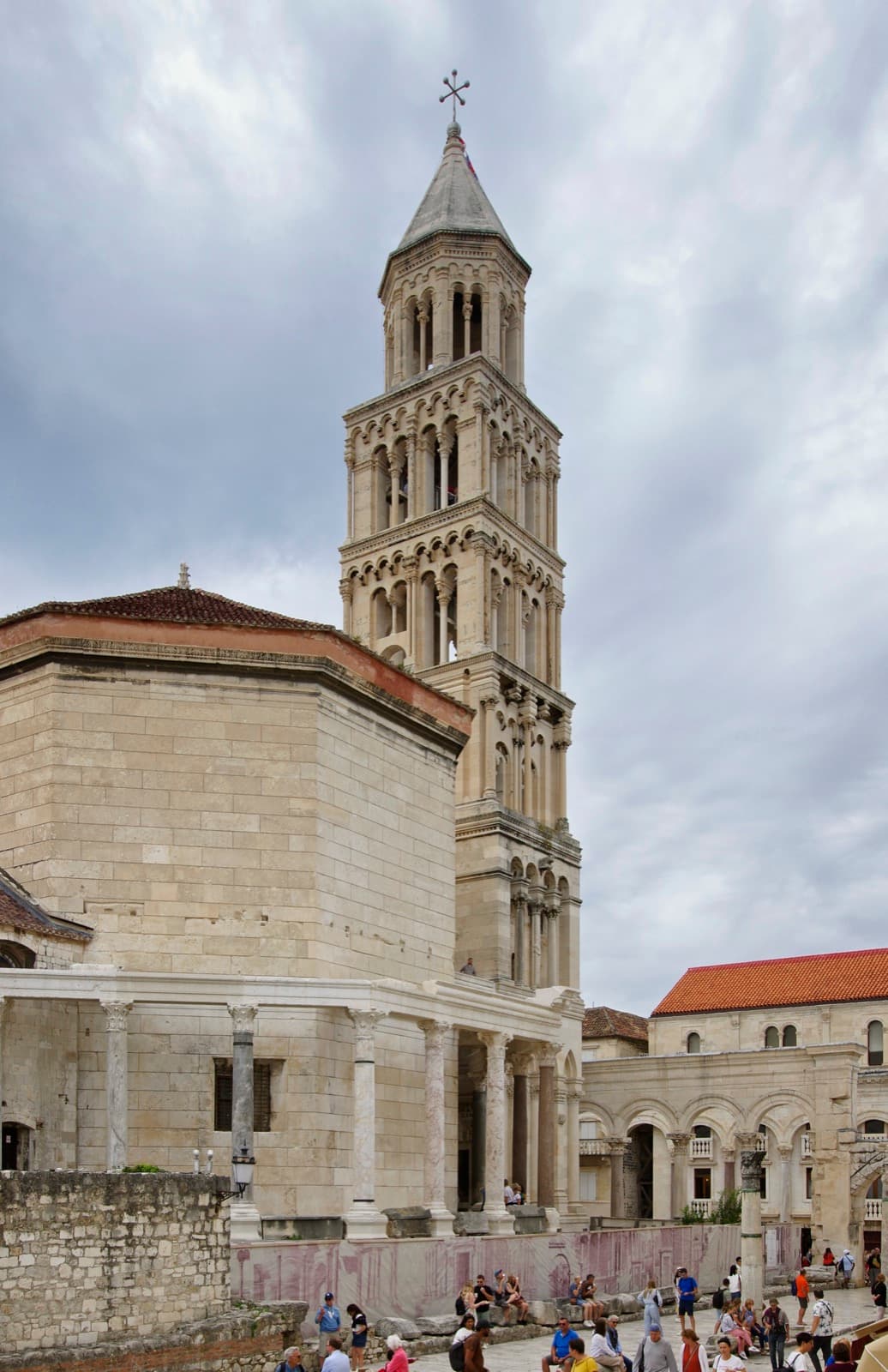
The Cathedral of Saint Domnius: The Persecutor's Tomb Becomes His Victim's Church
Diocletian's own octagonal mausoleum, later consecrated as a cathedral to Saint Domnius, a bishop the emperor's persecutions put to death, in one of history's quietest reversals.
- 4
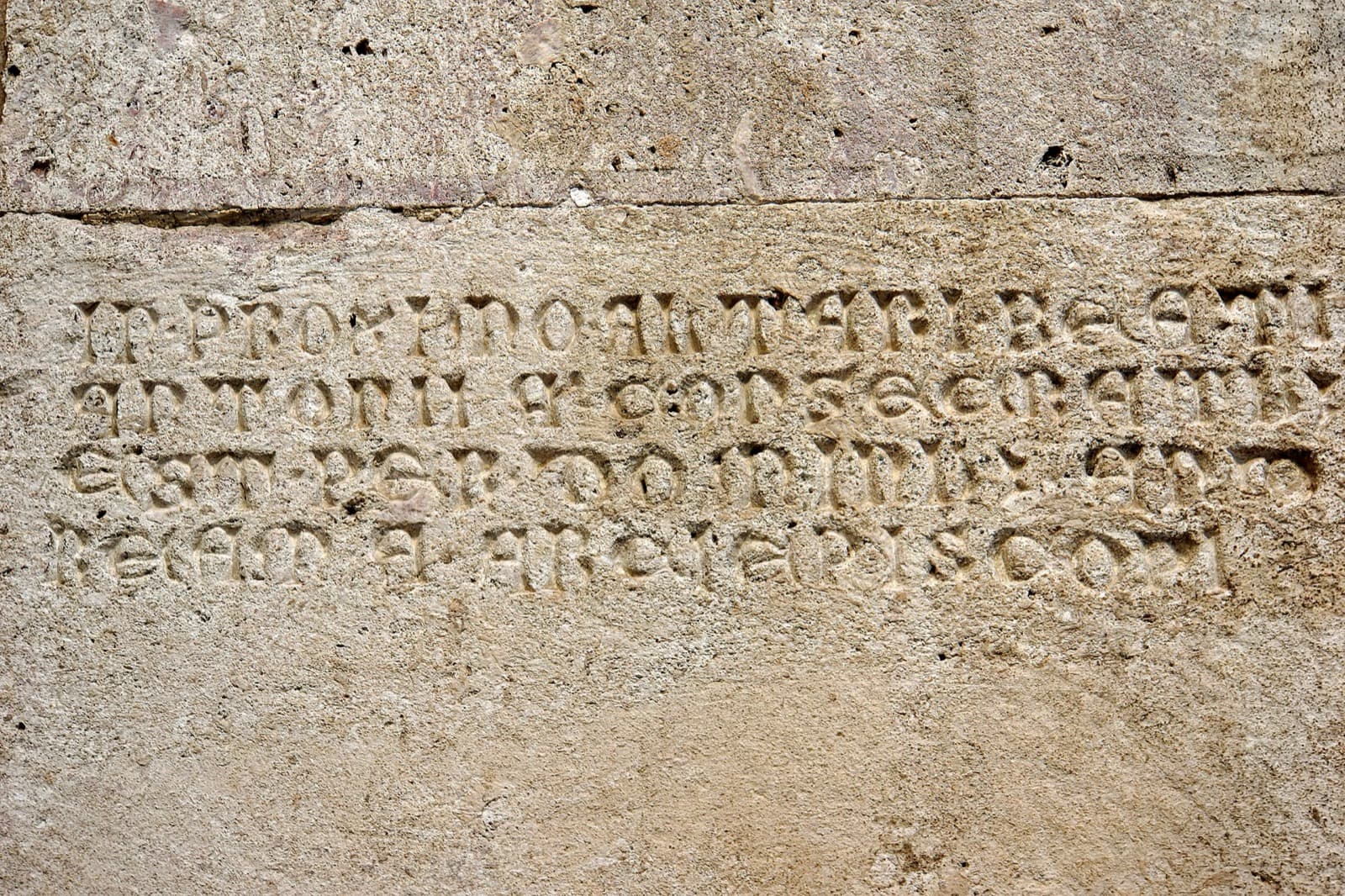
The Temple of Jupiter: A Pagan Temple Turned Christian Font
A small, astonishingly intact Roman temple on the west side of the Peristyle, its coffered stone vault now sheltering a baptismal font and guarded by a headless Egyptian sphinx.
- 5
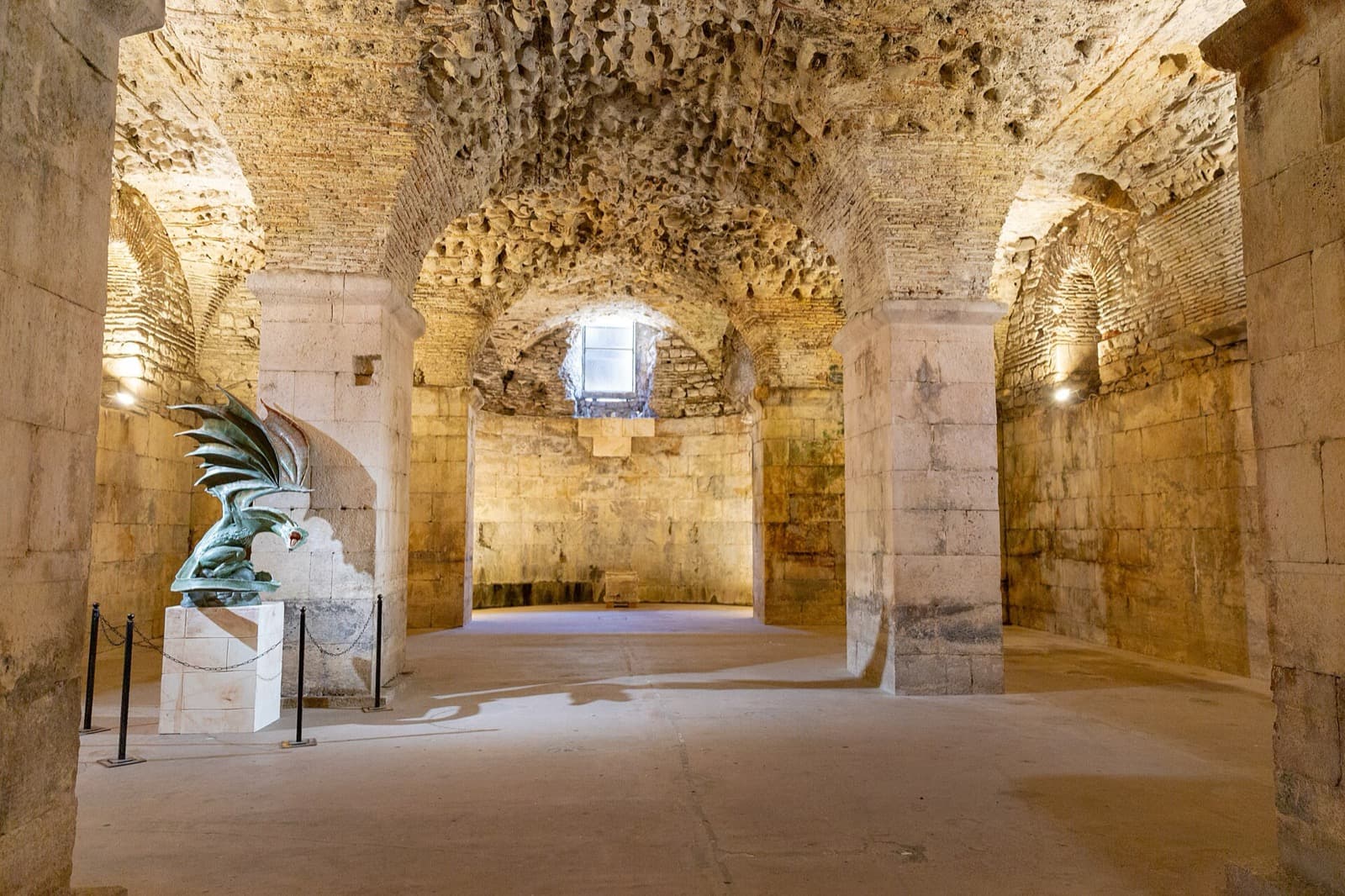
The Substructures: The Stone Blueprint of a Vanished Palace
The vast vaulted cellars beneath the palace's seaward half, whose plan preserves the floor of the emperor's lost apartments above, cleared of centuries of refuse and full of life again.
- 6
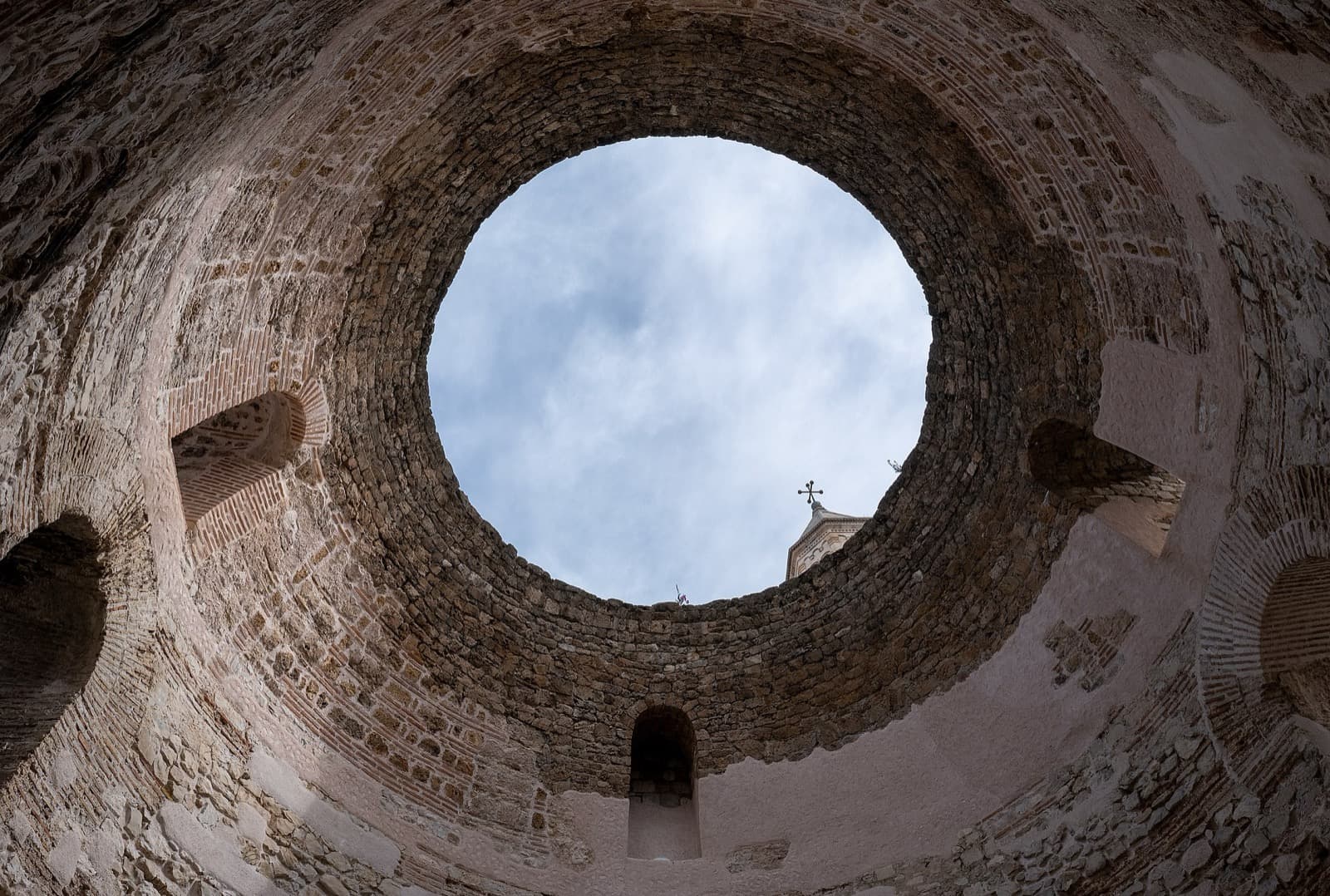
The Vestibule: A Dome Open to the Sky
The circular domed antechamber to the emperor's private rooms, once faced in marble and mosaic, now open to the heavens through its oculus, its bare stone singing whenever klapa voices rise.
- 7
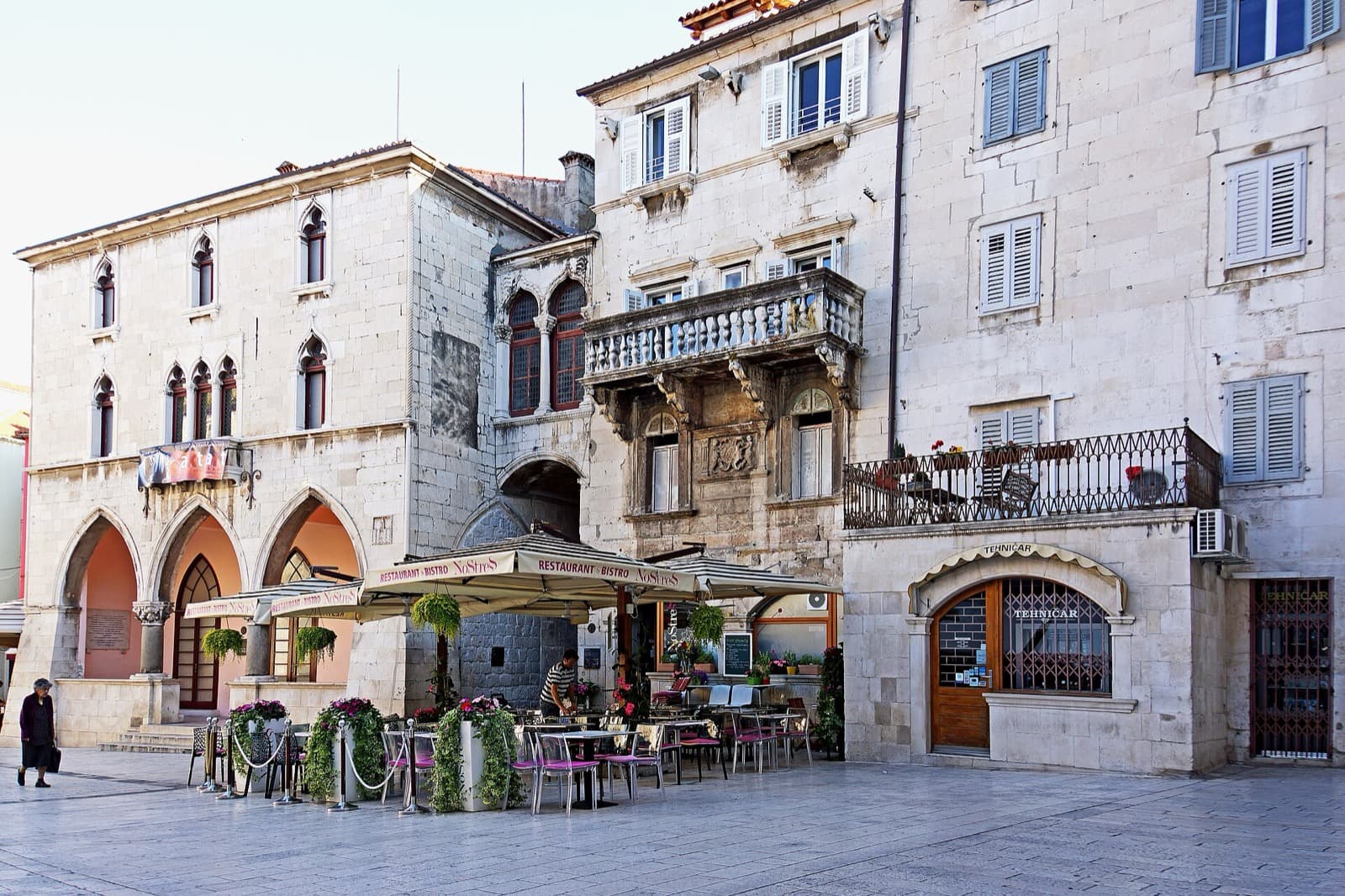
The Iron Gate and the People's Square: Where Roman Becomes Medieval
The one palace gate that has never closed, crowned by the oldest bell tower on the Adriatic, opening westward onto the medieval square where the Roman palace finally becomes a living town.
Details
Best Time to Visit
Come early in the morning, soon after sunrise, or in the last hours before sunset. The palace lanes are narrowest and busiest in the middle of the day and during cruise-ship arrivals, and the low light of morning and evening is kinder to the pale limestone and far more comfortable in the strong Dalmatian summer sun. Spring and autumn are gentler than the peak heat of July and August. The Vestibule and Peristyle are especially atmospheric in the golden light of early evening, when klapa singers are more likely to gather.
Pro Tips
- •This is a compact cluster walk, so there is no fixed route between stops. Wander the lanes freely and let the palace reveal itself; every stop is a short stroll from the last.
- •A combined cathedral ticket usually covers the cathedral interior, the bell tower climb, the treasury and the baptistery in the Temple of Jupiter, so buy it once if you plan to go inside more than one.
- •The bell tower climb rewards you with a view straight down over the palace roofs and out to the sea, but the stairs are steep and narrow; skip it if heights or tight spaces are not for you.
- •The central corridor through the substructures is free to walk; the side exhibition halls need a ticket. Even the free passage is worth it for the cool, vaulted stone on a hot afternoon.
- •Pause under the oculus in the Vestibule and simply listen. If singers are present, this is the acoustic high point of the whole palace, and it costs nothing.
- •Carry water and wear shoes with grip. Much of the walk is over centuries-old limestone polished glassy-smooth by millions of feet.
Safety & Precautions
- •The Cathedral of Saint Domnius is a working cathedral and the baptistery is a sacred space. Cover your shoulders and knees, keep your voice low, and be mindful of anyone at prayer.
- •The ancient and medieval paving throughout the palace is uneven and the limestone is slippery when wet or worn smooth, and there are steps at the cathedral, bell tower and substructures. Watch your footing and take the bell tower stairs slowly.
- •The Peristyle, the Riva waterfront and the open squares offer little shade, and the Dalmatian summer sun is intense. Carry water, use sun protection, and pace yourself in the heat.
- •The palace lanes are a lived-in old quarter and can grow very crowded during midday and cruise-ship surges. Keep an eye on your belongings in the crush, respect residents' homes and doorways, and step aside for the flow of foot traffic.
Travel advisory: Exercise Normal Precautions (Level 1).
Gallery
Related Reading
Go deeper on what you'll see, hear, and walk through.
Overview
Best Self-Guided Walking Tours in Split (2026)
3 min
Overview
One Day in Split: A Walkable Morning-to-Evening Itinerary
7 min
Overview
Split Travel Guide: Days, Transport, Season, Safety, Budget
7 min
Thematic
Split: The City That Moved Into an Emperor's Palace
7 min
Companion
The Cathedral of Saint Domnius: How a Persecutor's Tomb Became His Victim's Church
6 min
Deep dive
The Peristyle in Split: The Roman Court Where an Emperor Played God
6 min
Read
What to Eat in Split: A Local Dalmatian Food Guide
6 min
Read the walk
The full story of The Palace People Never Left, in words. Prefer to listen? Play it narrated, from home or on location.
Introduction
Here is a strange thing about Diocletian's Palace. Every other Roman imperial palace on earth survives as a ruin you view from a rope line. This one survives as a neighbourhood you walk straight through, because when the empire faded the people simply moved in and never left. They built their homes into the emperor's walls, turned his mausoleum into a cathedral, ran a market through his cellars, and are still doing it seventeen centuries later. It is the best-preserved Roman palace in the world precisely because nobody ever treated it as a monument. They treated it as a town. Use, not reverence, is what saved it. This is a cluster walk of seven stops through the old core of Split, on the Dalmatian coast of Croatia. Give it about ninety minutes and expect to cover a little under one kilometre, all of it inside or beside the palace, mostly on foot over old stone. You go at your own pace. Nothing here is on a schedule, no group is waiting, and every stop is short. Skip one if it does not call to you, linger at another as long as you like. You will meet a bishop who fought for the common tongue, a square where a man claimed to be a living god, a persecutor's tomb that became his victim's church, a temple turned into a font, cellars that hold the ghost of a vanished floor, a dome open to the sky, and the one gate that has never once closed. When you arrive at the Golden Gate, the great northern entrance to the palace, begin with stop one.
1. The Golden Gate: The Emperor's Threshold and the Bishop of the Common Tongue
Stand at the Golden Gate and you are standing at the front door of a retired emperor. In Latin it is the Porta Aurea, in Croatian the Zlatna vrata, and it was the northern gate, the principal and most richly decorated entrance to the whole palace. The Roman road that met it here ran straight north to Salona, which was Diocletian's birthplace and the capital of the province of Dalmatia. When he abdicated on the first of May three hundred and five A D, this is very likely the gate through which he came home to grow cabbages by the sea. Diocletian's Palace was raised as his fortified retirement residence around the years two hundred and ninety-five to three hundred and five, and UNESCO inscribed the historical complex of Split with the palace in nineteen seventy-nine. Now turn to the giant bronze figure beside the gate. This is Gregory of Nin, Grgur Ninski, a medieval Croatian bishop, cast by the sculptor Ivan Mestrovic in nineteen twenty-nine. He is about seven and a half metres tall. He first stood inside the palace on the Peristyle, was taken down during the Second World War, and was set here outside the Golden Gate in nineteen fifty-four. Look at his left foot. The big toe is polished to gold while the rest of him is dark, because visitors rub it for luck, year after year, until the bronze gleams. It is a lovely emblem for this whole place: the emperor built for eternity, and it is the ordinary passing hand that has left the brightest mark. Go ahead and rub the toe if you like. Then step through the gate the way the emperor did, into a town that was once a palace.
2. The Peristyle: The Stage Where a Man Claimed to Be a God
You have walked into the Peristyle, the ceremonial heart of the palace, at the crossing of its two main streets. In Croatian it is the Peristil. Look at the long sides: rows of columns with carved Corinthian capitals, linked by arches. On the south side, where the emperor appeared, the columns are red Egyptian granite, and that red was chosen to signal ceremony and power. At the south end stands the Protiron, a triangular gable carried on four columns with an arch between the two central ones. That arch framed the imperial loggia. And here is what happened beneath it. Diocletian was celebrated as Jovius, the living son of Jupiter. He would appear under that gable, and his subjects would come forward kneeling to kiss the hem of his scarlet cloak, or lie flat on the ground before him. A man, on this spot, presented as a god. Now notice what the Peristyle is today. It is a public square. People sit on these steps in the sun with a coffee, children run across the stone, someone is probably singing. The court built to hold a god at a distance is now the most open room in the city, free to anyone who wanders in. Look also toward the cathedral steps for a small dark shape: a black granite Egyptian sphinx, roughly three thousand five hundred years old, from the age of the pharaoh Thutmose the Third, one of several Diocletian shipped here from Egypt. It sat in this court while an emperor played god, and it is still sitting here, watching the rest of us just live.
3. The Cathedral of Saint Domnius: The Persecutor's Tomb Becomes His Victim's Church
This octagonal building was built as Diocletian's mausoleum, around the year three hundred and five, the tomb of the emperor himself. Today it is the Cathedral of Saint Domnius, in Croatian Sveti Duje. Sit with the reversal for a moment, soberly, because it is one of the strangest in the whole Roman world. Diocletian launched the Great Persecution of Christians. Saint Domnius was a bishop of Salona, born in Antioch, martyred at Salona in three hundred and four A D during that very persecution. When the Avars and Slavs destroyed Salona in the seventh century, refugees came here, and by the mid-seventh century they had consecrated the persecutor's tomb as a Christian church, in the name of one of his victims. Domnius became the patron saint of Split. The building is described as the oldest Catholic cathedral in the world still in use in its original structure, never rebuilt from the ground up. The Romanesque bell tower beside it was begun in the thirteenth century and finished in the mid-sixteenth. Look, if you go inside, for the carved walnut doors by Andrija Buvina, dated twelve fourteen, with twenty-eight scenes from the life of Christ. This is a working cathedral, so keep your voice low and your shoulders and knees covered if you enter. Whatever you believe, stand a moment with the plain fact of it: a tomb raised for a man who tried to erase a faith now shelters that faith, in the name of a man he killed. Nobody planned that ending. The town simply kept using the building, and the meaning changed underneath it.
4. The Temple of Jupiter: A Pagan Temple Turned Christian Font
On the west side of the Peristyle, down a narrow lane opposite the cathedral, is a small Roman temple so intact it can stop you in your tracks. It is generally identified as the Temple of Jupiter, built between two hundred and ninety-five and three hundred and five A D. And it…
Full narration for this stop unlocks with the tour.
5. The Substructures: The Stone Blueprint of a Vanished Palace
Head down into the cool now, into the substructures, the Podrumi, the cellars. These vast vaulted halls run beneath the southern, seaward half of the palace, and they hold a quiet marvel. Roman builders raised them to carry the floor of the emperor's residential apartments…
Full narration for this stop unlocks with the tour.
6. The Vestibule: A Dome Open to the Sky
Step up into the Vestibule, the Vestibul, and let your eyes go to the top. This great circular domed hall was the grand antechamber to the emperor's private apartments, reached through the Protiron, the last threshold before you entered his world. It stands roughly seventeen…
Full narration for this stop unlocks with the tour.
7. The Iron Gate and the People's Square: Where Roman Becomes Medieval
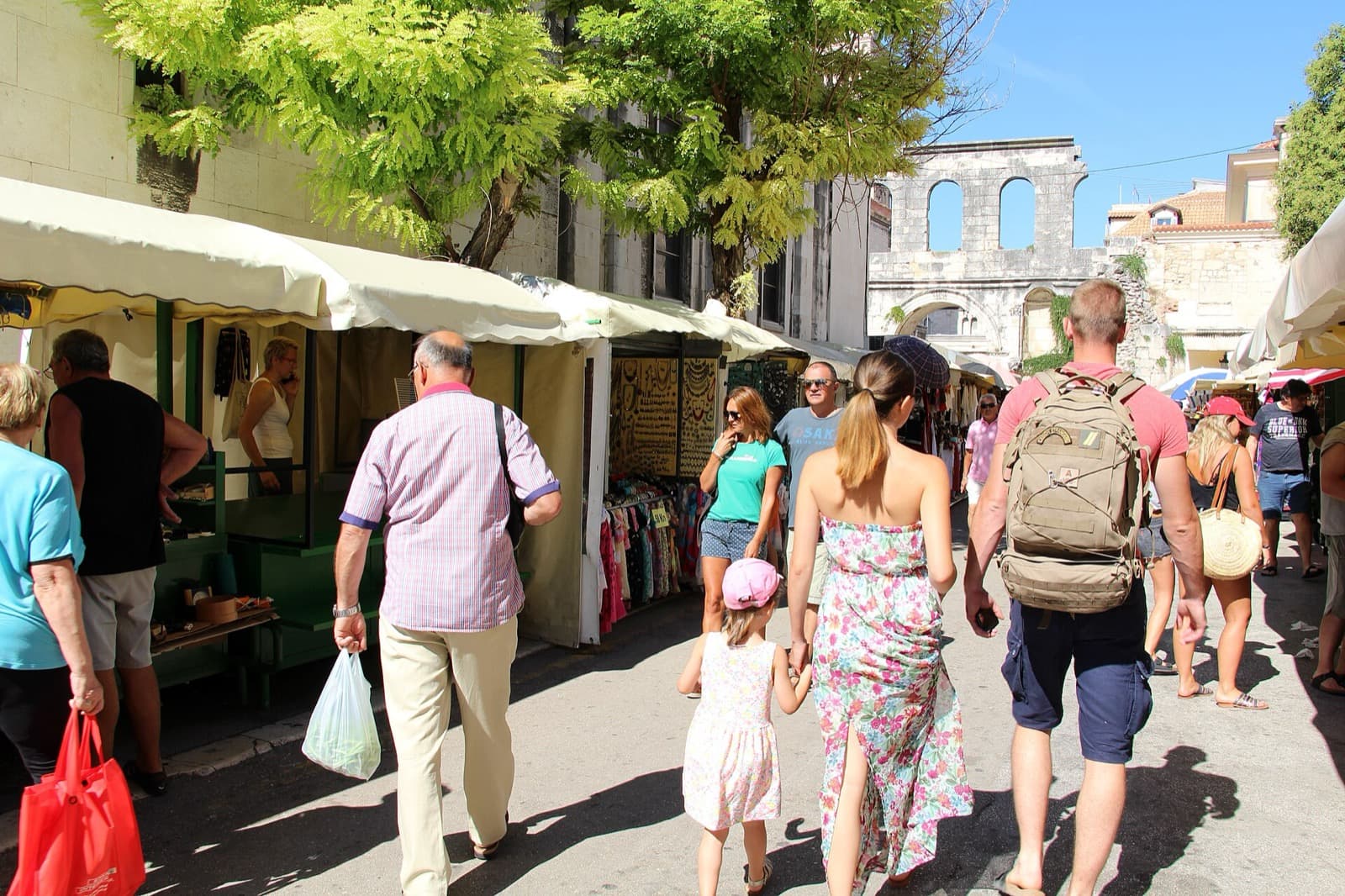
You finish at the Iron Gate, and it is the right ending, because of the four gates of the palace this western one, the Porta Ferrea, the Zeljezna vrata, is the only one that has stayed in continuous use to this day. It has never once been closed off. Every day for seventeen…
Full narration for this stop unlocks with the tour.