The Palace People Never Left
90 min · 0.7 km · easy
Split is the Dalmatian port that never let a Roman emperor's palace become a ruin, because the people moved into it and never left. Diocletian built his fortified retirement residence here around the years two hundred ninety-five to three hundred five, and every other imperial palace on earth survives as a ruin behind a rope line. This one survives as a neighbourhood you walk straight through. When the empire faded, ordinary people built their homes into the emperor's walls, turned his mausoleum into a cathedral, and ran a market through his cellars. Seventeen centuries later they are still doing it. Use, not reverence, is what saved the stone. That single idea, a living city wrapped around and spilling past a Roman monument, is the through-line that connects everything worth walking in Split.
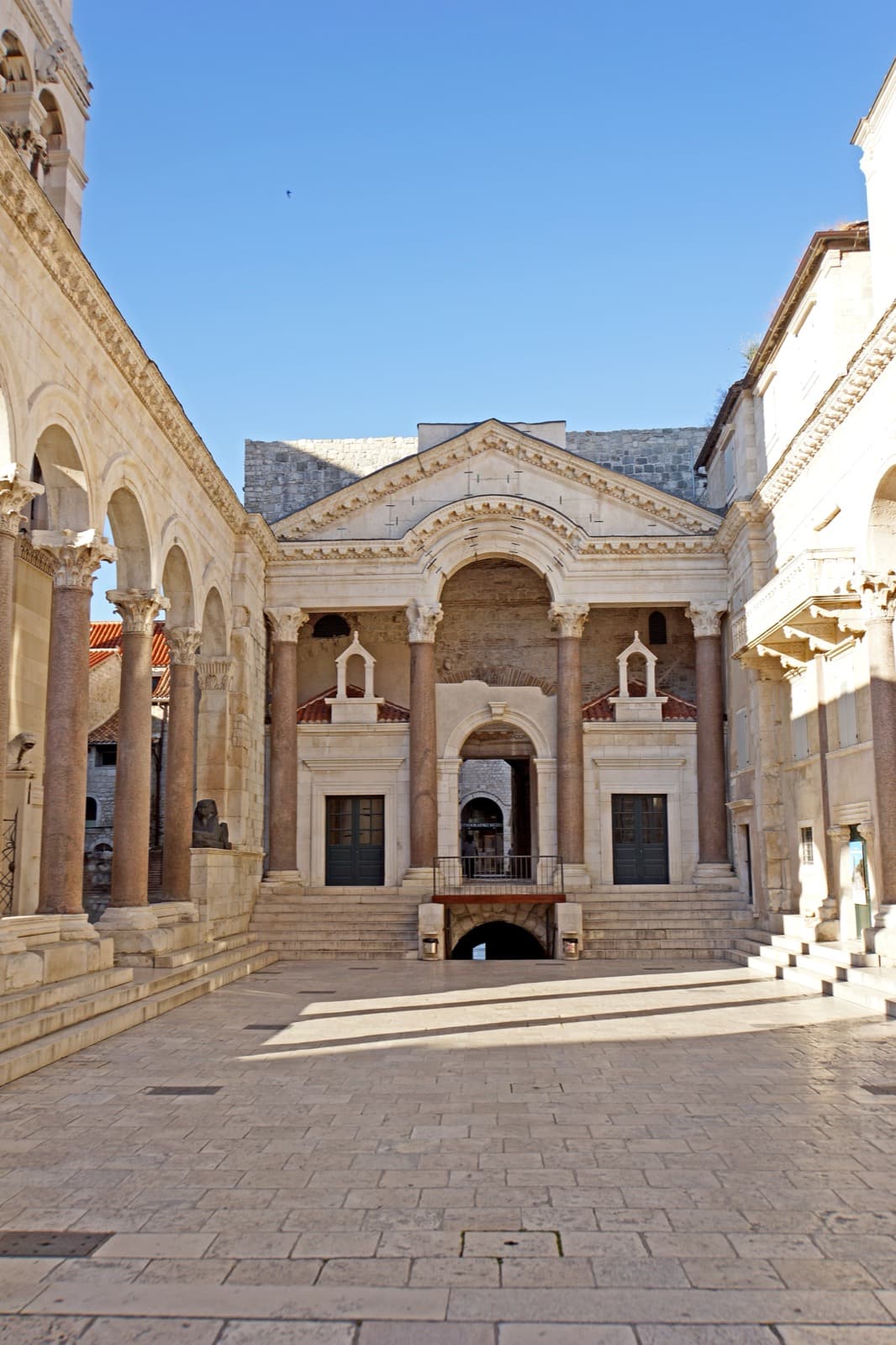
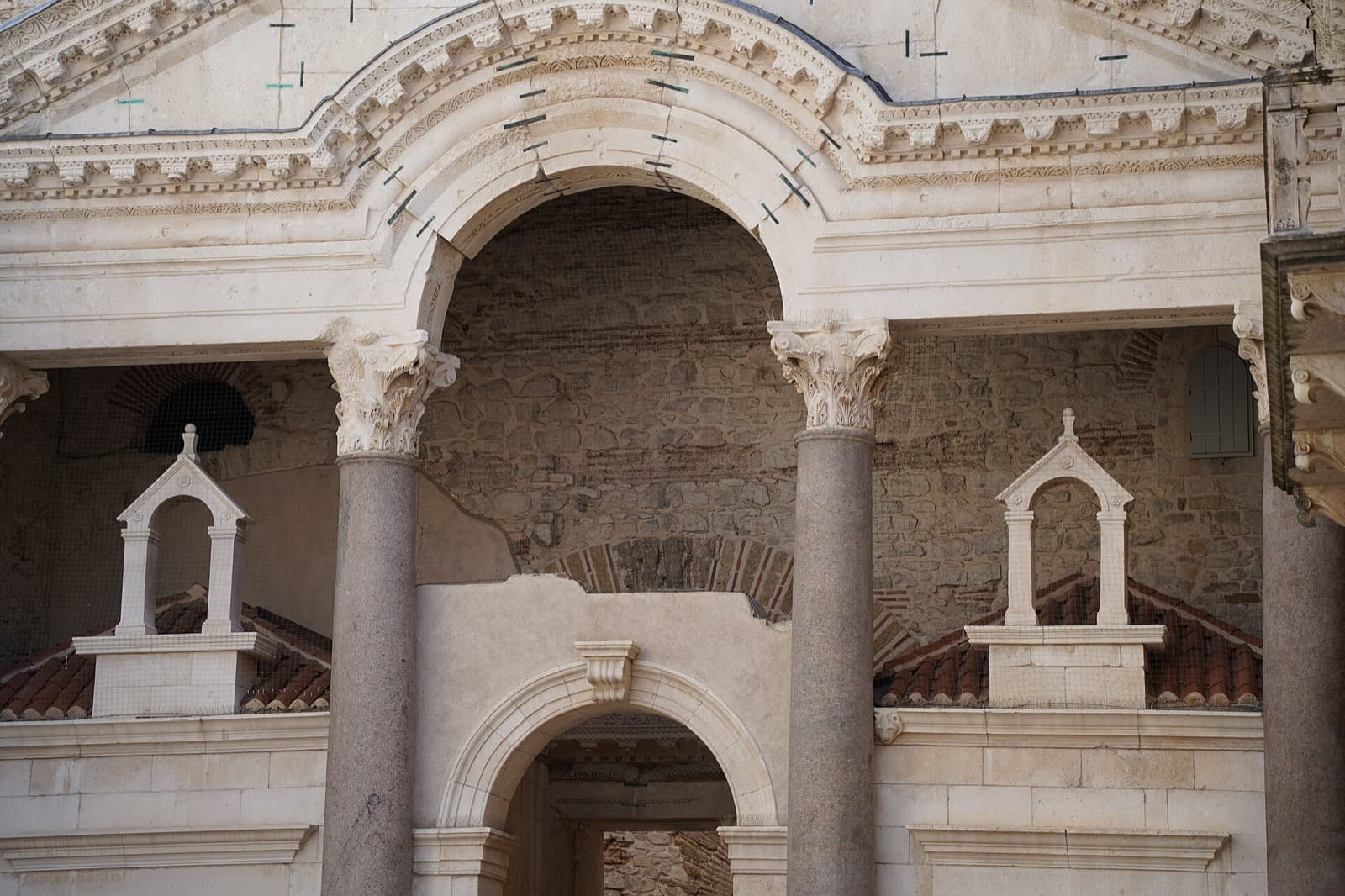
Start where the reversal is sharpest, inside the palace itself. Our Diocletian's Palace walk follows the pattern from gate to gate. At the Golden Gate, the grand northern entrance aligned with the Roman road to Salona, a bronze bishop roughly eight metres tall, Gregory of Nin, stands guard with one big toe rubbed gold by generations of hopeful hands. The emperor built for eternity, and it is the passing hand that leaves the brightest mark. The palace's ceremonial heart, the Peristyle, was once the stage where Diocletian appeared as Jovius, a living son of Jupiter, and subjects knelt to kiss the hem of his scarlet cloak. Today it is a public square where people drink coffee on the steps. The court built to hold a god at a distance is now the most open room in the city.
A town that kept the walls and changed the meaning
The clearest proof of Split's method sits at the cathedral. The octagonal Cathedral of Saint Domnius was built around three hundred five as Diocletian's own mausoleum. Diocletian launched the Great Persecution of Christians. Saint Domnius was a bishop of Salona, martyred in three hundred four during that very persecution. By the mid-seventh century, refugees from destroyed Salona had consecrated the persecutor's tomb as a church in the name of one of his victims. A tomb raised for a man who tried to erase a faith now shelters that faith. Nobody planned that ending. The town simply kept using the building, and the meaning changed underneath it.
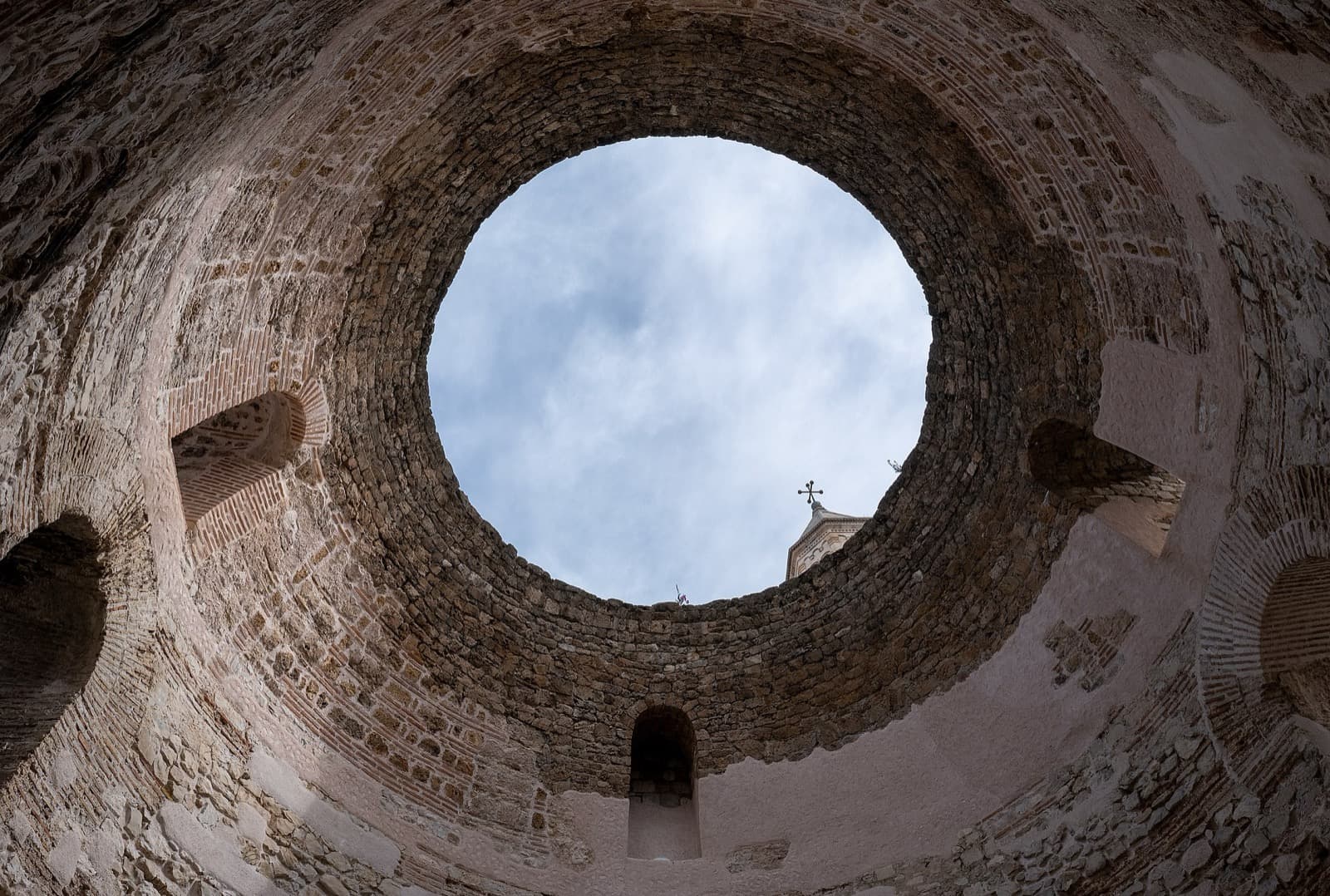
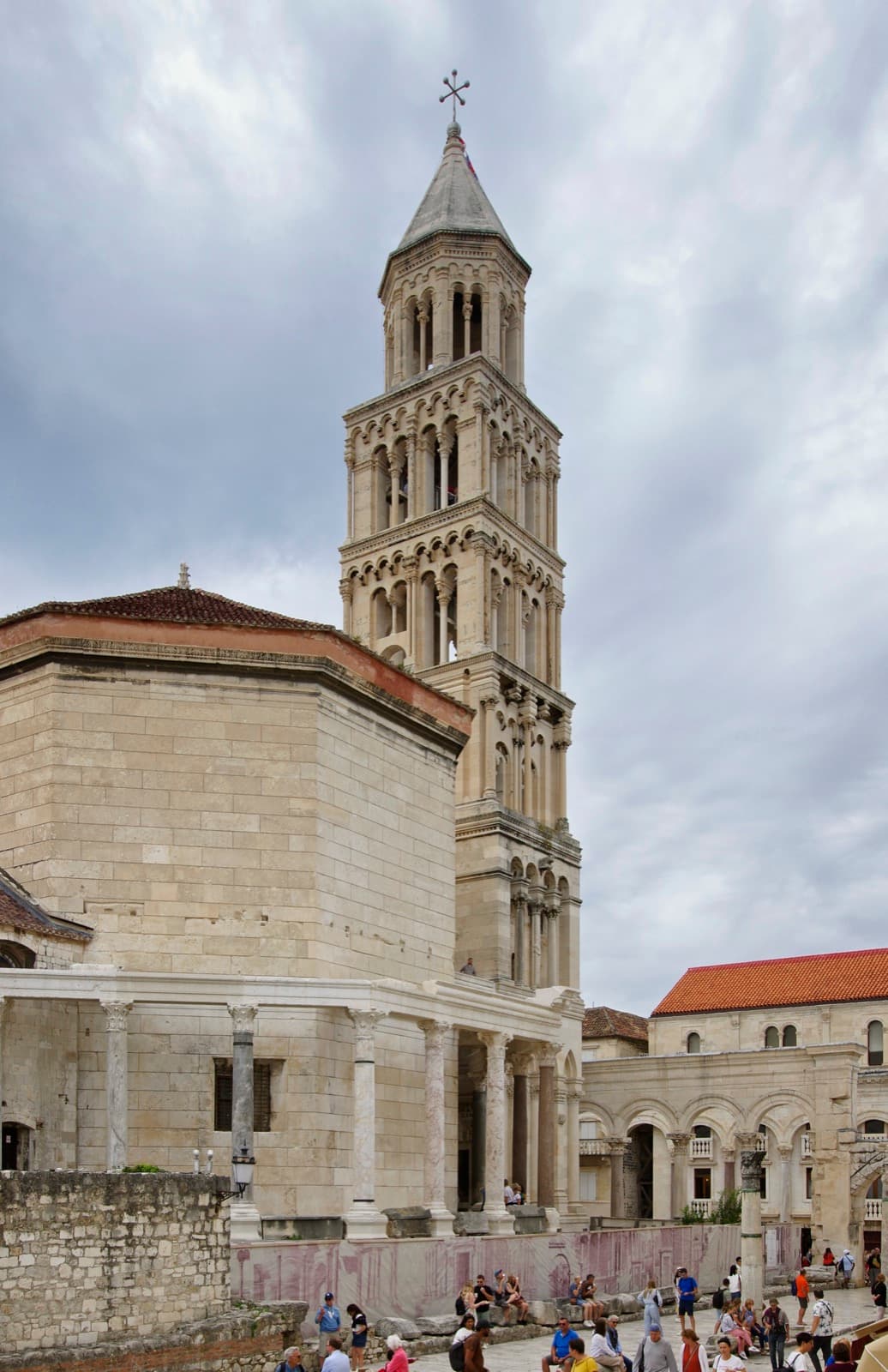
The same thing happened in miniature across the Peristyle. The small, astonishingly intact Temple of Jupiter, built between two hundred ninety-five and three hundred five, became the cathedral's baptistery, dedicated to Saint John the Baptist. The Roman fabric stayed, the dedication changed. When the Scottish architect Robert Adam surveyed the palace and published his drawings in seventeen sixty-four, he rated this little temple among the finest monuments in Europe. Down in the substructures, the vaulted cellars once packed solid with refuse, the plan of the vanished imperial apartments survives in stone, and the halls are full of market stalls and craft sellers again. Even the Vestibule, the domed antechamber where an oculus once let the gods gaze down on the emperor, is now open to raw sky and fills with klapa singers, the Dalmatian a cappella tradition, whose voices climb toward the opening. The walk ends at the Iron Gate, the one gate of the four that has never once closed, crowned by a pre-Romanesque bell tower from the eleventh century, described as the oldest preserved bell tower on the Adriatic coast.
The other Split: the fishermen's hill
Hear a stop from this walk
The Golden Gate: The Emperor's Threshold and the Bishop of the Common Tongue
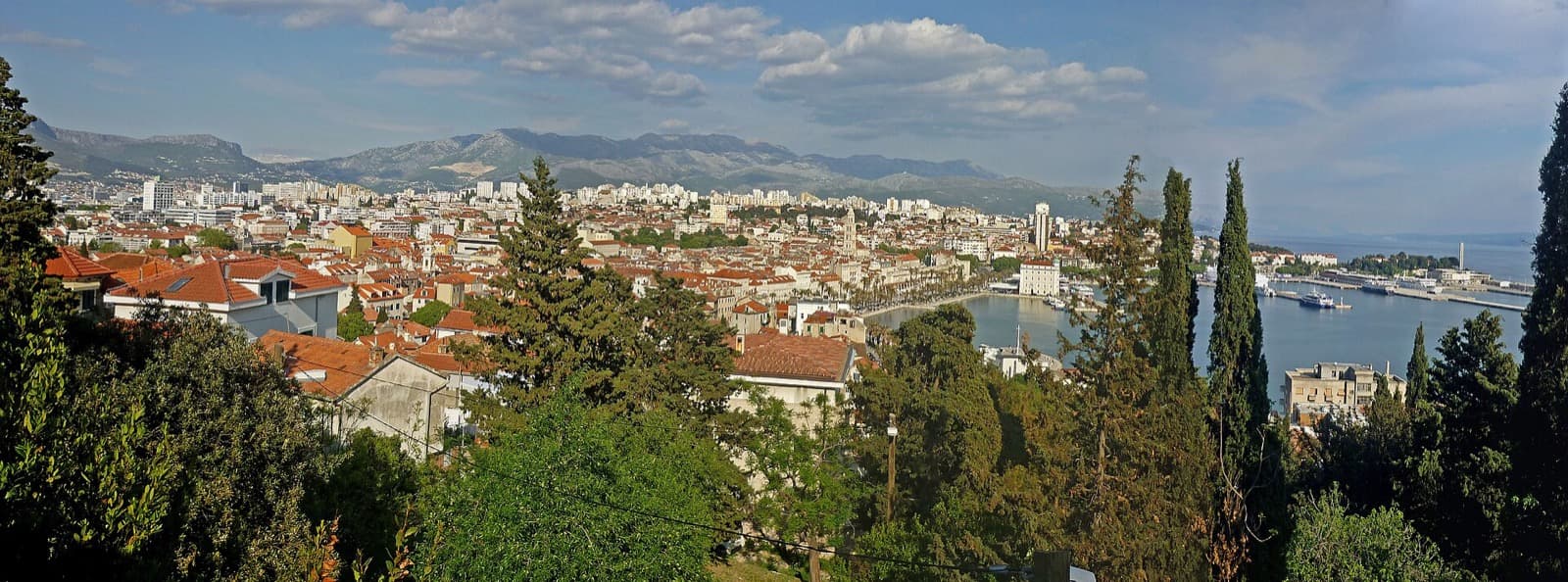
The marble core is only one small part of a much larger city, and the second tour turns its back on it. Our Veli Varos and Marjan walk climbs from the sea to a forested summit, trading the emperor's carved marble for pine, stone, and the working city that grew up beside him. It begins on the Riva, the palm-lined marble promenade that locals call the city's living room, which took its modern form in the early nineteenth century under Napoleonic rule. Just west sits the Prokurative, a three-sided neo-Renaissance square built to imitate the Procuratie around St Mark's Square in Venice, the vision of the long-serving nineteenth-century mayor Antonio Bajamonti, who lived from eighteen twenty-two to eighteen ninety-one.
Then the climb enters Veli Varos, the steep quarter where fishermen, stonemasons, and laborers, some fleeing Ottoman raids inland, built tightly packed stone houses, many from the seventeenth century. There is no imperial ambition here, only stone stacked by the hands that lived in it. A little Romanesque church, Saint Nicholas, names its ordinary-citizen endowers, Ivan and his wife Tiha, carved into the twelfth-century portal. Higher up, past a stairway of some three hundred steps and the Old Jewish Cemetery, established in fifteen seventy-three and the oldest of its kind in Croatia, the town falls away into the green hill of Marjan. Hermit churches are cut into the cliffs, one with an altar carved and signed by the sculptor Andrija Alessi in fourteen eighty. The summit, called Telegrin after a Napoleonic-era telegraph station, rises one hundred seventy-eight metres above the sea, a forest park protected since nineteen sixty-four that Split calls its lungs. From the top the whole Adriatic opens toward the islands of Brac, Solta, and Hvar.
Where the everyday city actually lives
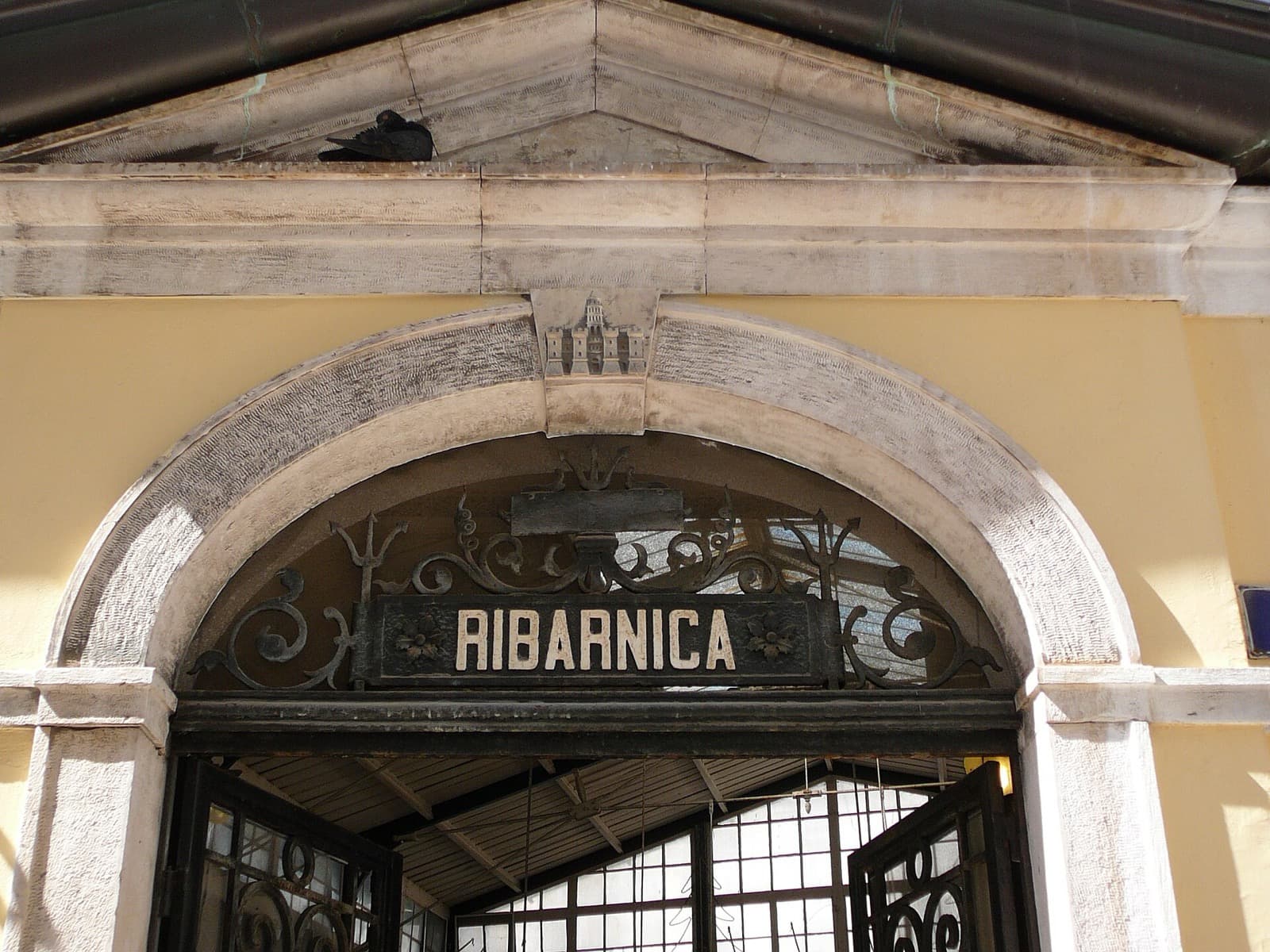
If the palace is the monument and the hill is the escape, the ordinary Split lives against the eastern wall. Our green market and Bacvice walk begins at the Silver Gate, the eastern gate walled up for centuries and reopened only in nineteen fifty-two, now the doorway residents use most because it opens straight onto the daily green market. The Pazar runs in a long ribbon of stalls that lean directly on Roman stone, farmers from the Dalmatian hinterland selling figs, tomatoes, olive oil, cheese, and lavender from roughly six in the morning. Nearby, the Fish Market, a Secession-style hall more than a hundred years old, lays the morning's Adriatic catch on marble slabs, wrapped in the local legend that no fly ever enters, blamed on a neighbouring sulphur spring said to be part of why Diocletian settled here in the first place.
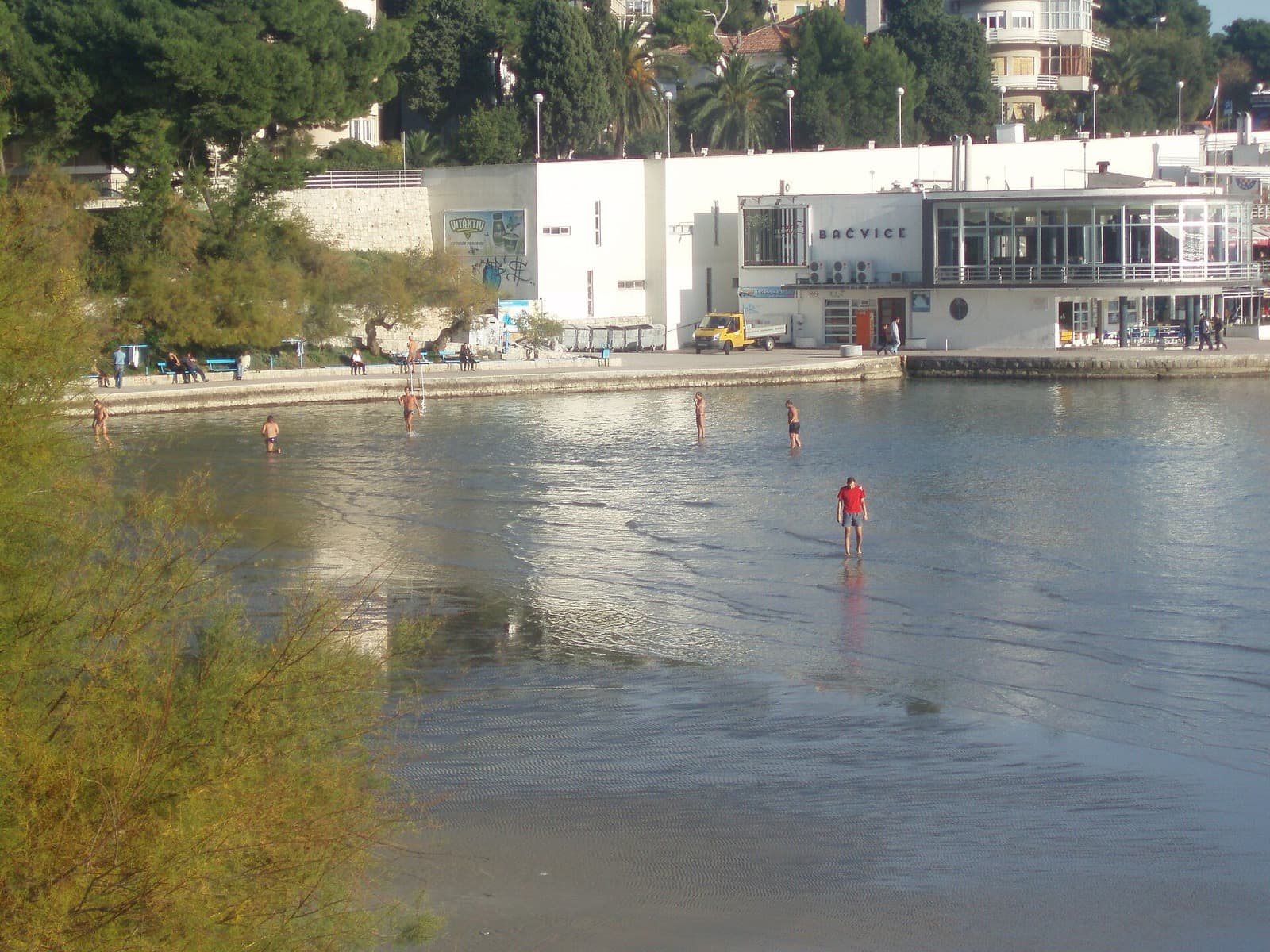
Fruit Square carries the memory of Marko Marulic, born fourteen fifty, the humanist called the father of Croatian literature, whose Judita, completed in fifteen oh one and printed in Venice in fifteen twenty-one, was one of the first printed works of literature in the Croatian language. His bronze statue, like the Gregory of Nin, is the work of the sculptor Ivan Mestrovic. The walk ends at the water twice over: at Matejuska, the working fishermen's slip at the west end of the Riva, and at Bacvice, the shallow sandy bay where in nineteen oh eight Croatian students returning from Prague invented picigin, a shin-deep-water ball game now recognised as Croatian intangible cultural heritage, with a World Championship held here every year since two thousand five. This is the quiet Dalmatian art the whole city practices: doing very little very well, always within reach of the sea. Read across all three routes and one thesis holds: Split never treated the palace as a monument, it treated it as a town, and the town is still going.
For the full set of routes through the palace, the hill, and the market, see Split walking tours.
Sources
- UNESCO World Heritage Centre, Historical Complex of Split with the Palace of Diocletian (inscribed 1979).
- Robert Adam, Ruins of the Palace of the Emperor Diocletian at Spalatro in Dalmatia (1764).
- Visit Split / Split Tourist Board, Pazar green market and Ribarnica fish market listings.
- Croatian Ministry of Culture, register of intangible cultural heritage (picigin).
- City of Split heritage records for Marjan Forest Park (protected 1964) and the Old Jewish Cemetery (established 1573).
Frequently asked questions
- Why is Diocletian's Palace in Split not a ruin like other Roman palaces?
- Because the city never stopped living inside it. When the Roman empire faded, ordinary people built their homes into the emperor's walls instead of abandoning the site. They turned the mausoleum into a cathedral and the Temple of Jupiter into a baptistery, and seventeen centuries later the palace is still a working neighbourhood. Use, not preservation, is what kept the stone standing.
- What was Diocletian's mausoleum turned into?
- It became the Cathedral of Saint Domnius. Diocletian's octagonal tomb was built around three hundred five A.D., and by the mid-seventh century refugees from the destroyed Roman city of Salona consecrated it as a Christian church. It is dedicated to Saint Domnius, a bishop of Salona martyred in three hundred four during Diocletian's own persecution of Christians.
- What is picigin and where was it invented?
- Picigin is a ball game played in shin-deep water, invented on Bacvice beach in Split in nineteen oh eight by Croatian students returning from Prague who found the water too shallow for water polo. Players bat a small felt-stripped ball with their palms to keep it from touching the surface. It is now recognised as Croatian intangible cultural heritage, and a World Championship has been held on Bacvice every year since two thousand five.
- What is there to see in Split beyond Diocletian's Palace?
- The old fishermen's quarter of Veli Varos climbs the slope west of the palace in narrow stone lanes, leading up to Marjan, a forested hill protected as a park since nineteen sixty-four with hermit churches cut into its cliffs and a summit view over the islands. The everyday city gathers at the green market against the eastern wall, the century-old Art Nouveau fish hall, the Matejuska fishermen's slip, and Bacvice bay.
- Who was Gregory of Nin and why do people rub his statue?
- Gregory of Nin was a medieval Croatian bishop remembered for championing the Slavic liturgy of the common people. His roughly eight-metre bronze statue by the sculptor Ivan Mestrovic, cast in nineteen twenty-nine, now stands outside the Golden Gate. Visitors rub his left big toe for luck, and it has been polished gold while the rest of the bronze stays dark.
Ready to experience it?
The Palace People Never Left
90 min · 0.7 km · easy
More from Split
Explore more at your own pace.
One Day in Split: A Walkable Morning-to-Evening Itinerary
Marjan Summit: Why Split's Green Hill Is the Walk That Turns Its Back on the Palace
Picigin at Bacvice: The Shin-Deep Game That Explains Split
The Cathedral of Saint Domnius: How a Persecutor's Tomb Became His Victim's Church
The Peristyle in Split: The Roman Court Where an Emperor Played God