Heart of Sharjah: The Restored Old Town
65 min · 1.4 km · easy
Eat your way through Sharjah by learning a short list of dishes and ordering them where locals do: machboos (the spiced-rice national dish), harees (a slow-cooked wheat-and-meat porridge), thareed (stew over thin bread), and street sweets like luqaimat drizzled with date syrup. Sharjah is the UAE's declared cultural capital, and its food carries the same idea as its restored coral old town: keep the tradition, then serve it. Start in the historic quarter around Souq Al Arsah, where the central coffee house pours Arabic coffee and dates the way it has for generations, then work outward to the family restaurants and karak stalls that ring the lagoons.
The short list: dishes to order first
Machboos is the one to try before anything else. It is the UAE's national dish: long-grain rice cooked in a spiced broth with chicken, lamb, or fish, tinted gold with turmeric or saffron and sharpened with loomi, the dried lime that gives Emirati cooking its distinctive sour edge. If a menu offers machboos djaj (chicken) or machboos laham (lamb), that is your safe first order. It sits close to a South Asian biryani because the Gulf's old sea trade with India and Persia shaped the kitchen, and you will taste that lineage in the cardamom and cinnamon.
Harees is the comfort dish. Cracked wheat and meat are cooked for hours and beaten into a smooth, savory porridge, then finished with ghee. It is plain on purpose, and it means something: harees appears at weddings and is a fixture of Ramadan tables. In 2023, UNESCO added the know-how of making harees to its Representative List of the Intangible Cultural Heritage of Humanity, submitted jointly by the United Arab Emirates, Oman, and Saudi Arabia. Order it if you want to understand the food emotionally, not just eat it.
Thareed is the third pillar: a stew of meat or vegetables ladled over thin, crisp-then-softened bread (regag or a similar flatbread), so the bread soaks up the broth. It is another Ramadan staple and one of the most satisfying dishes on a cool evening.
Breakfast the Emirati way
Hear a stop from this walk
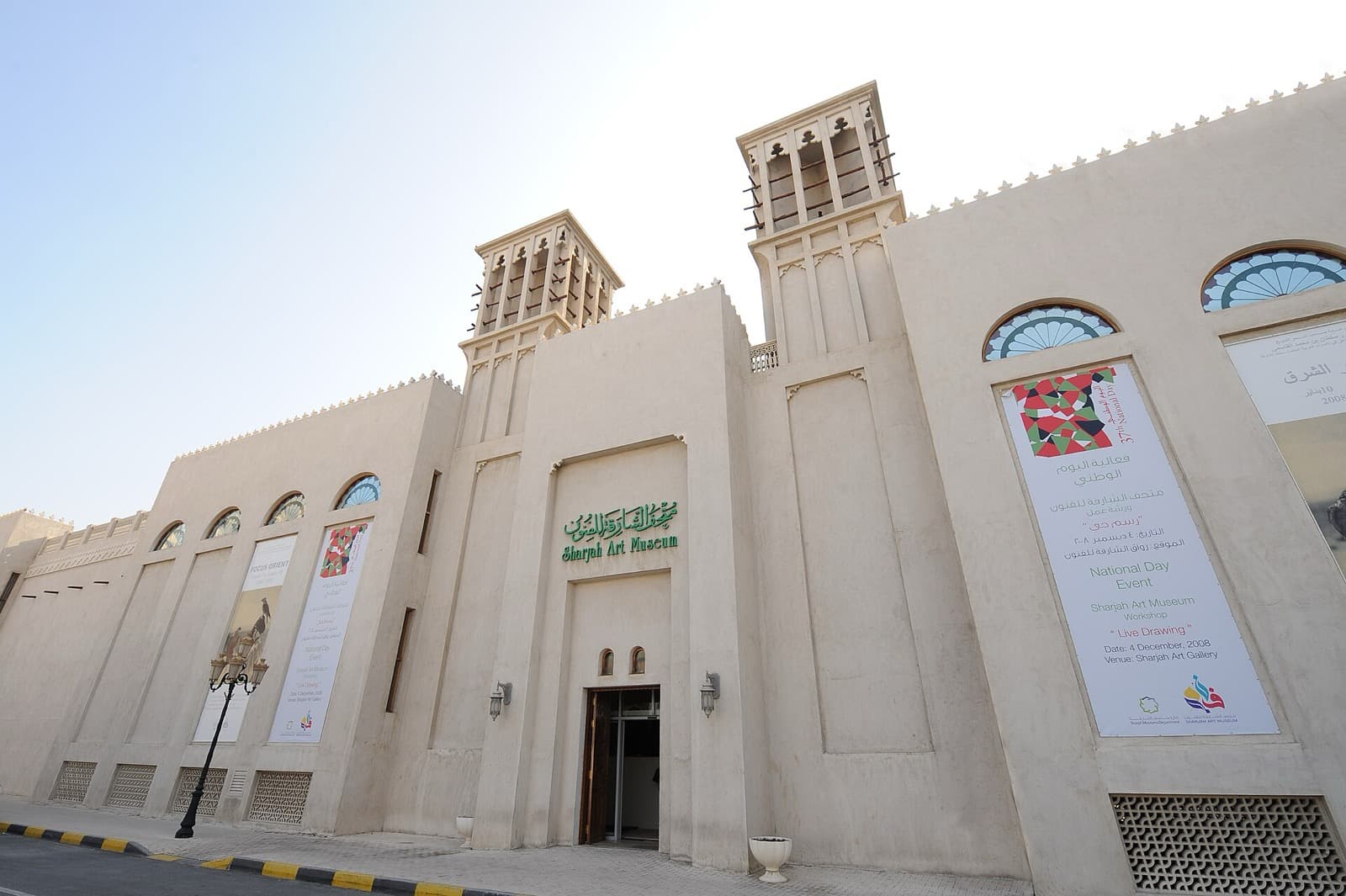
The Sharjah Art Museum: A Capital of Culture, Not Height
Emirati breakfast is where the sweet-and-savory character of the cuisine shows clearest. Balaleet is the signature plate: vermicelli noodles perfumed with saffron and cardamom, lightly sweetened, and topped with a thin savory omelet. The contrast is the point, and it maps directly onto the old trade routes to South Asia.
Chebab are the local pancakes, scented with cardamom and saffron and served with date syrup (dibs) or cream cheese. Look also for khameer, a soft bread gently sweetened with dates that pairs with honey, eggs, or cheese. And everywhere, there are dates themselves, dozens of varieties grown across the UAE, offered as the standard gesture of welcome alongside coffee.
What to drink: karak, gahwa, and dates
Two drinks anchor everything. Karak (karak chai) is the everyday cup: strong black tea boiled with milk, sugar, and a heavy hand of cardamom. It arrived from India in the twentieth century and became so ordinary that it now reads as fully Emirati, sold from roadside kiosks for a few dirhams. Order it hot and sweet unless you say otherwise.
Gahwa, or Arabic coffee, is the ceremonial cup. It is pale, unsweetened, lightly spiced with cardamom and sometimes saffron, and served in small handleless cups, always with dates alongside. Serving it is an act of hospitality, and the ritual is important enough that UNESCO inscribed Arabic coffee on its Intangible Cultural Heritage list in 2015, in a joint listing by the United Arab Emirates, Saudi Arabia, Oman, and Qatar. When someone offers you gahwa, accept at least one small cup.
The sweet you will keep ordering
Luqaimat are the dessert to end on: bite-sized dough balls fried until crisp outside and soft inside, then drizzled with date syrup or honey and sometimes sesame. The name comes from the Arabic luqma, meaning a bite or mouthful, which is exactly how they are eaten, by the handful, warm. You will find them at heritage markets, festival stalls, and traditional restaurants across the emirate.
Where to eat it in the old town
The single best place to start is the historic quarter, and this is where the walking tour lines up with the food. Souq Al Arsah, a covered coral-stone market and one of the oldest souks in the United Arab Emirates, reopened in its old form in the 1990s and keeps a public coffee house at its center that serves Arabic coffee and Sulaimani (a light black tea). Sit there first. A halwa shop in a corner sells the dense, fragrant Emirati sweet that is easy to miss and worth buying.
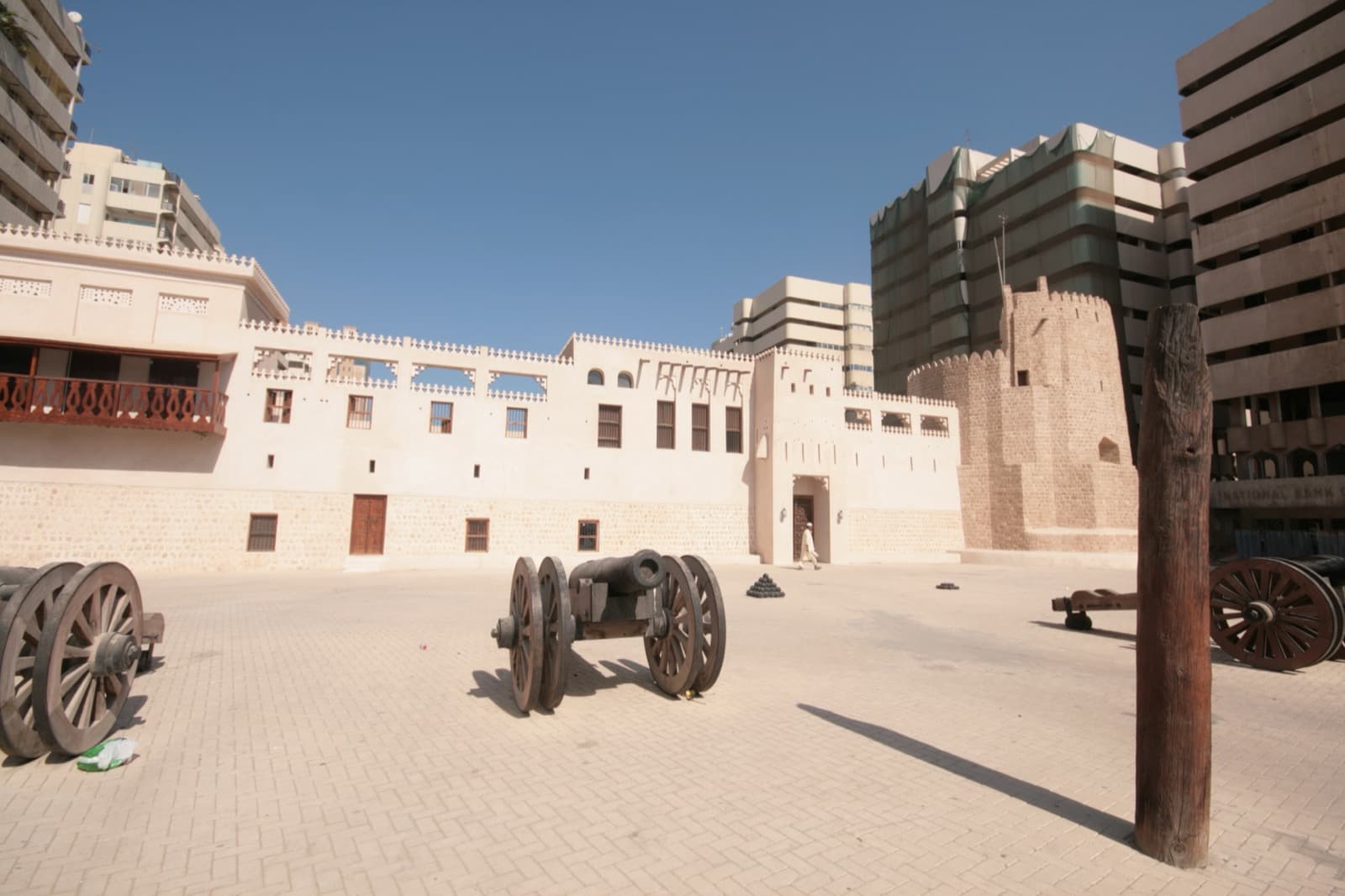
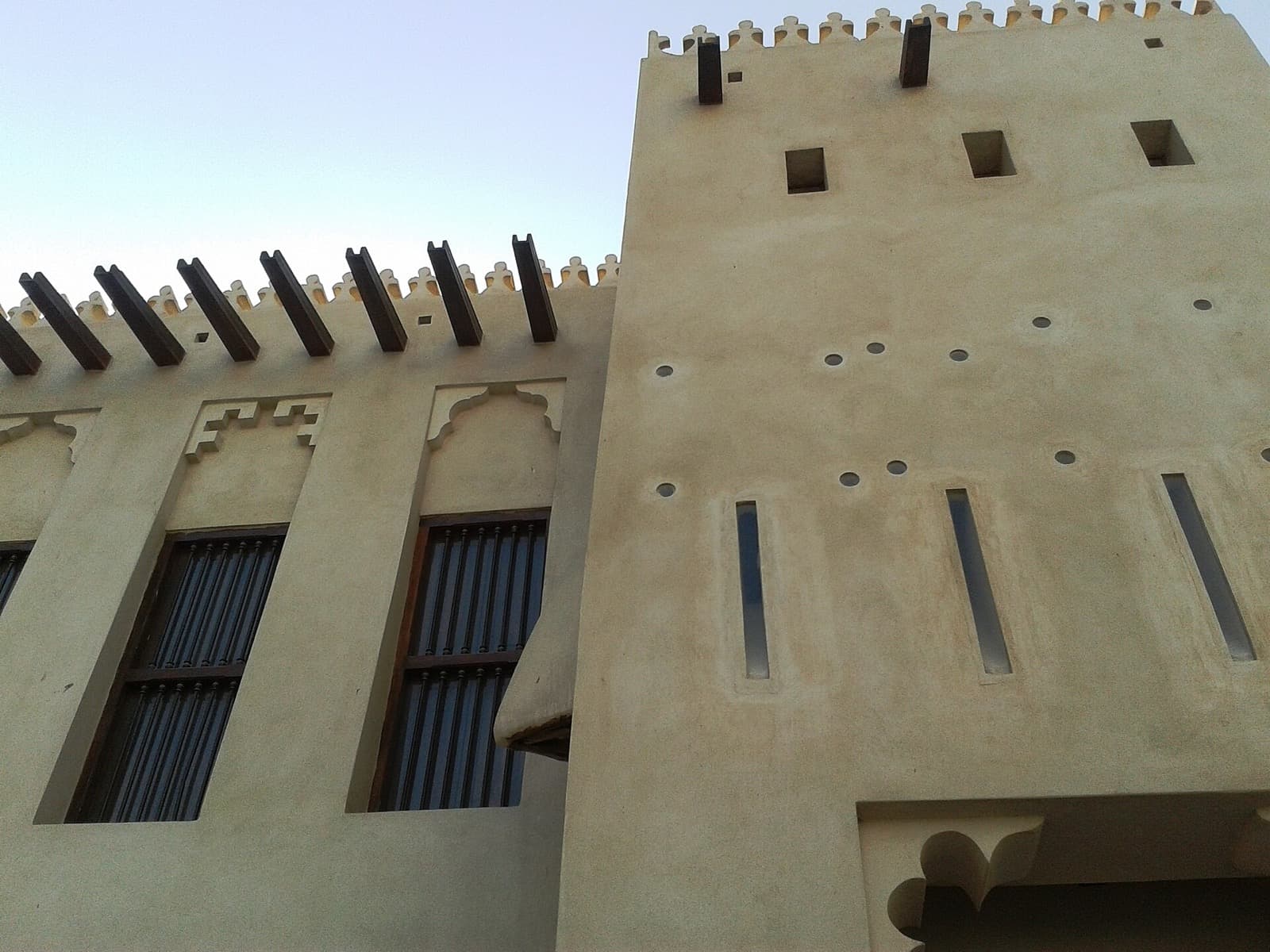
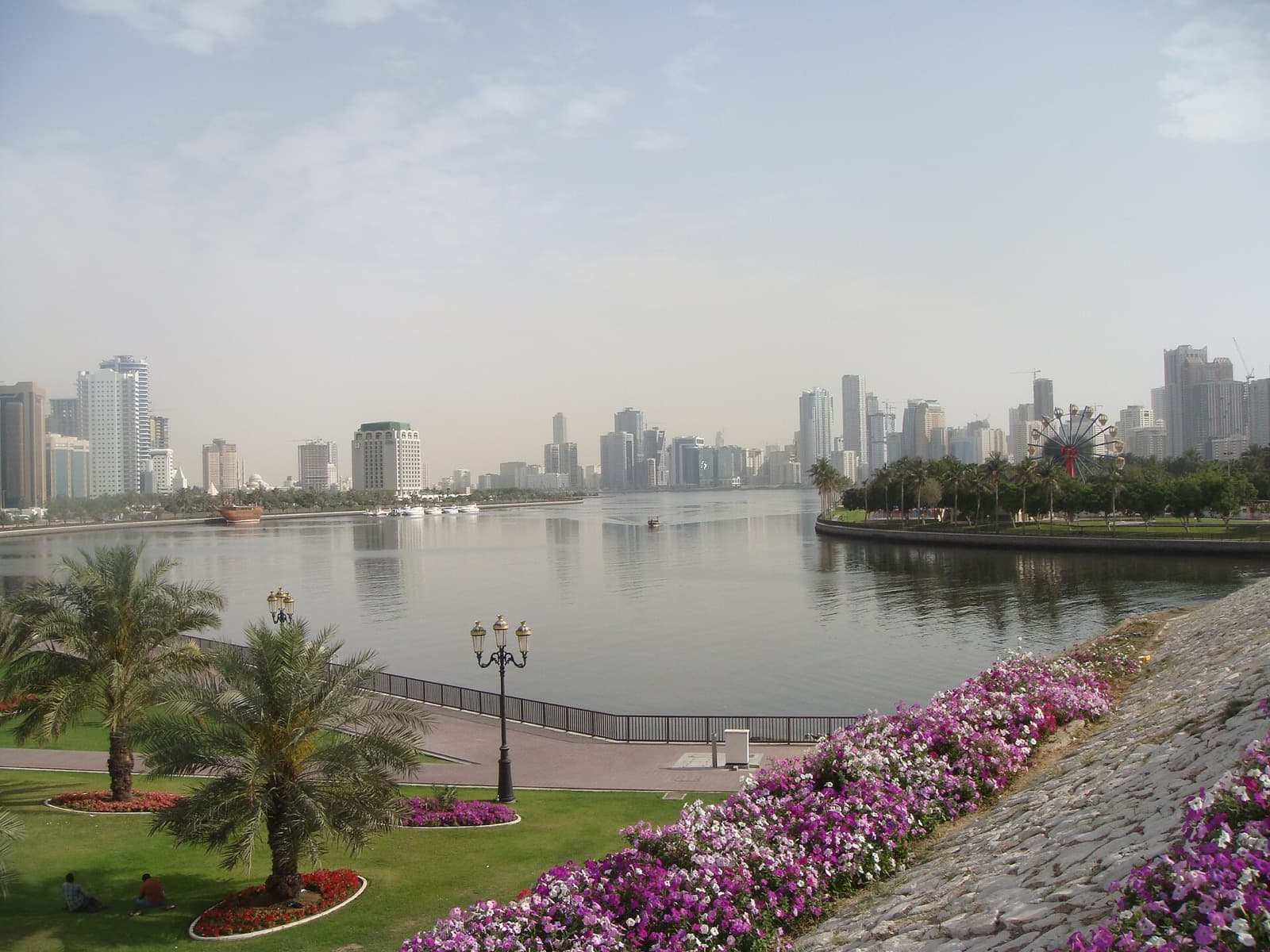
From the souq, the Heart of Sharjah walking tour threads past Al Hisn (the rebuilt fort), Bait Al Naboodah (a nineteenth-century pearl merchant's courtyard house), the Sharjah Heritage Museum, and the Sharjah Calligraphy Museum, described as the first museum in the Arab world devoted entirely to Arabic calligraphy. Time your walk so you break for karak or gahwa mid-route: the historic quarter is compact and self-paced, so you can stop for a plate of machboos and pick the tour back up. For the second half of the day, the Blue Souk and corniche tour loops the Khalid Lagoon and Al Majaz Waterfront, where restaurants and cafes line the water and the giant musical fountain runs after dark, an easy place for luqaimat and tea before the show.
How to order like a local
A few practical notes. Sharjah is a dry emirate: no alcohol is served in restaurants, so tea, coffee, fresh juice, and laban (a salty yogurt drink) are the table drinks. Portions of machboos and harees are generous and meant for sharing, so order fewer mains than people and add sides. Ask whether machboos is available in chicken, lamb, or fish rather than assuming, and if you want to eat the way many locals do, use bread or your right hand for thareed and harees. Many heritage restaurants and the souq coffee house keep unhurried hours, and prices for tea and sweets are small, often just a few dirhams, so the honest advice on cost is to carry a little cash for the stalls.
If you want the food and the history to reinforce each other, do the eating on foot. The two self-guided routes are built to be paused, which is exactly how a food day in the old town works. Browse the full list of Sharjah walking tours to pick your starting point, then eat your way between the stops.
Sources
- A guide to Emirati cuisine: the history, the classic dishes and the restaurants to try, The National
- Harees dish: know-how, skills and practices, UNESCO Intangible Cultural Heritage (2023)
- Gahwa (Arabic Coffee), Department of Culture and Tourism Abu Dhabi / UNESCO 2015
- Souk Al Arsah, Visit Sharjah (official)
- What Is Karak Tea? The UAE's everyday cup explained, Al Fanar
Frequently asked questions
- What is the national dish of the UAE?
- Machboos is the national dish of the United Arab Emirates. It is long-grain rice cooked in a spiced broth with chicken, lamb, or fish, colored gold with turmeric or saffron and given a sour edge by loomi, the dried lime central to Emirati cooking. It is the first dish most visitors should try in Sharjah.
- What traditional foods should I try in Sharjah?
- Start with machboos (spiced rice with meat or fish), harees (a slow-cooked wheat-and-meat porridge), and thareed (stew over thin bread). For breakfast try balaleet, saffron vermicelli topped with a savory omelet, and chebab pancakes. Finish with luqaimat, fried dough balls drizzled in date syrup.
- What is luqaimat?
- Luqaimat are bite-sized dough balls fried until crisp on the outside and soft inside, then drizzled with date syrup or honey and sometimes sesame. The name comes from the Arabic word luqma, meaning a bite or mouthful. You find them at heritage markets, festivals, and traditional restaurants across Sharjah.
- What is karak tea and where do I get it?
- Karak is strong black tea boiled with milk, sugar, and cardamom. It came to the UAE from India in the twentieth century and is now the everyday cup, sold from roadside kiosks for a few dirhams. Order it hot and sweet, and pair it with a plate of chebab or luqaimat.
- Can you drink alcohol in Sharjah restaurants?
- No. Sharjah is a dry emirate and restaurants do not serve alcohol. The standard table drinks are karak tea, Arabic coffee (gahwa), fresh juices, and laban, a salty yogurt drink. This is one clear difference from neighboring Dubai.
- Where is the best place to eat traditional food in Sharjah's old town?
- Begin at Souq Al Arsah, a covered coral-stone market and one of the oldest souks in the UAE, which keeps a public coffee house at its center serving Arabic coffee and light Sulaimani tea. From there the Heart of Sharjah walking route passes heritage restaurants where you can break for machboos, harees, and sweets.
Ready to experience it?
Heart of Sharjah: The Restored Old Town
65 min · 1.4 km · easy
More from Sharjah
Explore more at your own pace.
One Day in Sharjah: A Walkable Morning-to-Evening Itinerary
Sharjah: The Emirate That Banked on Culture Instead of Height
Heart of Sharjah: The Old Town That Was Rebuilt on Purpose
The Buhaira Corniche: Reading All of Sharjah From One Dusk View
Al Hisn Sharjah: The Fort Rebuilt From Memory