Heart of Sharjah: The Restored Old Town
65 min · 1.4 km · easy
Sharjah is the third city of the United Arab Emirates, and where its neighbours reached for height after oil, it chose to rebuild its past and bank on culture. That single decision, made by a ruler who is himself a working historian, runs from the coral fort on the tidal creek to the man-made lagoon at the centre of the city. Sharjah did not clear away its old town in the rush that followed oil. It reconstructed it, filled it with museums and markets and art, and staked its name on learning rather than on the tallest skyline. Two self-guided walks trace that choice: one through the restored old quarter on the creek, one around the lagoon at dusk. Together they read the emirate that made culture its capital, at your own pace. Start with the Sharjah walking tours hub, then follow the through-line below.
The Fort That Was Raised From Memory
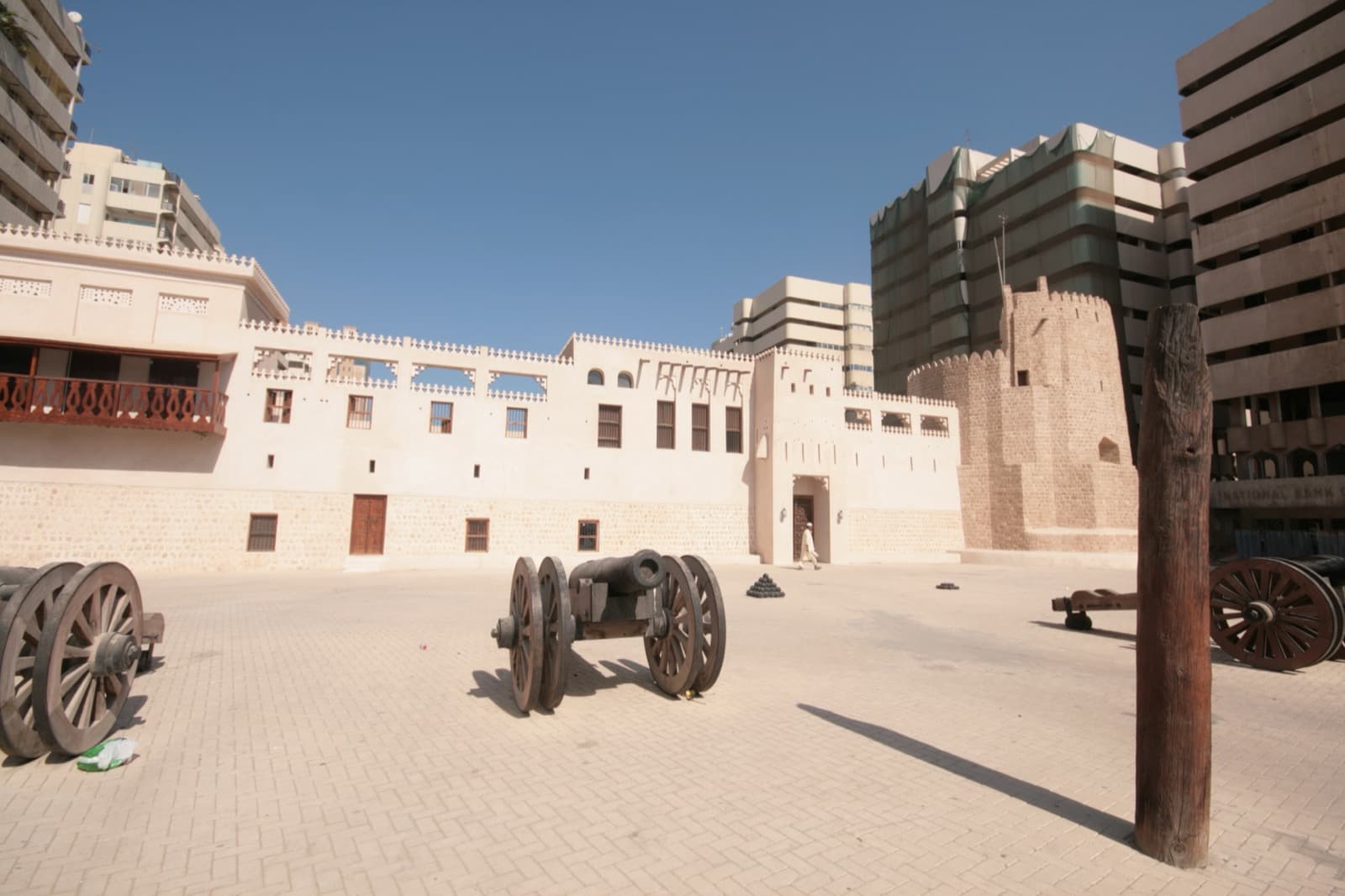
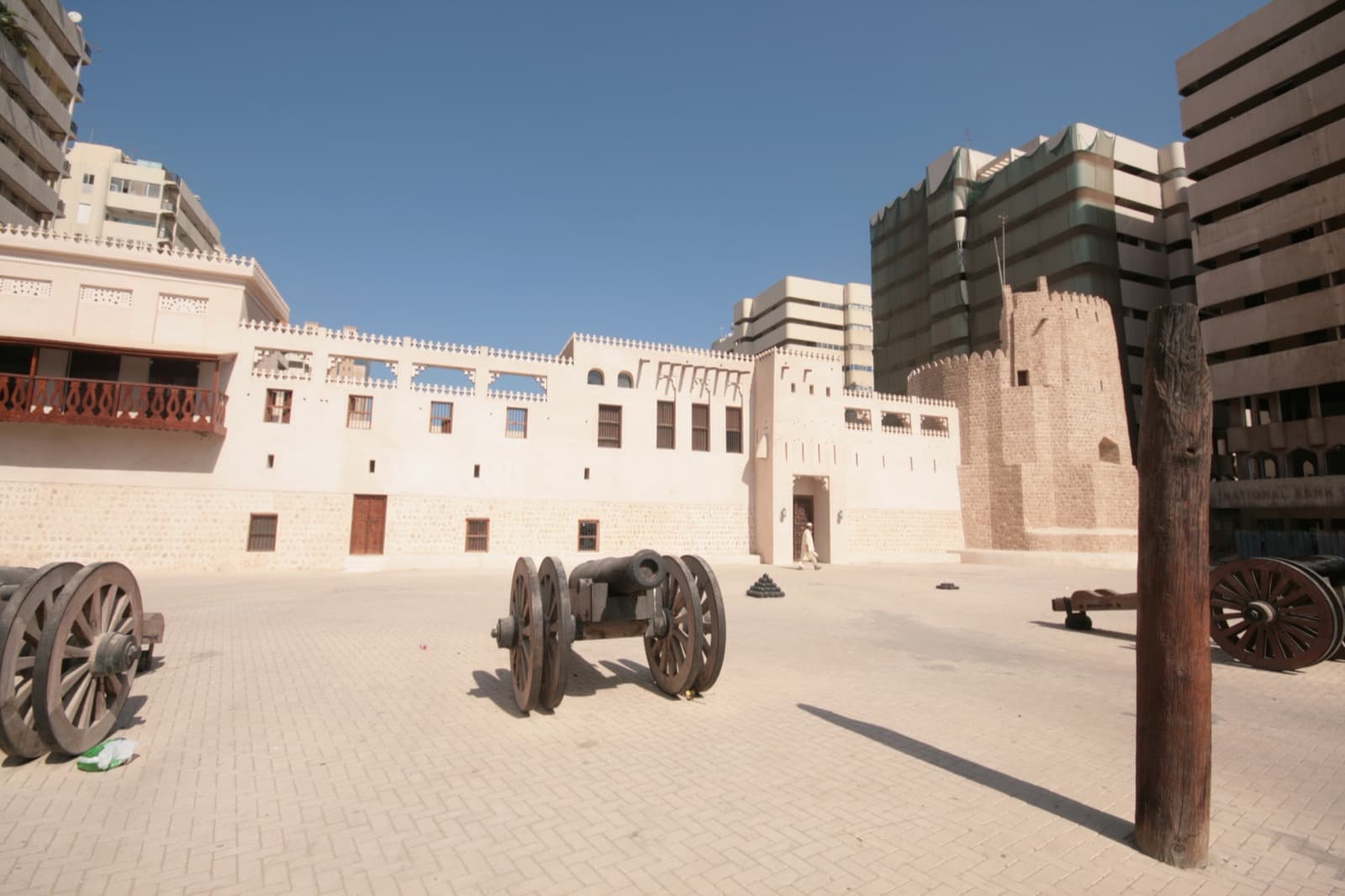
The clearest statement of Sharjah's decision stands at the centre of the old town. Al Hisn Sharjah, the white square fort, was built in eighteen twenty by Sheikh Sultan bin Saqr Al Qasimi and served for generations as the seat of government and the home of the ruling Al Qasimi family, who have governed Sharjah for roughly three centuries. In January of nineteen seventy, on the order of Sheikh Khalid bin Muhammad Al Qasimi, the fort was demolished. Only one tower survived. Nearly two decades later the current ruler, Sheikh Sultan bin Muhammad Al Qasimi, a historian by training, set out to bring the fort back. He worked from the surviving foundation line, from old photographs, and from original doors and windows that had been saved from the demolished building, completing the reconstruction in April of nineteen ninety-seven.
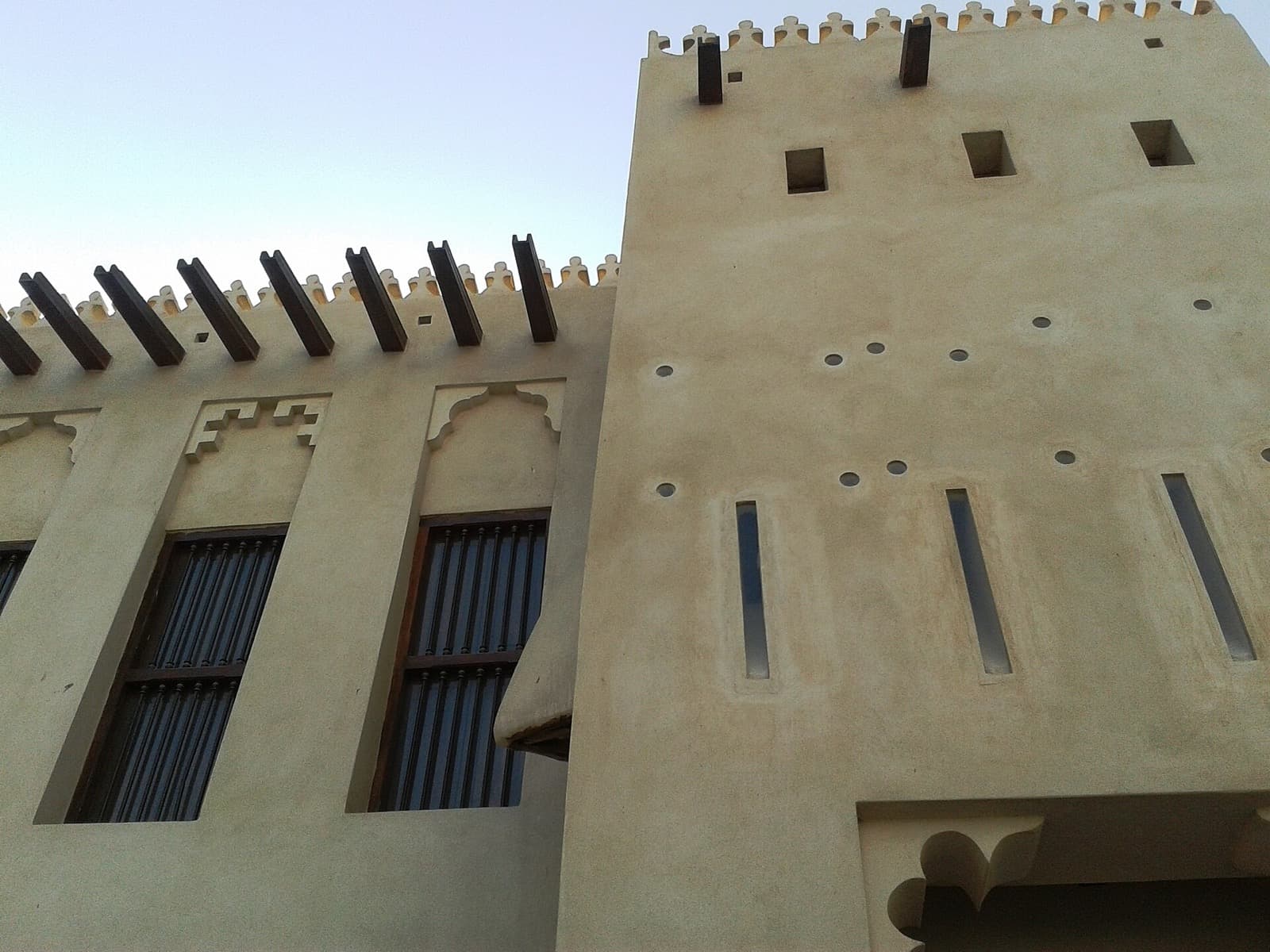
So the fort you see is a reconstruction, raised again from memory and salvaged pieces. That is not a flaw in the story. It is the story, and everything on the Heart of Sharjah walk flows from it. The larger quarter around the fort, the Heart of Sharjah, recreates the old town as it stood in the nineteen fifties, built in coral and gypsum with ceilings of teak and palm frond. That restoration began in January of nineteen ninety-six as a five-phase project structured for completion in the year two thousand and twenty-five, managed by the Sharjah Investment and Development Authority, known as Shurooq, together with the Sharjah Institute for Heritage, the Sharjah Museums Department and the Sharjah Art Foundation. It is preservation by rebuilding: new coral walls, reconstructed wind towers, streets laid to a remembered plan. In two thousand and fourteen the quarter was placed on the UNESCO tentative World Heritage list.
A Market, a Merchant's House, a Coast That Lived on Pearls
Hear a stop from this walk
The Sharjah Art Museum: A Capital of Culture, Not Height
The old quarter is not only monuments. It holds the texture of a coast that lived on the sea. Souq Al Arsah, a covered market of coral stone, is widely described as one of the oldest marketplaces in the country. Long before oil, Bedouin came in from the desert with their camels and traders arrived from Persia and India, bartering goods such as charcoal for rice around a traditional coffee house that still serves Arabic coffee and Sulaimani tea. Nearby, Bait Al Naboodah is a two-storey courtyard house built around eighteen forty-five for the pearl merchant Obaid Bin Isa Bin Ali Al Shamsi, known as Al Naboodah, who traded with India and with Europe, including France. Its sixteen rooms gather around a courtyard once planted with almond and palm trees, cooled by barjeel wind towers on the roof and smaller malaqaf wind-catchers set into the walls, ringed by a colonnade of teak columns shipped from India. The family held the house until the nineteen seventies, and it reopened as a museum in April of two thousand and eighteen.
What paid for all of it was pearling, and it was brutal work. The Sharjah Heritage Museum, in the restored coral house Bait Saeed Al Taweel Al Shamsi, widens the view from one family to the whole emirate: pearling and Bedouin traditions, crafts, dress, jewellery and traditional medicine. Divers went down again and again on a single breath, and most of the profit went to boat owners and financiers rather than to them. Then, in the nineteen thirties, the trade collapsed almost overnight, undone by Japanese cultured pearls and the Great Depression. Oil was discovered in nearby Abu Dhabi in the late nineteen fifties and exported from nineteen sixty-two, and on the second of December nineteen seventy-one the United Arab Emirates was founded, with Sheikh Zayed bin Sultan Al Nahyan as its first president. The museum holds the world that existed just before that transformation.
The Bet on Books, Letters and Art
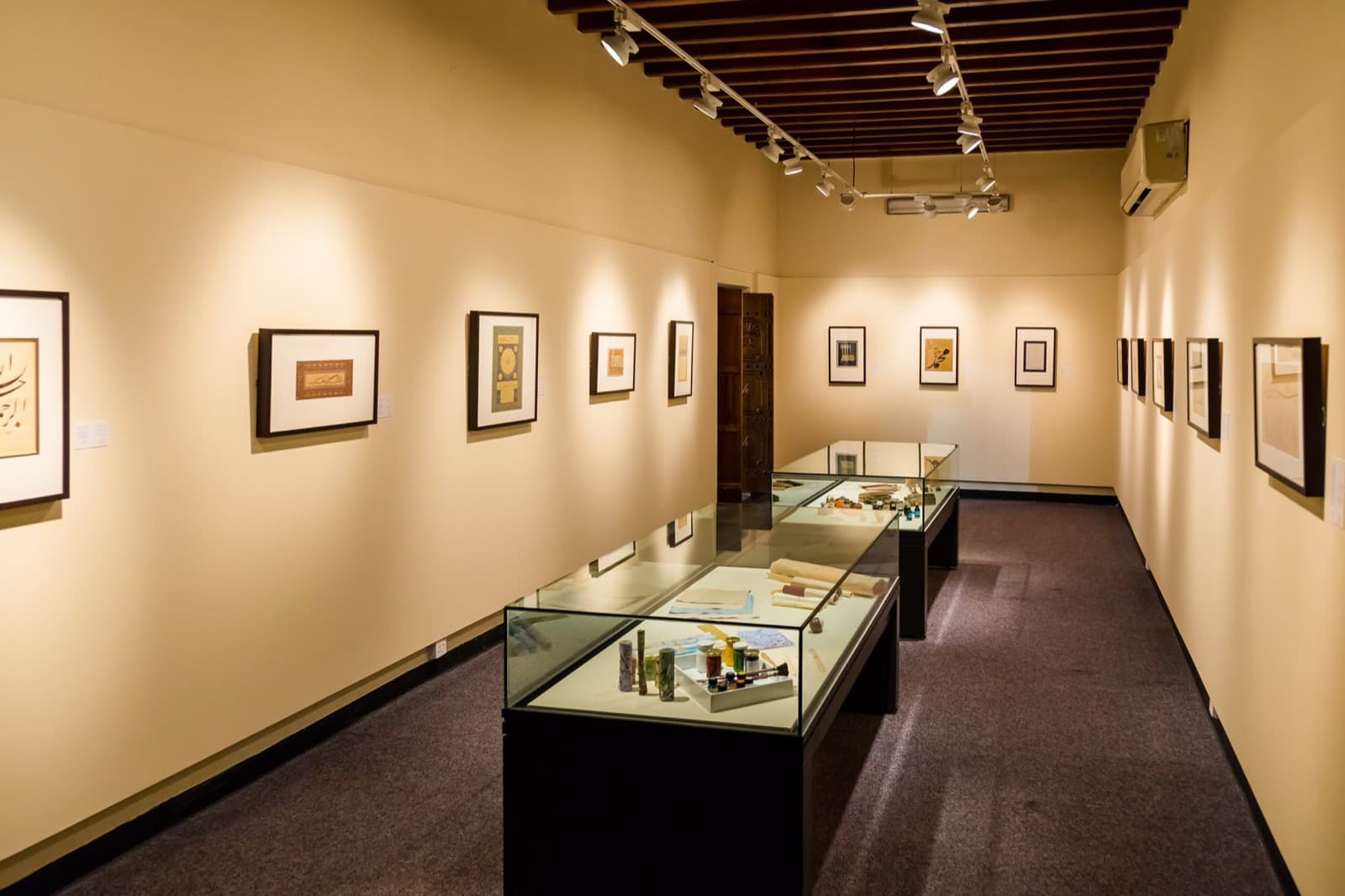
The deeper argument of the old town shows itself at Calligraphy Square. In the restored house of Hamad Al Midfaa stands the Sharjah Calligraphy Museum, which opened on the twelfth of June, two thousand and two, and is described as the first museum in the Arab world dedicated entirely to Arabic calligraphy. That a small emirate would give a whole museum and a whole square to the written word tells you where its ambitions lie. The record bears it out. In nineteen ninety-eight, UNESCO named Sharjah the Cultural Capital of the Arab World, and for the year two thousand and nineteen the emirate was named UNESCO World Book Capital.
The walk ends in the Arts Area at the Sharjah Art Museum, which opened on the seventh of April, nineteen ninety-seven, during the third Sharjah International Arts Biennial. It is among the leading art museums in the Gulf and is often called the first purpose-built art museum in the region. It holds the orientalist collection of Sheikh Sultan bin Muhammad Al Qasimi, the same ruler-historian who rebuilt the fort, alongside modern and contemporary art from the United Arab Emirates and the wider Middle East. Every neighbour on this coast reached for something taller. Sharjah reached for something older and deeper, and out of that single refusal to erase its past it built a claim to be the region's capital of culture.
The Lagoon at Dusk: The Softer Face
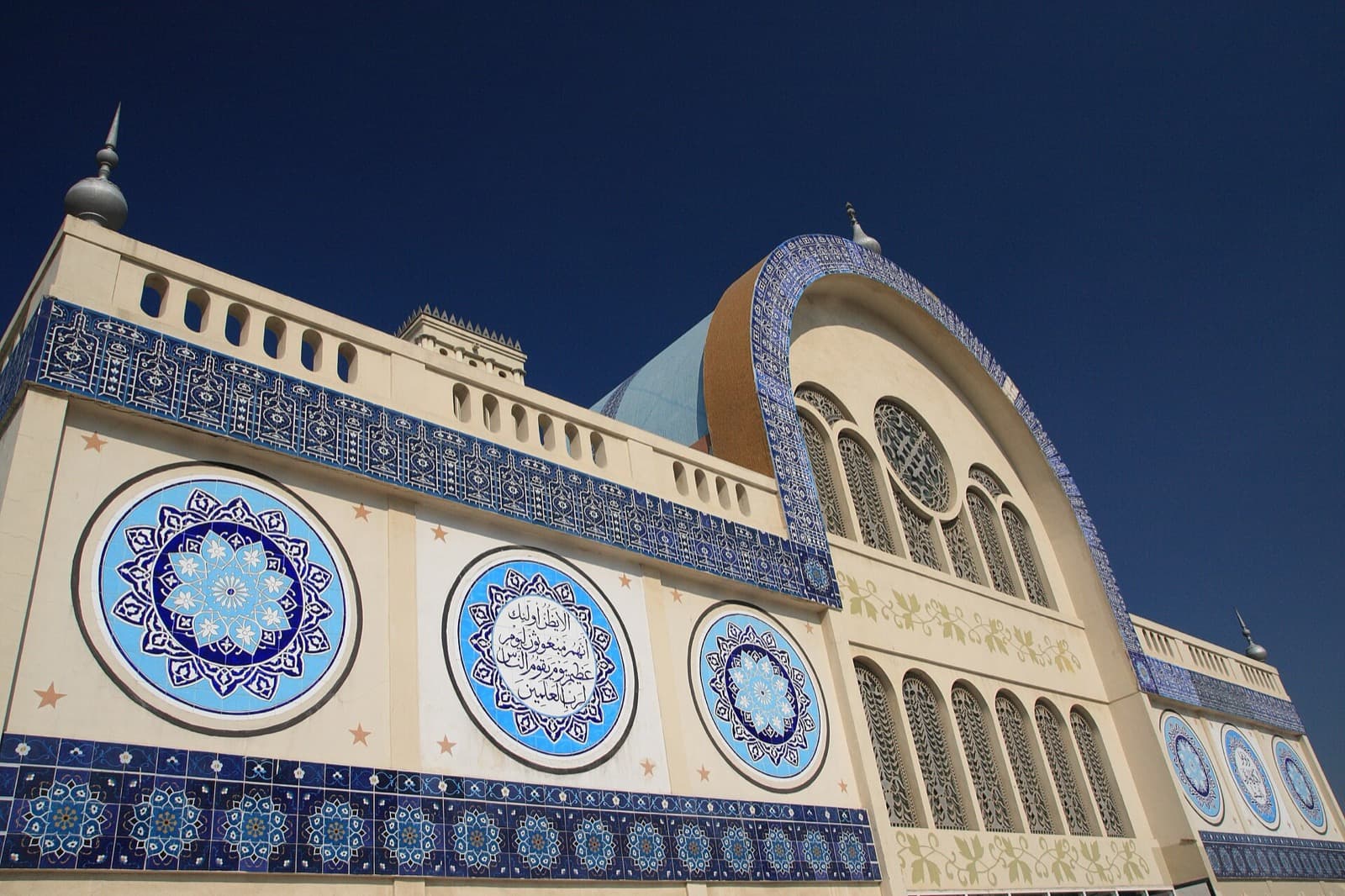
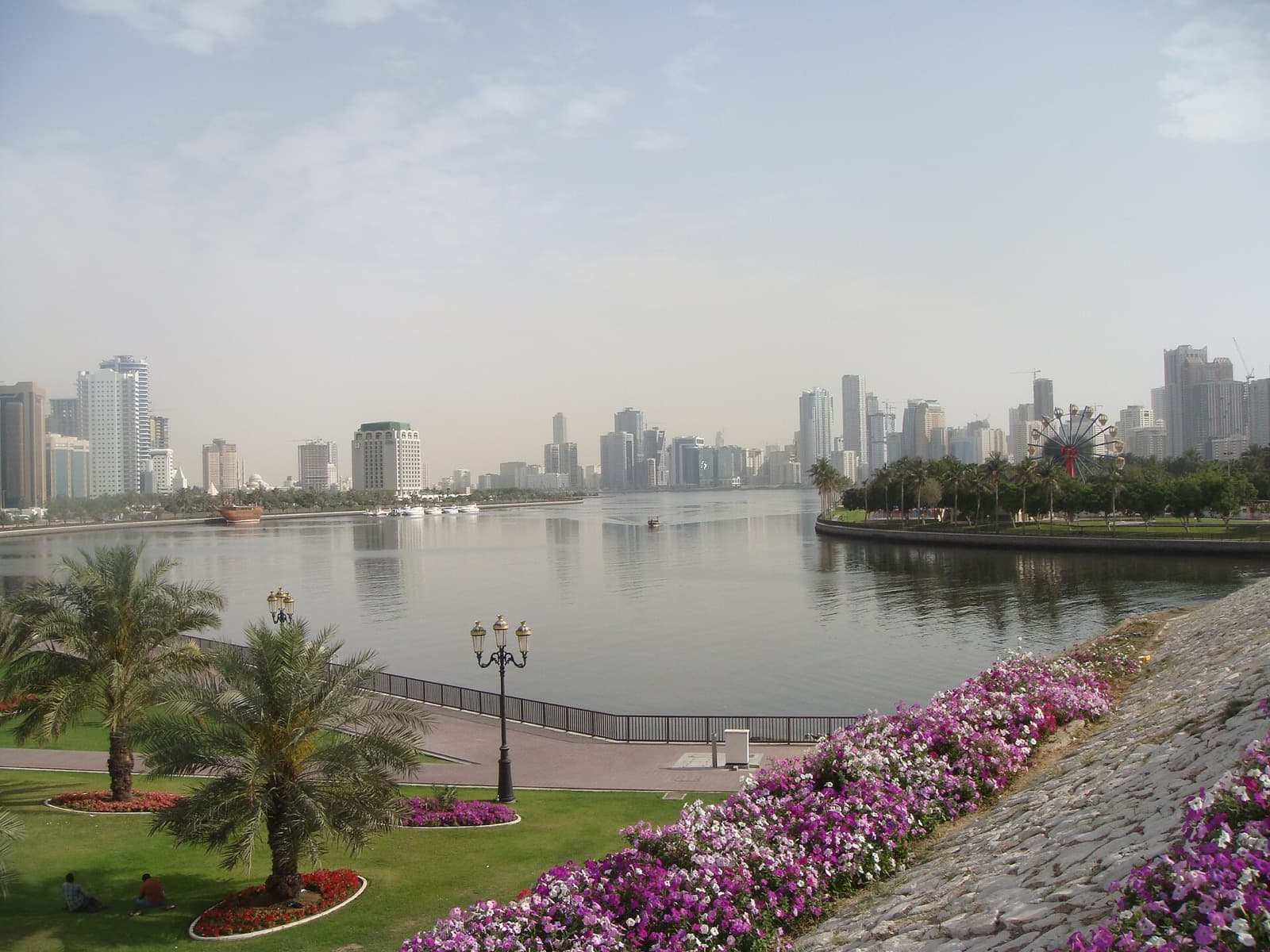
The Corniche and Blue Souk walk reads the same restraint in a gentler register, around Khalid Lagoon, the sheet of water the city cut into its own centre. The blue-tiled Sharjah Central Souq, known to everyone as the Blue Souk, was designed by the British firm Michael Lyell Associates under the guidance of the ruler and completed in nineteen seventy-eight, then inaugurated in nineteen eighty. Its two joined halls hold more than six hundred shops across roughly eighty thousand square metres, crowned by twenty decorative wind towers. The country admired it enough to print it on the five-dirham banknote.
Across the water stands the Al Noor Mosque, its foundation laid on the sixth of April, two thousand and three, and completed in two thousand and five. Its Turkish Ottoman design, modelled on the Sultan Ahmed Mosque in Istanbul, cascades into thirty-four domes with two minarets each fifty-two metres tall, holding around twenty-two hundred worshippers. It was the first mosque in Sharjah to open its doors to non-Muslim visitors on guided tours, offered as a bridge between people. That open door is the truest expression of what Sharjah means by culture. Around the same lagoon, Al Majaz Waterfront, developed by Shurooq and opened to the public in late twenty eleven, is a public garden most of which is free to walk into, and the giant Sharjah Fountain, opened in twenty twelve, throws water up to one hundred metres over the dark water at night. Sharjah, named Capital of Islamic Culture in twenty fourteen, describes the fountain carefully as among the largest of its kind in the region, not the world. That modest framing is the whole point of the place.
Sources
- Sharjah Museums Authority, Al Hisn Sharjah and heritage house museums: https://www.sharjahmuseums.ae/
- Sharjah Investment and Development Authority (Shurooq), Heart of Sharjah and Al Majaz Waterfront: https://www.shurooq.gov.ae/
- UNESCO, Sharjah World Book Capital 2019: https://www.unesco.org/en/world-book-capital
- Visit Sharjah official tourism, Blue Souk and Al Noor Mosque: https://visitsharjah.com/
- UNESCO World Heritage tentative list, Sharjah entry: https://whc.unesco.org/en/tentativelists/
Frequently asked questions
- Why is Sharjah called the cultural capital of the UAE?
- Sharjah deliberately rebuilt its pre-oil old town in coral and gypsum rather than clearing it away, and filled it with museums, markets and art under a ruler who is a historian. UNESCO named Sharjah the Cultural Capital of the Arab World in nineteen ninety-eight, World Book Capital for two thousand and nineteen, and Capital of Islamic Culture in twenty fourteen.
- Is Al Hisn Sharjah the original fort?
- No. The original fort, built in eighteen twenty, was demolished in January nineteen seventy on the order of Sheikh Khalid bin Muhammad Al Qasimi, leaving only one tower. The current fort is a reconstruction completed in April nineteen ninety-seven, rebuilt from the surviving foundation line, old photographs, and original doors and windows saved from the demolished building.
- Can non-Muslim visitors enter the Al Noor Mosque in Sharjah?
- Yes. The Al Noor Mosque was the first mosque in Sharjah to open its doors to non-Muslim visitors, and it runs guided tours for that purpose. Visitors should join a scheduled tour, dress modestly, and women should bring a scarf to cover the hair, since it remains a working place of worship.
- What is the Blue Souk in Sharjah?
- The Blue Souk is the popular name for the Sharjah Central Souq, named for the blue tiles on its outer walls. It was designed by the British firm Michael Lyell Associates, completed in nineteen seventy-eight and inaugurated in nineteen eighty, holds more than six hundred shops, and is pictured on the UAE five-dirham banknote.
- What can you see on a walk around Khalid Lagoon in Sharjah?
- The lagoon walk gathers the Blue Souk, the Al Noor Mosque with its thirty-four domes reflected in the water, the Al Majaz Waterfront public gardens, and the Sharjah Fountain, whose jets rise up to one hundred metres after dark. Most of the route, including the corniche, the souk halls and the fountain, is free to enjoy.
Ready to experience it?
Heart of Sharjah: The Restored Old Town
65 min · 1.4 km · easy
More from Sharjah
Explore more at your own pace.
One Day in Sharjah: A Walkable Morning-to-Evening Itinerary
Sharjah Travel Guide: Days, Transport, Best Time, Safety, Budget
Heart of Sharjah: The Old Town That Was Rebuilt on Purpose
The Buhaira Corniche: Reading All of Sharjah From One Dusk View
Al Hisn Sharjah: The Fort Rebuilt From Memory