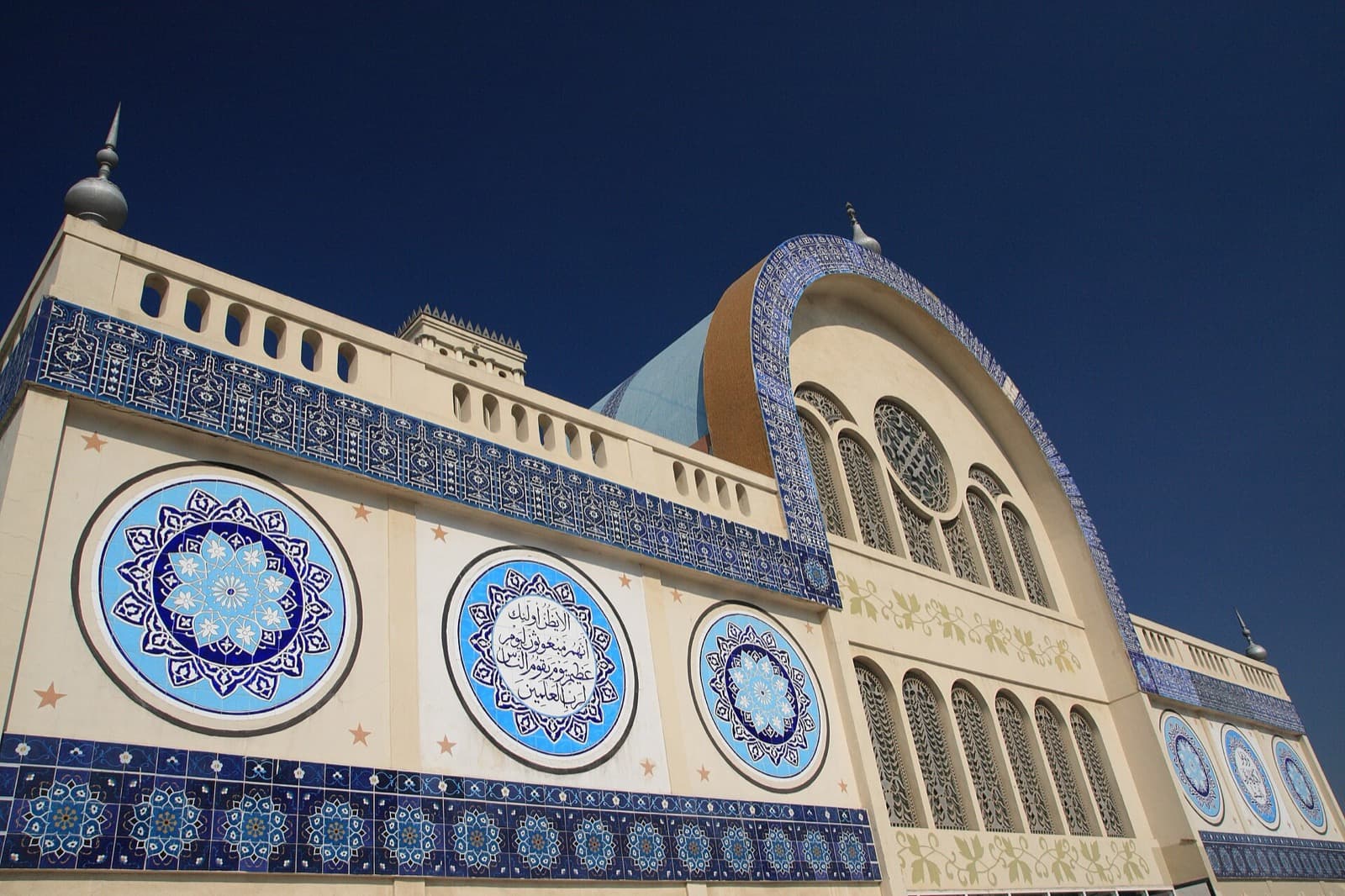
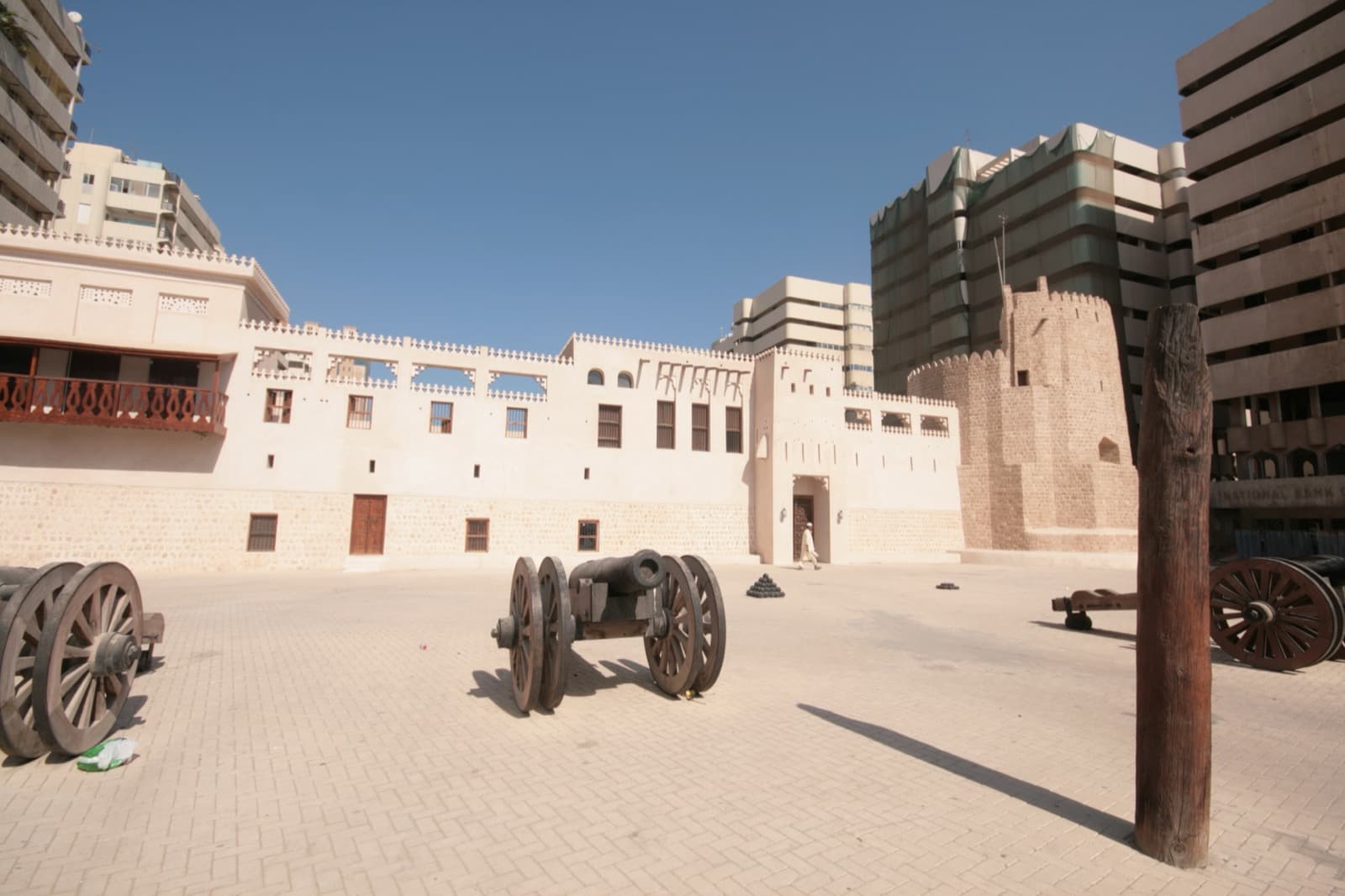
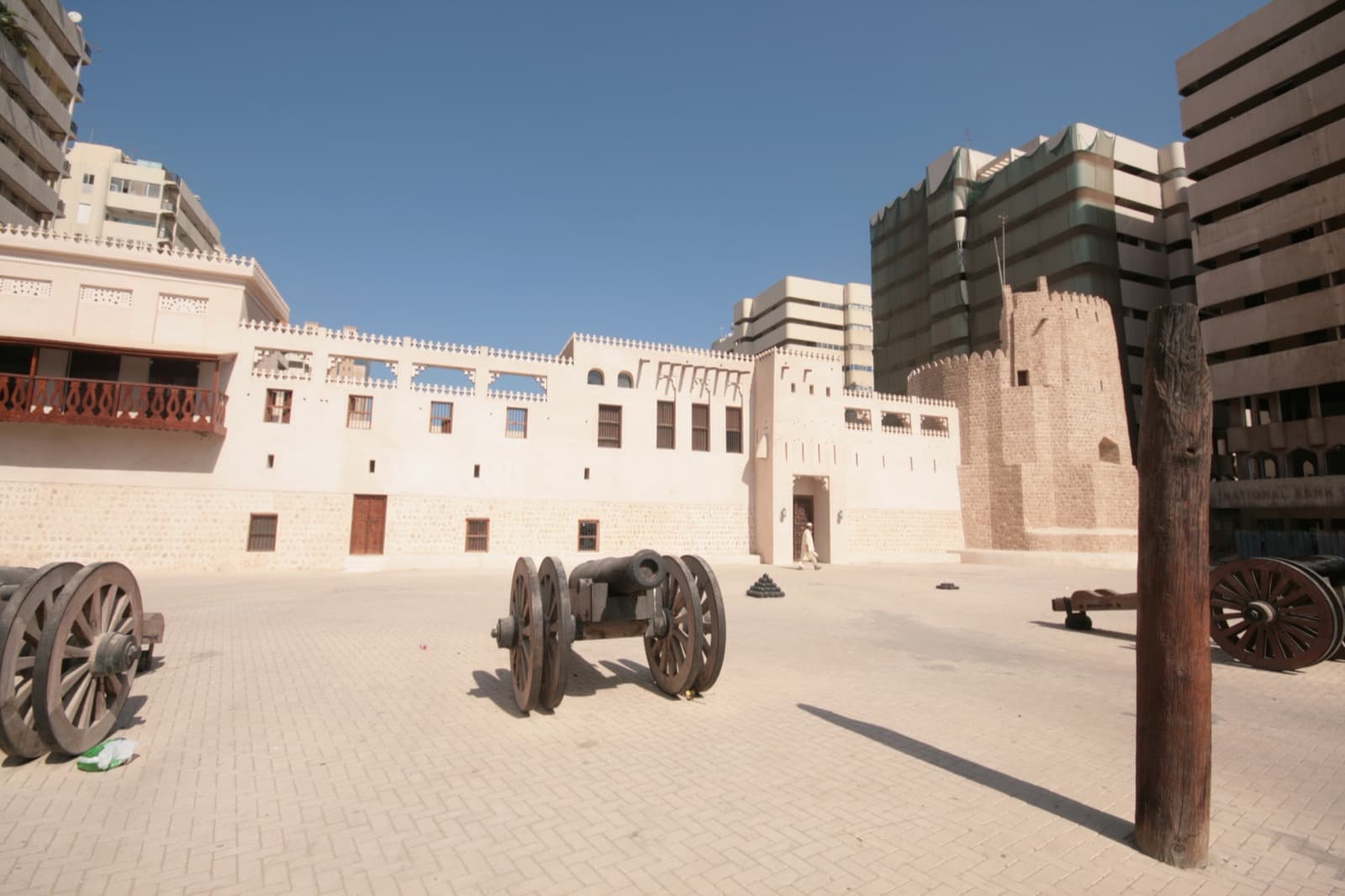
Al Hisn Sharjah is a fort with an unusual biography: it was built in 1820, torn down in January 1970, and then rebuilt decades later from salvaged doors and windows, old photographs, and the line of its own surviving foundation. The white, square structure you see today at the center of Sharjah's old town is a reconstruction, completed in April 1997, and understanding that single fact changes how you read everything around it. This is not a fort that survived. It is a fort that was deliberately brought back, and it anchors an entire quarter built on the same principle.
The seat of a three-century dynasty
For most of the emirate's modern history, Al Hisn was the seat of government and the home of its ruling family, the Al Qasimi. That dynasty has held Sharjah for roughly three centuries, with its founding placed in the 1720s, so this ground has been the center of power on this stretch of coast for a very long time. Hisn simply means the fort, and the building did the work the name implies: it watched over the town, housed the ruler, and organized the life of the quarter around it.
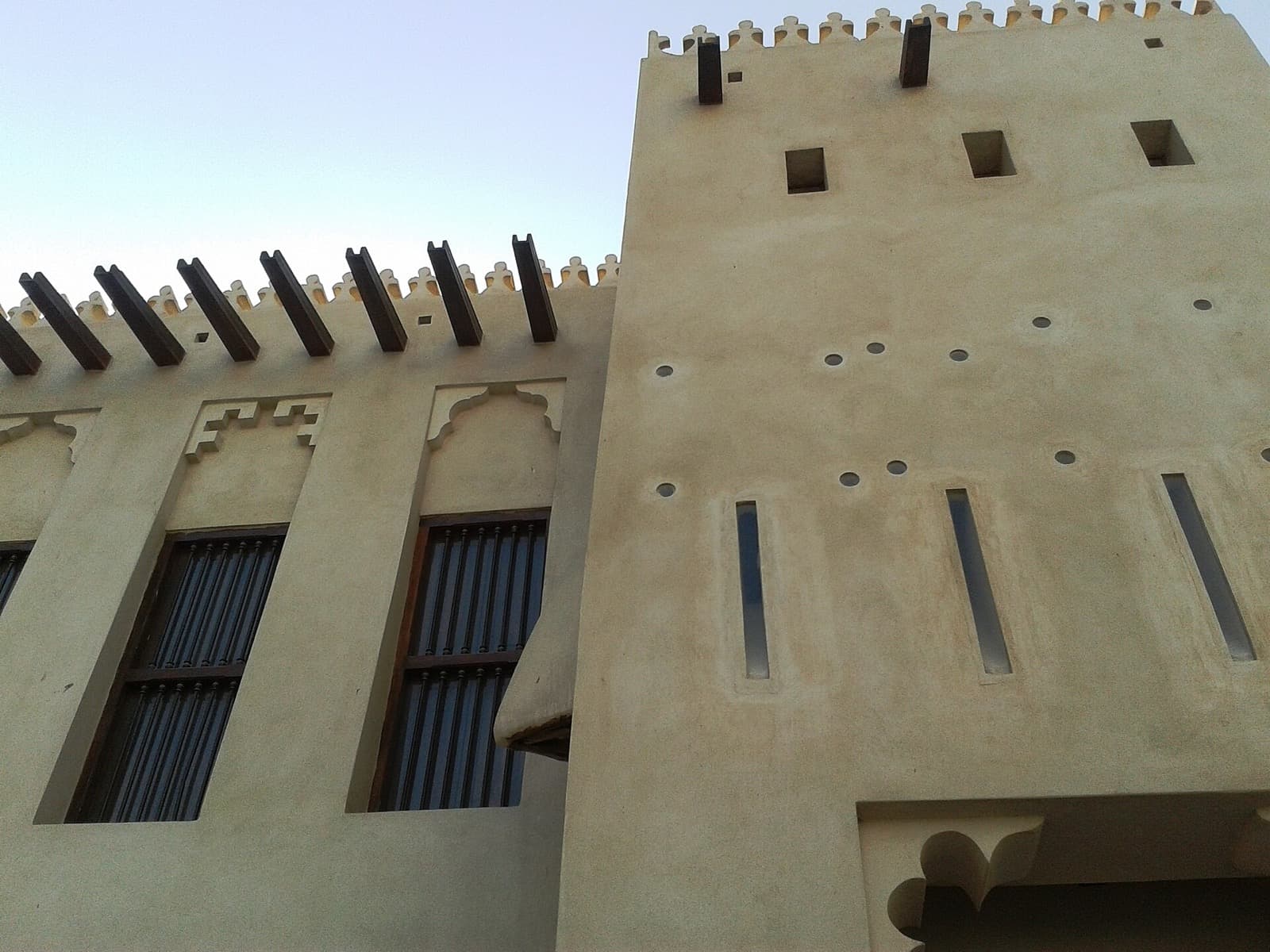
The fort itself was raised in 1820 by Sheikh Sultan bin Saqr Al Qasimi, built of rock, coral, and adobe. It was a double-storey structure set around a central courtyard, with towers at its corners. That material palette matters beyond this one building. Coral cut from the shallows and bound with gypsum plaster was the ordinary architecture of the pre-oil Gulf coast, and the fort set the pattern that the surrounding houses and markets would follow. When you look at the whole old town later, you are looking at variations on what Al Hisn established first.
The demolition, and the one tower that lived
Hear a stop from this walk
The Sharjah Art Museum: A Capital of Culture, Not Height
Here the story turns. In January 1970, on the order of Sheikh Khalid bin Muhammad Al Qasimi, the fort was demolished. This was the period after oil began to reshape the region, when towns across the Gulf were clearing away their old cores and building anew, and Sharjah's fort was caught in that current. Almost all of it came down.
Only one tower survived. It was called the Kubs, and later simply the Burj, which means tower. That surviving fragment gave its name to the square that grew up around it, so even after the fort was gone, the ground kept a memory of what had stood there. That single tower would matter more than anyone could have known in 1970, because it became part of the physical evidence for what came next.
Bringing the fort back
Nearly two decades after the demolition, the current ruler of Sharjah, Sheikh Sultan bin Muhammad Al Qasimi, set out to rebuild the fort. This detail is central to the whole quarter, so it is worth stating plainly: the ruler who ordered the reconstruction is himself a working historian, with a doctorate in history and dozens of published books to his name. The instinct to rebuild rather than replace came from someone who thinks about the past for a living.
The reconstruction was not guesswork. He worked from the line of the remaining foundation, from old photographs of the building, and from original doors and windows that had been saved from the demolished fort. Salvaged pieces of the real 1820 structure were set back into a new coral-and-gypsum shell built on the original footprint. The work was completed in April 1997.
So the qasr, the great fort you stand before, is authentic in intent and reconstructed in fact. That is not a weakness in the story. It is the story. Standing in the fort square, the one thing to understand is this: Sharjah chose to rebuild its past rather than clear it away, and that decision, made first for this fort, became the template for the entire surrounding district.
Why the fort is the anchor
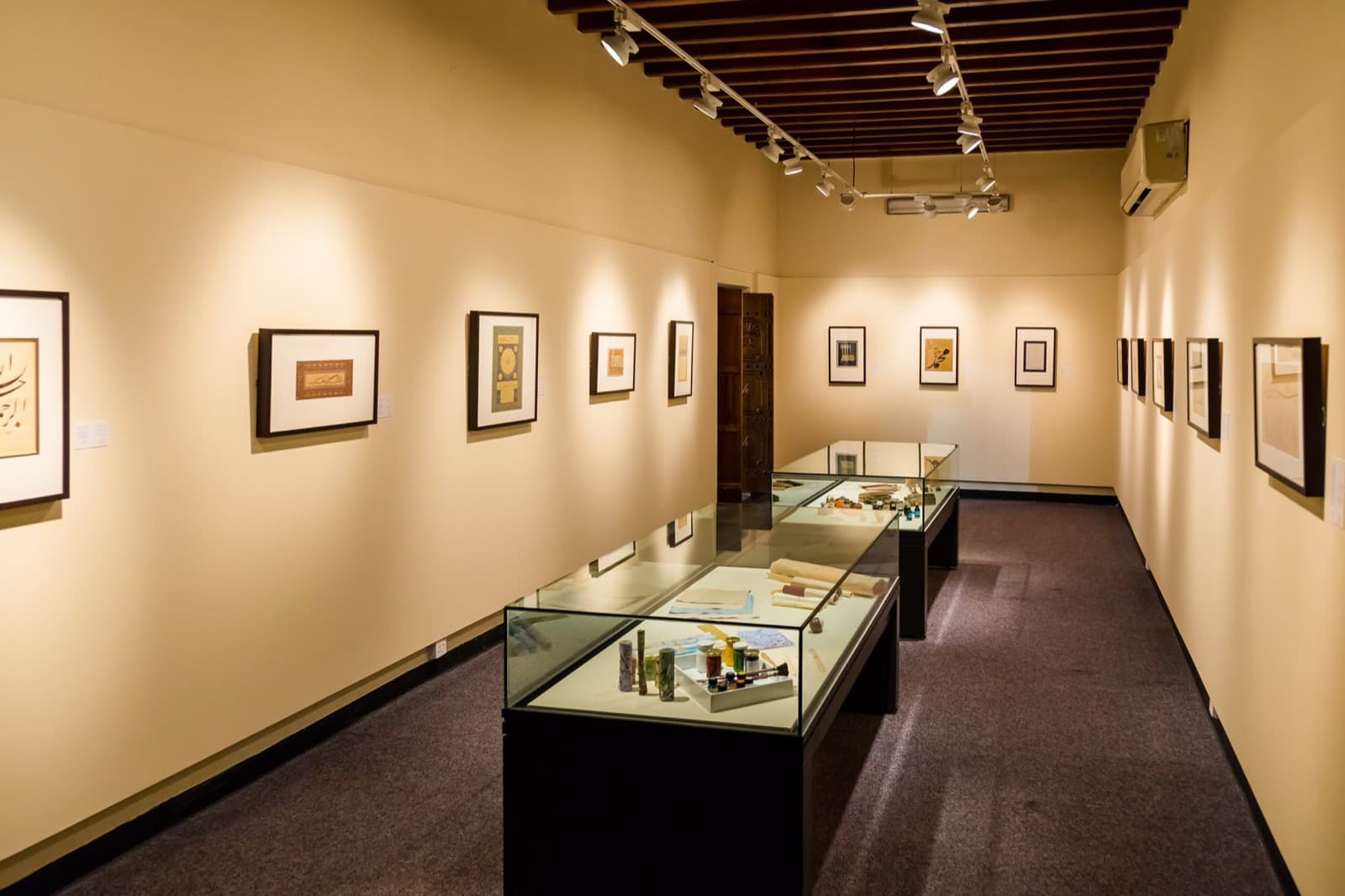
Al Hisn is now a museum, and it is the anchor of the larger project called the Heart of Sharjah, a restoration that recreates the old town as it stood in the 1950s. The quarter gathers a covered coral market older than the country itself, merchant courtyard houses cooled by wind towers, a museum of coastal life before oil, and a square given over to Arabic calligraphy. All of it flows from the choice the fort represents.
That choice sets Sharjah apart from its neighbors. In the decades after oil, other emirates on this coast reached for height and cleared their historic cores to do it. Sharjah reached instead for something older and staked its name on culture and learning. The recognition followed: UNESCO named Sharjah the Cultural Capital of the Arab World in 1998, the year after the fort's reconstruction was finished. Later, for 2019, the emirate was named the UNESCO World Book Capital. The rebuilt fort was the opening move in a long argument about what a small place should value.
There is a quiet lesson in the fort's fittings, too. The saved doors and windows built into the reconstruction are literal fragments of the original 1820 building, carried through the demolition and set back into their old positions. When you visit, that is the thing to look for: the seams where the genuinely old meets the faithfully new. They make the fort's method visible in a way no plaque can. This is preservation practiced as an act of memory, documented and deliberate, rather than the accident of a building that simply happened to last.
Walk it in order
Al Hisn is the first stop on a compact, flat loop through the restored quarter, and it is the right place to begin because it explains the method behind everything else. From the fort, the walk continues to the old market, the merchant houses, the heritage and calligraphy museums, and finishes at the Sharjah Art Museum on the northern edge of the old town. The full route runs about a kilometer and a half and takes roughly sixty-five minutes at an unhurried pace.
To follow the fort's story into the streets that grew from its example, see our guide to Sharjah walking tours, or start planning from the Sharjah city page. The self-guided Heart of Sharjah audio tour begins at Al Hisn and walks you stop by stop through the old town that a demolished, rebuilt fort brought back to life.
Sources
- Sharjah Fort (Al Hisn), Wikipedia. Encyclopedia entry covering the 1820 construction by Sheikh Sultan bin Saqr Al Qasimi, the January 1970 demolition, the surviving Kubs tower, and the restoration completed in April 1997.
- Heart of Sharjah, Wikipedia. Background on the wider restoration project that recreates the old town in its 1950s state and its UNESCO tentative-list status.
- UNESCO, "Sharjah named World Book Capital 2019," and UNESCO records of Sharjah as Cultural Capital of the Arab World for 1998.
- Roamer, "Heart of Sharjah: The Restored Old Town" self-guided audio tour, fact-audited stop transcripts for Al Hisn Sharjah and the surrounding quarter.
Ready to experience it?
Heart of Sharjah: The Restored Old Town
65 min · 1.4 km · easy
More from Sharjah
Explore more at your own pace.
One Day in Sharjah: A Walkable Morning-to-Evening Itinerary
Sharjah Travel Guide: Days, Transport, Best Time, Safety, Budget
Sharjah: The Emirate That Banked on Culture Instead of Height
Heart of Sharjah: The Old Town That Was Rebuilt on Purpose
The Buhaira Corniche: Reading All of Sharjah From One Dusk View