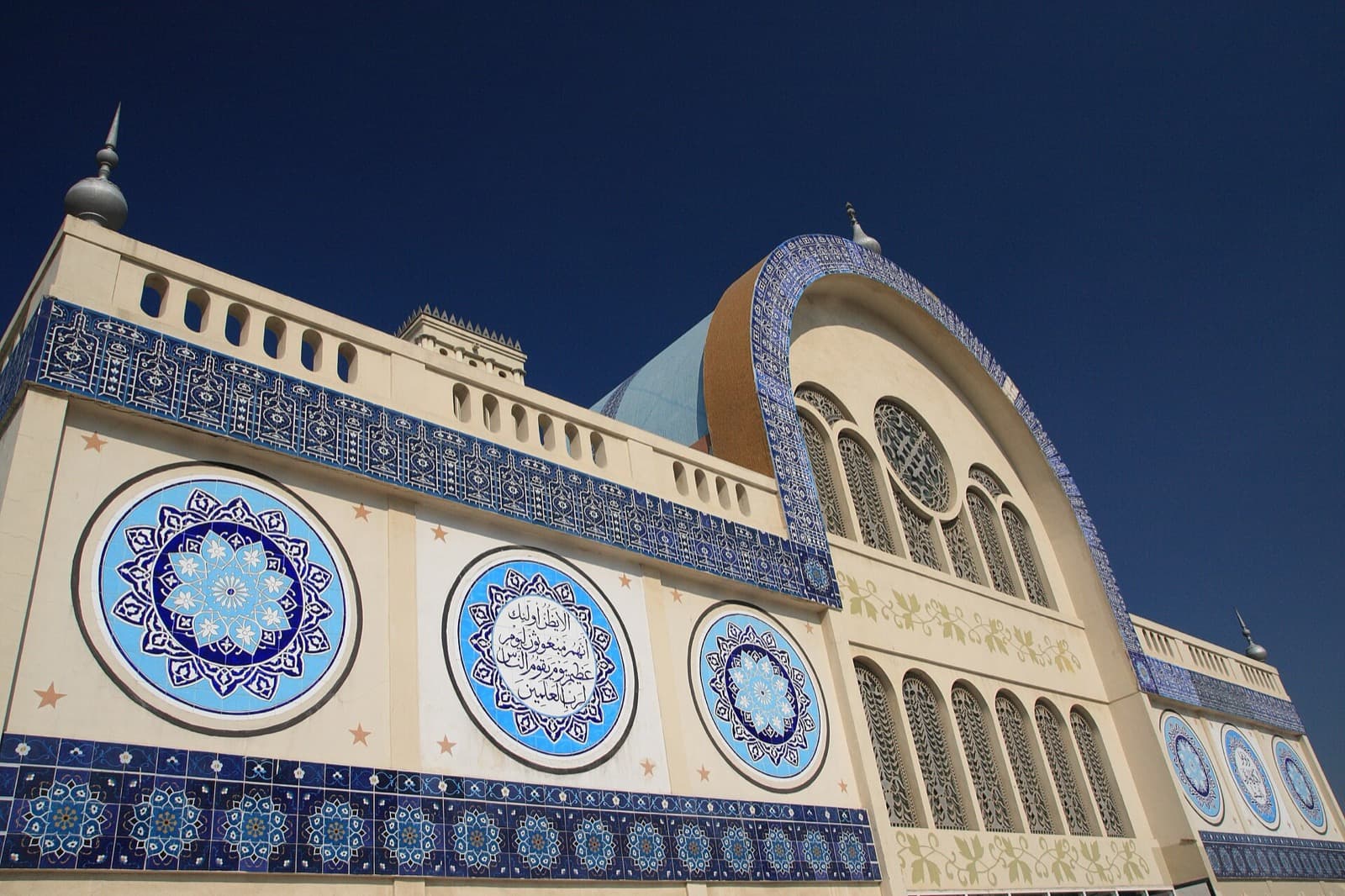
The Heart of Sharjah looks far older than the country around it, and that is the puzzle worth understanding before you walk it. This quarter of white coral walls, wind towers and shaded markets sits along the tidal creek at the northern edge of the United Arab Emirates, and its calm feels like something that simply survived. It did not. Nearly all of it was rebuilt on purpose. Where its neighbours on this coast largely cleared away their historic cores in the rush that followed oil, Sharjah chose to reconstruct its pre-oil quarter in coral and gypsum, then filled it with museums, markets and art. What you see is authentic in intent but reconstructed in fact. That single decision, to rebuild rather than demolish, is the argument the whole old town makes, and it is the argument this tour follows stop by stop.
The Fort Raised From Memory
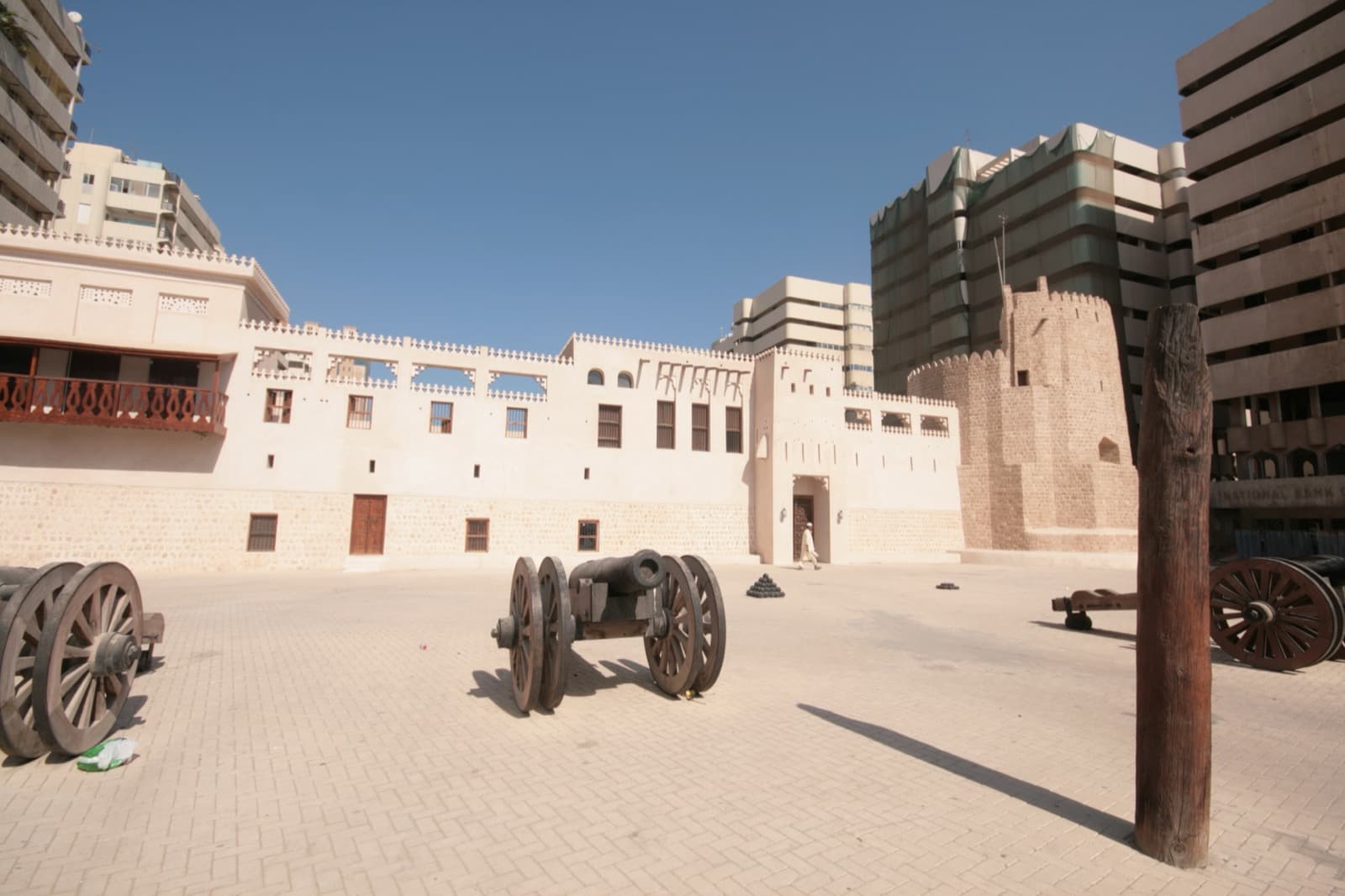
The clearest way to grasp the idea is to start where the tour starts, at Al Hisn Sharjah, the white square fort at the centre of the old town. Hisn means the fort, and for most of the emirate's modern history this was its seat of government and the home of the ruling Al Qasimi family, who have governed Sharjah for roughly three centuries, with the dynasty's founding placed in the seventeen twenties. The fort itself was first built in eighteen twenty by Sheikh Sultan bin Saqr Al Qasimi, of rock, coral and adobe.
Here the honest part begins. In January of nineteen seventy, on the order of Sheikh Khalid bin Muhammad Al Qasimi, the fort was demolished. Only one tower survived, called the Kubs and later the Burj, which simply means tower, and its name passed to the square around it. Nearly two decades later the current ruler, Sheikh Sultan bin Muhammad Al Qasimi, who is himself a working historian, set out to bring the fort back. He worked from the surviving foundation line, from old photographs, and from original doors and windows that had been saved from the demolished building. The restoration was completed in April of nineteen ninety-seven. So the fort you can stand before is a reconstruction, raised again from memory and salvaged pieces. That is not a flaw in the story. It is the story.
A Decision Not to Demolish
Hear a stop from this walk
The Sharjah Art Museum: A Capital of Culture, Not Height
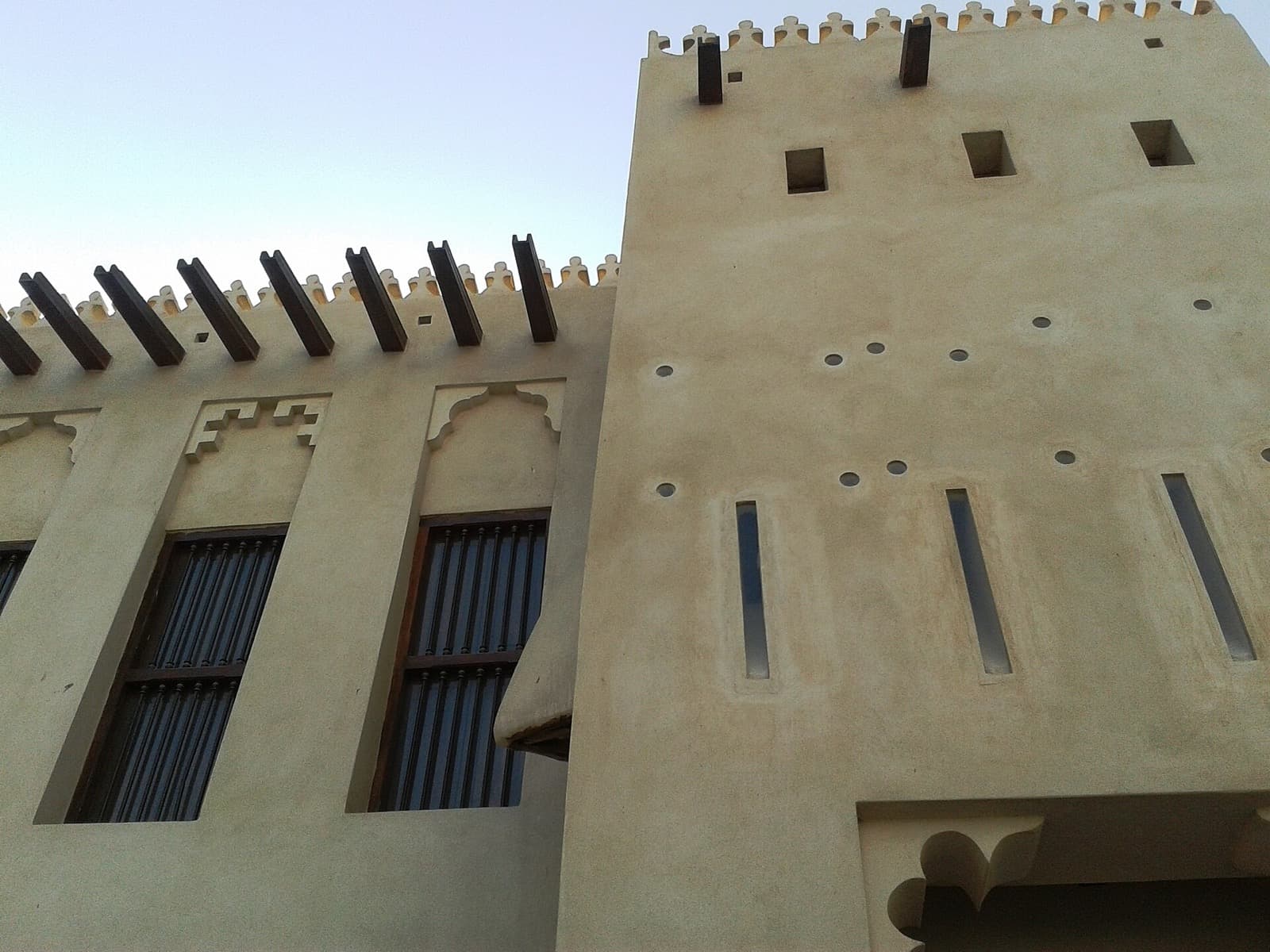
Step into the fort square and you are at the centre of a much larger project. The whole quarter is the Heart of Sharjah, a restoration that recreates the old town as it stood in the nineteen fifties, built around the creek in coral and gypsum with ceilings of teak and barasti, which is palm frond. Work began in January of nineteen ninety-six as a five-phase project structured for completion in the year two thousand and twenty-five, one of the largest historic-restoration efforts in the region.
What drove it is worth stating plainly. In the decades after oil transformed this coast, many Gulf towns swept their old cores away and built anew. Sheikh Sultan bin Muhammad Al Qasimi, the Ruler of Sharjah, chose the opposite path, rebuilding the old quarter faithfully and filling it with meaning. The project is managed by the Sharjah Investment and Development Authority, known as Shurooq, together with the Sharjah Institute for Heritage, the Sharjah Museums Department and the Sharjah Art Foundation. It gathers the fort, the old market, merchant houses, heritage museums and a historic school into a single walkable whole. In two thousand and fourteen the quarter was placed on the UNESCO tentative World Heritage list as the Heart of Sharjah, a bid later retitled Sharjah, a Gateway to the Trucial States, after the old British name for these coastal emirates.
This is the hidden layer of everything you will see: preservation by rebuilding. The walls are new coral, the wind towers reconstructed, the streets laid to a remembered plan. It is a documented act of memory rather than a relic. Once you accept that, the rest of the walk reads differently.
Trade, Pearls and Wind Towers
From the fort square, the route slows down. Souq Al Arsah is a covered coral-stone market widely called one of the oldest in the United Arab Emirates. Long before oil, Bedouin came in from the desert with their camels and traders arrived from Persia and India, bartering goods such as charcoal for rice around a central coffee house where you can still take Arabic coffee or a small glass of Sulaimani tea. This coast lived for centuries on pearling, and a market like this was where the wealth of a good season turned into rice, cloth, spices and dates.
Nearby stands Bait Al Naboodah, a two-storey courtyard house built around eighteen forty-five for the pearl merchant Obaid Bin Isa Bin Ali Al Shamsi, known as Al Naboodah, who traded with India and with Europe, including France. It holds sixteen rooms around a courtyard once planted with almond and palm trees, cooled by barjeel wind towers on the roof and smaller malaqaf wind-catchers set into the walls. A colonnade of teak columns brought by sea from India runs around the yard, a reminder that this coast was tied by trade to the whole Indian Ocean. The family held the house until the nineteen seventies, and it reopened as a museum in April of two thousand and eighteen after major restoration.
Across from the market, the Sharjah Heritage Museum occupies the restored coral house Bait Saeed Al Taweel Al Shamsi. Where Bait Al Naboodah shows one family's world, this widens the view to the whole coast before oil: pearling, Bedouin traditions, crafts, dress, jewellery and traditional medicine. Pearling was brutal work, and it ended almost overnight in the nineteen thirties when Japanese cultured pearls and the Great Depression drained the market. What came after changed everything within a single lifetime. Oil was exported from Abu Dhabi from nineteen sixty-two, and on the second of December nineteen seventy-one the United Arab Emirates was founded, with Sheikh Zayed bin Sultan Al Nahyan as its first president.
The Point of the Whole Walk
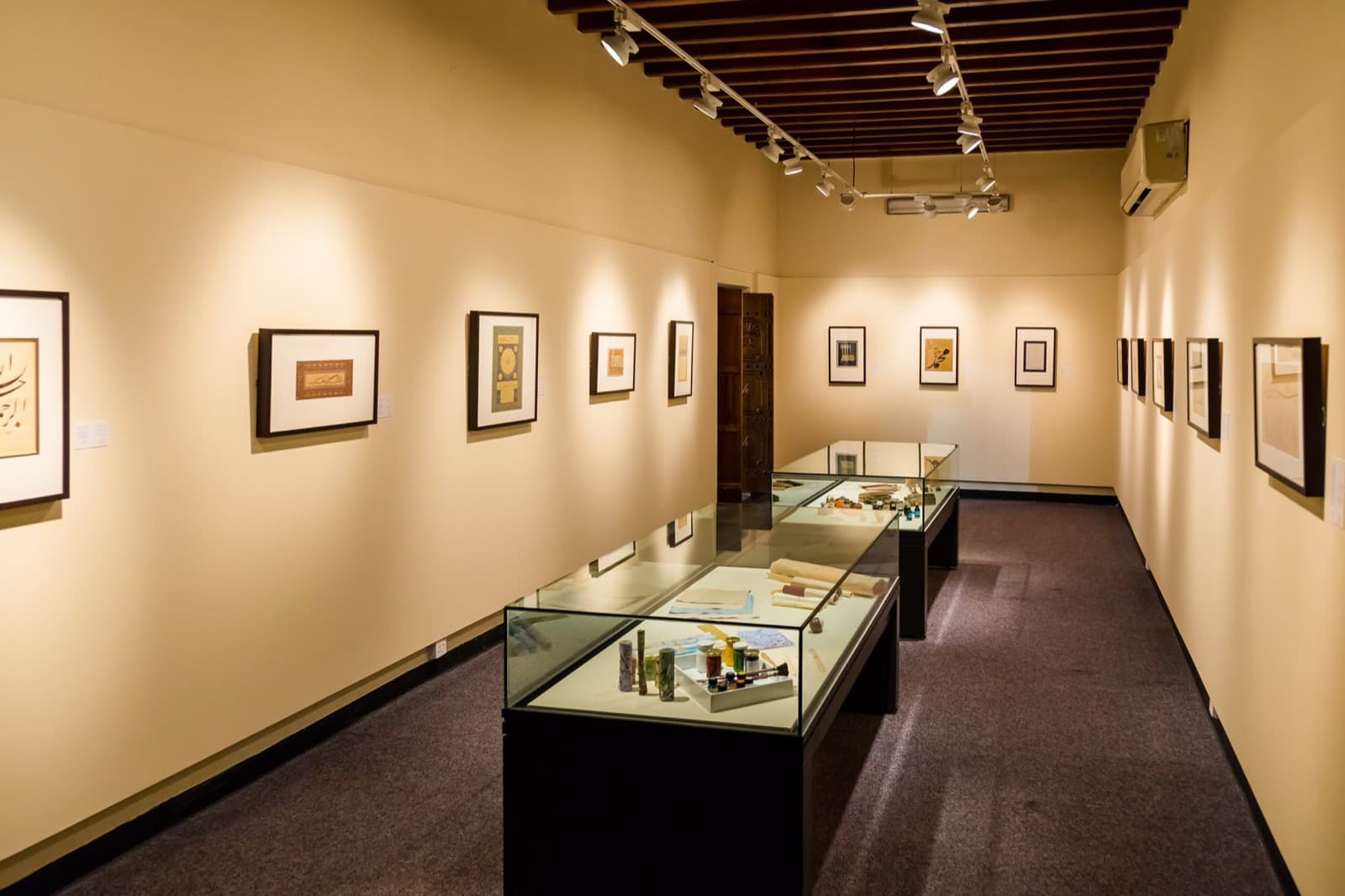
The tour turns at Calligraphy Square, where the Sharjah Calligraphy Museum occupies the restored house of Hamad Al Midfaa. It opened on the twelfth of June, two thousand and two, and is described as the first museum in the Arab world dedicated entirely to Arabic calligraphy. That a small emirate would give a whole museum and a whole square to the written word tells you where its ambitions lie. The record bears it out: UNESCO named Sharjah the Cultural Capital of the Arab World in nineteen ninety-eight, and Sharjah was named UNESCO World Book Capital for two thousand and nineteen.
The walk resolves at the Sharjah Art Museum in the Arts Area, which opened on the seventh of April, nineteen ninety-seven, during the third Sharjah International Arts Biennial. Often called the first purpose-built art museum in the region, it holds the orientalist collection of Sheikh Sultan bin Muhammad Al Qasimi, the same ruler-historian who rebuilt the fort, alongside modern Middle Eastern art. Every neighbour on this coast reached for something taller. Sharjah reached instead for something older and deeper.
The full route runs seven stops across roughly a kilometre and a half, flat and unhurried, about sixty-five minutes on foot. If this way of reading a city appeals to you, browse the other Sharjah walking tours or start planning from the Sharjah city page. The old town rewards a slow pace and an ear for what it is actually telling you.
Sources
- Heart of Sharjah, Wikipedia: overview of the five-phase restoration project, its coral-and-gypsum reconstruction and management by Shurooq and the heritage bodies.
- Sharjah Fort (Al Hisn), Wikipedia: the eighteen twenty construction, the nineteen seventy demolition and the nineteen ninety-seven reconstruction.
- Bait Al Naboodah, Wikipedia: the merchant house's date, courtyard, wind towers and reopening as a museum.
- Sharjah Calligraphy Museum, Wikipedia: opening date and its standing as the first Arab-world museum devoted to calligraphy.
- Sharjah Art Museum, Wikipedia: the nineteen ninety-seven opening, the ruler's orientalist collection and the museum's regional standing.
Ready to experience it?
Heart of Sharjah: The Restored Old Town
65 min · 1.4 km · easy
More from Sharjah
Explore more at your own pace.
One Day in Sharjah: A Walkable Morning-to-Evening Itinerary
Sharjah Travel Guide: Days, Transport, Best Time, Safety, Budget
Sharjah: The Emirate That Banked on Culture Instead of Height
The Buhaira Corniche: Reading All of Sharjah From One Dusk View
Al Hisn Sharjah: The Fort Rebuilt From Memory