Petra: The Siq, the Treasury, and the Rose-Red City
165 min · 4 km · hard
If you want to eat like a local in Petra, start with mansaf: lamb slow-cooked in a tangy fermented-yogurt sauce called jameed, ladled over rice and thin shrak flatbread. It is the national dish of Jordan, it comes from the Bedouin tradition that still runs through this corner of the country, and around Petra you order it in the town of Wadi Musa rather than inside the ruins. Beyond mansaf, the food worth seeking out here is Bedouin and Levantine at heart: zarb barbecue cooked in a buried desert pit, upside-down maqluba, a spread of mezze, sweet cheese knafeh, and sage-scented tea poured at a cliff-edge tent. This guide covers the specific dishes, where each tradition comes from, how to order without missteps, and how to fit a proper meal around a long day on foot.
Mansaf: the dish that defines the table
Mansaf is Jordan's national dish and the one plate you should not leave the Petra area without trying. Lamb is simmered until it falls apart in jameed, a hard, dried yogurt made from sheep's or goat's milk that is strained, salted, and shaped into rock-like balls, then reconstituted into a tangy white sauce. The meat and sauce go over rice and layers of shrak, a paper-thin flatbread, usually finished with toasted almonds or pine nuts and fresh herbs. The flavor is savory and sour at once, unlike anything else you will eat on the trip.
The dish is Bedouin in origin, developed by nomadic tribes who needed hearty food that could be cooked over an open fire, and it remains the centerpiece of hospitality at weddings, holidays, and tribal gatherings across the country. That heritage is not abstract in Petra. The Bdoul Bedouin lived inside Petra's rock-cut tombs until they were resettled to the nearby village of Umm Sayhoun in the nineteen eighties to protect the monuments, and their families still work the site and run kitchens in Wadi Musa. When you eat mansaf here, you are eating the food of the people whose ancestors lived in the caves you walk past on the Petra Siq and Treasury trail.
How to order and eat it like a local: mansaf is traditionally shared from one large platter, eaten standing, using only the right hand. Diners tuck the left hand behind the back, scoop rice and meat with the thumb, index, and middle fingers of the right hand, and press it into a small ball before eating. Using the left hand for the food is considered rude. In a restaurant you will usually be given a spoon and no one will mind if you use it, but if you are hosted by a family, follow the right-hand rule and you will be met with warmth.
Zarb, maqluba, and the rest of the savory table
Hear a stop from this walk
Qasr al-Bint: The One Great Building Raised Block on Block
Zarb is the Bedouin barbecue worth planning a dinner around. Meat and vegetables are sealed in a metal container and buried in a pit under hot coals and sand, then cooked slowly underground until the lamb or chicken turns tender and smoky. Several camps and restaurants around Wadi Musa and in nearby Wadi Rum make zarb a centerpiece, sometimes lifting the buried container from the ground in front of guests. It is a slower, ceremonial meal, so save it for an evening when you are not rushing.
Maqluba, which means "upside-down" in Arabic, is a one-pot dish of rice, meat (usually chicken or lamb), and fried vegetables such as eggplant and cauliflower, cooked in a pot that is flipped onto a platter at the table so the layers stack into a tower. Musakhan is roast chicken baked with onions, sumac, allspice, saffron, and fried pine nuts over flatbread. Fatteh layers toasted bread, rice, and lamb under yogurt and nuts. Any of these is a solid, filling lunch or dinner after a hard day of climbing.
Before the main course comes mezze: a table of small plates you assemble as you like. Expect hummus, the chickpea-and-tahini dip; baba ganoush made from smoked eggplant; tabbouleh, a parsley-heavy salad with bulgur, tomato, mint, and lemon; warak enab, or stuffed grape leaves; and falafel, deep-fried balls of ground chickpeas or fava beans. Order two or three mezze plates with flatbread to share, and you have a light meal on their own, which is handy if the heat has killed your appetite for a full platter.
Sweets and drinks: knafeh, sage tea, and Arabic coffee
For dessert, look for knafeh (also spelled kunafa). It is a warm pastry of shredded phyllo threads or semolina over stretchy, mildly sweet white cheese, soaked in sugar syrup scented with rose or orange-blossom water, often dusted with crushed pistachio. The dessert is a Levantine tradition shared across Jordan, Palestine, Lebanon, and Syria, and you can find it fresh in Wadi Musa, the town at Petra's gate. Eat it hot, when the cheese still pulls.
Tea and coffee are their own ritual. Bedouin tea in and around Petra is usually black tea brewed with fresh sage, called shai maramiya, then sweetened heavily with sugar. Sharing it is a genuine part of local culture, from town cafes to the tents run by Bedouin vendors up at the high viewpoints beyond the Monastery. Those cliff-edge tea tents, reached on the climb to Ad-Deir and the High Places, are a fair and welcome place to rest, so carry small cash in Jordanian dinars for a glass. Arabic coffee, or qahwa, is served in small cups, lightly spiced with cardamom and traditionally offered as a gesture of hospitality. Jordan is a Muslim country and alcohol is far less central than in the West; you will find it at some hotel restaurants and bars in Wadi Musa, but it is not part of the traditional meal, so plan around tea and coffee instead.
Where to eat, and how to plan food around the trail
Eat your real meals in Wadi Musa, the town wrapped around the Petra entrance, not inside the archaeological park. The town has a dense cluster of restaurants serving Jordanian and wider Middle Eastern food, from family kitchens specializing in mansaf and maqluba to hotel dining rooms with broader menus. Inside the ruins themselves the food is limited: a couple of cafes and restaurants near the Treasury, the Basin at the far end, and the Monastery sell drinks, snacks, and simple plates, but they are pricier and more basic than town, and bottled water inside can cost several times the town price. Treat on-site food as a top-up, not the main event.
The practical rhythm most visitors settle into: a big breakfast at your hotel, small snacks and lots of water carried into the site, and a proper Jordanian dinner back in Wadi Musa once you have finished the trail. Petra is enormous and mostly on foot over uneven ground, with the main Siq-to-Qasr-al-Bint walk alone running about four kilometers before any climbs, so eating light during the day and saving mansaf or zarb for the evening keeps you from hiking on a heavy stomach. On water: tap water in Jordan generally meets safety standards, but many travelers and hotels stick to bottled or filtered water to be safe, and you will want to carry far more than you expect once you leave the shaded Siq, since shade is scarce and the sun is strong.
A note on timing and cost so a meal plan holds together. Petra opens at six in the morning with last entry in the early evening, a standard one-day ticket runs around fifty Jordanian dinars, and the Jordan Pass (bought before you arrive, valid for a stay of at least three nights) bundles the Petra ticket with your visa fee if you are seeing several sites. Starting at the gate when it opens lets you walk the cool morning trail, then come out for a late, unhurried lunch or an early dinner in town. Once you have the food and the logistics sorted, the walking is the point: browse the two self-guided routes on the Petra walking tours hub and set your own pace through the rose-red city, then reward the climb with a plate of mansaf.
Sources
Frequently asked questions
- What is the must-try dish in Petra?
- Mansaf, Jordan's national dish. It is lamb slow-cooked in jameed, a tangy sauce made from fermented dried yogurt, served over rice and thin shrak flatbread with toasted nuts. It is Bedouin in origin and best eaten in a restaurant in Wadi Musa, the town at Petra's entrance.
- Where should I eat near Petra, inside the site or in town?
- Eat your main meals in Wadi Musa, the town wrapped around the Petra entrance, where restaurants serve mansaf, maqluba, zarb, and mezze. Inside the archaeological park the food is limited to a few cafes near the Treasury, the Basin, and the Monastery, and it is pricier and more basic, so treat on-site food as a snack top-up rather than a real meal.
- What is zarb and where can I try it?
- Zarb is a Bedouin barbecue where meat and vegetables are sealed in a container and buried in a pit under hot coals and sand, then cooked slowly underground until tender and smoky. Several camps and restaurants around Wadi Musa and nearby Wadi Rum serve it, often as a ceremonial evening meal, so save it for a night when you are not rushing.
- How do locals eat mansaf?
- Mansaf is traditionally shared from one large platter, eaten standing, using only the right hand. Diners keep the left hand behind the back and scoop rice and meat with the thumb, index, and middle fingers, pressing it into a small ball. Restaurants provide spoons, but if a family hosts you, follow the right-hand custom, and never use the left hand for the food.
- What desserts and drinks are traditional around Petra?
- Knafeh, a warm pastry of shredded phyllo or semolina over sweet white cheese soaked in scented syrup, is a Levantine favorite you can find fresh in Wadi Musa. For drinks, Bedouin tea is black tea brewed with sage (shai maramiya) and heavily sweetened, and Arabic coffee is served in small cardamom-spiced cups. Alcohol is not part of the traditional meal but is available at some hotels and bars.
- Is the tap water safe to drink in Petra?
- Tap water in Jordan generally meets safety standards, but many travelers and hotels stick to bottled or filtered water to be cautious. Carry far more water than you expect for a day inside Petra, since shade is scarce once you leave the Siq and bottled water sold inside the site costs several times the town price.
Ready to experience it?
Petra: The Siq, the Treasury, and the Rose-Red City
165 min · 4 km · hard
More from Petra
Explore more at your own pace.
One Day in Petra: A Walkable Morning-to-Evening Itinerary
Petra Travel Guide: Days, Transport, Tickets, and Safety
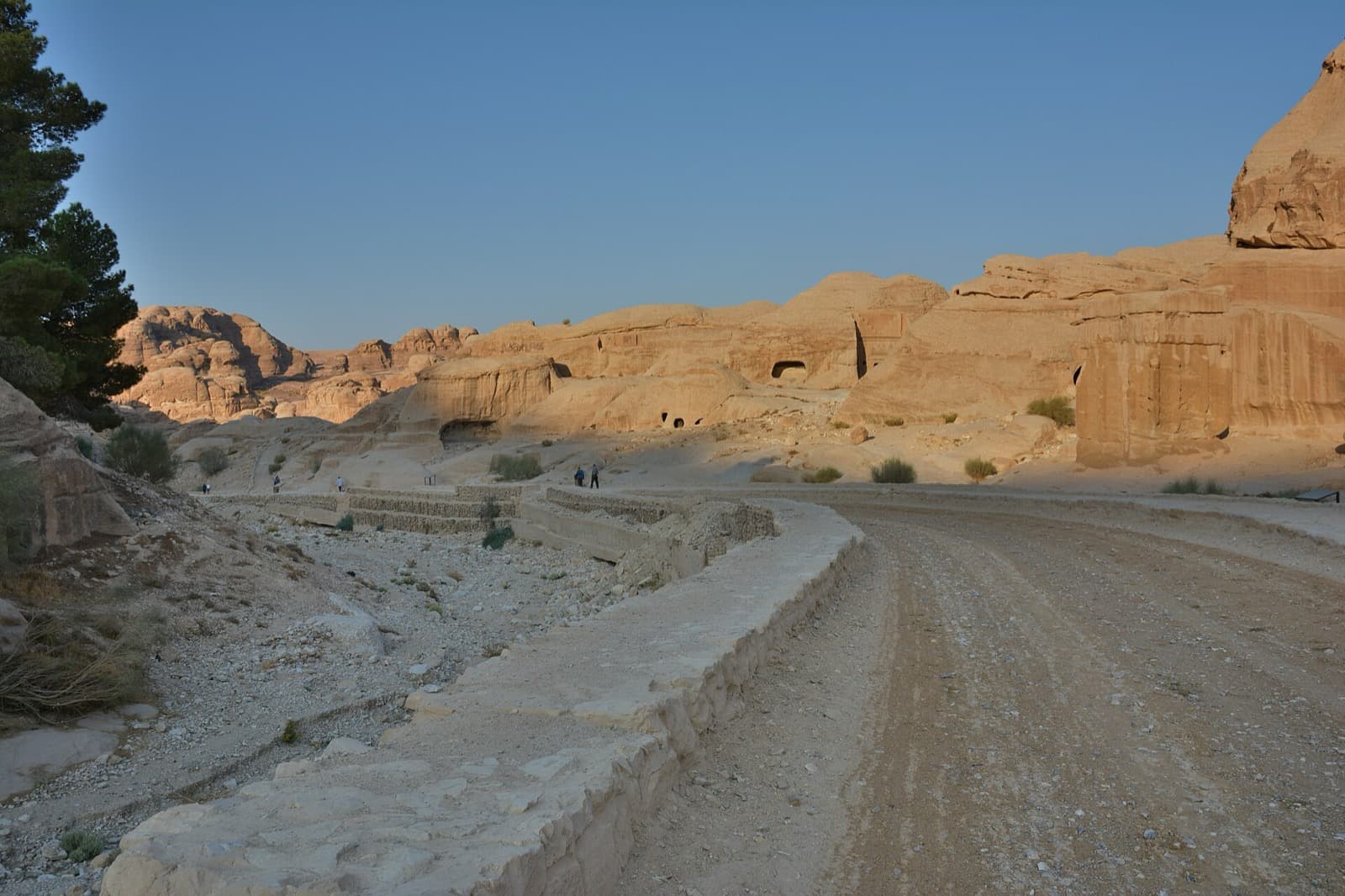
Petra, the City Carved Down: How to Read a Nabataean Capital on Foot
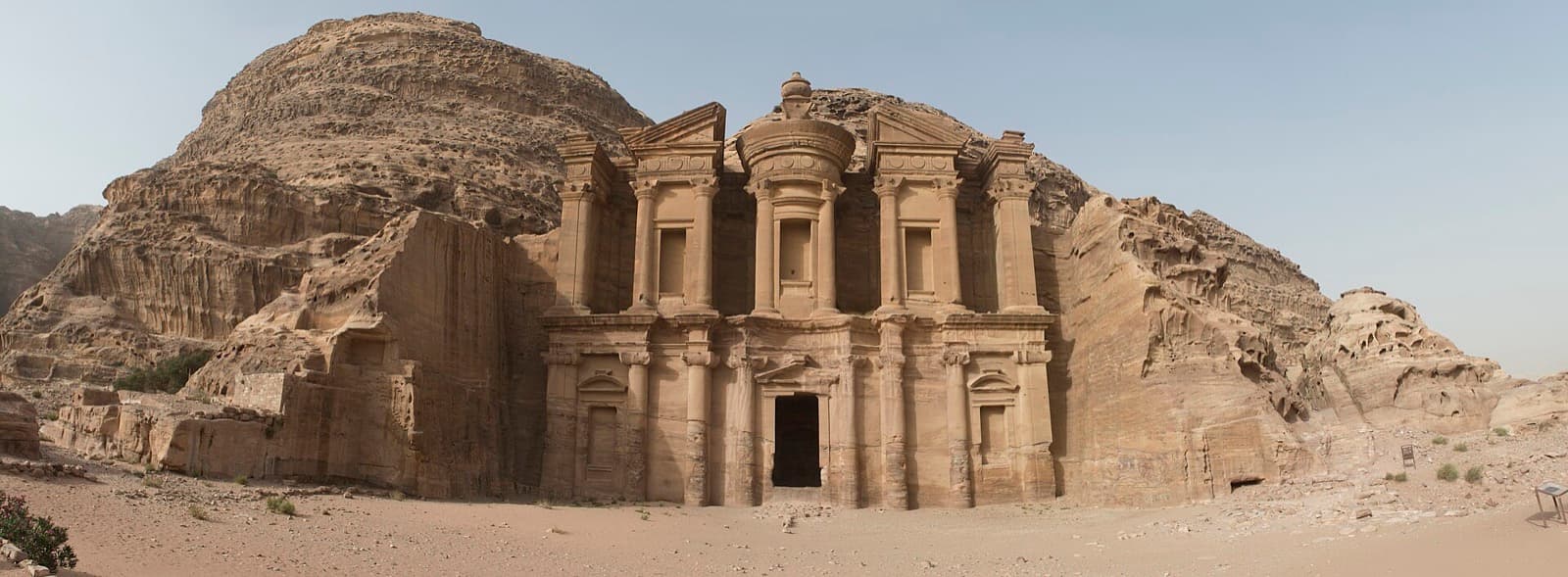
The Climb to Ad-Deir: Why Petra's Monastery Rewards the 800-Step Ascent
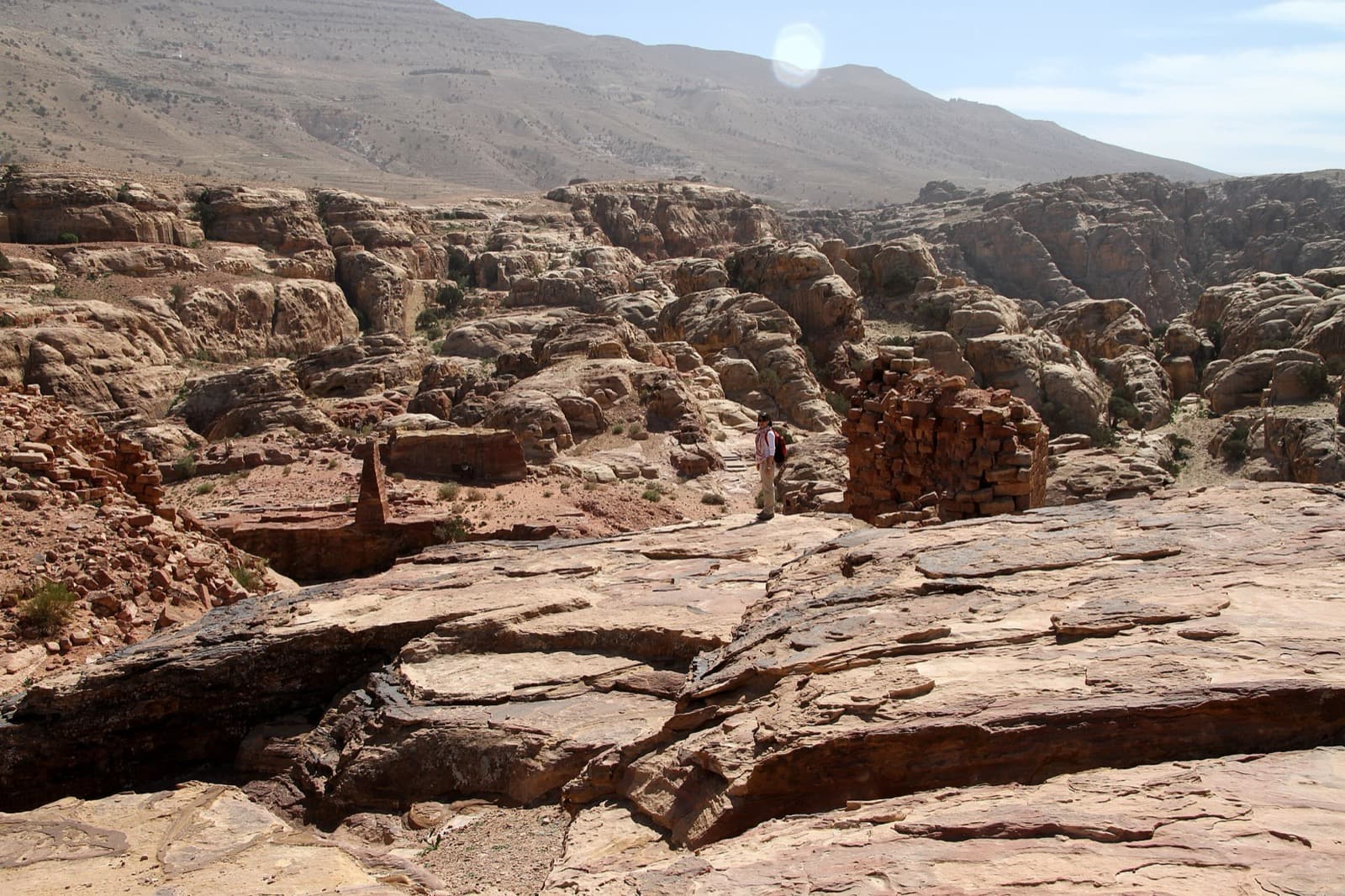
The High Place of Sacrifice: Petra's Altar in the Sky on Jabal al-Madbah