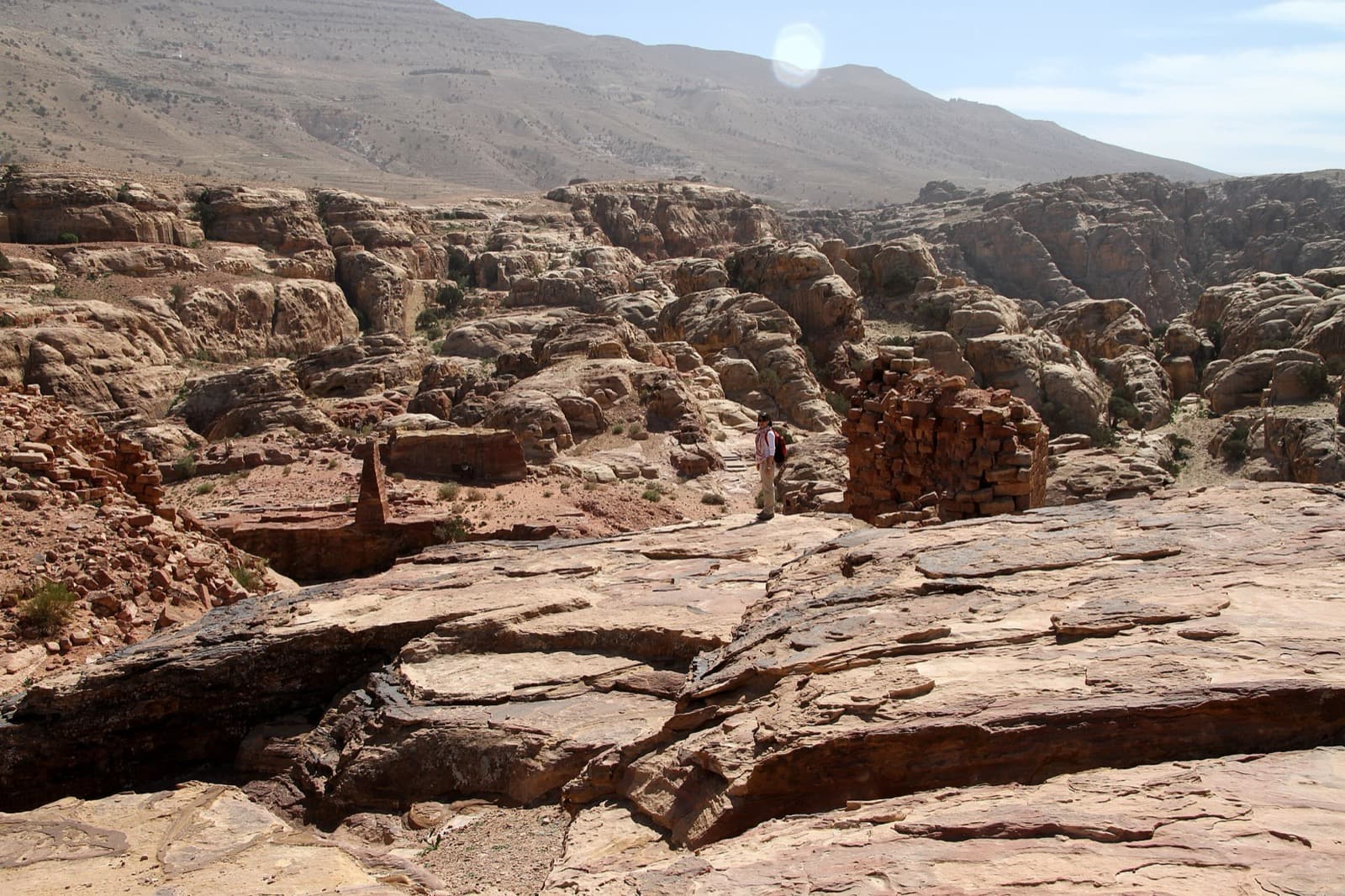
Climb the signposted stairway that rises from near the Roman theatre and, at the top of Jabal al-Madbah, you reach an open-air altar cut straight from the summit rock: the High Place of Sacrifice, called al-Madbah, which simply means the altar. This is the best-preserved of all the Nabataean high places at Petra, a sanctuary where worshippers gathered to offer to Dushara, the chief Nabataean god, on a ridge that falls away roughly one hundred and seventy metres to the town of Wadi Musa below. Standing here, the one thing to understand is that you are not looking at a ruin so much as at a working religious platform, complete with the plumbing of ancient ritual, still legible in the stone.
What the Nabataeans carved into the summit
The site reads as a set of purpose-built features, and once you know what each one did, the whole platform makes sense. There is a rectangular open courtyard with three stone benches, a triclinium, and a low central table where people gathered. To the west stands the altar itself, which once held baetyls, the plain carved stone blocks that stood in for the gods rather than any human statue. Beside the altar lies a platform with a carved circular basin, most likely used to collect rainwater for ritual purification. And near that sits the detail that stops most visitors cold: a cup-shaped recess fitted with a drainage channel, cut so that the blood of sacrificed animals could be carried away.
Put those pieces together and you have a place designed for a specific sequence of acts. Water for washing. A courtyard for gathering and eating. An altar for the god-stones. A channel to drain what was offered. The Petra park authority documents these features, and archaeological accounts describe the summit as the most important center for public worship in the Nabataean city. The offerings here went mainly to Dushara, and later interpreters have read the arrangement as the ceremonial heart of Petra's high country, not a minor shrine.
Why a "high place" at all
Hear a stop from this walk
The Monuments of Wadi Farasa: The Quiet Valley of Tombs on the Way Down
The instinct to build a sanctuary on a summit was not unique to the Nabataeans, but they committed to it with unusual ambition. A high place puts the ritual as close to the sky as the landscape allows, deliberately separated from daily life below by a long, hard climb. That separation is part of the point. You do not stumble onto this altar. You earn it by ascending, and the effort of the stairs is itself a kind of preparation.
What makes the Petra example so valuable is preservation. Rock-cut installations survive where built structures crumble, and because the Nabataeans carved the courtyard, benches, altar, basin, and drain directly from the living rock, the layout has endured for roughly two thousand years. You can still stand where a Nabataean master of ceremonies may have stood, trace the drainage channel with your eye, and understand the ritual geography without a single reconstruction. Few ancient sanctuaries anywhere offer that clarity.
The view is part of the meaning
It is tempting to treat the panorama as a reward for the climb, and it is that. From the platform the ground opens over the whole carved city of Petra, over Wadi Musa beyond, and, in the far distance, over Jabal Haroun, the mountain that tradition holds to be the burial place of Aaron, brother of Moses. That is a tradition, not a proven fact, but it has drawn pilgrims across many centuries.
The wider sight matters for a practical reason too. A sanctuary placed this high commands everything around it, and that command was likely deliberate. Worship on a summit was public and visible, a claim staked over the landscape the Nabataeans controlled and farmed. The same view that photographs so well today would have carried religious and political weight for the people who cut these steps.
The height demands respect in the plainest sense. The cliffs drop sharply, some one hundred and seventy metres straight down to Wadi Musa, so keep well back from the edges, watch children closely, and give the summit your full attention rather than your phone. Just before the altar, on the same ridge, you also pass the two great obelisks known as Zibb Atuf, each over six metres tall and carved not by stacking stone but by quarrying the entire surrounding summit away by hand. That is the scale of ambition this whole plateau announces: to leave two pillars, the Nabataeans cut away a mountain.
Standing here, at your own pace
The one thing worth carrying up with you is patience. The steps are many, the sun is strong, and there is little shade on the heights, so take the ascent slowly, rest often, and carry far more water than you think you need. The reward is a rare chance to read an ancient religion directly from the rock: the basin, the benches, the altar, the blood-channel, and the immense drop that made this a place set apart.
The High Place of Sacrifice is one of six stops on the "petra-monastery-high-places" self-guided audio tour, which pairs this summit with Ad-Deir, the Monastery, on the opposite side of the city and descends afterward through the quiet valley of Wadi Farasa. Walking it on your own clock means you decide how long to linger at the altar and when to begin the descent, with no group setting the pace on the stairs. To plan the wider route and the other summit climbs, browse Petra walking tours and the full city guide for Petra. Then choose your day, start early, and let the altar in the sky come to you one hard step at a time.
Sources
Ready to experience it?
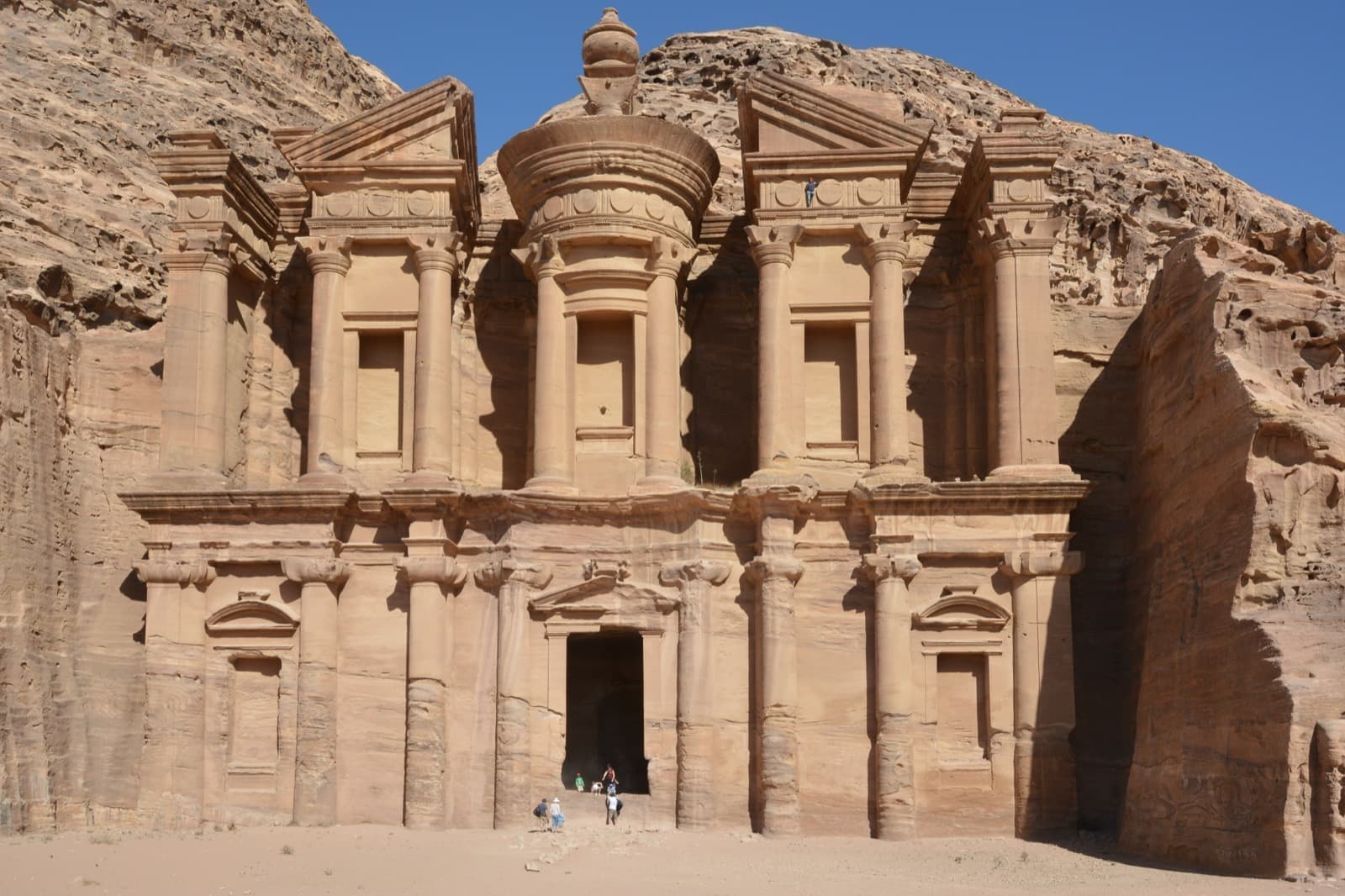
Petra Monastery: The Climb to Ad-Deir and the High Places
300 min · 6 km · hard
More from Petra
Explore more at your own pace.
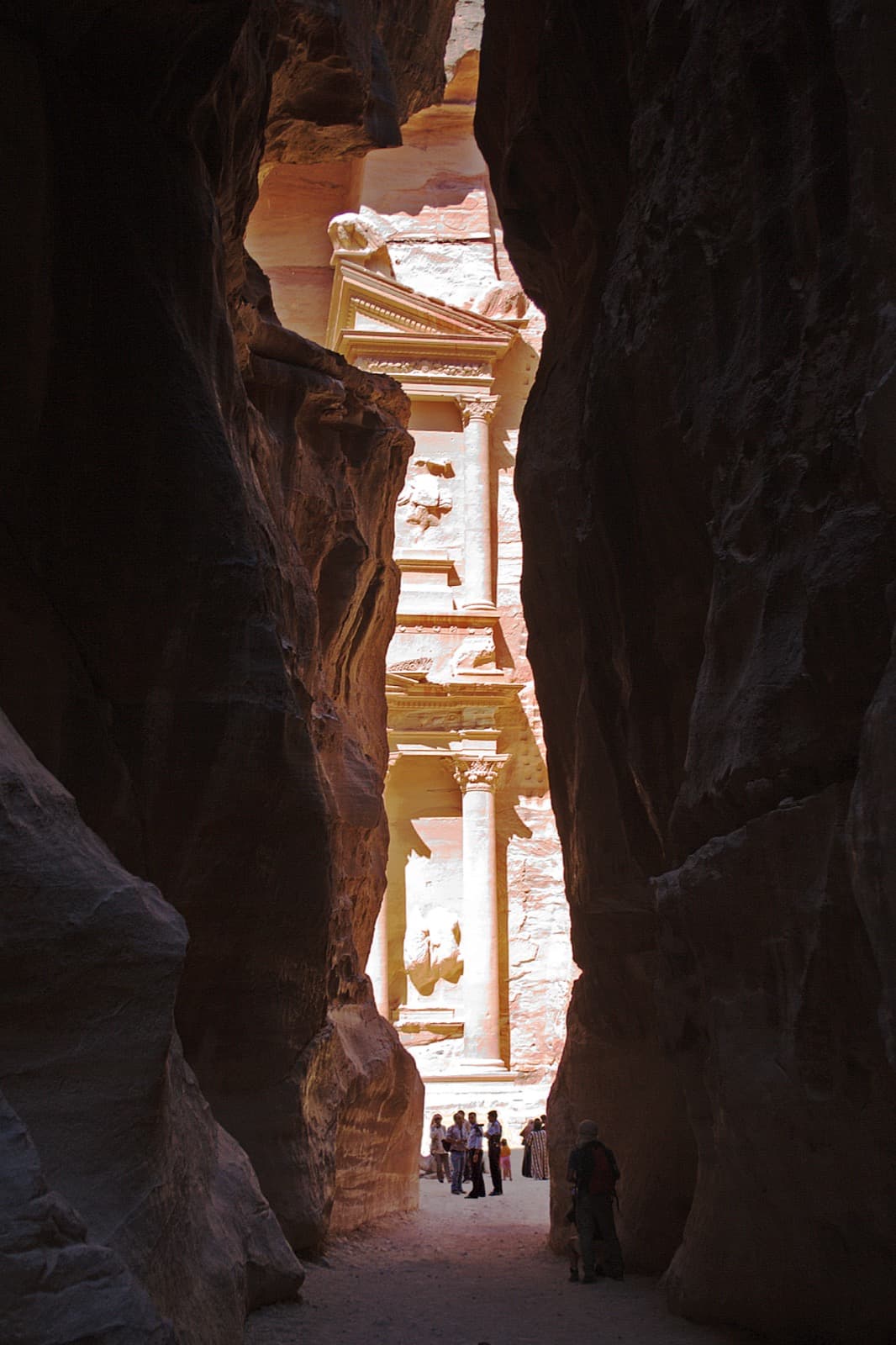
One Day in Petra: A Walkable Morning-to-Evening Itinerary
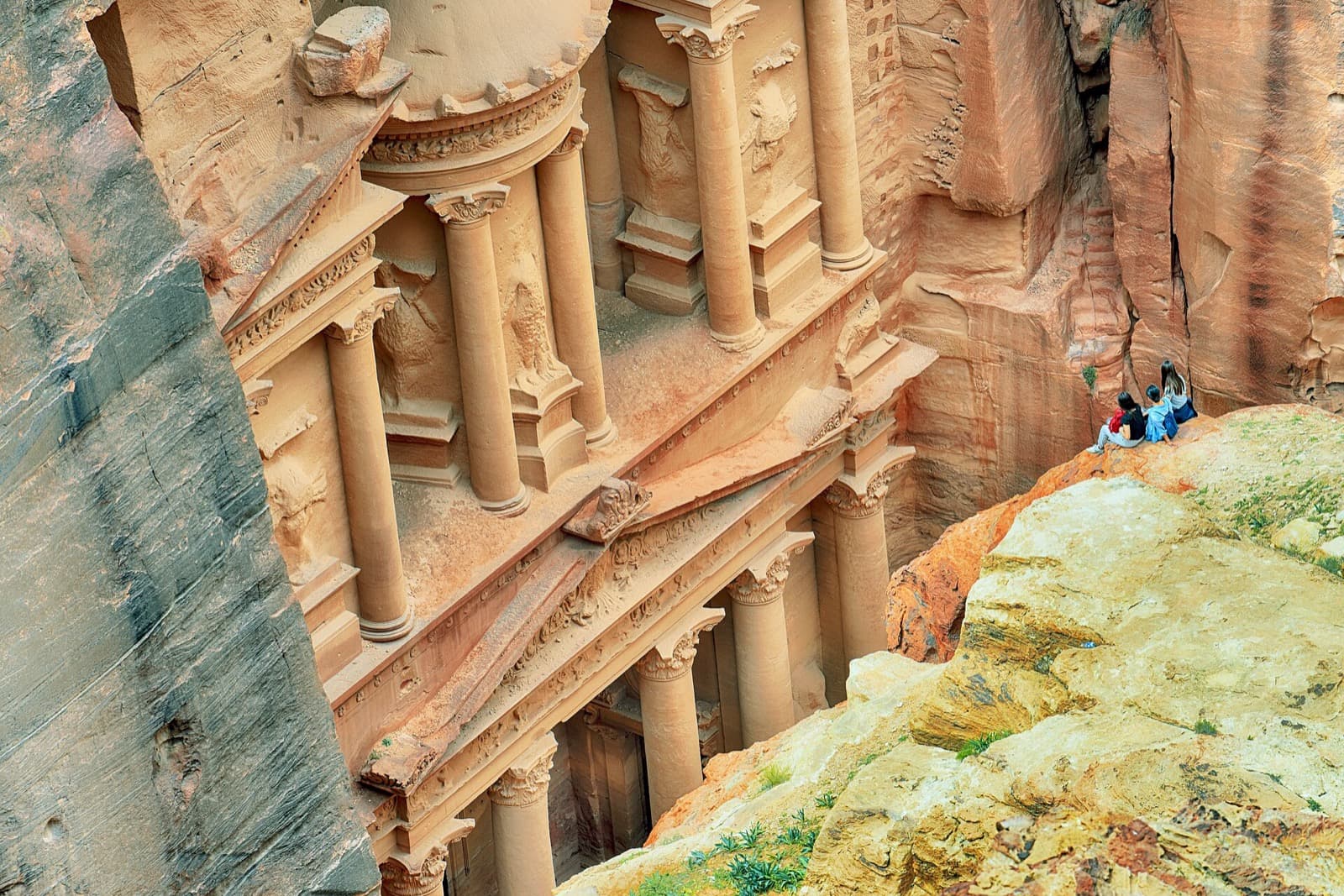
Petra Travel Guide: Days, Transport, Tickets, and Safety
Petra, the City Carved Down: How to Read a Nabataean Capital on Foot
The Climb to Ad-Deir: Why Petra's Monastery Rewards the 800-Step Ascent
The Treasury at Petra: Why the Siq Was Built to Hide It