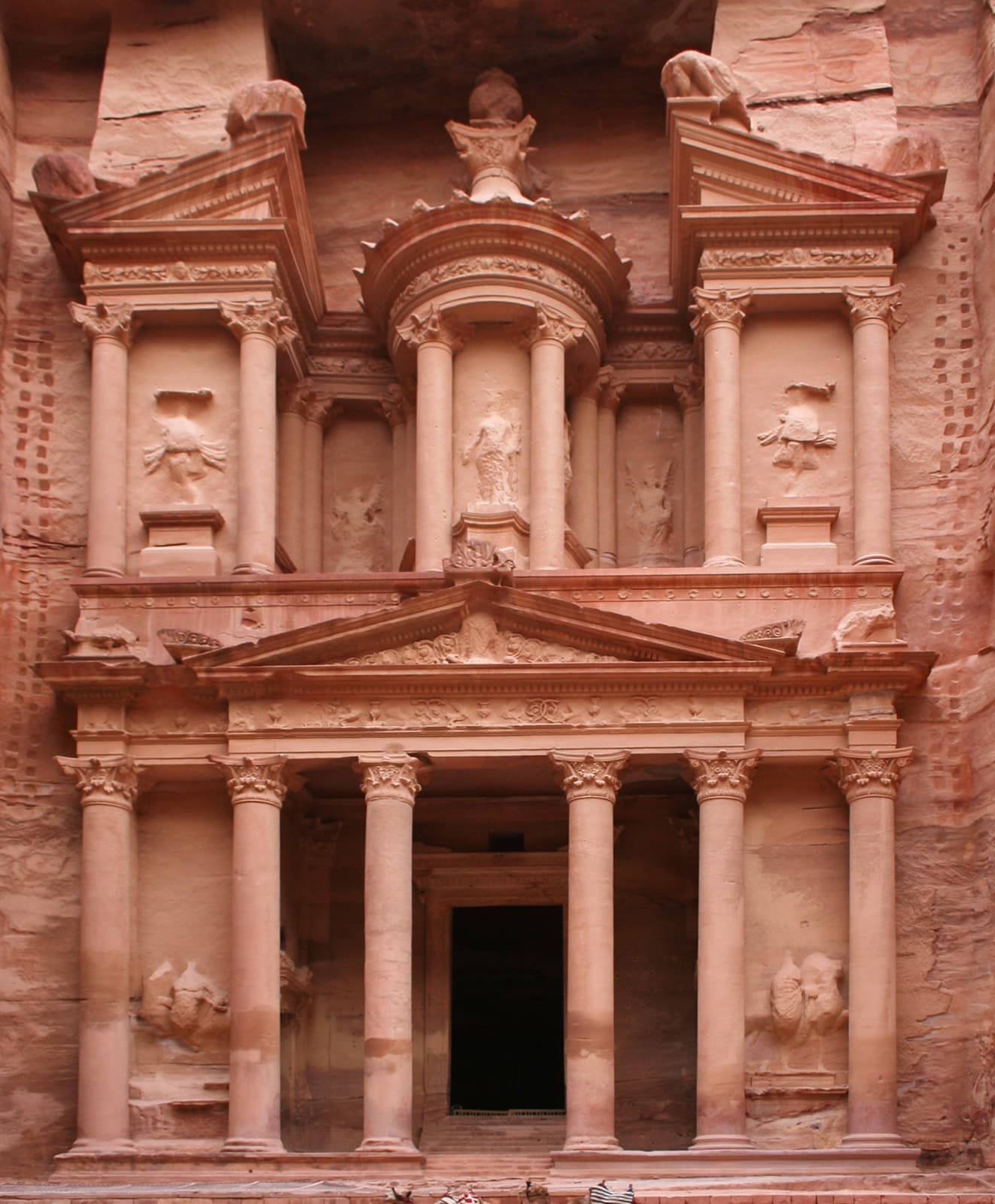
The Treasury at Petra, Al-Khazneh, works on you not because of what it is but because of what the Nabataeans made you walk through to reach it. The facade is a rock-cut tomb, not a vault of gold, and the kilometre of shadow that hides it, the gorge called the Siq, is engineered suspense. Understanding that the approach was designed to conceal the reveal changes how you experience the whole route: the processional walk, not the facade alone, is the monument. That is the argument this tour makes, and Al-Khazneh is where it lands hardest.
The name lies, and that is the first clue
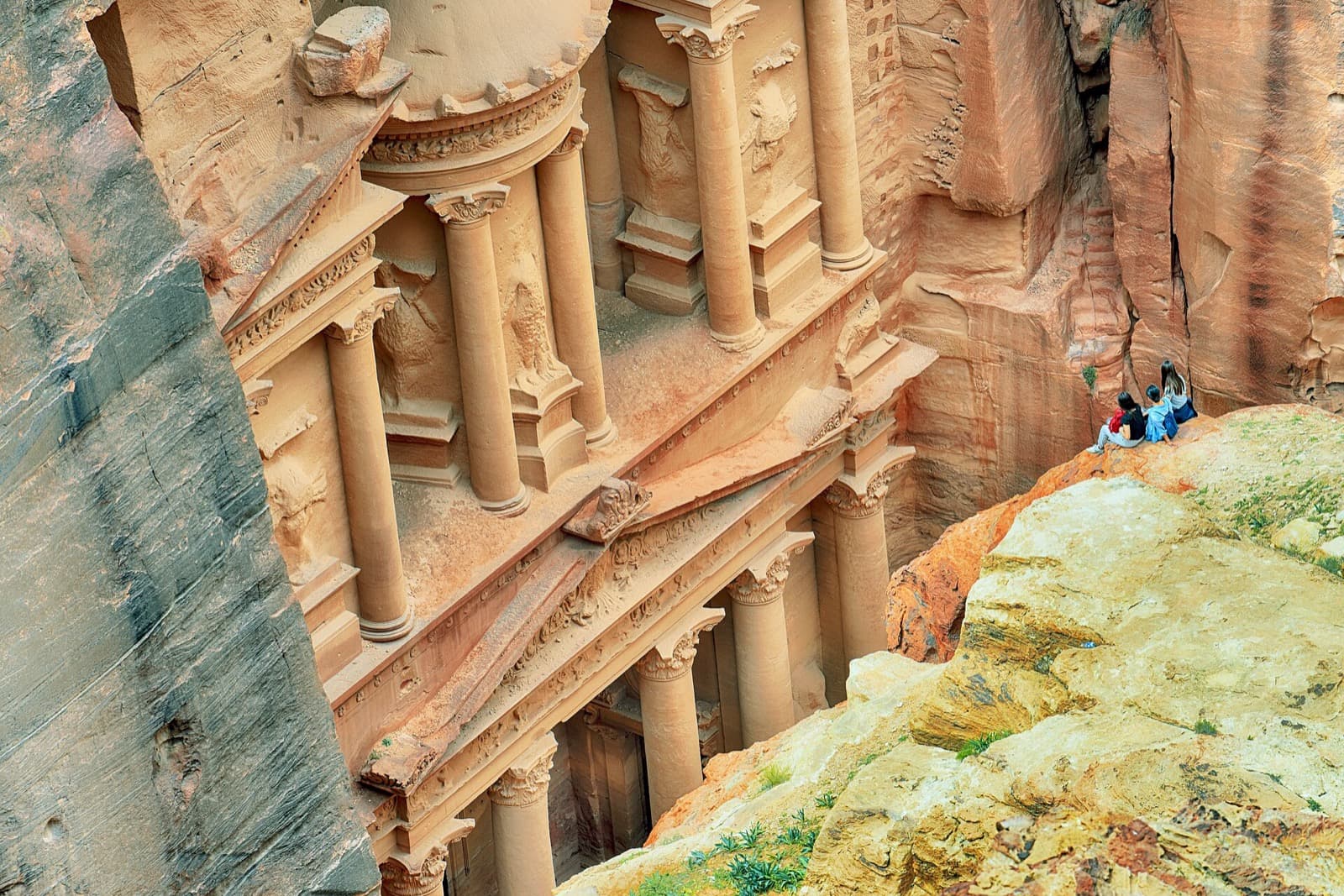
Khazneh means treasury, but the building is not a treasury. It is a rock-cut mausoleum, roughly forty metres high and about twenty-five metres wide, carved straight down into a rose-coloured cliff. Every column, every pediment, the great decorative urn on the second level, all of it was cut from the living stone from the top down, not built up from separate blocks. Scholarship attributes it most likely to the tomb of the Nabataean king Aretas the Fourth, who ruled from nine B C to forty A D, placing its construction in the early first century A D.
So why "Treasury"? The name comes from a Bedouin legend that a pharaoh hid his gold inside the great stone urn high on the facade. Over the years people fired at that urn hoping to crack it open and let the riches spill out, and you can still see the bullet marks on it today. The urn is solid sandstone, carved in one piece, with nothing inside at all. The legend is wrong about the gold and wrong about the pharaoh, but it tells you something true: this facade was so overwhelming that people needed a story large enough to explain it.
The Siq is the machine that makes it land
Hear a stop from this walk
Qasr al-Bint: The One Great Building Raised Block on Block
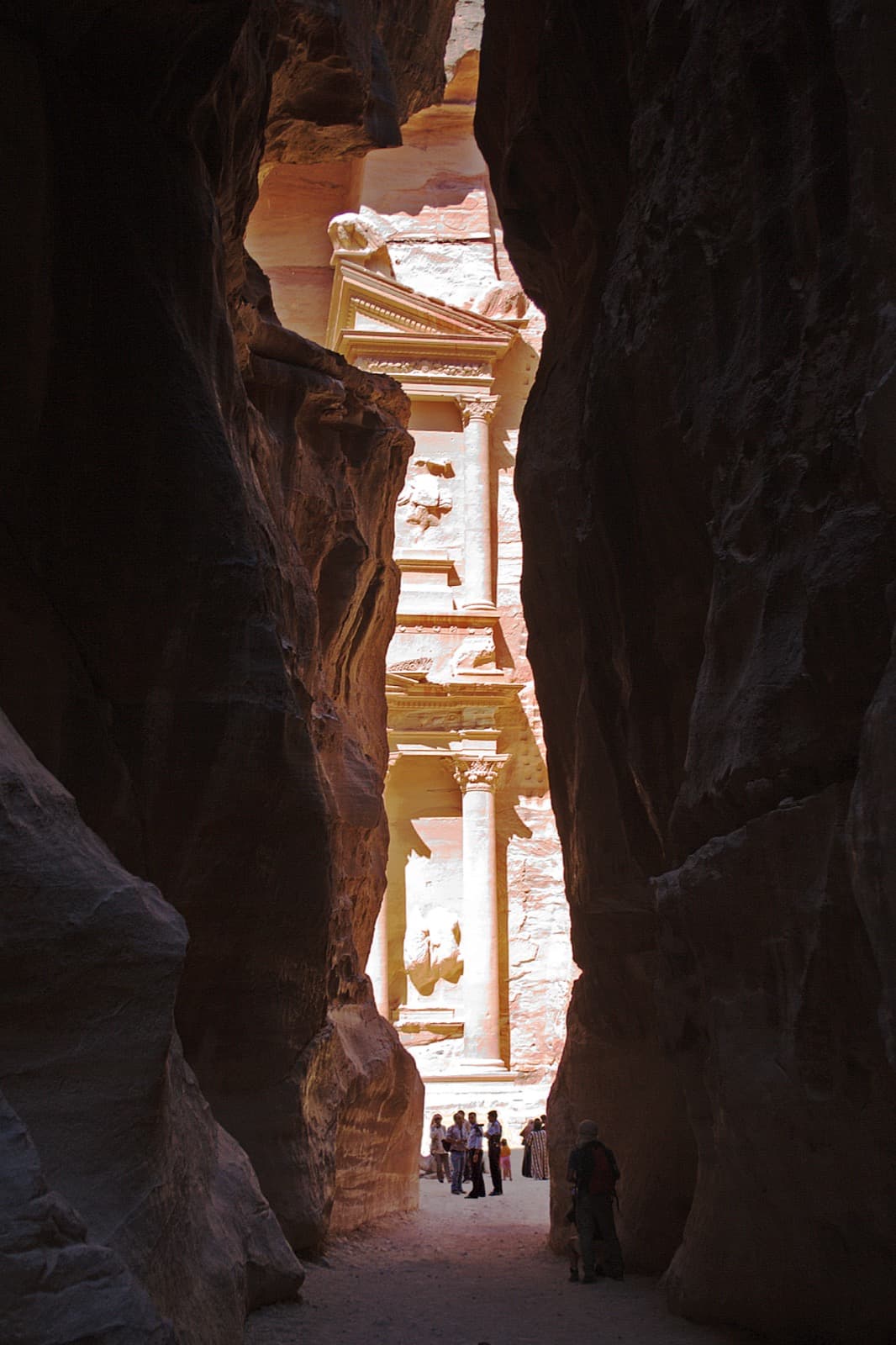
Al-Khazneh does not gradually appear. The Siq, a natural gorge about one and a fifth kilometres long and in places no more than three metres wide, holds the reveal back until the final second. Its walls climb between about ninety and one hundred and eighty metres, so the sky narrows to a thin ribbon and the light turns cool and blue. For a full kilometre you cannot see what waits at the end. Then, without warning, the gorge parts and the Treasury stands framed in the last slot of stone.
The Nabataeans did not carve the Siq; it is a natural fracture. But they engineered it into a sacred approach. Rock-cut water channels run low along both walls, once carrying spring water from Wadi Musa, the valley of Moses, into the city, and a dam at the gorge mouth rerouted floodwater away from the passage. Small carved niches held baetyli, sacred standing stones, which tells us this was holy ground, a processional route and not merely a road. Watch for the worn relief of a caravan uncovered in nineteen ninety-eight: two merchants leading two camels each, almost twice life size, their feet dissolving where the lower stone has weathered away. Every element of that walk was chosen. The suspense is the design.
The stops before the Treasury are the setup
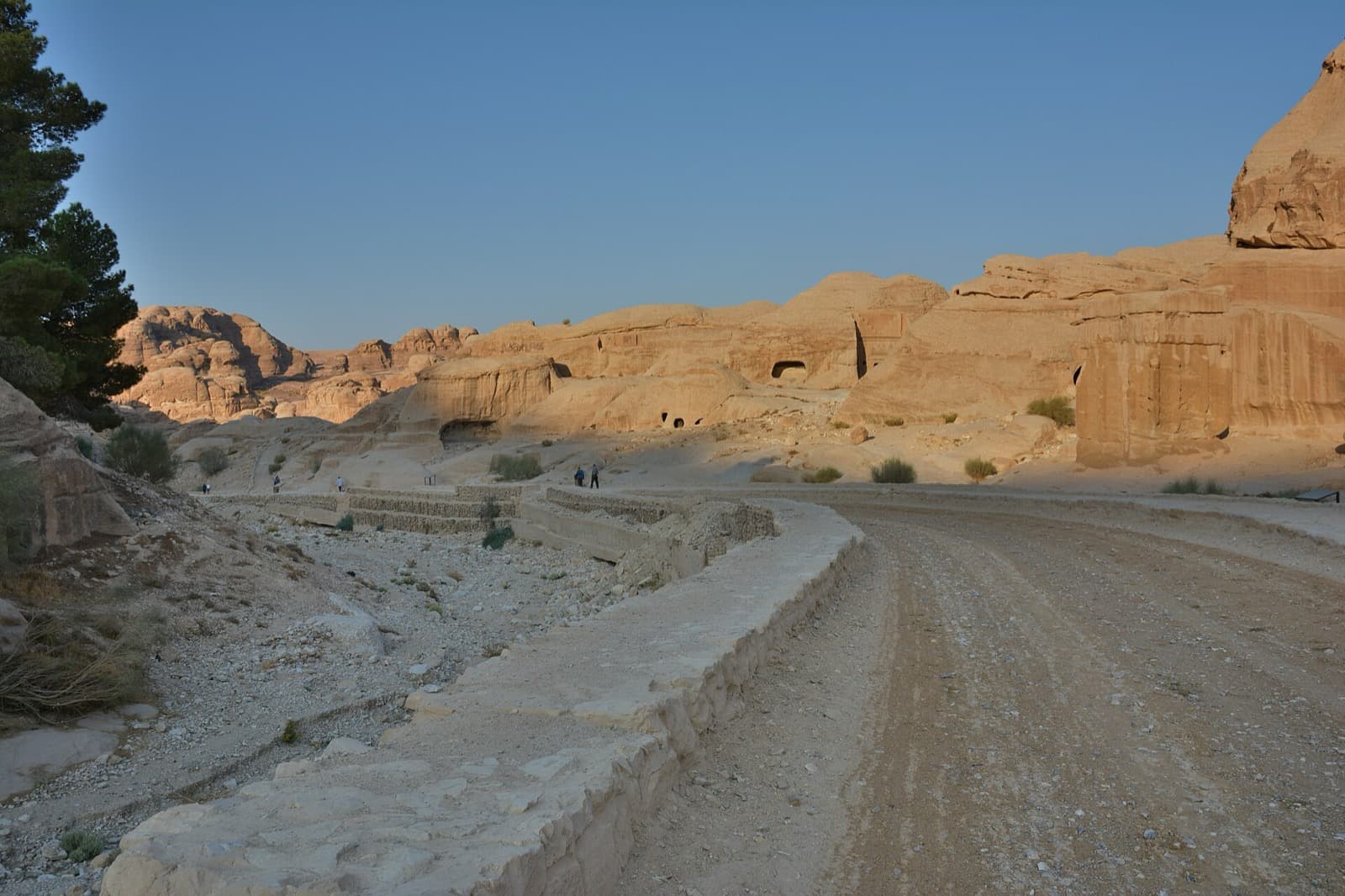
The tour begins at Bab as-Siq, the open valley past the visitor centre, where Petra's first monuments gather. The Djinn Blocks stand there, three massive cubes carved free on all four sides, possibly among the earliest monumental tombs at the site. Recent study has proposed a date as early as the second century B C, before the great facades existed, though the dating remains debated. Opposite them the Obelisk Tomb rises, its facade about sixteen metres wide, crowned by four tall pyramid-shaped obelisks that are nefesh, Nabataean markers of the dead. These strange cube shapes prepare your eye. By the time you enter the Siq, you already understand that these people carved memory directly into rock.
What the walk gives you after the reveal
If the tour ended at the Treasury it would still be worth taking, but the argument keeps building. Beyond Al-Khazneh the gorge widens into the Street of Facades, a whole avenue of Nabataean tomb fronts cut side by side. Then comes the Theatre, carved from solid rock in the first century A D during the reign of Aretas the Fourth, the same king. When Rome later enlarged it, the expansion sliced straight through older rock-cut tombs, and you can still see their opened interiors on the smoothed rock behind the top rows. A theatre for the living, cut through the resting places of the dead, seating about eight thousand five hundred people.
The Royal Tombs follow, cut into the western face of Jabal al-Khubtha and facing west so they catch the late light. The Urn Tomb's vaulted base was so vast it became a Byzantine church in four hundred and forty-six A D. The Silk Tomb runs with brilliant bands of rose, gold, and grey. At the day's edge the whole wall glows. Then the Colonnaded Street brings you down to the ordinary city, Nabataean in origin and rebuilt in Roman style after Rome annexed the kingdom in one hundred and six A D, the spine of a place where roughly twenty thousand people once lived and traded. The walk ends at Qasr al-Bint, the one great temple raised block on block instead of carved from a cliff, likely dedicated to the god Dushara and standing today probably because its builders laid courses of Lebanese cedar into the walls to ride out the earthquakes that flattened everything else.
Why walk it at your own pace
Petra is busy. Guides, carriage touts, and camel and donkey handlers all work the trail, and the pressure to keep moving is strongest exactly where you least want to hurry, at the Treasury. A self-guided walk hands that decision back to you. Sit on the sand at Al-Khazneh as long as the wonder holds, then press on when you please, with no group steering you. The ground is uneven, the steps many, and the sun strong once you leave the Siq, so carry more water than you think you need and wear shoes with grip. Come at first light or late afternoon for cool shadow in the gorge and warm, low light on the stone.
If you want the full route, stop-by-stop and mapped, browse the Petra walking tours or start from the Petra city page and let the gorge do what it was built to do.
Sources
- Al-Khazneh, Wikipedia. Overview of the Treasury's dimensions, dating, and attribution to Aretas the Fourth.
- The Siq, Visit Petra (official site of the Petra Development and Tourism Region Authority). Description of the gorge, its water channels, and the sacred approach.
- Petra Theater, Wikipedia. Details on the rock-cut theatre, Roman enlargement, and seating capacity.
- Royal Tombs and the Urn Tomb, Madain Project. Notes on the Jabal al-Khubtha facades and the Byzantine church conversion in 446 A D.
- Qasr al-Bint, Wikipedia. Account of Petra's free-standing temple, its cedar string courses, and seismic survival.
Ready to experience it?
Petra: The Siq, the Treasury, and the Rose-Red City
165 min · 4 km · hard
More from Petra
Explore more at your own pace.
One Day in Petra: A Walkable Morning-to-Evening Itinerary
Petra Travel Guide: Days, Transport, Tickets, and Safety
Petra, the City Carved Down: How to Read a Nabataean Capital on Foot
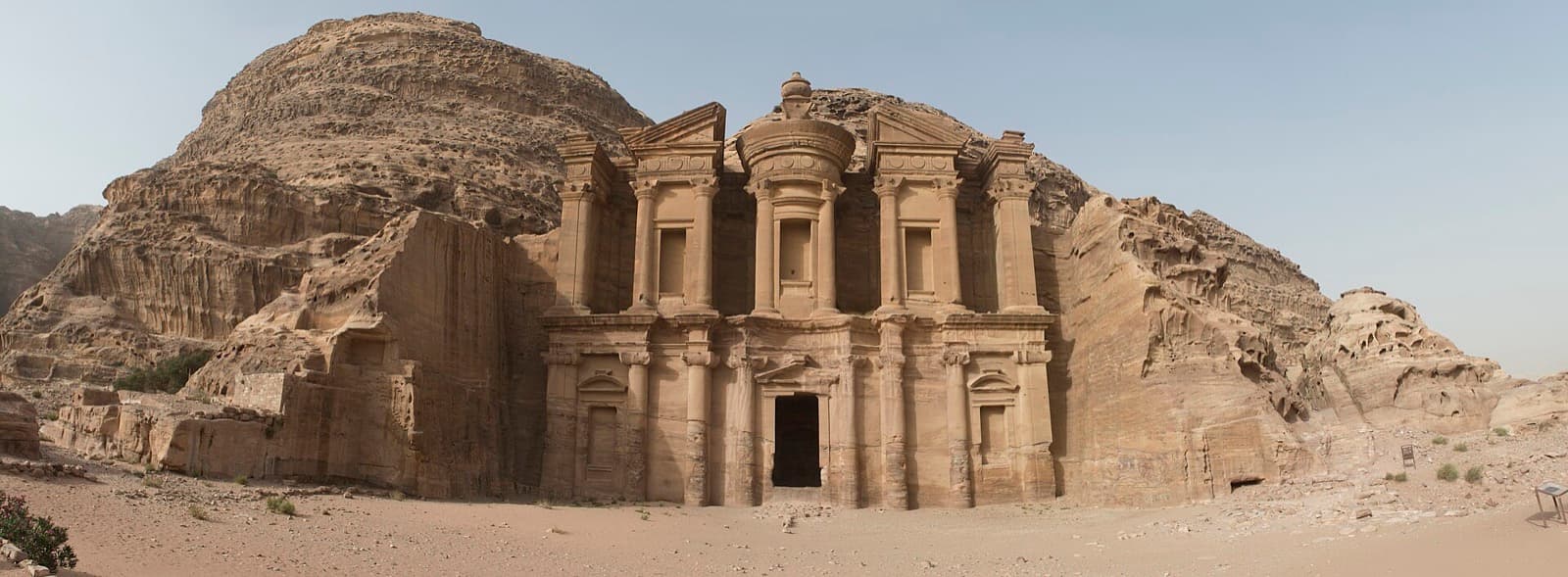
The Climb to Ad-Deir: Why Petra's Monastery Rewards the 800-Step Ascent
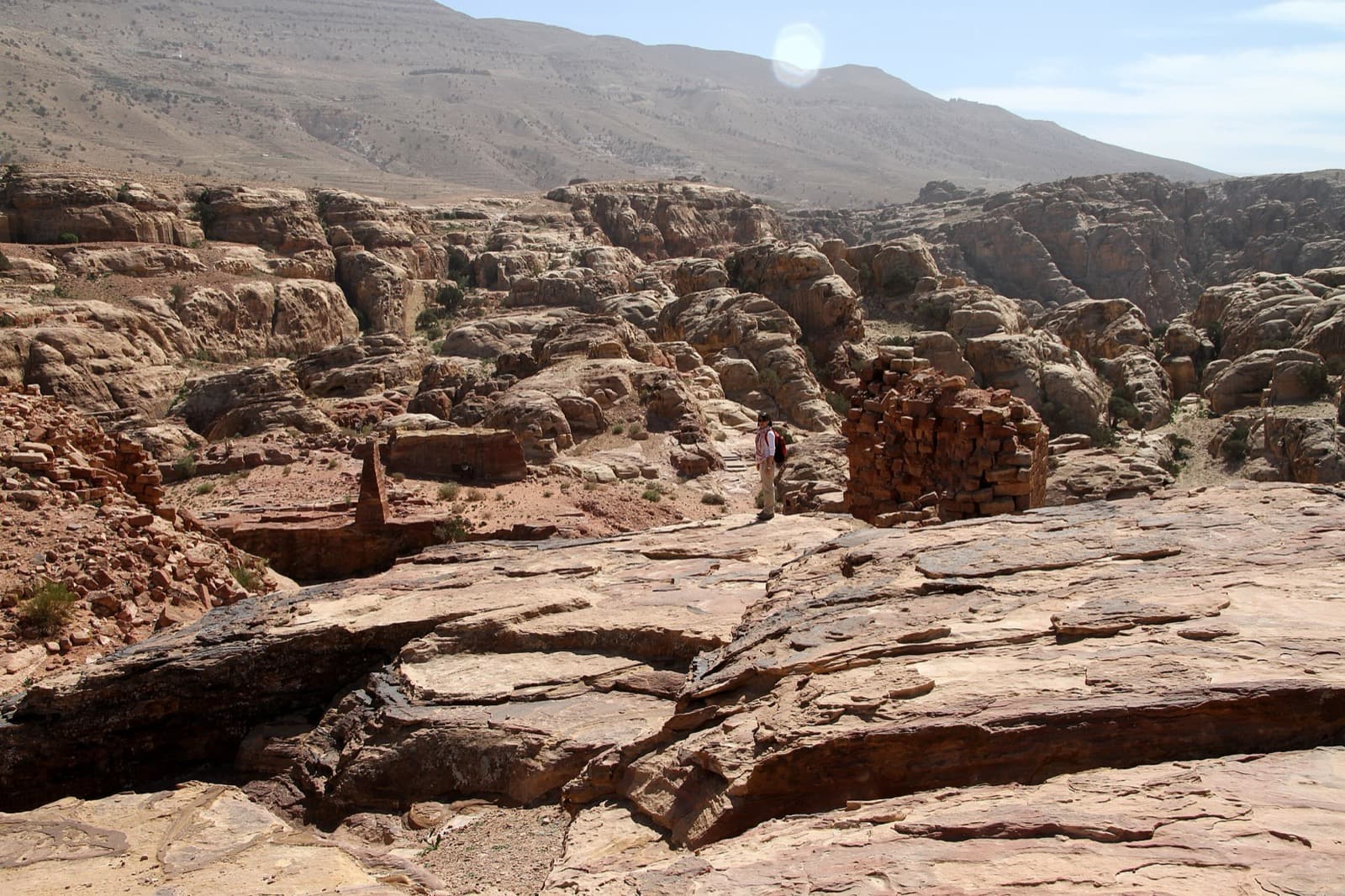
The High Place of Sacrifice: Petra's Altar in the Sky on Jabal al-Madbah