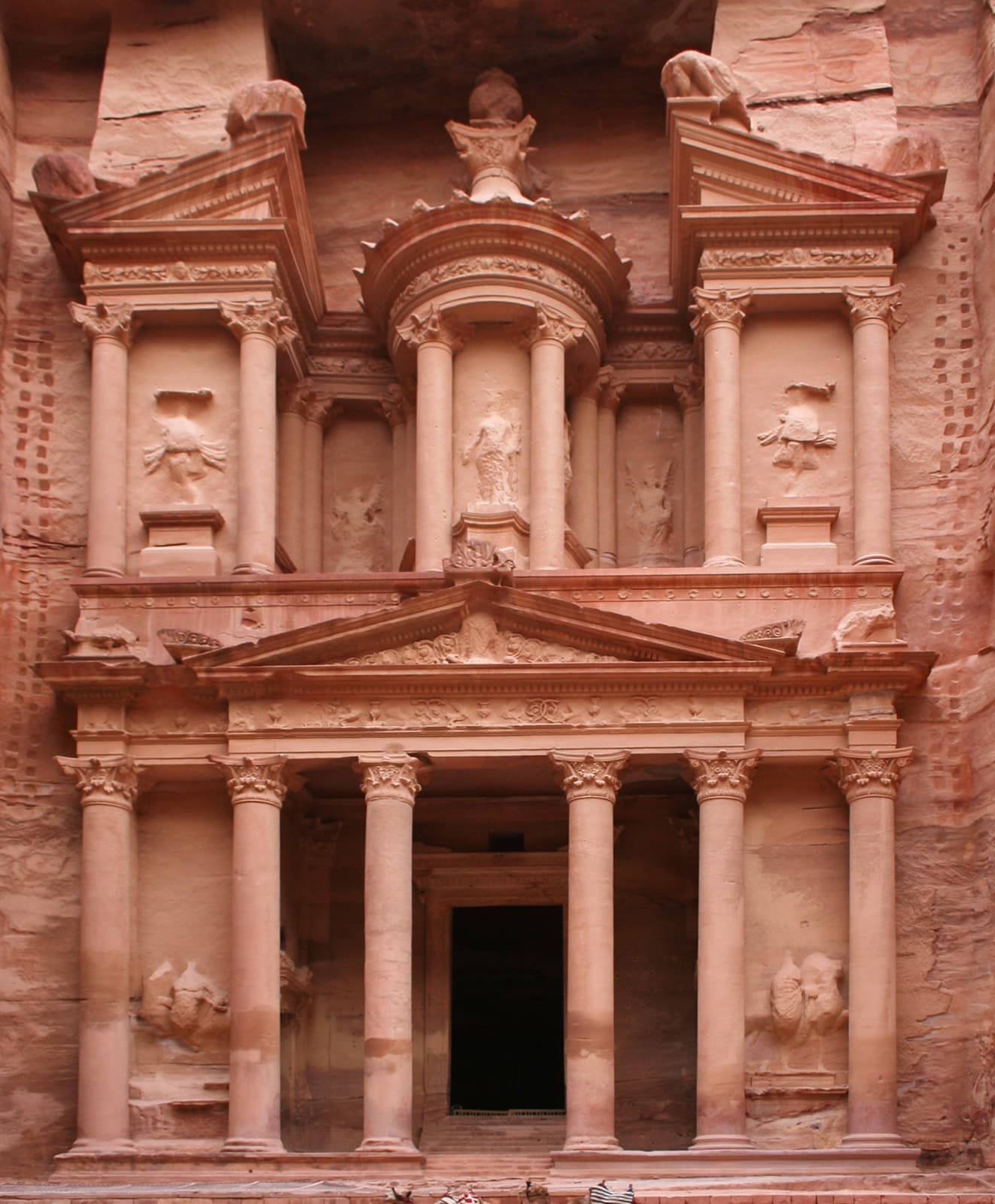
Petra: The Siq, the Treasury, and the Rose-Red City
165 min · 4 km · hard
Petra rewards two days on foot, a spring or autumn visit, and a little planning around tickets and transport. This guide answers the practical questions travelers actually ask before going: how many days you need, how to reach Wadi Musa from Amman, when to go, what it costs, and an honest read on safety. The short version: give the site two days if you can, walk it early to beat both crowds and heat, buy the right ticket for your trip length, and treat Jordan as a calm, well organized place to travel with normal precautions.
How many days do you need in Petra?
Two days is the sweet spot. You can see the headline monuments in one long day, but the site is large, the trails climb hard, and rushing turns a wonder into a forced march. The official ticketing reflects this: a two-day accommodated ticket (55 JD) costs only slightly more than a one-day ticket (50 JD), so the second day is close to free value.
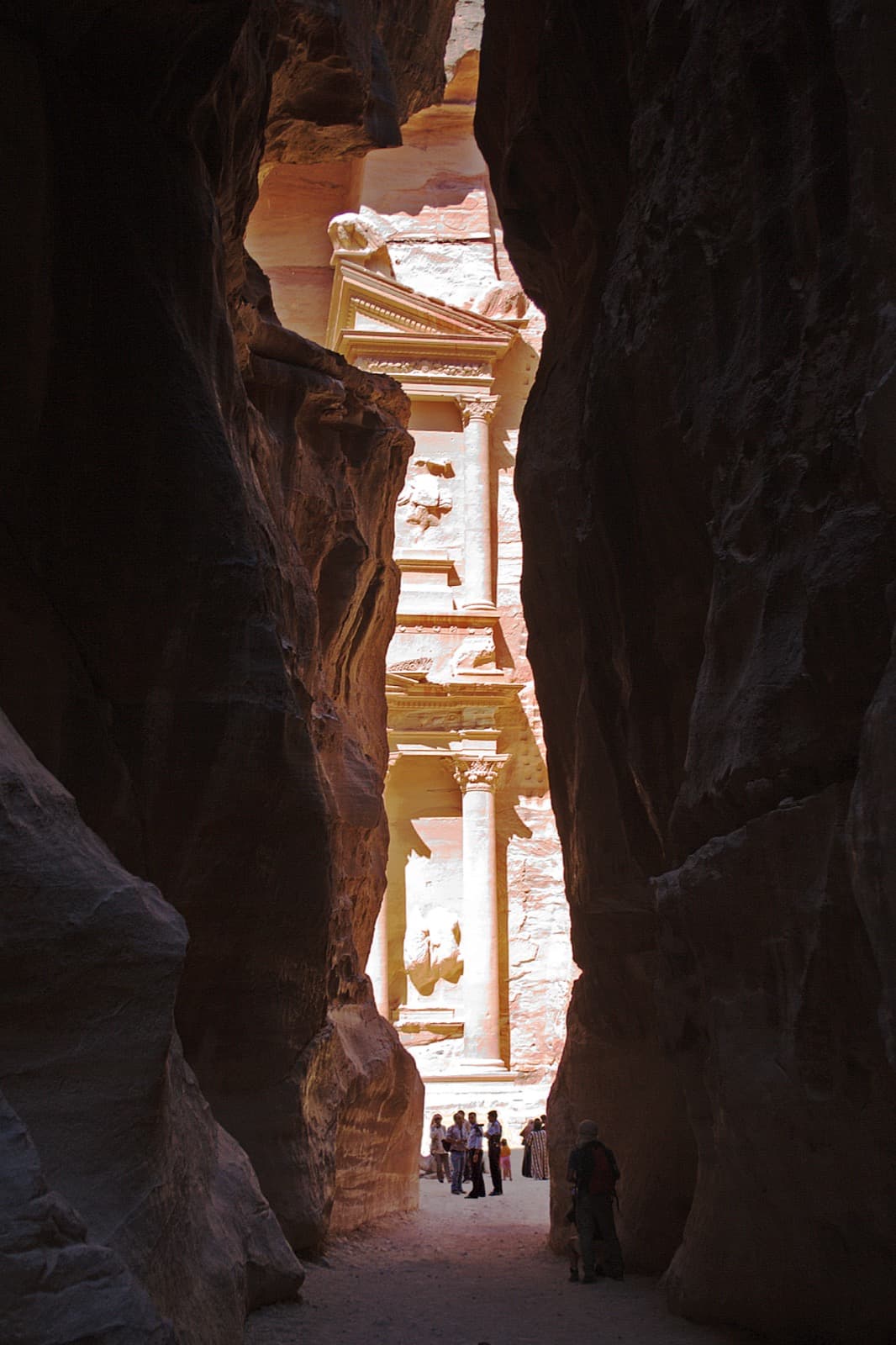
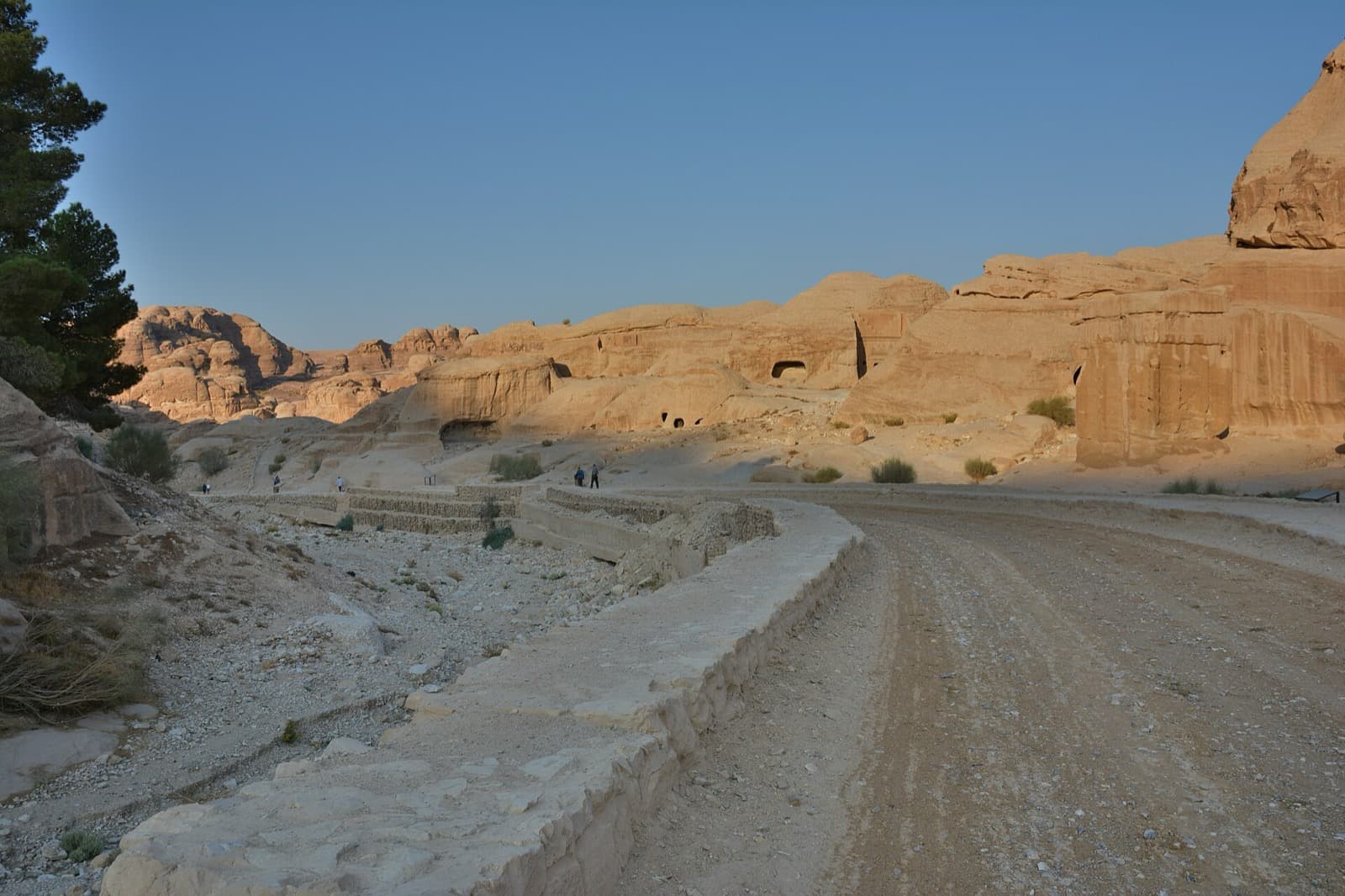
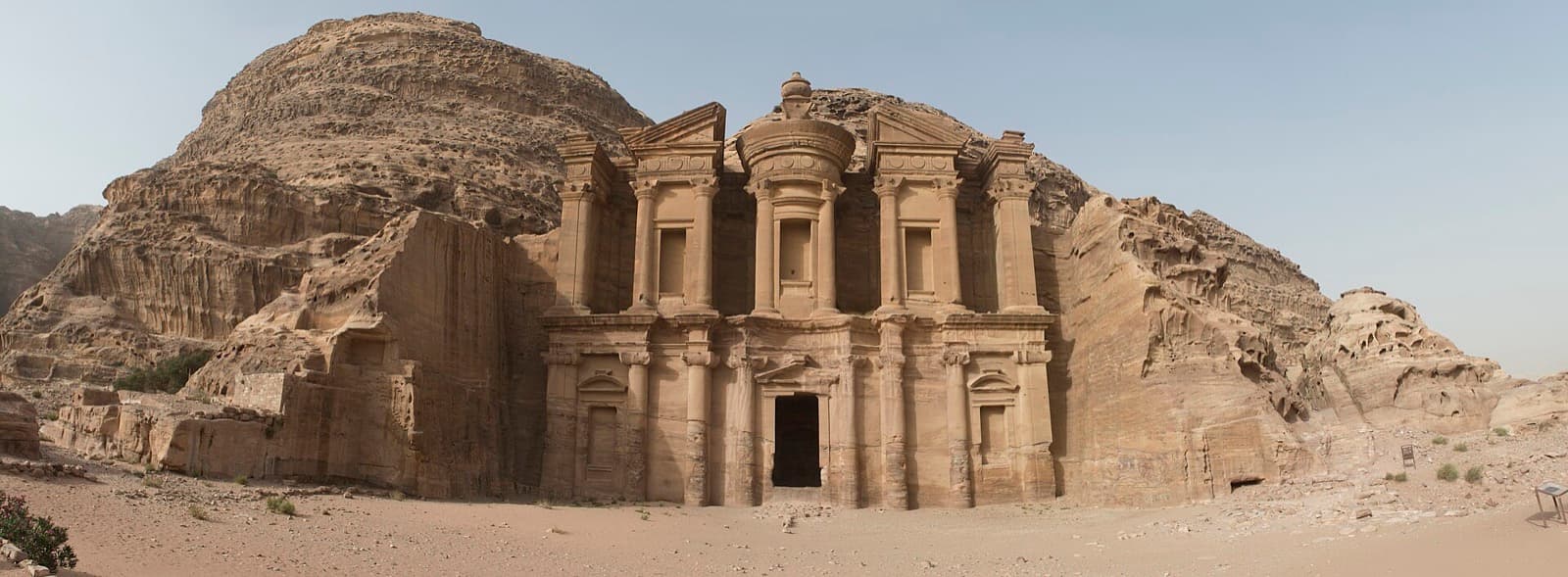
A sensible split matches our two self-guided routes. Day one follows the great processional approach: the tombs at Bab as-Siq, the shadowed kilometre of the Siq, the Treasury (Al-Khazneh), the Street of Facades, the Theatre, the Royal Tombs, and the Colonnaded Street to Qasr al-Bint. That is the Siq and Treasury main trail, roughly 4 km one way through the valley floor. Day two is the vertical day: the climb of nearly eight hundred rock-cut steps to Ad-Deir, the Monastery, whose facade stands taller than the Treasury, plus the separate ascent to the High Place of Sacrifice above the town. That is the Monastery and High Places route, a strenuous 6 km of stairways and ridgelines.
If you truly have only one day, do the main trail and add the Monastery climb in the afternoon if your legs hold. Start at opening either way. Full route detail and stop-by-stop narration live on the Petra walking tours hub.
How do you get to Petra?
Hear a stop from this walk
Qasr al-Bint: The One Great Building Raised Block on Block
Petra sits at the town of Wadi Musa, about 235 km south of Amman. Three options cover almost every traveler.
The JETT bus is the budget pick. A daily service leaves Amman in the morning (Abdali around 6:30 AM, 7th Circle around 7:00 AM) and reaches Petra around 10:00 to 10:30 AM, with a return from Wadi Musa in the late afternoon (around 5:00 PM). The one-way fare has been roughly 10 JD. Book a day or two ahead through JETT (jett.com.jo), because the single daily departure fills up. The catch: the afternoon return leaves before the light softens, so JETT suits a one-day visit better than an unhurried two-day one.
A rental car gives you the most freedom and lets you stay for the good evening hours. Reckon about two hours each way on the fast Desert Highway, or four to four and a half hours if you take the scenic King's Highway through Madaba, Karak, and Dana. Small automatics with air conditioning and insurance rent for roughly 25 to 30 JD per day.
A private taxi or driver runs about 70 to 100 JD per car one way and takes around three hours on the direct route. Split between three or four people it becomes reasonable, and a hired driver for the day lets you take the King's Highway without losing the car for the return.
When is the best time to visit?
March to May and September to November. In those spring and autumn windows daytime temperatures sit in the low to mid twenties Celsius, which is exactly what you want for a site defined by long walks and steep stairs. Summer (roughly June to August) regularly pushes past 35 degrees Celsius on exposed rock with little shade, which makes the Monastery climb genuinely punishing. Winter days are mild but short, and evenings turn cold; flash flooding in the Siq is a rare but real winter risk that the park manages by closing the canyon when needed.
Whatever the season, the single best decision is to arrive at opening (6:00 AM year round for the gate). The first hour gives you the Siq and the Treasury nearly to yourself and banks cool time before the sun clears the cliffs. If your schedule allows a Monday, Wednesday, or Thursday, the separate Petra by Night show lights the Siq and Treasury by candlelight; it is ticketed on its own (around 30 JD in 2026) and requires a valid daytime ticket as well.
What does Petra cost?
Entry is tiered by how long you visit and, importantly, by whether you are staying overnight in Jordan. Accommodated visitors (anyone with at least one night booked in the country) pay 50 JD for one day, 55 JD for two consecutive days, or 60 JD for three. Day-trippers who do not stay overnight in Jordan pay 90 JD, a deliberate premium that makes even one hotel night in Wadi Musa the cheaper choice. Children under twelve enter free. Bring your passport; the ticket office checks it, and it is what proves your accommodated status. Cash in Jordanian dinar and Visa cards are both accepted.
Most travelers should look at the Jordan Pass before buying anything. It bundles your tourist visa waiver with Petra entry and more than forty other sites (Jerash, Wadi Rum, the Amman Citadel, and others) into one prepaid package. The tiers track your Petra days: Jordan Wanderer (70 JD, one Petra day), Jordan Explorer (75 JD, two days), and Jordan Expert (80 JD, three days). The pass waives the visa fee (worth 40 JD) as long as you stay at least three nights, so for a normal Jordan trip it usually pays for itself against the visa plus a couple of site entries. Buy it online before you arrive at jordanpass.jo.
Budget beyond tickets: a night in Wadi Musa runs from hostel rates to mid-range hotel prices, meals are inexpensive, and the only in-park spending is optional tea from Bedouin vendors on the high trails and optional donkey, mule, or horse-cart rides (which we would skip on animal-welfare grounds; the walking is the point).
Is Petra safe?
Yes, with the usual caveats and one piece of context. Jordan is a stable, tourism-focused country, and Petra itself is a controlled archaeological park with dedicated tourism police, a single gated entry through the Visitor Centre, and well-marked main trails. The practical risks are ordinary ones: dehydration and heat exhaustion on the climbs, twisted ankles on uneven rock-cut steps, and persistent vendor and unofficial-guide sales pressure rather than any threat to your safety.
Read government advisories with care. As of 2026 the U.S. State Department carries a Level 3 "Reconsider Travel" advisory for Jordan driven by regional conflict, and in March 2026 it ordered non-emergency government staff to leave. The United Kingdom's guidance is narrower: it advises against travel only within 3 km of the Syrian border and treats all major tourist areas, Petra included, as normal-precautions destinations. That gap matters. The advisories are about the wider region and the northern border, not about the tourist corridor of Petra, Wadi Rum, and Amman, which has continued operating with heightened security and no incidents targeting visitors inside the park. Check your own government's current advisory before booking, buy travel insurance, carry more water than you think you need, and you are planning for the real risks rather than the headline ones.
Sources
- How Much Does It Cost to Go to Petra Jordan in 2026, Visit Jordan
- Petra Entrance Fee: Updated Prices 2026, Jordan MW
- How to Get from Amman to Petra: Complete Guide 2026, One Nation Travel
- Opening Hours Petra Jordan 2026, Jordan MW
- Jordan Travel Advisory, U.S. Department of State
- Jordan Pass Cost 2026, jordanpass.org
Frequently asked questions
- How many days do you need to visit Petra?
- Two days is ideal. One long day covers the Siq, Treasury, Royal Tombs, and Colonnaded Street, while a second day frees you for the Monastery climb and the High Place of Sacrifice. The two-day accommodated ticket is 55 JD versus 50 JD for one day, so the extra day is close to free value. If you only have one day, start at opening and add the Monastery in the afternoon.
- How do you get from Amman to Petra?
- Petra is about 235 km south of Amman. The JETT bus leaves Amman in the morning and reaches Petra around 10:00 to 10:30 AM for roughly 10 JD one way, returning in the late afternoon. A rental car takes about two hours on the Desert Highway and costs around 25 to 30 JD per day. A private taxi or driver runs about 70 to 100 JD per car and takes around three hours.
- What is the best time of year to visit Petra?
- March to May and September to November, when daytime temperatures sit in the low to mid twenties Celsius. Summer often exceeds 35 degrees Celsius on exposed rock, making the climbs punishing, and winter days are short with cold evenings and a small flash-flood risk in the Siq. Whatever the season, arrive at the 6:00 AM opening to beat crowds and heat.
- How much does it cost to enter Petra in 2026?
- Accommodated visitors staying overnight in Jordan pay 50 JD for one day, 55 JD for two days, or 60 JD for three consecutive days. Day-trippers who do not stay overnight in Jordan pay 90 JD. Children under twelve enter free. Bring your passport, since the ticket office checks it to confirm your accommodated status.
- Is the Jordan Pass worth it for Petra?
- Usually yes. The Jordan Pass bundles your visa waiver with Petra entry and more than forty other sites. The tiers are Jordan Wanderer (70 JD, one Petra day), Jordan Explorer (75 JD, two days), and Jordan Expert (80 JD, three days). It waives the 40 JD visa fee if you stay at least three nights, so for a normal multi-site Jordan trip it usually pays for itself. Buy it online before arrival at jordanpass.jo.
- Is Petra safe to visit right now?
- Petra itself is a controlled park with tourism police, a single gated entry, and marked trails, and the tourist corridor of Petra, Wadi Rum, and Amman has continued operating normally. As of 2026 the U.S. State Department has a Level 3 advisory for Jordan tied to regional conflict, while the UK advises against travel only within 3 km of the Syrian border and treats tourist areas as normal precautions. The real day-to-day risks are heat, dehydration, and uneven steps. Check your own government's current advisory before booking.
Ready to experience it?
Petra: The Siq, the Treasury, and the Rose-Red City
165 min · 4 km · hard
More from Petra
Explore more at your own pace.
One Day in Petra: A Walkable Morning-to-Evening Itinerary
Petra, the City Carved Down: How to Read a Nabataean Capital on Foot
The Climb to Ad-Deir: Why Petra's Monastery Rewards the 800-Step Ascent
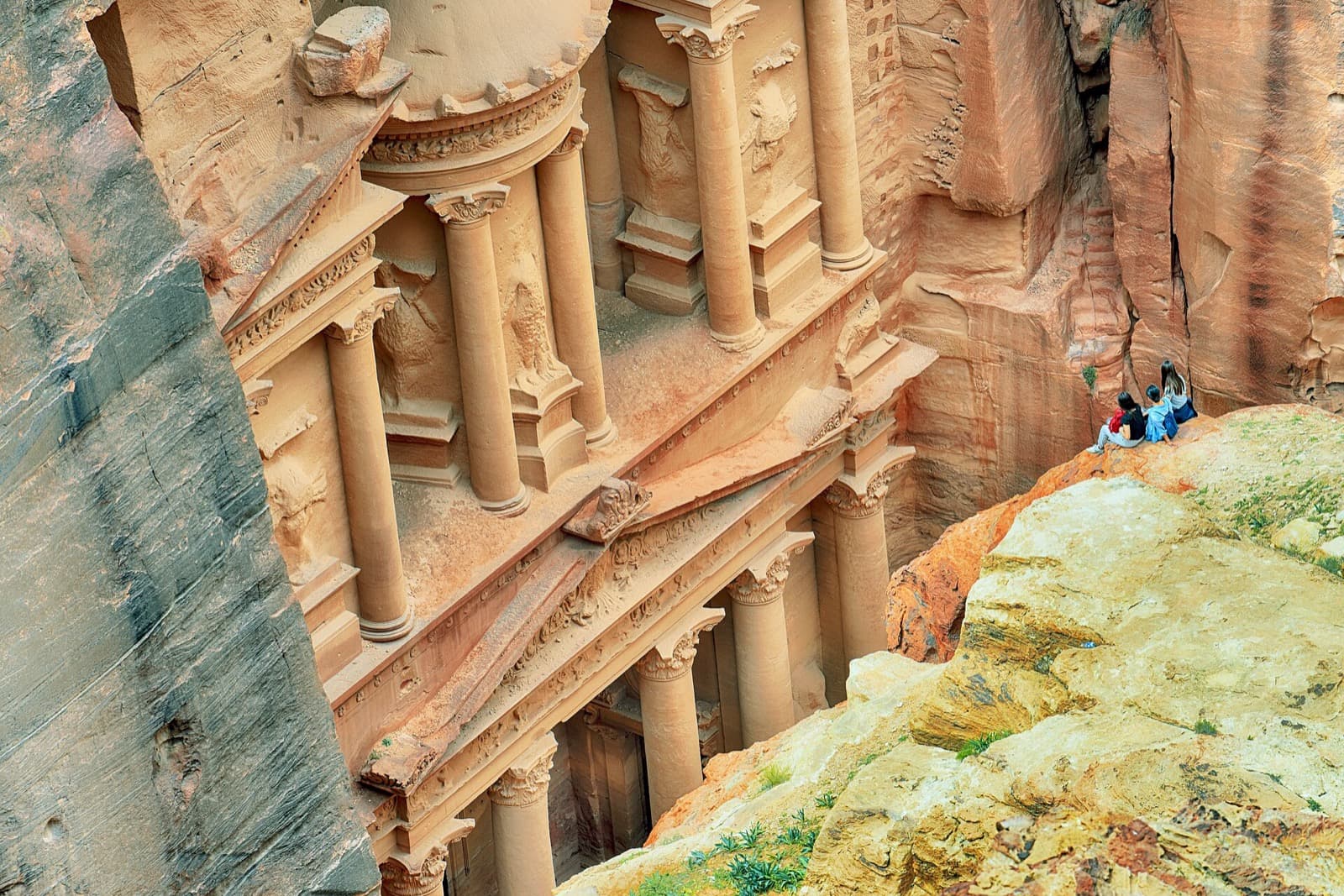
The Treasury at Petra: Why the Siq Was Built to Hide It
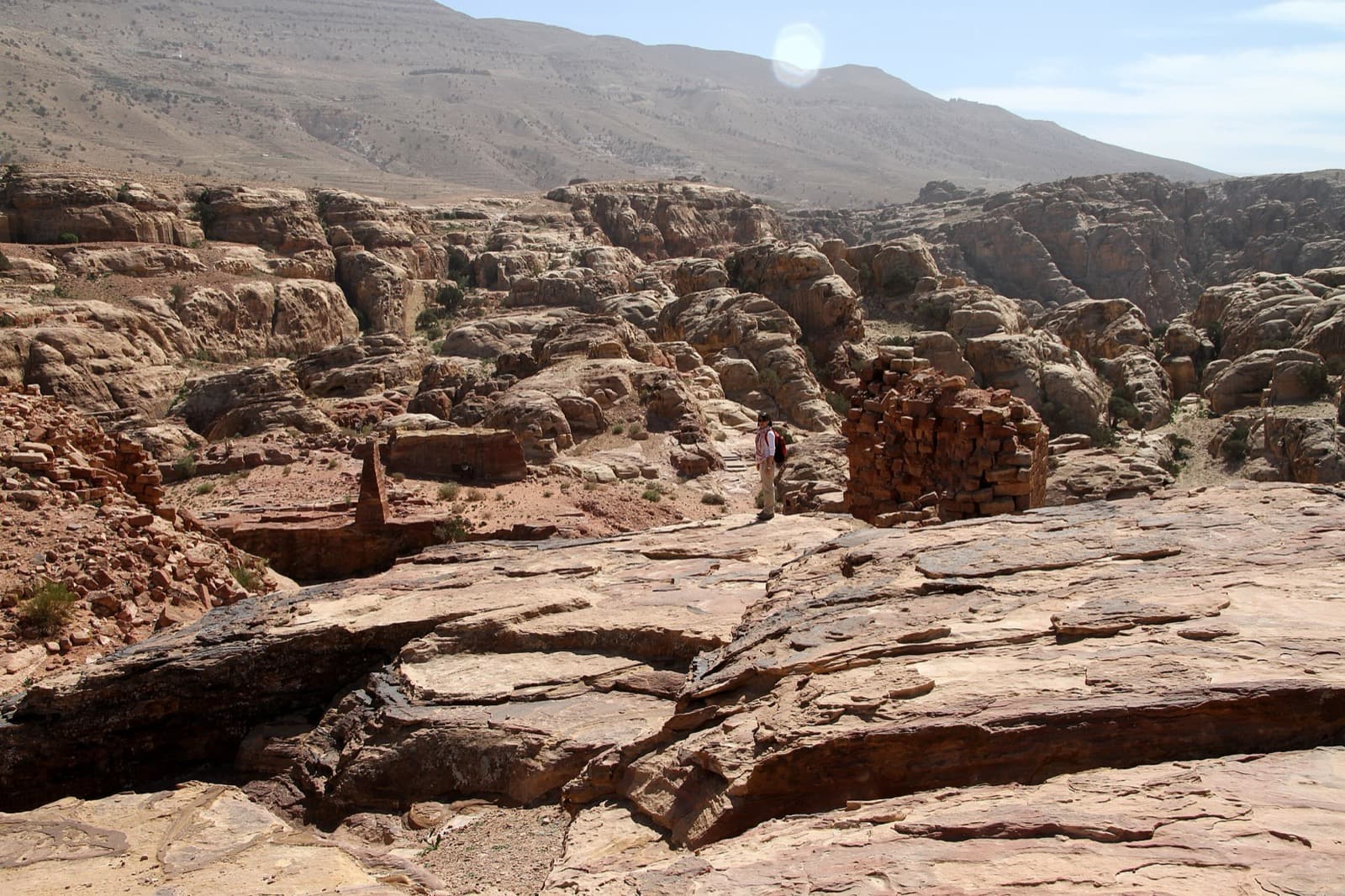
The High Place of Sacrifice: Petra's Altar in the Sky on Jabal al-Madbah