Petra: The Siq, the Treasury, and the Rose-Red City
165 min · 4 km · hard
One day in Petra means walking the ancient processional route from the entrance down the Siq to the Treasury in the cool morning, spending the middle of the day among the tombs and the colonnaded street of the old city, then choosing one big climb (the Monastery or the High Place of Sacrifice) before the low afternoon light turns the sandstone to fire and the gate closes for the day. It is a long day on foot over uneven rock, and the two ends of the day (early and late) are when the stone glows and the crowds thin. Here is how to walk it well, and how to let a self-guided audio tour carry the history so you can keep your eyes on the cliffs.
The short answer: can you see Petra in one day?
Yes, one full day is enough to walk the classic route and add one summit climb, as long as you start at opening and pace yourself. Petra opens at 6 am, and it closes at 6 pm in summer and around 4 pm in the shorter winter days, so start early and plan your turnaround around the season's closing time. The Main Trail from the gate through the Siq to the Treasury and on to the old city center runs roughly four kilometers one way over uneven, sometimes polished stone, so budget the whole day, not a couple of hours. If you want both the Monastery and the High Place of Sacrifice in the same day you can technically do it, but most people pick one climb and save the other, which is exactly the choice these two tours are built around.
Our two self-guided audio walks split the day cleanly. The Siq, the Treasury, and the Rose-Red City tour (about 4 km, roughly two and a half to three hours at a walking, listening pace) takes you from the entrance to the old city core. The Monastery and High Places tour adds the strenuous ascents, including the climb of roughly eight hundred rock-cut steps to Ad-Deir. Both start at the same gate, so you can walk one, rest, and add the other. Browse both at Petra walking tours.
Before you go: ticket, hours, and the Jordan Pass
Hear a stop from this walk
Qasr al-Bint: The One Great Building Raised Block on Block
Buy your ticket before you walk in, and think about the Jordan Pass before you even fly. A one-day Petra ticket costs 50 JOD for visitors who stay at least one night in Jordan. Day-trippers who do not spend a night in the country pay a much steeper 90 JOD, so an overnight in Wadi Musa (the town at the gate) pays for itself immediately. Children under twelve enter free during daylight hours. Tickets are sold at the Petra Visitor Center and through the official PDTRA online ticketing site.
If Petra is part of a longer Jordan trip, the Jordan Pass usually saves money and hassle. It bundles Petra entry (one, two, or three days depending on the tier), waives the tourist visa fee for visitors staying at least three nights, and covers entry to more than forty other sites including Jerash, Wadi Rum, and the Amman Citadel. The passes run in the range of roughly 70 to 80 JOD in 2026. Petra by Night is a separate ticket and is not included in either a standard day ticket or the Jordan Pass.
Prices and hours do change, and the site closes earlier in winter than in summer, so confirm the current times and fees on the official site before you travel. If a figure here has shifted by the time you read it, treat the exact number as the thing to double check, not the shape of the day.
Morning: through the Siq to the Treasury
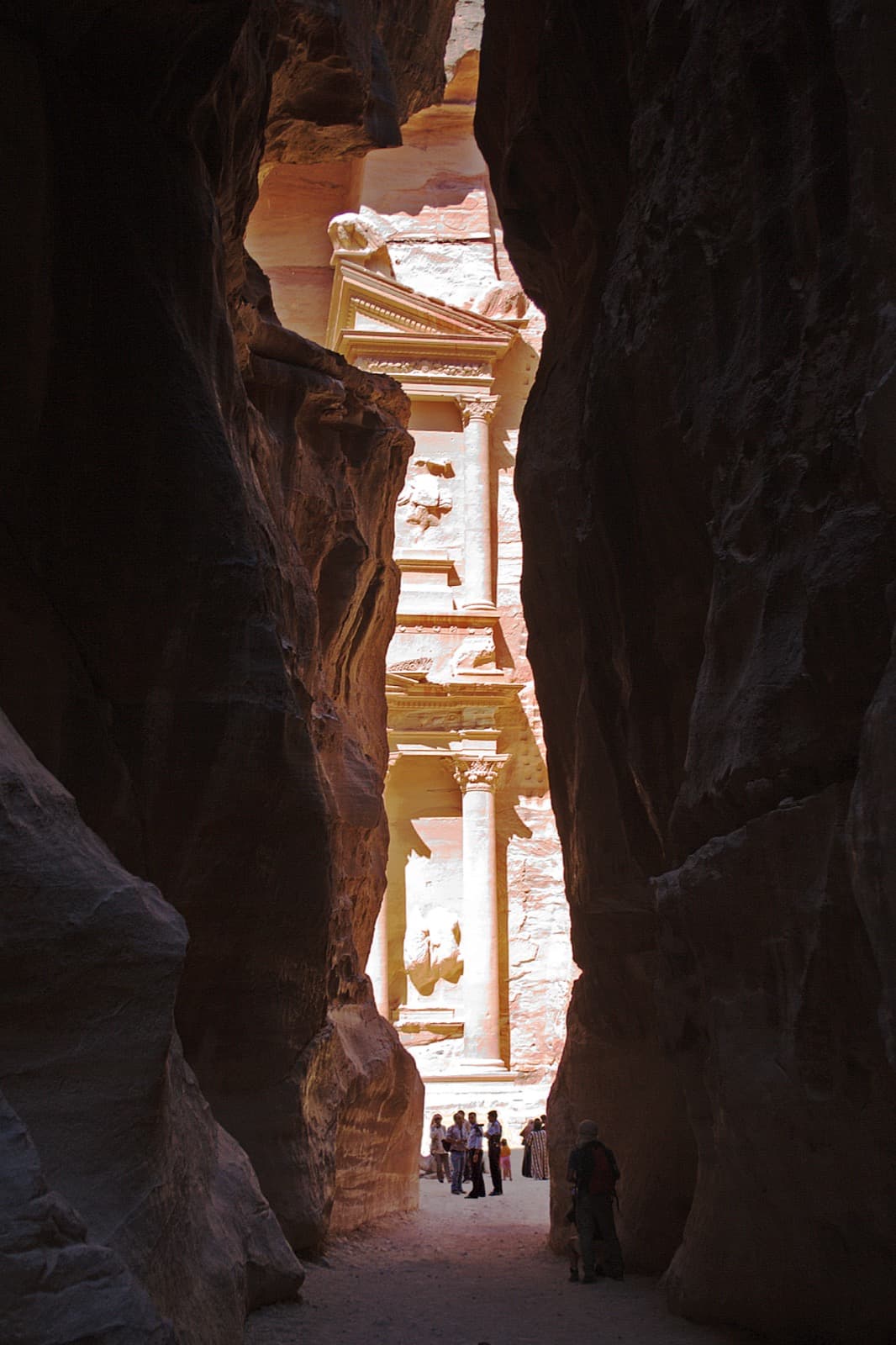
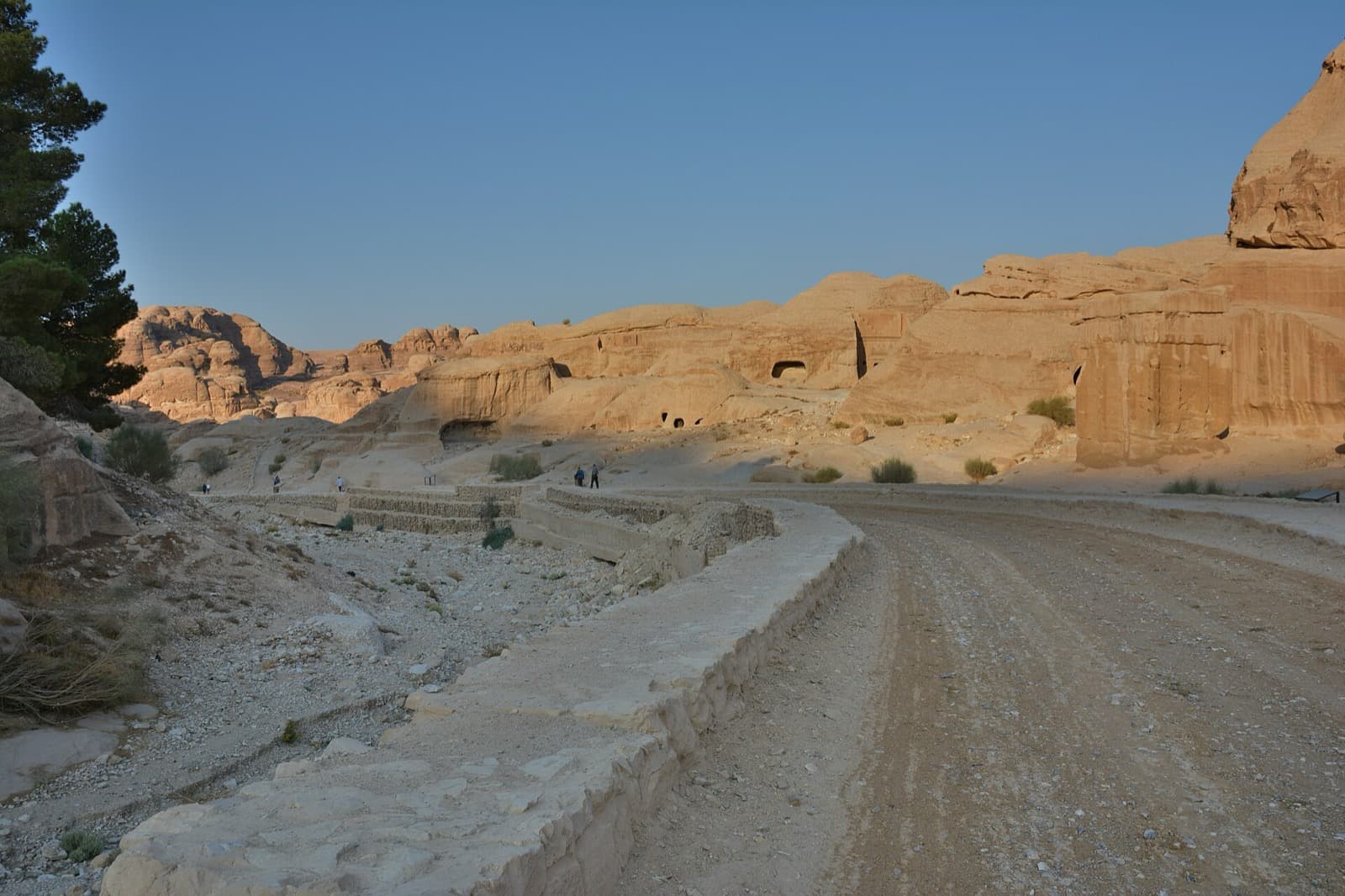
Start at the gate as close to 6 am as you can manage. The first stretch is an open, sunlit path past the Djinn Blocks and the carved Obelisk Tomb, curious square and pillared monuments that read as a warm-up for what is coming. Then the walls close in and you enter the Siq, the sandstone gorge that runs just over 1.2 kilometers to the city. It is only a few meters wide in places and stays shadowed and cool in the early hours, which is the whole reason to be here first: you walk the most famous kilometer of the day out of the sun, and you reach the Treasury while the light is still soft.
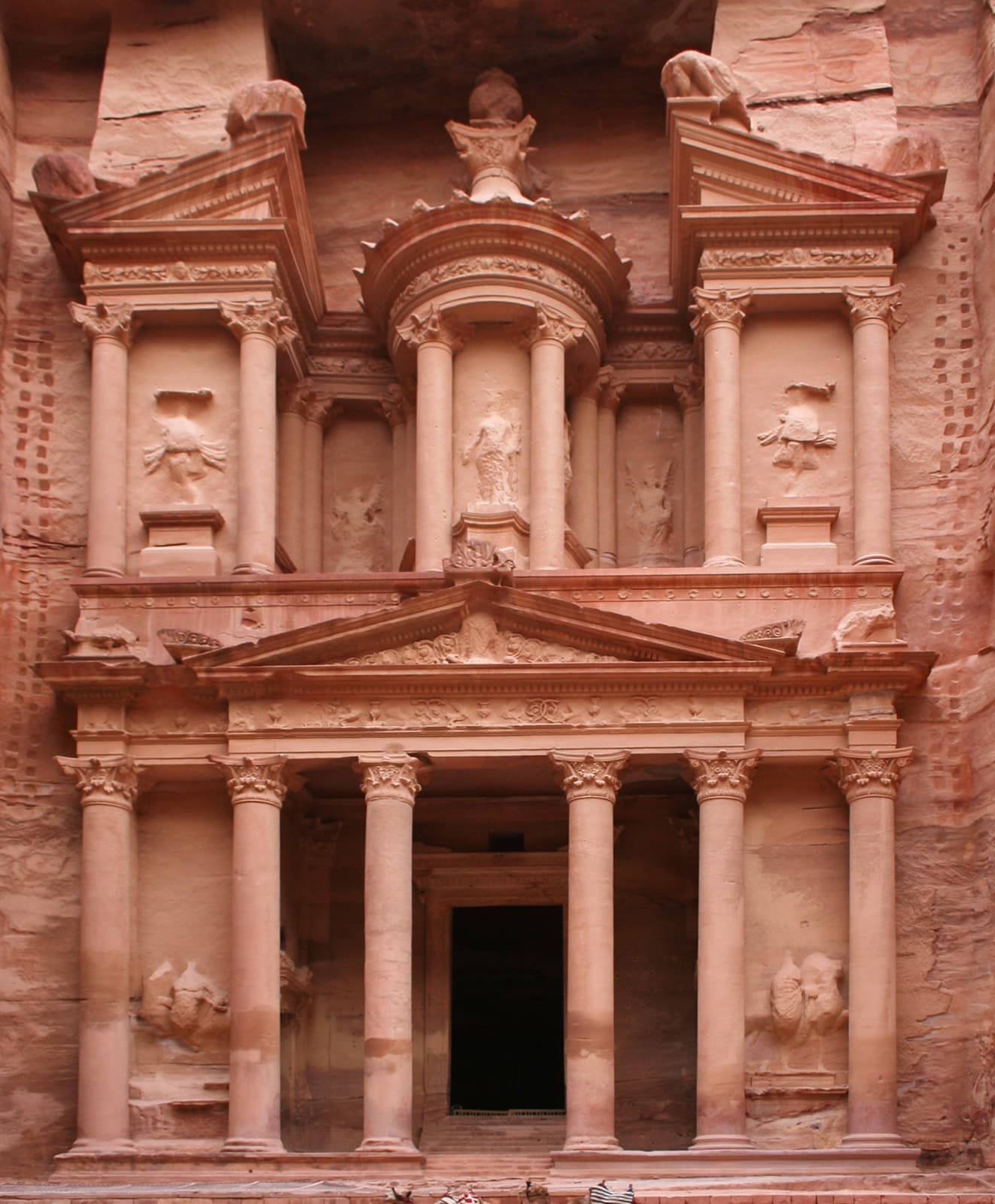
The Siq ends at Al-Khazneh, the Treasury, whose ornate facade steps out of the rock face at the mouth of the gorge. This is the moment most people picture when they imagine Petra. Arrive early and you may have a few quiet minutes before the tour groups and the camel handlers arrive. The self-guided audio tour of the Siq and Treasury is designed to be listened to as you walk this exact sequence, so the story of the Nabataean traders who cut the city, the water channels along the gorge walls, and the debate over what the Treasury actually was all land at the spot where you are standing, at your own pace, with no group to keep up with.
Midday: the tombs, the theater, and the old city
From the Treasury the gorge opens into a wide valley, and this is where you spend the hot middle of the day among the monuments of the city itself. The Street of Facades is a run of tomb fronts carved side by side into the cliff. Beyond it a large theater is cut straight into the rock, its seats hewn through older tombs. Across the valley the Royal Tombs form a tall wall of carved facades that glow strongest in late-afternoon light, so note them now and plan to look back at them on your way out.
Keep walking and the valley becomes the old civic heart of Petra: the Colonnaded Street, the paved spine of what was once a desert metropolis, leading to Qasr al-Bint, the one great free-standing temple that was built block on block rather than carved from the cliff. There is little natural shade out here, so this is the part of the day to move deliberately, refill water, and take breaks. Bedouin-run tea and snack stalls along the trail are a fair place to rest and to support the people who work the site. Carry small cash in Jordanian dinars.
Afternoon: choose your climb (Monastery or High Place)
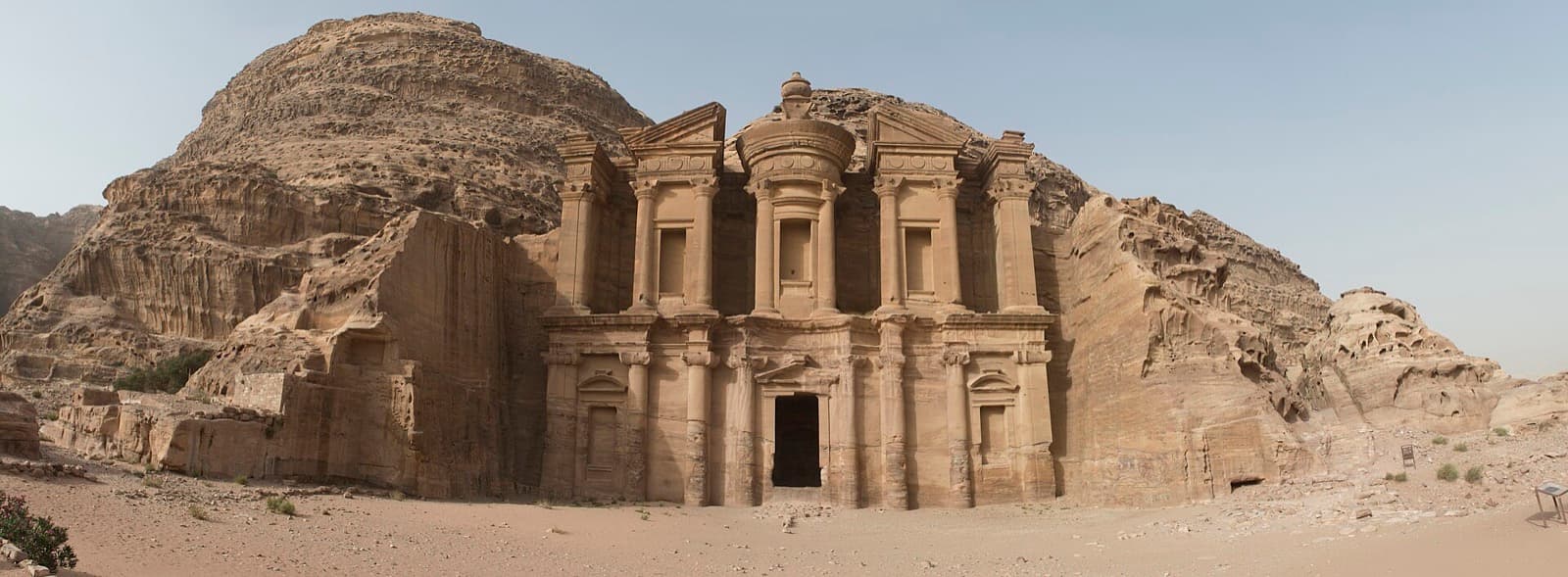
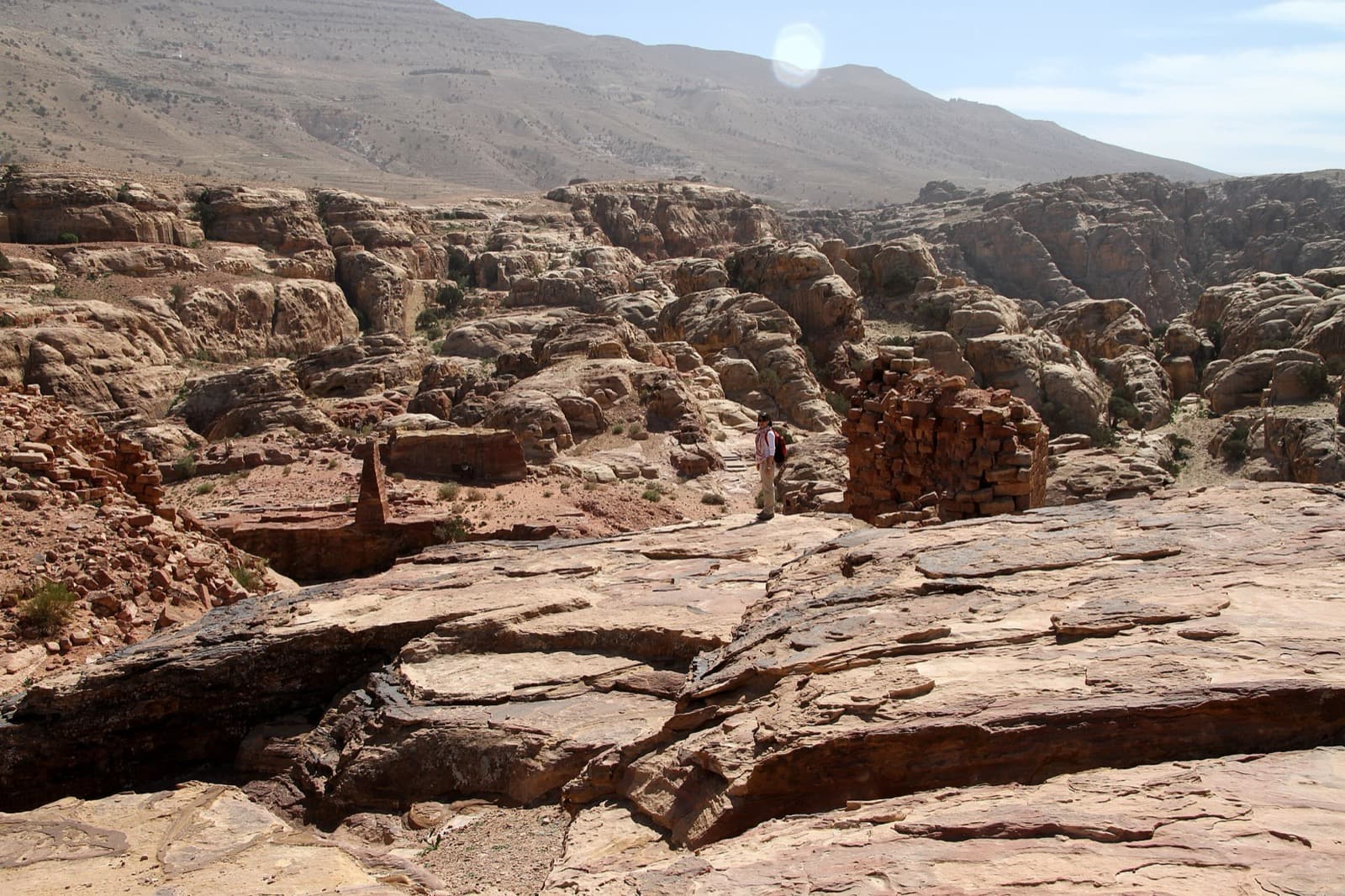
Now comes the day's decision. From the old city center, two great rock-cut stairways climb to the heights, and doing justice to even one is a serious effort. The Monastery, Ad-Deir, sits at the top of roughly eight hundred stone steps northwest of the city center. Its facade is larger than the Treasury's, and the climb takes most people around forty five minutes to an hour at a steady pace, with tea tents and viewpoints at the top that look out over the desert. The other option is the High Place of Sacrifice, a shorter but steep stair-climb to a Nabataean altar with commanding views, reached from nearer the theater.
Most walkers pick one. If you want the Monastery, start up in the later afternoon so the low light is on the facade when you arrive, but leave yourself enough daylight to descend those eight hundred steps safely before the site closes. The Monastery and High Places audio tour covers both ascents and lets you decide on the trail which one your legs are up for. Whichever you choose, the walk back down the valley and out through the Siq is long, so keep some water and energy in reserve for the return.
Evening: light, the walk out, and Petra by Night
Time your exit for the golden hour. In the last hour or two before closing, the low sun turns the Royal Tombs and the valley walls a deep rose-red, and the crowds have mostly thinned, so the walk back out through the Siq can be the quietest and most beautiful part of the whole day. The gate closes for the day at 6 pm in summer and around 4 pm in winter, and you want to be moving toward the exit, not deep in the back country, as the light goes.
On select evenings there is a separate ticketed Petra by Night experience: the Siq and the Treasury lit by candles, with the walk in after dark. It runs only on certain nights and requires its own ticket, in addition to a valid day ticket or Jordan Pass, so check the current schedule at the Visitor Center when you arrive. It is a different experience from the daytime walk rather than a replacement for it.
Practical notes and honest safety
Wear sturdy, broken-in shoes with grip, because the rock is worn smooth in places and there are a great many steps. Carry far more water than for an ordinary walk (two to three liters per person if you are climbing), plus sun protection and a hat, since shade is scarce once you leave the Siq. Horse, camel, and donkey rides are offered along the trail. Taking one is a personal choice, but agree any price clearly in advance or simply decline politely. Walking at your own pace is the point of a self-guided day.
Two honest cautions, neither meant to alarm. First, the heat is real: summer middays are punishing, spring and autumn are far kinder, and heat exhaustion is a genuine risk on the long climbs, so turn back without hesitation if it becomes too much. Second, in rare heavy rain, flash floods can surge through the Siq and the narrow valleys quickly, so heed any warnings from park staff and do not enter the gorges when storms threaten. On a normal dry day, walked at a sensible pace, Petra is a straightforward long hike with excellent underfoot markings and plenty of other people around.
When you are ready to plan the walk stop by stop, start at the Petra city page and pick the tour that matches your day.
Sources
Frequently asked questions
- Can you see Petra in one day?
- Yes, one full day covers the classic route plus one climb if you start at opening. Petra opens at 6 am and closes at 6 pm in summer and 4 pm in winter, so start early. Walk the Siq to the Treasury in the cool morning, spend midday among the tombs and colonnaded street, then add either the Monastery or the High Place of Sacrifice in the afternoon. Most visitors pick one of the two big climbs rather than both.
- How much does a Petra ticket cost in 2026?
- A one-day ticket is 50 JOD for visitors who stay at least one night in Jordan. Day-trippers who do not spend a night in the country pay 90 JOD, so booking an overnight in Wadi Musa pays for itself. Children under twelve enter free during daylight hours. Tickets are sold at the Petra Visitor Center and through the official PDTRA online ticketing site.
- Is the Jordan Pass worth it for Petra?
- For most multi-day trips, yes. The Jordan Pass bundles Petra entry (one to three days depending on the tier), waives the tourist visa fee if you stay at least three nights, and covers over forty other sites including Jerash and Wadi Rum. The 2026 tiers run roughly 70 to 80 JOD. It does not include the separate Petra by Night ticket.
- How far is the walk from the entrance to the Treasury?
- The Siq gorge alone runs just over 1.2 kilometers from near the entrance to the Treasury, a walk of about thirty to forty five minutes at a relaxed pace. The full Main Trail from the gate through the Siq and on to the old city center is roughly four kilometers one way over uneven stone, so plan the whole day rather than a quick visit.
- How many steps is the climb to the Monastery?
- The Monastery, Ad-Deir, sits at the top of roughly eight hundred rock-cut steps northwest of the old city center. The climb takes most people around forty five minutes to an hour at a steady pace. Start the ascent with enough daylight left to descend safely before closing, and carry plenty of water since shade is scarce on the heights.
- What is the best time of day and year to walk Petra?
- Start near the 6 am opening to walk the Siq in cool shadow, and save the last hour or two before closing for the Royal Tombs and valley walls glowing rose-red in low light. Spring (March to May) and autumn (September to November) are the most comfortable seasons. Summer middays are punishingly hot with little shade.
Ready to experience it?
Petra: The Siq, the Treasury, and the Rose-Red City
165 min · 4 km · hard
More from Petra
Explore more at your own pace.
Petra Travel Guide: Days, Transport, Tickets, and Safety
Petra, the City Carved Down: How to Read a Nabataean Capital on Foot
The Climb to Ad-Deir: Why Petra's Monastery Rewards the 800-Step Ascent
The Treasury at Petra: Why the Siq Was Built to Hide It
The High Place of Sacrifice: Petra's Altar in the Sky on Jabal al-Madbah