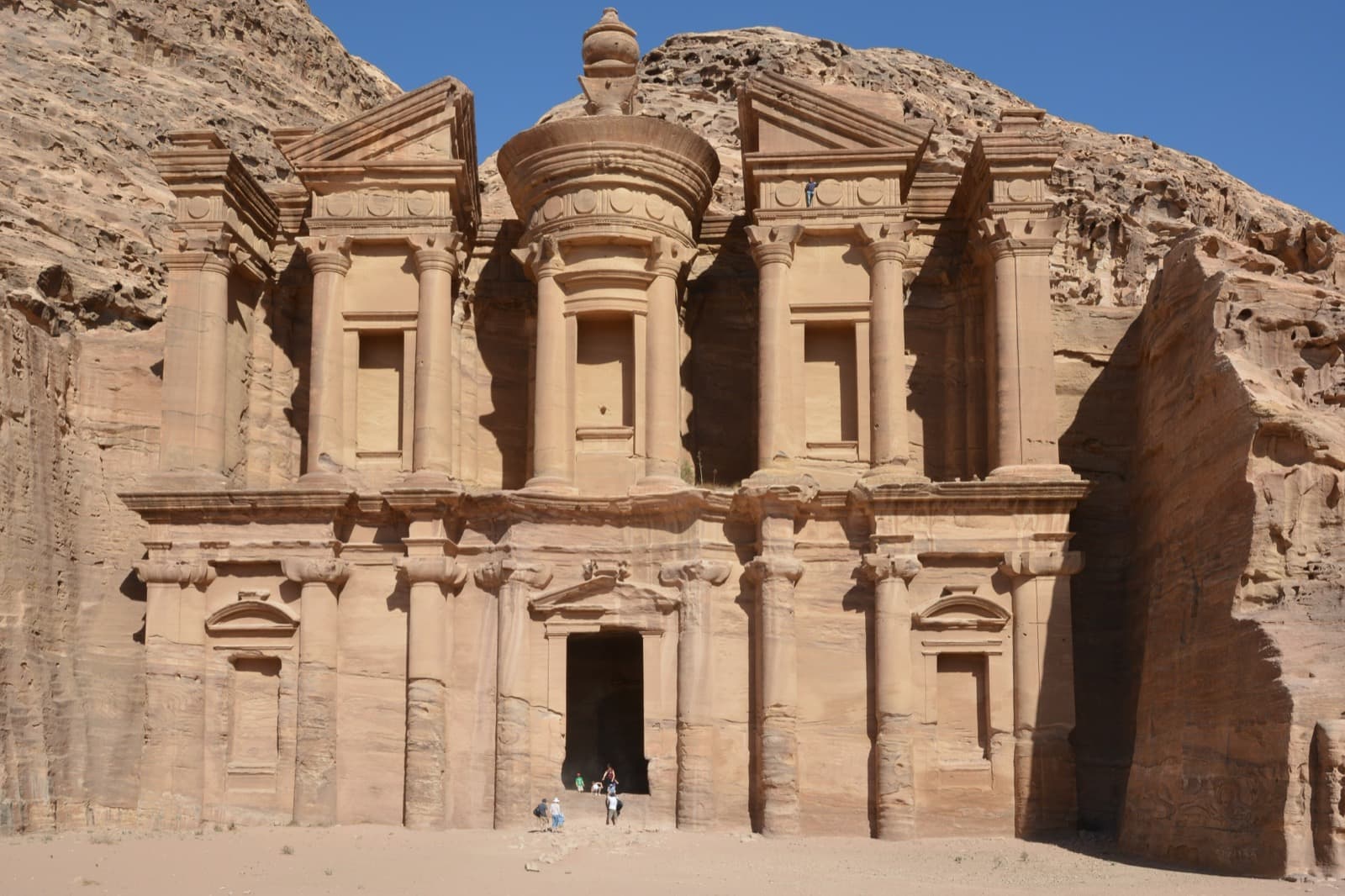
A strenuous, unforgettable day on foot through Petra's high country in Jordan, following two great rock-cut stairways to the summits where the Nabataeans cut their holiest places. Climb nearly eight hundred steps to Ad-Deir, the Monastery, whose facade stands taller than the Treasury, then take the separate ascent to the High Place of Sacrifice, all at your own pace.
Start · The Lion Triclinium: Lions Guarding the Way Up
DirectionsStops
- 1
The Lion Triclinium: Lions Guarding the Way Up
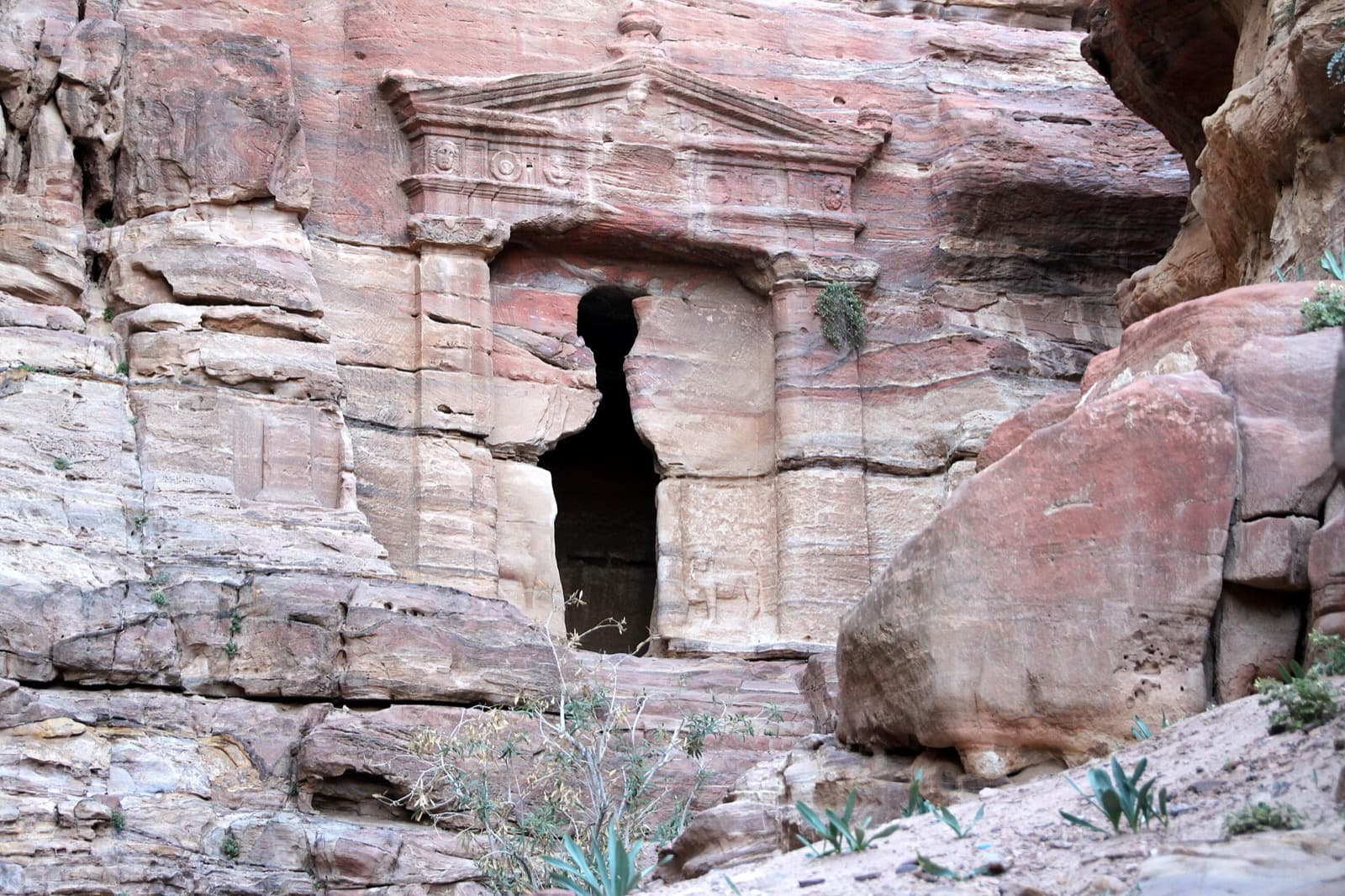
A first-century Nabataean rock-cut banqueting chamber on the ascending trail to the Monastery, its doorway flanked by a weathered pair of carved lions.
- 2
Ad-Deir, the Monastery: The Facade Bigger Than the Treasury
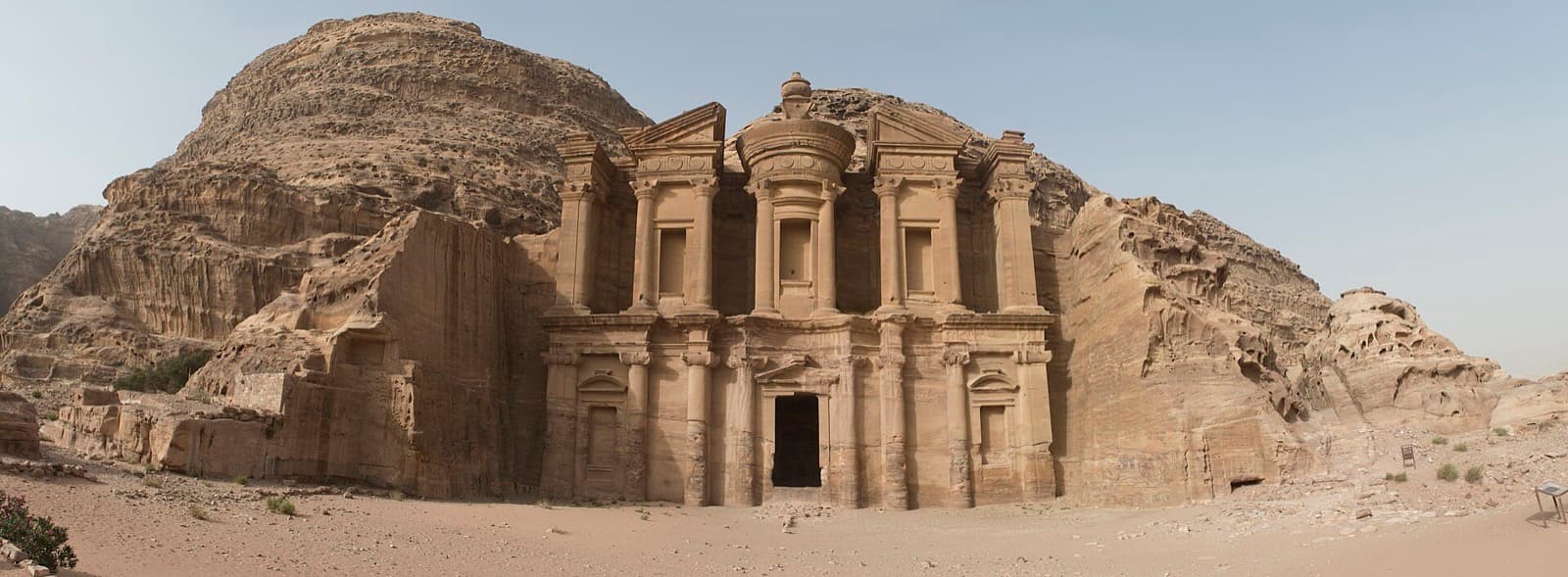
The largest carved monument in Petra, about forty-seven metres high and forty-eight metres wide, reached by nearly eight hundred rock-cut steps and the climax of the climb.
- 3
The High Viewpoints Beyond the Monastery: Where Petra Falls Into the Desert
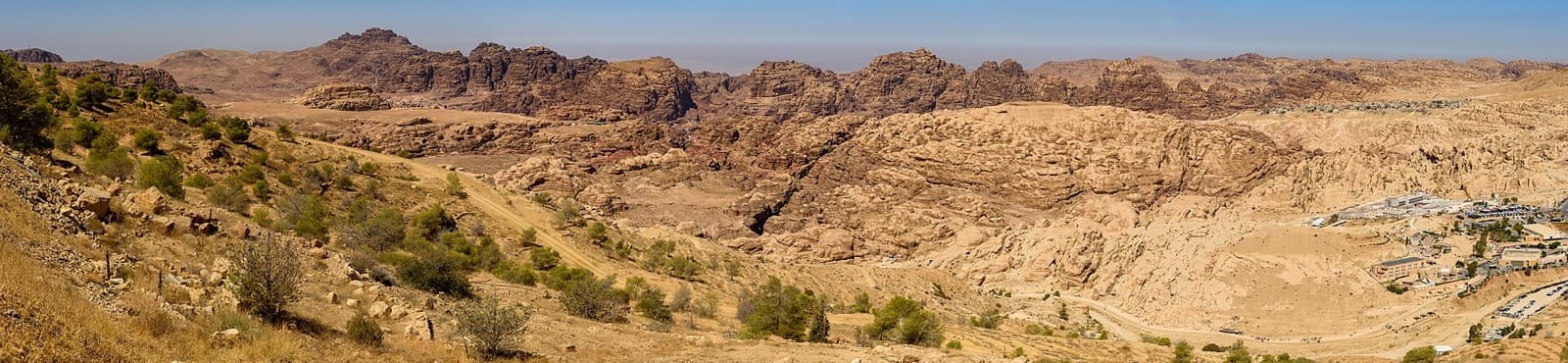
Cliff-edge viewpoints a few minutes west of the Monastery, marked by Bedouin tea tents, looking out across the great rift of Wadi Araba toward the desert.
- 4
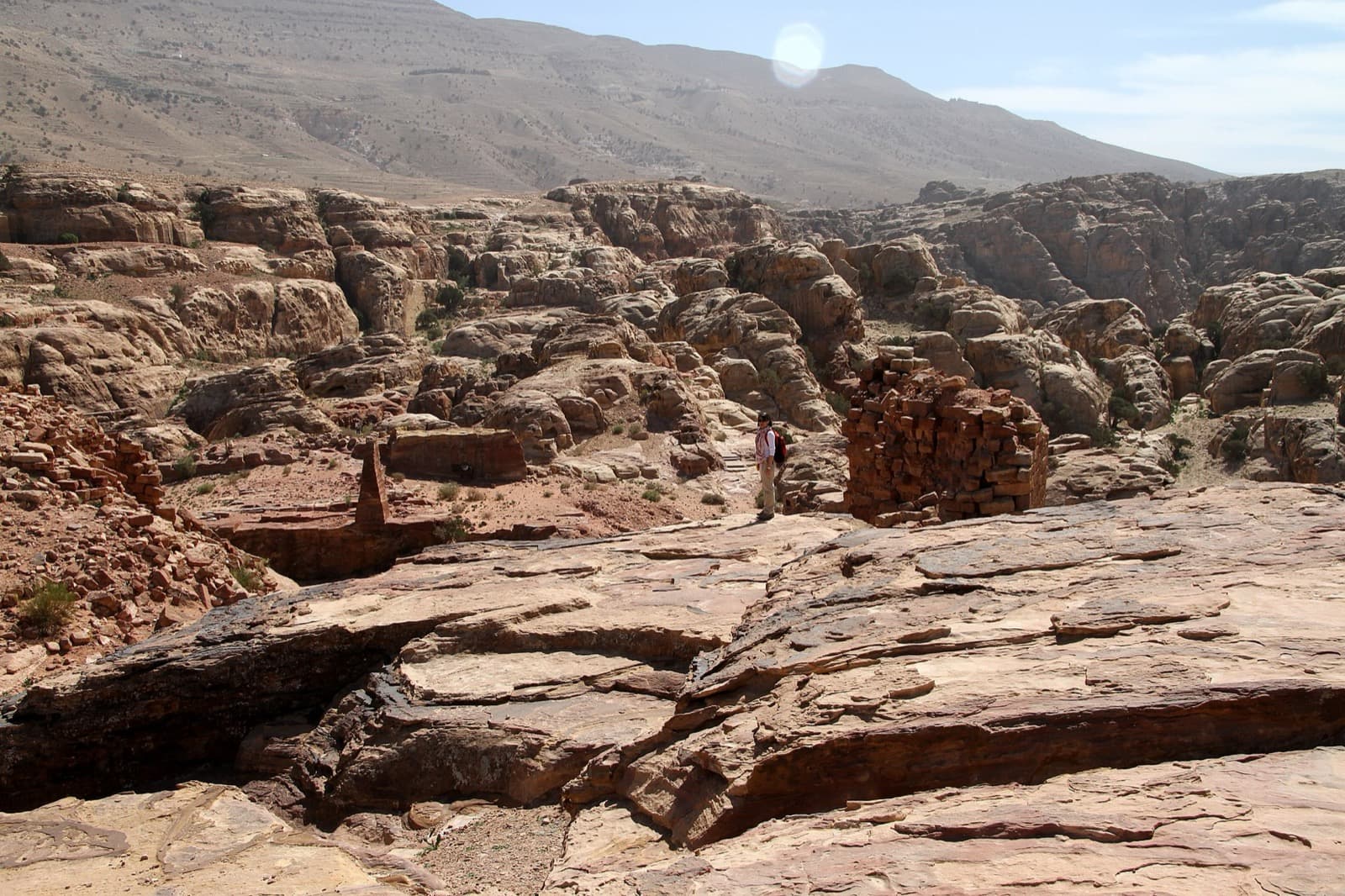
The High Place of Sacrifice: The Altar in the Sky
The best-preserved of Petra's Nabataean high places, an open-air altar-platform cut into the summit of Jabal al-Madbah above the theatre, reached by a separate stair climb.
- 5
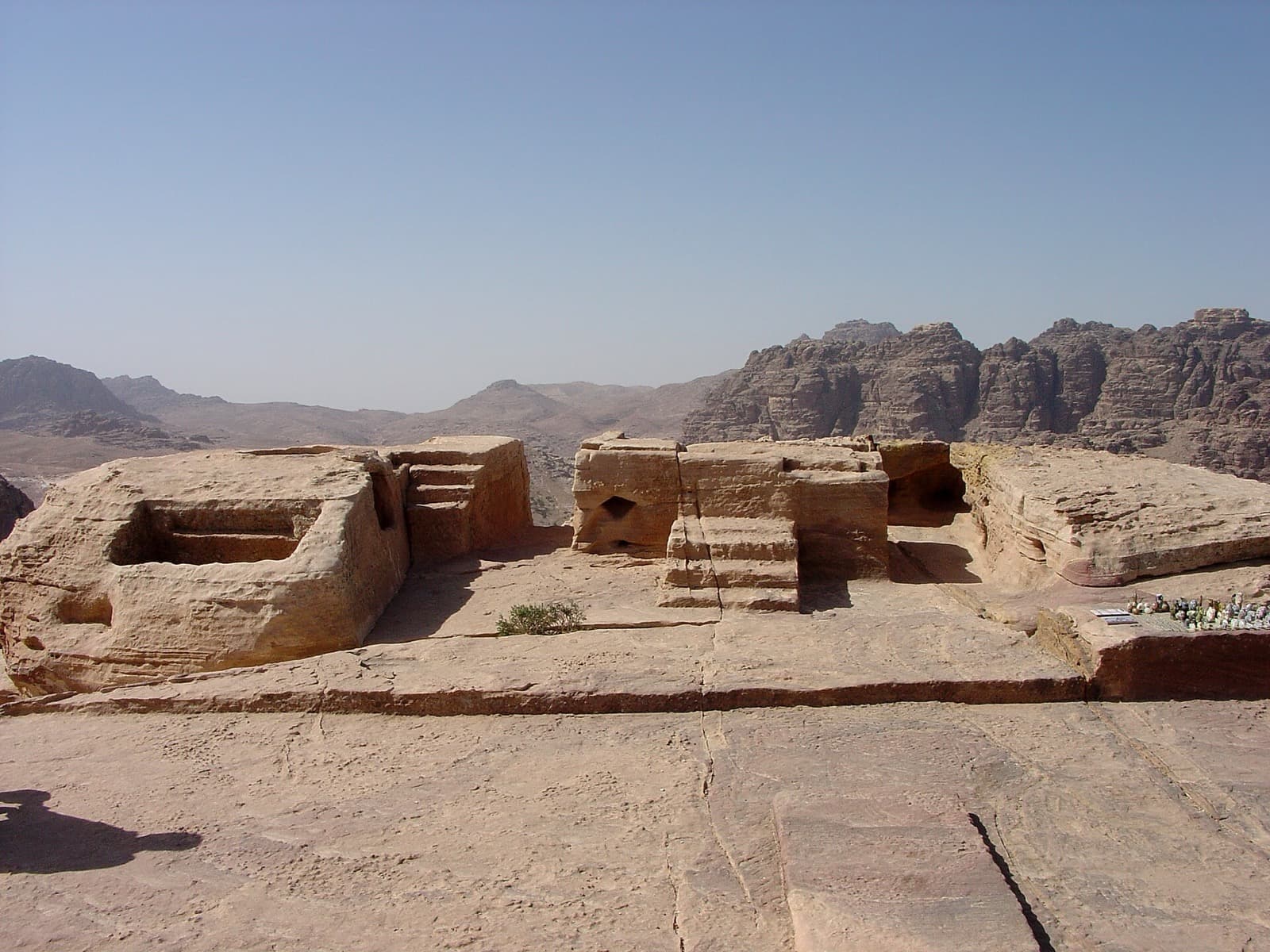
The Obelisks of Zibb Atuf: What Is Left When a Mountaintop Is Carved Away
Two great obelisks, each over six metres tall, that stand at the head of the High Place route, carved not by building up but by quarrying away the entire surrounding summit.
- 6
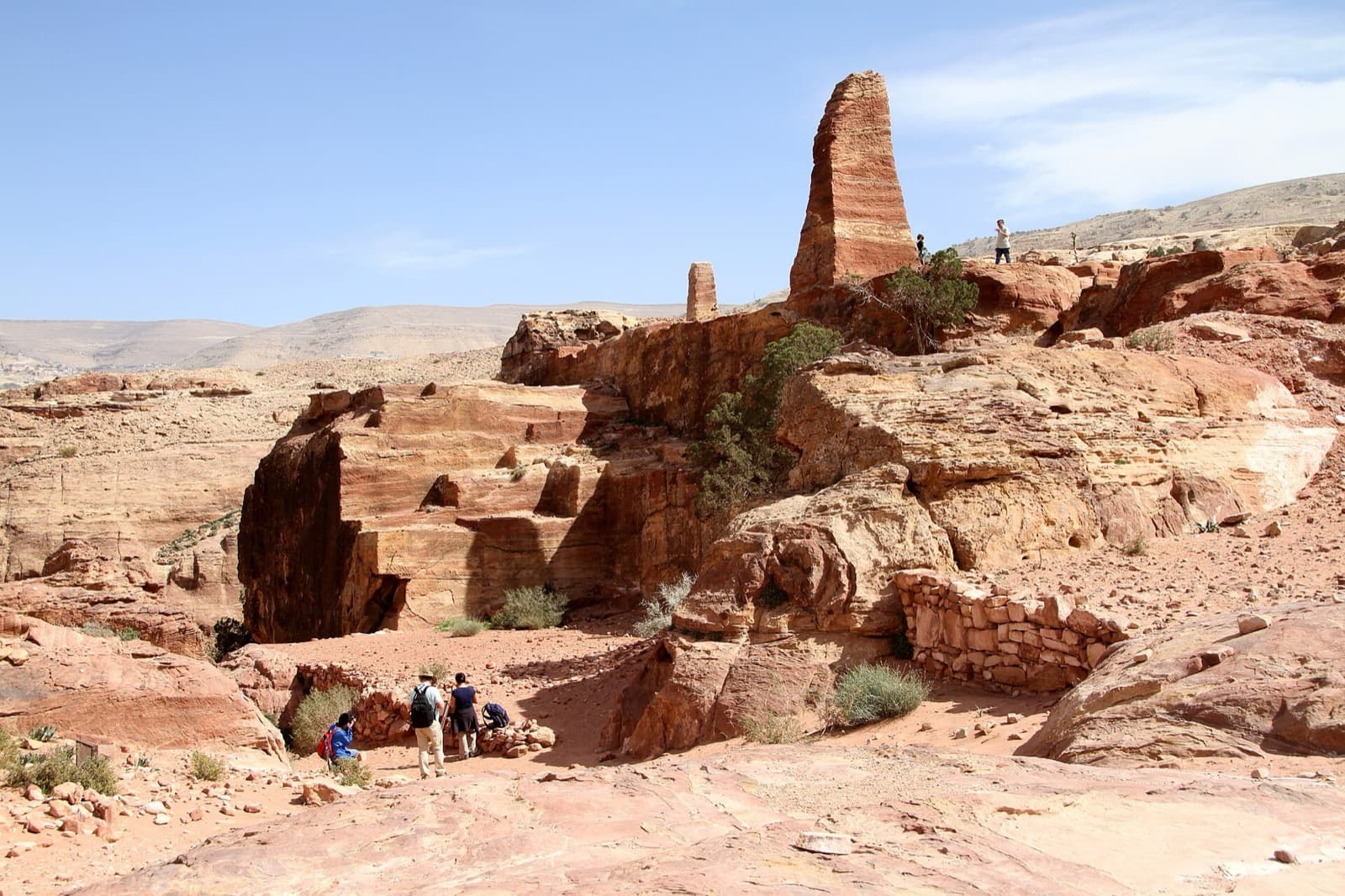
The Monuments of Wadi Farasa: The Quiet Valley of Tombs on the Way Down
The descent from the High Place through Wadi Farasa, a quieter valley past a lion fountain, a garden triclinium, and the Tomb of the Roman Soldier facing its painted hall.
Details
Best Time to Visit
Start early, ideally at the park's opening around six thirty in the morning, so you make the two big climbs before the midday sun turns the exposed rock into a furnace. Spring, from March to May, and autumn, from September to November, offer the kindest temperatures for a full day on foot; midsummer is brutally hot on the high steps, and winter can bring cold winds and rare heavy rain. Late afternoon light on the Monastery facade is superb, but leave yourself enough daylight to descend the eight hundred steps safely before the site closes.
Pro Tips
- •Treat this as a full day, roughly five to seven hours, and decide in advance which of the two climbs you have the legs for; many people do the Monastery in the morning and the High Place another day rather than both at once.
- •Carry far more water than you think you need, at least two to three litres per person, plus salty snacks, since shade and refill points are scarce on the heights.
- •Wear proper walking shoes with grip: the rock-cut steps are uneven, polished smooth in places, and steep, and sandals will punish you on the descent.
- •The Bedouin tea tents beyond the Monastery and along the trails are a welcome rest and a fair way to support the people who work these heights, so budget small cash in Jordanian dinars for tea.
- •Handlers will offer donkey, mule, horse, or camel rides up and down the steps; a ride is a personal choice, and if you take one, agree the price clearly before you start and decline politely and firmly if you would rather walk.
- •Go at your own pace and rest often on the climbs: there is no group waiting, so stop in the shade whenever you need it and let faster walkers pass.
Safety & Precautions
- •This is a strenuous route over great distances and many hundreds of uneven rock-cut steps with sudden, exposed drops at the summits and viewpoints; keep well back from cliff edges, watch children closely, and turn back without hesitation if the heat or the climb becomes too much.
- •Sun exposure is serious here, with little shade on the high trails; wear a hat, use sunscreen, cover up, and carry enough water to avoid heat exhaustion, which is a real risk on the eight hundred steps.
- •In rare heavy rain, flash floods can surge through the Siq and the narrow valleys with little warning; heed any warnings from park staff and do not enter the gorges during storms.
- •Dress modestly out of respect for local custom, carry small cash in Jordanian dinars for tea, water, and any ride you choose, and note that on Fridays and around prayer times the rhythm of nearby towns shifts, so plan transport and meals accordingly.
Travel advisory: Reconsider Travel (Level 3).
Gallery
Related Reading
Go deeper on what you'll see, hear, and walk through.

Overview
Best Self-Guided Walking Tours in Petra (2026)
3 min
Overview
One Day in Petra: A Walkable Morning-to-Evening Itinerary
9 min
Overview
Petra Travel Guide: Days, Transport, Tickets, and Safety
7 min
Thematic
Petra, the City Carved Down: How to Read a Nabataean Capital on Foot
7 min
Companion
The Climb to Ad-Deir: Why Petra's Monastery Rewards the 800-Step Ascent
7 min
Deep dive
The High Place of Sacrifice: Petra's Altar in the Sky on Jabal al-Madbah
5 min
Read
What to Eat in Petra: Mansaf, Zarb, and the Bedouin Table
8 min
Read the walk
The full story of Petra Monastery: The Climb to Ad-Deir and the High Places, in words. Prefer to listen? Play it narrated, from home or on location.
Introduction
This is a walk into Petra's high country, the summits above the famous carved canyon here in Jordan, where the Nabataeans cut their holiest sanctuaries into the tops of the mountains. Reaching them means climbing, and this route reads that high country by two great rock-cut stairways. One rises through a side valley by roughly eight hundred steps to Ad-Deir, the Monastery, a facade even larger than the Treasury standing alone against the sky. The other climbs from near the theatre to the High Place of Sacrifice, a Nabataean altar-platform on a ridge, then descends past a chain of tombs through Wadi Farasa, the valley of quiet. There are six stops across a long day of about five to seven hours, spread over roughly six kilometres of trail, though the two climbs and the summits set the pace far more than the distance. This is famously tour-pressured ground, with guides, carriage touts, and stall-holders steering the crowds through the low canyon. Up here, on your own clock, you decide whether to press on to the Monastery, linger at a cliff-edge tea tent run by the Bedouin who work these heights, or turn back. No group, no schedule, no tip pressure. A good local guide is wonderful company at a site this vast, and nothing here argues against one. The only thing this walk sets aside is the fixed pace of a scheduled group. The heights reward a slow pace and frequent water, so let the scale surprise you rather than rushing it. When you arrive at the Lion Triclinium on the ascending trail, begin with stop one.
1. The Lion Triclinium: Lions Guarding the Way Up
You are on the ascending trail toward Ad-Deir, the Monastery, and this is a fitting first stop before the long stair climb begins. The Lion Triclinium is a Nabataean rock-cut chamber dating to the first century A D, and it takes its name from the pair of heavily weathered lions carved to either side of the doorway, facing the entrance and guarding the way up. The word triclinium simply means a dining chamber with three stone benches. This is not a tomb. There are no graves inside. A triclinium like this one was a place for ritual funerary banquets held in honour of ancestors or of the gods, the family gathering on the benches to share a meal in memory. Petra was built by the Nabataeans, an Arab people whose kingdom grew rich on the caravan trade, and their monuments blend styles borrowed from across the ancient world. You can read that here in the facade. Above the doorway runs a frieze of triglyphs and metopes, the alternating grooved blocks and panels of classical architecture, and at each end sits a carved head of Medusa. Step your eye inside and you find three benches and, in a niche to the left of the doorway, a baetyl, a sacred standing stone. The Nabataeans often worshipped their gods not as human figures but as these plain carved blocks. The whole site around you carries that layered greatness. UNESCO inscribed Petra on its World Heritage List in nineteen eighty-five, and in two thousand seven it was named one of the New Seven Wonders of the World. From here the trail steepens toward the summit, so settle into your own pace before the climb.
2. Ad-Deir, the Monastery: The Facade Bigger Than the Treasury
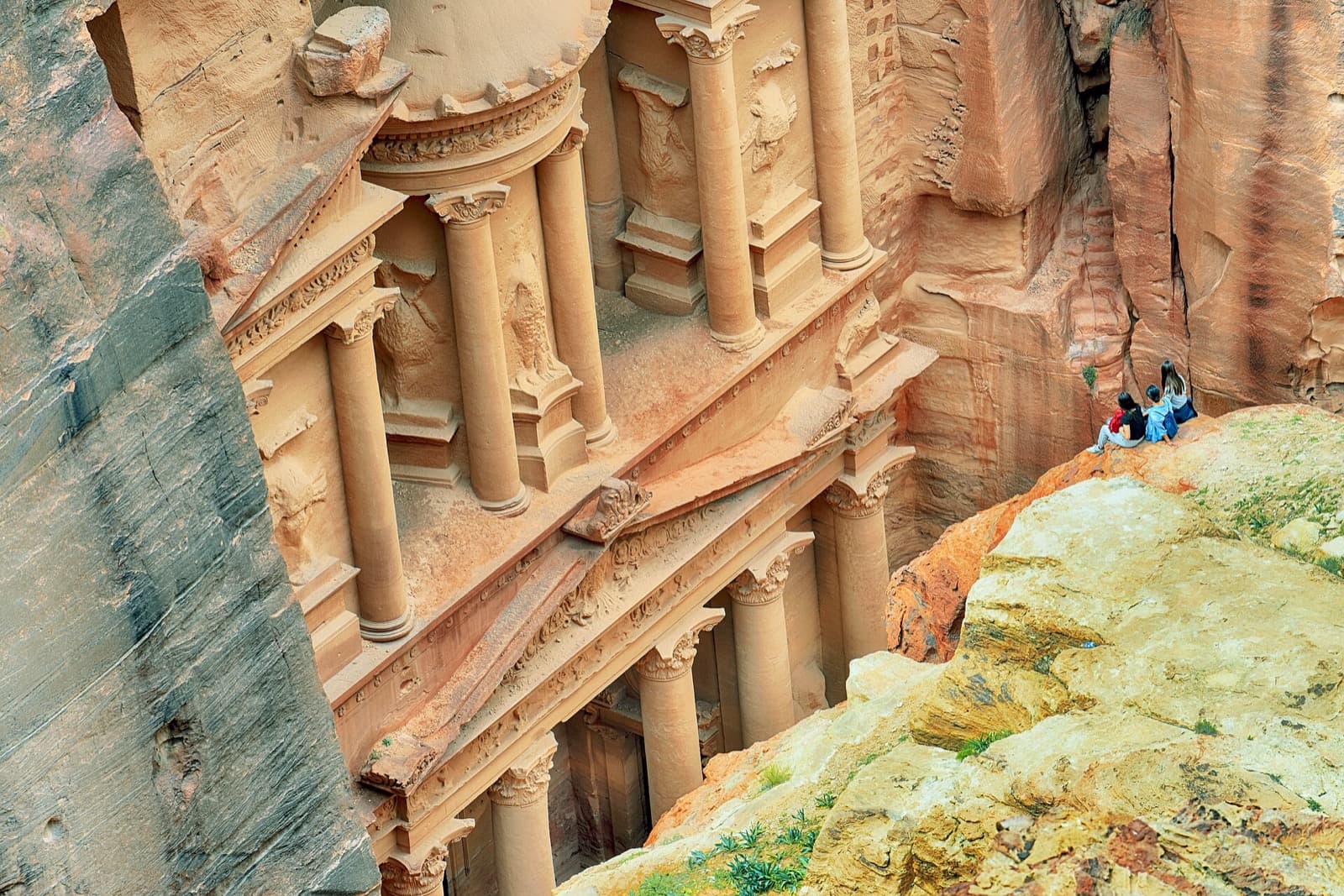
You have reached the top, and ahead stands Ad-Deir, the Monastery, the largest carved monument in all of Petra. The name Deir means monastery, and the facade rises to about forty-seven metres high and forty-eight metres wide. That is taller than Al-Khazneh, the Treasury, the monument most travellers know from the canyon below. According to the accounts of the site, the Monastery has the tallest facade in Petra and is the second most visited monument here after the Treasury, and standing before it you can feel why. It was probably carved in the mid-first century A D. To reach it you have just climbed a path of nearly eight hundred rock-cut steps, roughly a forty-minute ascent from the basin at the far end of the site, and you did it at your own clock, no group setting the pace on the stairs. Look at the architecture. A broad pediment is broken in the centre, its two halves flanking a round element called a tholos. Despite the name, this was almost certainly not a monastery, and probably not even a tomb, since its interior is a single square chamber with a broad rear niche rather than the layout of a burial. Scholars read it instead as a Nabataean cultic monument. An inscription mentioning what is written as the marzeah of Obodat the god suggests it was dedicated either to a deity or to the deified Nabataean king Obodas, so the leading interpretation is a temple or a royal cult, not a tomb. The name Monastery came much later, from several small crosses incised inside the chamber when Christians reused the space as a church or hermitage. Rest here. You earned the view.
3. The High Viewpoints Beyond the Monastery: Where Petra Falls Into the Desert
A few minutes' walk west of the Monastery, the ground simply ends. These are the high viewpoints, a string of cliff-edge overlooks marked by Bedouin tea tents and hand-painted signs reading things like Best View in the World, Wadi Araba View, and End of the World. They are not…
Full narration for this stop unlocks with the tour.
4. The High Place of Sacrifice: The Altar in the Sky
This is a second summit and a second climb, on the opposite side of the city from the Monastery, reached by a signposted stairway that rises from near the Roman theatre. The High Place of Sacrifice, called al-Madbah, which means the altar, is the best-preserved of all the…
Full narration for this stop unlocks with the tour.
5. The Obelisks of Zibb Atuf: What Is Left When a Mountaintop Is Carved Away
Just before the sacrificial platform, on the same ridge, stand two great stone obelisks, known by the Bedouin name Zibb Atuf. Each rises over six metres tall, and here is the thing that stops you when you understand it. These were not built up. They were carved down. The…
Full narration for this stop unlocks with the tour.
6. The Monuments of Wadi Farasa: The Quiet Valley of Tombs on the Way Down
The descent from the High Place runs down Wadi Farasa, and the word wadi simply means a valley or dry riverbed. This one is far quieter than the crowded main canyon, and it carries you past a chain of Nabataean monuments in a fitting close to the day. First comes the Lion…
Full narration for this stop unlocks with the tour.