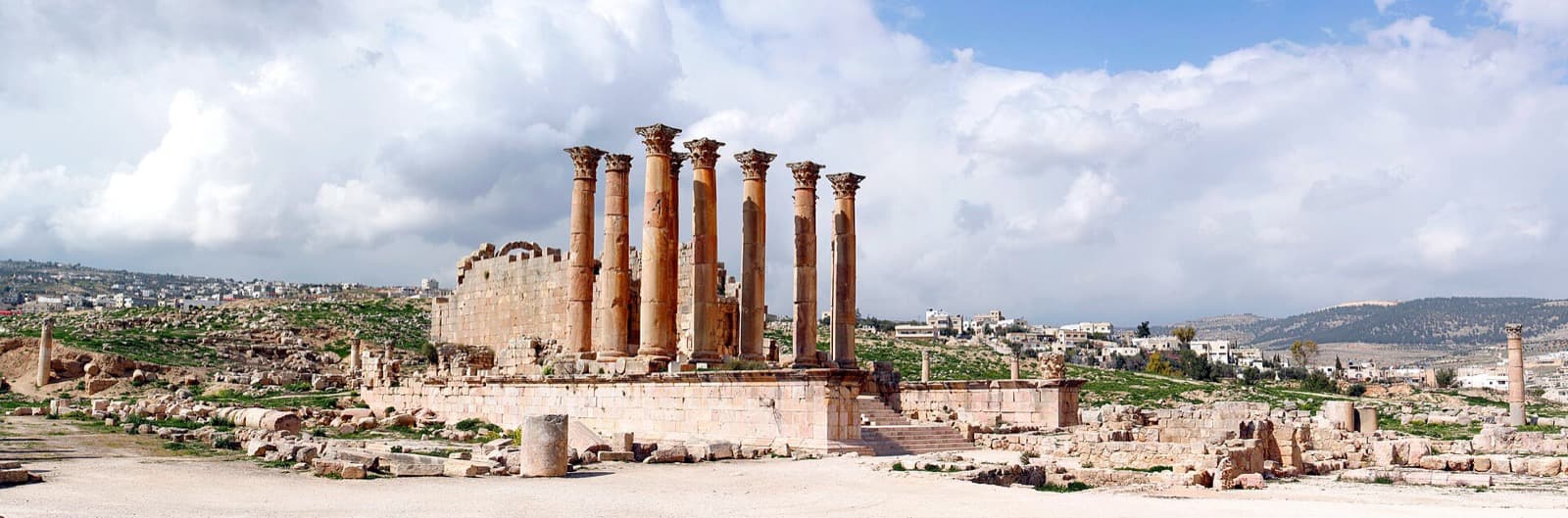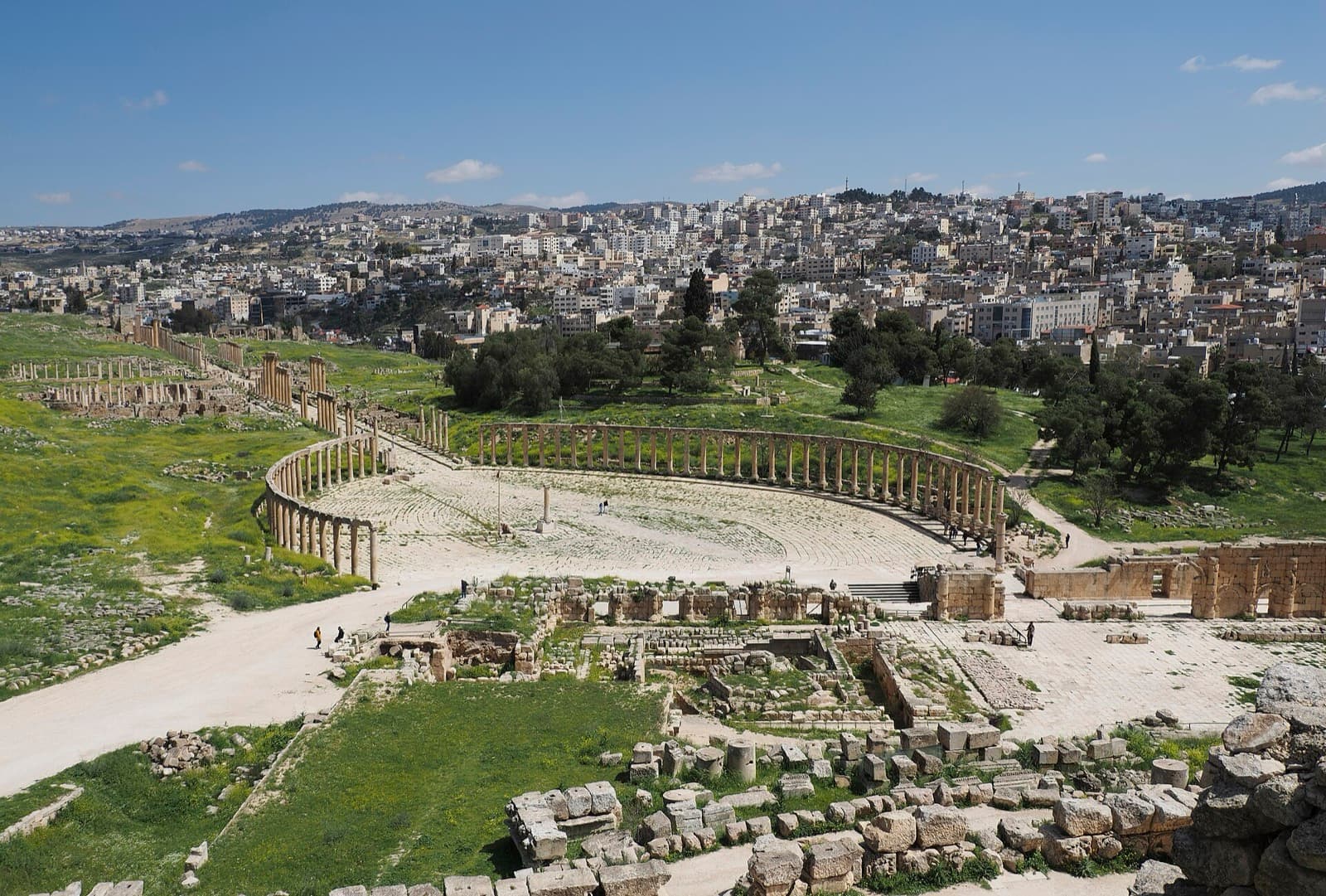
Jerash: The Colonnaded Heart of Roman Gerasa
90 min · 1.5 km · moderate
If you want to eat well in Jerash, plan two things: a proper sit-down mansaf near the ruins, and a stop for knafeh, the warm cheese-and-syrup pastry that people here treat as a daily reward rather than a special occasion. Jerash is a day-trip town built around one of the best-preserved Roman cities anywhere, so most of its food clusters near the South Gate entrance and along the modern main road. The regional plate is Jordanian home cooking with a strong Bedouin backbone: lamb, rice, fermented yogurt, grilled meats, and a handful of sweets carried over from nearby Nablus. Order for the table, not the individual, and you will eat the way locals do.
The one dish to build a meal around: mansaf
Mansaf is Jordan's national dish and the thing to eat if you eat only one full meal in Jerash. It is lamb or goat simmered in a sauce of jameed, a fermented and dried yogurt made from sheep or goat milk, then spread over rice or flatbread and scattered with toasted almonds or pine nuts. The jameed is the whole point: it was a way to preserve milk in the desert without refrigeration, and it gives the sauce a sharp, savory tang that separates real mansaf from a plain lamb-and-rice plate. In 2022, UNESCO added mansaf to its Representative List of the Intangible Cultural Heritage of Humanity, recognizing it as a symbol of Jordanian hospitality tied to the country's agro-pastoral life.
Two practical notes. First, mansaf is a communal dish, traditionally served on one large platter and eaten with the right hand; ordering a single portion for one person is possible but misses the spirit of it. Second, it is heavy, so most travelers eat it as a midday meal and go light in the evening. Restaurants near the ruins, including the ones flanking the visitor-center entrance, are set up to serve it to walk-in visitors without a reservation.
What else to order, and where it comes from
Hear a stop from this walk
The Cardo Maximus: The Marble Street Rutted by Two-Thousand-Year-Old Wheels
Beyond mansaf, a good Jerash meal is a spread of mezze and grilled meat. Start with hummus, fresh falafel, and flatbread from a bakery or a grill house. Add maqluba if you see it: the name means "upside-down," and it is a pot of rice, fried vegetables, and chicken or lamb that gets flipped onto a platter at the table. For a fast, cheap lunch between tours, shawarma wrapped in bread does the job.
The sweet you should not skip is knafeh (also spelled kunafa). It is a hot pastry of shredded or semolina dough over soft white cheese, soaked in sugar syrup and often finished with pistachios. Its home is Nablus, the Palestinian city where the cheese-based version, knafeh Nabulsiyeh, was perfected using local Nabulsi cheese; because Jerash sits close to that culinary world, the knafeh here is the real Levantine style, bright orange on top and best eaten fresh and warm rather than reheated. Order it at the counter, eat it standing, and expect it to be intensely sweet.
To drink, ask for mint tea or a small cup of Arabic coffee spiced with cardamom. In warm months, freshly squeezed pomegranate juice appears at stalls near the entrance.
Where to eat around the ruins
The simplest plan is to eat right at the South Gate. Tickets and the small museum are at the Jerash Visitor Center just outside the main gate, and the center has a cafe with snacks and drinks for a quick bite before or after your walk. Directly opposite the visitor center sits the Jerash Rest House, a long-running restaurant set up for tour groups and independent visitors, with a souvenir shop beside it. It is the most convenient full meal on the site, and it serves the standard Jordanian range including mansaf.
For something with a little more local character, the restaurants along the modern town road and family-run grill houses serve the same core dishes, often at lower prices than the tourist-facing rest house. Because Jerash is compact, you are never more than a short walk from the next meal. To match the food to a walking route, pair a late lunch with either of the city's self-guided tours: the colonnaded civic core through Hadrian's Arch, the hippodrome, and the oval plaza, or the sacred half up the terraced stair to the Temple of Artemis. Both run about ninety minutes on foot, which is a natural appetite-builder. See the full set on the Jerash walking tours hub and the /jordan/jerash city page.
How to order like a local
A few habits will make ordering smoother. Order mezze to share and let the table fill up before the mains arrive; Jordanian meals build slowly. When the mansaf comes, wait for it to be portioned rather than diving straight in, and use bread to scoop if you skip the utensils. Coffee and tea usually arrive at the end, not the start. Tipping around ten percent is normal in sit-down restaurants and appreciated but not expected at counter stalls. Ramadan changes everything: daytime dining is limited during the fasting month, and many places open only after sunset, so check timing before you go.
Timing your visit around the food
The site itself charges a small entry fee, 12 JOD at the gate, and it is free if you hold a Jordan Pass, which many travelers buy to cover Petra and other sites. Opening hours shift with the season, roughly 08:00 to 16:00 in winter and later into the evening in summer, so a late-morning arrival lets you finish the ruins and land at a restaurant for a proper midday mansaf. If you visit in high summer, the Jerash Festival of Culture and Arts takes over the ancient city, with its fortieth edition running from 22 July to 2 August 2026; during the festival, food stalls inside and around the site sell falafel, hummus, mansaf, knafeh, and mint tea in a carnival setting, which is the one time the ruins double as an open-air food market.
Getting here is easy from the capital. Jerash sits roughly 48 kilometers north of Amman, about a 45-minute drive. The cheapest option is a minibus from Amman's Tabarbour (North) bus station for around 1 JOD each way, departing when full; ride-hailing apps like Careem and Uber also run the route, and organized day tours or a day-trip taxi are common if you want a guaranteed ride back. Whichever way you arrive, eat before the last minibus fills up in the afternoon, or plan a taxi back so a long, slow mansaf lunch does not become a scramble.
Sources
- Al-Mansaf in Jordan (UNESCO Intangible Cultural Heritage, inscribed 2022)
- Mansaf and jameed explained (Jordan News)
- Knafeh origins and Nablus (Rakwa / Arab American News)
- Jerash entrance fees and hours (Visit Jordan official)
- Amman to Jerash transport options (Rome2Rio)
- 40th Jerash Festival 2026 dates and program (Jordan Times)
Frequently asked questions
- What is the national dish to try in Jerash?
- Mansaf is Jordan's national dish and the one to build a meal around in Jerash. It is lamb or goat cooked in a sauce of jameed, a fermented dried yogurt made from sheep or goat milk, served over rice or flatbread with toasted almonds or pine nuts. UNESCO added mansaf to its Intangible Cultural Heritage list in 2022. It is traditionally served communally on one large platter.
- Where can I eat near the Jerash ruins?
- The most convenient options are right at the South Gate. The Jerash Visitor Center just outside the main gate has a cafe with snacks and drinks, and the Jerash Rest House restaurant sits directly opposite it with a souvenir shop beside it. Family-run grill houses along the modern town road serve the same Jordanian dishes, often at lower prices than the rest house.
- Where does knafeh come from and should I try it in Jerash?
- Yes, knafeh (also spelled kunafa) is the sweet to try. The cheese-based version, knafeh Nabulsiyeh, was perfected in Nablus, the Palestinian city recognized as its home, using local Nabulsi cheese. It is a hot pastry of shredded or semolina dough over soft white cheese soaked in sugar syrup, usually topped with pistachios. Eat it fresh and warm at a counter.
- How do I get to Jerash from Amman for a food day trip?
- Jerash is roughly 48 kilometers north of Amman, about a 45-minute drive. The cheapest option is a minibus from Amman's Tabarbour (North) bus station for around 1 JOD each way, leaving when full. Ride-hailing apps like Careem and Uber also run the route, and organized day tours or a day-trip taxi are common if you want a fixed return.
- How much does it cost to enter the Jerash ruins?
- The entry fee is 12 JOD at the gate, and it is free if you hold a Jordan Pass. Opening hours shift with the season, roughly 08:00 to 16:00 in winter and later into the evening in summer. A late-morning arrival lets you finish the site and reach a restaurant for a midday mansaf.
- Is there food inside the ruins during the Jerash Festival?
- Yes. During the Jerash Festival of Culture and Arts, whose fortieth edition runs from 22 July to 2 August 2026, food stalls around and inside the ancient city sell falafel, hummus, mansaf, knafeh, and mint tea in a carnival setting. It is the one time the ruins double as an open-air food market.
Ready to experience it?
Jerash: The Colonnaded Heart of Roman Gerasa
90 min · 1.5 km · moderate
More from Jerash
Explore more at your own pace.
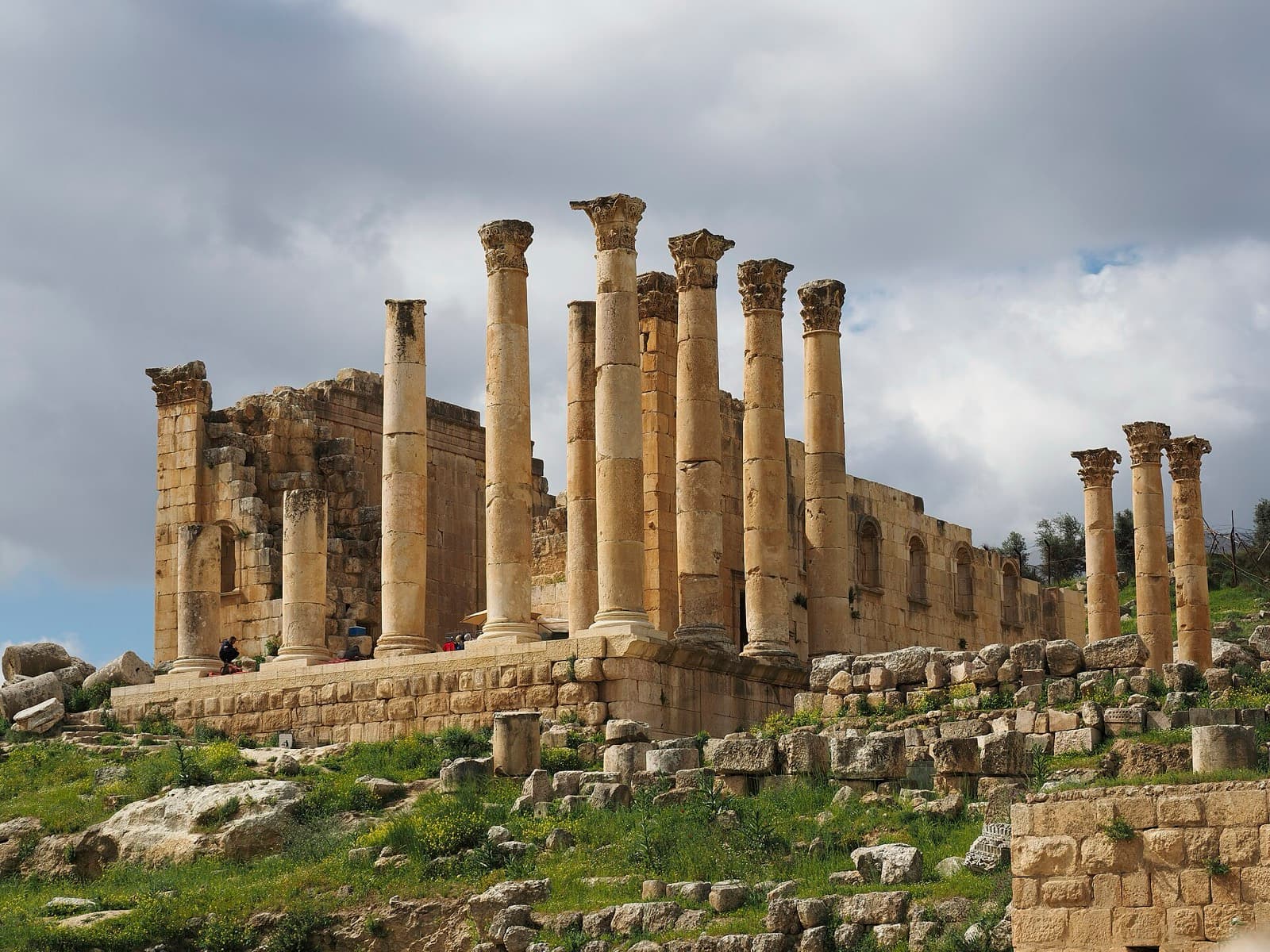
One Day in Jerash: A Walkable Morning-to-Evening Plan
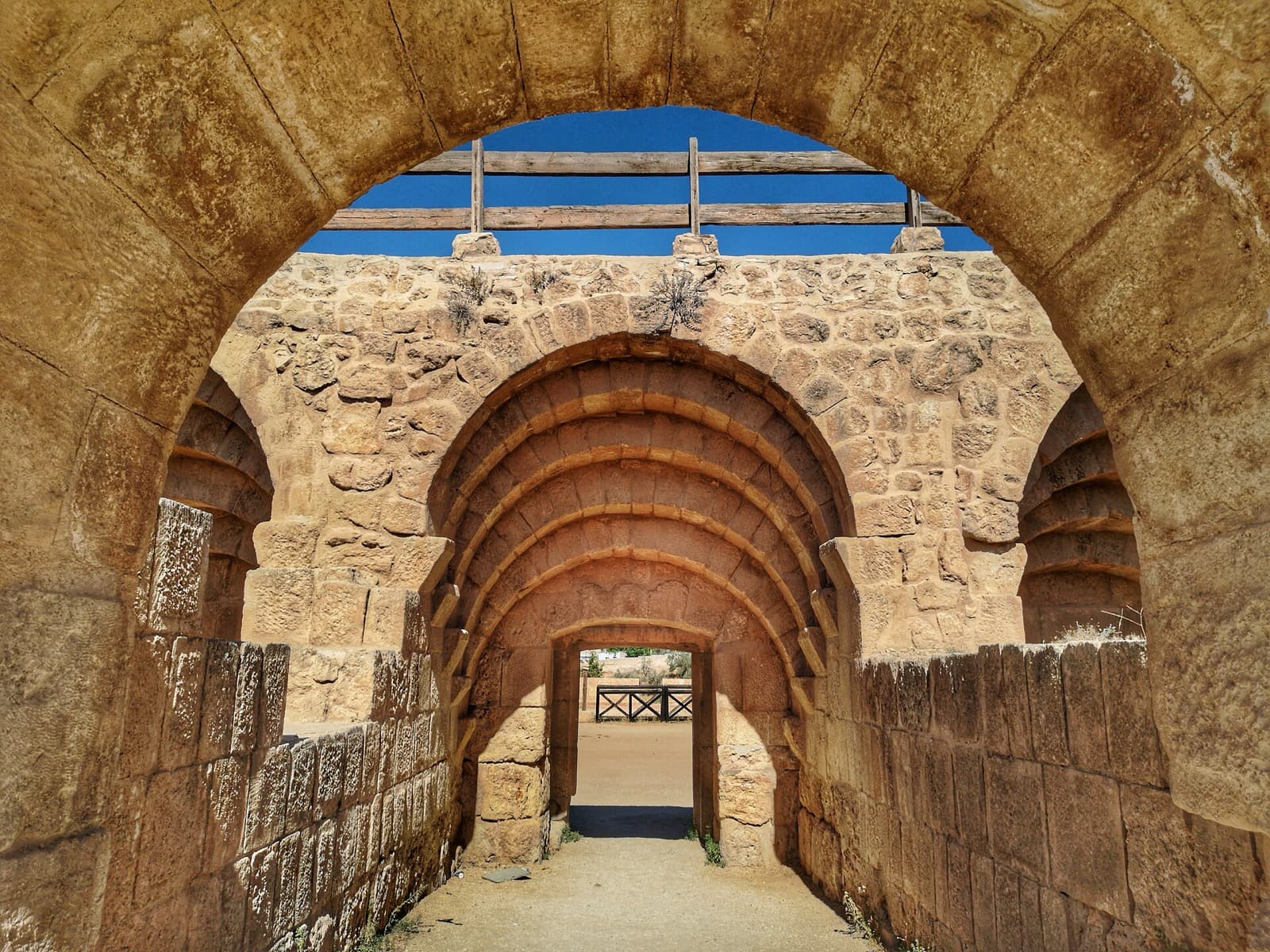
Visiting Jerash: A Practical 2026 Planning Guide
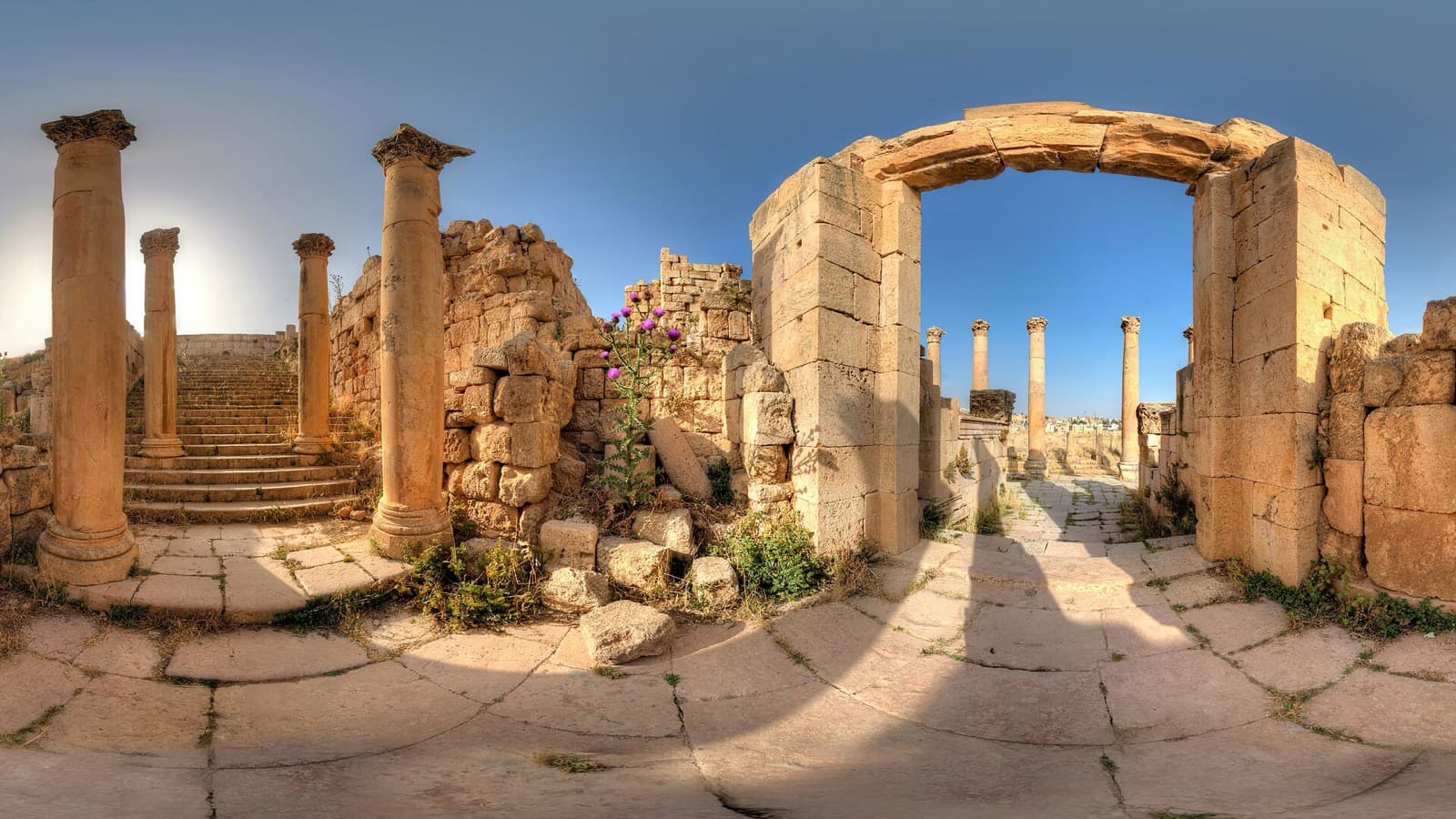
The Jerash Cathedral: A Church Built From a Temple, and the Sacred Way Behind It
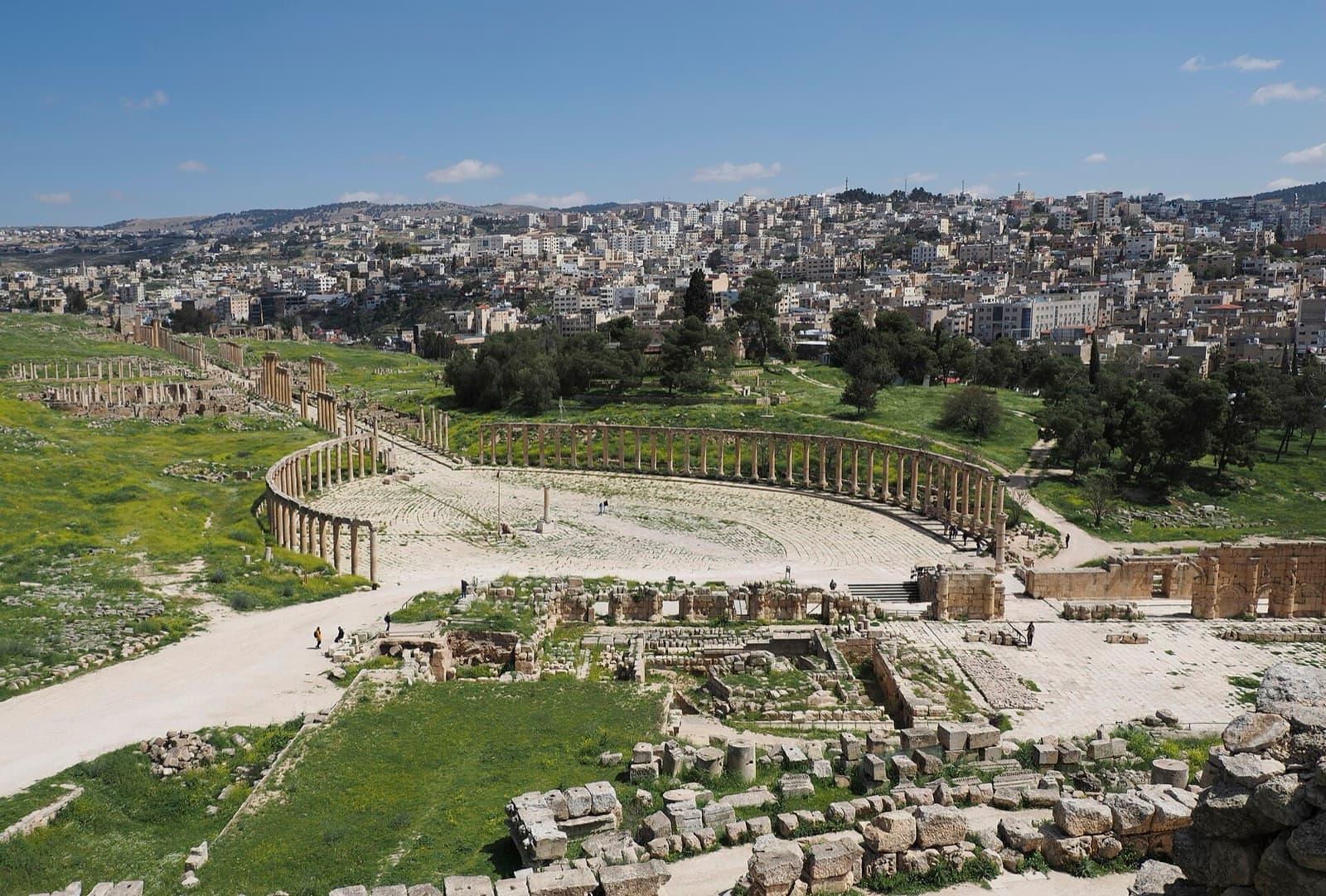
The Oval Plaza at Jerash: How One Stone Oval Explains a Whole Roman City
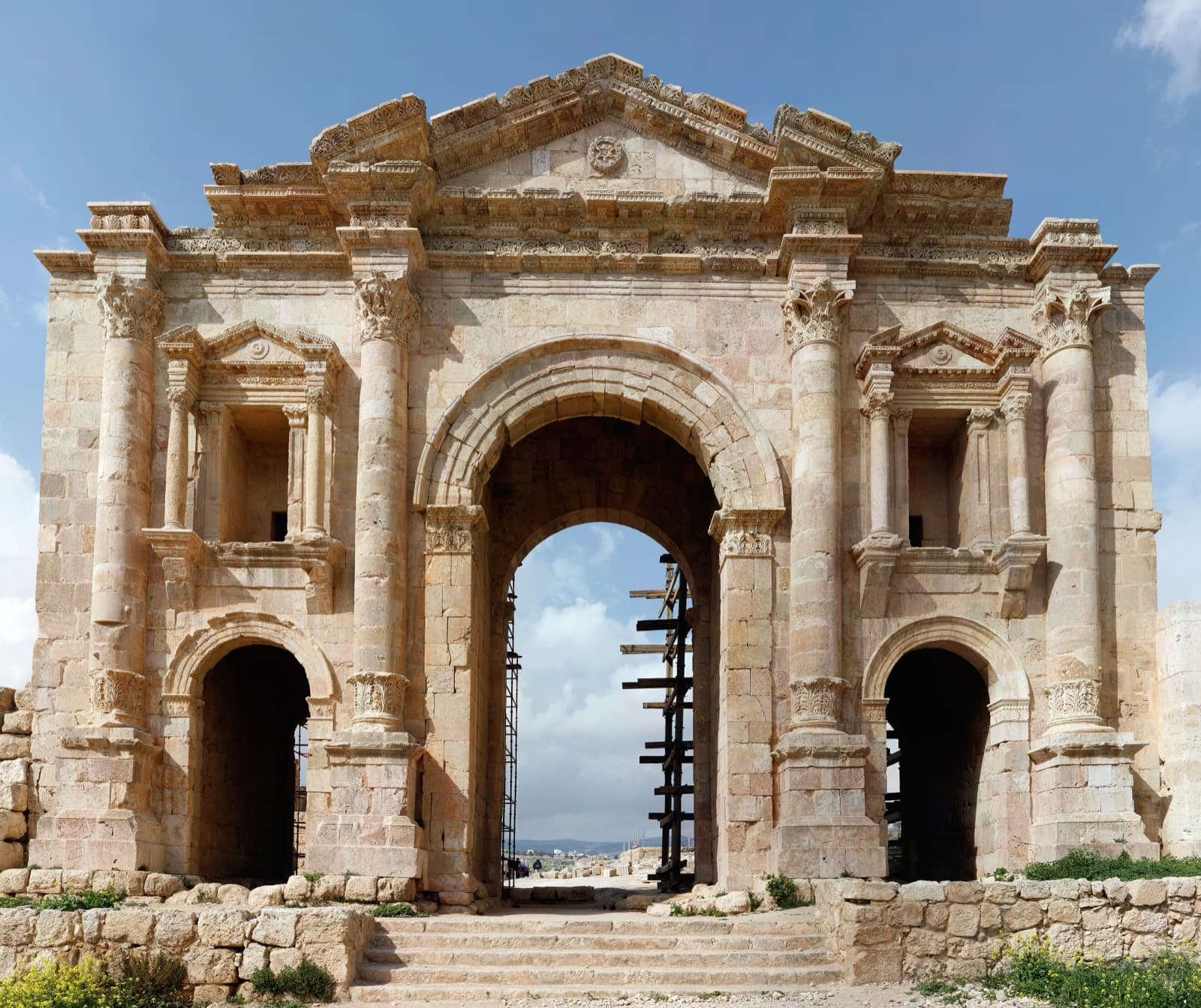
Hadrian's Arch in Jerash: The Gateway to a City That Was Never Built