Jerash: The Colonnaded Heart of Roman Gerasa
90 min · 1.5 km · moderate
You can walk ancient Jerash end to end in a single unhurried day, entering through Hadrian's Arch in the morning, following the colonnaded main street north past the Oval Plaza and both Roman theatres, climbing to the Temple of Artemis by afternoon, and leaving through the North Gate as the light goes gold. The ruins of ancient Gerasa are compact, roughly one continuous line from south to north, and the whole circuit is about three kilometres of actual walking if you do both halves. A calm full day here means one entry ticket, sturdy shoes, water, and a plan that puts the exposed stone behind you before the midday heat peaks.
This guide splits the day into two self-guided walks that map onto the ruins as they were built: the civic and ceremonial south, then the sacred and Christian north. Both are ready to follow on your phone with GPS-triggered audio, so you set the pace and skip nothing you want to linger on. Browse the full set at Jerash walking tours, or jump straight to the city page at /jordan/jerash.
The one-day plan at a glance
Arrive early. Jerash is about 50 kilometres north of Amman by road, a drive of just under an hour, and it is the busiest archaeological site in northern Jordan, second only to Petra for tour traffic. Getting through the gate by opening time buys you the Oval Plaza and the main street before the coach groups arrive and before the sun turns the open ground into a griddle.
- Morning (about 90 minutes to two hours): the southern civic core, from Hadrian's Arch to the Cardo Maximus.
- Midday: a shaded break. The site has a visitor center, a museum included with your ticket, and cafes near the entrance and just outside the gates.
- Afternoon (about 90 minutes to two hours): the northern sacred half, from the Nymphaeum up to the Temple of Artemis and out the North Gate.
- Late afternoon and evening: linger at the South Theatre for the acoustics, then head back toward Amman.
Two hours plus two hours plus breaks lands you at a comfortable full day. You can compress it to a half day by walking only the south half, which holds the postcard views.
Morning: the southern civic core
Hear a stop from this walk
The Cardo Maximus: The Marble Street Rutted by Two-Thousand-Year-Old Wheels
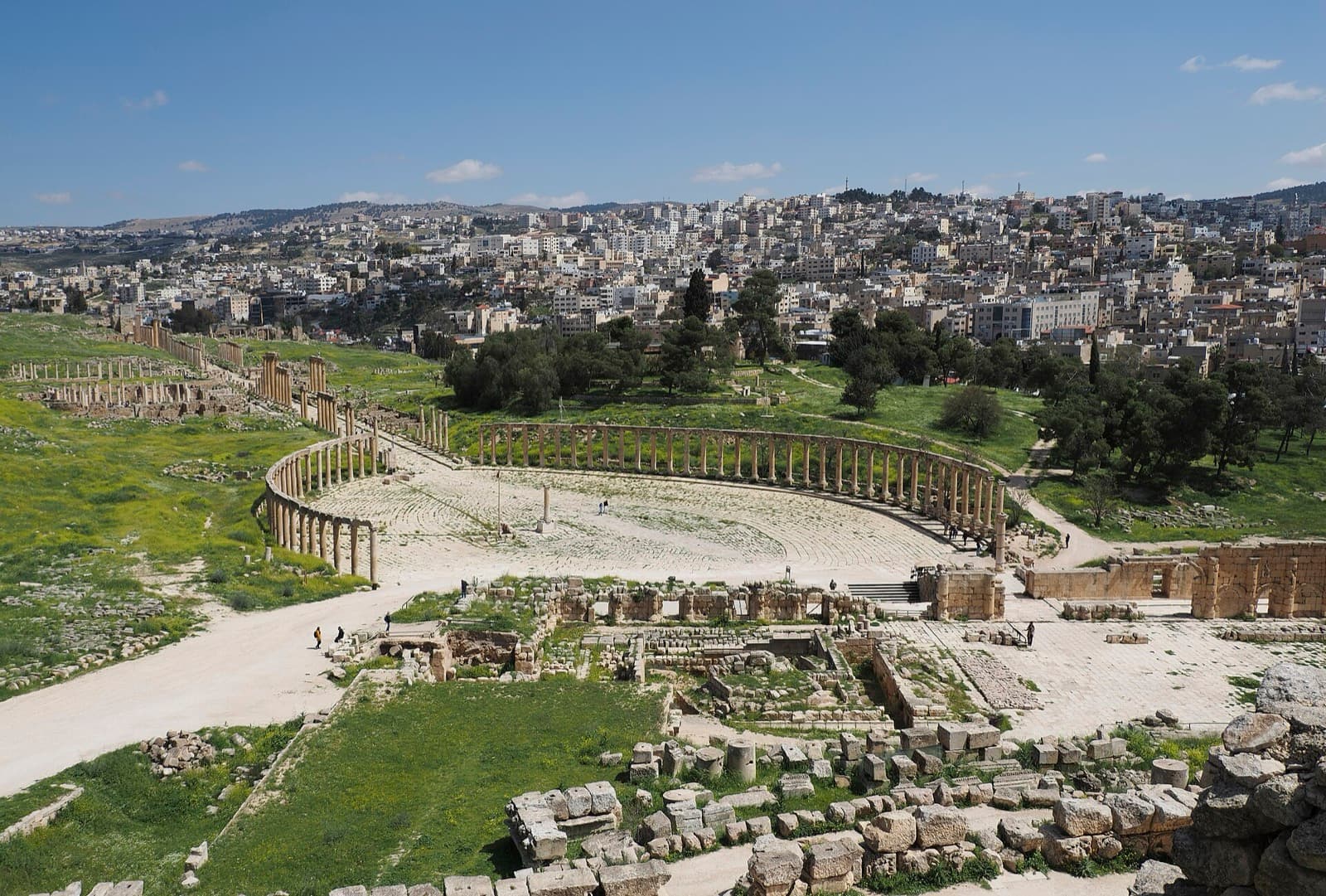
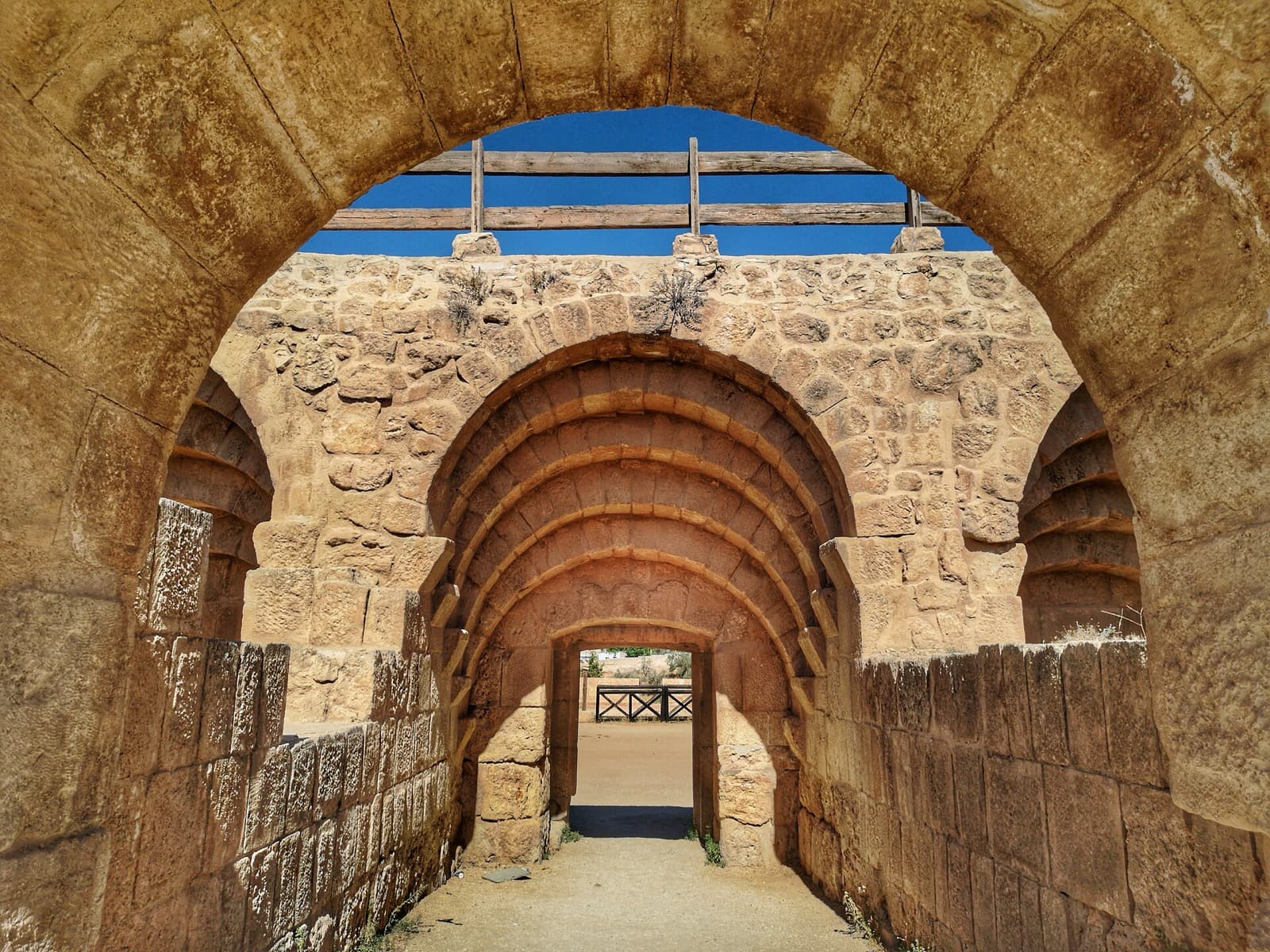
Start at Hadrian's Arch, the triple triumphal gate raised for the emperor's visit, standing apart at the southern edge of the site. From there the civic-core walk runs six stops north: the Hippodrome, an arena whose seating could hold up to about fifteen thousand, then the South Gate and the terraced Sanctuary of Zeus, then the Oval Plaza, an ellipse ringed with columns that no other Roman city quite matches. Above it sits the South Theatre, still tuned so precisely that a voice from the orchestra floor carries to the top rows. The walk ends on the Cardo Maximus, the colonnaded main street whose paving is still scored by two-thousand-year-old cartwheel ruts.
This half is roughly a kilometre and a half of walking over about ninety minutes at an easy pace. The ground is stony, exposed, and broken by steps and slopes, which is the main reason to do it first: shade is scarce, and the marble radiates heat by late morning.
Midday: rest, museum, and refill
Break in the middle of the day rather than pushing through it. Your entry ticket includes the on-site Jerash Archaeological Museum, a cool, quick stop with mosaics and finds pulled from the ruins around you. Water is essential. The site is highland and cooler than Jordan's deserts, but summers here are hot, with highs commonly in the mid-30s Celsius and hotter still when a desert wind blows in, and there is little cover, so the sensible move is to seek shade aggressively between late morning and mid-afternoon and to carry more water than you think you need.
Afternoon: the sacred and Christian north
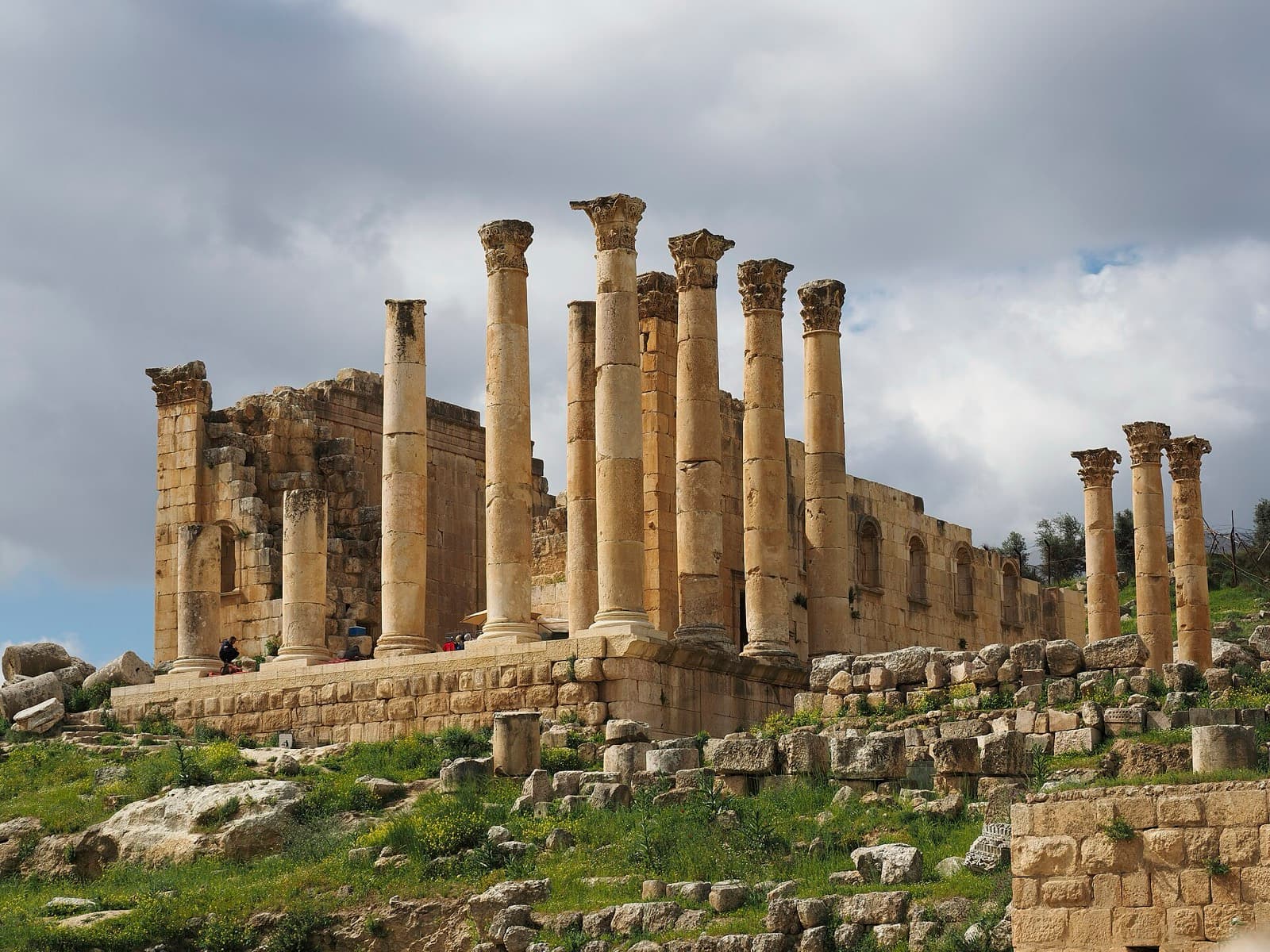
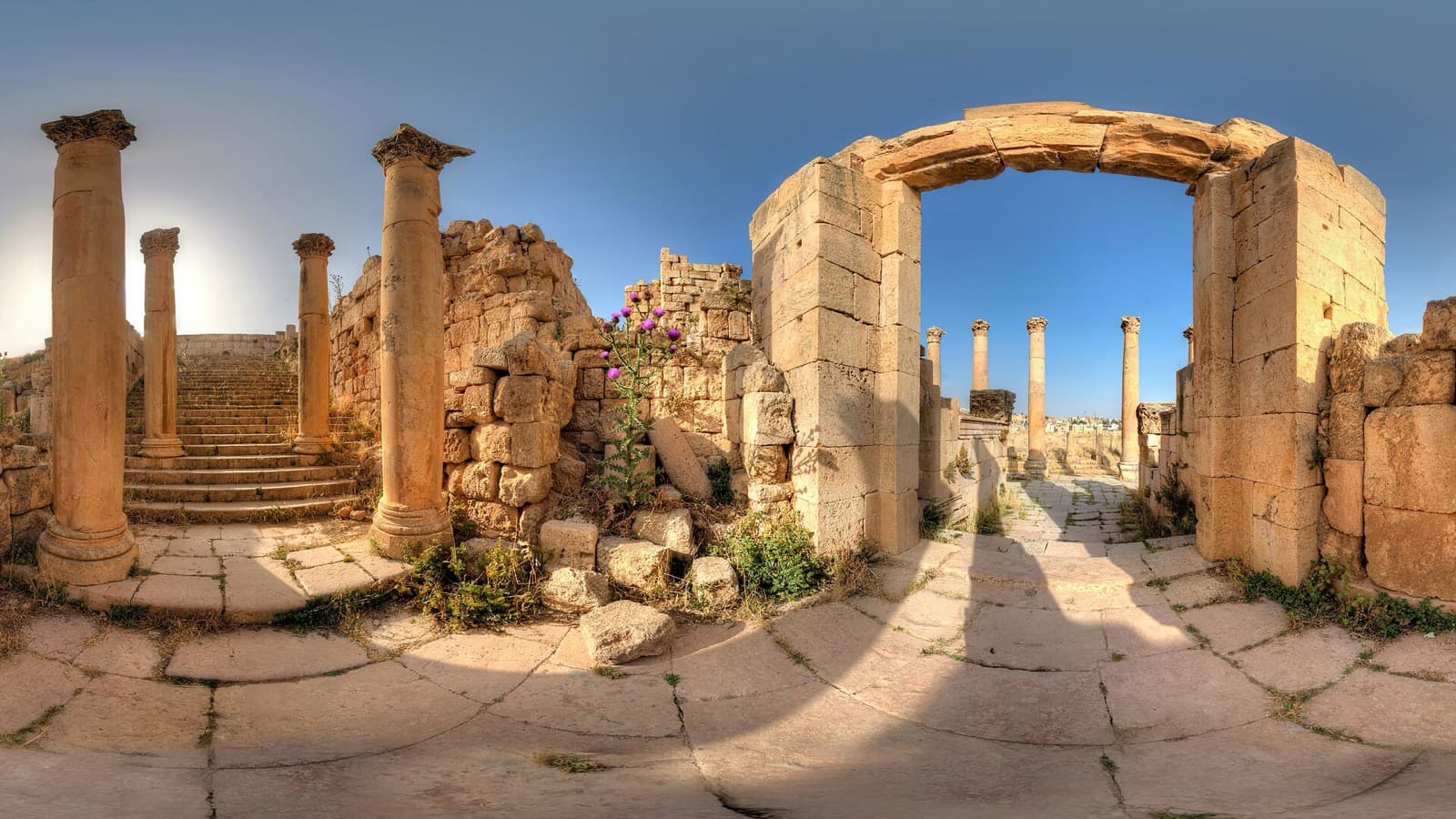
The temples-and-churches walk picks up where the main street continues north. It begins at the Nymphaeum, a two-storey public fountain on the colonnade, then climbs a processional stair to the Temple of Artemis, patron goddess of the city, whose eleven surviving columns stand about thirteen metres tall and are famous among visitors for flexing gently in the wind without falling, a real effect of their engineering that on-site guides often demonstrate. Above and around the temple lies a later Christian city: a fourth-century cathedral raised on the platform of an older shrine, a cluster of Byzantine churches paved with mosaics, the intimate North Theatre where the city council once met, and the quiet north end of the street running out to the North Gate.
Doing the north half in the afternoon works with the light. The columns and the temple terrace catch the low sun and set glowing, and the crowds have usually thinned by then. This half is again about a kilometre and a half over roughly ninety minutes, with the steepest climb of the day being the sacred stair up to Artemis.
Tickets, hours, and what you actually pay
The official Visit Jordan fee schedule lists entry for foreign visitors at 10 Jordanian dinars, and that single ticket also covers the on-site Archaeological Museum. Some operators quote 12 dinars, so confirm the current rate before you go. If you hold a Jordan Pass, admission to Jerash is already included, along with entry to more than 40 other sites including Petra and the Amman Citadel, and the pass also waives the tourist visa fee for stays of three nights or more. For most travelers doing a Jordan trip that includes Petra, the pass pays for itself.
Opening hours shift with the season. In the winter months the site generally opens around 8 in the morning and closes in the late afternoon, roughly 4 pm, while in summer it stays open later into the evening, often to around 6 or 6:30 pm. Hours can change on Fridays, holidays, and during Ramadan, so confirm on the day, and note that a slot in late July may overlap with the Jerash Festival of Culture and Arts, when the ancient theatres host performances and the site's rhythm changes.
Getting there and getting around
From Amman, the cheapest route is a minibus from the North Bus Station at Tabarbour, which runs frequently and costs around a dinar one way. These buses often leave when full rather than on a fixed timetable, so build in a little slack. A taxi or ride-hailing app from Amman is faster and more predictable if you are short on time or traveling as a group. Inside the site itself there is no transport: it is a continuous walk on foot, which is exactly why a self-guided audio tour suits it. You keep your own schedule, pause where the stone holds you, and never wait on a group.
A calm word on safety: Jordan is a well-established destination for independent travel, and Jerash is a mainstream, heavily visited site with a staffed entrance and a museum. The realistic cautions here are practical rather than dramatic, sun and uneven footing, plus the touts and would-be guides who work the great gates. Walking with your own audio guide is a quiet way to move past the sales pitch and keep the day yours. As always, check current government travel guidance before you go.
Sources
Frequently asked questions
- How much does it cost to enter Jerash in 2026?
- The official Visit Jordan fee schedule lists entry for foreign visitors at 10 Jordanian dinars, and that ticket also includes the on-site Jerash Archaeological Museum. Some travel operators quote 12 dinars, so confirm the current rate on the day. If you hold a Jordan Pass, admission to Jerash is already included at no extra cost. Jordanian nationals pay a reduced rate.
- Is Jerash covered by the Jordan Pass?
- Yes. The Jordan Pass includes free entry to Jerash along with more than 40 other sites, including Petra and the Amman Citadel. It also waives the tourist visa fee for visitors staying at least three nights, so it usually pays for itself on a multi-site trip.
- How do you get from Amman to Jerash?
- Jerash is about 50 kilometres north of Amman by road, a drive of just under an hour. The cheapest option is a minibus from the North Bus Station at Tabarbour for around one dinar one way, though these often leave when full rather than on a fixed schedule. A taxi or ride-hailing app is faster and more predictable.
- How long do you need to see Jerash?
- A full day covers the whole site comfortably. Each half, the southern civic core and the northern sacred quarter, is about a kilometre and a half of walking and takes roughly 90 minutes at an unhurried pace. You can compress it to a half day by walking only the southern half, which holds the Oval Plaza and the main colonnaded street.
- What are Jerash opening hours?
- Hours shift by season. In winter the site generally opens around 8 in the morning and closes in the late afternoon near 4 pm, while in summer it stays open later, often to around 6 or 6:30 pm. Hours can change on Fridays, holidays, and during Ramadan, so confirm on the day, especially in late July when the Jerash Festival may affect access.
- When is the best time of day to visit Jerash?
- Arrive at opening time to walk the Oval Plaza and main street before the coach groups and the midday heat. The site is exposed with little shade, so morning and late afternoon are most comfortable. Summers are hot, with highs commonly in the mid-30s Celsius and hotter still during a desert wind, so carry plenty of water and seek shade in the middle of the day.
Ready to experience it?
Jerash: The Colonnaded Heart of Roman Gerasa
90 min · 1.5 km · moderate
More from Jerash
Explore more at your own pace.
Visiting Jerash: A Practical 2026 Planning Guide
The Jerash Cathedral: A Church Built From a Temple, and the Sacred Way Behind It
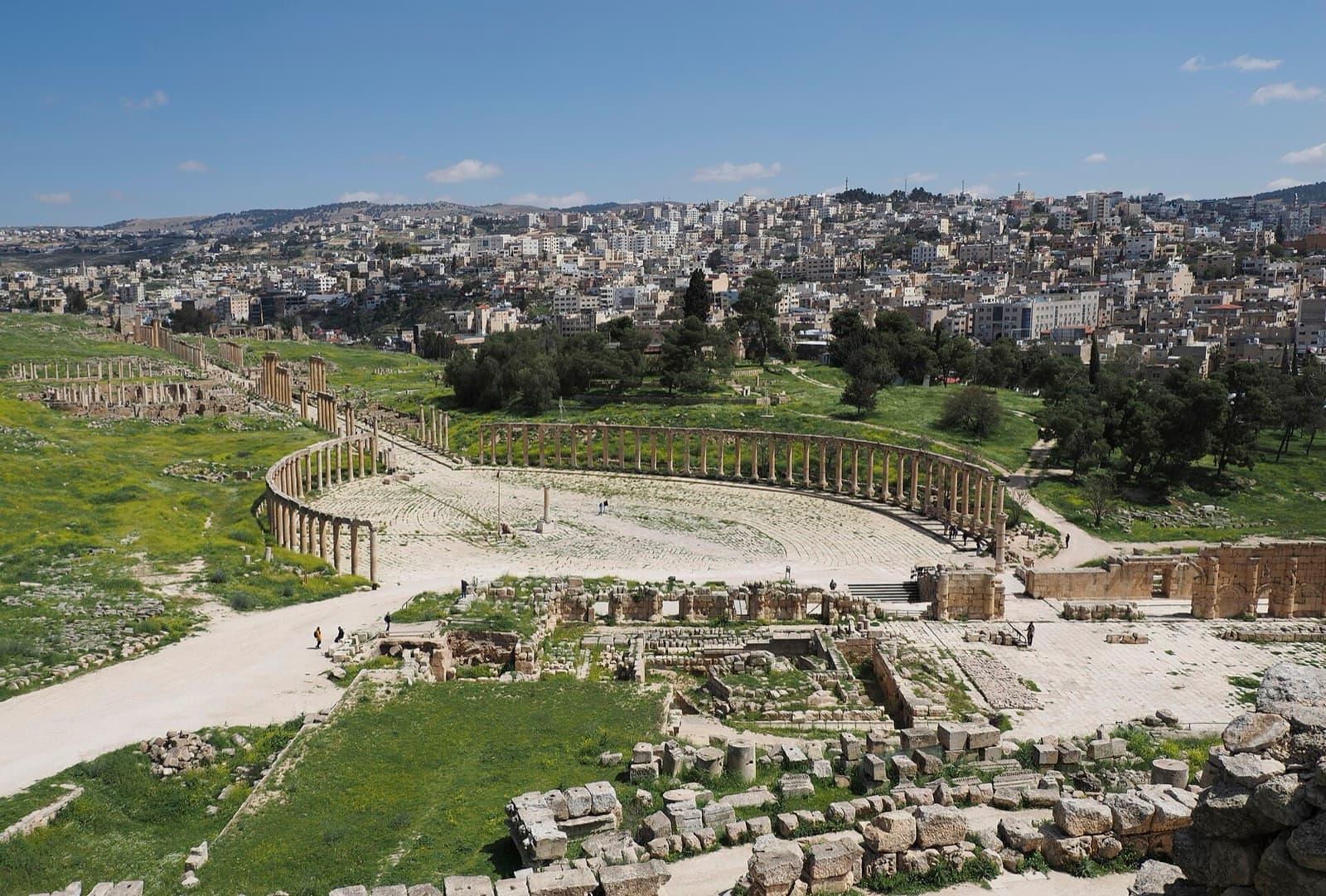
The Oval Plaza at Jerash: How One Stone Oval Explains a Whole Roman City
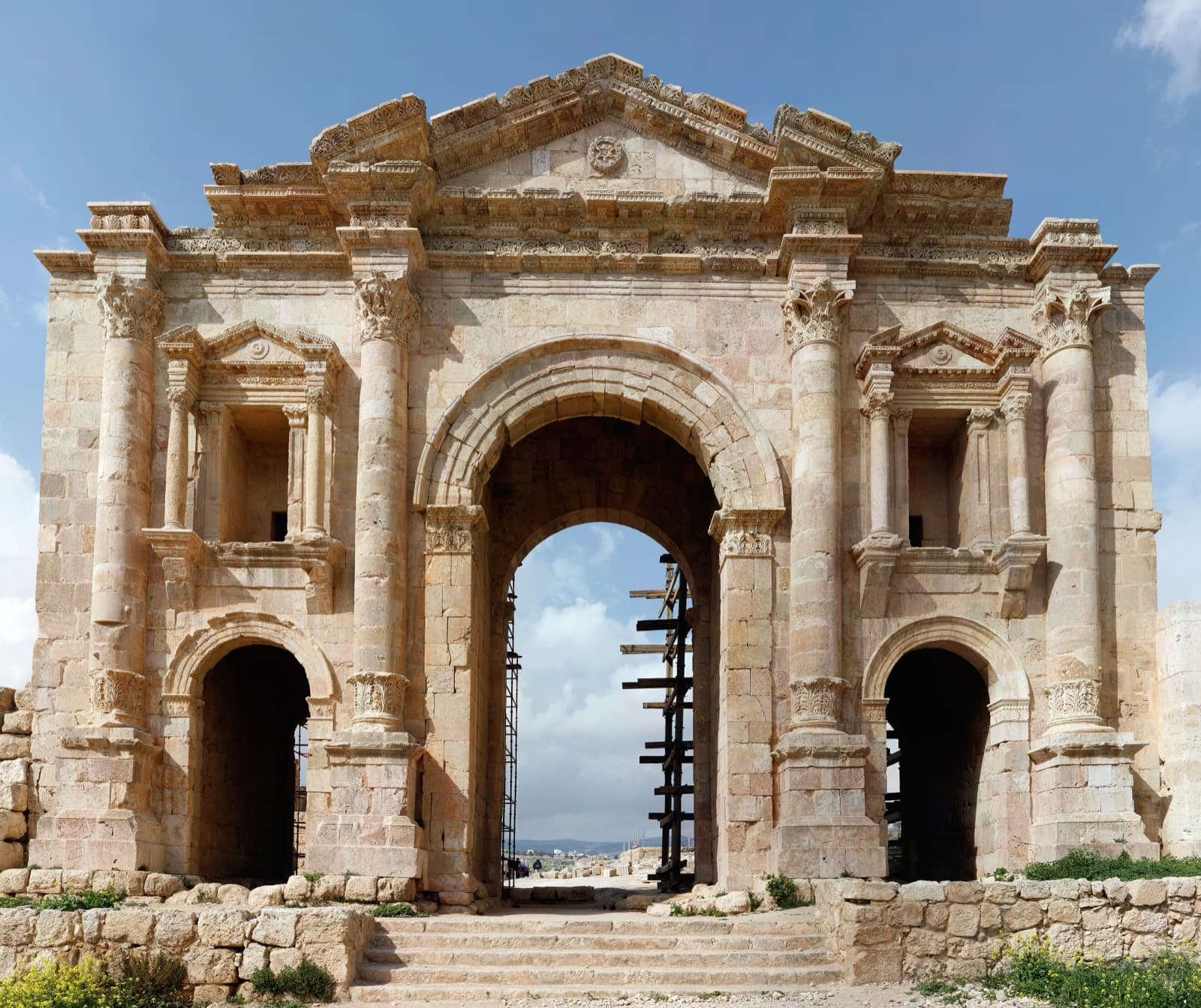
Hadrian's Arch in Jerash: The Gateway to a City That Was Never Built
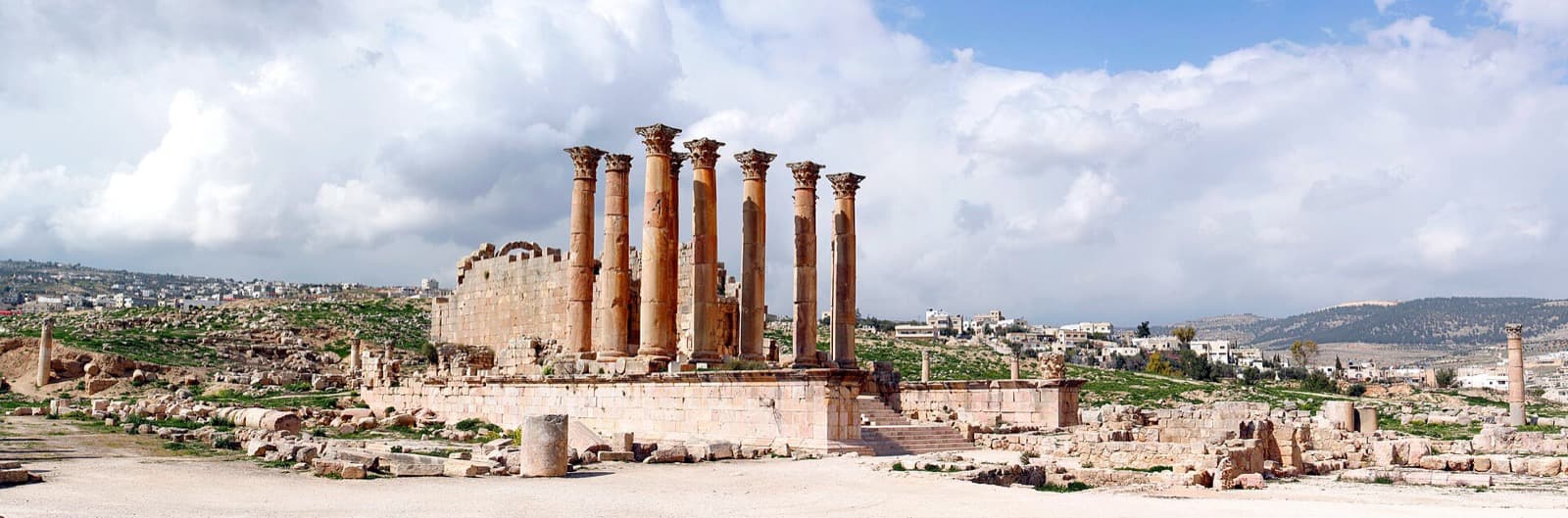
The Temple of Artemis in Jerash: Columns Engineered to Sway