Jerash: The Colonnaded Heart of Roman Gerasa
90 min · 1.5 km · moderate
Plan two to three hours on your feet inside Jerash, get there from Amman by bus or taxi in under an hour, aim for early morning or late afternoon light, and carry a Jordan Pass so the entry fee and your visa are already handled. That is the short version of a Jerash day trip. Jerash is a ruined Roman city, not a museum with a roof, so the visit is really a walk: roughly a mile and a half through a standing civic core of gates, an arena, an oval forum, temples, and two theatres. This guide covers how many days you need, how to arrive, when to go, an honest read on safety, and what a visit costs, all checked against current 2026 sources.
How much time do you need
One half-day is enough to see Jerash well, and most travelers visit it as a day trip from Amman rather than staying overnight. The archaeological site is compact enough to walk end to end, but dense enough that rushing it wastes the trip. Budget two to three hours on the ground. If you only do the southern monuments, from Hadrian's Arch up through the Oval Plaza and the South Theatre, ninety minutes covers it at an unhurried pace. Add the northern sacred half, the Temple of Artemis and the Byzantine churches, and you are into a comfortable half-day with time to sit.
That is exactly how our two self-guided audio tours are built. Each runs about ninety minutes over roughly one and a half kilometres, six stops, on foot, no vehicle between stops. Jerash: The Colonnaded Heart of Roman Gerasa walks the southern civic core, and its companion covers the Temple of Artemis and the Sacred Way. Walk one in a morning, or link both for a full day inside the ruins. See all the routes on the Jerash walking tours hub.
How to get to Jerash from Amman
Hear a stop from this walk
The Cardo Maximus: The Marble Street Rutted by Two-Thousand-Year-Old Wheels
Jerash sits about 45 kilometres north of Amman, and the drive takes roughly 45 minutes to an hour. You have three practical options.
The cheapest is the public bus. Buses and minibuses run from Amman's North Terminal, also called Tabarbour, in the north of the city, and cost around 1 JOD one way. They leave when they fill rather than on a fixed timetable, so allow flexibility, and note that Tabarbour is itself a taxi ride from central Amman. Service runs through the day, starting early.
The simplest is a taxi or ride-hail. Careem and Uber both operate in Amman, and many yellow-cab drivers will run a return trip and wait two to three hours while you explore, for a negotiated fare. This is the low-stress choice if you want to control your own timing.
The third option is an organized day tour, which usually pairs Jerash with nearby Ajloun Castle or Umm Qais. Convenient if you would rather not arrange transport, though it puts you on someone else's schedule, which is the opposite of what a self-guided walk is for.
When is the best time to visit
Go early in the morning or in the last hours before closing, and favor spring or autumn over high summer. Jerash is open-air, stony, and largely without shade, so the middle of a summer day is hot and hard on the feet. Spring (roughly March through May) and autumn (September through November) give you mild walking weather. Whatever the season, arriving at opening or in late afternoon means softer light on the limestone and thinner crowds, which matters at a site that draws tour vans and is one of Jordan's busier destinations after Petra.
Opening hours shift with the season. In the summer months the site generally stays open into the evening, roughly 8:00 to around 18:00, while in winter it closes earlier, roughly 8:00 to around 16:00. Sources vary by up to an hour on the exact closing time, so treat these as a guide and confirm on the day, especially if you are counting on late-afternoon light in winter.
Is Jerash safe to visit
Jerash itself is a well-managed, well-trafficked tourist site, and the practical risks there are ordinary: uneven ancient paving, steps and slopes, strong sun, and persistent guides and touts working the main gates who you can decline politely. Sturdy shoes, water, and sun protection matter more than anything else at the ruins.
The honest wider picture in 2026 is that Jordan carries an elevated travel advisory. As of 2026 the United States rated Jordan Level 3, Reconsider Travel, and on March 2, 2026, ordered the departure of non-emergency government staff, citing regional tensions and the fallout from hostilities involving Iran that began earlier that year. Australia and the United Kingdom likewise urge extra caution and warn specifically against travel close to the Syrian and Iraqi borders. Jerash, in the northwest, is not on those borders, and tourist infrastructure, hotels, tours, and transport, has continued to operate normally in the main visitor areas. Still, this is a live situation: check your own government's current advisory before you book, register with your embassy if that service exists, and stay aware of regional news. Frame it as due diligence, not a reason to write off a country that treats its tourism sites as a national priority.
What does it cost
The entry fee for foreign visitors is a modest single ticket, commonly cited around 10 to 12 JOD. The smarter move for almost anyone spending more than a day in the country is the Jordan Pass, which bundles the entry fee for Jerash together with Petra and more than 40 other sites, and waives the standard 40 JOD tourist visa fee if you buy it before arrival and stay a minimum number of consecutive nights (the exact night requirement has shifted recently, so check the current terms). The pass comes in three tiers priced roughly 70 to 80 JOD: Wanderer (one day at Petra), Explorer (two consecutive days), and Expert (three consecutive days), all of which include Jerash. If Petra is anywhere on your itinerary, the pass pays for itself quickly. Beyond admission, a day trip is cheap: a bus each way is about 1 JOD, and a self-guided audio walk means you skip a guide's fee while still getting the history stop by stop.
What you actually walk
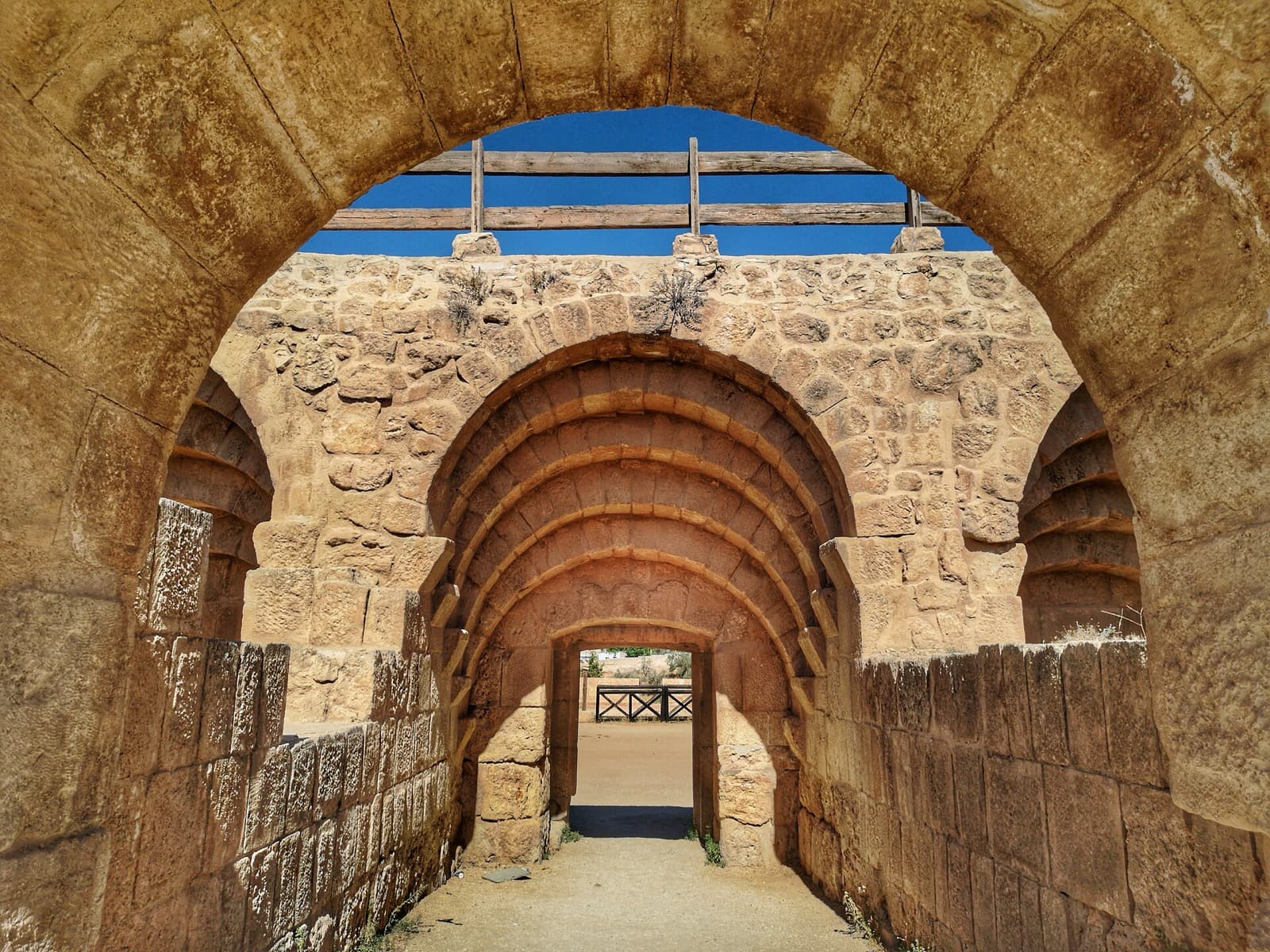
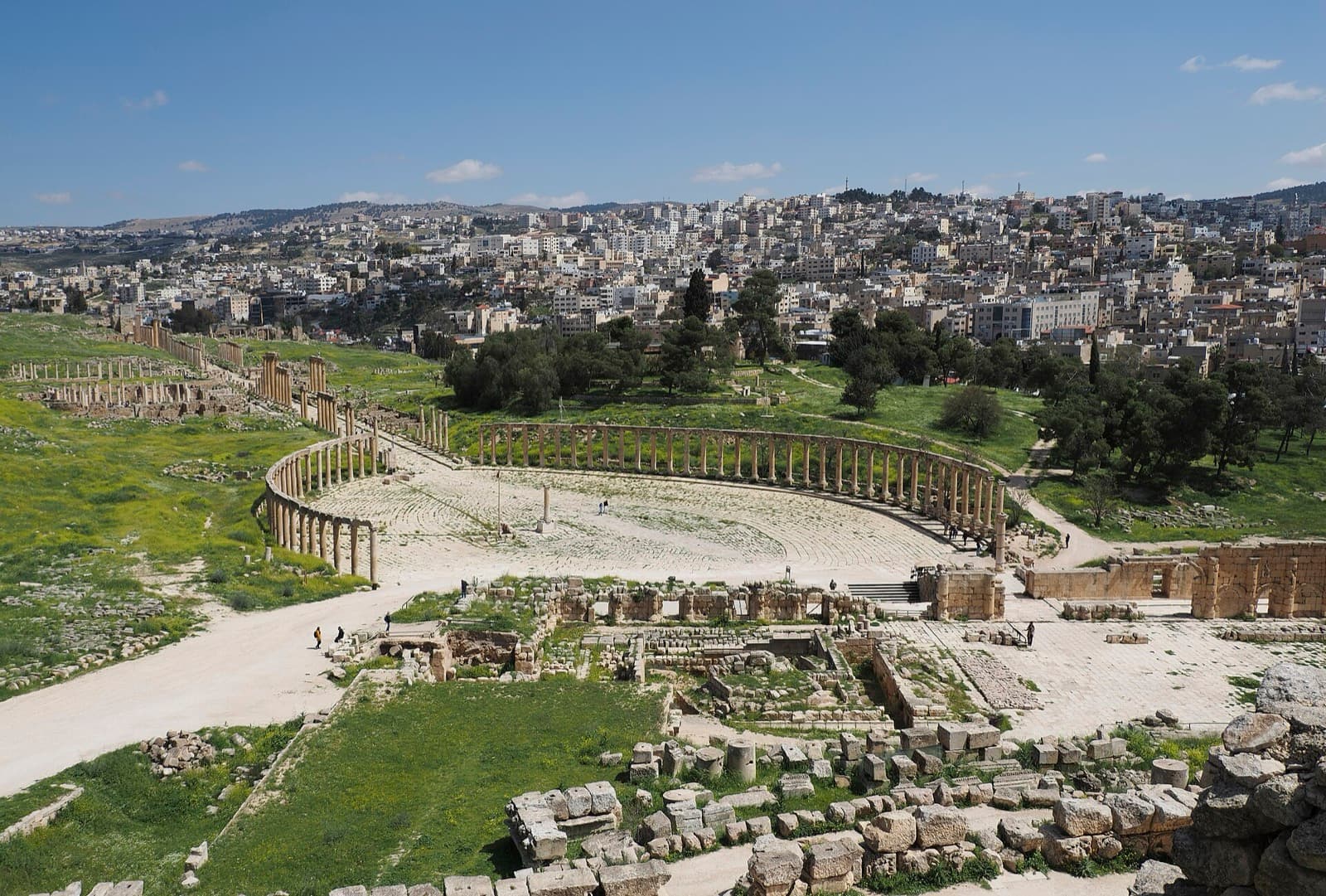
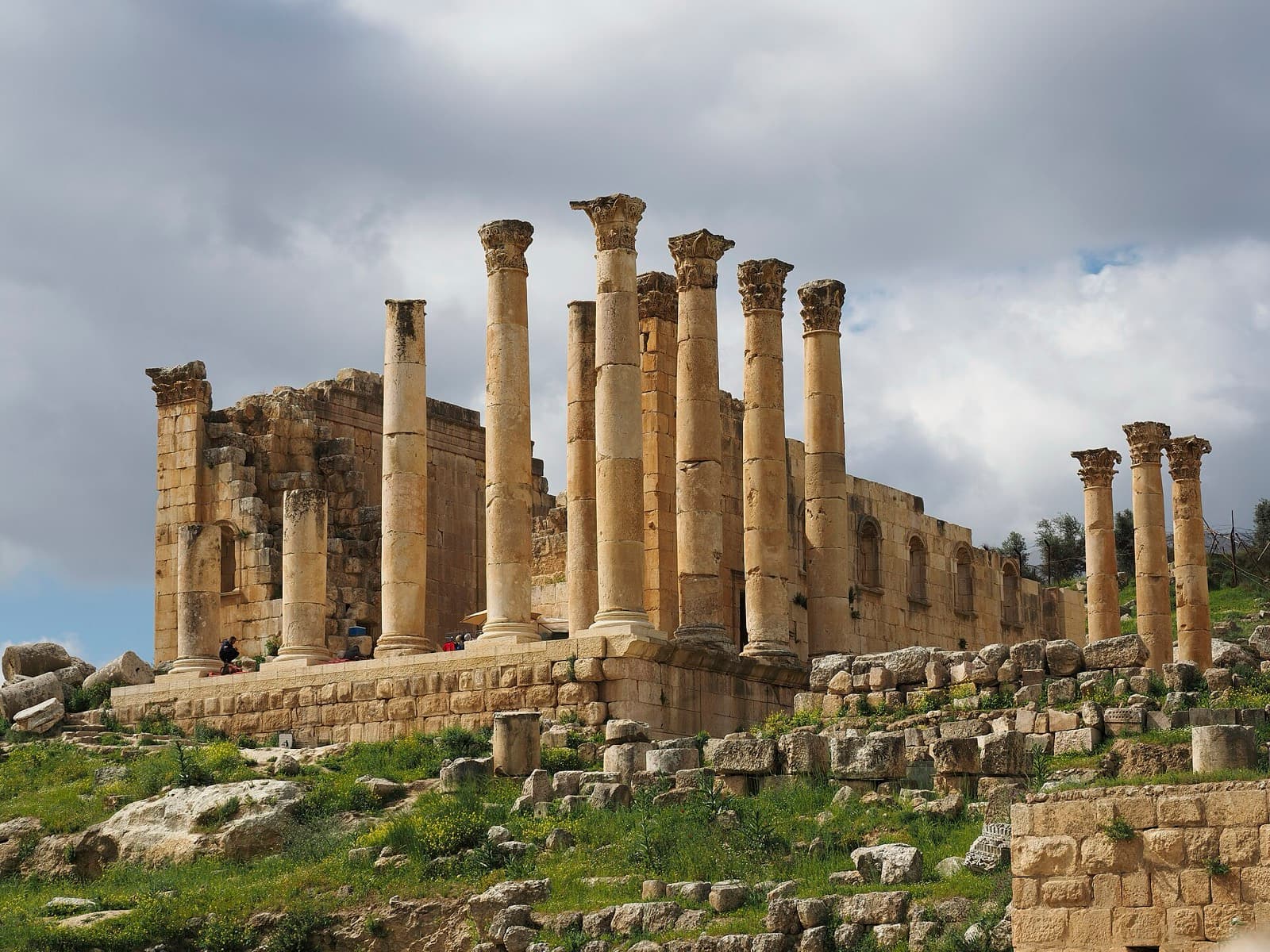
Both Roamer tours are continuous walks, no taxis between stops, over stony and exposed ground with steps and slopes, so wear proper shoes. The southern route opens at Hadrian's Arch, the triple gateway raised for the emperor's visit that still stands stranded outside the walls, then passes the Hippodrome arena, the South Gate and the terraced Sanctuary of Zeus, the great Oval Plaza ringed by columns, the South Theatre that carries a whisper across its seats, and the marble Cardo Maximus rutted by ancient cartwheels. The northern route climbs from the Nymphaeum fountain up the Sacred Way to the swaying columns of the Temple of Artemis, then reads the later Christian city in its mosaic churches, the North Theatre, and the crooked north end of the colonnaded street. You set the pace at every stop. Start planning from the /jordan/jerash city page.
Sources
Frequently asked questions
- How many hours do you need to visit Jerash?
- Plan two to three hours on your feet inside the site. The southern monuments alone take about ninety minutes at an unhurried pace, and adding the northern sacred half with the Temple of Artemis brings the visit to a comfortable half-day. Most travelers see Jerash as a day trip from Amman rather than staying overnight.
- How do you get from Amman to Jerash?
- Jerash is about 45 kilometres north of Amman, roughly a 45-minute to one-hour drive. Public buses and minibuses run from Amman's North Terminal (Tabarbour) for around 1 JOD one way, leaving when full. Alternatively, take a taxi or use Careem or Uber, or join an organized day tour that often pairs Jerash with Ajloun Castle or Umm Qais.
- What is the entry fee for Jerash and is the Jordan Pass worth it?
- A single ticket for foreign visitors is commonly cited around 10 to 12 JOD. If you are in Jordan for more than a day, the Jordan Pass is usually the better value: priced roughly 70 to 80 JOD across three tiers, it bundles Jerash with Petra and 40-plus other sites and waives the 40 JOD tourist visa fee if you buy it before arrival and stay a minimum number of consecutive nights. The exact night requirement has changed recently, so confirm the current terms on the official Jordan Pass site.
- What is the best time of day and year to visit Jerash?
- Go early in the morning or in the last hours before closing, when light on the limestone is soft and crowds are thinner. Favor spring (March to May) or autumn (September to November), since the site is open-air with little shade and summer middays are hot. Summer hours run roughly 8:00 to 18:00 and winter hours roughly 8:00 to 16:00, though closing times vary by up to an hour, so confirm on the day.
- Is Jerash safe to visit in 2026?
- The site itself is well-managed and heavily visited, with ordinary risks like uneven paving, sun, and persistent gate touts you can decline. Jordan does carry an elevated advisory in 2026: the United States rated it Level 3 and ordered non-emergency staff to depart on March 2, 2026, over regional tensions, and several governments warn against travel near the Syrian and Iraqi borders. Jerash is far from those borders and tourist services operate normally, but check your government's current advisory before booking.
- Can you visit Jerash without a guide?
- Yes. The ruins are walkable end to end, and a self-guided audio tour lets you move at your own pace while getting the history stop by stop, without paying for a guide or keeping to a group's schedule. Roamer offers two audio walks, one for the southern civic core and one for the Temple of Artemis and Sacred Way, each about ninety minutes over roughly one and a half kilometres.
Ready to experience it?
Jerash: The Colonnaded Heart of Roman Gerasa
90 min · 1.5 km · moderate
More from Jerash
Explore more at your own pace.
One Day in Jerash: A Walkable Morning-to-Evening Plan
The Jerash Cathedral: A Church Built From a Temple, and the Sacred Way Behind It
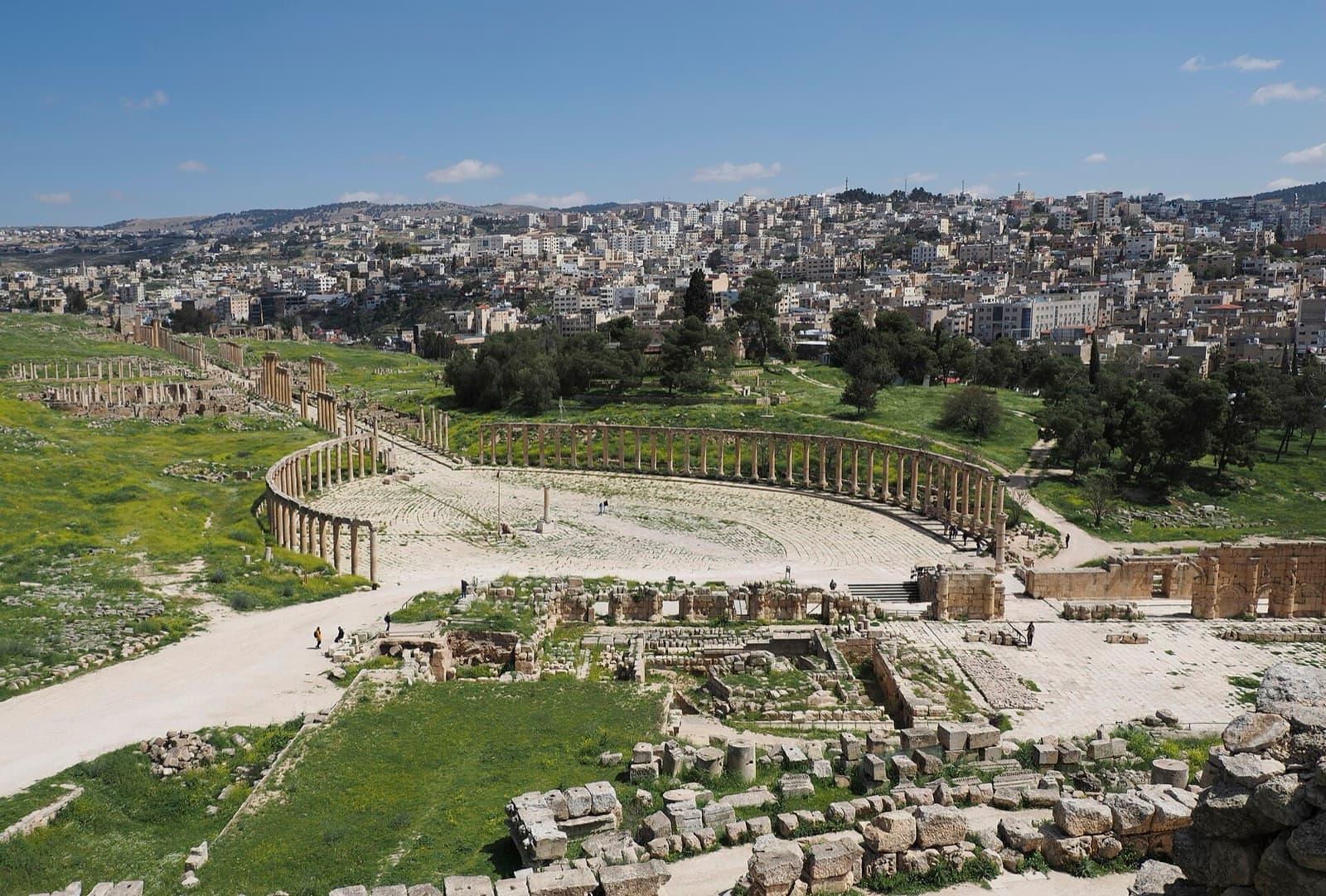
The Oval Plaza at Jerash: How One Stone Oval Explains a Whole Roman City
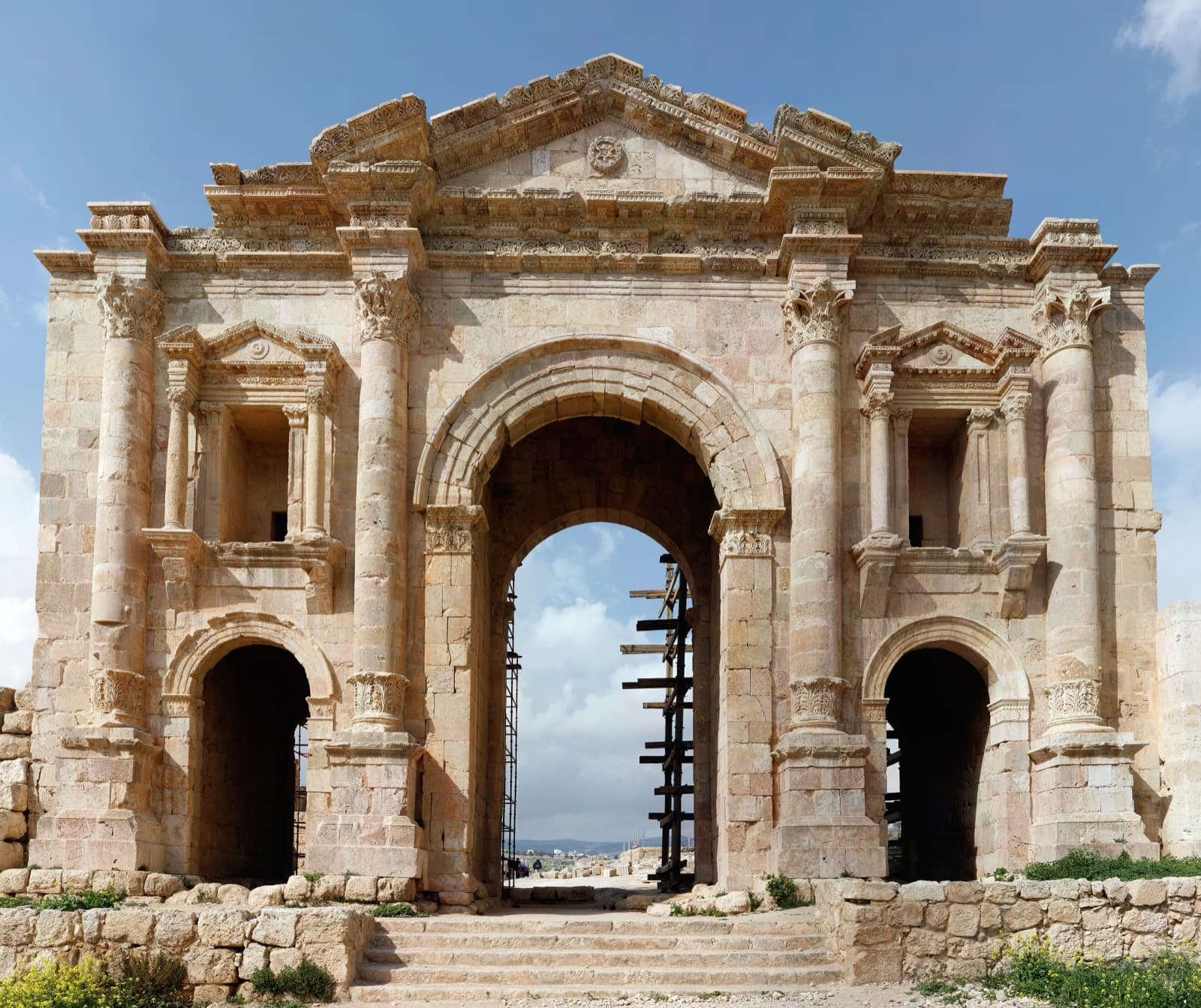
Hadrian's Arch in Jerash: The Gateway to a City That Was Never Built
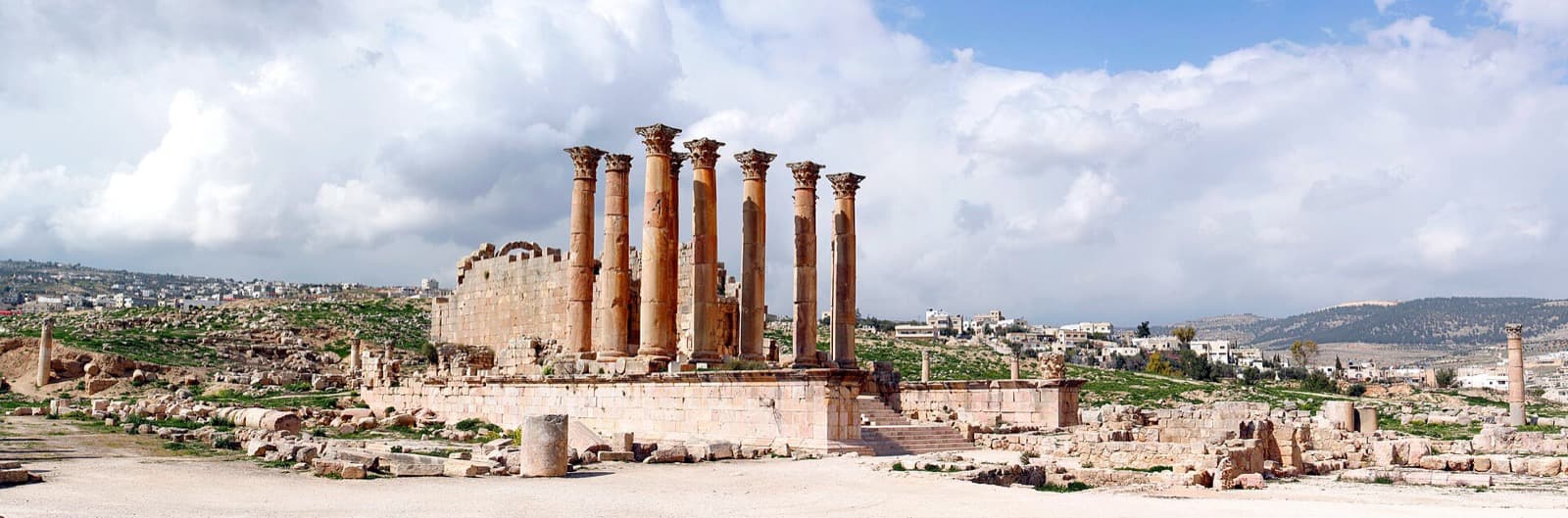
The Temple of Artemis in Jerash: Columns Engineered to Sway