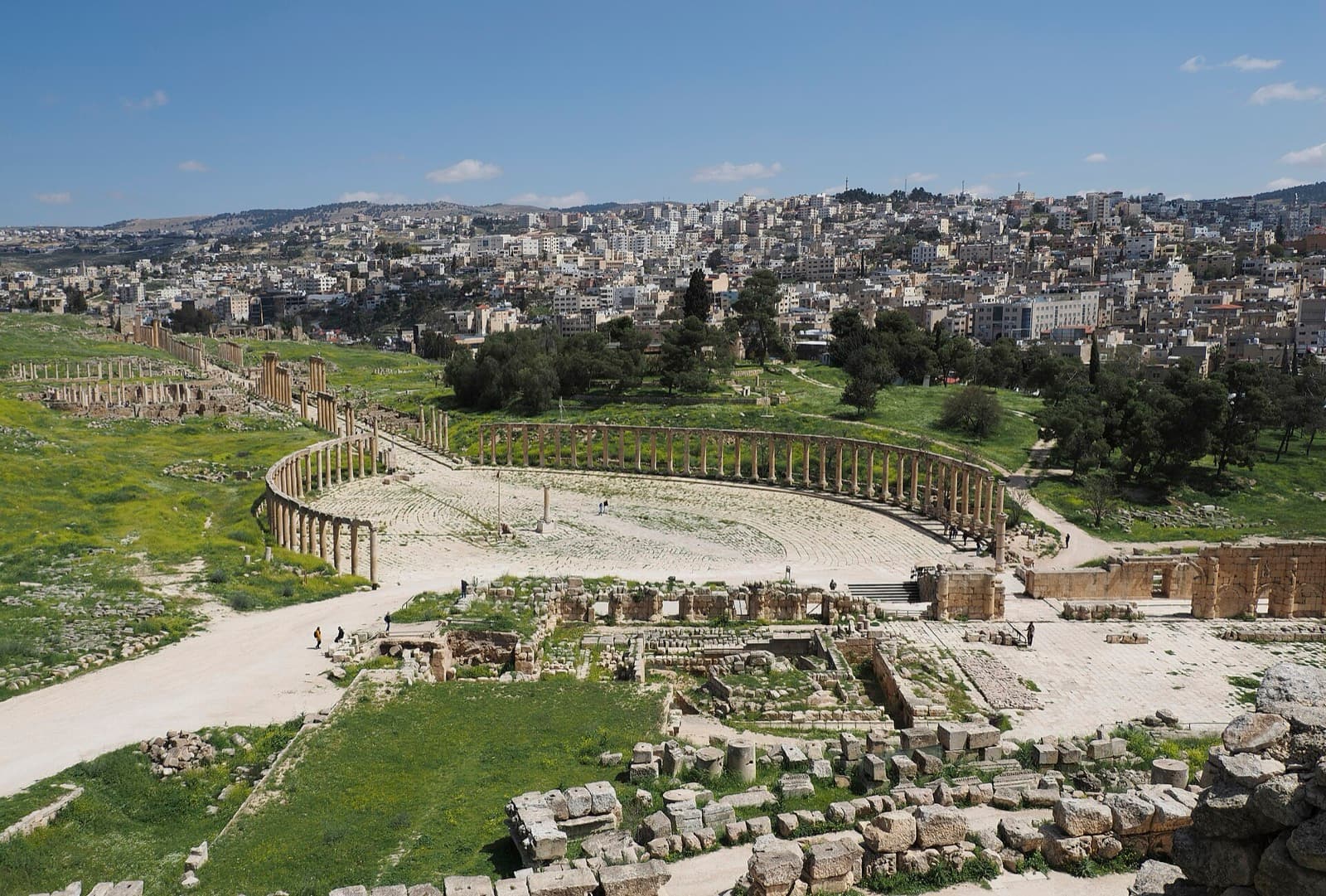
A self-guided walk through the ceremonial core of ancient Gerasa, one of the best-preserved provincial Roman cities anywhere, from Hadrian's triumphal arch to the marble main street still scored by two-thousand-year-old wheels.
Start · Hadrian's Arch: The Emperor's Gate at the City's Edge
DirectionsStops
- 1
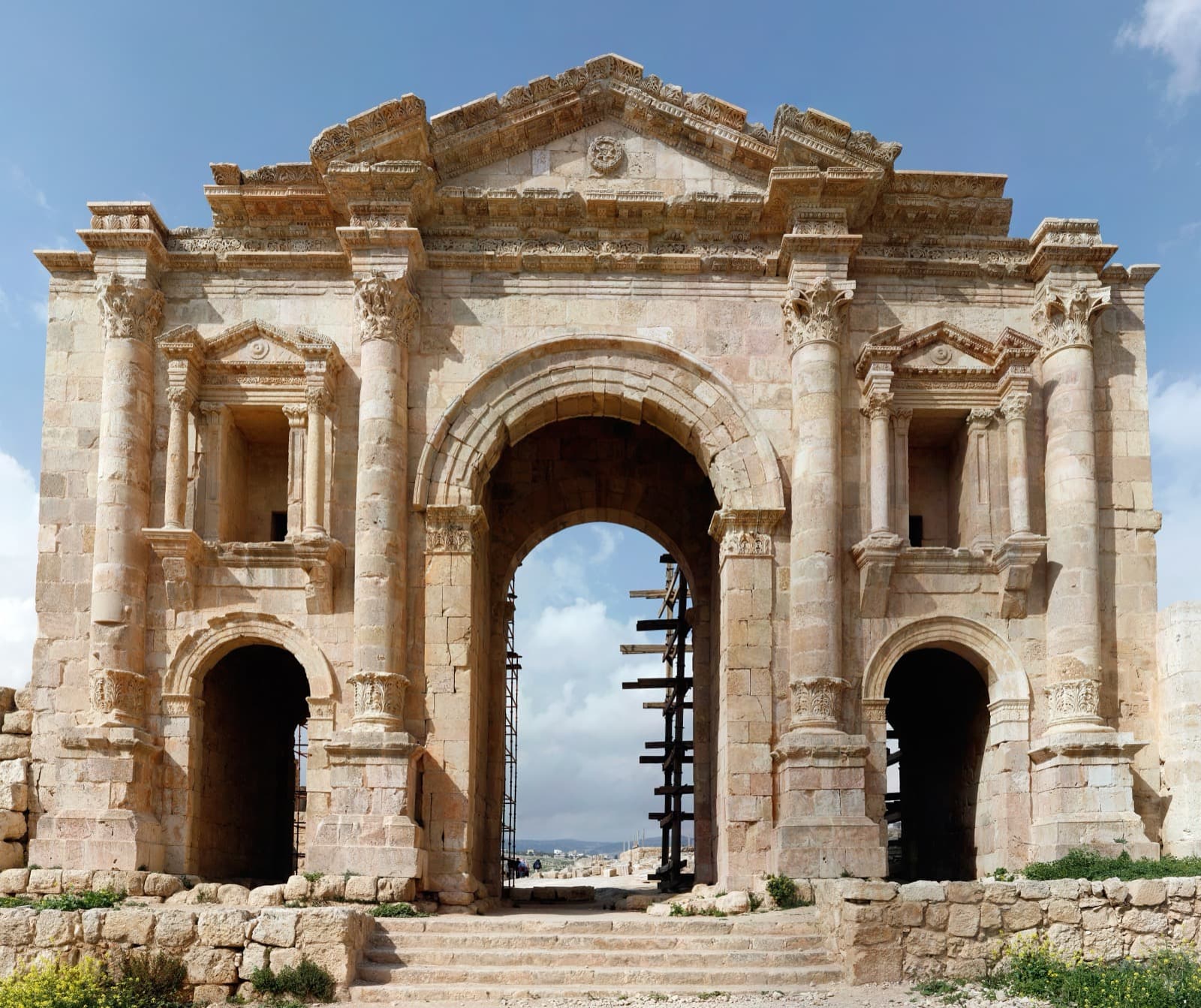
Hadrian's Arch: The Emperor's Gate at the City's Edge
A triple triumphal gateway raised to mark the emperor Hadrian's visit, standing alone well south of the city walls.
- 2
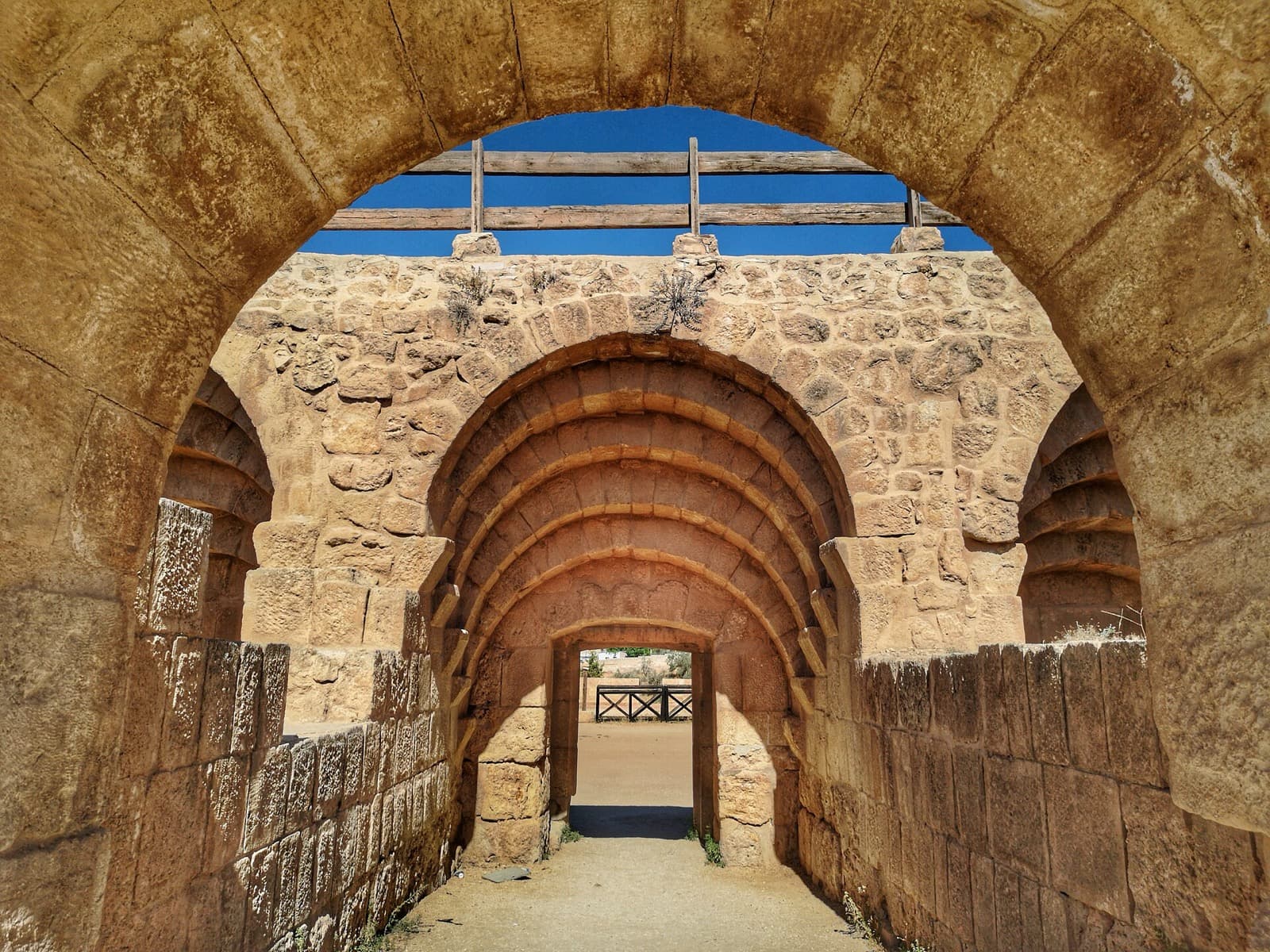
The Hippodrome: The Chariot Arena Still Ringed by Its Seats
A long Roman arena for chariot racing, one of the best-preserved of its kind, still held within its tiers of stone seats.
- 3
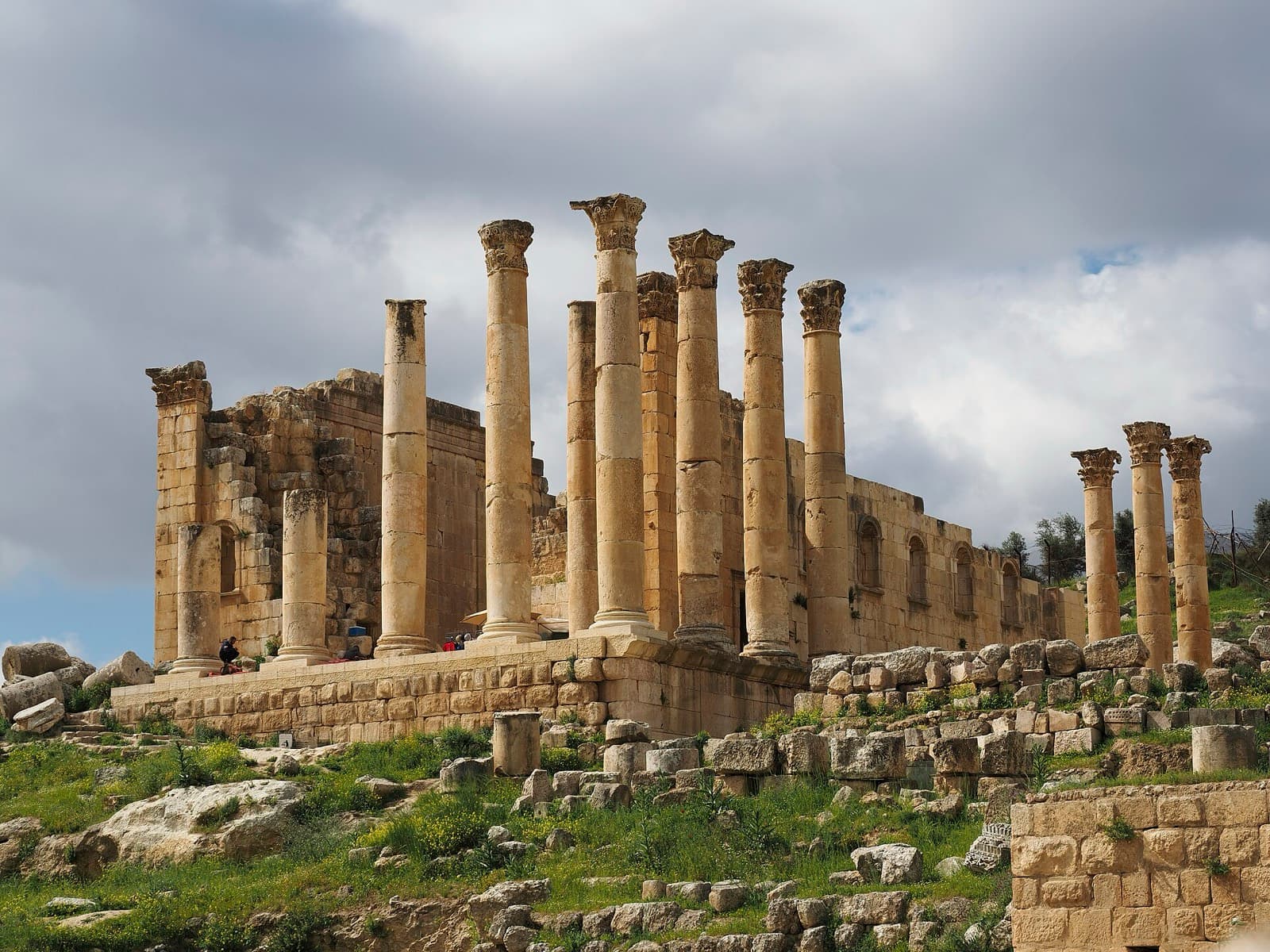
The South Gate and the Temple of Zeus: The Sky-God Above the City
The city's true southern entrance and, rising on its terrace just beyond, the great sanctuary of Zeus overlooking the town.
- 4
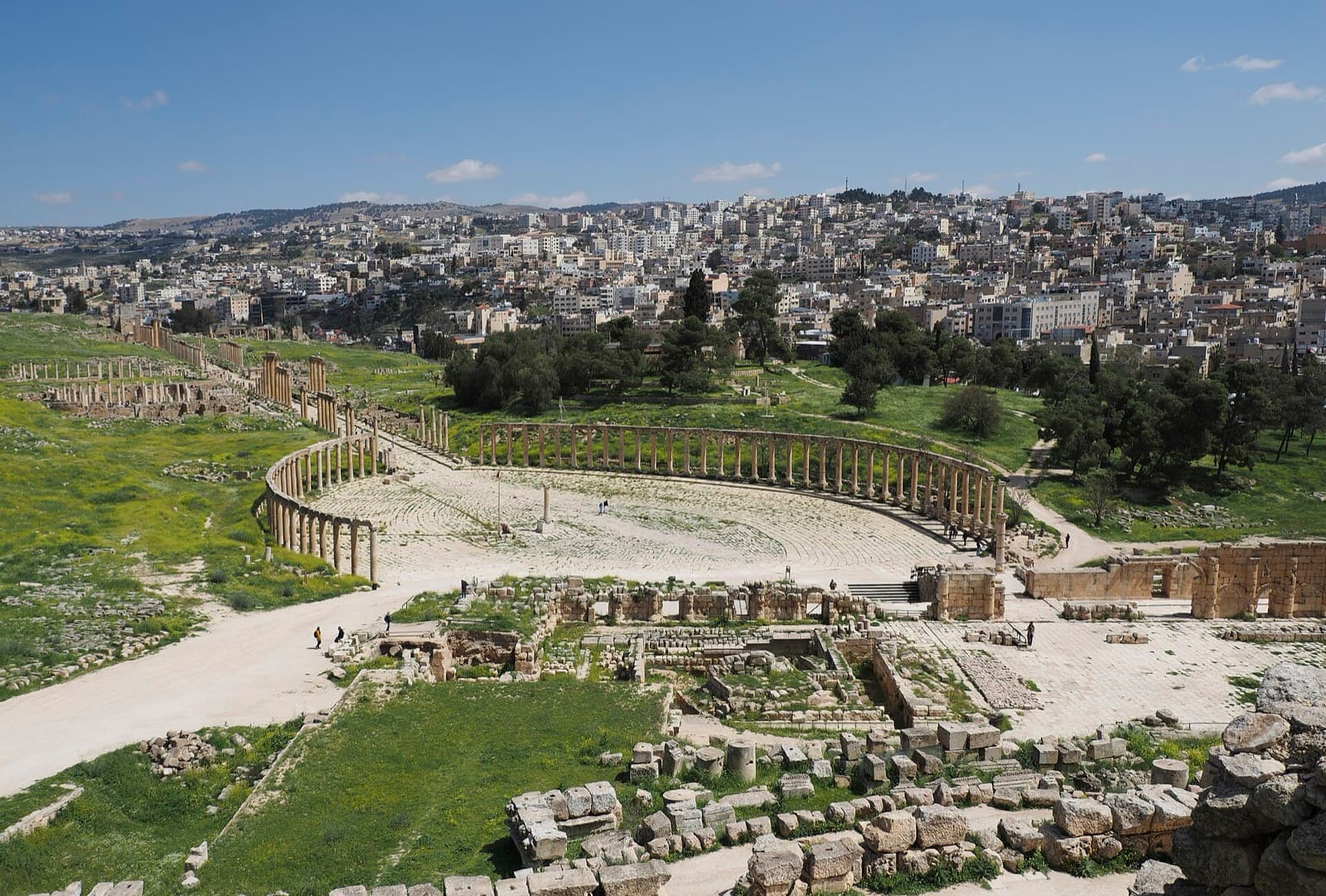
The Oval Plaza: The Perfect Stone Oval No Other Roman City Has
Gerasa's signature monument, a great oval forum ringed by Ionic columns, where every axis of the city meets.
- 5
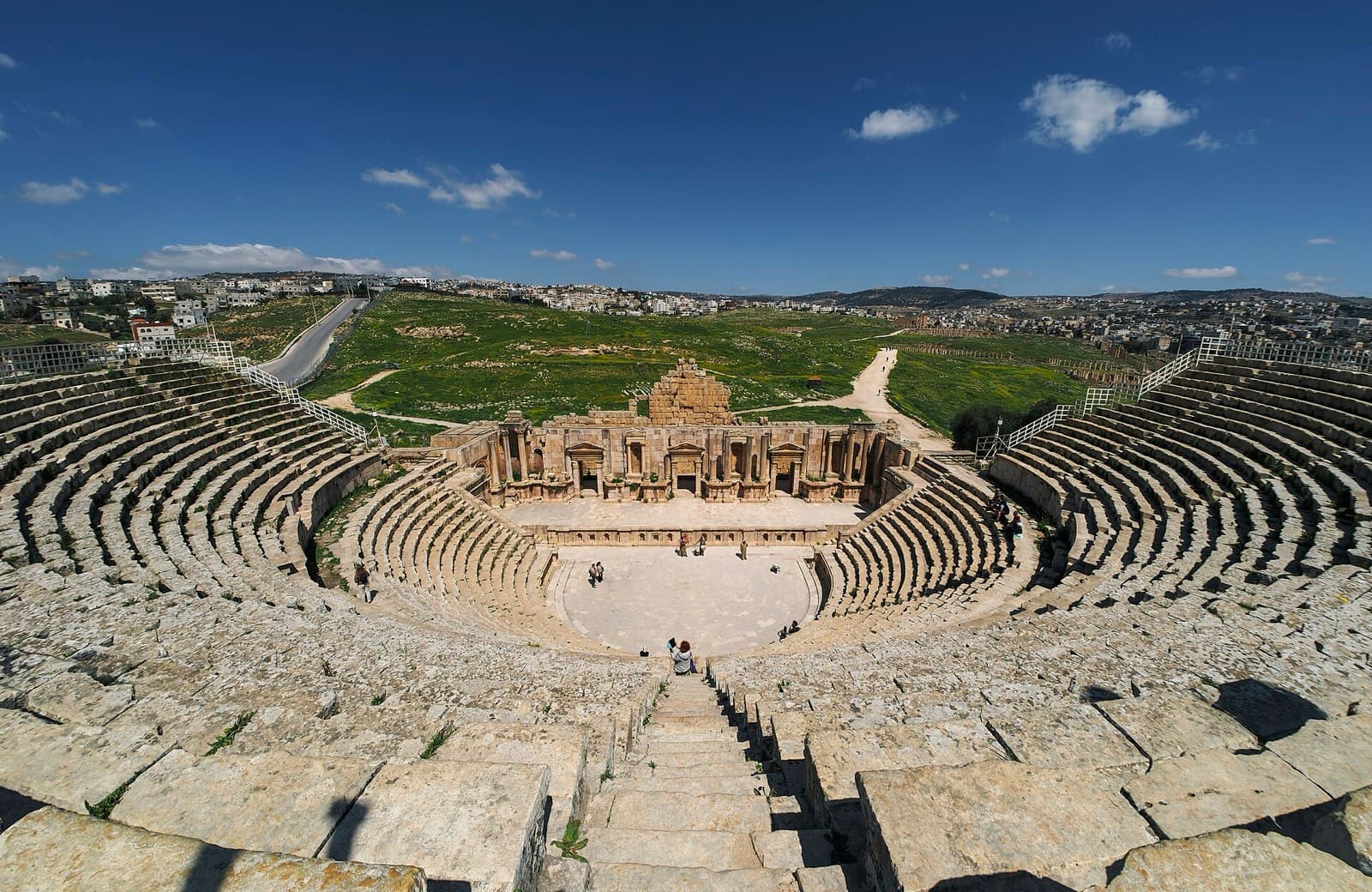
The South Theatre: The Theatre That Still Answers a Whisper
A steep Roman theatre with a reconstructed stage wall and acoustics so precise a speaker at its centre carries to every seat.
- 6
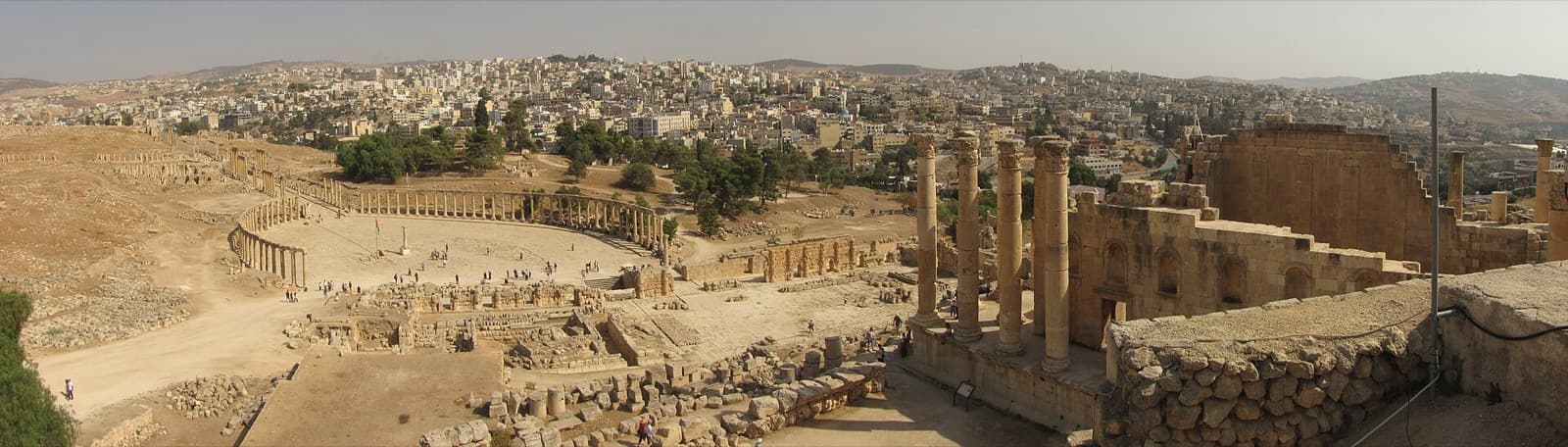
The Cardo Maximus: The Marble Street Rutted by Two-Thousand-Year-Old Wheels
The great colonnaded main street of Gerasa, its original flagstones still scored by ancient wheel ruts, running away to the north.
Details
Best Time to Visit
Come early, soon after the site opens around eight in the morning, or in the last hours before closing, roughly four in the afternoon in winter and later in summer. The stone core is fully exposed with almost no shade, so the low light of early morning and late afternoon is both cooler and far kinder for photographs, the columns glowing gold. Spring and autumn are the most comfortable seasons; midsummer midday is punishing on the open ground. Fridays and prayer times shift the local rhythm, and the site can fill with tour groups in the mid-morning, so an early start buys you the Oval Plaza and the theatre in relative quiet.
Pro Tips
- •Buy the Jordan Pass before you travel if you are seeing more than one site; it bundles the Jerash entry, which is otherwise twelve Jordanian dinars, along with the Petra ticket and your visa, and it saves both money and queuing.
- •Arrive at opening, around eight in the morning, and walk the southern monuments first while the tour vans are still on the road; you will get the Oval Plaza and the South Theatre nearly to yourself.
- •Carry small cash in Jordanian dinars for the entry, water, and any incidental purchase; card acceptance at the gate and stalls is unreliable.
- •Test the theatre acoustics yourself: stand on the marked focal point at the centre of the orchestra floor and speak at a normal volume, then have a companion listen from the top row.
- •Kneel at the Cardo Maximus to find the wheel ruts worn into the original flagstones, and look for the drainage openings at the street's edges; these small details reward a slow pace more than a hurried march.
- •Plan on more time than you expect. Ninety minutes covers the walk briskly, but the southern half alone can easily fill a half day if you linger, and the site continues well north beyond the Cardo.
Safety & Precautions
- •The ground is stony, uneven, and full of loose ancient paving, with steps and slopes at the theatre and the temple terrace; wear sturdy closed shoes and watch your footing, especially on the polished flagstones of the Cardo.
- •The site is almost entirely exposed with very little shade and can be intensely hot from late morning through the afternoon; bring more water than you think you need, a hat, and sun protection, and pace yourself.
- •Modest dress is appropriate as a courtesy in Jordan and essential if you visit any nearby mosque; cover shoulders and knees, and be aware that Fridays and daily prayer times can change opening rhythms and local access.
- •Small cash in Jordanian dinars is genuinely useful for the entry fee, water, and restrooms, as card facilities on site are limited; carry some before you arrive.
- •Guides, horse and carriage touts, and stall-holders work the main gates and marquee monuments, and some people will offer to take your photo or sell you 'original' Roman coins; a firm, friendly no is enough, buying antiquities is illegal, and you are free to explore this route at your own pace with no obligation to hire anyone.
Travel advisory: Reconsider Travel (Level 3).
Gallery
Related Reading
Go deeper on what you'll see, hear, and walk through.

Overview
Best Self-Guided Walking Tours in Jerash (2026)
3 min
Overview
One Day in Jerash: A Walkable Morning-to-Evening Plan
7 min
Overview
Visiting Jerash: A Practical 2026 Planning Guide
7 min
Thematic
Best History Walking Tours in Jerash (2026)
2 min
Companion
The Oval Plaza at Jerash: How One Stone Oval Explains a Whole Roman City
6 min
Deep dive
Hadrian's Arch in Jerash: The Gateway to a City That Was Never Built
6 min
Read
What to Eat in Jerash: Mansaf, Knafeh, and Where to Find Them by the Ruins
6 min
Read the walk
The full story of Jerash: The Colonnaded Heart of Roman Gerasa, in words. Prefer to listen? Play it narrated, from home or on location.
Introduction
Jerash, in northern Jordan, holds something most Roman cities lost long ago: a whole civic core still standing. This was Gerasa, a town of the Decapolis that grew rich on trade and rebuilt itself in marble and columns. Pompey brought it into the Roman sphere in sixty-three B C, and by one hundred and six A D it belonged to the Roman province of Arabia. What survives is a parade of nearly intact monuments, a gate raised for an emperor, an arena that once held fifteen thousand, an oval forum ringed with columns that no other Roman city can quite match, a temple terraced above the town, a theatre that still answers a whisper, and a colonnaded street rutted by ancient cartwheels. This tour runs six stops through that southern half, on foot, over roughly one and a half kilometres, and takes about ninety minutes at an unhurried pace, longer if the stone keeps you. It is all one continuous walk, no taxis, though the ground is stony and exposed and there are steps and slopes, so sturdy shoes help. The pleasure here is that the map is yours. Jerash draws crowds and tour vans, the busiest northern site after Petra, but nothing on this route needs you to keep to anyone else's schedule. You can linger under the arch, sit alone in the theatre, or press up the long street while a group files past. When you arrive at Hadrian's Arch at the southern edge of the site, begin with stop one.
1. Hadrian's Arch: The Emperor's Gate at the City's Edge
You begin at the very edge of Gerasa, where a triple gateway rises alone against the sky. This is Hadrian's Arch, and it was built to commemorate a single event: the visit of the emperor Hadrian to Gerasa in the winter of one hundred and twenty-nine to one hundred and thirty A D. When an emperor came, a city answered in stone. The form is a triumphal gateway, one high central passage flanked by two smaller ones, and it originally stood nearly twenty-two metres tall, with wooden doors hung in the openings. A reconstruction completed in two thousand and seven brought it back to roughly twenty-one metres, so what you see now is close to its full ambition. Notice the columns: the base of each is topped by a row of carved acanthus leaves, a distinctive touch, possibly Nabataean in inspiration, and unusual for a Roman gate. Here is the detail that rewards standing still. The arch is stranded. It sits well south of the actual city walls, about four hundred and sixty metres from the South Gate, with open ground between. That gap is not an accident. The arch marks where Gerasa meant to grow. In its heyday the city planned a great expansion southward, and this gate was to be its new formal threshold. The expansion was never built. So you are standing at the edge of an ambition, a doorway that leads to a city that never came, ambition announced and then quietly set aside. Take your time under it. There is no group here to move you along, and the walk into the real city begins when you are ready.
2. The Hippodrome: The Chariot Arena Still Ringed by Its Seats
A short walk north of the arch, the ground opens into a long, narrow arena still cupped by its own stone seating. This is the Hippodrome, and it was built for speed. It measures about two hundred and forty-five metres long by about fifty-two metres wide, a track laid out for chariots to thunder down and wheel around at the ends. When it was full, the tiers could hold up to fifteen thousand spectators. Picture that for a moment, fifteen thousand voices in a provincial city, rising as the teams came round the turn. It was raised sometime between roughly the mid-second and early third centuries A D. The exact date is uncertain, and some link it to the burst of building that followed Hadrian's visit, with completion perhaps early in the third century. What makes it worth your time is not its size but its survival. This is one of the smaller circuses of the Roman world, but also one of the best-preserved, so where most such arenas are ghosts marked only by their outline, here you can still read the shape whole: the long straights, the curved end, the banks of seats where the crowd sat. Part of it has been restored, and in modern times the arena has hosted reconstructed Roman spectacles staged for visitors. You do not have to catch one. Stand at the rail on your own clock, let the emptiness do the work, and imagine the dust and the noise. Then, when you have had your fill of the scale of it, carry on north toward the true entrance of the city.
3. The South Gate and the Temple of Zeus: The Sky-God Above the City
Now you reach the city's real threshold, the South Gate, built about one hundred and twenty-nine to one hundred and thirty A D, right around Hadrian's visit. This was the main southern entrance through the walls, opening onto the busy road that climbed up from Philadelphia, the…
Full narration for this stop unlocks with the tour.
4. The Oval Plaza: The Perfect Stone Oval No Other Roman City Has
This is the monument Gerasa is known for, and standing in it you understand why. The Oval Plaza is a great public square shaped not as the usual rectangle but as a broad, sweeping oval, about ninety metres by eighty, ringed by a colonnade of fifty-six Ionic columns of the first…
Full narration for this stop unlocks with the tour.
5. The South Theatre: The Theatre That Still Answers a Whisper
Just west of the plaza, the ground rises into a bowl of stone seats, the South Theatre. It was built in the late first century A D, during the reign of the emperor Domitian, dated between eighty and ninety-six A D, with scholarship narrowing it to about ninety to ninety-two A D.…
Full narration for this stop unlocks with the tour.
6. The Cardo Maximus: The Marble Street Rutted by Two-Thousand-Year-Old Wheels
You end where the city keeps going without you. The Cardo Maximus is the great colonnaded main street, running about eight hundred metres north from the Oval Plaza toward the far gate. It was first laid in the first century A D and then rebuilt in the early second century,…
Full narration for this stop unlocks with the tour.