Kota Tua: The Company Town That Ran an Empire
90 min · 3.4 km · easy
If you want to eat like a local in Jakarta, start with the food of the Betawi, the city's indigenous community, and follow it into two neighborhoods you can walk: the Old Town plaza of Kota Tua and the Chinatown lanes of Glodok beside it, then the parade-ground core around Monas. The signature dishes are kerak telor (a charcoal-cooked glutinous-rice omelette), soto betawi (a creamy beef soup), nasi uduk (coconut rice), and gado-gado (vegetables in peanut sauce). Order them where they were born, learn the two or three words that get you served, and you turn a walk into a meal.
Jakarta's cooking is a blend, not a single tradition. Betawi cuisine grew out of the same mixed port culture the Jakarta walking tours describe: Javanese, Sundanese, Malay, Arab, Indian, Chinese, and Dutch cooks all left marks on it. That is why one Jakarta lunch can carry coconut milk from the archipelago, cumin and cloves from the spice trade, and a wok technique from the Chinese quarter. Here is what to eat, where it comes from, and how to order it.
Kerak telor: the dish to eat first, on the Old Town plaza
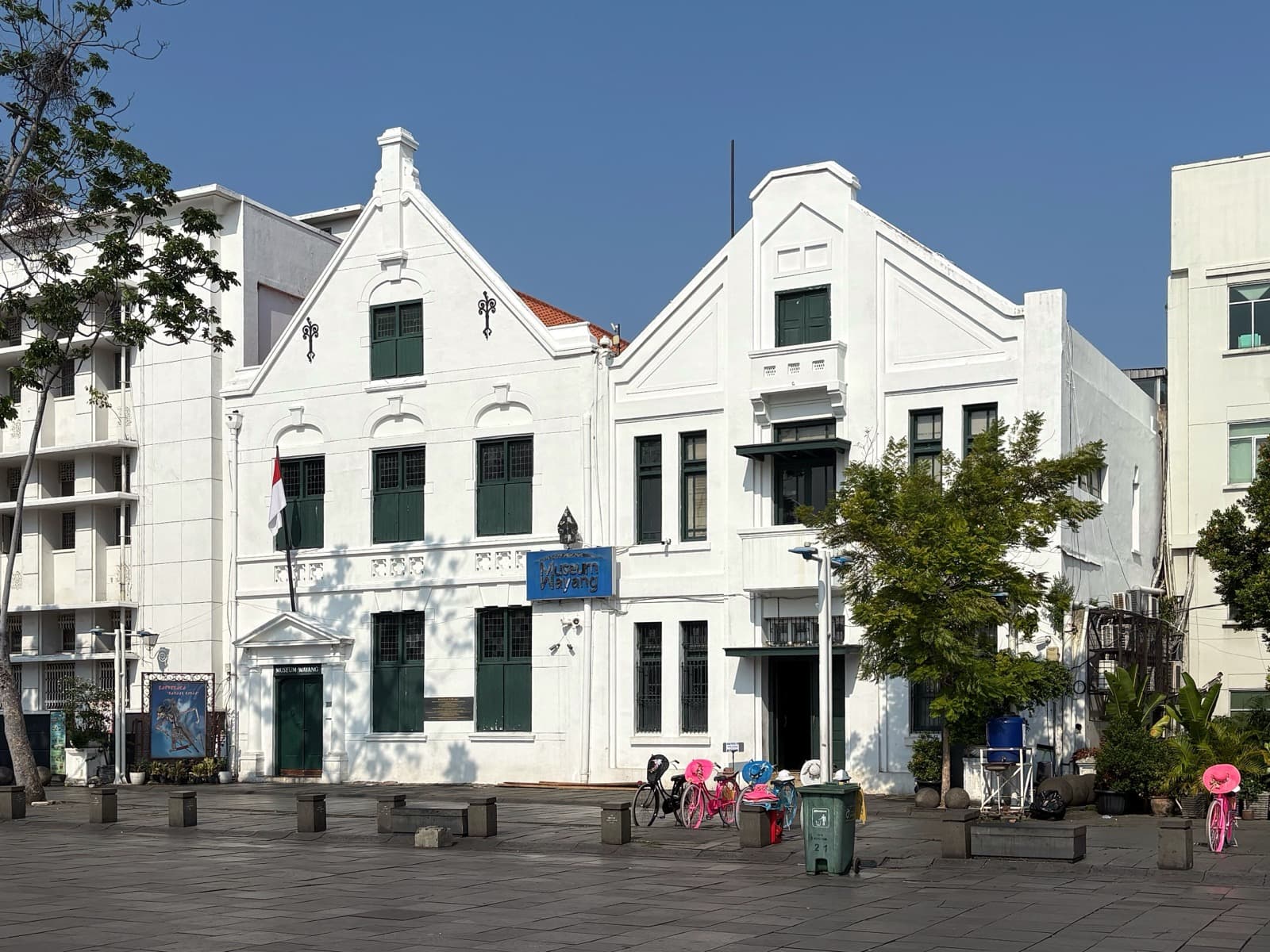
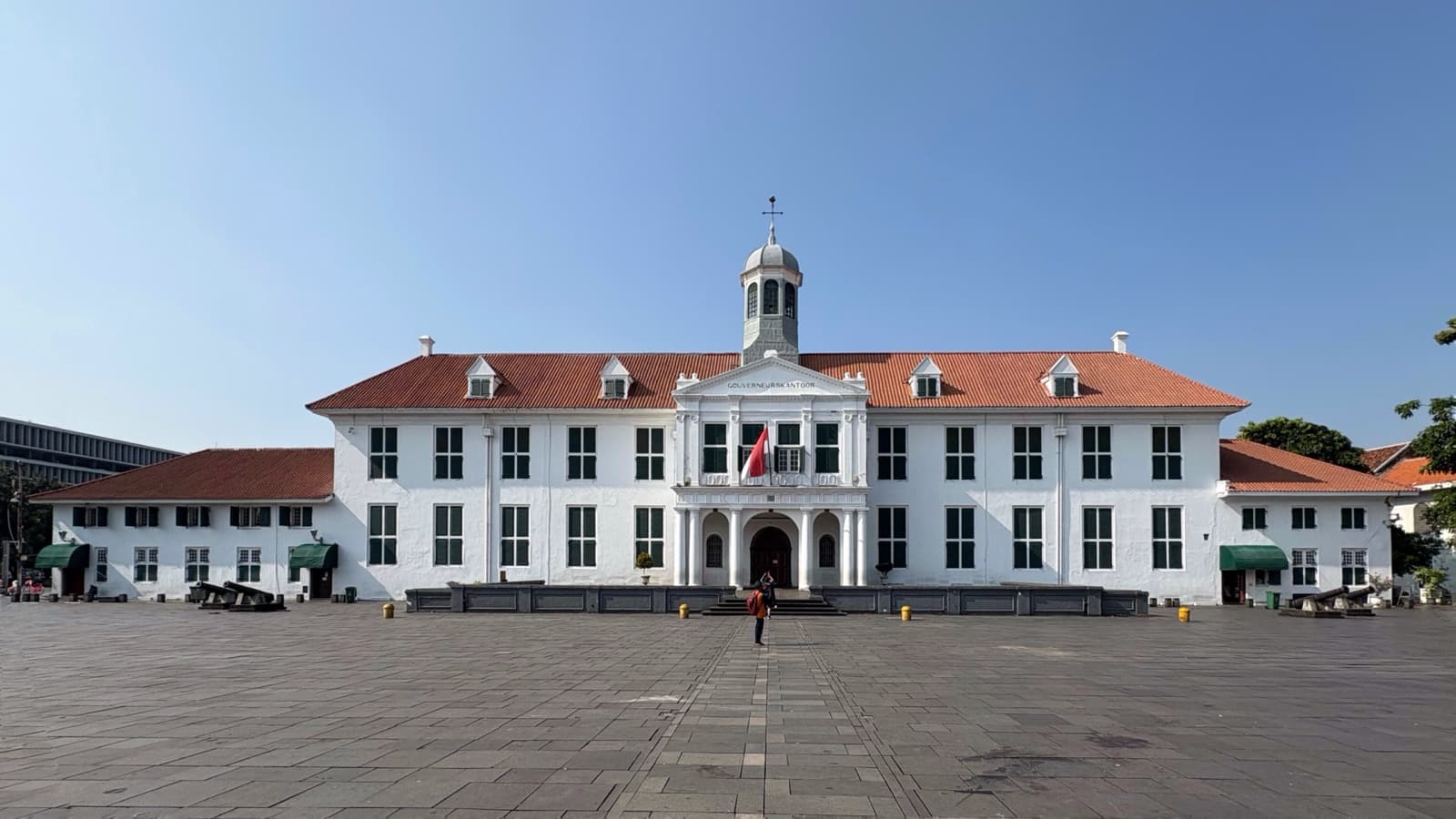
Kerak telor is the single most Jakarta thing you can eat, and you will find it exactly where you should: on Taman Fatahillah, the pastel plaza at the center of Kota Tua, and around Monas. It is glutinous rice and a duck or chicken egg cooked flat in a small wok over charcoal, then finished with serundeng (fried grated coconut), dried shrimp, and fried shallots. The vendor tips the wok toward the fire so the underside crisps into a browned crust, which is what kerak means.
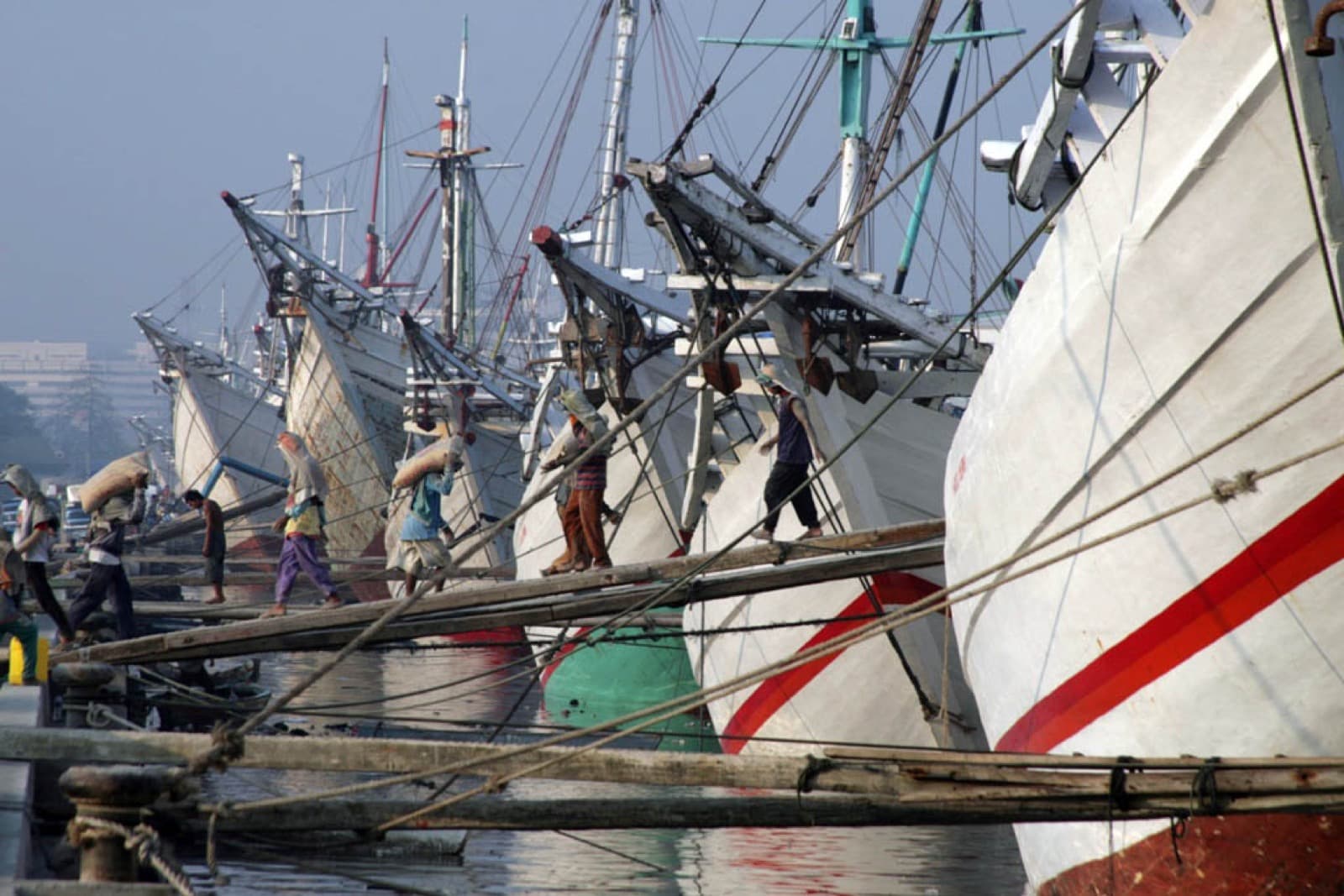
The dish is tied to the Betawi people and became a Jakarta signature in the era when the city was the colonial capital of Batavia. One account from the Jakarta culture service traces its accidental invention to Betawi cooks who noticed rice charring on burning coconut husks and added egg and seasoning to make it worth eating. Today it turns up at Betawi festivals and, reliably, at the Old Town food stalls, so it pairs naturally with the Kota Tua self-guided route through Taman Fatahillah, the Jakarta History Museum, and Sunda Kelapa harbour.
How to order like a local: kerak telor is cooked to order and takes a few minutes, so hand it over at the start of your loop and come back. Ask for telur bebek (duck egg) if you want the traditional version, telur ayam (chicken egg) if you want it milder, and say pedas for spicy or tidak pedas for not.
Soto betawi: the creamy beef soup that defines the city
Hear a stop from this walk
Taman Fatahillah: The Front Office of an Empire
Soto betawi is Jakarta's defining soup: beef and offal simmered in a broth enriched with coconut milk, and often fresh cow's milk as well, which is what gives it a richness most Indonesian sotos do not have. The spice base is shallots, garlic, ginger, chili, cloves, cumin, and pepper, ground and cooked before the broth goes in. It arrives with chunks of beef, sometimes tripe and other organ meats, plus tomato, potato, fried shallots, emping crackers, and rice or lontong (compressed rice cake) on the side.
The name itself has a documented history. The soup existed under vendors' own names before a Chinese-Indonesian seller popularized the label "soto betawi" in the late 1970s at Prinsen Park, the amusement area now known as Lokasari, and the term spread across the city from there. That story is itself a small map of Jakarta: a Betawi dish, named and made famous by a Chinatown-adjacent vendor.
How to order like a local: soto betawi is a sit-down bowl, not street-walking food, so plan it as a proper lunch or dinner stop. Ask whether the broth is santan (coconut milk) or susu (dairy milk) if you have a preference, and request nasi (rice) on the side rather than in the bowl if you want to keep the crackers crisp.
Nasi uduk and gado-gado: the everyday plates
Nasi uduk is Betawi coconut rice, steamed with coconut milk and aromatics like lemongrass and pandan, and it is a breakfast and all-day staple sold from warung stalls across the city. It is a base rather than a whole meal: you build it up with fried chicken, tempeh, tofu, a hard-boiled egg, sambal, and a scatter of fried shallots. If you eat one cheap, filling local plate in Jakarta, this is the safe and satisfying one.
Gado-gado is the other everyday classic: blanched and raw vegetables, tofu, tempeh, egg, and sometimes lontong, all bound in a thick peanut sauce and topped with krupuk crackers. The name comes from the Betawi verb menggado, meaning to eat a dish without rice, which is close to what gado-gado is: a composed plate that food historians link to Jakarta's mixed Betawi kitchens, eaten as a meal in itself or with a rice cake rather than steamed rice. It travels well as a light, mostly vegetable meal between walking stops.
How to order like a local: at a nasi uduk or gado-gado warung you point at what you want, and the vendor assembles the plate. Say sambal or lombok if you want chili added, kurangi (less) or tanpa (without) if you want something left off, and bungkus if you want it wrapped to take away.
Glodok and Petak Sembilan: the Chinatown lanes beside the Old Town
A short walk from Kota Tua, the Glodok district is Jakarta's Chinatown and its most concentrated street-food ground. The core is Petak Sembilan and the narrow alley called Gang Gloria, lined with vendors selling Peranakan and Chinese dishes: pork and non-pork dumplings, kwetiau (flat rice noodles), Hainanese-style chicken rice, noodle soups, and roast meats. Because Jakarta is a majority-Muslim city and Glodok is a Chinese quarter, this is one of the places you will find pork openly sold, so if you avoid it, ask before ordering.
The neighborhood also holds a genuinely old hospitality tradition worth building into a walk. At the Pantjoran Tea House on Jalan Pancoran, free tea is set out in pots on the sidewalk for anyone to drink, a revival of the patekoan custom (pat means eight, for the eight pots) attributed to a seventeenth-century Chinese community leader, Captain Gan Jie, and his wife, who put out tea for tired passersby. You do not have to buy anything to take a cup, and it is a fitting pause between the Old Town and the Chinatown lanes.
How to order like a local: in Gang Gloria the vendors are used to pointing and one-word orders. Learn babi (pork) and ayam (chicken) so you can choose or avoid, and es teh (iced tea) or kopi (coffee) to drink. The free sidewalk tea at Pantjoran is genuinely free, but buying a snack or a pot inside is the polite way to thank a place that gives tea away.
Around Monas: evening sate and a cold Betawi dessert
The Merdeka Square and Monas route ends near Menteng, and just off it, Jalan Sabang turns into an evening street-food strip after dark. This is the place for sate ayam, chicken skewers grilled over charcoal and served with thick peanut sauce and lontong, and for nasi goreng cooked fresh at portable stalls. The stalls roll in around early evening and stay busy late, which makes Sabang a natural dinner after a long, shadeless afternoon crossing the square.
For a hot day, look for es selendang mayang, a Betawi iced dessert of soft tri-color mung-bean and starch jelly in coconut milk and palm-sugar syrup over crushed ice. It is sweet, cooling, and old, a market and festival treat, and it is the right thing to buy from a cart when the Jakarta heat peaks around midday.
How to order like a local: at a sate cart, order by the count and the number of servings, for example sepuluh tusuk (ten skewers) with lontong or nasi, and pedas or tidak pedas for the sauce. For drinks and desserts, es means iced and panas means hot, so es teh manis is sweet iced tea and es selendang mayang is the cold jelly dessert.
Practical notes for eating your way through Jakarta
Street food here is cooked to order over live heat, which is part of why it is good and part of how to eat it safely: choose stalls that are busy and cooking in front of you, and favor hot, freshly finished plates. Carry small cash, because carts and warung do not always take cards, and bring water for the walking legs, since Merdeka Square in particular is vast and mostly shadeless.
Getting between the food districts takes a little planning. The TransJakarta bus network reaches all of these areas, with stops serving Kota Tua and Glodok in the north and Monas and Menteng in the center, so it is the workhorse for hopping between them. The MRT currently runs the central north-south corridor through the Monas and Menteng side of town, while its extension north to Glodok and Kota is still under construction, so for now the Old Town and Chinatown are reached by TransJakarta, taxi, or on foot. The two Old Town and Chinatown zones are close enough to walk between. Time it to the heat: eat kerak telor in the cool of a Kota Tua morning, take free tea in Glodok at midday, and save the Jalan Sabang sate for the evening. Do that, and the food and the walk become the same trip. Start with the Jakarta walking tours to line up the route, then eat at each end of it.
Sources
Frequently asked questions
- What food is Jakarta famous for?
- Jakarta is known for Betawi dishes, the cooking of the city's indigenous community. The signatures are kerak telor (a charcoal-cooked glutinous-rice omelette with dried shrimp and fried coconut), soto betawi (a creamy beef and offal soup made with coconut milk), nasi uduk (coconut rice), and gado-gado (vegetables in peanut sauce). All four are widely sold at street stalls and warung across the city.
- Where can I try kerak telor in Jakarta?
- Kerak telor is reliably sold by street vendors at Taman Fatahillah, the central plaza of the Kota Tua Old Town, and around the Monas national monument. It is cooked to order in a small wok over charcoal, so hand it over and come back in a few minutes. You can ask for telur bebek (duck egg) for the traditional version or telur ayam (chicken egg) for a milder one.
- What is soto betawi and how is it different from other Indonesian soups?
- Soto betawi is a Jakarta beef soup made from beef and offal in a broth enriched with coconut milk, and often fresh cow's milk as well, which makes it richer and creamier than most Indonesian sotos. It is seasoned with a spice paste of shallots, garlic, ginger, chili, cloves, cumin, and pepper. The name was popularized in the late 1970s by a Chinese-Indonesian vendor at Prinsen Park, now the Lokasari area, and spread across the city from there.
- Where is the best street food in Jakarta's Chinatown?
- Glodok is Jakarta's Chinatown, and its densest street-food ground is Petak Sembilan and the narrow Gang Gloria alley, lined with vendors selling dumplings, kwetiau noodles, chicken rice, and roast meats. Because Glodok is a Chinese quarter in a majority-Muslim city, pork is sold openly here, so ask before ordering if you avoid it. The nearby Pantjoran Tea House puts out free tea on the sidewalk, a revival of the old patekoan custom.
- Where should I eat near Monas and Merdeka Square?
- Just off Merdeka Square, near Menteng, Jalan Sabang becomes an evening street-food strip. It is the place for sate ayam (charcoal chicken skewers with peanut sauce) and nasi goreng cooked fresh at stalls that open as the sun goes down and stay busy late. For a hot afternoon, look for es selendang mayang, a cold Betawi dessert of colored jelly in coconut milk and palm-sugar syrup over ice.
- Is street food safe to eat in Jakarta?
- Jakarta street food is generally fine to eat if you choose sensibly. Pick stalls that are busy and cooking in front of you, and favor hot, freshly finished plates rather than food that has been sitting out. Carry small cash, since carts and warung do not always take cards, and bring water for the long walking legs, especially around the shadeless expanse of Merdeka Square.
Ready to experience it?
Kota Tua: The Company Town That Ran an Empire
90 min · 3.4 km · easy
More from Jakarta
Explore more at your own pace.
Jakarta Travel Guide: Days, Transport, Weather, Safety, Budget
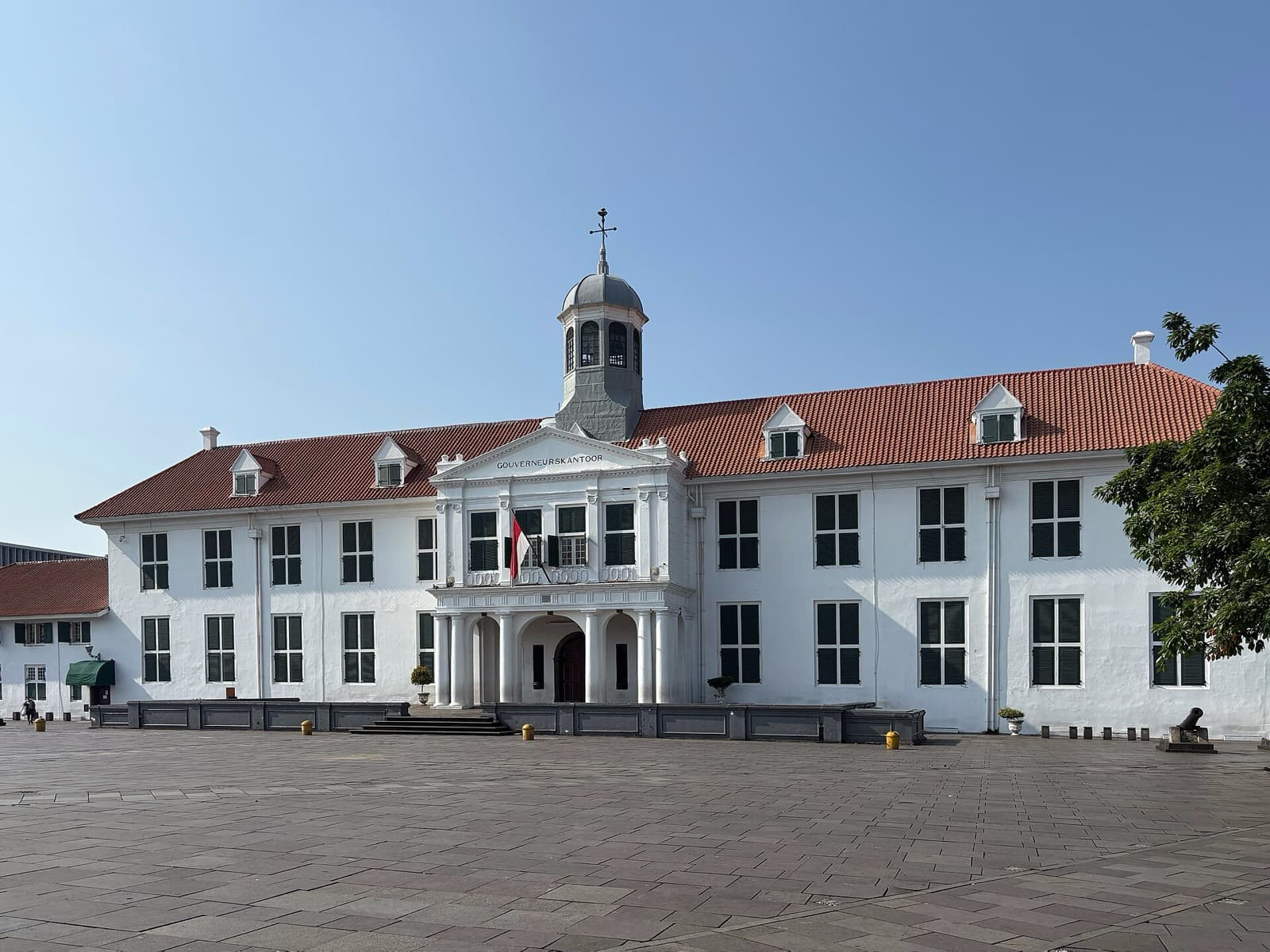
Company Town and Square of Freedom: Reading Jakarta on Foot
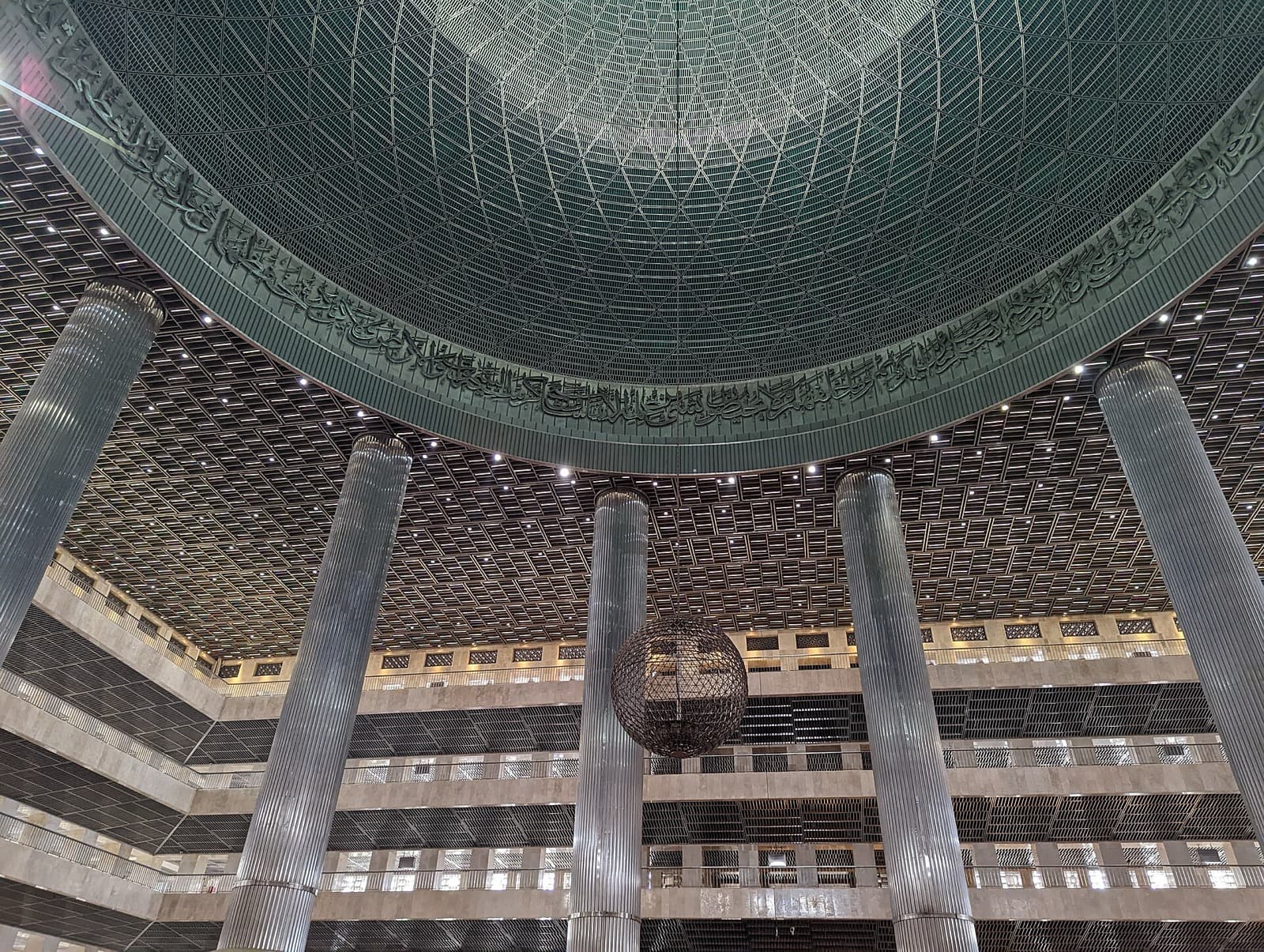
The Istiqlal Mosque: A Mosque Named Freedom, Designed by a Christian
The Stadhuis of Batavia: Why Jakarta's Prettiest Square Was a Corporation's Head Office
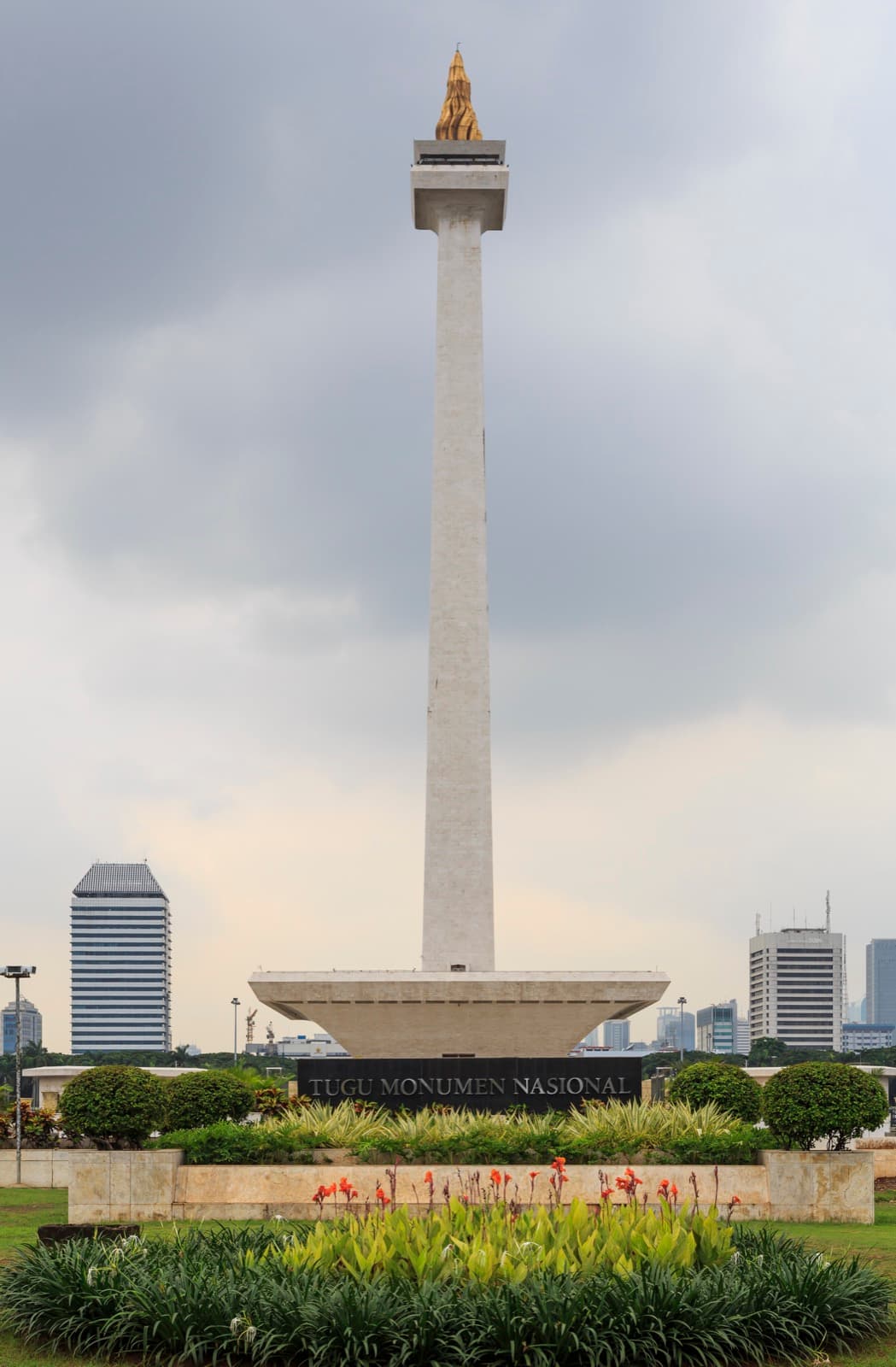
Monas: Why Indonesia Planted a Golden Flame at the Center of a Colonial Parade Ground