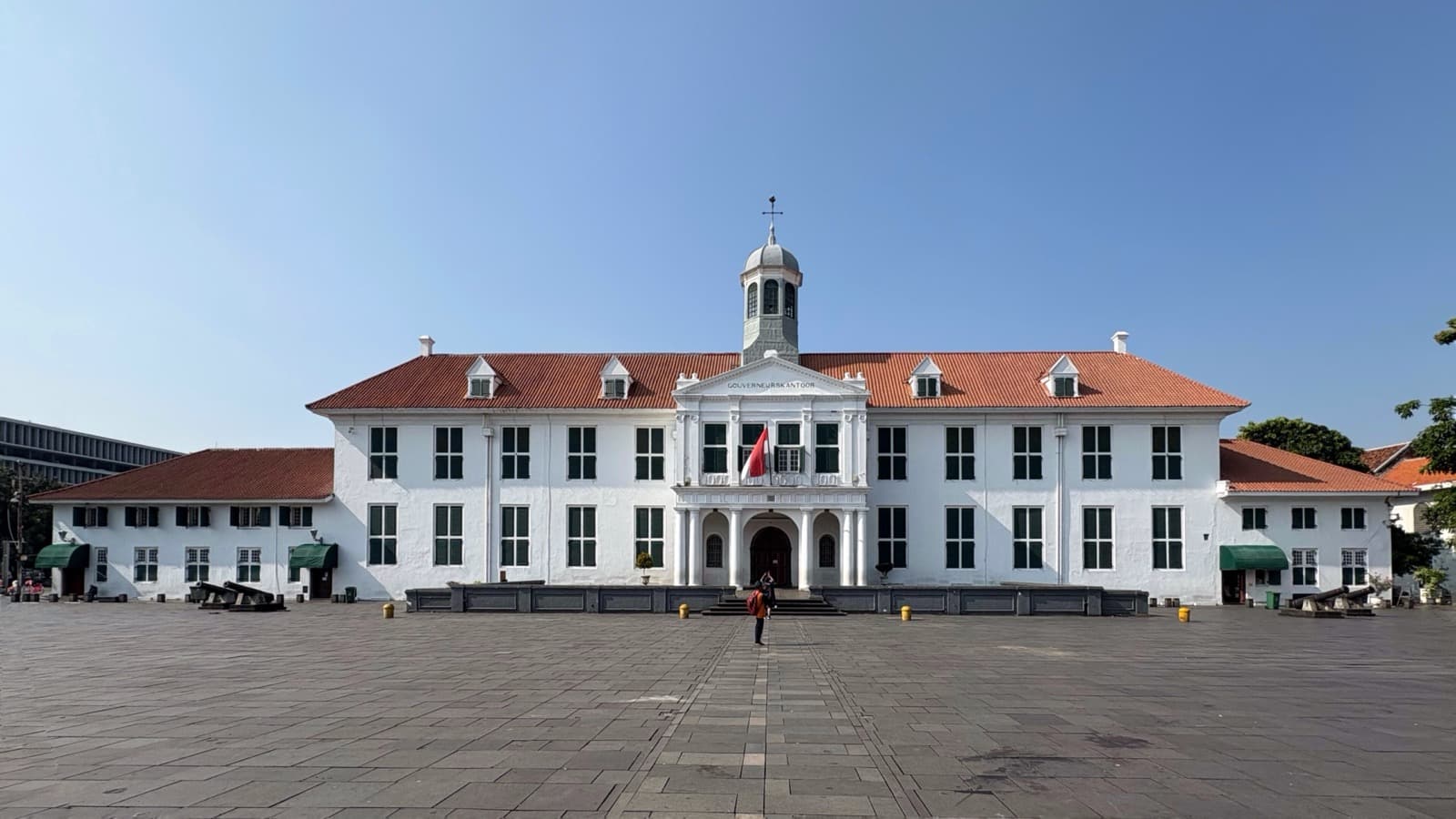
A slow walk through Jakarta's Old Town, where a pretty pastel plaza turns out to be the head office of a corporation that ran a spice empire, from the city hall with cells in its cellars to the hand-loaded harbour that was the whole reason for the city.
Start · Taman Fatahillah: The Front Office of an Empire
DirectionsStops
- 1
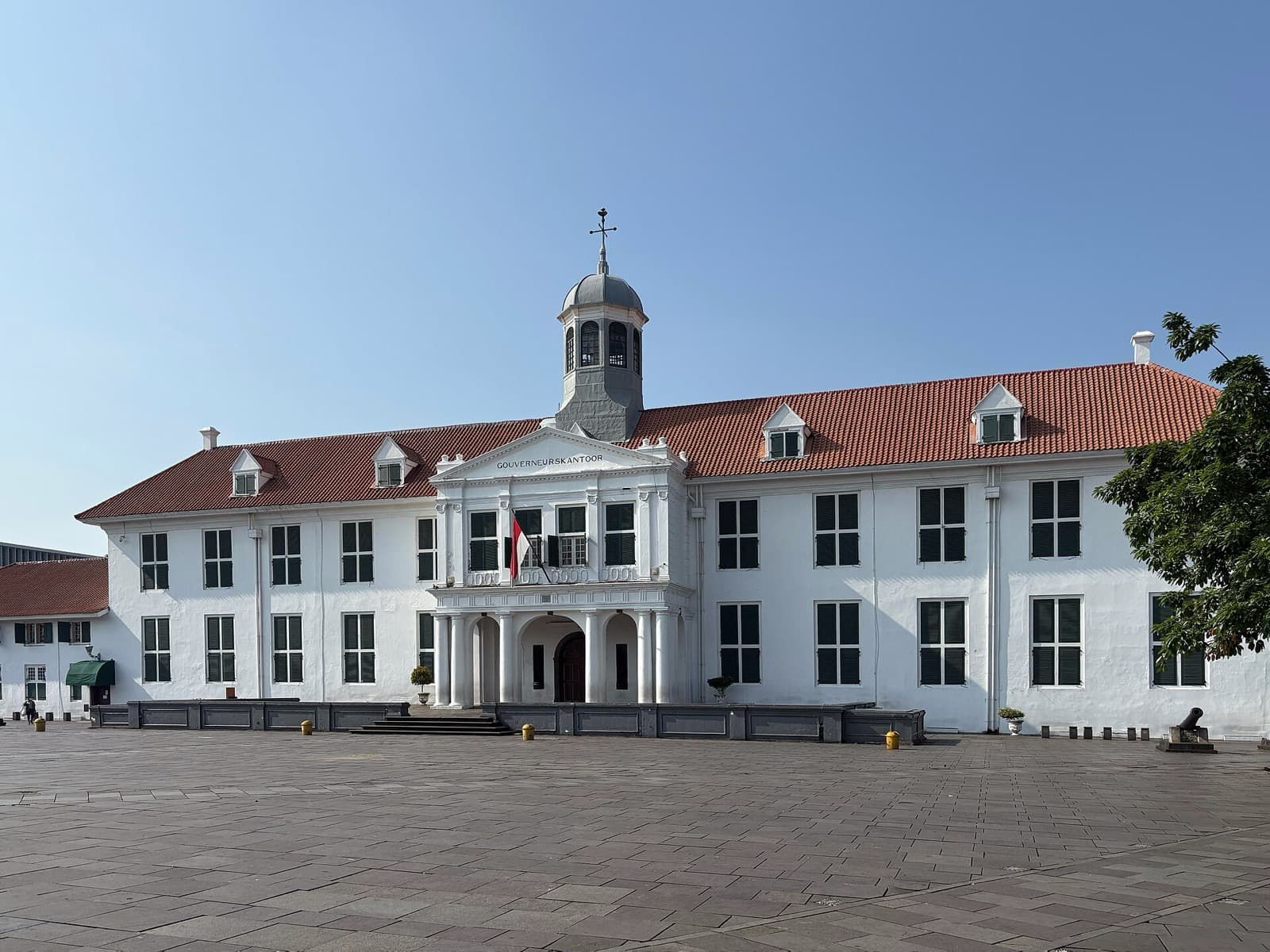
Taman Fatahillah: The Front Office of an Empire
The central plaza of old Batavia, the governmental heart of the Dutch colonial city, framed by the buildings from which a trading empire was run.
- 2
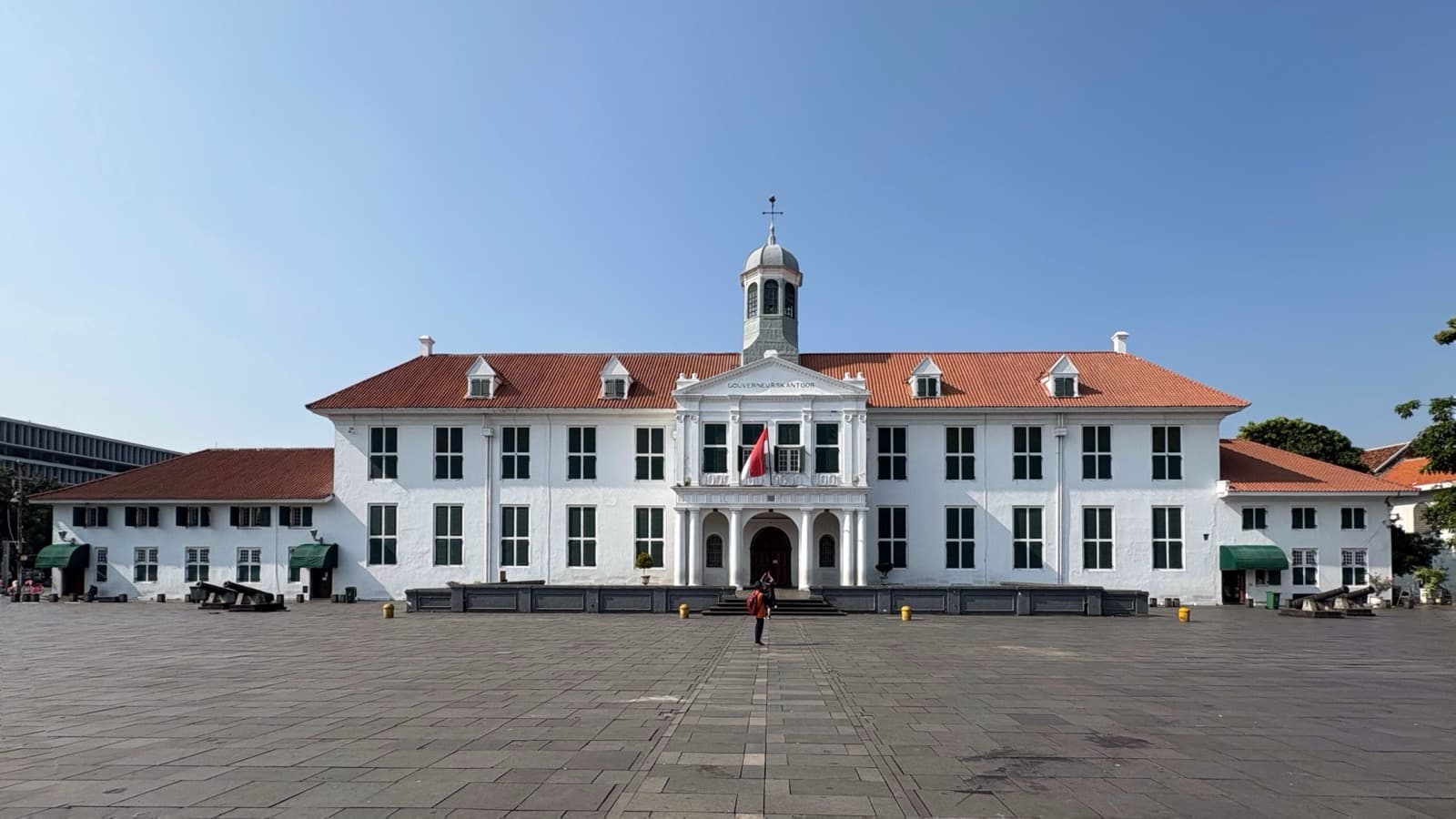
Jakarta History Museum: The City Hall Whose Cellars Were Cells
The former Stadhuis of Batavia, administrative headquarters of the Dutch East India Company, with dungeons beneath the front portico that served as prison cells.
- 3
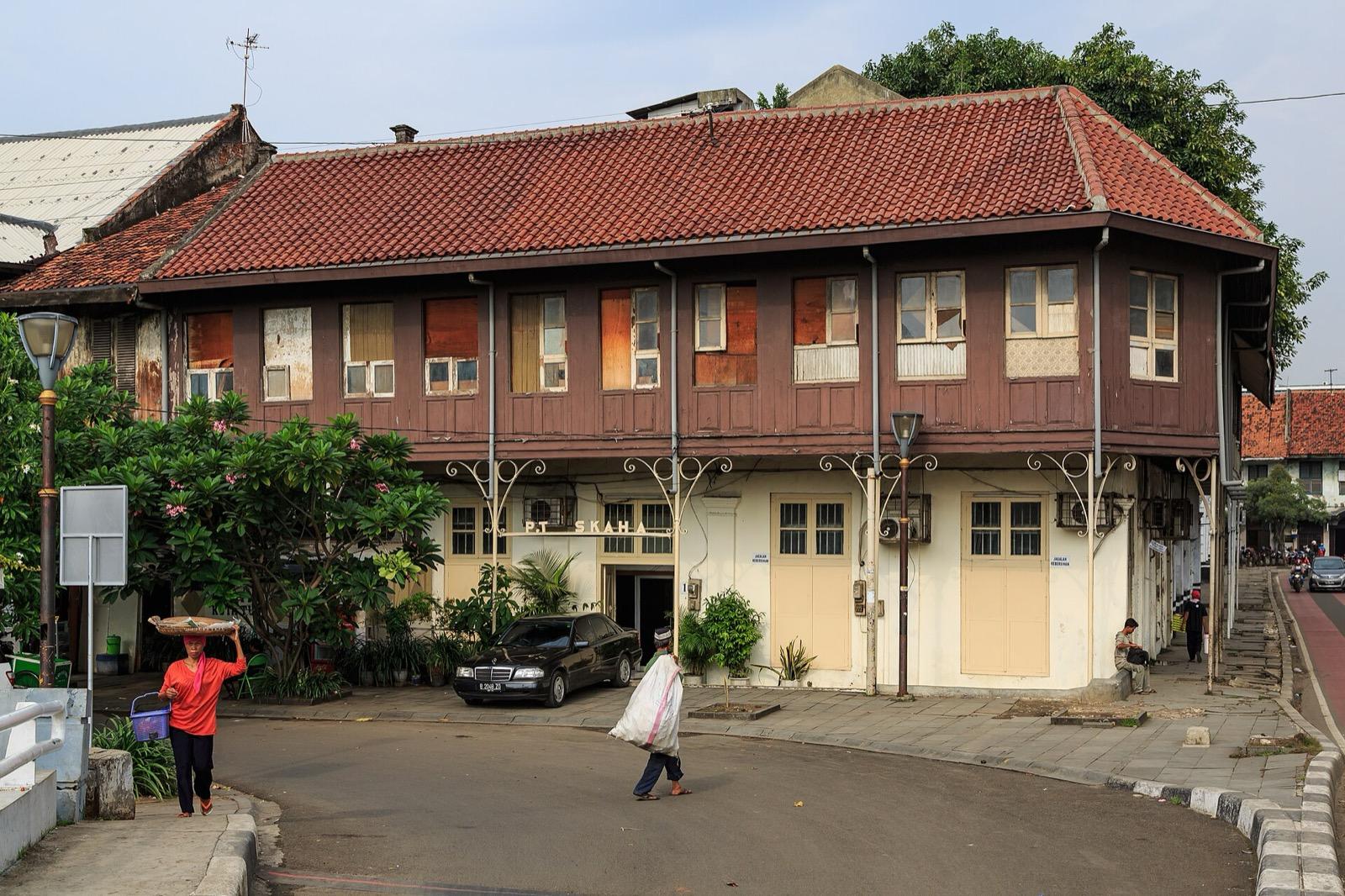
The Merchant Square: Arcades Where an Empire's Clerks Worked
The arcaded colonial facades that framed the daily commerce of Batavia, the paperwork underside of a trading corporation.
- 4
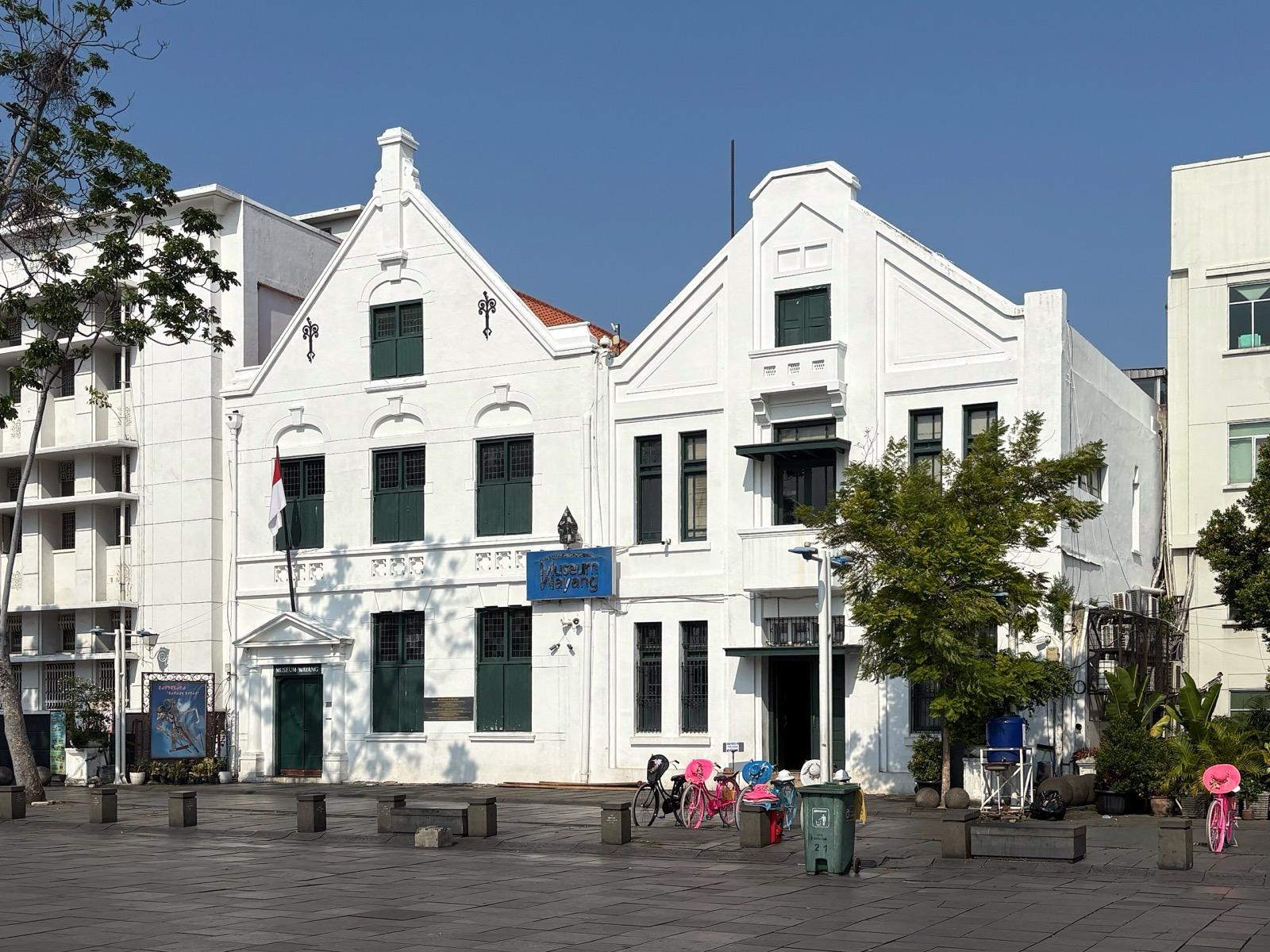
The Wayang Museum: Shadow-Puppets Over a Conqueror's Grave
A museum of Javanese shadow-puppet theatre standing on a former churchyard that was the funeral site of Batavia's founder.
- 5
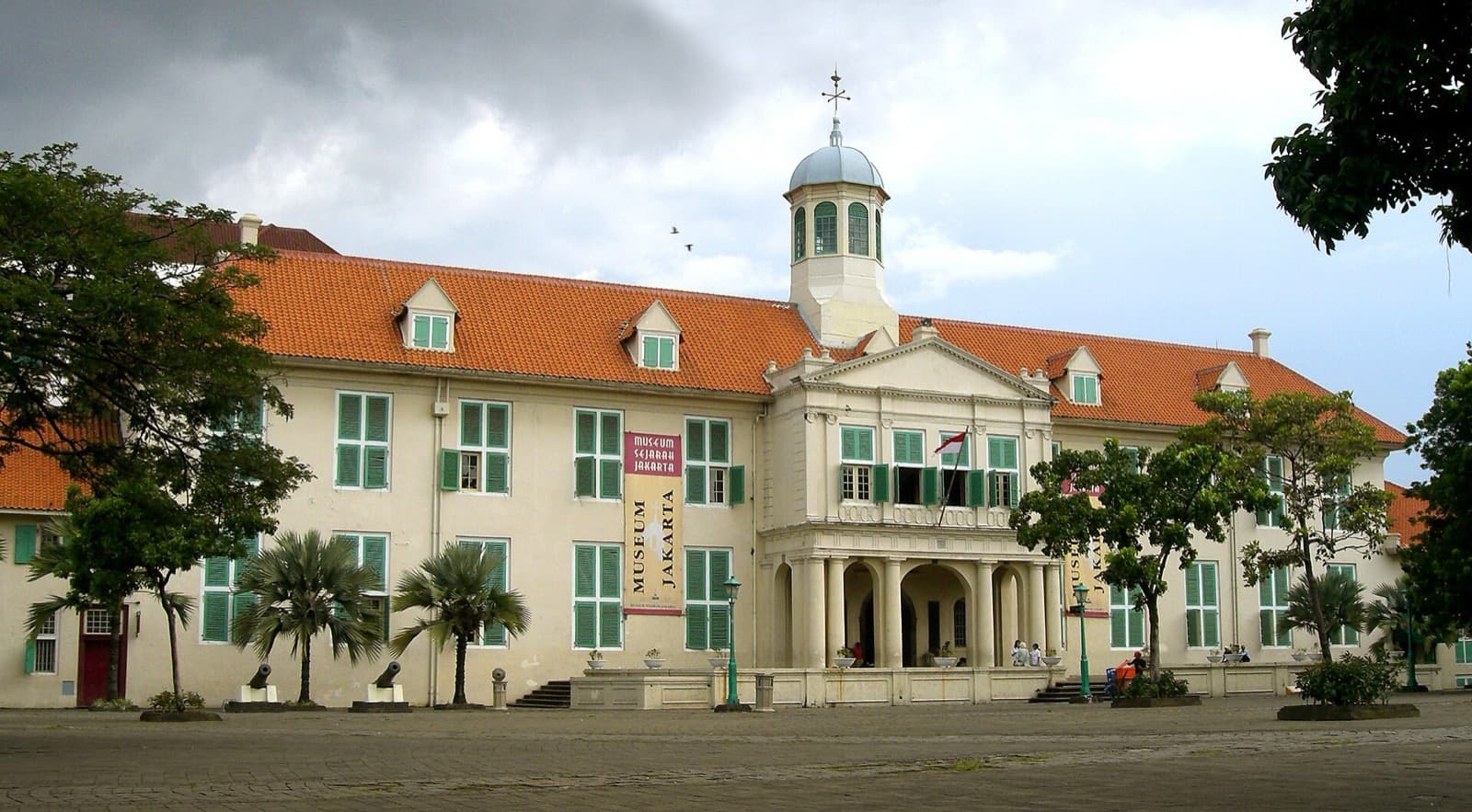
The Fine Art and Ceramic Museum: The Colony's Courthouse, Now a House of Art
The former Court of Justice of the colony, once the highest court in the land, now the Museum of Fine Arts and Ceramics.
- 6
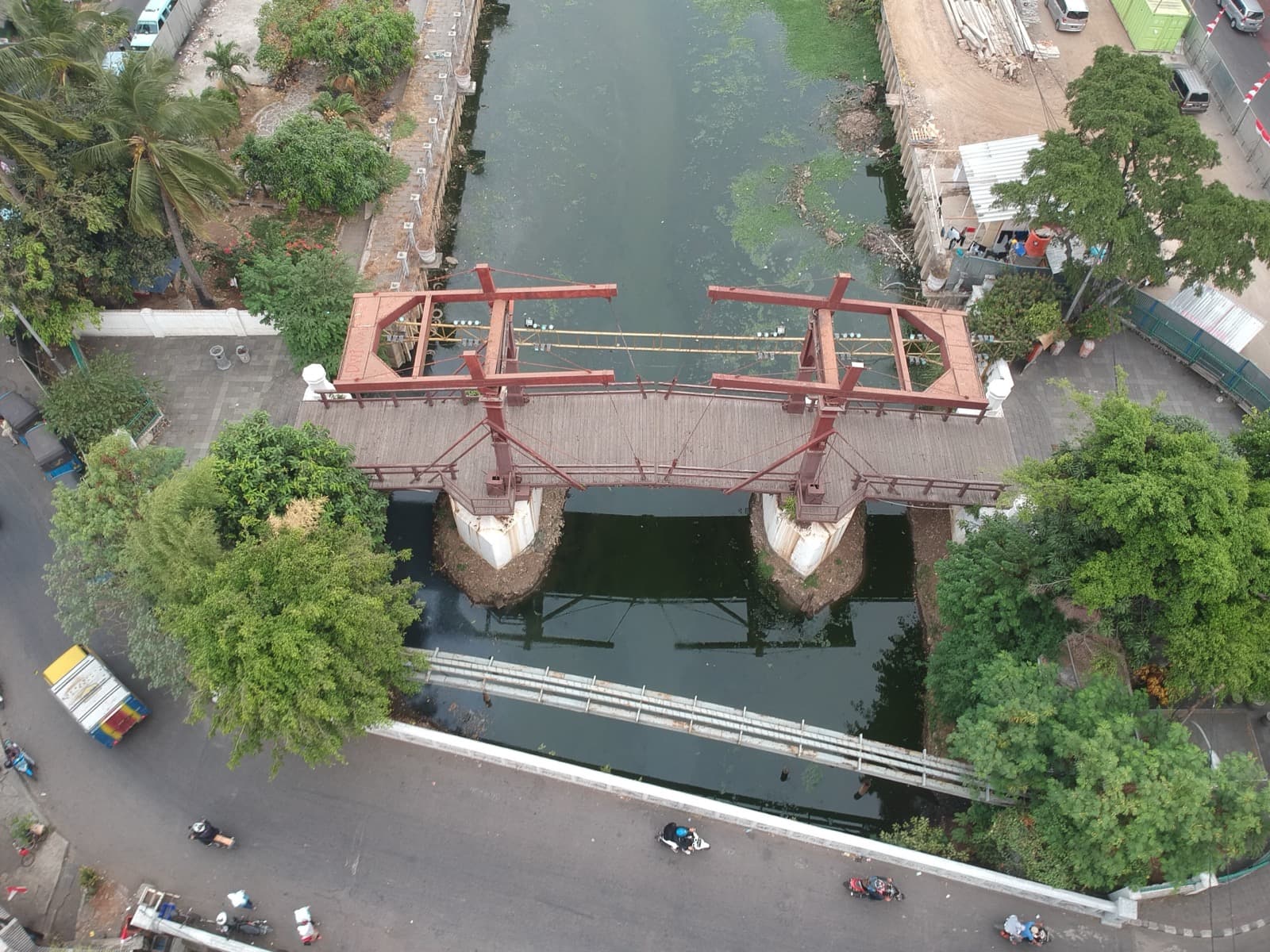
Kota Intan Drawbridge: The Last Dutch Drawbridge Over a Dead Canal
The oldest bridge in Indonesia and the only surviving seventeenth-century Dutch drawbridge, spanning a remnant of Batavia's old canal system.
- 7
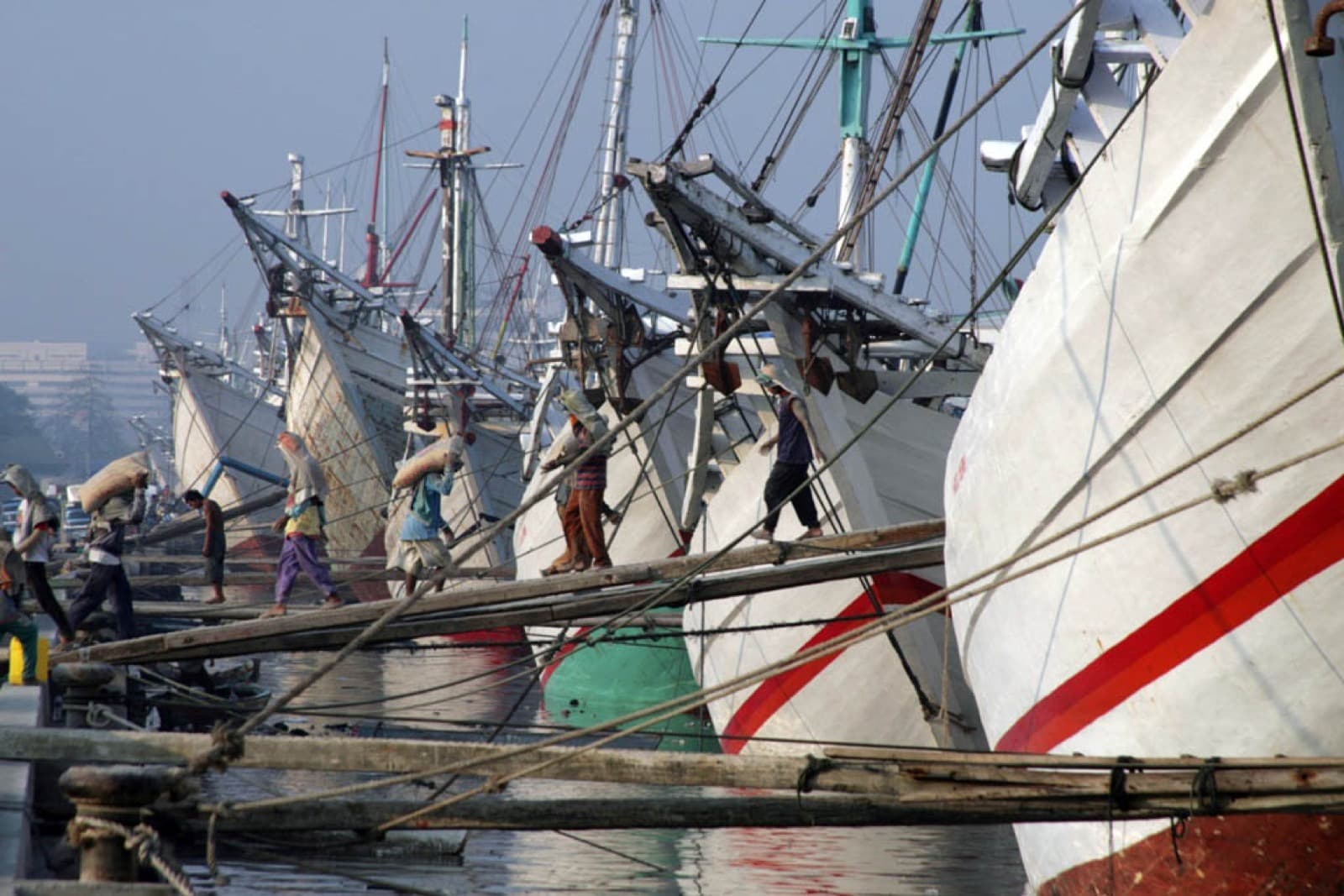
Sunda Kelapa: The Hand-Loaded Harbour That Was the Whole Point
The old spice harbour, older than the Dutch, that was the entire reason for the city, still worked by hand-loaded wooden schooners today.
Details
Best Time to Visit
Early morning, soon after the square opens, is the kindest window. The light is soft, the pastel facades photograph beautifully, and you beat both the midday sun and the thickest crowds of costumed photo-touts and rental bicycles. A weekday morning is quieter than a weekend, when the plaza fills with families and day-trippers. If you want to end at Sunda Kelapa with the wooden schooners in good light, aim to reach the harbour before the heat peaks around midday, or come back in the late afternoon when the working boats catch a lower sun. The dry season, roughly May through September, gives you more reliable conditions, though a sudden tropical downpour can arrive in any month, so a flexible pace helps.
Pro Tips
- •Start at the south side of Taman Fatahillah facing the old City Hall, now the Jakarta History Museum, so the whole square opens in front of you before you begin.
- •Buy a nominal museum ticket for the Jakarta History Museum and the Wayang Museum if you want to see the interiors and the cellars; the exteriors and the square itself are free.
- •Carry small cash in rupiah for museum tickets, water, and the harbour entry at Sunda Kelapa, since not every counter takes cards.
- •Costumed photo-touts and bicycle-rental hawkers will approach you on the plaza; a friendly no is enough, and moving at your own pace keeps the experience calm.
- •The final leg to Sunda Kelapa is a longer walk of about a kilometre north through working streets, so save energy and water for it, or treat it as the natural finish and rest at the harbour.
- •Go slowly and let the layers surface; the pleasure of this walk is reading what the pastel hides, so linger at the cellars, the drawbridge, and the schooners rather than rushing the loop.
Safety & Precautions
- •Jakarta heat and humidity are serious; carry water, wear sun protection, and expect sudden tropical rain, since much of the walk and all of Sunda Kelapa is open and unshaded.
- •Keep bags zipped and phones secure in the crowded plaza and on the busy streets toward the harbour, where pickpocketing in dense crowds is the main risk.
- •Watch traffic, becak, and motorbikes at the edges of the Old Town; crossings can be chaotic and vehicles do not always yield.
- •At Sunda Kelapa you are in a live working port; mind loading ropes, gangplanks, forklifts, and slippery quaysides, and stay clear of crews handling cargo by hand.
Travel advisory: Exercise Increased Caution (Level 2).
Gallery
Related Reading
Go deeper on what you'll see, hear, and walk through.
Overview
Best Self-Guided Walking Tours in Jakarta (2026)
3 min
Overview
Jakarta Travel Guide: Days, Transport, Weather, Safety, Budget
7 min
Overview
One Day in Jakarta: A Walkable Morning-to-Evening Itinerary
7 min
Thematic
Best History Walking Tours in Jakarta (2026)
2 min
Thematic
Company Town and Square of Freedom: Reading Jakarta on Foot
8 min
Companion
The Stadhuis of Batavia: Why Jakarta's Prettiest Square Was a Corporation's Head Office
7 min
Deep dive
Sunda Kelapa: Jakarta's Hand-Loaded Spice Harbour Explained
7 min
Read
What to Eat in Jakarta: Betawi Dishes and Where to Order Them
9 min
Read the walk
The full story of Kota Tua: The Company Town That Ran an Empire, in words. Prefer to listen? Play it narrated, from home or on location.
Introduction
Kota Tua, the Old Town of Jakarta, in Indonesia, looks at first like a pleasant pastel plaza. This walk is about what the prettiness hides. On these few blocks, a chartered corporation, the Dutch East India Company, administered trade, punishment, and conquest across a spice empire, and the buildings around you were its offices, its courthouse, and its cells. Over seven stops and roughly ninety minutes, covering about three and a half kilometres at an unhurried pace, you will move from the front office of that empire out to the harbour that was its whole reason for being. This is a solo, self-guided experience, so the pace is entirely yours. The plaza can be crowded and sunny, thick with costumed photo-touts and rental bicycles, but with your own quiet map you can linger at a cellar door or a dead canal on your own clock, with no group steering you and no one hurrying you toward a shop. Along the way you will meet the old City Hall whose cellars held prisoners, the arcades where an empire's clerks kept its ledgers, a puppet museum standing over a conqueror's grave, the colony's courthouse now filled with art, and the last Dutch drawbridge over a canal that no longer carries trade. The walk ends north of the square at Sunda Kelapa, a hand-loaded harbour older than the Dutch, still working today. Take it slowly, and let the layers surface. When you arrive at the south side of Taman Fatahillah, facing the old City Hall, begin with stop one.
1. Taman Fatahillah: The Front Office of an Empire
This is Taman Fatahillah, the central plaza of old Batavia, and it reads as a pleasant open square ringed by pastel facades. Read it instead as a company town's front office. On the south side stands the old City Hall, the focal point of the whole city, and the streets and buildings around you once framed the daily business of a corporation that governed a spice empire. The square was formerly called Stadhuisplein, the city hall square. After independence it took the name Taman Fatahillah, for Fatahillah, a commander acting for the Demak Sultanate who captured this port from the Portuguese on the twenty-second of June, fifteen twenty-seven, long before the Dutch arrived. That date is also Jakarta's official anniversary. Around the plaza sit the former City Hall to the south, now the Jakarta History Museum, formally declared a museum on the thirtieth of March, nineteen seventy-four; a former church site to the west, now the Wayang Museum; the Fine Art and Ceramic Museum to the east; and the old post office to the northeast. In the middle stands an eighteenth-century artesian water pump, restored in nineteen seventy-four. Under Governor Ali Sadikin, a restoration of the square and its landmarks began in nineteen seventy, and it has been cared for and revitalised in the modern era. One thing to set straight: you may hear this called a World Heritage Site, but it is not. The Old Town was placed on UNESCO's tentative list, yet it was never inscribed. As you take your own slow loop, notice how the pastel calm sits over something much harder. This was never merely a charming square. It was the seat of a corporation's power.
2. Jakarta History Museum: The City Hall Whose Cellars Were Cells
This handsome building on the south side of the square is the old City Hall of Batavia, the Stadhuis, and it is the reason this walk exists. The structure in front of you was built in seventeen ten, on a site that had carried a city hall since sixteen twenty-seven. When the seventeen ten renovation was finished, it was inaugurated by Governor General Abraham van Riebeeck as the administrative headquarters of the Dutch East India Company, the V O C. From these rooms the company administered its Asian trade empire, signing the orders that moved pepper and nutmeg across oceans and governed the colonial city around it. Then there is what lies beneath. The dungeons under the front portico served as prison cells, and they functioned until eighteen forty-six. The cellars held people awaiting colonial justice. Among them was Prince Diponegoro, the Javanese leader of the Java War, imprisoned here in eighteen thirty before he was deported to Manado, in North Sulawesi. State that plainly and let it sit. After the company went bankrupt, the Dutch colonial government took over the building, and its life as a city hall ended in nineteen thirteen. On the thirtieth of March, nineteen seventy-four, it was declared a museum. It closed for conservation in twenty eleven and reopened in twenty fifteen, with Dutch government support. This is the head-office stop. The corporation that ran the spice empire kept its ledgers and its authority here, and it jailed people in the cellars below. The pastel facade is the same one those prisoners never got to admire.
3. The Merchant Square: Arcades Where an Empire's Clerks Worked
Turn your attention now from the seat of power to the buildings that framed the everyday work around it. The arcaded colonial facades along the square are the architecture of commerce, the world of the bookkeepers, factors, and clerks who actually ran a trading company day to day. An empire runs on paperwork, and this is where the paperwork lived. One structure stands as a good example of that merchant world. The building now known as the Cafe Batavia is the second-oldest on the square after the old City Hall, built around eighteen oh five, originally as accommodation and offices for high-ranking company officers. Over the years it served as a residence, a warehouse, an office, and a gallery. Its upper floor, a grand salon, is built of Javanese teak, with large shuttered gallery windows looking out over the plaza. Picture the clerks at those windows, ledgers open, tallying cargoes of pepper and nutmeg bound for Europe. Batavia was never only Dutch. It grew distinctive cross-cultural communities: Mardijker, Indies, and Chinese Peranakan cultures all shaped the streets and the trade. The elegant arcades you are standing under were the working backdrop for all of it, the routine machinery of a corporation. This is the quiet middle layer of the story. Between the head office and the courthouse and the harbour sits this: rooms full of paper, people keeping the accounts of an empire, hour after hour, under facades that still look graceful today. Take a slow look up at the shuttered windows and the teak before you move on.
4. The Wayang Museum: Shadow-Puppets Over a Conqueror's Grave
On the west side of the square stands the Wayang Museum, devoted to wayang, the Javanese art of shadow-puppet theatre. Inside are Javanese wayang kulit and Sundanese wayang golek, delicate figures made to throw stories onto a lit screen. It is a place of art and imagination.…
Full narration for this stop unlocks with the tour.
5. The Fine Art and Ceramic Museum: The Colony's Courthouse, Now a House of Art
On the east side of the square stands a building of columns and classical proportion, now the Museum of Fine Arts and Ceramics, the Museum Seni Rupa dan Keramik. Its calm facade housed something far from calm. This was the former Court of Justice, in Dutch the Raad van Justitie,…
Full narration for this stop unlocks with the tour.
6. Kota Intan Drawbridge: The Last Dutch Drawbridge Over a Dead Canal
A short way north of the square you reach the Kota Intan drawbridge, the Jembatan Kota Intan, and it is a quiet late beat in this walk. It was built in sixteen twenty-eight by the Dutch East India Company. It is the oldest bridge in Indonesia, and the only remaining…
Full narration for this stop unlocks with the tour.
7. Sunda Kelapa: The Hand-Loaded Harbour That Was the Whole Point
The walk ends about a kilometre north of the square, at Sunda Kelapa, and this harbour is why everything you have walked exists. Long before the Dutch, this was the main port of the Sunda Kingdom, from the thirteenth to the sixteenth centuries. It thrived on the international…
Full narration for this stop unlocks with the tour.