Kota Tua: The Company Town That Ran an Empire
90 min · 3.4 km · easy
Jakarta is a capital built by reversal: a Dutch trading corporation founded the city of Batavia on a conquered port in sixteen nineteen, and three centuries later a colony renamed the same ground for freedom and declared itself a republic. You can read that reversal on foot in two places. In the north, the old company town of Kota Tua still holds the offices, courthouse, cells, and harbour of the Dutch East India Company. To the south, Merdeka Square, one of the largest city squares in the world, turned a colonial parade ground into the stage of a nation. Walk both, and you hold the trade, the power, and the human cost in the same view.
Start with the reason the city exists at all: water. The harbour of Sunda Kelapa, at the top of the Kota Tua walk, was the main port of the Sunda Kingdom from the thirteenth to the sixteenth centuries. It thrived on the spice trade, especially pepper, and every power that came here came for that water. In fifteen twenty-two the Portuguese secured an agreement with the Sunda Kingdom. On the twenty-second of June, fifteen twenty-seven, a commander named Fatahillah, acting for the Demak Sultanate, captured the port and renamed it Jayakarta, a date still marked as Jakarta's official anniversary. Then in sixteen nineteen, Jan Pieterszoon Coen of the Dutch East India Company seized it and built Batavia over the ruins of the conquered town. The whole inland city, the offices and the cells and the drawbridge, was raised because of this one stretch of quay.
The corporation had a front office, a courthouse, and cellars
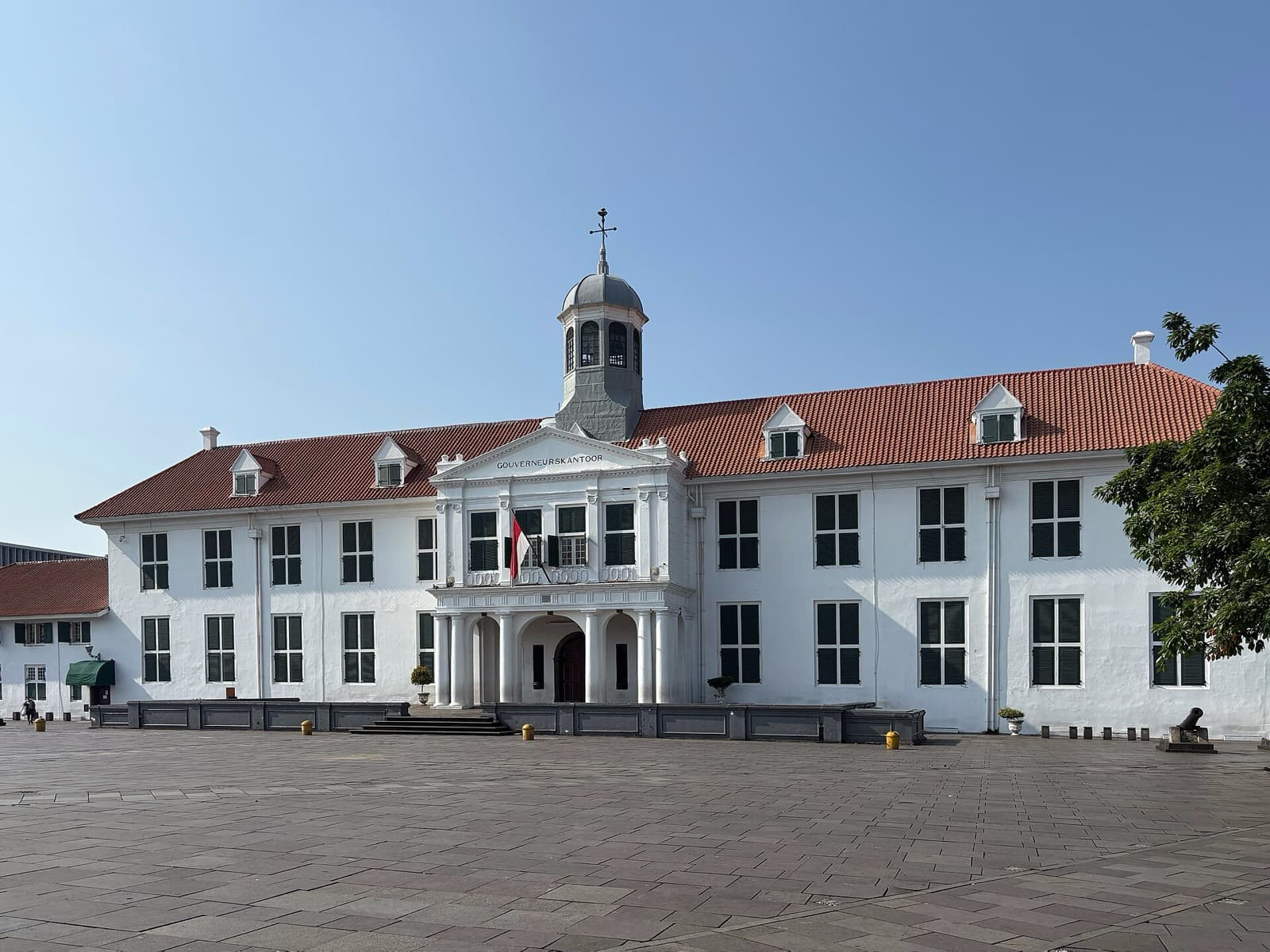
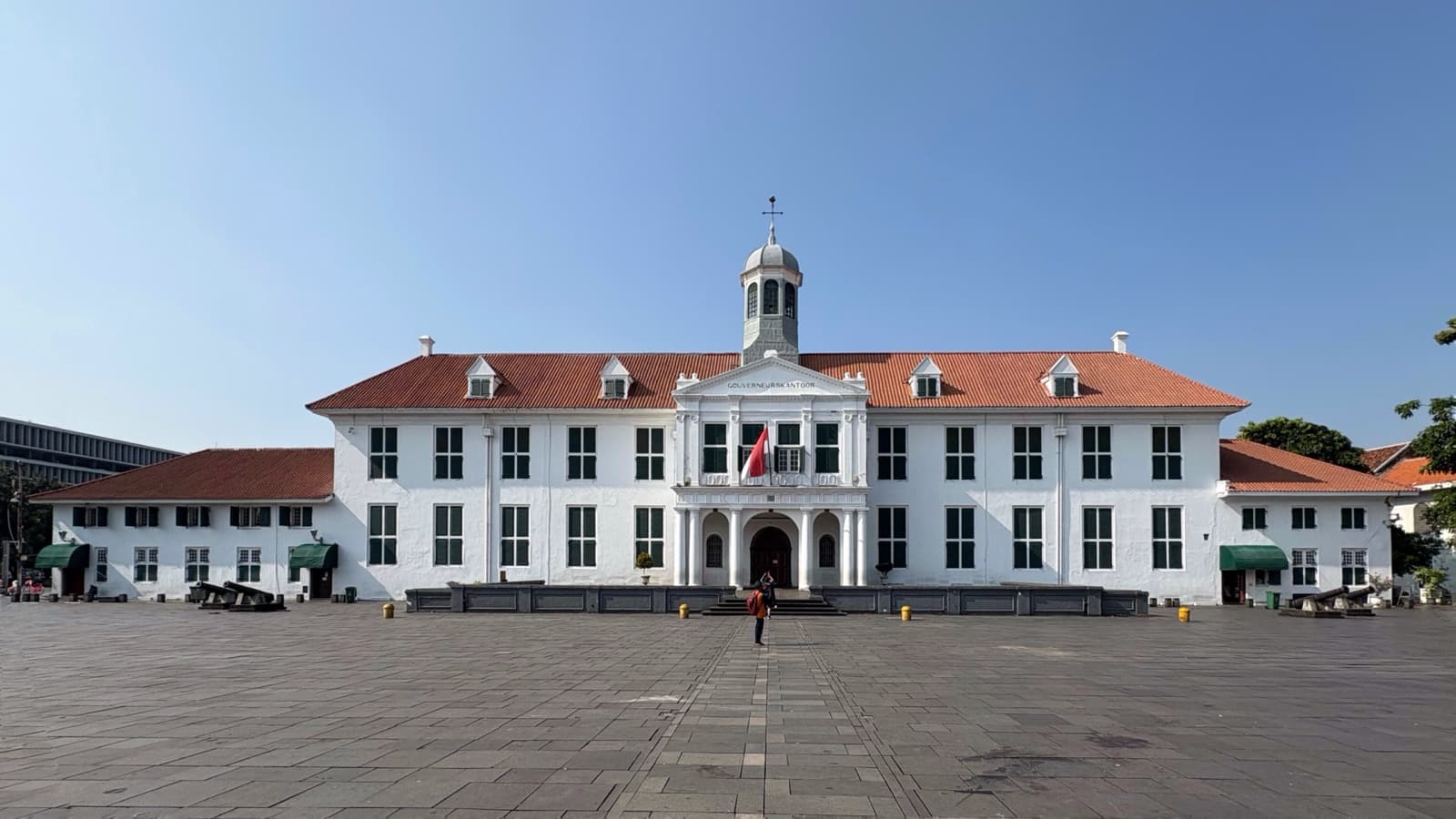
Kota Tua reads today like a pleasant pastel plaza, but Taman Fatahillah was the front office of a corporation that governed a spice empire. On its south side stands the old City Hall, the Stadhuis, built in seventeen ten on a site that had carried a city hall since sixteen twenty-seven. Governor General Abraham van Riebeeck inaugurated it as the administrative headquarters of the company, and from these rooms the company signed the orders that moved pepper and nutmeg across oceans. Beneath the front portico, the dungeons served as prison cells until eighteen forty-six. Prince Diponegoro, the Javanese leader of the Java War, was held here in eighteen thirty before being deported to Manado in North Sulawesi. The building is now the Jakarta History Museum, declared a museum on the thirtieth of March, nineteen seventy-four.
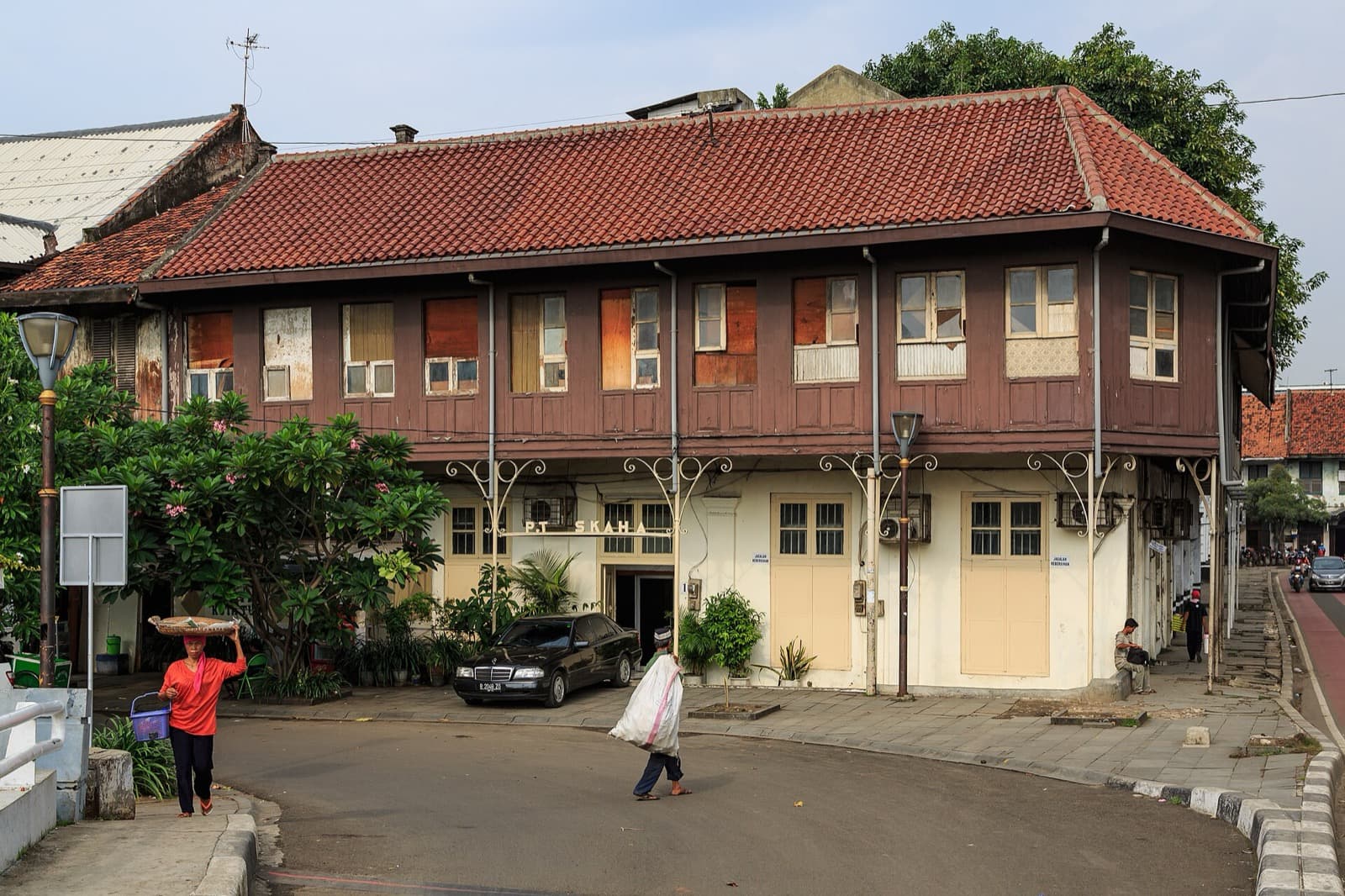
The power of the company ran on both ends of the square. On the east side, the building now holding the Museum of Fine Arts and Ceramics was the former Court of Justice, the highest court in the colony, completed on the twelfth of January, eighteen seventy. Authority was signed in the Stadhuis, judgment delivered in the courthouse, and punishment carried out in the cellars below. Between those poles sat the paperwork: the arcaded facades that framed the daily work of the bookkeepers, factors, and clerks. The building now called Cafe Batavia, the second oldest on the square, went up around eighteen oh five as offices and lodging for high-ranking company officers, its upper salon built of Javanese teak.
The founder is buried under a puppet museum
Hear a stop from this walk
Taman Fatahillah: The Front Office of an Empire
The turn in the walk comes at the Wayang Museum, a house of Javanese shadow-puppet theatre on the west side of the square. It stands on the site of the Old Dutch Church of sixteen forty, and its garden was the funeral site of Jan Pieterszoon Coen. Coen, the company governor-general who founded Batavia, is remembered as the Butcher of Banda for the massacre in the Banda Islands in sixteen twenty-one, in which about two thousand eight hundred inhabitants were killed and roughly one thousand seven hundred enslaved. Of some fifteen thousand original inhabitants, only about one thousand survived. He died in Batavia on the twenty-first of September, sixteen twenty-nine, and was buried here. A museum of imagination now stands over the grave of the man who razed one town to build this city. This is the human cost the pastel calm sits on top of, and the walk states it plainly.
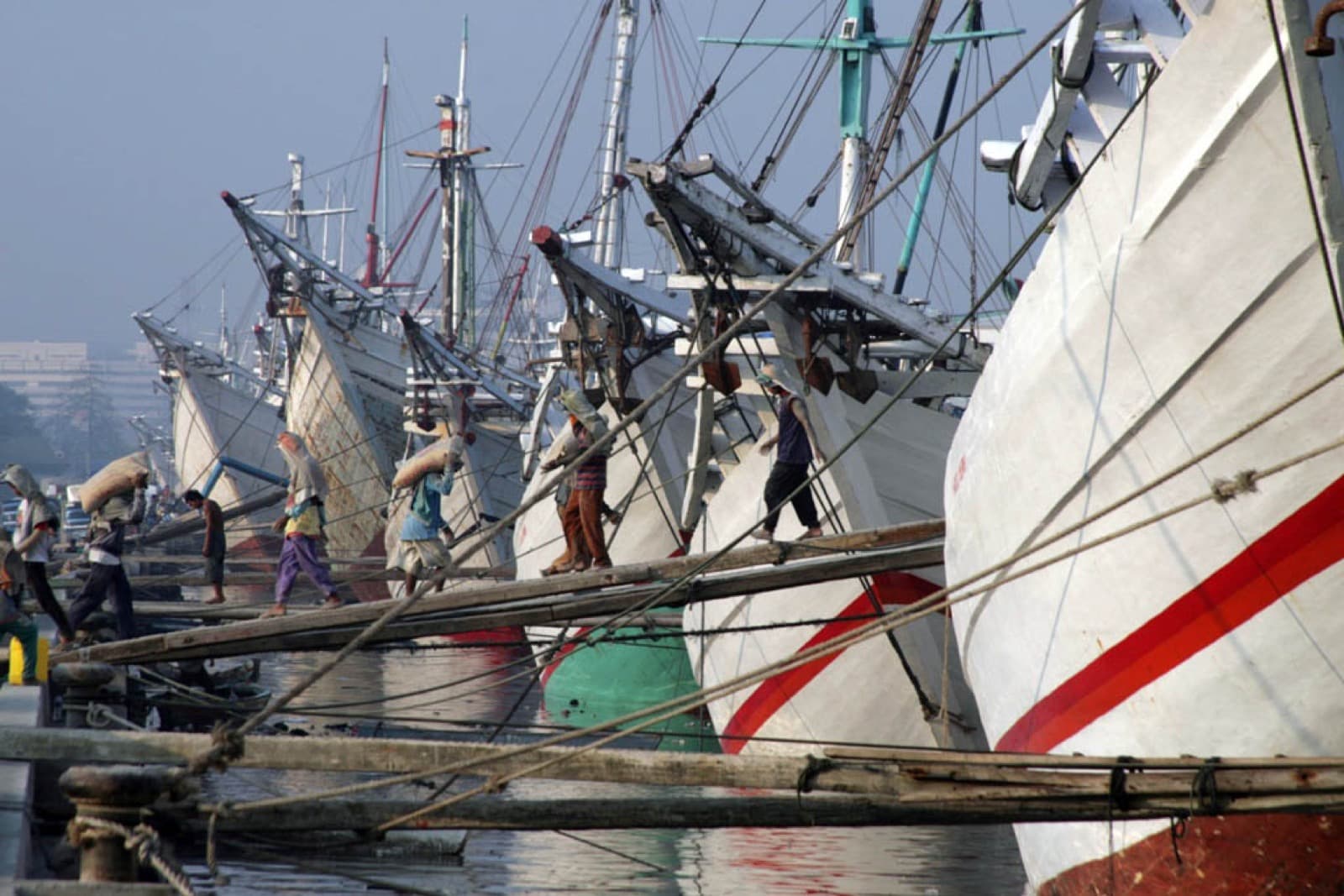
The old water-city surfaces a few steps north at the Kota Intan drawbridge, built in sixteen twenty-eight by the company. It is the oldest bridge in Indonesia and the only surviving seventeenth-century Dutch drawbridge, crossing the Kali Besar, a remnant of Batavia's canals. Batavia was planned as a city of waterways with Venice of the East ambitions, but most canals were later filled or reduced to sluggish remnants. The drawbridge now lifts nothing over water that no longer trades. The walk ends back at Sunda Kelapa, where the pinisi, traditional two-masted wooden schooners tied to the shipbuilding tradition of Makassar, are still loaded by hand, sack by sack. The trade at the root of the empire is right there on the quay, older than the company that came for it, and still working today.
A colony turned a parade ground into a republic
The southern half of the story flips the polarity. Merdeka Square is about one hundred hectares of open ground, over twice the size of Tiananmen Square and around eight times the size of the Place de la Concorde. It began as a buffalo field, became a military parade ground the Dutch named the Koningsplein, the King's Square, around eighteen eighteen, and displayed colonial troops to a distant crown. In nineteen forty-nine, President Sukarno renamed it Medan Merdeka, Independence Square. The ground did not change; its meaning was overturned.
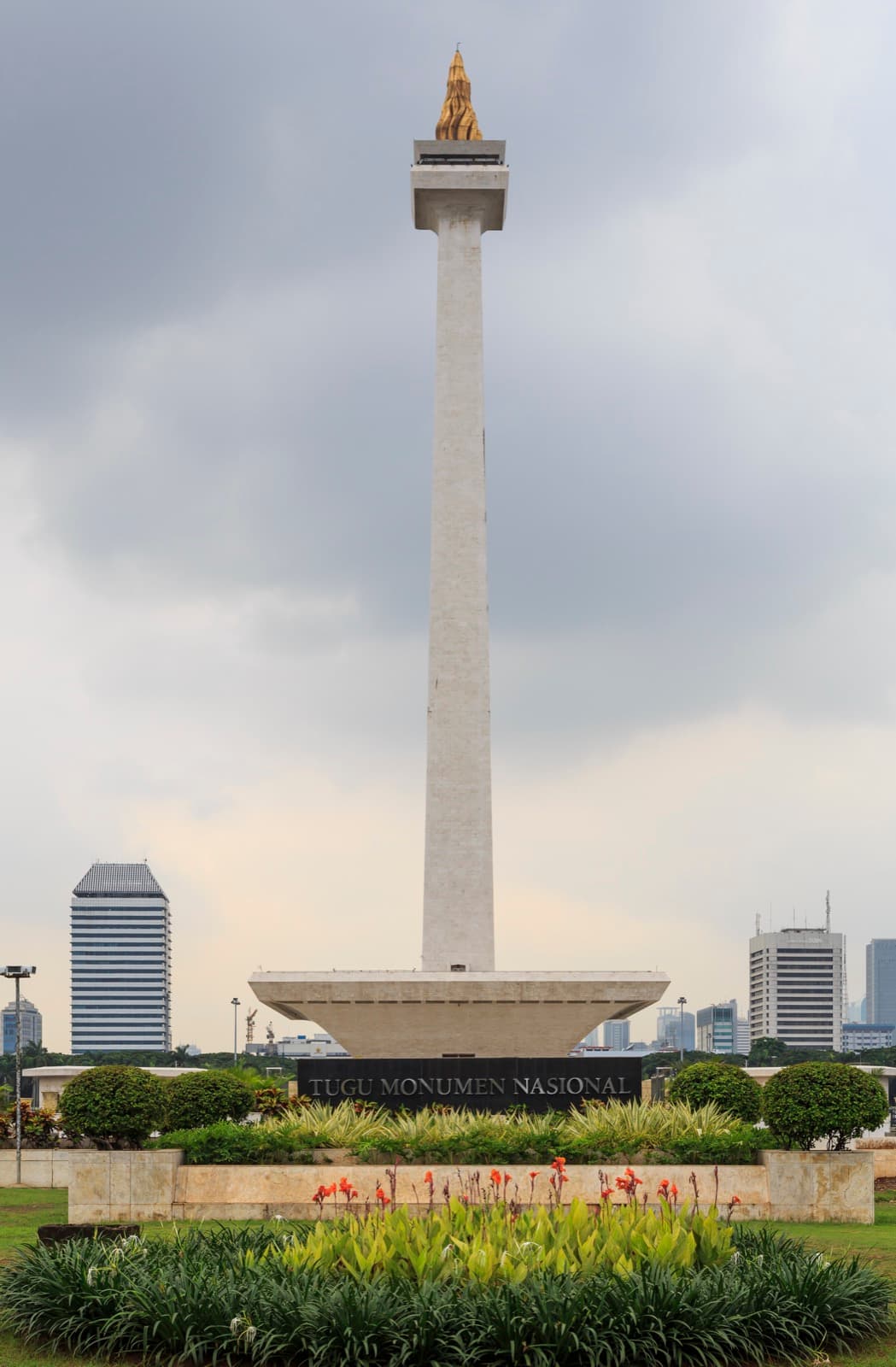
The republic answered the parade ground with a fire. At the centre rises the National Monument, or Monas, a one hundred and thirty-two metre obelisk begun on the seventeenth of August, nineteen sixty-one, under Sukarno and designed by Friedrich Silaban and Soedarsono. Its crowning flame is fourteen and a half tons of bronze, fourteen metres high, sheathed in gold, originally coated in thirty-five kilograms and raised to fifty for the nineteen ninety-five independence anniversary. On the north side, the same reversal is written at palace scale. Istana Merdeka was built between eighteen seventy-three and eighteen seventy-nine as the governor-general's residence, designed by Jacobus Bartholomeus Drossaers. On the twenty-eighth of December, nineteen forty-nine, after the transfer of sovereignty, it was renamed the Freedom Palace, with Sukarno as the first Indonesian president to live there. Same walls, same colonnade, opposite meaning.
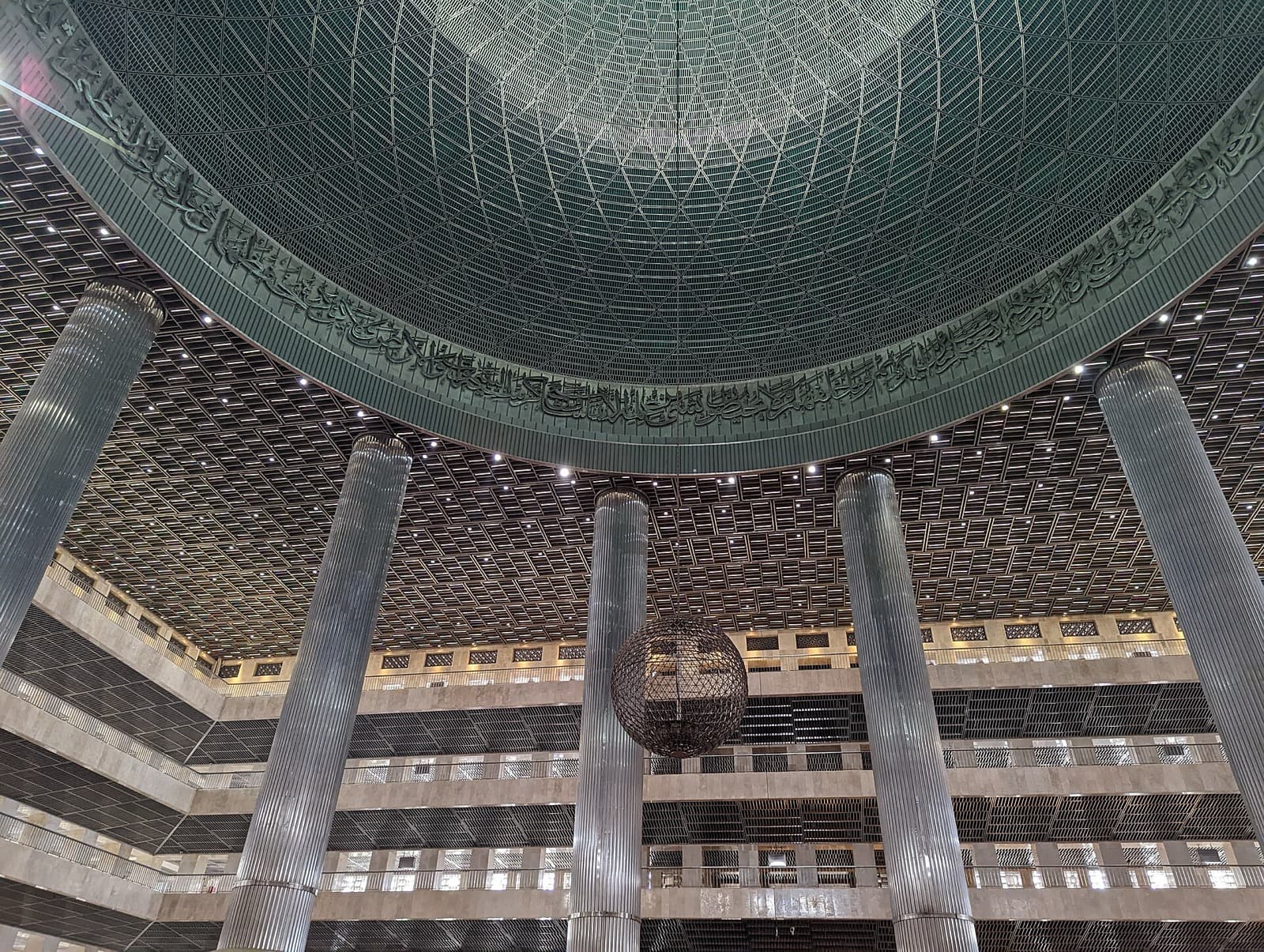
The square's boldest sentence stands just off its northeast corner, where a mosque and a cathedral were placed to face each other on purpose. The Istiqlal Mosque, the largest mosque in Southeast Asia with room for about two hundred thousand worshippers, takes its name from the Arabic for independence, its foundation stone laid by Sukarno on the twenty-fourth of August, nineteen sixty-one, and inaugurated on the twenty-second of February, nineteen seventy-eight. Its architect was Friedrich Silaban, the same man who shaped Monas, and Silaban was a Protestant Christian, the son of a Lutheran pastor. A Christian designed the region's largest mosque, and it was built to stand opposite the neo-Gothic Jakarta Cathedral, consecrated on the twenty-first of April, nineteen oh one. On Christmas and Easter, Christians use the mosque's parking lot, and the courtesy is returned to Muslims at Eid, a custom cited by the Vatican's own news service. The grand version is in the placement of the two buildings; the daily version is in the shared car parks.
Read north to south, Jakarta tells one continuous argument. The company built a town on a conquered harbour, ran a spice empire from a pastel square, and buried its founder under what is now a puppet museum. A colony inherited a parade ground and filled it, deliberately, with a flame, a president's house, and two faiths facing each other. Nothing about the stone had to change. Only the meaning did, and it changed completely. See both halves at your own pace and let the layers surface, starting from the full list of Jakarta walking tours.
Sources
- Jakarta History Museum (Museum Sejarah Jakarta), official museum information on the Stadhuis of Batavia and its dungeons.
- Museum Wayang, Jakarta, museum history and the former churchyard funeral site of Jan Pieterszoon Coen.
- National Monument (Monas) official monument records on dimensions, the gilded flame, and construction dates.
- Istiqlal Mosque official information on capacity, the architect Friedrich Silaban, and its placement opposite Jakarta Cathedral.
- Vatican News reporting on the shared parking custom between the Istiqlal Mosque and Jakarta Cathedral.
Frequently asked questions
- What was Batavia and why is it important to Jakarta?
- Batavia was the Dutch colonial city that became modern Jakarta. The Dutch East India Company governor-general Jan Pieterszoon Coen seized the port in sixteen nineteen and built Batavia over the ruins of the conquered town of Jayakarta. From the city hall in what is now Kota Tua, the company ran a spice-trading empire.
- Why is Merdeka Square historically significant?
- Merdeka Square is one of the largest city squares in the world at about one hundred hectares. The Dutch built it as the Koningsplein, a military parade ground, and in nineteen forty-nine President Sukarno renamed it Medan Merdeka, or Independence Square. The same ground built to display an empire became the stage of the new republic.
- Why do the Istiqlal Mosque and Jakarta Cathedral face each other?
- They were placed opposite each other on purpose to symbolise religious coexistence. The Istiqlal Mosque, whose name means independence in Arabic, was designed by Friedrich Silaban, a Protestant Christian. On Christmas and Easter, Christians use the mosque's parking lot, and Muslims use the cathedral's parking at Eid, a custom cited by Vatican News.
- What is Sunda Kelapa and can you still visit it?
- Sunda Kelapa is Jakarta's old spice harbour, the main port of the Sunda Kingdom from the thirteenth to the sixteenth centuries. It is still a working port today, handling pinisi, traditional two-masted wooden schooners loaded largely by hand. It sits about a kilometre north of the Kota Tua square and forms the final stop of the Old Town walk.
- Who was Jan Pieterszoon Coen?
- Coen was the Dutch East India Company governor-general who founded Batavia in sixteen nineteen. He is remembered as the Butcher of Banda for the sixteen twenty-one massacre in the Banda Islands, in which about two thousand eight hundred inhabitants were killed and roughly one thousand seven hundred enslaved. He died in Batavia in sixteen twenty-nine and was buried on the site now occupied by the Wayang Museum.
Ready to experience it?
Kota Tua: The Company Town That Ran an Empire
90 min · 3.4 km · easy
More from Jakarta
Explore more at your own pace.
Jakarta Travel Guide: Days, Transport, Weather, Safety, Budget
One Day in Jakarta: A Walkable Morning-to-Evening Itinerary
The Istiqlal Mosque: A Mosque Named Freedom, Designed by a Christian
The Stadhuis of Batavia: Why Jakarta's Prettiest Square Was a Corporation's Head Office
Monas: Why Indonesia Planted a Golden Flame at the Center of a Colonial Parade Ground