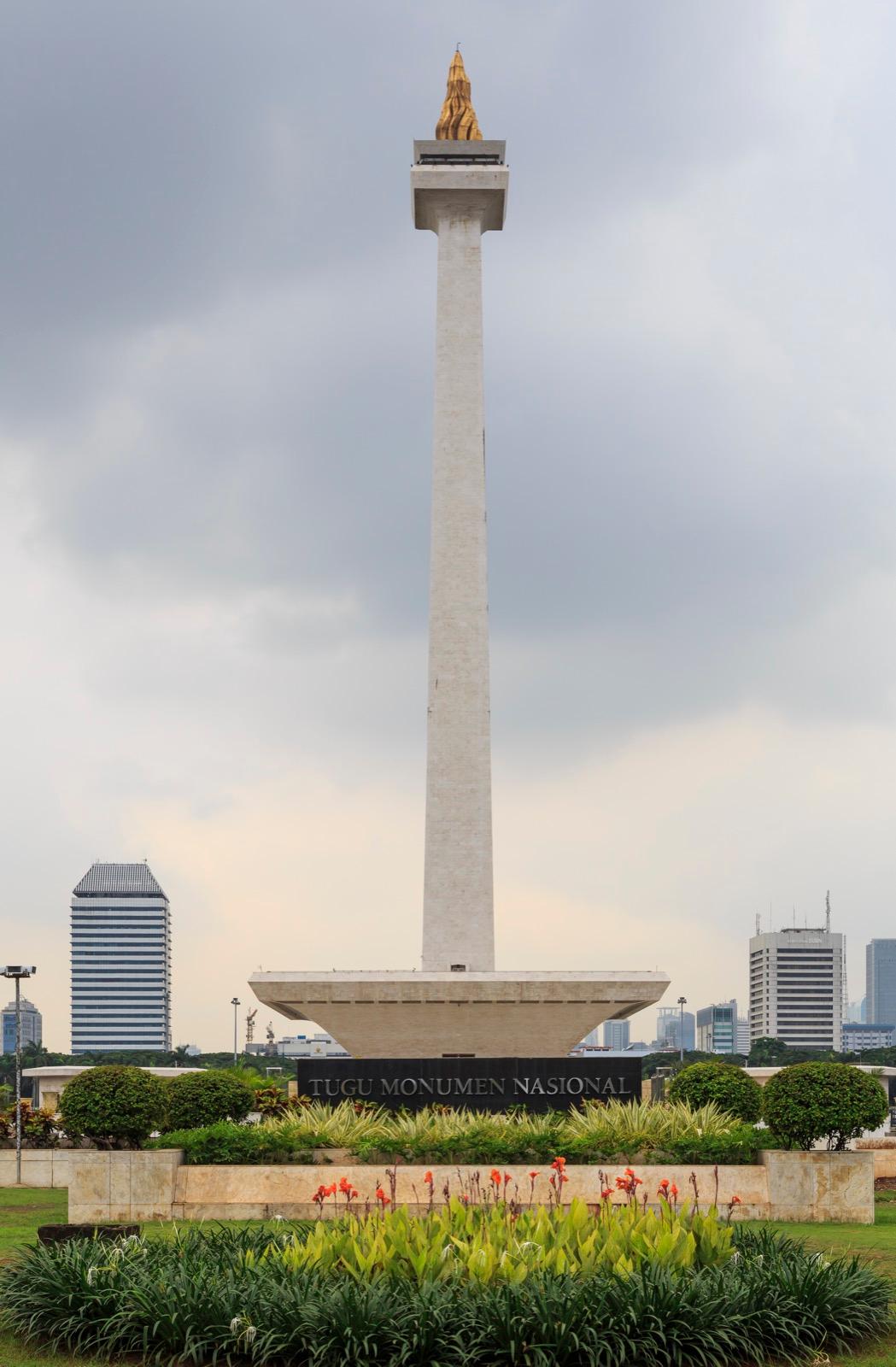
Cross one of the world's largest city squares, the old Dutch parade ground that a colony turned into the stage for a republic, from a gilded independence flame to a mosque and a cathedral built to face each other on purpose.
Start · The Colonial Edge: The Old Koningsplein
DirectionsStops
- 1
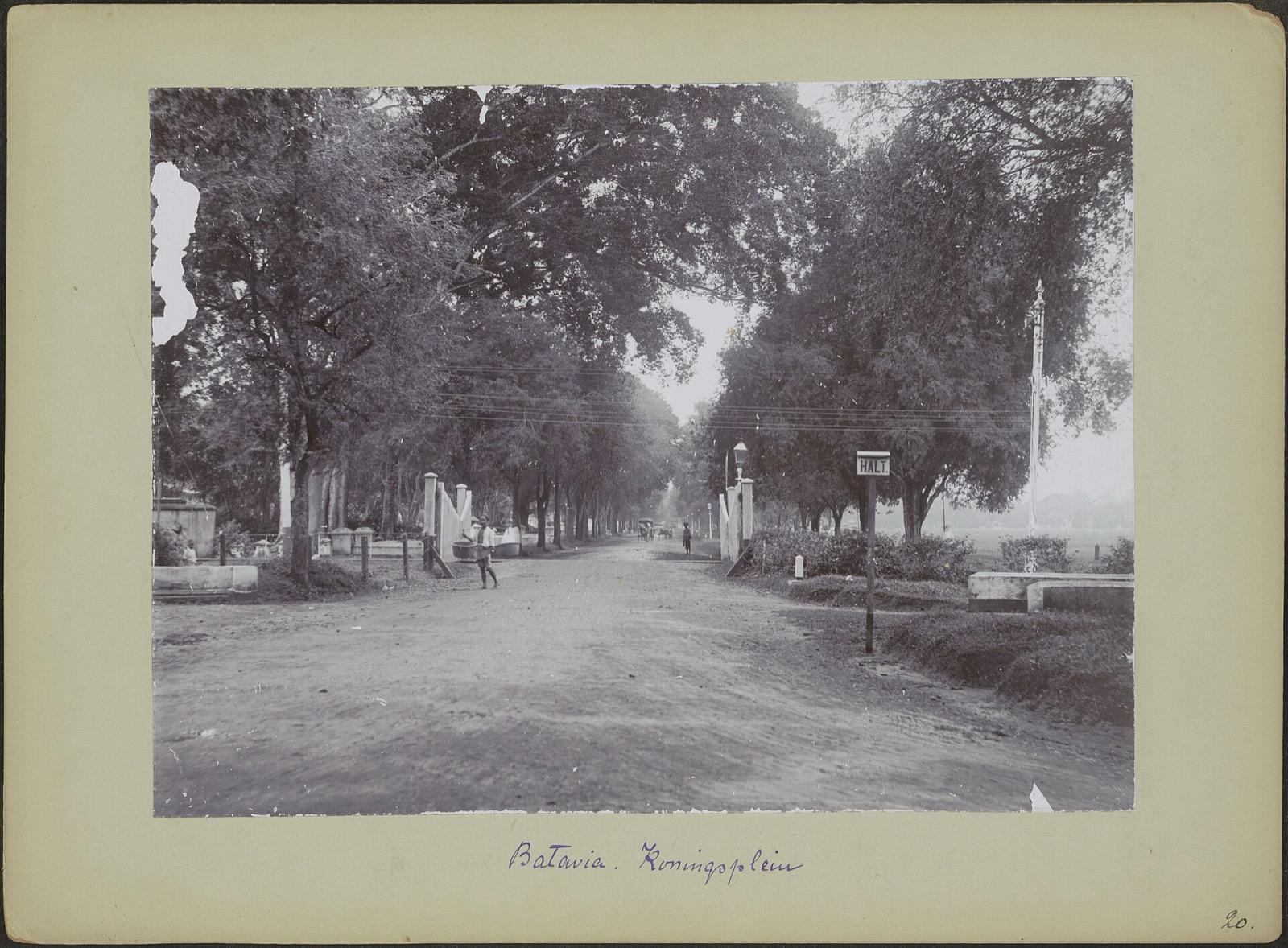
The Colonial Edge: The Old Koningsplein
The southern edge of the square, the colonial parade ground that would become a republic's stage.
- 2
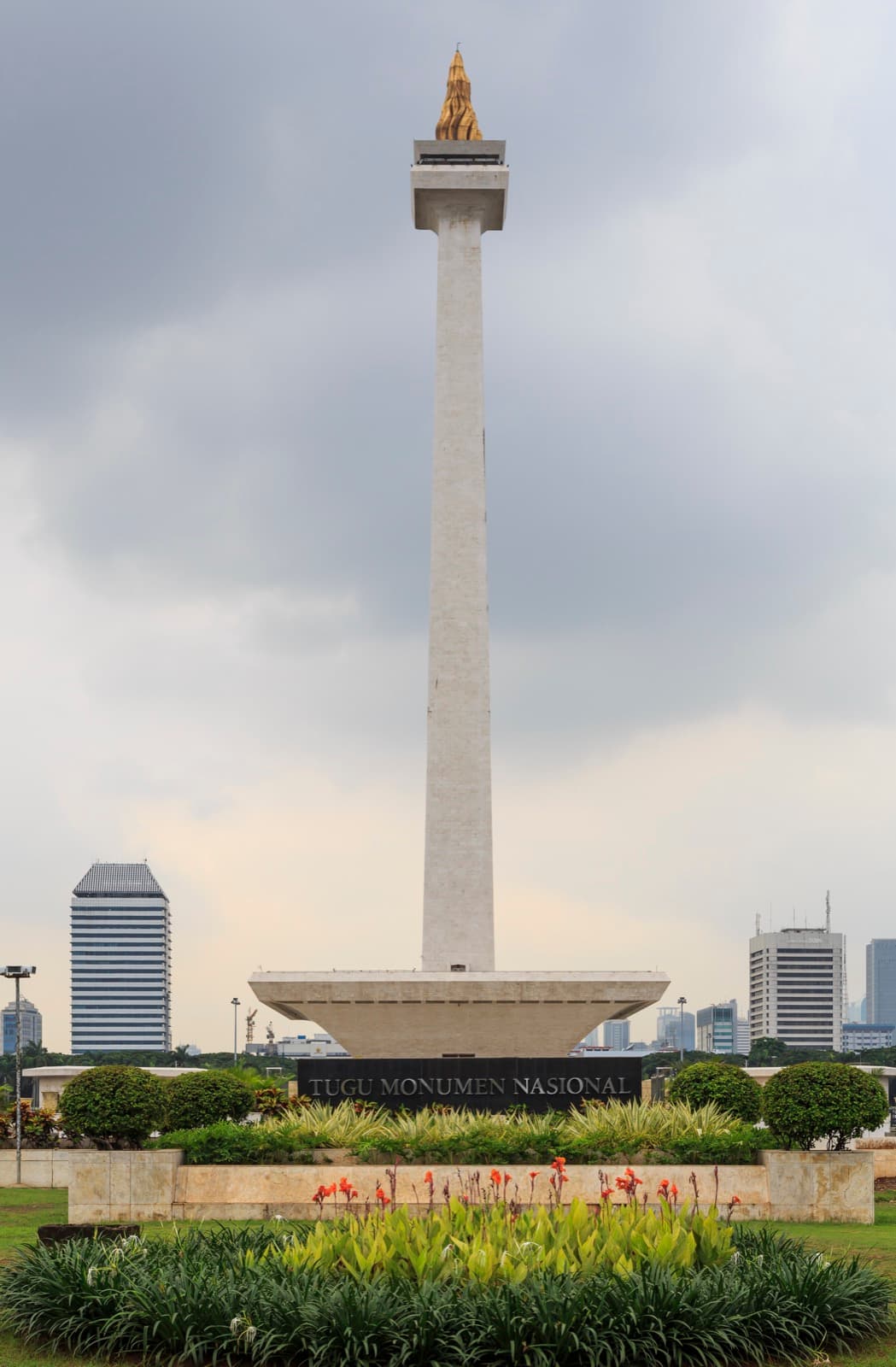
Monas: The Gilded Flame at the Centre
The one hundred and thirty-two metre National Monument, crowned by a gold-sheathed flame at the square's heart.
- 3
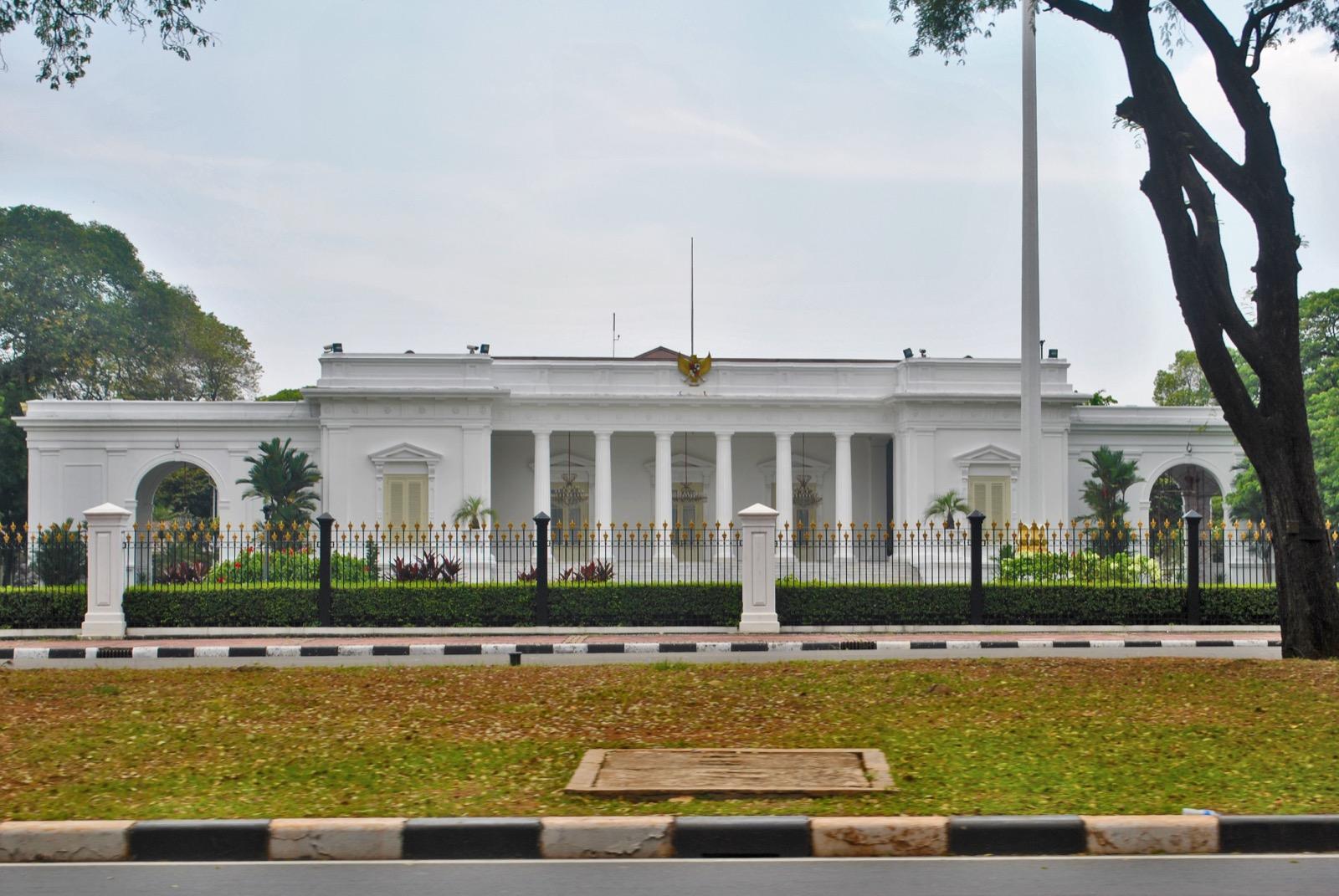
Istana Merdeka: The Mansion That Became the Republic's House
The former Dutch governor-general's residence on the north side, renamed the Merdeka Palace after the transfer of sovereignty.
- 4
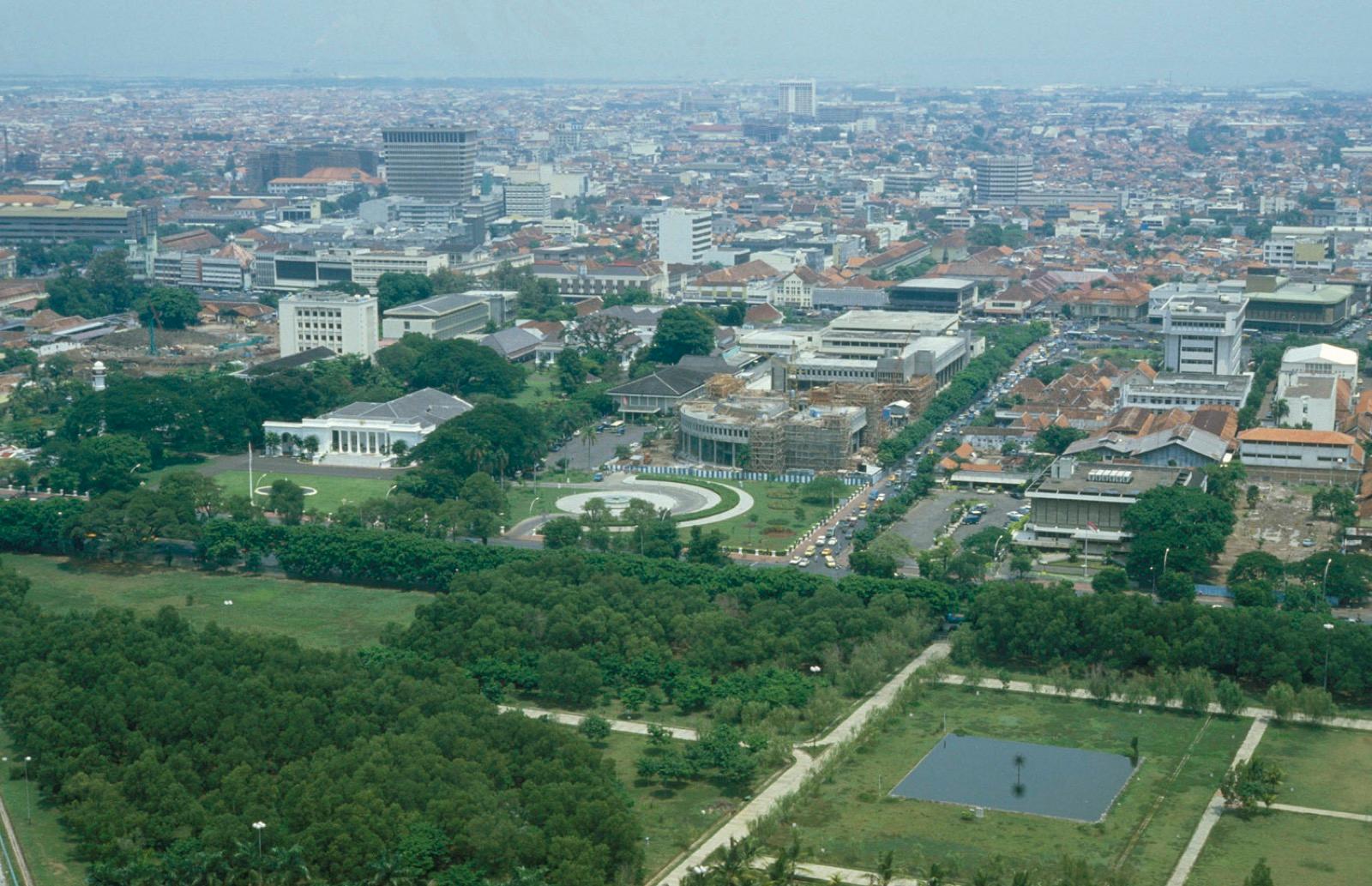
The Northeast Crossing
The long open leg northeast across the square, the bridge from the monument core toward the meeting of two faiths.
- 5
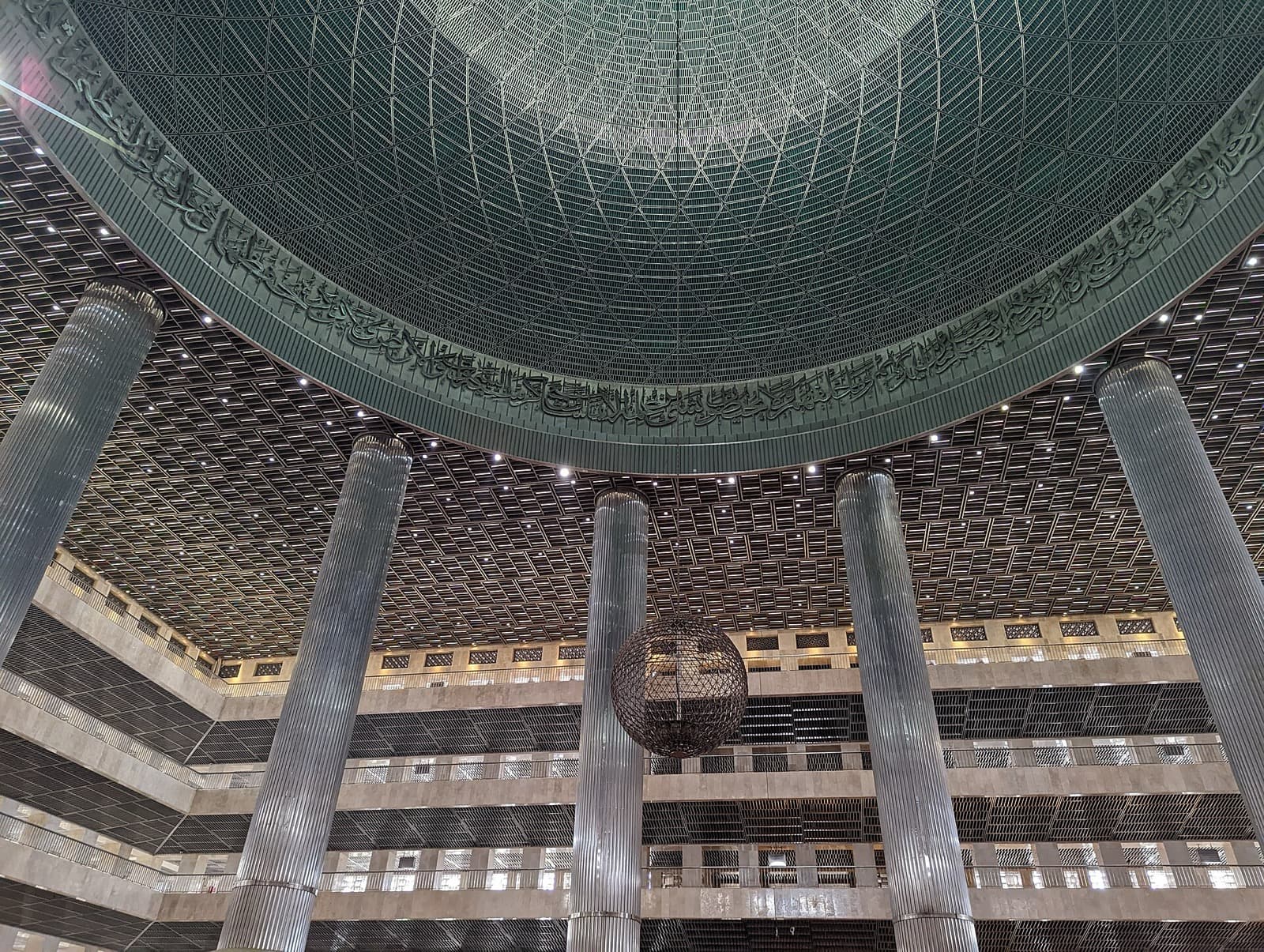
The Istiqlal Mosque: The Mosque Named Freedom
The largest mosque in Southeast Asia, named for independence and placed deliberately to face the Jakarta Cathedral.
- 6
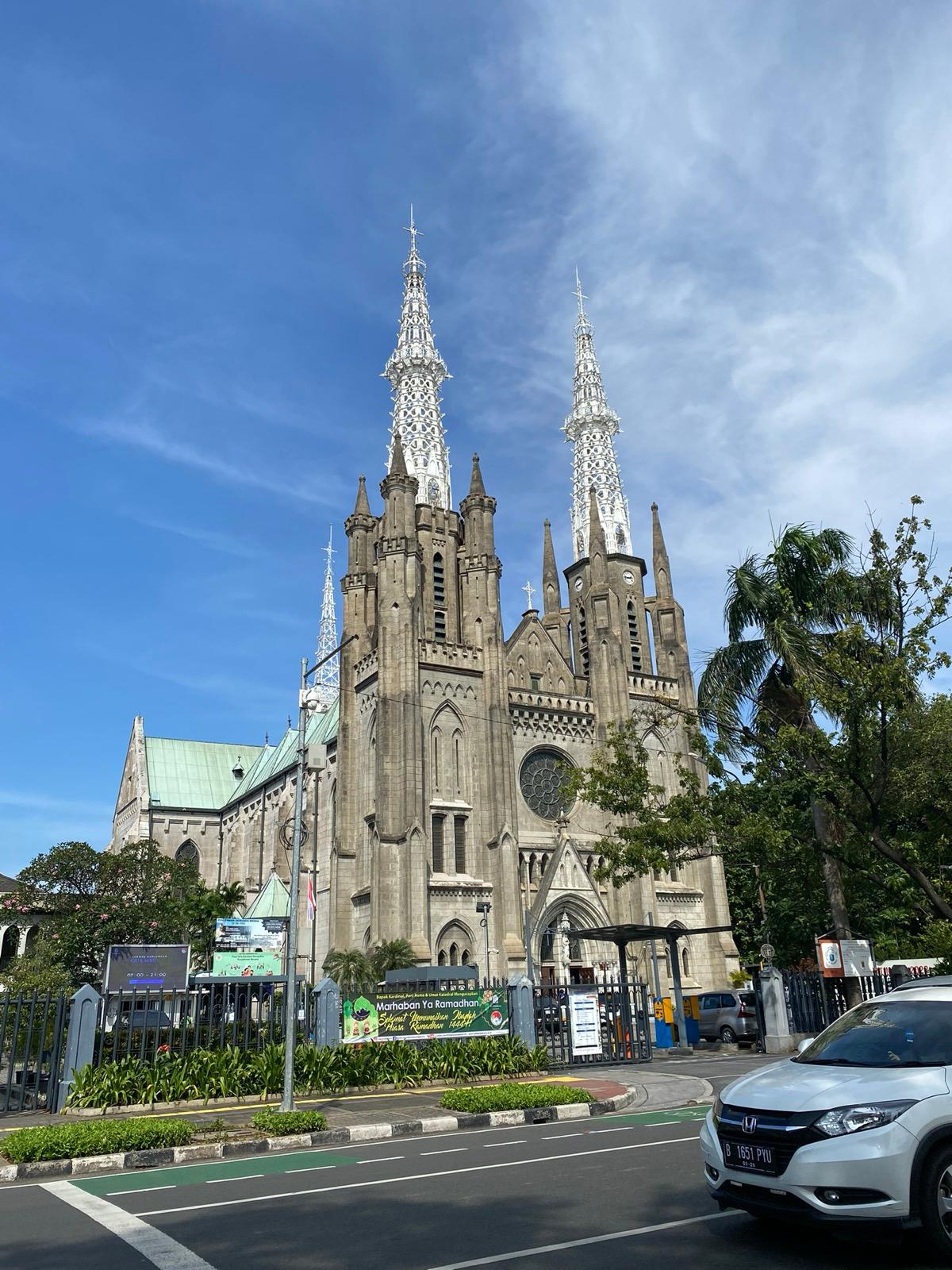
The Jakarta Cathedral: The Church That Faces the Mosque
A neo-Gothic Catholic cathedral built directly across from the mosque, the two houses of worship lending each other their car parks.
- 7
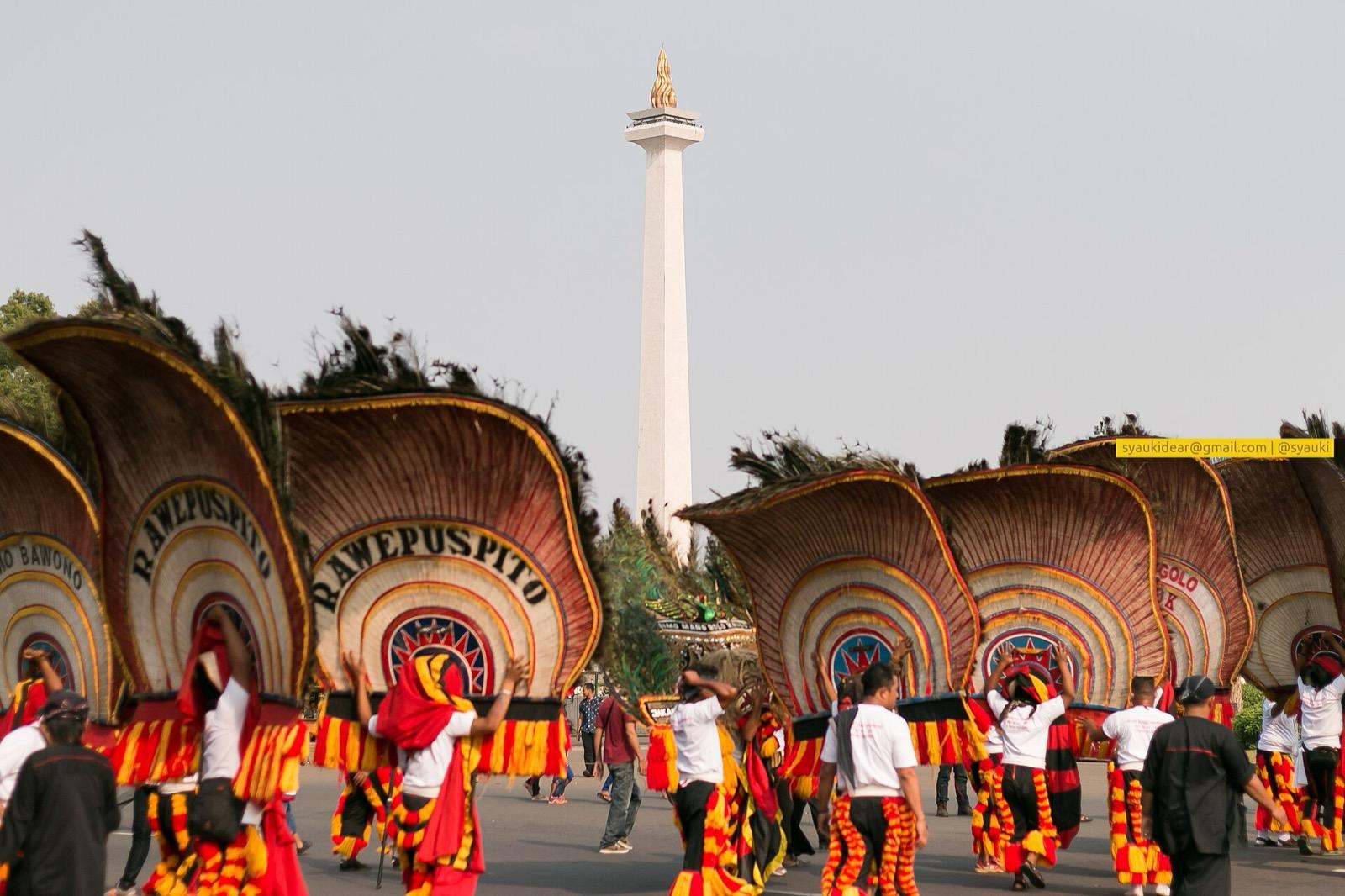
The Return to the Flame
The closing stop back within sight of the National Monument, tying colony, republic and two faiths onto one square called freedom.
Details
Best Time to Visit
Come early in the morning, ideally between seven and nine, when the tropical heat is still gentle and the light on the National Monument is soft. Merdeka Square is enormous and almost entirely open, so the middle of the day brings hard sun and little shade. Weekday mornings are calmer than weekends, when families flood the monument grounds. If you want to see the shared parking custom at the Istiqlal Mosque and the Jakarta Cathedral in action, the days around major Muslim and Christian holy days are remarkable, though also very crowded. Note that the mosque limits visitor hours around the five daily prayers and especially the Friday midday prayer, so plan the mosque leg outside those windows.
Pro Tips
- •Reaching the National Monument grounds is on foot, since the inner ring is closed to traffic. Approach from the square's edge and give yourself time to cross the open ground.
- •At the Istiqlal Mosque, non-Muslim visitors are welcomed through a separate visitor entrance. Register at the information desk for a free guided tour of about twenty minutes, dress modestly covering shoulders and knees, expect to remove your shoes, and note that women may be asked to wear a headscarf. Robes are provided free at the entrance.
- •The mosque may close to visitors during the five daily prayers and especially the Friday midday Jumah prayer, so time your visit between prayers.
- •The Jakarta Cathedral is an active Catholic church directly across the street from the mosque. Keep your voice low if a service is underway, and treat it as a place of worship rather than a photo backdrop.
- •Water and small rupiah notes are worth carrying. The square has few facilities out on the open ground, and small cash smooths entry to the monument museum and observation deck.
- •Pair the two houses of worship deliberately. Standing between the mosque named for independence and the cathedral built to face it is the clearest reading of what this square is trying to say.
Safety & Precautions
- •The square is vast and mostly shadeless. The long crossing legs, especially the northeast walk toward the mosque, sit in strong sun, so wear a hat, use sunscreen, and carry water to avoid heat exhaustion.
- •Jakarta's weather turns fast. A clear morning can give way to a heavy tropical downpour by afternoon, so pack a compact rain layer and be ready to shelter.
- •Watch traffic and your belongings around the square's busy edges and the crowded mosque and cathedral approach. Keep bags closed and phones secure in dense crowds.
- •The Merdeka Palace is an active presidential residence, viewed only from outside the fence. Do not attempt to enter or photograph security details, and follow any posted restrictions.
Travel advisory: Exercise Increased Caution (Level 2).
Gallery
Related Reading
Go deeper on what you'll see, hear, and walk through.
Overview
Best Self-Guided Walking Tours in Jakarta (2026)
3 min
Overview
Jakarta Travel Guide: Days, Transport, Weather, Safety, Budget
7 min
Overview
One Day in Jakarta: A Walkable Morning-to-Evening Itinerary
7 min
Thematic
Best History Walking Tours in Jakarta (2026)
2 min
Thematic
Company Town and Square of Freedom: Reading Jakarta on Foot
8 min
Companion
The Istiqlal Mosque: A Mosque Named Freedom, Designed by a Christian
7 min
Deep dive
Monas: Why Indonesia Planted a Golden Flame at the Center of a Colonial Parade Ground
6 min
Read
What to Eat in Jakarta: Betawi Dishes and Where to Order Them
9 min
Read the walk
The full story of Merdeka Square: From Colony to Republic, in words. Prefer to listen? Play it narrated, from home or on location.
Introduction
Merdeka means freedom, and this square in Jakarta, Indonesia, is one of the largest city squares in the world, about one hundred hectares of open ground. It was built by the Dutch as the Koningsplein, the King's Square, a place to parade colonial troops. In nineteen forty-nine, President Sukarno renamed it Medan Merdeka, Independence Square, and the ground that was made to display an empire became the stage on which that empire was refused. This tour is a walk of seven stops, roughly two hours and about six and a half kilometres, though you set your own pace, with no group and no schedule pulling you along. Because the square is so large, the route is a deliberate crossing. It begins at the colonial edge, moves to the gilded flame at the centre, then to the mansion that became the president's house, before heading northeast to the square's boldest statement: a mosque named for freedom and a Catholic cathedral built to stand face to face with it, two rival faiths choosing to share a street. The final stop returns you within sight of the flame. Every stop asks you to see two things at once in the same place: the parade ground and the republic, the governor's residence and the president's house. The ground is open and the sun is strong, so a hat and water are worth carrying. When you arrive at the southern edge of the square, begin with stop one.
1. The Colonial Edge: The Old Koningsplein
You are standing at the southern edge of a field that began as something ordinary and grew into something enormous. Before the Dutch shaped it, this was open ground, a buffalo field. Under colonial rule it became a military exercise and parade ground, and around eighteen eighteen it was named the Koningsplein, the King's Square. This was the heart of Batavia, the capital of the Dutch East Indies, a city founded in sixteen nineteen by the East India Company governor-general Jan Pieterszoon Coen on the conquered town of Jayakarta. It is worth saying plainly that Batavia ran a trade empire of great wealth and real violence. This square was ringed by the buildings of that colonial government, and colonial troops paraded here to display the power of a distant crown. The scale is hard to take in. The square covers about one hundred hectares, roughly a square kilometre, which makes it one of the largest city squares in the world, over twice the size of Tiananmen Square in Beijing and around eight times the size of the Place de la Concorde in Paris. The colonial administration later laid athletic tracks and sports grounds across it. Then, in nineteen forty-nine, President Sukarno renamed it Medan Merdeka, Independence Square. The ground did not change. Its meaning was overturned. Hold that idea as you cross, because it is the whole argument of this walk. The parade ground built to show off an empire became the ground on which that empire was refused, and everything ahead of you, the flame, the palace, the mosque and the cathedral, sits on this one square now called freedom.
2. Monas: The Gilded Flame at the Centre
At the centre of the square rises the National Monument, known as Monas, a single obelisk of one hundred and thirty-two metres. Construction began on the seventeenth of August in nineteen sixty-one, directed by President Sukarno, with the architects Friedrich Silaban and Soedarsono. It opened to the public on the twelfth of July in nineteen seventy-five, and the full complex was completed by nineteen seventy-six. Because the inner ring is closed to traffic, you reach it on foot, which is fitting for a monument to a people's struggle. Look up to the crown. That flame is not a metaphor made of stone. It is fourteen and a half tons of bronze, fourteen metres high, sheathed in gold. It was originally coated in thirty-five kilograms of gold, and for the fiftieth anniversary of independence in nineteen ninety-five that gold was increased to fifty kilograms. The monument's records describe it as the burning spirit of struggle of the Indonesian people, held up over the square so it can be seen from far across the city. There is an observation deck at one hundred and fifteen metres, with the flame tip another seventeen metres above it, and a small ticket lets you climb to the deck and the museum below. Whether or not you go up, stand for a moment with the idea of it. This is the exact centre of a colonial parade ground, and a young republic chose to plant a gilded flame here, at the middle of the field where an empire once marched. The gesture is deliberate. The empire displayed its troops on this ground. The republic answered with a fire that does not go out.
3. Istana Merdeka: The Mansion That Became the Republic's House
On the north side of the square stands Istana Merdeka, the Merdeka Palace, viewed from outside the fence because it is an active presidential residence. The building in front of you was raised between eighteen seventy-three and eighteen seventy-nine as the official home of the governor-general of the Dutch East Indies. It was designed in a Neo-Palladian style by the architect Jacobus Bartholomeus Drossaers, and for decades it was where the most powerful colonial official in the islands lived and ruled. The first governor-general to reside here arrived in the eighteen seventies, and the last Dutch governor-general occupied it into the nineteen forties. Then came the reversal that this whole square records. On the twenty-eighth of December in nineteen forty-nine, after the transfer of sovereignty, the mansion was renamed Istana Merdeka, the Freedom Palace. President Sukarno had arrived the day before, on the twenty-seventh of December, as the first Indonesian president to live here. At the ceremony of transfer, the palace records describe the Dutch flag being lowered and the Indonesian flag raised while crowds outside cheered the single word Merdeka, freedom. Consider what you are looking at. This is the literal transfer of power made into architecture. The same walls, the same rooms, the same colonnade that housed a colonial governor now house an elected president of a republic. Nothing about the stone changed. Everything about its meaning did. It is the palace-scale version of the whole square: the governor's mansion that became the president's house, on the ground built to display an empire and now called freedom.
4. The Northeast Crossing
This is the crossing, the long open leg of the walk, and it is worth doing slowly. You are leaving the monument core behind and heading northeast, out of the parade ground and toward the square's most deliberate statement about the new nation. Ahead, just beyond the northeast…
Full narration for this stop unlocks with the tour.
5. The Istiqlal Mosque: The Mosque Named Freedom
In front of you is the Istiqlal Mosque, the largest mosque in Southeast Asia, with room for about two hundred thousand worshippers. The name matters to this walk. Istiqlal means Independence in Arabic, and the mosque was built to commemorate the independence of Indonesia. Its…
Full narration for this stop unlocks with the tour.
6. The Jakarta Cathedral: The Church That Faces the Mosque
Directly across the street from the mosque stands the Jakarta Cathedral, officially the Church of Our Lady of the Assumption, an active Catholic church you should treat with the same quiet respect as the mosque. This neo-Gothic building was consecrated on the twenty-first of…
Full narration for this stop unlocks with the tour.
7. The Return to the Flame
For the last stop, you have circled back into the square, within sight of the gilded flame of the National Monument, and this is the place to gather the whole walk into one thought. Everything you have seen sits on a single square, and every piece of it was overturned in…
Full narration for this stop unlocks with the tour.