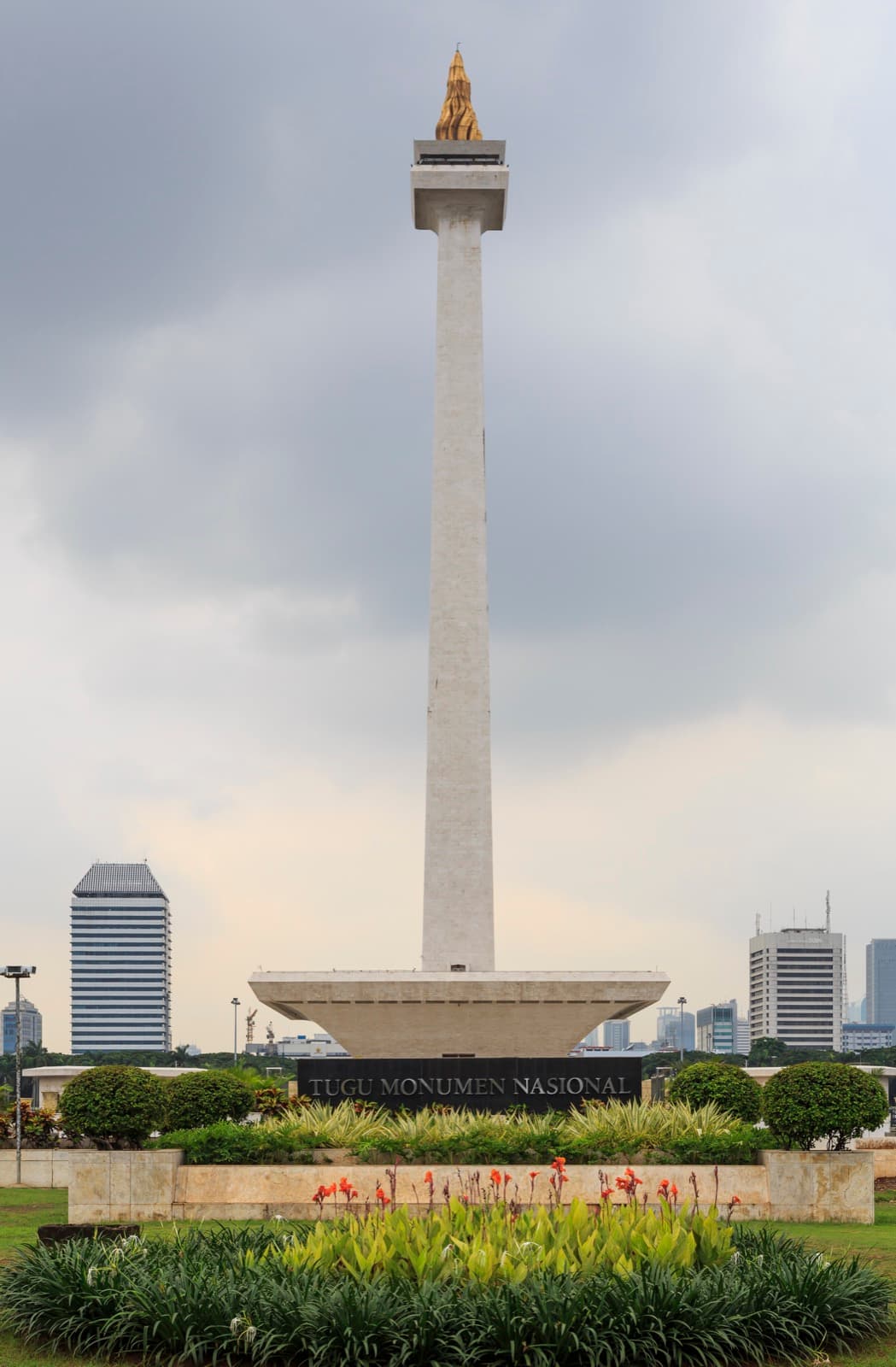
Monas, the 132-metre National Monument at the center of Merdeka Square, was planted on the exact spot where Dutch colonial troops once paraded, and its gold-sheathed flame was raised there so a young republic could answer an empire with a fire that does not go out. To understand the monument, you have to understand where it stands. The obelisk does not sit on a neutral lawn. It sits at the middle of a hundred hectares of open ground that the Dutch built as the Koningsplein, the King's Square, a place to display colonial power. Standing at the base and looking up at the flame is the single most important thing a visitor can do here, because the whole meaning of the monument is the argument between the ground and the fire.
An obelisk with a job
The numbers give you the frame. Monas is a single obelisk rising 132 metres. Construction began on the 17th of August 1961, directed by President Sukarno, with the architects Friedrich Silaban and Soedarsono. It opened to the public on the 12th of July 1975. That fourteen-year span between groundbreaking and public opening is worth holding onto: this was not a quick civic ornament but a long, deliberate project carried across the early decades of the republic.
The date of the groundbreaking is itself a statement. The 17th of August is Indonesia's Independence Day, the anniversary of the 1945 proclamation. Sukarno did not lay the first stone on a convenient day. He laid it on the day the nation counts as its birthday, at the center of the field the Dutch had built to impress their subjects.
The flame is not a metaphor
Hear a stop from this walk
The Jakarta Cathedral: The Church That Faces the Mosque
Look up to the crown, and you are looking at the argument made literal. The flame at the top is not a shape carved from stone to suggest fire. It is a real object: fourteen and a half tons of bronze, fourteen metres high, sheathed in gold. It was originally coated in thirty-five kilograms of gold. For the fiftieth anniversary of independence in 1995, that gold was increased to fifty kilograms.
The monument's own records describe the flame as the burning spirit of struggle of the Indonesian people, held up over the square so it can be seen from far across the city. That phrase is the key to reading the design. An obelisk is an old form, borrowed by many nations to say "we endure." What makes Monas specific is the object on top. A parade ground exists to show off soldiers who march and then disperse. The republic answered that temporary display with something permanent: a fire, in gold, that stays lit whether anyone is watching or not.
Why the center matters
The placement is the point, and it is easy to miss if you treat Monas as a photo stop. Because the inner ring of the square is closed to traffic, you reach the monument on foot. That short walk across open ground is part of the experience, and it is fitting for a monument to a people's struggle that you have to cross the old parade ground to reach it.
Consider what that crossing means. This is the exact center of a colonial parade ground. An empire once used this ground to march its troops and demonstrate the power of a distant crown. A young republic chose that precise spot, the geometric heart of the empire's stage, and planted a gilded flame there. The gesture is deliberate. Nothing about the Dutch had to be erased for the meaning to change. The republic simply occupied the center and filled it with its own symbol. The empire displayed its troops on this ground; the republic answered with a fire in the middle of the field where those troops once marched.
Going up, or not
There is a practical reward for the climb. An observation deck sits at 115 metres, with the flame tip another seventeen metres above it. A small rupiah ticket lets you reach the deck and the museum housed below, where the story of the independence struggle is laid out in dioramas. From the deck you get the scale of Merdeka Square in a single view, and you understand how genuinely vast a hundred hectares is when it opens out beneath you.
But the monument works whether or not you go up. The essential reading happens at ground level, at the base, looking at the flame against the sky. If you have limited time or the queue is long, you lose very little by staying below. The deck gives you the view; the base gives you the argument.
Reading Monas standing in front of it
Here is the one thing to understand while you are there. Monas is not a monument to a battle or a king. It is a monument to a reversal of meaning. The ground it stands on was made by the Dutch to display an empire, and in 1949 President Sukarno renamed that ground Medan Merdeka, Independence Square. The stone of the square did not change. Its meaning was overturned. Monas is the vertical version of that same reversal: a permanent flame set at the center of the colonial stage, saying that the field built to impress now belongs to the people who were once meant to be impressed.
That is why the design chose fire rather than a statue of a leader or a general on a horse. A flame has no face and takes no side within the nation. It stands for struggle itself, and it is held up high enough to be seen across the city, so that the whole of Jakarta lives within sight of the burning spirit at the center of the square called freedom.
Monas is the second stop on a walk that reads Merdeka Square as a single continuous argument, from the colonial edge to the gilded flame, on to the mansion that became the president's house, and northeast to a mosque and a cathedral built to face each other on purpose. If you want the flame in its full context, walk the whole square. Browse more Jakarta walking tours or start planning from the Jakarta city page, where the Merdeka Square tour begins at the southern edge and delivers you to the base of the monument on foot.
Sources
- National Monument (Indonesia), Wikipedia. Height, construction dates, architects, flame dimensions and gold weights, observation deck details.
- Merdeka Square, Jakarta, Wikipedia. The Koningsplein origin, the 1949 renaming to Medan Merdeka, and the square's hundred-hectare scale.
- Britannica, biography of Jan Pieterszoon Coen. Context on the founding of Batavia in 1619, the colonial capital whose parade ground became the site of the monument.
- Roamer tour transcript, "Merdeka Square: From Colony to Republic," fact-audited primary source for the monument's dimensions, dates and symbolism.
Ready to experience it?
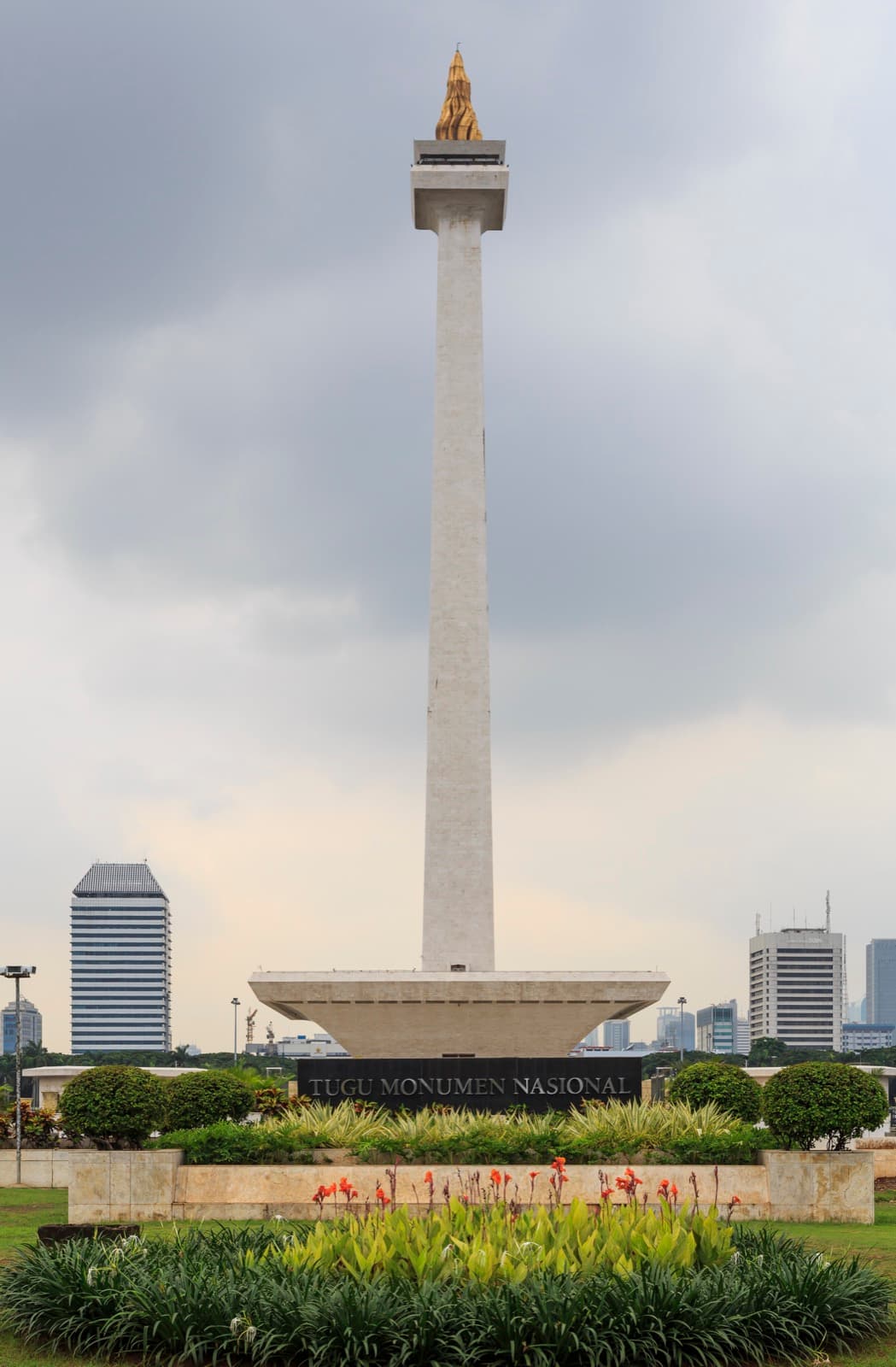
Merdeka Square: From Colony to Republic
125 min · 6.4 km · moderate
More from Jakarta
Explore more at your own pace.
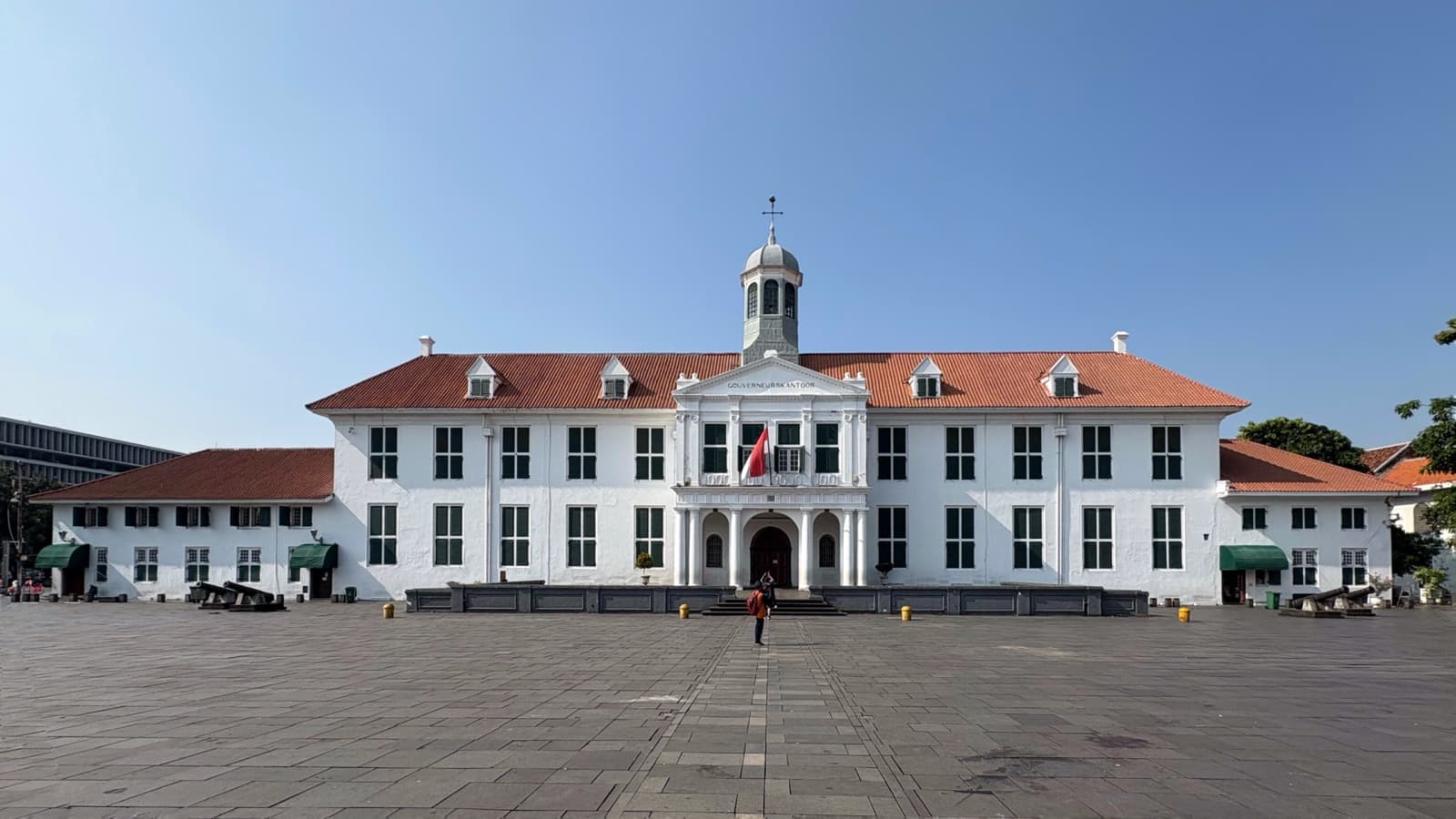
Jakarta Travel Guide: Days, Transport, Weather, Safety, Budget
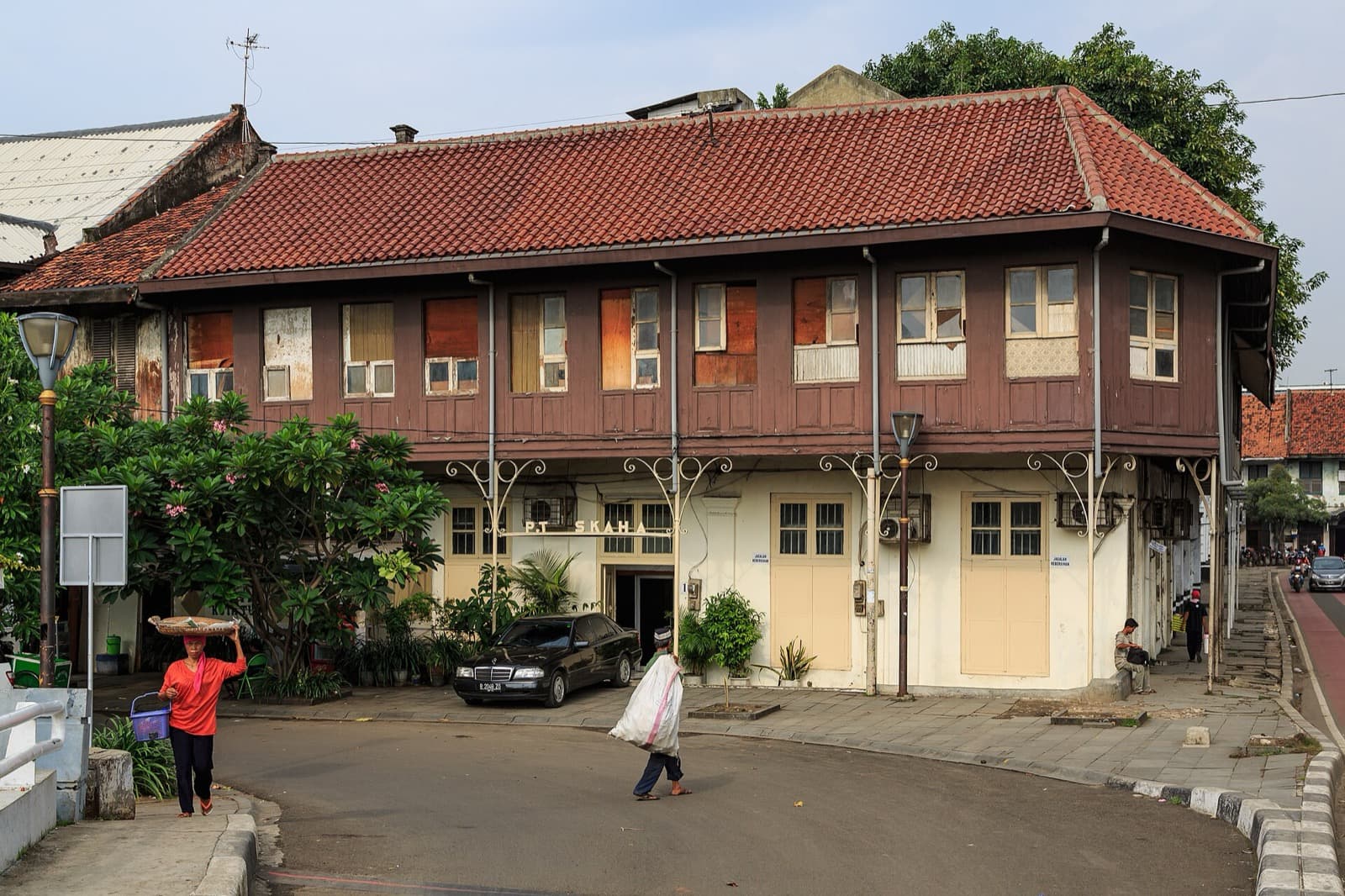
One Day in Jakarta: A Walkable Morning-to-Evening Itinerary
Company Town and Square of Freedom: Reading Jakarta on Foot
The Istiqlal Mosque: A Mosque Named Freedom, Designed by a Christian
The Stadhuis of Batavia: Why Jakarta's Prettiest Square Was a Corporation's Head Office