Kota Tua: The Company Town That Ran an Empire
90 min · 3.4 km · easy
One good day in Jakarta walks the city's two founding grounds in order: start early in Kota Tua, the pastel Old Town that was the head office of a Dutch trading empire, then cross town to Merdeka Square, the giant parade ground a colony turned into the stage for a republic. The morning is a compact loop through old Batavia, from a company city hall with cells in its cellars out to a hand-loaded harbour. The afternoon is a deliberate transect across one of the world's largest city squares, ending between a mosque and a cathedral built to face each other on purpose. Both halves are self-guided on foot, so the pace is entirely yours, and a short train or bus hop stitches them together. This is the whole day, hour by hour, with hours, tickets, transport, and heat handled honestly.
Two Roamer audio tours carry the day: Kota Tua: The Company Town That Ran an Empire in the morning and Merdeka Square: From Colony to Republic in the afternoon. You can see both, plus the full city listing, on the Jakarta walking tours hub and the Jakarta city page.
Why start early, and why in that order
Start in Kota Tua soon after the square opens, for two reasons. First, the light is soft on the pastel facades and you beat the midday sun on ground that is mostly open and unshaded. Second, a weekday morning is far quieter than a weekend, when Taman Fatahillah fills with families, rental bicycles, and costumed photo-touts. Doing the Old Town first also lets you finish the morning at Sunda Kelapa harbour before the heat peaks around midday, then move to Merdeka Square for the afternoon, when the long open crossings are the day's biggest heat exposure and you will want water and a hat regardless.
The dry season, roughly May through September, gives more reliable conditions, but a sudden tropical downpour can arrive in any month, so a flexible pace and a compact rain layer help.
Morning, roughly 8:00 to 11:30: Kota Tua, the Old Town
Hear a stop from this walk
Taman Fatahillah: The Front Office of an Empire
The morning tour is a loop of about 3.4 kilometres over seven stops, unhurried at around ninety minutes of listening plus time to linger. It reads a corporate empire folded inside a charming square.
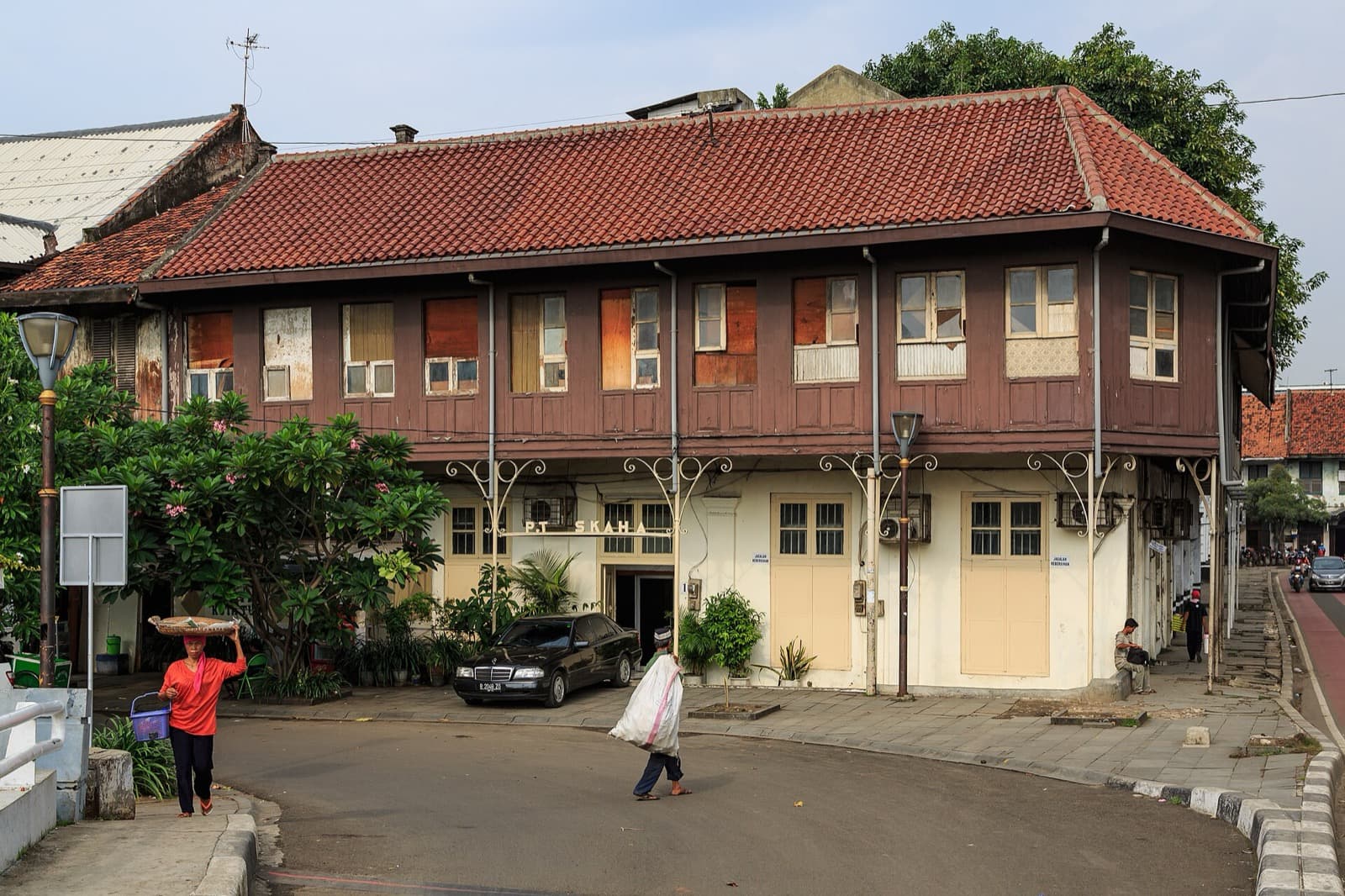
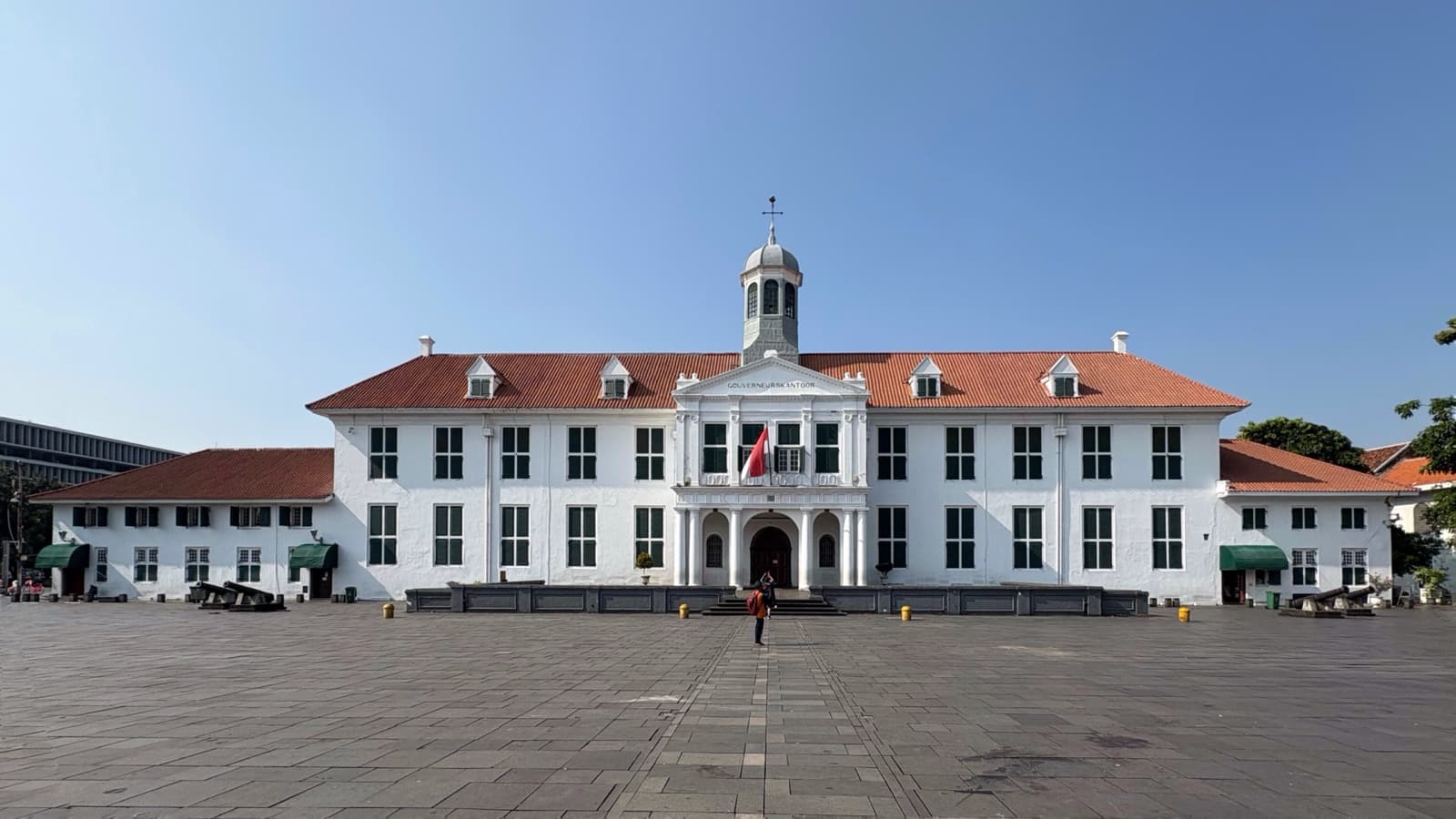
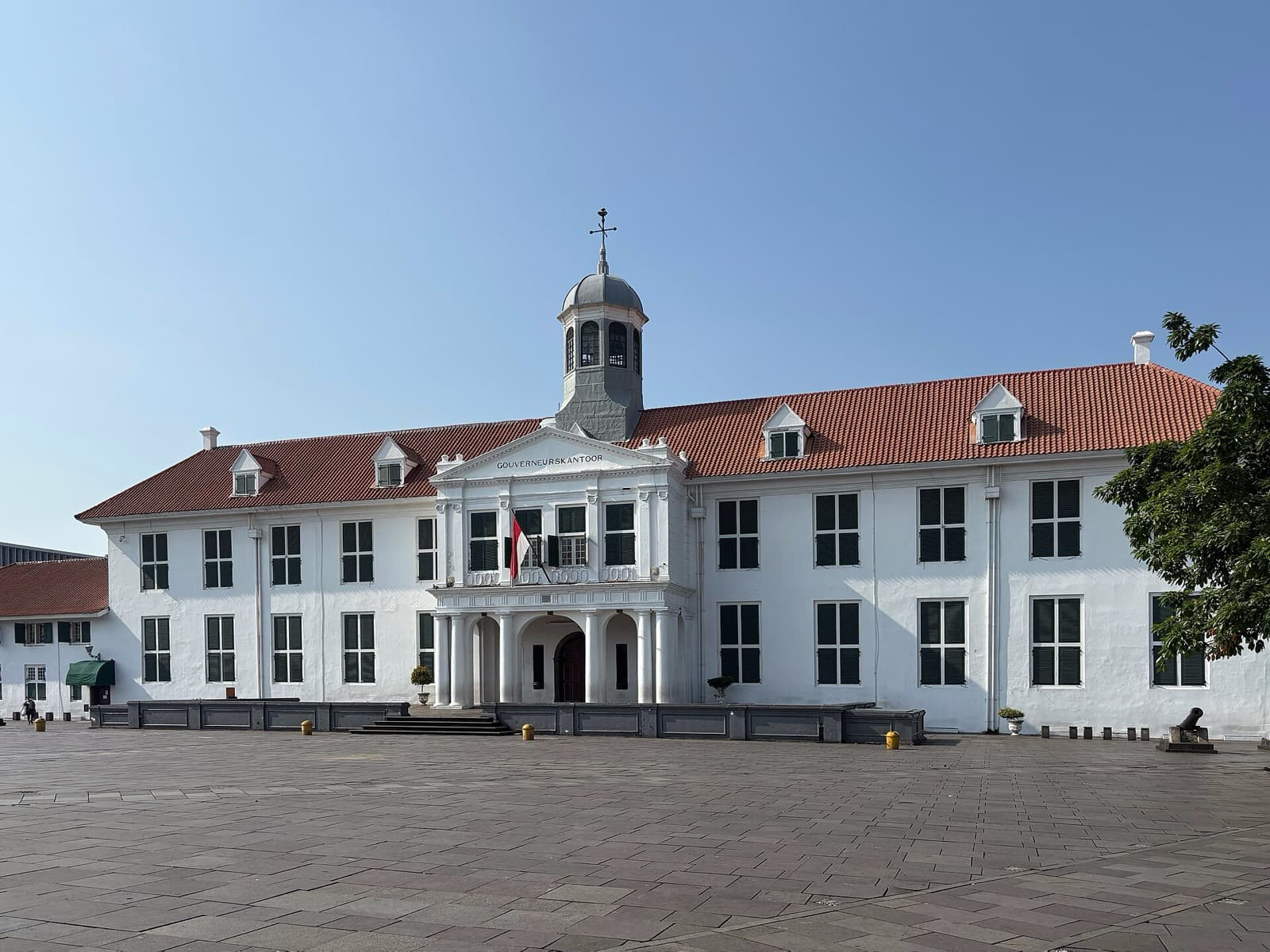
Begin on the south side of Taman Fatahillah, facing the old City Hall. The square itself is free and open. The building in front of you is now the Jakarta History Museum, housed in the Stadhuis built in 1710 as the administrative headquarters of the Dutch East India Company, with dungeons beneath the front portico that held prisoners until 1846. If you want to go inside and see the cellars, the museum is open Tuesday to Sunday and closed on Mondays, and foreign visitors pay a nominal ticket (locals pay less; carry small rupiah, since not every counter takes cards). Published hours vary between sources, so confirm the current schedule before you count on going in. From there the loop takes in the arcaded merchant facades around Cafe Batavia, the Wayang shadow-puppet museum on a former churchyard, and the former Court of Justice, now the Museum of Fine Arts and Ceramics on the east side. Each museum interior is a small optional ticket; the exteriors and the plaza are free.
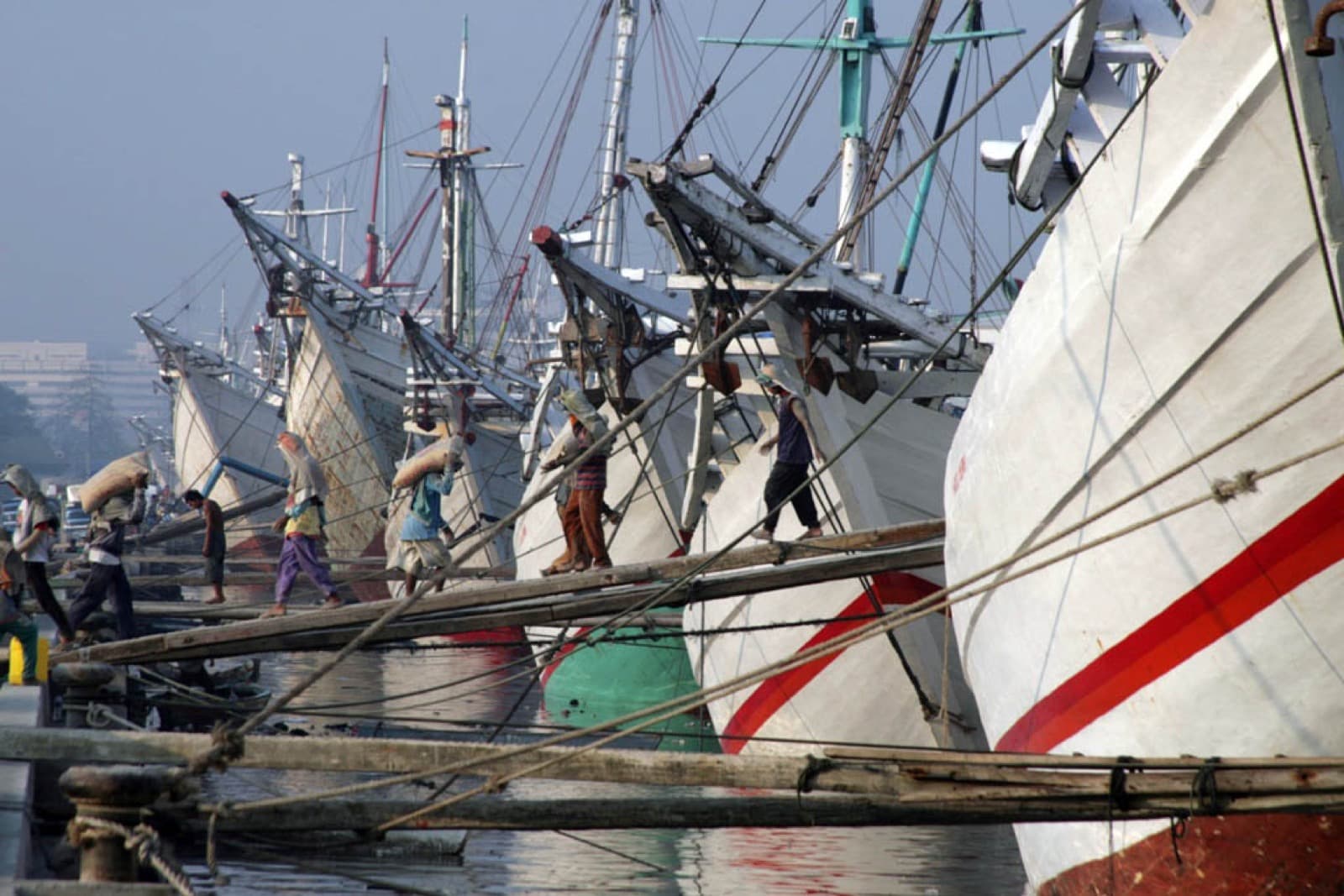
The loop then heads north to the Kota Intan drawbridge over the Kali Besar canal, the oldest surviving Dutch drawbridge in Indonesia, and finishes with a longer leg of about a kilometre through working streets to Sunda Kelapa harbour. Sunda Kelapa still handles pinisi, two-masted wooden schooners loaded and unloaded largely by hand, and it charges a small entry fee. This is a live working port, so mind loading ropes, gangplanks, and slippery quaysides, and stay clear of crews handling cargo.
Midday transfer: Kota Tua to Merdeka Square
The two halves of the day are about 6 kilometres apart, and the transfer is quick and cheap. Three good options: ride the KRL Commuter Line from Jakarta Kota station toward the center (Juanda station drops you near the mosque and cathedral, roughly a six-minute ride), take TransJakarta Corridor 1 toward Monas (about 22 to 26 minutes), or book a Grab or Gojek car for a short hop. All three cost very little; ride-hailing apps remove any meter-scam worry. Keep bags zipped on the train and at stations, which are the most common pickpocketing spots in the city along with crowded markets.
Grab lunch before you cross, or near Merdeka Square when you arrive, so the hot open square is done on a full stomach.
Afternoon, roughly 12:30 to 3:00: Merdeka Square, from colony to republic
The afternoon tour is a walk of seven stops, about 6.4 kilometres and roughly two hours at your own pace, across ground that covers about one hundred hectares. Merdeka means freedom. The Dutch built this as the Koningsplein, the King's Square, a colonial parade ground, and in 1949 President Sukarno renamed it Medan Merdeka, Independence Square.
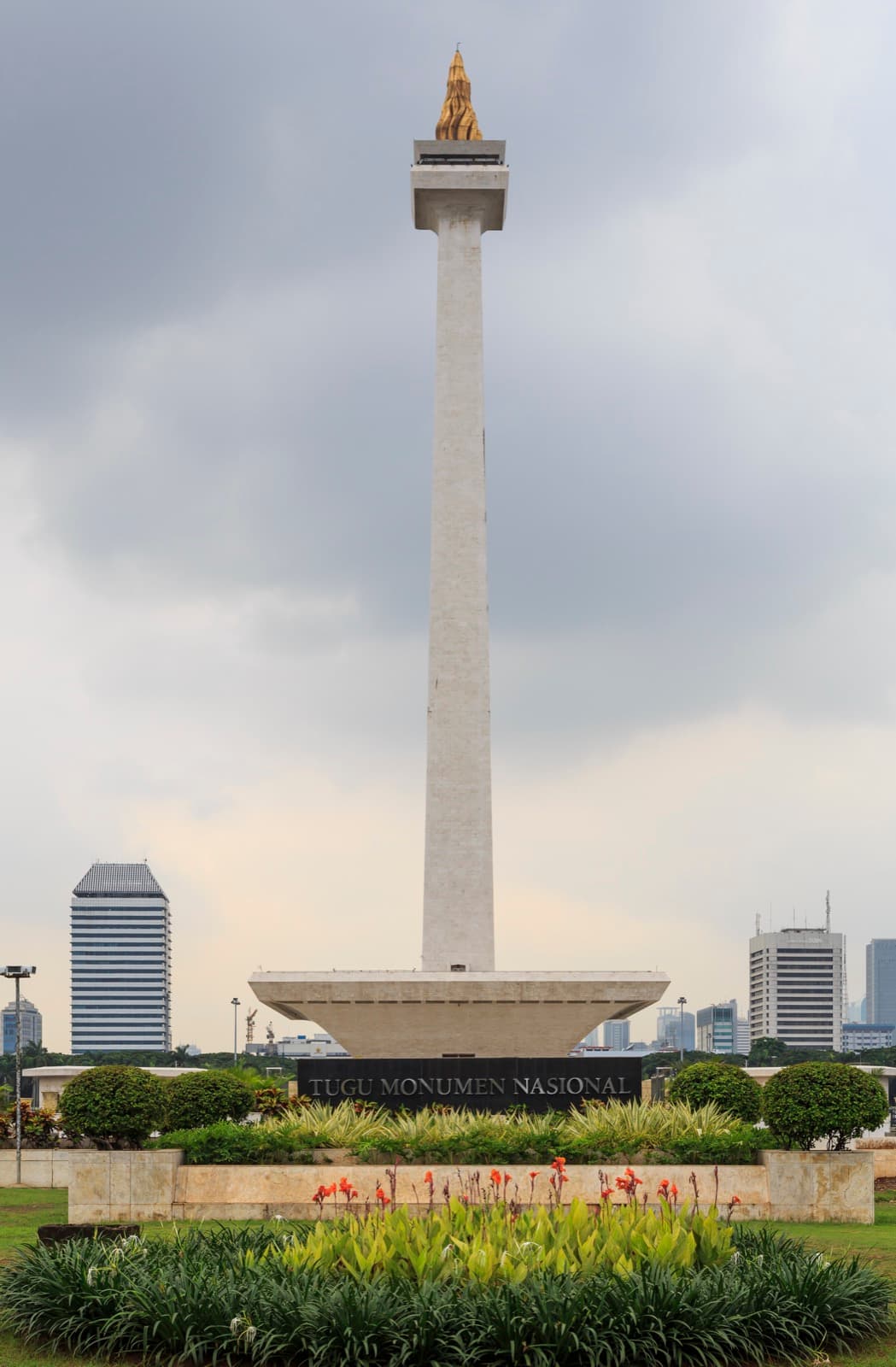
At the center rises Monas, the National Monument, a 132-metre obelisk crowned by a bronze flame sheathed in gold. The inner ring is closed to traffic, so you reach it on foot. The grounds are free; a small ticket lets you into the museum and up to the observation deck. Monas is generally open daily from 8:00 to 16:00, closed on the last Monday of each month, and the observation deck is not open every day, so if the internal climb matters to you, check the current deck schedule and avoid a last-Monday visit. The route then passes Istana Merdeka, the former Dutch governor-general's mansion that became the president's house at the transfer of sovereignty in 1949, viewed only from outside its fence, since it is an active presidential residence.
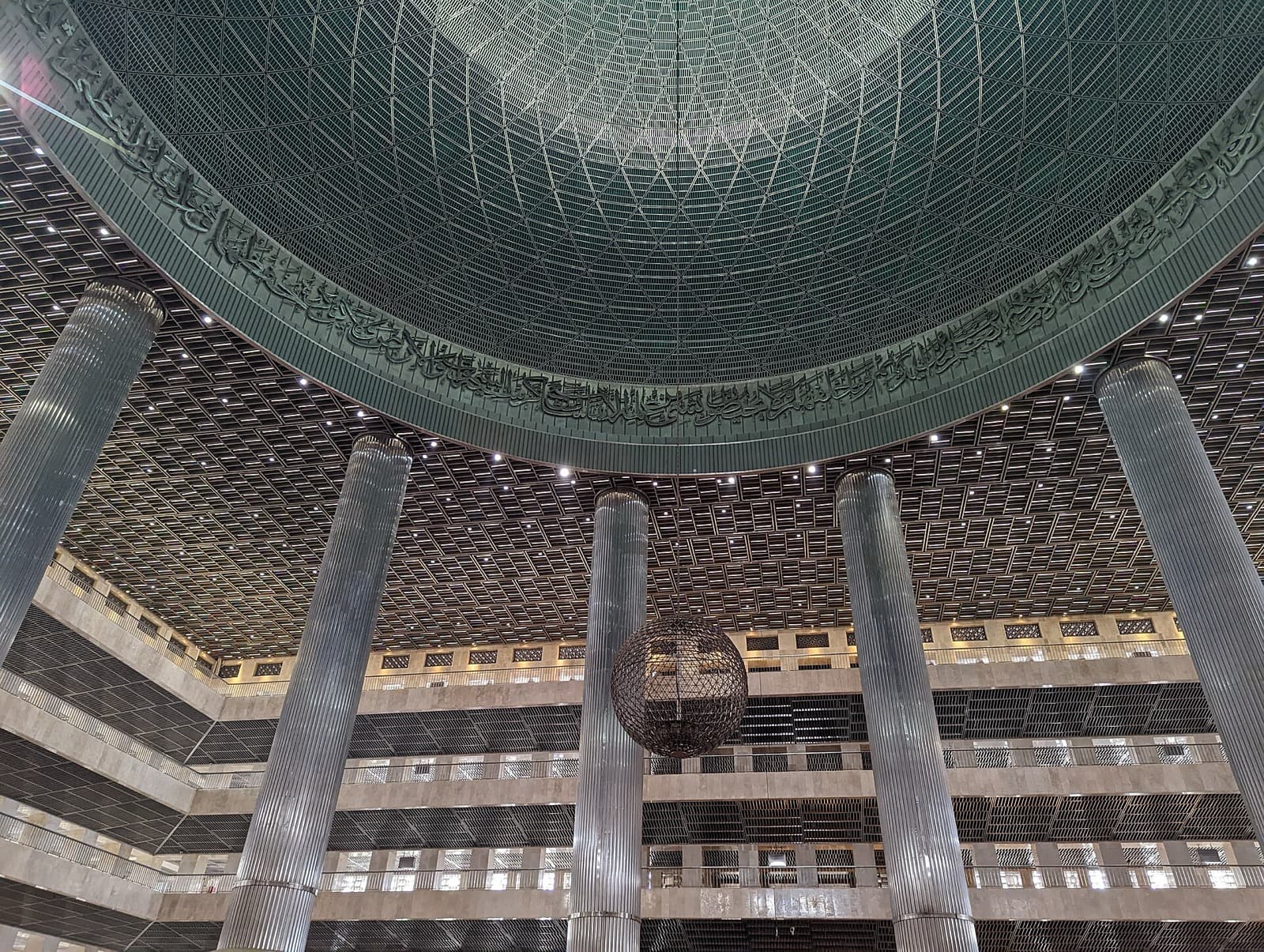
The walk's boldest statement sits just off the northeast corner: the Istiqlal Mosque, the largest mosque in Southeast Asia, named for independence and designed by Friedrich Silaban, a Protestant Christian, and directly across the street the neo-Gothic Jakarta Cathedral, the two lending each other their car parks on their holiest days. There is no admission fee at the mosque. Non-Muslim visitors are welcomed through a separate visitor entrance, where volunteers offer a free guided tour of about twenty minutes; register at the information desk, dress modestly covering shoulders and knees, expect to remove your shoes, and note that robes are provided free and women may be asked to wear a headscarf. Time the mosque leg between prayers, because it limits or closes visitor access around the five daily prayers and especially the Friday midday prayer. Treat the cathedral, an active Catholic church, with the same quiet respect.
Practical notes for the day
Carry water, sun protection, and small rupiah cash. Both squares are largely shadeless, and Jakarta's heat and humidity are the real hazard, more so than crime. Violent crime against visitors is uncommon; the honest risks are pickpocketing in dense crowds, taxi overcharging (solved by using Grab or Gojek), and chaotic traffic at crossings where motorbikes and becak do not always yield. A friendly no is enough for photo-touts and hawkers on the Old Town plaza.
Note that Jakarta has run periodic promotions, including free public transport and free entry to attractions such as Monas around the city's anniversary, so it is worth checking current offers before you go; when a promotion is not running, the standard small tickets described above apply.
If you finish the afternoon with energy left, the return to the flame at Monas is the natural close, within sight of the gilded independence monument that ties the whole day together: a company town in the morning, a republic's square in the afternoon, both walked at your own pace.
Sources
Frequently asked questions
- Can you see Jakarta's main sights in one day on foot?
- Yes. A walkable one-day plan pairs Kota Tua, the Old Town, in the morning with Merdeka Square and the National Monument (Monas) in the afternoon. The Old Town loop is about 3.4 kilometres and the Merdeka Square walk is about 6.4 kilometres, both self-guided at your own pace. The two areas are roughly 6 kilometres apart, connected in minutes by TransJakarta bus, the KRL Commuter Line, or a Grab car.
- What are the opening hours and ticket costs for Kota Tua and Monas?
- The Jakarta History Museum in Kota Tua is open Tuesday to Sunday and closed on Mondays, with a nominal ticket that is higher for foreign visitors than for locals; day-to-day hours vary by source, so check the current schedule before you go. Monas is generally open daily from 8:00 to 16:00, closed on the last Monday of each month, and the grounds are free with a small ticket for the museum and observation deck. Carry small rupiah cash, since not every counter takes cards, and check for current anniversary promotions that occasionally waive entry.
- Can non-Muslims visit the Istiqlal Mosque in Jakarta?
- Yes. Non-Muslim visitors are welcomed through a separate visitor entrance and there is no admission fee. Register at the information desk for a free guided tour of about twenty minutes, dress modestly covering shoulders and knees, and expect to remove your shoes; robes are provided free and women may be asked to wear a headscarf. Time your visit between prayers, because the mosque limits visitor access around the five daily prayers and especially the Friday midday prayer.
- How do you get from Kota Tua to Merdeka Square?
- The two areas are about 6 kilometres apart. Take the KRL Commuter Line from Jakarta Kota station toward the center (Juanda station is near the mosque and cathedral, roughly a six-minute ride), ride TransJakarta Corridor 1 toward Monas in about 22 to 26 minutes, or book a short Grab or Gojek car. All options are inexpensive, and ride-hailing apps avoid taxi meter scams.
- Is Jakarta safe for walking as a tourist?
- Jakarta is generally safe for visitors who stay aware. Violent crime against tourists is uncommon; the real risks are pickpocketing in dense crowds and train stations, taxi overcharging, and chaotic traffic at crossings. Keep bags zipped, use Grab or Gojek rather than unregistered taxis, and treat heat and humidity as the day's main hazard by carrying water and sun protection.
- What is the best time of day to walk Jakarta's Old Town?
- Start early, soon after Taman Fatahillah opens. The light is soft on the pastel facades, the crowds of families and photo-touts are thinner on a weekday morning, and you beat the midday sun on ground that is largely unshaded. Aim to reach Sunda Kelapa harbour before heat peaks around midday, then move to Merdeka Square for the afternoon.
Ready to experience it?
Kota Tua: The Company Town That Ran an Empire
90 min · 3.4 km · easy
More from Jakarta
Explore more at your own pace.
Jakarta Travel Guide: Days, Transport, Weather, Safety, Budget
Company Town and Square of Freedom: Reading Jakarta on Foot
The Istiqlal Mosque: A Mosque Named Freedom, Designed by a Christian
The Stadhuis of Batavia: Why Jakarta's Prettiest Square Was a Corporation's Head Office
Monas: Why Indonesia Planted a Golden Flame at the Center of a Colonial Parade Ground