Salamanca Place: Hobart's Sandstone Waterfront
80 min · 3.2 km · moderate
If you have one meal in Hobart, eat Tasmanian seafood pulled from the cold water around you: shucked Bruny Island or St Helens oysters, a curried scallop pie, and fish and chips from a floating punt at Constitution Dock, then finish with a Tasmanian single malt whisky. These are the specific regional foods that come from Hobart's own harbour and island coasts, and most of them sit within a few minutes' walk of the waterfront where the city began. Below is what each dish is, where the tradition comes from, and how to order it without looking like you just got off the ferry.
The short answer: what to eat in Hobart
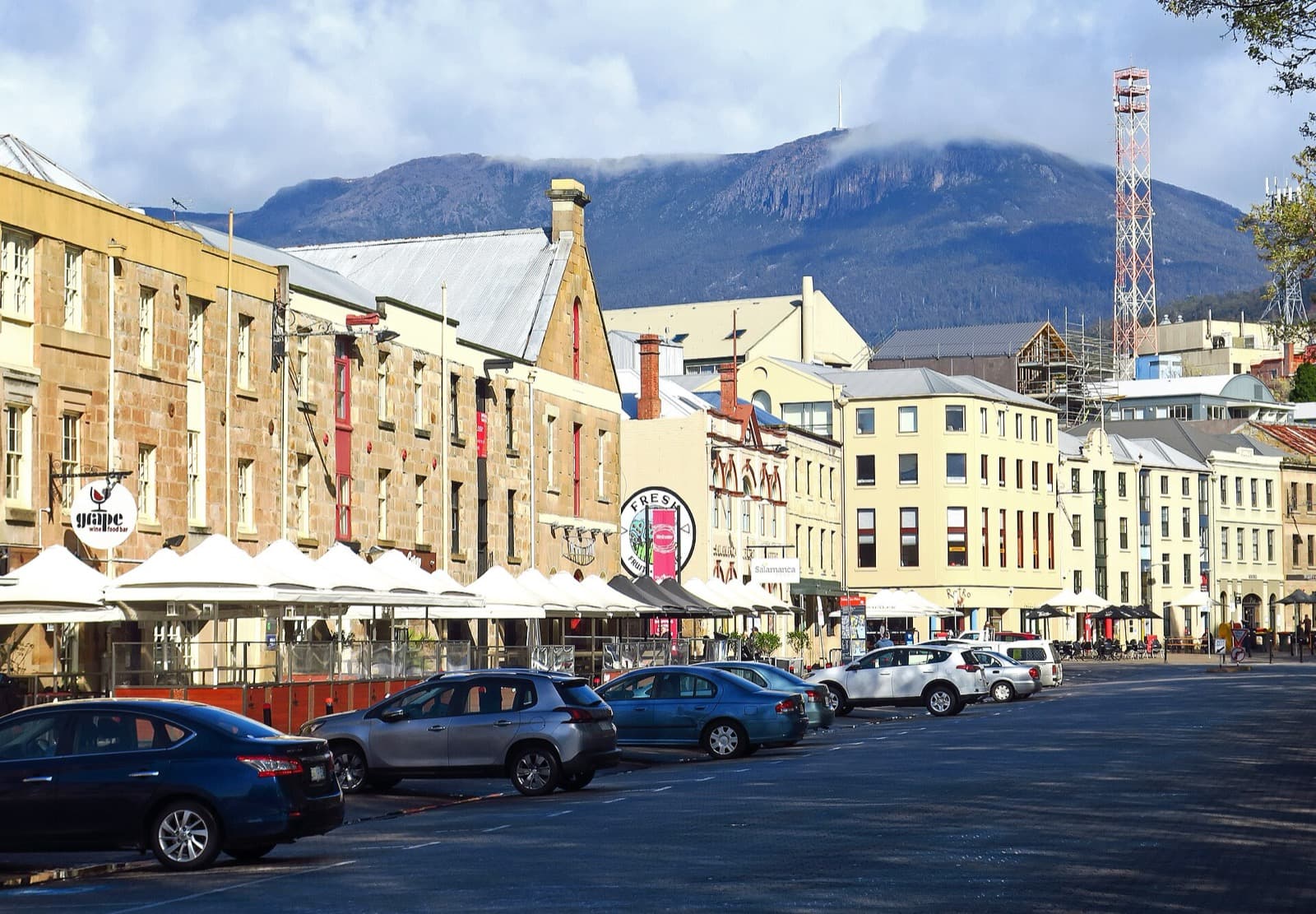
Hobart's food identity is cold-water seafood and the island produce grown in a clean, cool climate. The five things worth going out of your way for are oysters (Pacific oysters farmed off Bruny Island and the state's east coast), the curried scallop pie (a genuinely local invention, not a tourist gimmick), fish and chips from the fishing punts moored at Constitution Dock, artisan cheese and produce from Bruny Island, and Tasmanian whisky. You can graze most of this along Sullivans Cove and Salamanca Place, the same stretch of sandstone the city grew up around.
If you want the harbour context that makes the food make sense, the Sullivans Cove convict port walk starts at the very docks where the fishing fleet still ties up, and the Salamanca warehouses on the sister walk once stored the grain, wool and whale oil of the port. The food and the stone tell the same story.
Curried scallop pie: the dish that is actually Hobart's own
Hear a stop from this walk
Salamanca Place: The Sandstone Waterfront
Start with the one you cannot get anywhere else in the same form. A Tasmanian scallop pie is fresh local scallops in a mild curry sauce, baked inside puff pastry, and it is judged locally by how many plump scallops (ideally five or six, orange roe attached) are inside. The exact origin is not documented with a single date, but the tradition took hold in Hobart across the early-to-mid twentieth century, built on two local facts: sizeable scallop beds were found in the cold River Derwent from the late 1800s, and the curry flavour comes from Keen's Curry Powder, an Australian pantry staple. That is why it counts as regional: local shellfish plus a locally embedded curry powder, folded into a hand pie.
How to order like a local: buy it from a bakery or a seafood counter rather than expecting it on a white-tablecloth menu, eat it warm and by hand, and do not ask for it "spicy." The curry here is gentle and creamy, closer to a mild cream sauce than an Indian curry. It is a snack, not a main.
Oysters: Bruny Island and the east coast, shucked to order
Order oysters the way Tasmanians do, which is cold, raw, and as fresh as possible. The Pacific oysters you will be offered are farmed in clean, cold Tasmanian waters, with Bruny Island just south of the city and St Helens on the east coast the names to look for. Get Shucked, a working farm on Bruny Island, is well known enough that it operates an oyster drive-through, and it grows its Pacific oysters on for two to three years before harvest. In town you will see oysters served three common ways: natural (just the oyster and its own brine), Kilpatrick (a warm version with bacon and Worcestershire), or dressed with a splash of citrus such as finger lime.
How to order like a local: ask what came in that day and where it is from, order them natural first to taste the water, and buy by the half dozen or dozen. If you are heading to Bruny Island south of the city, buying them straight from a farm gate is cheaper and about as fresh as it gets.
Fish and chips from the Constitution Dock punts
For the classic Hobart harbour meal, walk to Constitution Dock and buy fish and chips from one of the floating fish punts moored alongside. The best known is Flippers, a fish-shaped floating shopfront, and nearby sits Mures, a Hobart seafood institution that dates to 1973, catches on its own boats, and runs a casual Lower Deck as well as a fine-dining Upper Deck. This is the finish line of the Sydney to Hobart Yacht Race each summer, so in late December the docks are crowded and celebratory; the rest of the year it is a calm, gulls-and-chips kind of place.
How to order like a local: ask for the local catch of the day (trevalla, flathead, blue-eye and flake all appear), get scallops if they have them, and eat standing at the dock edge from the paper. A fisherman's basket is the easy default if you want a bit of everything. This is one of the great free-to-almost-free pleasures of the city, and it sits directly on the route of the Sullivans Cove convict port walk, which passes Constitution Dock at its second stop.
Bruny Island produce and Tasmanian cheese
Beyond seafood, the thing to seek out is Bruny Island produce, because a single small island south of Hobart concentrates oysters, artisan cheese, honey, whisky and chocolate. Bruny Island Cheese and Beer Company, founded by cheesemaker Nick Haddow, makes cheeses matured by traditional methods and is one reason Tasmania has a serious artisan reputation. You can taste much of this without leaving the city, but Bruny is a straightforward day trip south if you want it at the source.
How to order like a local: build a small board rather than one big cheese, and pair Tasmanian cheese with the island's cool-climate drinks. Tasmania's clean, cool growing conditions are also why its cheese, berries and cool-climate wines punch above the island's size.
Tasmanian whisky, and the Sullivans Cove connection
Finish with a Tasmanian single malt, which is not a novelty but a genuine world-class category with a specific history. Modern Tasmanian whisky begins with Bill Lark, who in 1992 founded Lark Distillery and became the first person to legally distil single malt spirit in Tasmania in 154 years, after getting the minimum still size limited by early distillation law lifted so a craft-scale still was legal. That reopening lit the fuse for the whole Australian whisky revival. The proof arrived in 2014, when Sullivans Cove French Oak was named World's Best Single Malt at the World Whiskies Awards, the first time a whisky from outside Scotland or Japan took that title.
There is a neat geography to this: the distillery takes its name from Sullivans Cove, the exact convict harbour where Hobart was settled on the twenty-first of February, 1804, and where the Sullivans Cove convict port walk begins. How to order like a local: ask for a Tasmanian single malt neat or with a few drops of water, and treat it as a slow drink to close the night rather than a shot.
Salamanca Market: the one Saturday stop for grazing
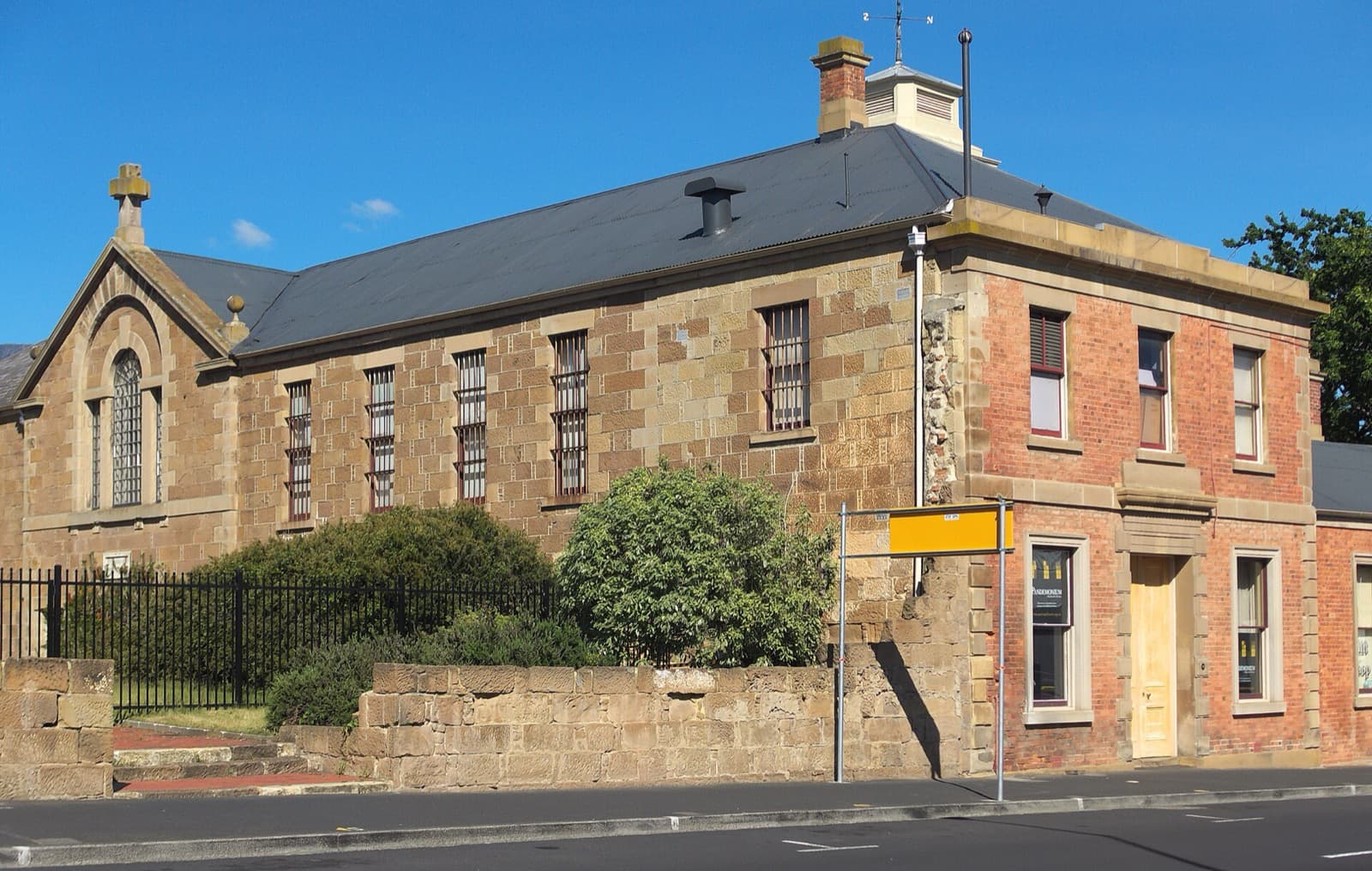
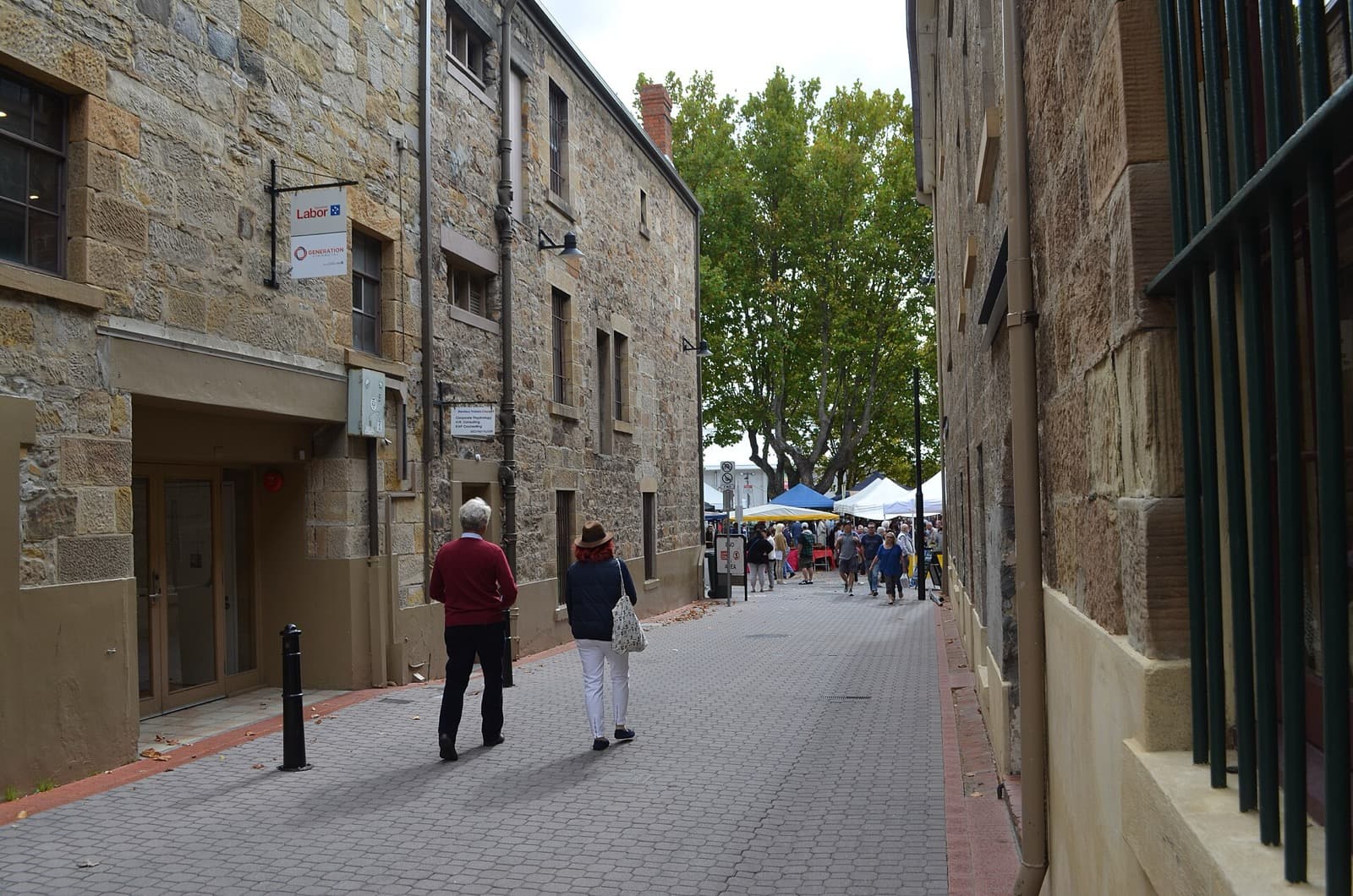
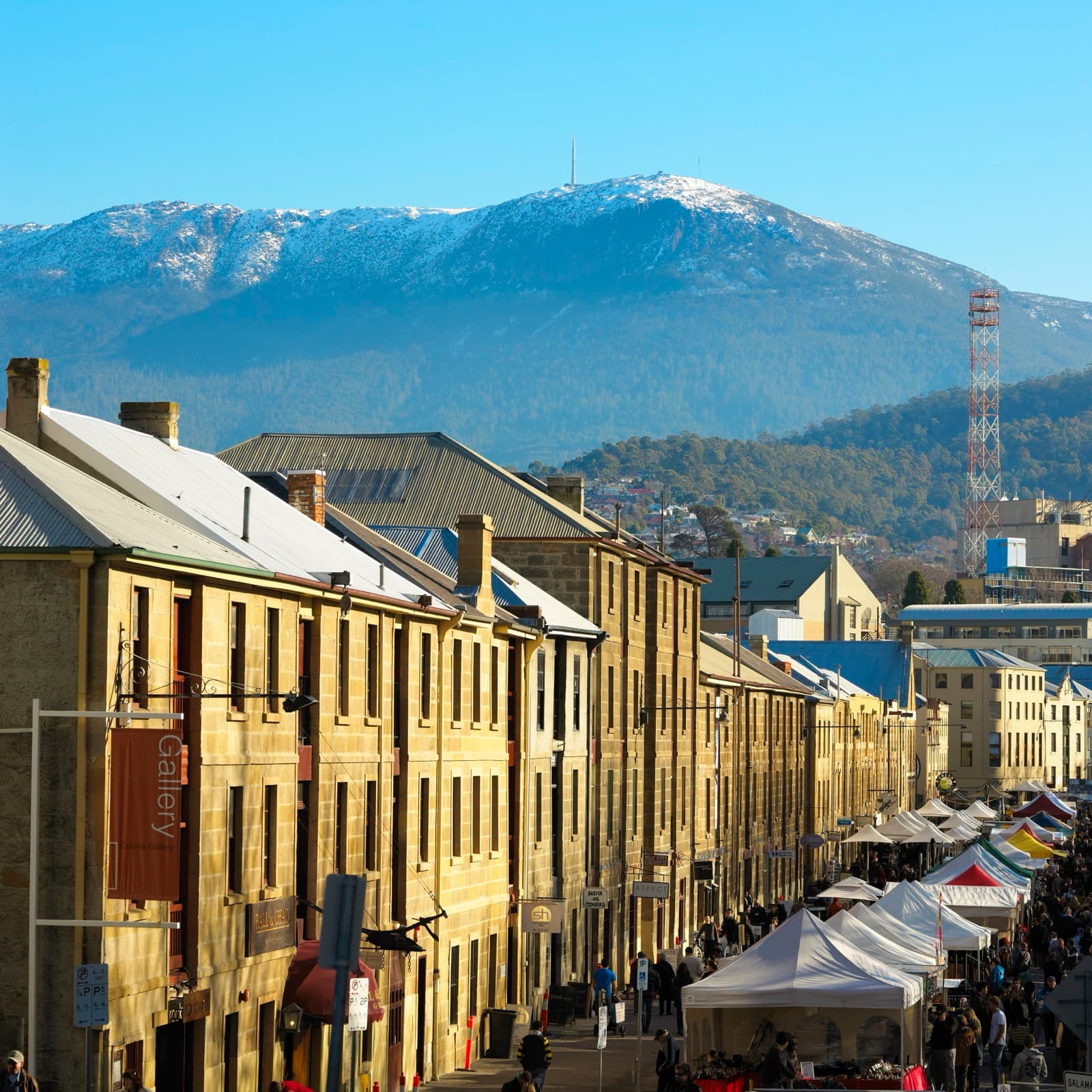
If your visit includes a Saturday, plan your eating around Salamanca Market, held every Saturday from 8:30 am to 3 pm along Salamanca Place, rain or shine, with more than 300 stalls. The food lines are the longest lines in the market, so arriving before 9 am is the local move if you want the barbecue scallop skewers, tempura and other hot-food stalls without a queue. Between mouthfuls you are standing in front of the honey-coloured convict-built sandstone warehouses that stored the port's wealth, which is exactly where the Salamanca and Battery Point walk opens. On any other day of the week the stone is quiet and the market is gone, so time it deliberately.
For the walks that connect all of this eating to the ground it grew from, see the full set of Hobart walking tours. A practical way to plan a food day is simple: graze Salamanca Market in the morning if it is Saturday, do fish and chips at Constitution Dock for lunch, keep an eye out for a curried scallop pie as a walking snack, and end with oysters and a Tasmanian whisky in the evening.
Sources
Frequently asked questions
- What food is Hobart known for?
- Hobart is known for cold-water seafood and cool-climate island produce. The signature items are oysters farmed off Bruny Island and the east coast, the curried scallop pie, fish and chips from the floating punts at Constitution Dock, Bruny Island cheese, and Tasmanian single malt whisky. Most of these sit within a short walk of the Sullivans Cove waterfront.
- What is a Tasmanian scallop pie?
- It is fresh local scallops in a mild curry sauce baked inside puff pastry, and it is a genuinely regional Hobart dish rather than a tourist invention. The curry flavour comes from Keen's Curry Powder, an Australian pantry staple, and local scallop beds were found in the cold River Derwent from the late 1800s. Locals judge a good one by how many plump scallops it holds, ideally five or six with the orange roe.
- Where do you get fish and chips at Constitution Dock?
- You buy them from the floating fish punts moored alongside Constitution Dock in central Hobart. The best known is Flippers, a fish-shaped floating shopfront, and Mures nearby is a Hobart seafood institution that dates to 1973 and catches on its own boats. Ask for the local catch of the day such as trevalla, flathead or blue-eye, and eat standing at the dock edge.
- Is Tasmanian whisky actually good?
- Yes, it is a serious world-class category. Bill Lark founded Lark Distillery in 1992 and was the first to legally distil single malt in Tasmania in 154 years, which sparked the wider Australian whisky revival. In 2014 Sullivans Cove French Oak was named World's Best Single Malt at the World Whiskies Awards, the first time the title went to a whisky from outside Scotland or Japan.
- When is Salamanca Market and is there food?
- Salamanca Market runs every Saturday from 8:30 am to 3 pm along Salamanca Place in Hobart, rain or shine, with more than 300 stalls. Food stalls draw the longest queues, including barbecue scallop skewers and tempura, so arriving before 9 am helps you skip the lines. The market only runs on Saturdays, so plan food around it accordingly.
- Where do Hobart's oysters come from?
- They are Pacific oysters farmed in clean, cold Tasmanian waters, with Bruny Island just south of the city and St Helens on the east coast the names to look for. Get Shucked on Bruny Island grows oysters on for two to three years before harvest and even runs an oyster drive-through. In town they are usually served natural, Kilpatrick with bacon, or dressed with citrus such as finger lime.
Ready to experience it?
Salamanca Place: Hobart's Sandstone Waterfront
80 min · 3.2 km · moderate
More from Hobart
Explore more at your own pace.
Hobart Travel Guide: How Many Days, Getting Around, Best Time and Safety
Hobart: The Convict Port That Became a Capital in Sandstone
Salamanca Place: How to Read Hobart's Sandstone Waterfront
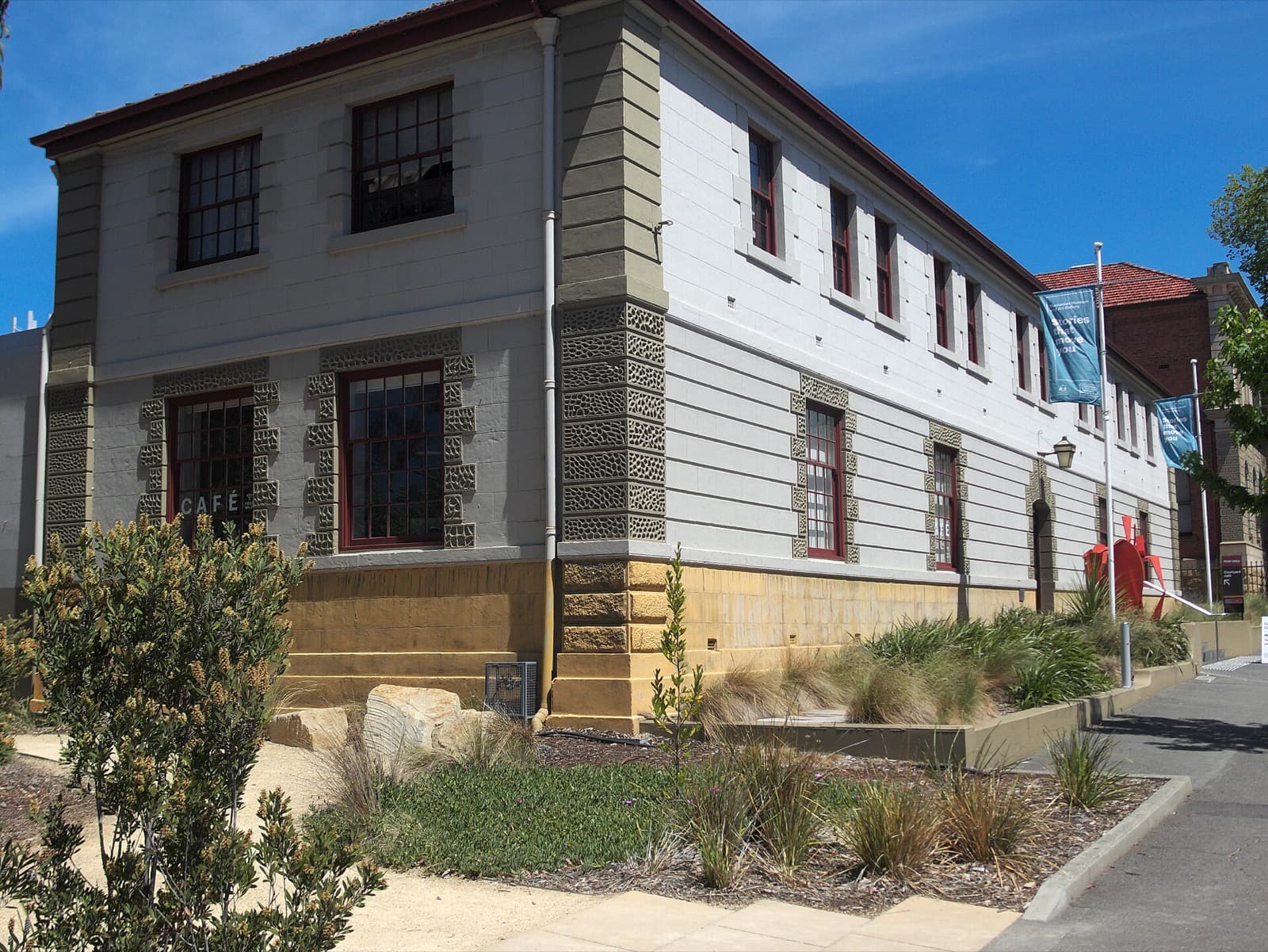
The Commissariat Store: How Tasmania's Oldest Building Reads the Whole Convict Port
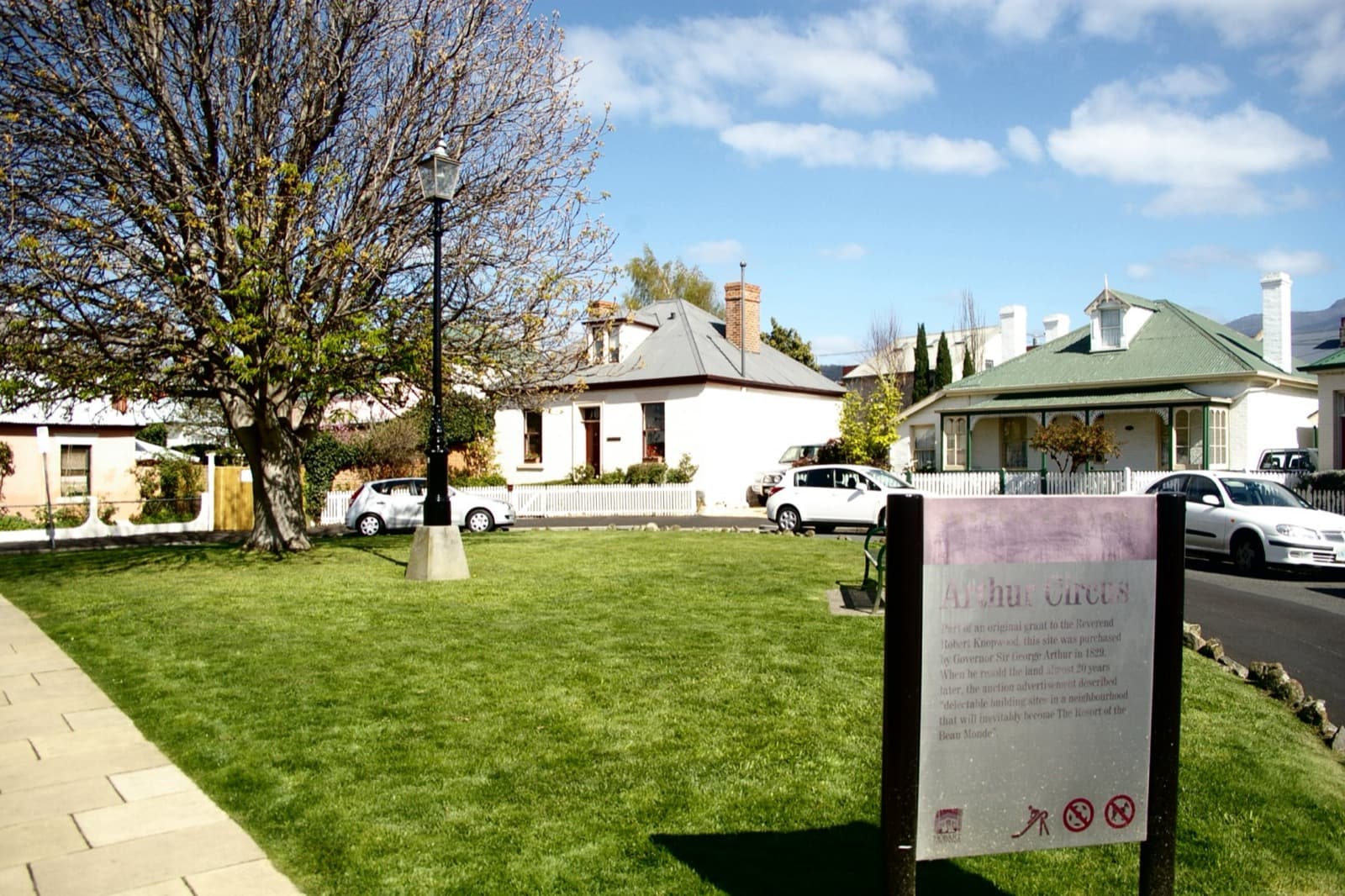
Arthur Circus: The Ring of Cottages That Time Left Alone in Battery Point