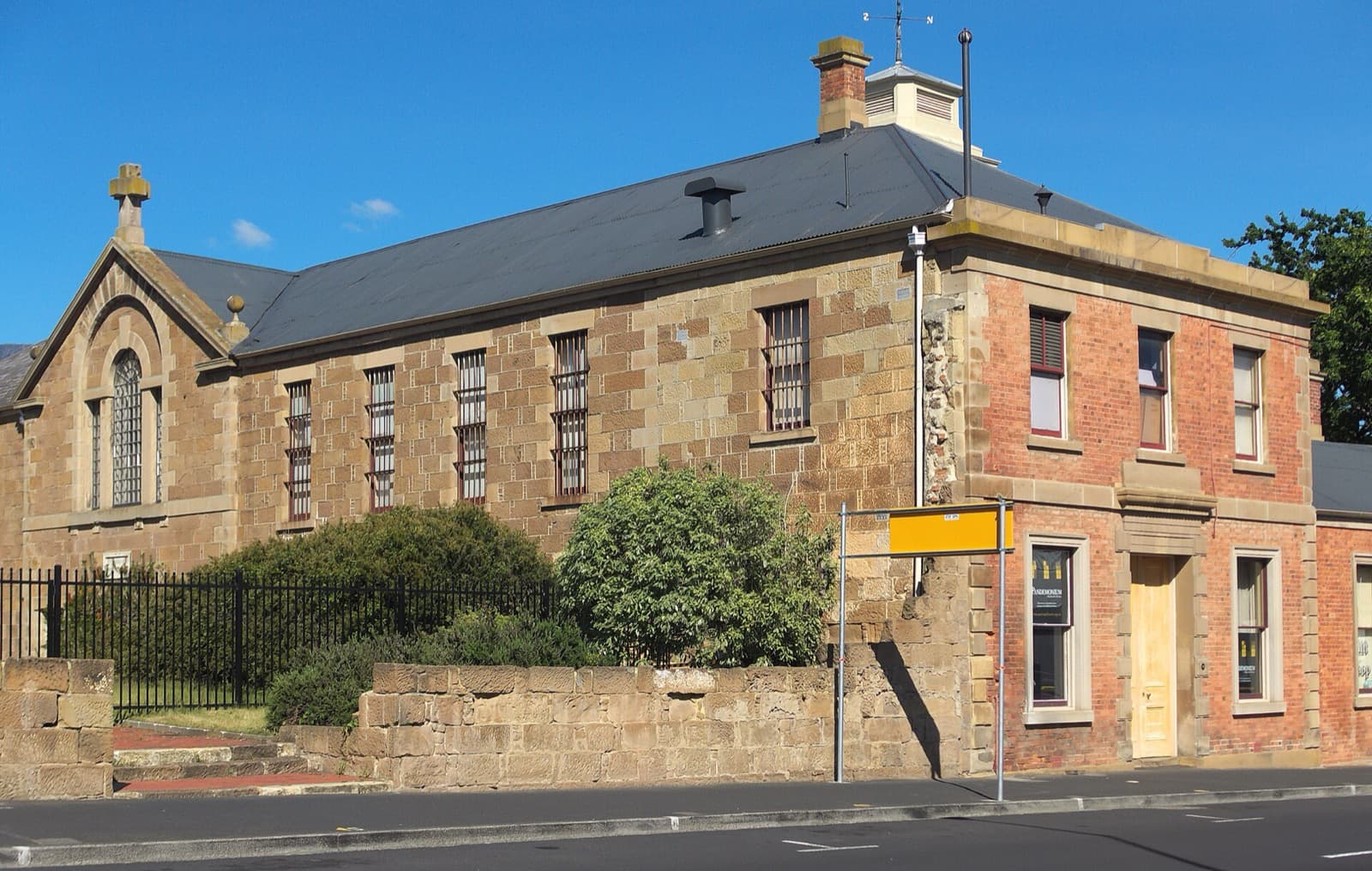
The Commissariat Store, a plain, thick-walled convict store built between 1808 and 1810, is the oldest surviving building in Tasmania, and it is the root from which the whole Sullivans Cove harbour walk grows. Stand in front of it on Dunn Place and you are looking at the government store of a penal outpost founded only about six years earlier: a squat, honest structure that held food, clothing, convict and military uniforms, alcohol and armaments, the supplies that kept a prison colony alive on the far side of the world. It is not handsome. That is exactly why it explains everything the tour goes on to show you.
A store that set the grid
The most useful fact about this building is quiet. The Commissariat Store was used to set the alignment of Macquarie Street, which means the grid of the early town was surveyed from this very wall. Before there was a parliament, a town hall, a formal square or a museum in Hobart, there was this store, and it decided where the streets would run. Everything you walk past on the rest of the tour is downstream of a decision made here, at the point where a convict colony first had to organise itself into something that could last.
That is the argument of the tour in miniature, and it is why this stop sits at the centre of the route rather than the beginning. The walk opens on the old wharf at Hunter Street, where Hobart Town first took hold after Lieutenant-Governor David Collins came ashore on the twenty-first of February, 1804, following an abandoned first attempt upstream at Risdon Cove in 1803. It moves along Victoria Dock and Constitution Dock, the working fishing docks cut largely by convict labour between 1847 and 1850. Then it reaches this store, the oldest thing on the island, and from here the story turns: a prison learning to become a capital.
The museum that holds the harder history
Hear a stop from this walk
The Commissariat Store: The Oldest Building in Tasmania
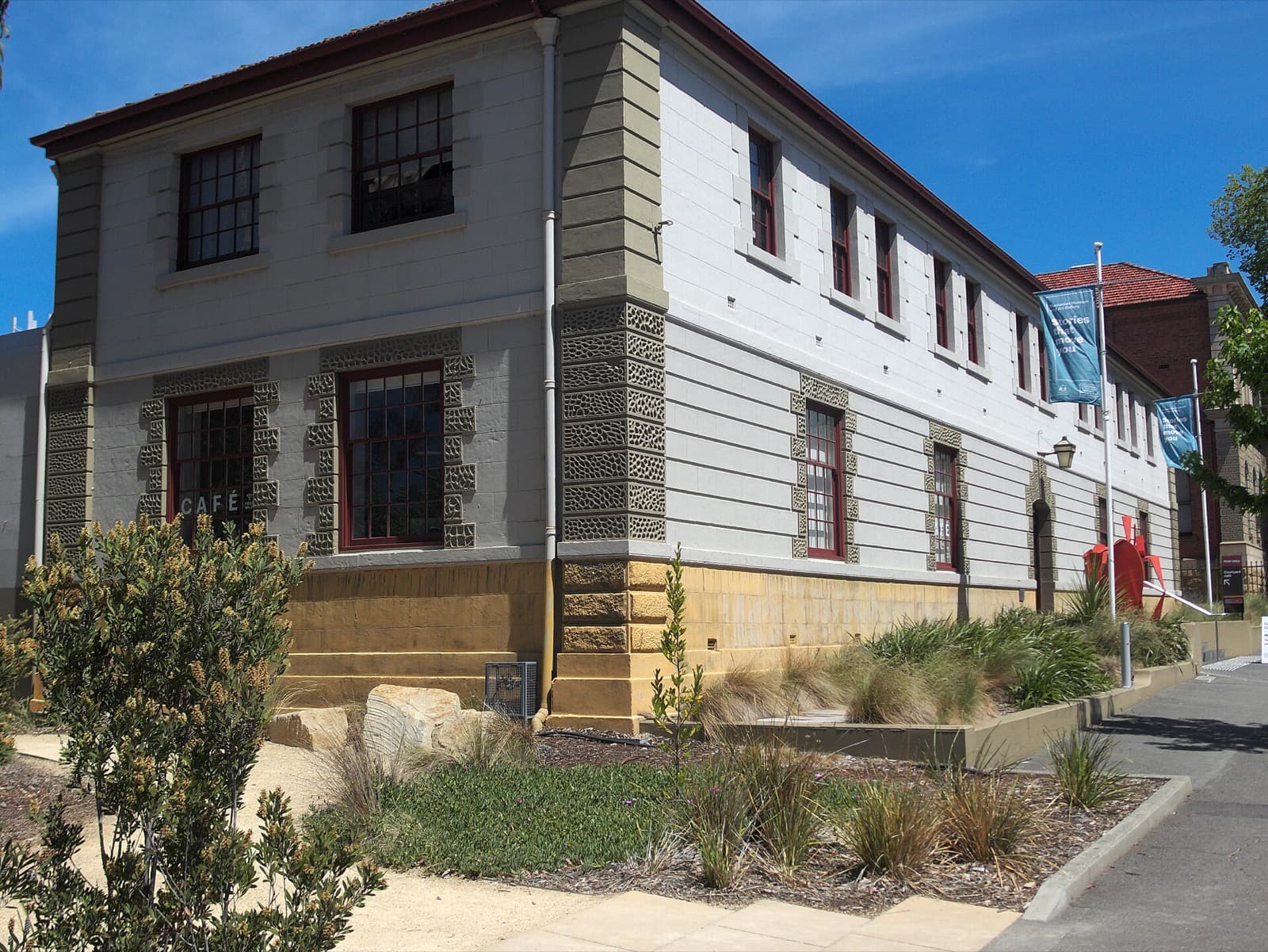
Today the Commissariat Store is folded into the Tasmanian Museum and Art Gallery, which records both the natural history of the island and the catastrophe visited on its Aboriginal people. General admission is free, so you can step inside at your own pace or simply stand with the old convict store from the street.
This is where the tour keeps its promise to tell the hard parts plainly. This is the Country of the muwinina, the traditional owners of the Hobart area, and part of the wider home of the palawa, the Tasmanian Aboriginal people, who have lived on this island for tens of thousands of years and who are living today. After British settlement, in the frontier conflict known as the Black War, from the mid-1820s to 1832, the Tasmanian Aboriginal people were brought close to destruction. Some six hundred to nine hundred Aboriginal people and more than two hundred colonists died.
The museum carries one story that makes the point unavoidable. Truganini, born about 1812 and wrongly called the last Tasmanian Aboriginal, died in Hobart on the eighth of May, 1876. Against her wishes, her skeleton was later put on public display at this museum until 1947, then held in its vaults. Only in 1976 were her remains cremated and returned, as she had asked, near her birthplace. The palawa people survive today. Their culture is living, not lost. The building that anchored the colony now houses the institution reckoning with what the colony did, and it holds both truths at once.
Why the anchor makes the rest worth walking
From the store, the walk shows you what the penal colony grew into. Parliament House began as John Lee Archer's Customs House, formal construction starting on the third of January, 1835, raised mostly by convict hands, and it became the seat of a two-chamber colonial parliament in 1856. That is the turn: a place founded to punish had raised a customs house by convict labour and then turned it into the seat of its own self-government.
Then the civic confidence keeps building. Franklin Square was laid out between 1863 and 1866 on the site of the colony's Old Government House, its bronze statue of Sir John Franklin carrying an epitaph written by Alfred, Lord Tennyson. Franklin governed Van Diemen's Land from 1837 to 1843, then died in the Arctic on the eleventh of June, 1847, seeking the Northwest Passage; all one hundred and twenty-nine of the men who remained were lost. The Hobart Town Hall, foundation stone laid on the fourteenth of April, 1864, and completed in September 1866, rose on that same Old Government House ground. By the 1860s a settlement founded as a prison had grown a parliament, a museum, a formal square and a proper town hall in worked sandstone. It had decided it was a city.
The walk closes on the moral floor beneath all of it. The Penitentiary Chapel, part of the former Campbell Street Gaol, was designed by the same John Lee Archer, its foundation stone dated 1831. He set thirty-six solitary punishment cells into the ground floor directly beneath the place of worship, one sealed so completely it was known as the Dust Hole. Later the nave became two criminal courtrooms, first cases heard on the seventeenth of April, 1860, and an execution yard was added. The National Trust records thirty-two executions on the site, the last on the fourteenth of February, 1946, the final hanging in Tasmania.
Beginning at the Commissariat Store gives you the key to all of it. The store is where the town was organised, the museum is where the town now tells the truth about itself, and every grand building afterward is measured against this plain one. The full route runs seven stops over roughly seventy-five minutes, an easy two and a half kilometres, almost all level along the docks with one short rise at the end. You can browse the other Hobart walking tours or read more about visiting Hobart before you set out. Walk it at your own pace: sit on the dock edge, linger where the light is good, and skip any stop that does not hold you.
Sources
- Tasmanian Museum and Art Gallery, "Commissariat Complex," Shaping Tasmania: the museum's own record of the store's 1808 to 1810 construction and its role in the early colony.
- Wikipedia, "Truganini": biography and the display and return of her remains, corroborating the museum account.
- Parliament of Tasmania, "About Parliament House": official history of the Customs House that became Parliament in 1856.
- National Trust of Australia (Tasmania), Penitentiary Chapel Historic Site: records of the chapel, cells, courts and executions.
- Wikipedia, "Constitution Dock" and "Sullivans Cove": settlement chronology and the convict-built docks along the waterfront.
Ready to experience it?
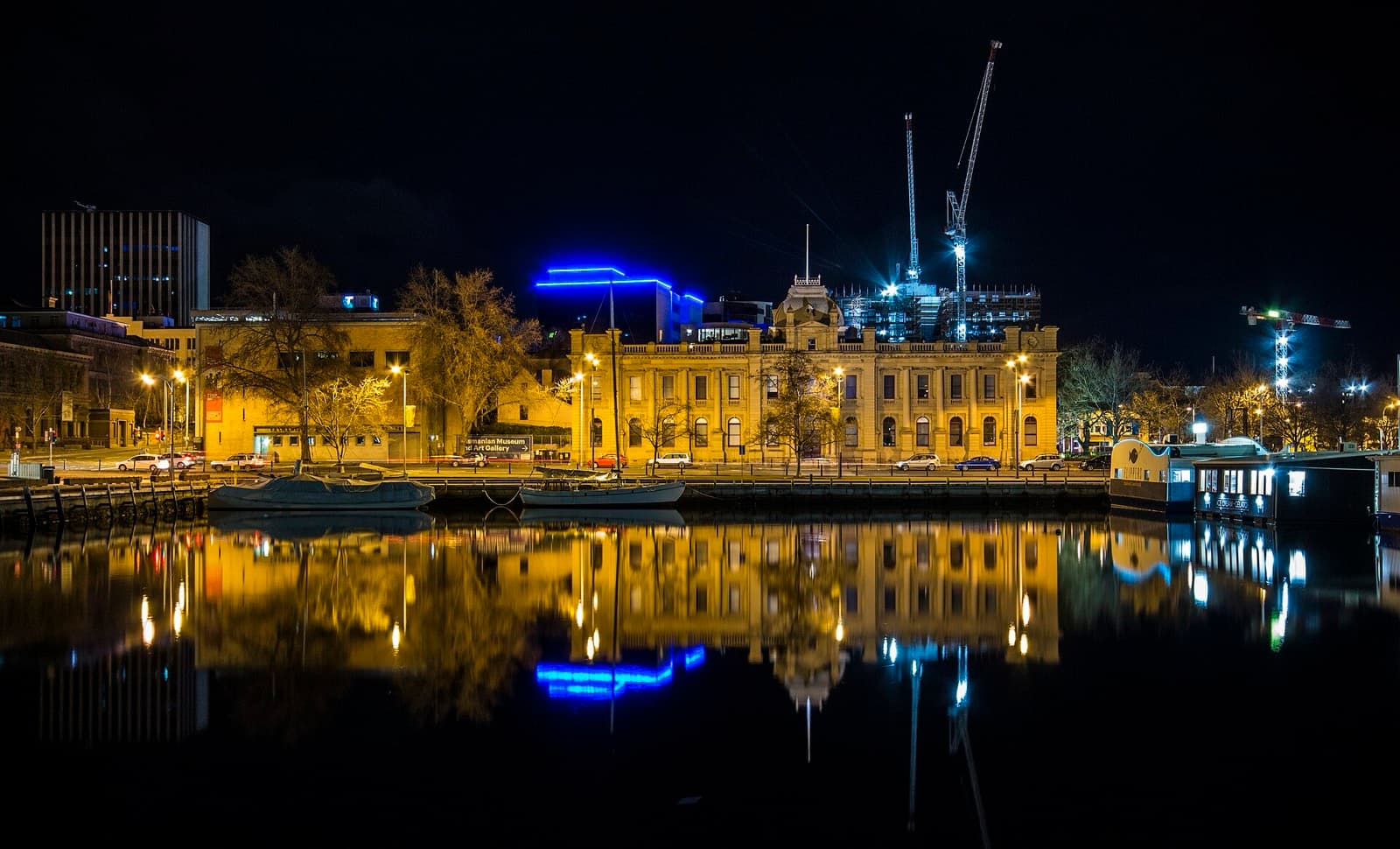
Sullivans Cove: The Convict Port Where Hobart Began
75 min · 2.6 km · easy
More from Hobart
Explore more at your own pace.
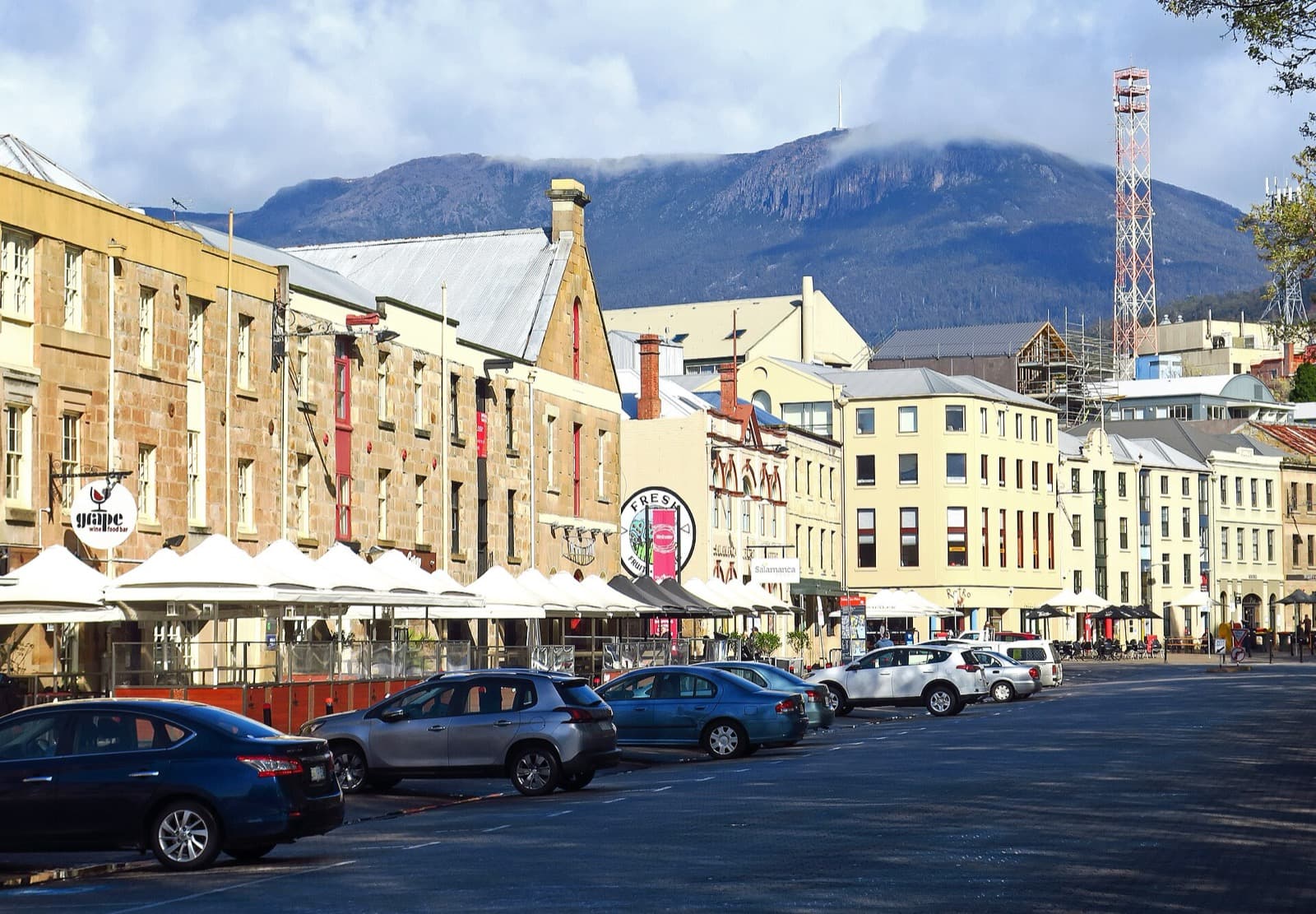
Hobart Travel Guide: How Many Days, Getting Around, Best Time and Safety
One Day in Hobart: A Walkable Morning-to-Evening Itinerary
Hobart: The Convict Port That Became a Capital in Sandstone
Salamanca Place: How to Read Hobart's Sandstone Waterfront
Arthur Circus: The Ring of Cottages That Time Left Alone in Battery Point