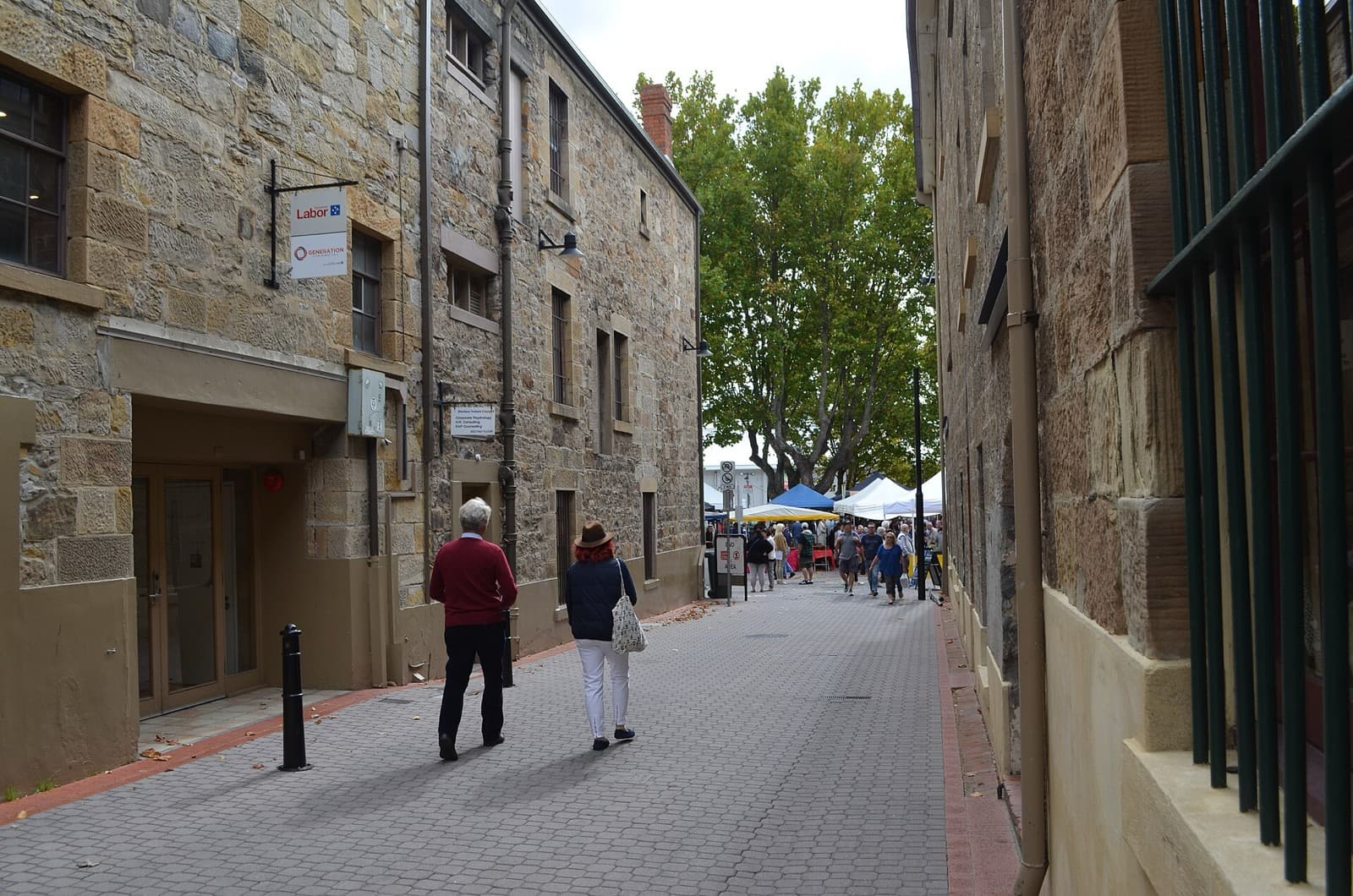
Read Hobart's honey-coloured Georgian waterfront like a page, from the convict-cut warehouses of Salamanca Place up Kelly's Steps into the sailors' and shipwrights' village of Battery Point.
Start · Salamanca Place: The Sandstone Waterfront
DirectionsStops
- 1

Salamanca Place: The Sandstone Waterfront
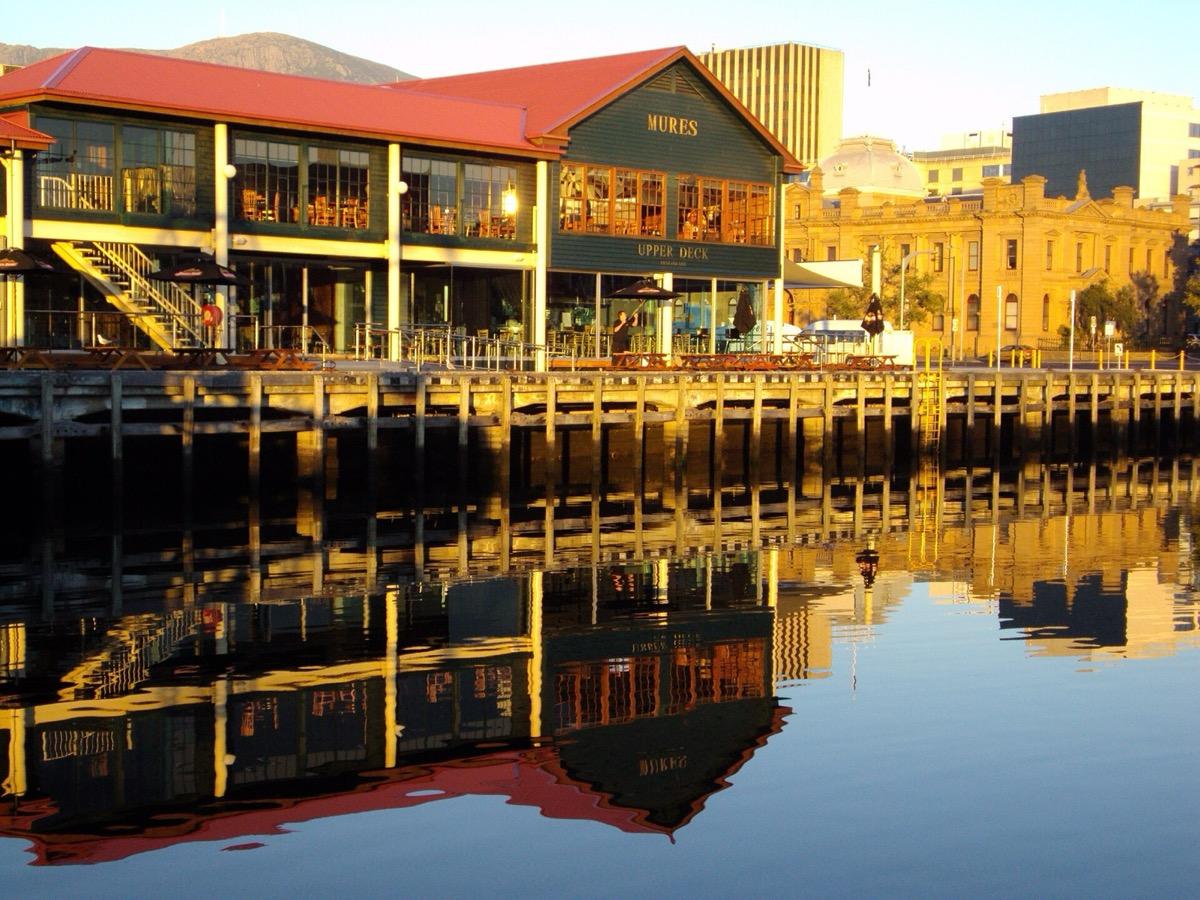
The long row of honey-coloured Georgian warehouses that stored a whaling port's wealth, cut from convict-quarried sandstone.
- 2
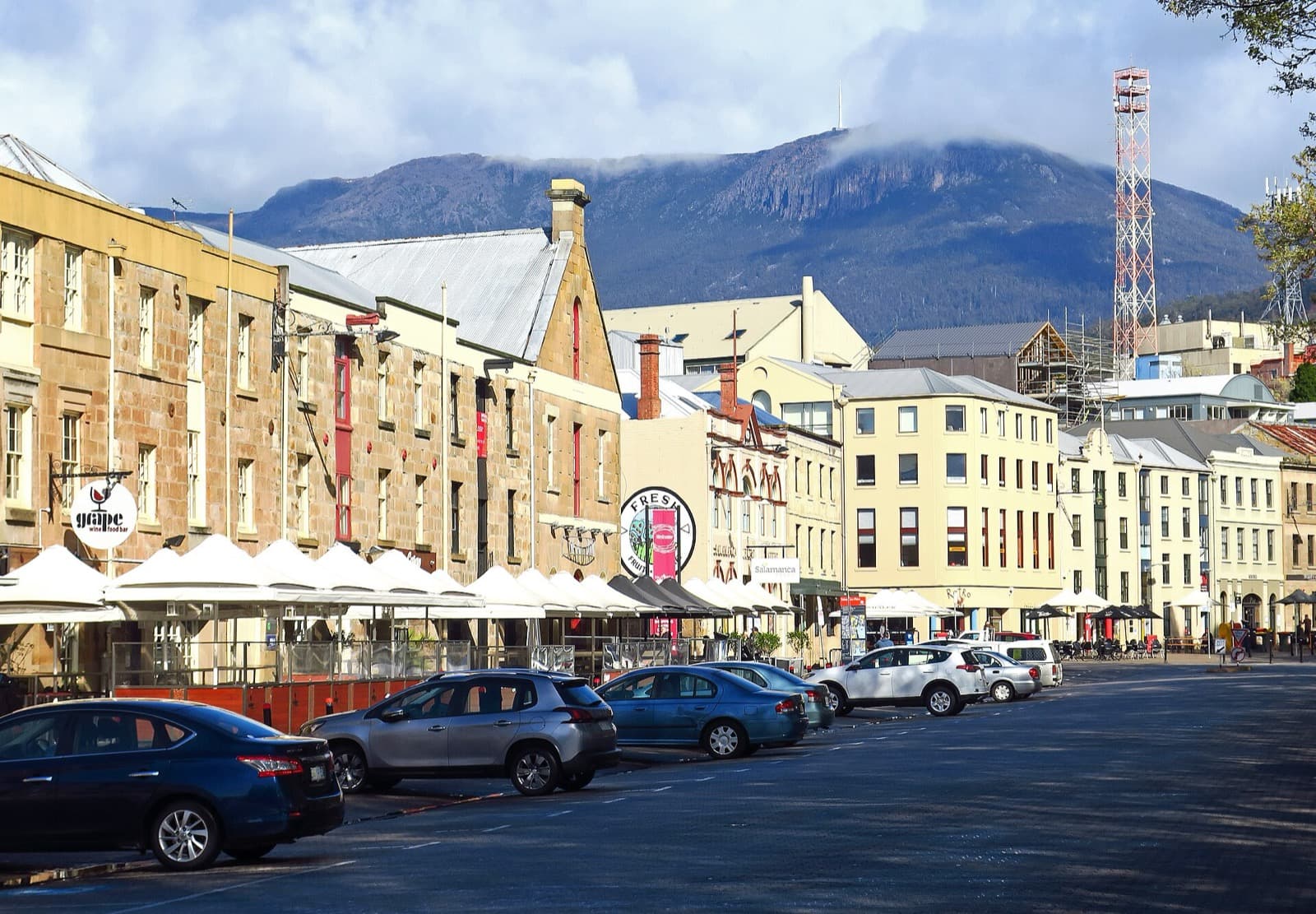
Kelly's Steps: The Convict-Cut Climb
A steep flight of stone steps cut into the sandstone cliff in eighteen thirty-nine to link the warehouses below with the village above.
- 3
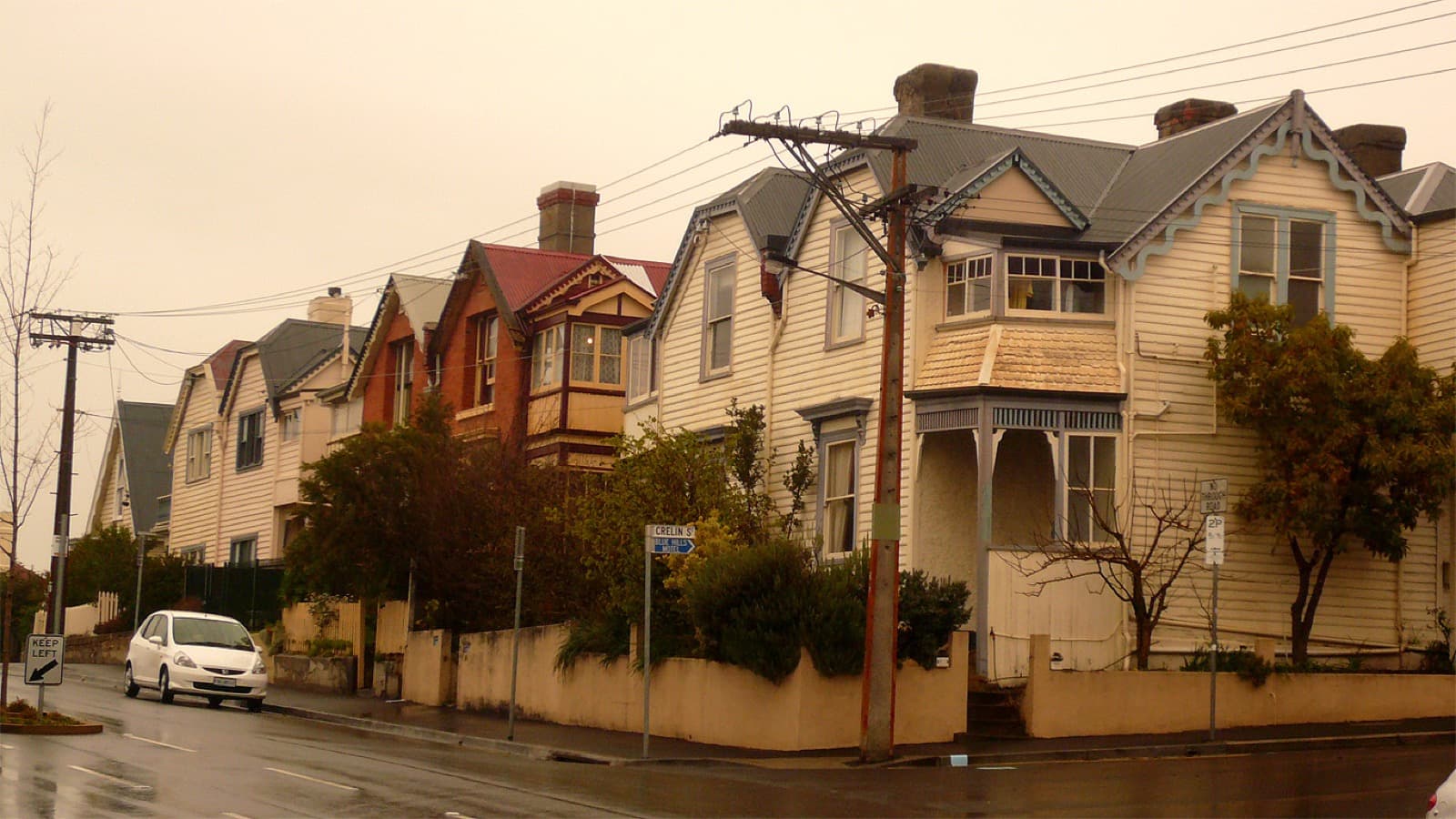
Battery Point: The Village of Sailors and Shipwrights
The old maritime village on the rise above Salamanca, kept almost intact, where seamen's cottages stood close to merchants' mansions.
- 4
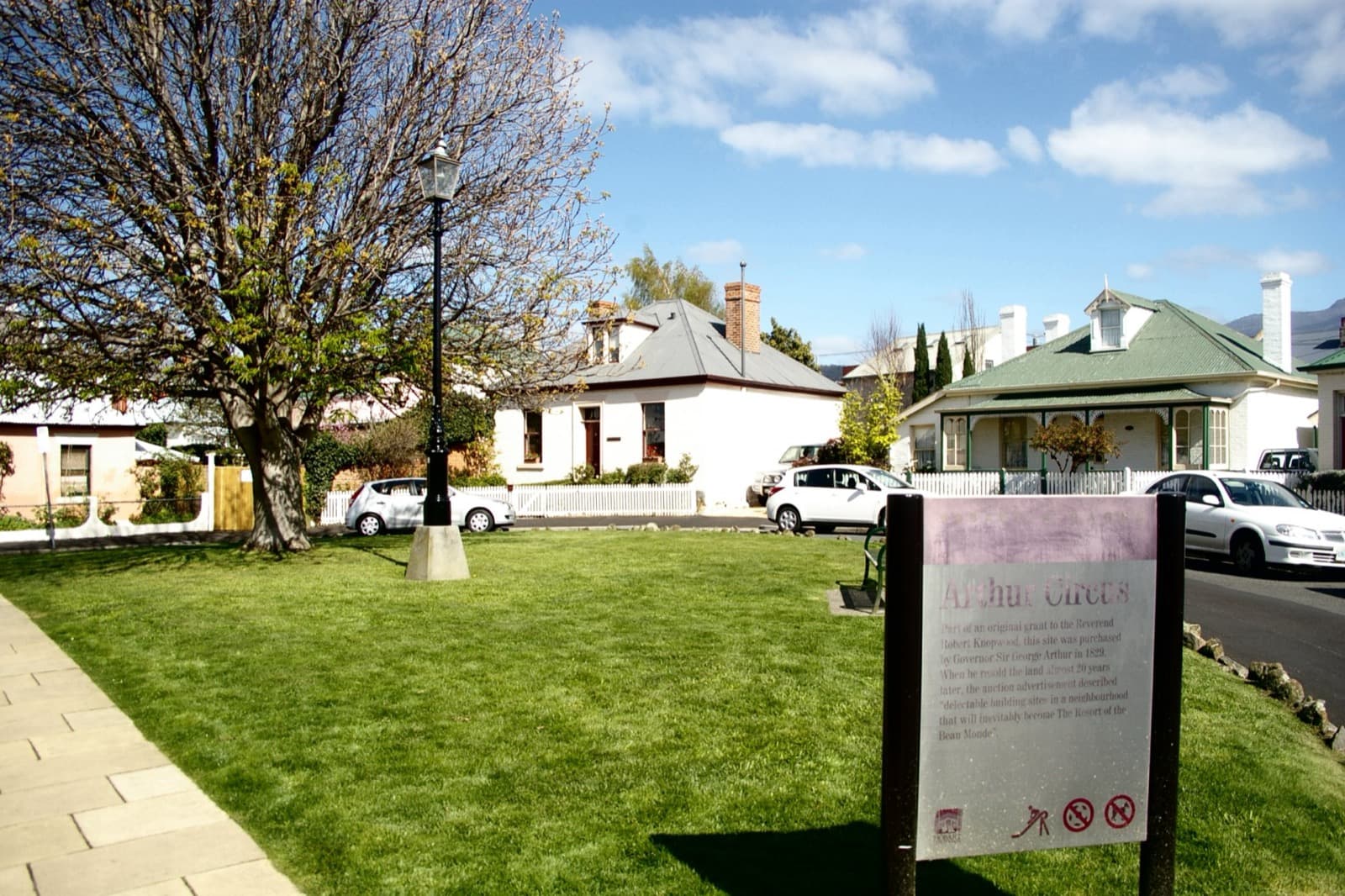
Arthur Circus: The Ring of Cottages
A ring of tiny single-storey Georgian cottages around a circular village green, unchanged for around a hundred and seventy years.
- 5
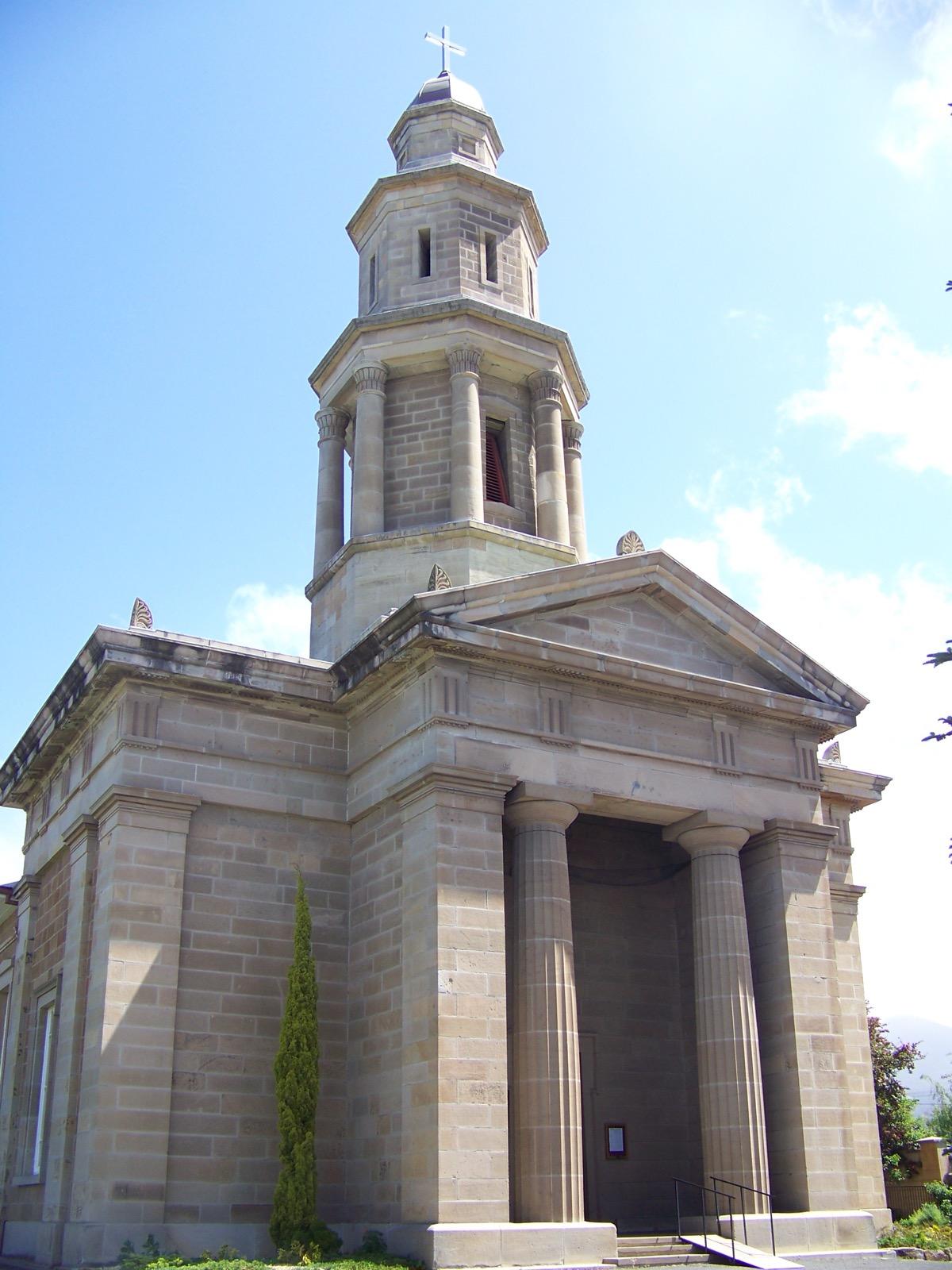
St George's Church: The Mariners' Seamark
A sandstone Georgian church on Battery Point's highest ground, whose tower once guided ships up the Derwent.
- 6
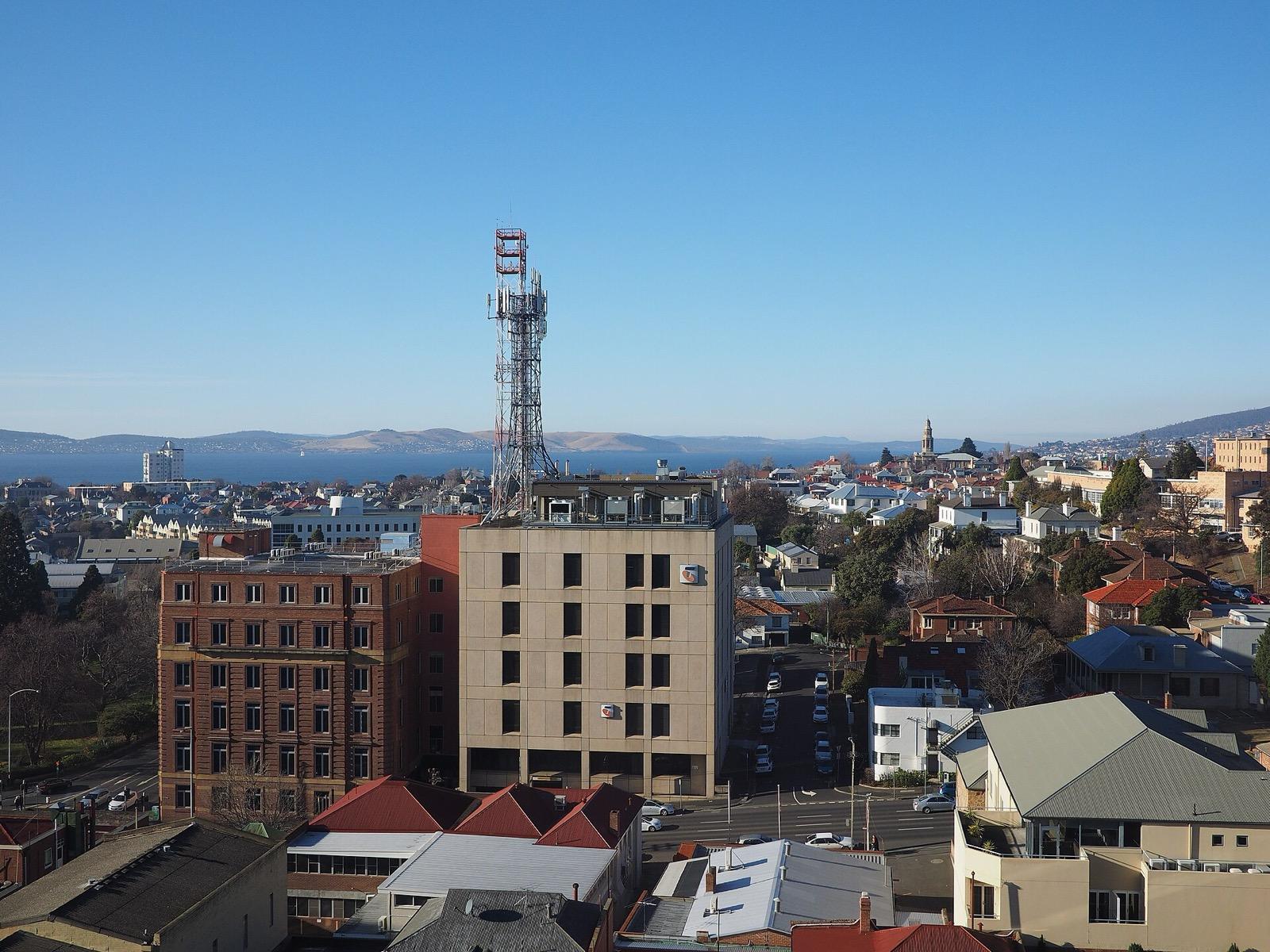
Princes Park: Where the Harbour Guns Stood
The grassy point that named the district, once the site of a harbour battery and signal station, now a park over the Derwent.
- 7
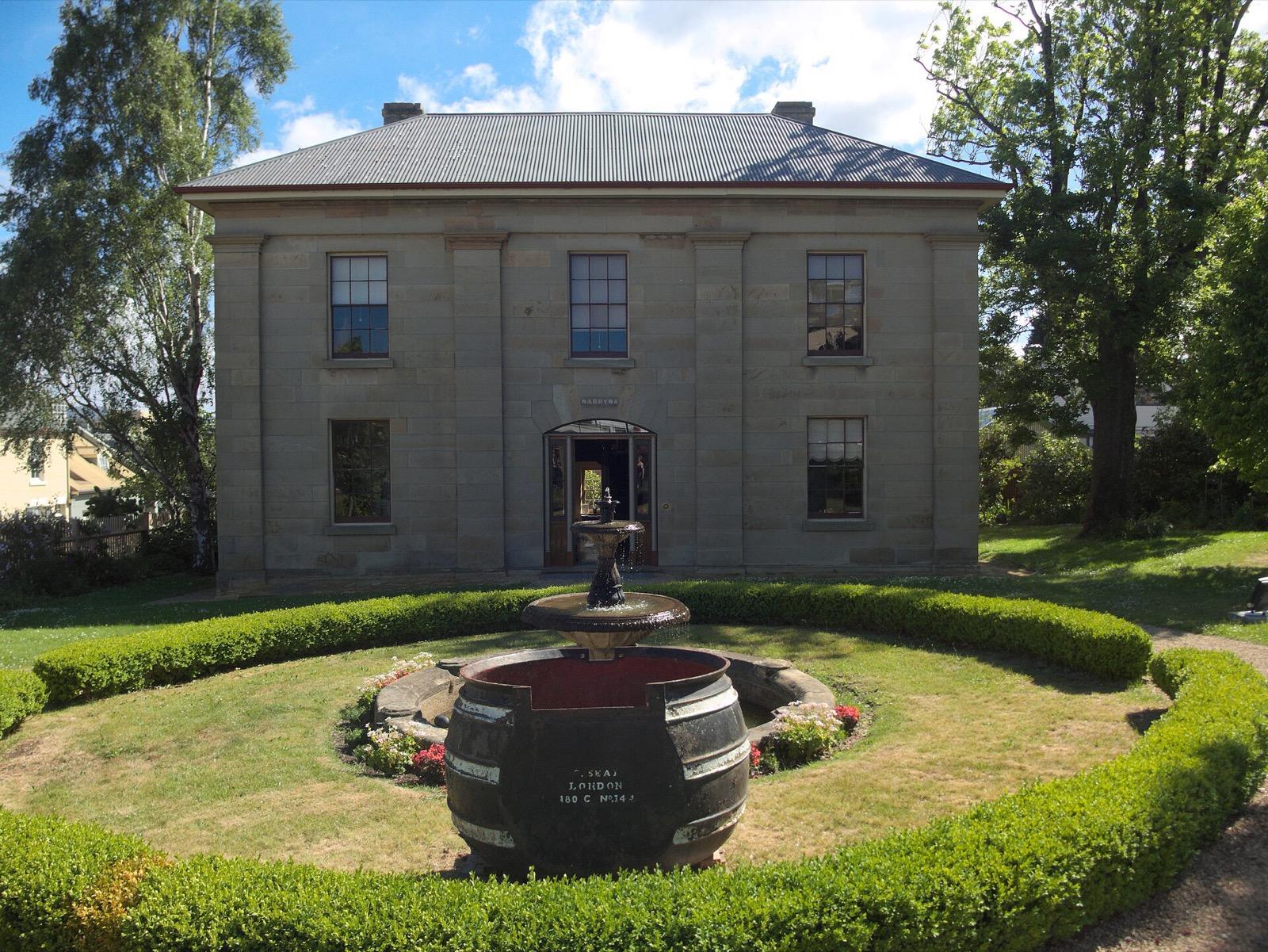
Narryna: The Merchant's House
A sandstone Georgian merchant's house on Hampden Road, built for a whaling sea captain and now a heritage museum.
Details
Best Time to Visit
Morning light on a clear day is loveliest, when the sun warms the honey-coloured sandstone along Salamanca Place and the harbour glitters. Saturdays bring the Salamanca Market and a lively, crowded scene along the warehouse row, wonderful atmosphere but far busier underfoot; a weekday gives you the quiet stone and the empty steps entirely to yourself. Late afternoon light on the Derwent from Princes Park is worth timing for. Battery Point and its cottages are calm most of the day, so linger as long as you like.
Pro Tips
- •Save a Saturday for the Salamanca Market if you want the lively scene, or come on a weekday for the quiet stone and empty steps. Both are lovely for different reasons.
- •Kelly's Steps are steep and can be slick after rain. Take them slowly and use the wall; it is a short climb with a real reward at the top.
- •The cottages of Arthur Circus and Battery Point are private homes. Enjoy them from the street and the green, and keep noise low out of courtesy to the people who live there.
- •Time your arrival at Princes Park for late afternoon if you can, when the light on the Derwent and across to kunanyi, Mount Wellington, is at its best.
- •Narryna charges entry, adults ten dollars, and keeps museum hours, so check its opening times before you count on going inside.
- •Wear proper walking shoes. The route mixes reclaimed waterfront, cut stone steps and the sloping streets of an old village on the hill.
Safety & Precautions
- •Hobart's weather off the Derwent is cool and changeable, and can turn quickly even in summer. Carry a waterproof layer and something warm, and bring sun protection for the exposed waterfront and the point.
- •Kelly's Steps and the slopes of Battery Point involve a genuine short climb on cut stone that can be slippery when wet. Take your time, watch your footing, and use handrails and walls where they exist.
- •This walk crosses the Country of the muwinina and passes places tied to the convict system and to the catastrophe suffered by the Tasmanian Aboriginal people. Move through these with quiet respect for a living culture and a real history.
- •This is a busy tourist quarter, especially around Salamanca and on market days. Keep valuables discreet in crowds and use ordinary city street awareness.
Travel advisory: Exercise Normal Precautions (Level 1).
Gallery
Related Reading
Go deeper on what you'll see, hear, and walk through.
Overview
Best Self-Guided Walking Tours in Hobart (2026)
3 min
Overview
Hobart Travel Guide: How Many Days, Getting Around, Best Time and Safety
7 min
Overview
One Day in Hobart: A Walkable Morning-to-Evening Itinerary
7 min
Thematic
Best History Walking Tours in Hobart (2026)
2 min
Thematic
Hobart: The Convict Port That Became a Capital in Sandstone
7 min
Companion
Salamanca Place: How to Read Hobart's Sandstone Waterfront
7 min
Deep dive
Arthur Circus: The Ring of Cottages That Time Left Alone in Battery Point
6 min
Read
What to Eat in Hobart: Oysters, Scallop Pie, and Dock Fish and Chips
8 min
Read the walk
The full story of Salamanca Place: Hobart's Sandstone Waterfront, in words. Prefer to listen? Play it narrated, from home or on location.
Introduction
This is a walk you take entirely at your own pace, in Hobart, Australia, through one of the most complete Georgian waterfronts anywhere in the country. It runs a little over three kilometres across seven stops, and you should give it around eighty minutes, longer if you sit on the warehouse steps by the water and let the salt air and the light on the Derwent do their work. Many people meet this quarter in a scheduled group, moving on someone else's clock. Here there is no group, no schedule, and no tip pressure, just your own quiet map and your own time to read the stone. The story begins along the long row of honey-coloured sandstone warehouses at Salamanca Place, raised in the eighteen thirties and forties to hold the wheat, wool, whale oil and spirits of a whaling port, cut and laid by convict hands. From there the route rises on the convict-cut Kelly's Steps into Battery Point, an old village of sailors and shipwrights whose narrow streets and little cottages have barely changed, and circles the doll's-house ring of Arthur Circus at its heart. It passes the mariners' church on the highest ground, reaches the grassy point where the harbour guns once stood, and closes at a merchant's sandstone house kept as a window on the colony's parlours. This is the Country of the muwinina, the traditional owners of the Hobart area, and of the palawa, the Tasmanian Aboriginal people, who are living today, and we hold their story alongside the sandstone charm. When you arrive at Salamanca Place, in front of the long row of sandstone warehouses, begin with stop one.
1. Salamanca Place: The Sandstone Waterfront
You are standing before one of the most complete rows of colonial warehouses in Australia. This long terrace of honey-coloured sandstone was raised chiefly in the eighteen thirties and forties, when a new wharf was built out into the harbour here and lined with warehouses to serve the port of Hobart Town. Run your eye along the grain of the stone and the salt on the air, and you are reading the wealth of a whaling port: these buildings held grain and wool, whale oil and spirits, imported goods and timber. By around eighteen thirty the deeper harbour at Salamanca was busy with whaling ships and sailors, smugglers and traders. The beauty here is inseparable from who made it. The stone was quarried by convict labour, and much of the ground you stand on is land reclaimed from the water in the eighteen thirties, again by convict hands, real people bound to a hard system. This is the Country of the muwinina, one band of the Tasmanian Aboriginal people, and the wider Hobart region carries the name nipaluna. The palawa, the Tasmanian Aboriginal people, are living today. The place is named for the Duke of Wellington's victory at the Battle of Salamanca in Spain in eighteen twelve; before that it was simply called The Cottage Green. In the nineteen sixties and seventies these warehouses were threatened with demolition, and the arts advocate Claudio Alcorso led the campaign to keep them; the Salamanca Arts Centre was established in the former warehouse spaces in nineteen seventy-six. Every Saturday the Salamanca Market fills this strip with people, a living scene against the old stone. Take your time along the row before you climb.
2. Kelly's Steps: The Convict-Cut Climb
Here the walk lifts you off the wharf and onto the hill. This steep flight of stone was cut straight into the sandstone cliff in eighteen thirty-nine to link the warehouses of Salamanca Place with the streets of Battery Point above. It is a short rise, forty-eight sandstone blocks, and the reward waits at the top in the quiet village on the hill. Put your hand on the wall as you go and feel the same stone. The warehouses below were built with sandstone quarried from these very cliffs, and much of the town's stonework, including these steps, was cut by convict labour. It is worth pausing on that. The convicts who shaped this stone were real people caught in a hard system, not a ghost-tour thrill, and the honey-coloured charm of Salamanca rests directly on their work. The steps are named for the whaling captain James Kelly, who used this line as his shortcut between his interests at Battery Point and the wharves below. Kelly was born in seventeen ninety-one at Parramatta in New South Wales, likely the son of a ship's cook and a convict woman transported for life from Dublin. He grew into a mariner, whaler, sealer, explorer and port official, circumnavigated Tasmania on his voyages of exploration, and in eighteen twenty-six founded the Derwent Whaling Club. Take the climb slowly, at your own breath, and step out at the top into Battery Point.
3. Battery Point: The Village of Sailors and Shipwrights
You have arrived in Battery Point, the old maritime village on the rise above the wharves, and one of the most historic corners of Hobart. Settlement here began as far back as eighteen oh four, when the colony's first chaplain was granted thirty acres on the northern slope. Through the early nineteenth century this became home to the people of the port: sailors and shipwrights, whalers and fishermen, merchants and master mariners. Wander the narrow streets and you can still read that mix in the buildings themselves, small one and two room seamen's and shipwrights' cottages standing close to the lace-trimmed mansions of merchants and ship owners, rich and poor side by side on the same hill. Around Napoleon Street the shipbuilding trade grew steadily through the eighteen forties, and the height of that activity ran from eighteen forty-nine to eighteen fifty-three, when the sound of the shipwrights would have carried across the point. What makes this place rare is how little it has changed. The village has kept its character almost intact, and many of its homes are classified by the National Trust. The district takes its name from the battery of guns established on the point in eighteen eighteen, which we will come to at the water's edge. Before any of this, and still, this is the Country of the muwinina, the traditional owners of the Hobart area; the palawa, the Tasmanian Aboriginal people, are living today. There is no need to hurry. Let the little streets take you where they will toward the ring of cottages at the village's heart.
4. Arthur Circus: The Ring of Cottages
This is the quiet climax of the village. Around a small circular green stands a ring of tiny single-storey Georgian cottages, so neat and so small they look almost like a row of doll's houses set out for a game. They were built in the eighteen forties and fifties, originally for…
Full narration for this stop unlocks with the tour.
5. St George's Church: The Mariners' Seamark
On the highest ground of Battery Point stands St George's, one of the earliest Anglican churches in Tasmania and, for generations of sailors, far more than a church. It was built of sandstone in the Neo-Classical style then fashionable in London, on a rise once known as…
Full narration for this stop unlocks with the tour.
6. Princes Park: Where the Harbour Guns Stood
This grassy point is where the district's name comes from. On this shoreline in eighteen eighteen the colony built the Mulgrave Battery, a set of harbour guns, with a signal station beside it, on land that early officers cheerfully called Blow My Skull Point after a fierce drink…
Full narration for this stop unlocks with the tour.
7. Narryna: The Merchant's House
The walk closes at a merchant's house, and a window into the parlours of the colony. Narryna is a grand sandstone Georgian home on Hampden Road, Battery Point's main street, its facade dressed with engaged columns in the Regency taste of its day. It was built about eighteen…
Full narration for this stop unlocks with the tour.