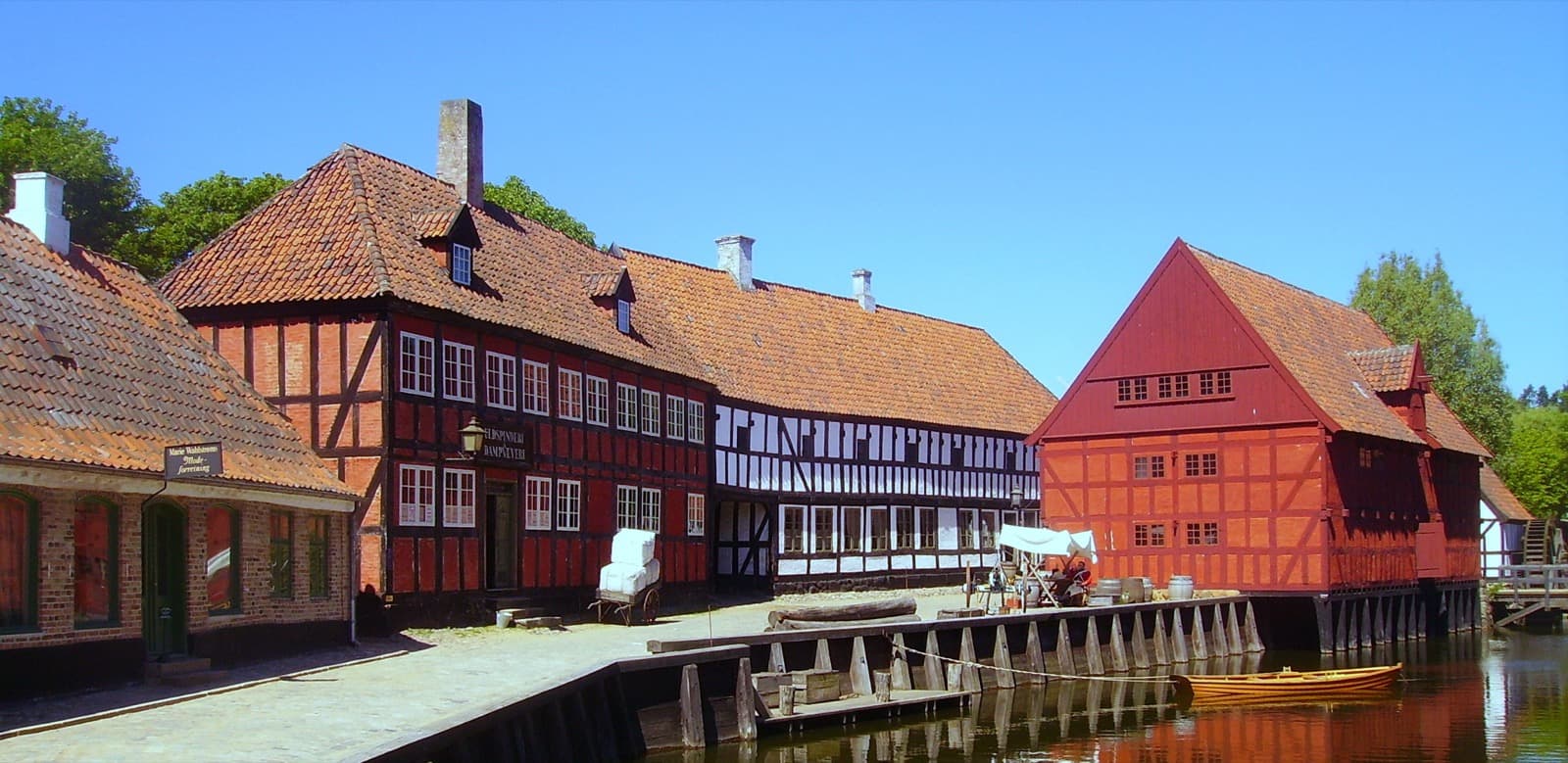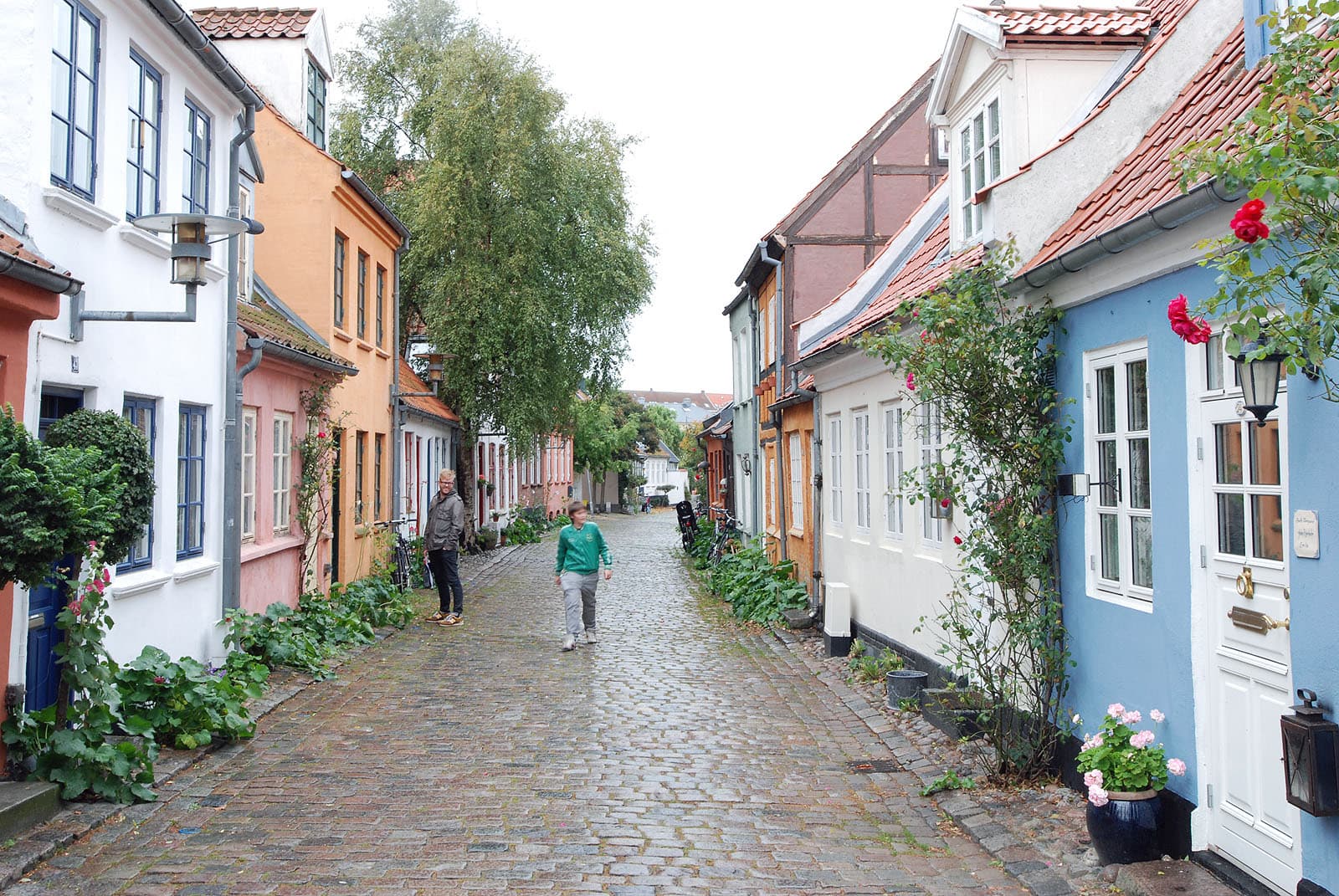
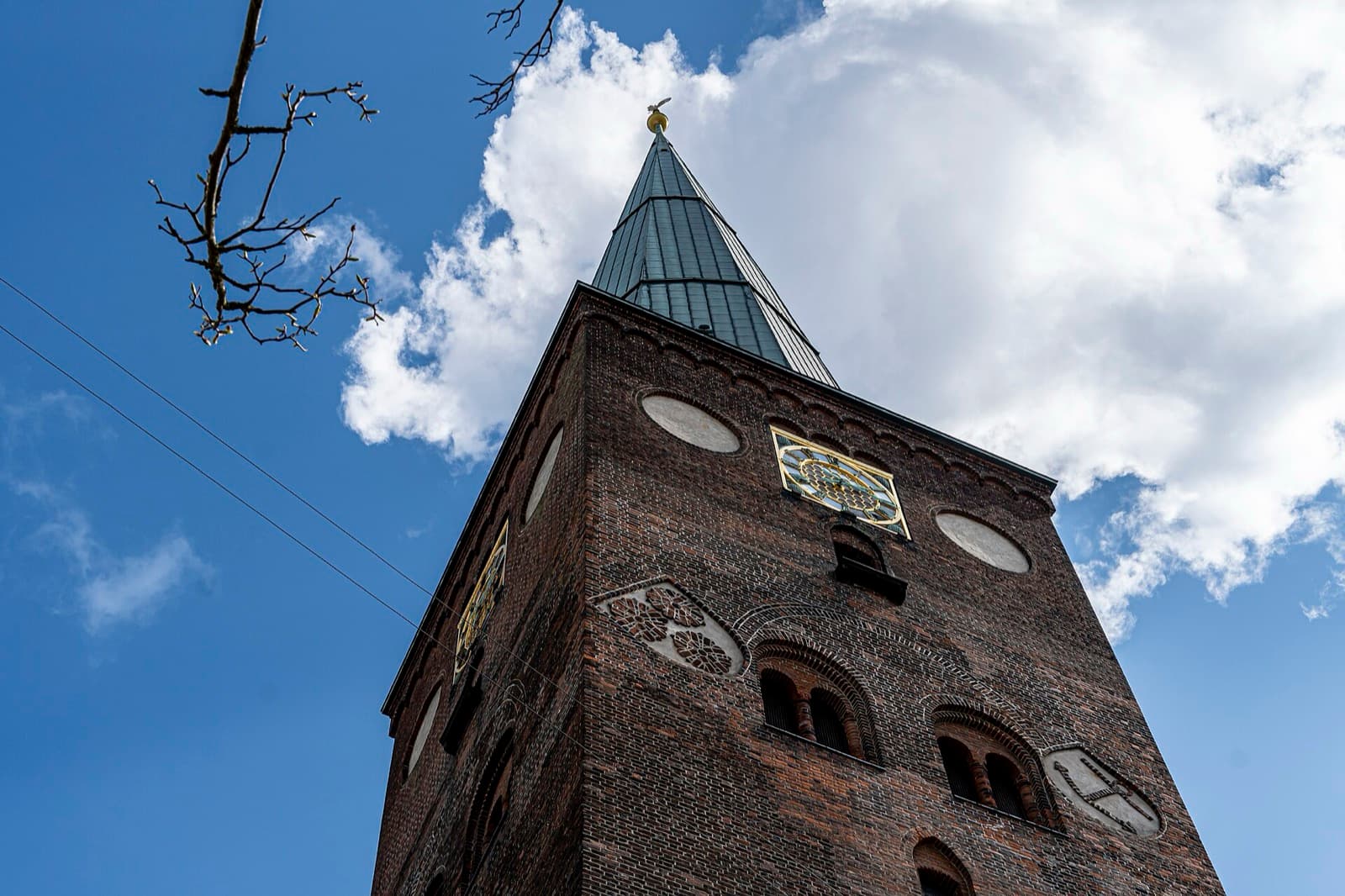
Latin Quarter: The Cathedral City in the Old Aarhus Streets
75 min · 2.7 km · easy
In Aarhus you eat Danish classics built on dark rye bread and the cold waters of Jutland: smørrebrød (open-faced rye sandwiches), the shrimp-and-fish showpiece called stjerneskud, the crackling-topped flæskestegssandwich, a proper Danish hot dog from a pølsevogn, and a flaky wienerbrød with your coffee. Order most of these at lunch, ask for rye (rugbrød) not white bread, and try the two central food halls when you want everything in one place. This guide walks through the specific dishes, where each tradition comes from, and how to order like someone who lives here, then hands you off to the Aarhus walking tours that pass most of these tables.
Start with smørrebrød, the open-faced rye sandwich
Smørrebrød is the anchor of Danish eating, and it is a lunch dish, not a dinner one. The word means buttered bread: a slice of dense, dark rye called rugbrød, spread with butter, then loaded with one main topping and its garnishes. You eat it with a knife and fork, not your hands, and you order it one piece at a time, choosing each by its topping.
The classics you will see on almost every menu are pickled herring (sild), roast beef with fried onions and remoulade, chicken salad, and shrimp. Rugbrød itself is the point of pride: a dense, seeded rye that is the traditional base for every piece. If a place offers you white bread instead, that is the tourist version. Ask for rugbrød.
A local ordering note for Jutland, the mainland peninsula Aarhus sits on: in parts of Jutland smørrebrød can arrive smothered in brown gravy (brun sovs), turning a tidy sandwich into a full fork-and-knife plate. It is regional and worth trying if you see it.
Order a stjerneskud, the showpiece of the menu
Hear a stop from this walk
Aarhus City Hall: Jacobsen's Marble Landmark
If you order one piece of smørrebrød in Aarhus, make it the stjerneskud, which means shooting star. It is the extravagant one: a base of bread topped with fried white fish (usually plaice) alongside poached fish, then piled with shrimp, lettuce, a dressing, caviar or roe, and often asparagus and lemon. It is a small architectural feat and one of the Danes' own favourites.
The dish has a documented origin. It was created by the Copenhagen smørrebrød maker Ida Davidsen in 1962, made to mark the visit of Soviet cosmonaut Yuri Gagarin to Copenhagen, which is where the celestial name comes from. In 2022, Copenhagen restaurants marked its sixtieth anniversary. You will find it across Aarhus in both traditional lunch rooms and modern kitchens that give it a gourmet twist.
Eat a flæskestegssandwich, the roast-pork street classic
For a hot, handheld meal, the flæskestegssandwich is the Aarhus street-food staple. It is a bun filled with thin slices of flæskesteg, Danish roast pork cooked so the top layer of fat crisps into a salty, shattering crackling. The sandwich is finished with braised red cabbage, pickled cucumber, and mustard, ketchup, or mayonnaise.
Flæskesteg on its own, the full roast with crackling, gravy, caramelized potatoes, and red cabbage, is a Danish Christmas centrepiece, but the sandwich version is sold year-round. Look for it at the food halls and dedicated counters around the city center. Ask for it med det hele, meaning with everything, if you want the full set of toppings.
Grab a pølse from a pølsevogn
The Danish hot dog is its own institution, and you buy it from a pølsevogn, a mobile sausage cart parked on a square or street corner. The sausage (pølse) is served in a bun, often sticking out both ends, with the traditional trio of condiments: ketchup, mustard, and Danish remoulade, plus raw and crispy fried onions and pickled cucumber slices if you ask for the works. A version served in a hollowed-out bun with the sausage tucked inside is the ristet hot dog.
This is the cheapest sit-anywhere meal in Denmark and a genuine part of daily life, not a tourist gimmick. Order it med det hele to get every topping. Børnenes Kontor is a long-running hot dog spot in Aarhus if you want a fixed address rather than hunting for a cart.
Finish with wienerbrød and coffee
What English speakers call a Danish pastry, Danes call wienerbrød, which means Vienna bread. The name records a real history. The laminated-dough technique, cold butter folded repeatedly into yeasted dough to make flaky layers, was brought to Denmark by Austrian bakers around the mid-1800s, associated with a Danish bakers' strike in 1850 when foreign bakers were hired to keep bread on the shelves. Denmark adopted the method, kept the Vienna name, and made the pastry its own.
Pair it with coffee at a bakery (bageri) mid-morning or mid-afternoon. If you are in Aarhus in the colder months, watch for æbleskiver, round pancake puffs cooked in a special dished cast-iron pan and dusted with sugar, served with jam. They appear around Christmas markets and the cold season.
Where to eat it all in one place
Two food halls put most of these dishes within a few steps of each other, which is the easy answer if you want variety without planning.
Aarhus Street Food occupies the old bus garages at Ny Banegaardsgade 46, near the main railway and bus stations, with more than thirty vendors covering Danish smørrebrød and flæskestegssandwich alongside tacos, banh mi, and soul food. It runs long daily hours (roughly late morning until 9 pm, later on weekends), entry is free, you pay per stall, and dogs and outdoor seating are welcome. Confirm exact hours on the day, as they shift seasonally.
Aarhus Central Food Market sits at Sankt Knuds Torv, closer to the cathedral and the old-town lanes. It has historically closed Monday and Tuesday and opened Wednesday through Sunday from late morning into the evening, so plan around a possible early-week closure and check current hours before you go.
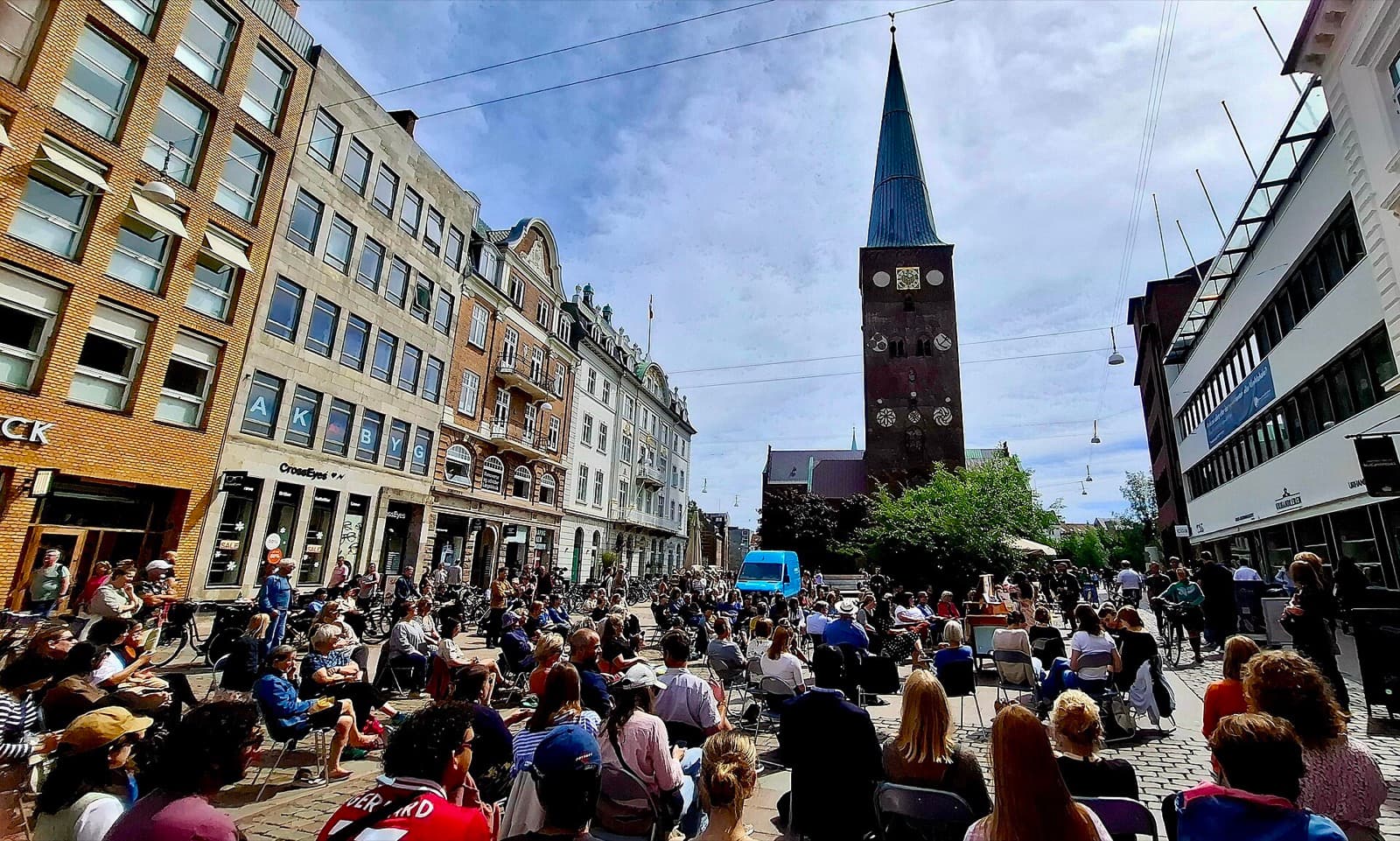
Both markets are steps from the routes in our Aarhus walking tours. The Latin Quarter and cathedral loop passes the old market squares of Store Torv and Lille Torv, which have gathered traders for eight centuries and are lined with lunch spots, so pausing for a stjerneskud fits neatly into that walk. The culture-city route runs down to the Aarhus Oe docklands and the Dokk1 waterfront, where you will find waterside cafes and harbour dining. See both tours and everything else the city offers on the Aarhus page.
How to order like a local
A few habits make ordering smoother. Smørrebrød and stjerneskud are lunch food, so aim for the middle of the day rather than the evening. Choose smørrebrød by its topping, one piece at a time, and take rugbrød over white bread. Say med det hele for a hot dog or pork sandwich with all the trimmings. Denmark uses the Danish krone, not the euro, and cards are accepted almost everywhere, though a small amount of cash is handy at a pølsevogn. Aarhus is a calm, walkable city, so the honest safety note is simply to watch cobblestones and wet quaysides underfoot rather than worry about anything at the table.
Sources
- 8 traditional Danish foods you really shouldn't miss, VisitDenmark
- Stjerneskud (Shooting Star) origin, Chef's Pencil
- Copenhagen restaurants celebrate the 60-year jubilee of The Shooting Star, Wonderful Copenhagen
- Danish Food: 5 Must-Try Dishes in Aarhus, In Your Pocket
- Aarhus Street Food, VisitAarhus
- Danish pastry, Wikipedia
Frequently asked questions
- What food is Aarhus known for?
- Aarhus is known for Danish classics built on dark rye bread and Jutland seafood: smørrebrød (open-faced rye sandwiches), the stjerneskud shooting-star sandwich piled with fried fish and shrimp, the crackling-topped flæskestegssandwich, Danish hot dogs from a pølsevogn cart, and flaky wienerbrød pastries. Most of the sandwich dishes are eaten at lunch. Two central food halls, Aarhus Street Food and Aarhus Central Food Market, let you sample several in one place.
- What is a stjerneskud and where was it invented?
- A stjerneskud, meaning shooting star, is an elaborate open-faced sandwich topped with fried and poached white fish, shrimp, lettuce, dressing, and caviar or roe. It was created by Copenhagen smørrebrød maker Ida Davidsen in 1962 to mark the visit of cosmonaut Yuri Gagarin to Copenhagen, which is where the celestial name comes from. It is now one of Denmark's favourite lunch dishes and appears on menus across Aarhus.
- How do you order smørrebrød like a local?
- Order smørrebrød at lunch, not dinner, and choose it one piece at a time by its topping, such as pickled herring, roast beef, or shrimp. Ask for rugbrød, the dense dark rye, rather than white bread. Eat it with a knife and fork rather than picking it up. In parts of Jutland you may see it served with brown gravy (brun sovs) as a hot plate.
- Why is Danish pastry called wienerbrød?
- Wienerbrød means Vienna bread. The laminated-dough technique of folding cold butter into yeasted dough to make flaky layers was brought to Denmark by Austrian bakers around the mid-1800s, associated with a Danish bakers' strike in 1850 when foreign bakers were hired. Denmark adopted the method and kept the Vienna name, so what English speakers call a Danish pastry, Danes call wienerbrød.
- Where can I try many Aarhus dishes in one place?
- Two food halls concentrate the options. Aarhus Street Food, in the old bus garages at Ny Banegaardsgade 46 near the stations, has more than thirty vendors, free entry, pay-per-stall, and long daily hours into the evening. Aarhus Central Food Market at Sankt Knuds Torv, near the cathedral, has historically closed Monday and Tuesday and opened Wednesday through Sunday, so check current hours before visiting.
- What is the cheapest traditional meal in Aarhus?
- A Danish hot dog from a pølsevogn, a mobile sausage cart, is the cheapest traditional street meal. The sausage comes in a bun with ketchup, mustard, and Danish remoulade, plus raw and crispy fried onions and pickled cucumber if you order it med det hele, meaning with everything. Carts appear on squares and street corners, and Børnenes Kontor is a long-running hot dog spot in the city if you prefer a fixed address.
Ready to experience it?
Latin Quarter: The Cathedral City in the Old Aarhus Streets
75 min · 2.7 km · easy
More from Aarhus
Explore more at your own pace.
Aarhus Travel Guide: Days, Transport, Safety, and Costs
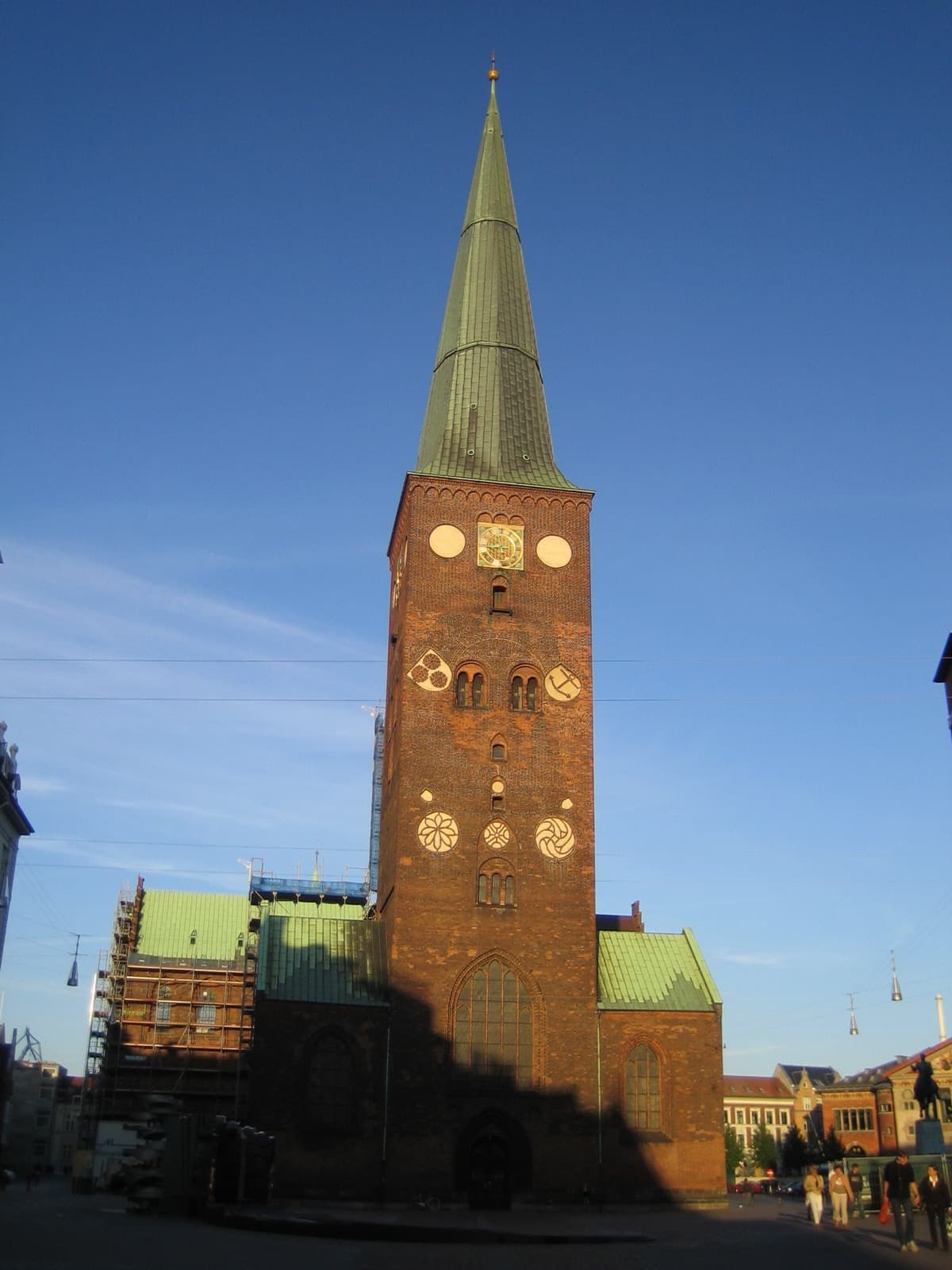
Aarhus: From the Viking River Mouth to the Rainbow in the Sky
Aarhus Cathedral and the Old Streets: Reading a City's Whole Story in a Few Hundred Metres
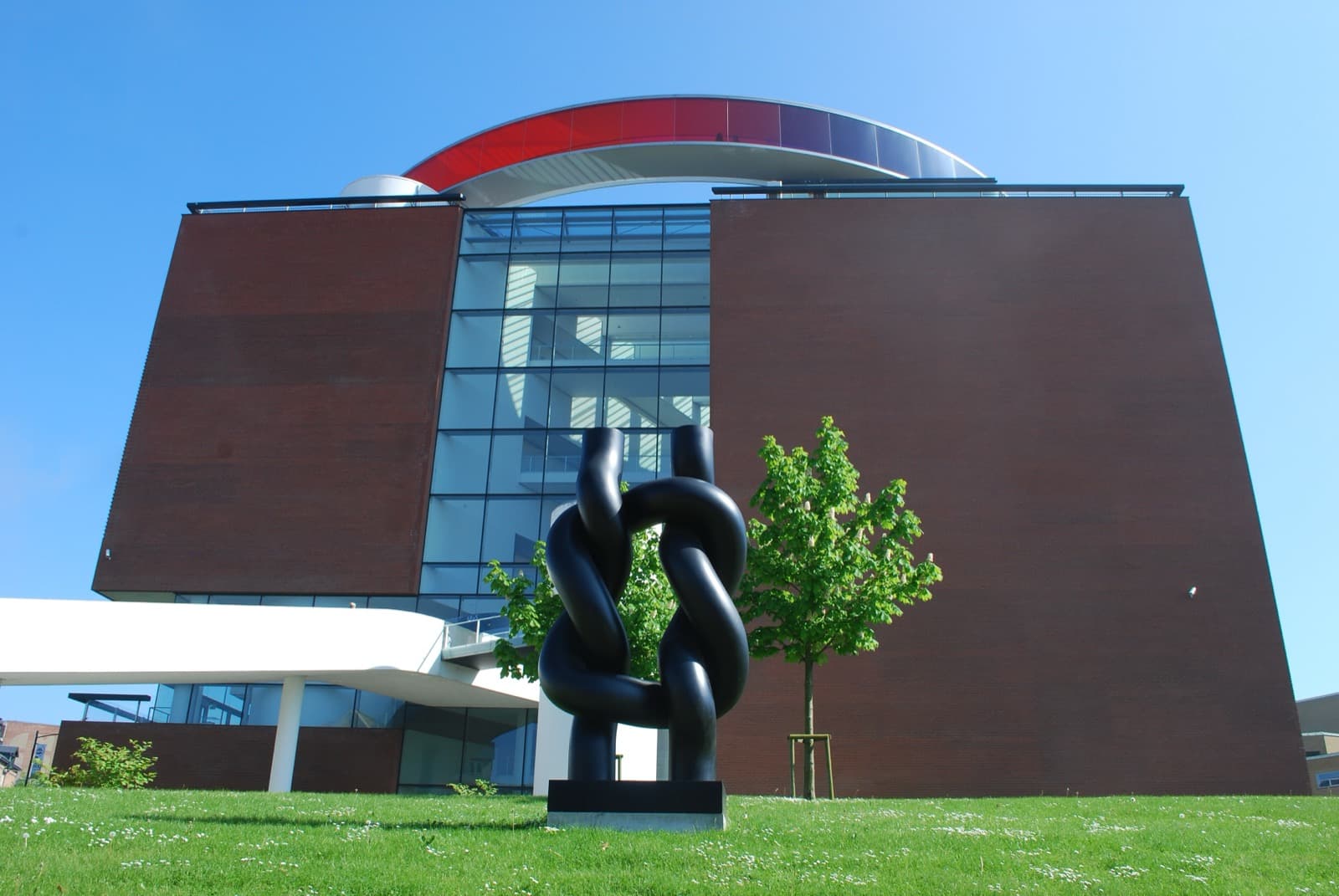
ARoS and the Rainbow Ring: How to Read Aarhus's Reinvention From the Roof Down
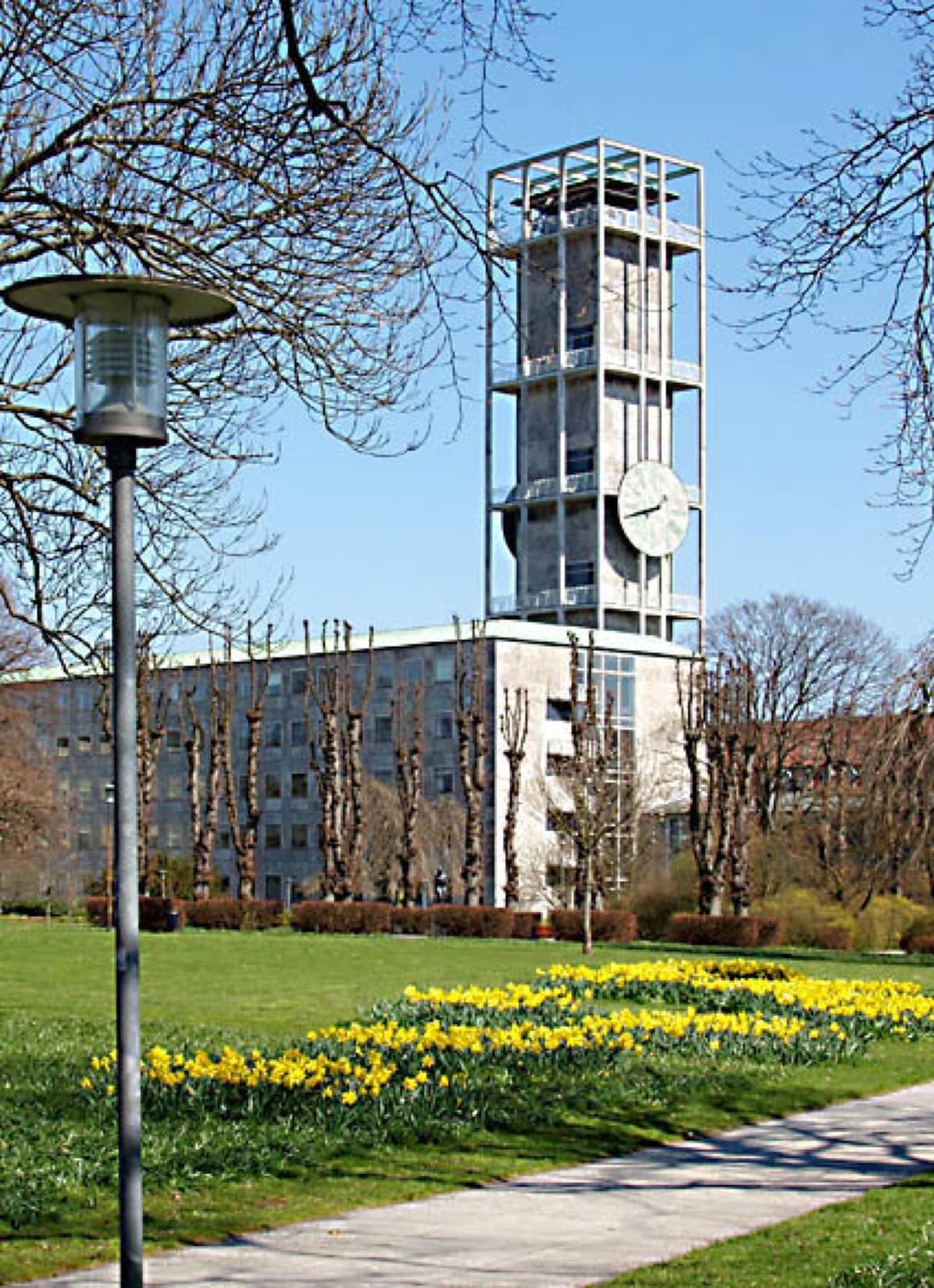
Aarhus City Hall: How a Plain Modernist Box Grew a Marble Tower