Latin Quarter: The Cathedral City in the Old Aarhus Streets
75 min · 2.7 km · easy
Aarhus reinvented itself twice. First it turned a Viking river mouth called Aros into a cathedral city, and then, over the last half-century, it turned a working harbour town into a capital of culture. Read the city in that order, from the eighth-century settlement at the water's edge to the ring of coloured glass above the ARoS art museum, and Denmark's second city stops being a checklist of sights and becomes a single argument about how a place remakes itself while staying itself. Two self-guided walks trace that argument on foot, one through the oldest streets and one across the reinvented modern city, and you take both at your own pace.
From Aros to a cathedral city
The first chapter is written in a few hundred metres of cobbled lanes. Aarhus began in the latter half of the eighth century, where a little river met the sea, and the people who lived here called the place Aros, the old Danish word for a river mouth. That Viking trading place grew into a bishop's city, and the Latin Quarter walking tour reads the whole span in a compact loop.
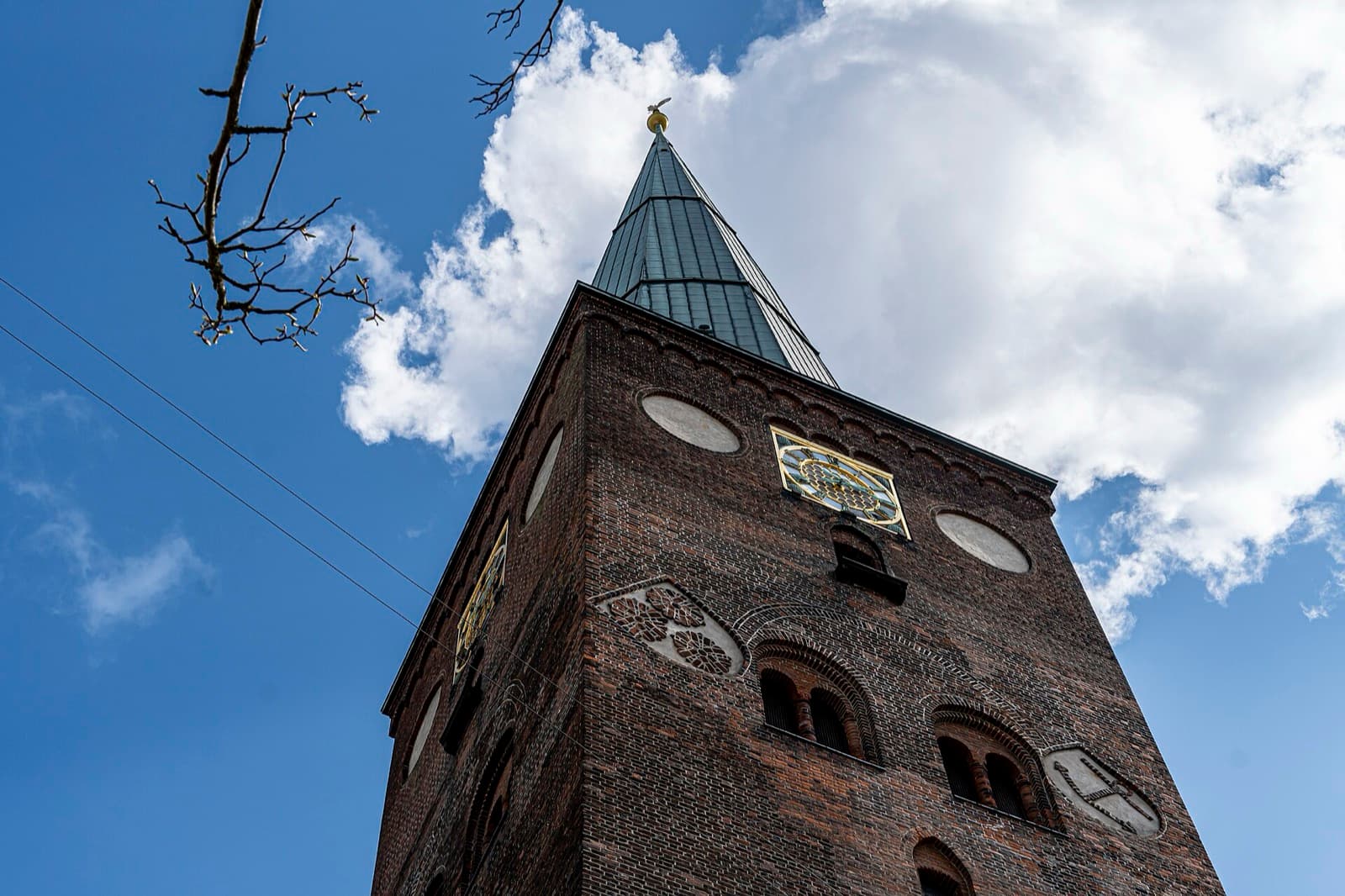
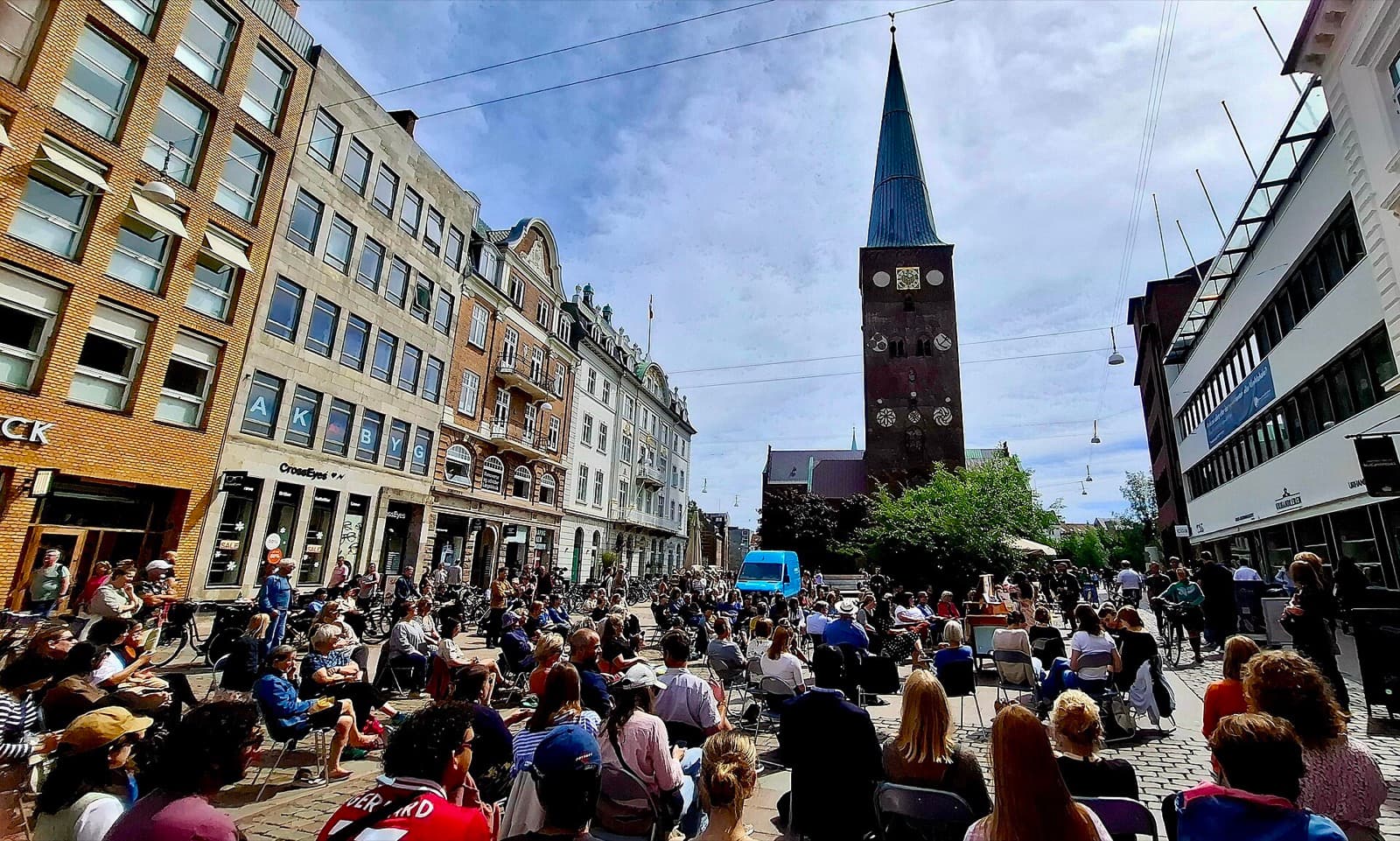
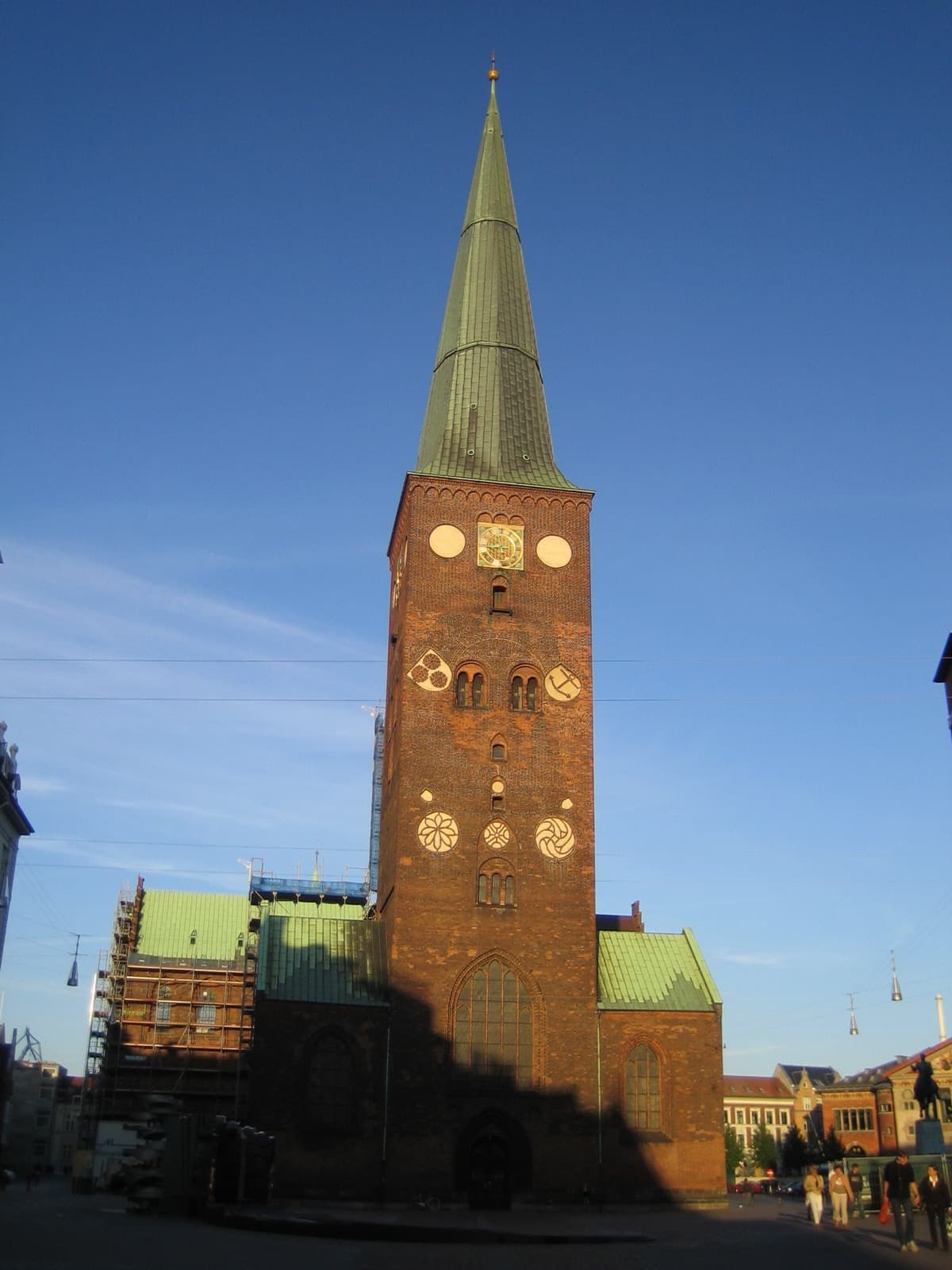
The marquee is Aarhus Cathedral, the Domkirke, dedicated to Saint Clement, the patron saint of sailors, a fitting patron for a town born at a river mouth. It is the longest and tallest church in Denmark: ninety-three metres long and ninety-six metres to the top of the tower. Its story runs in two chapters. Romanesque construction began after eleven ninety under Bishop Peder Vognsen, the church was completed about thirteen hundred, then a fire forced a Gothic brick reconstruction from fourteen forty-nine to about fifteen hundred. Inside, the walls hold about two hundred and twenty square metres of frescoes, more than any other church in Denmark, painted roughly between fourteen seventy and fifteen twenty, and a carved altarpiece by the Luebeck master Bernt Notke, dedicated on Easter Sunday fourteen seventy-nine.
The cathedral is the town's ambition made visible, but its true beginning hides underground. Beneath the Church of Our Lady, Vor Frue Kirke, lies a crypt church built around ten sixty, after an earlier wooden church burned. The National Museum of Denmark records it as the oldest extant stone church in Scandinavia, older than the cathedral of Saint Clement that later took the bishop's seat. It was lost from memory for centuries, rediscovered only in the nineteen fifties during renovations, and reopened on the tenth of November nineteen fifty-seven. So the two churches bind together: the giant on Store Torv and the quiet stone room below the Church of Our Lady, the town's first cathedral, mentioned about eleven eighty.
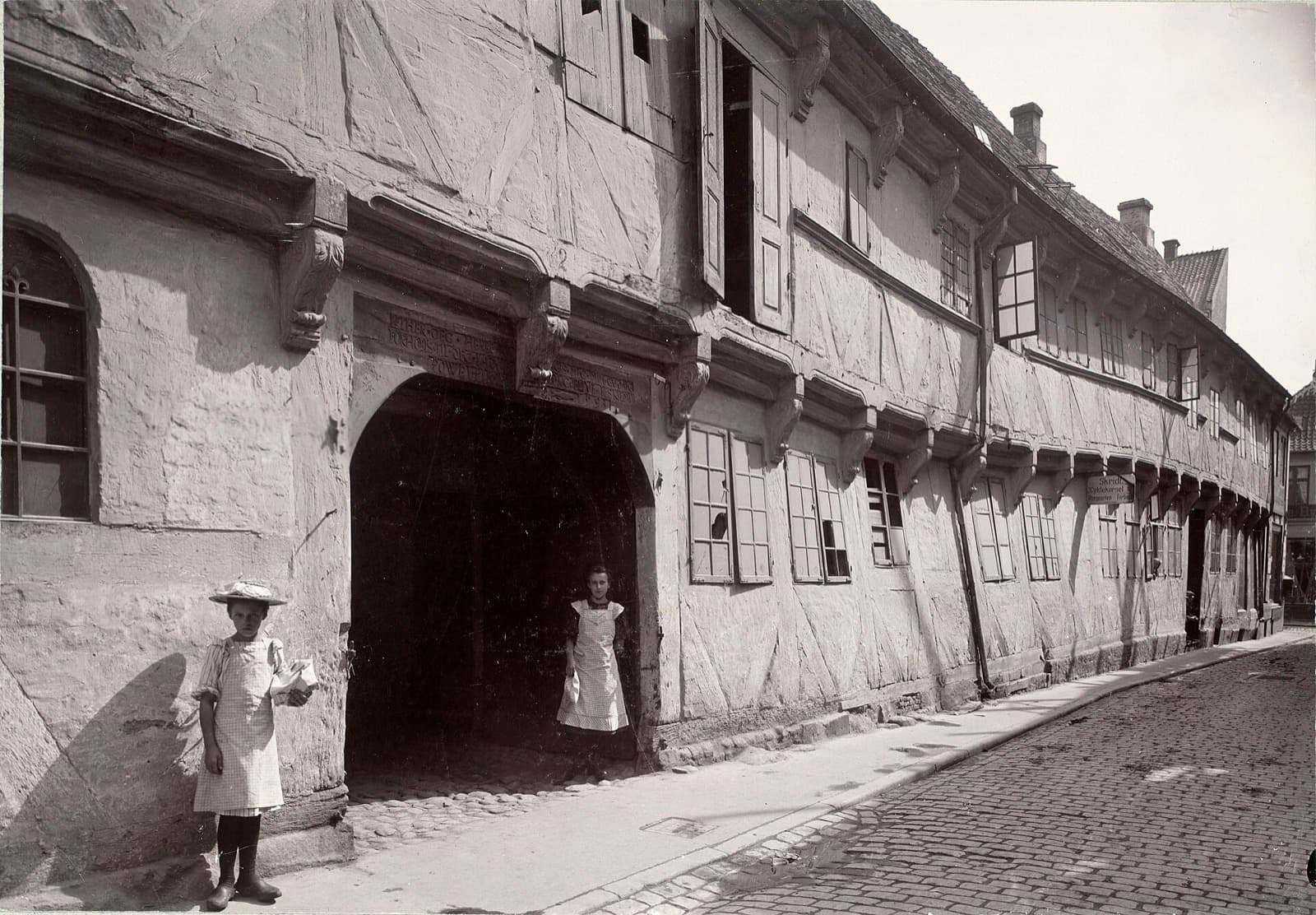
Around them sits the layered medieval town. Store Torv, the Big Square and the largest public square in the city, emerged about the year twelve hundred alongside the cathedral's construction. Lille Torv, one of the oldest squares, took shape around twelve fifty. The Latin Quarter itself is the oldest part of Aarhus, though the name Latinerkvarteret is modern, adopted only in the nineteen nineties in a nod to Paris. What is ancient is the ground: the street Volden, meaning the rampart, was laid out before fifteen hundred along the line of the westernmost earthen rampart that once defended early Aros. A block from that Gothic giant runs Moellestien, a short cobbled lane of small pastel cottages hung with hollyhocks and roses. The lane has existed since before thirteen hundred, but most of its cottages were built between eighteen seventy and eighteen eighty-five as modest rental homes for workers and small craftsmen. It is a lived-in residential street, not a film set, so pass quietly.
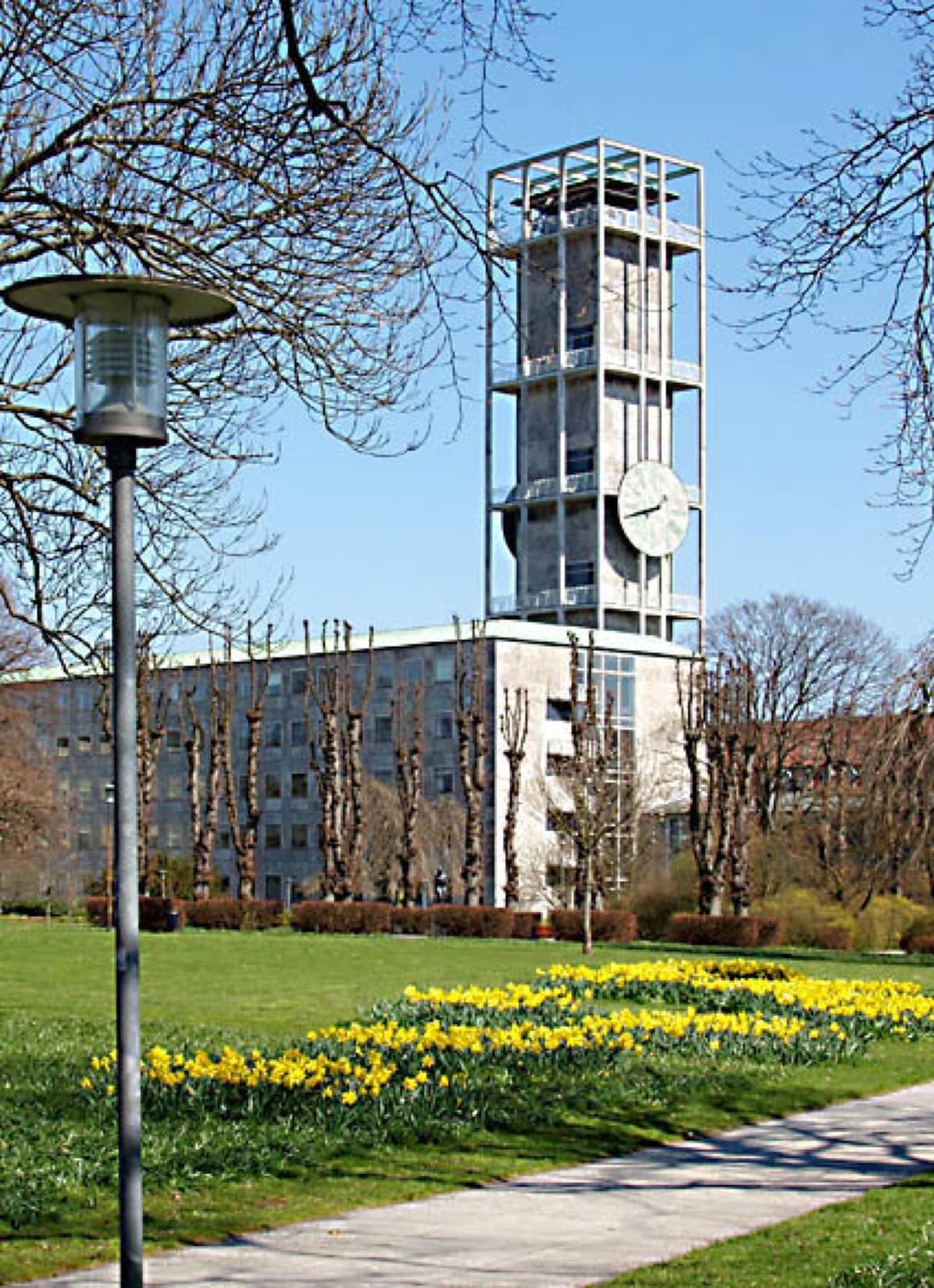
The chapter closes on a hinge between old and new. At the southern edge of the old town stands Aarhus City Hall, Aarhus Raadhus, designed by Arne Jacobsen and Erik Moeller and inaugurated on the second of June nineteen forty-one, a landmark of Danish functionalism. It is clad in about six thousand square metres of grey Norwegian marble from the Porsgrunn quarry, with a slender clock tower sixty metres tall. Neither the tower nor the marble were in the first design; both were added after public pressure. Controversial when new, it entered the Danish Culture Canon for architecture in two thousand and six.
The reinvented city
Hear a stop from this walk
Aarhus City Hall: Jacobsen's Marble Landmark
The second chapter picks up where the industrial city left off. For most of the nineteenth century Aarhus ran on shipping, timber and factories, a working harbour town. Over the last half-century it rebuilt its identity around art, learning and design, a story that reached a high point when Aarhus was European Capital of Culture in twenty seventeen, sharing the year with Paphos in Cyprus under the theme Rethink. The ARoS and reinvented-city walking tour traces that transformation across the modern city, bracketed by two moments of glass.
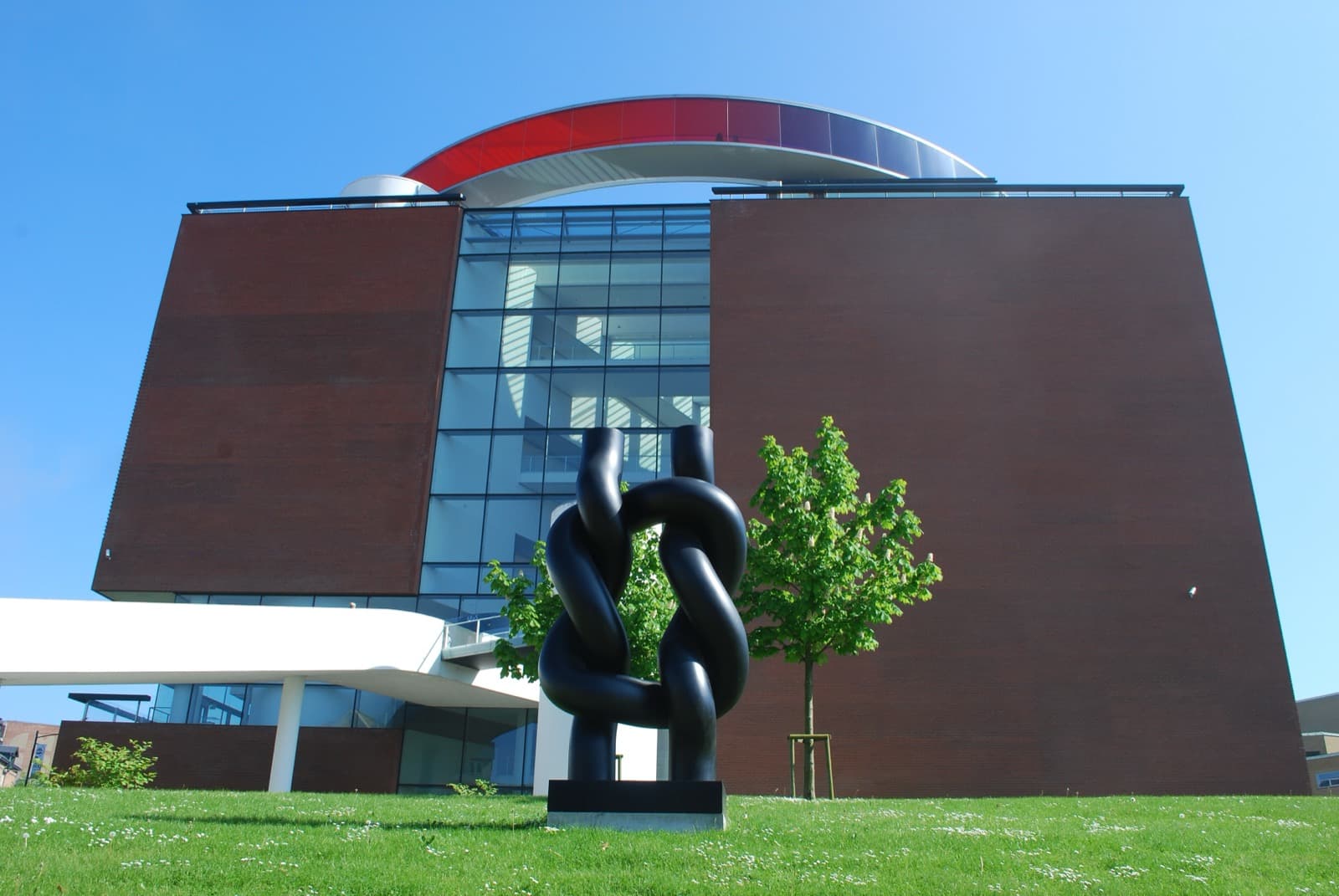
It opens at ARoS Aarhus Kunstmuseum, which opened on the seventh of April two thousand and four, designed by Schmidt Hammer Lassen. On its roof sits Your Rainbow Panorama by the Danish-Icelandic artist Olafur Eliasson, inaugurated on the twenty-eighth of May twenty eleven: a circular walkway glazed in every colour of the spectrum, about one hundred and fifty metres in circumference, so the whole city shifts hue as you walk it. That coloured ring over the red-brick cube is the single image of the reinvented city. A few steps away, Musikhuset Aarhus, the Music Hall, opened in nineteen eighty-two and expanded between two thousand and five and two thousand and eight, with a glass foyer of about two thousand square metres holding living palm and olive trees. It houses the Aarhus Symphony Orchestra, the Danish National Opera and the Royal Academy of Music, and offers free weekend performances under the glass.
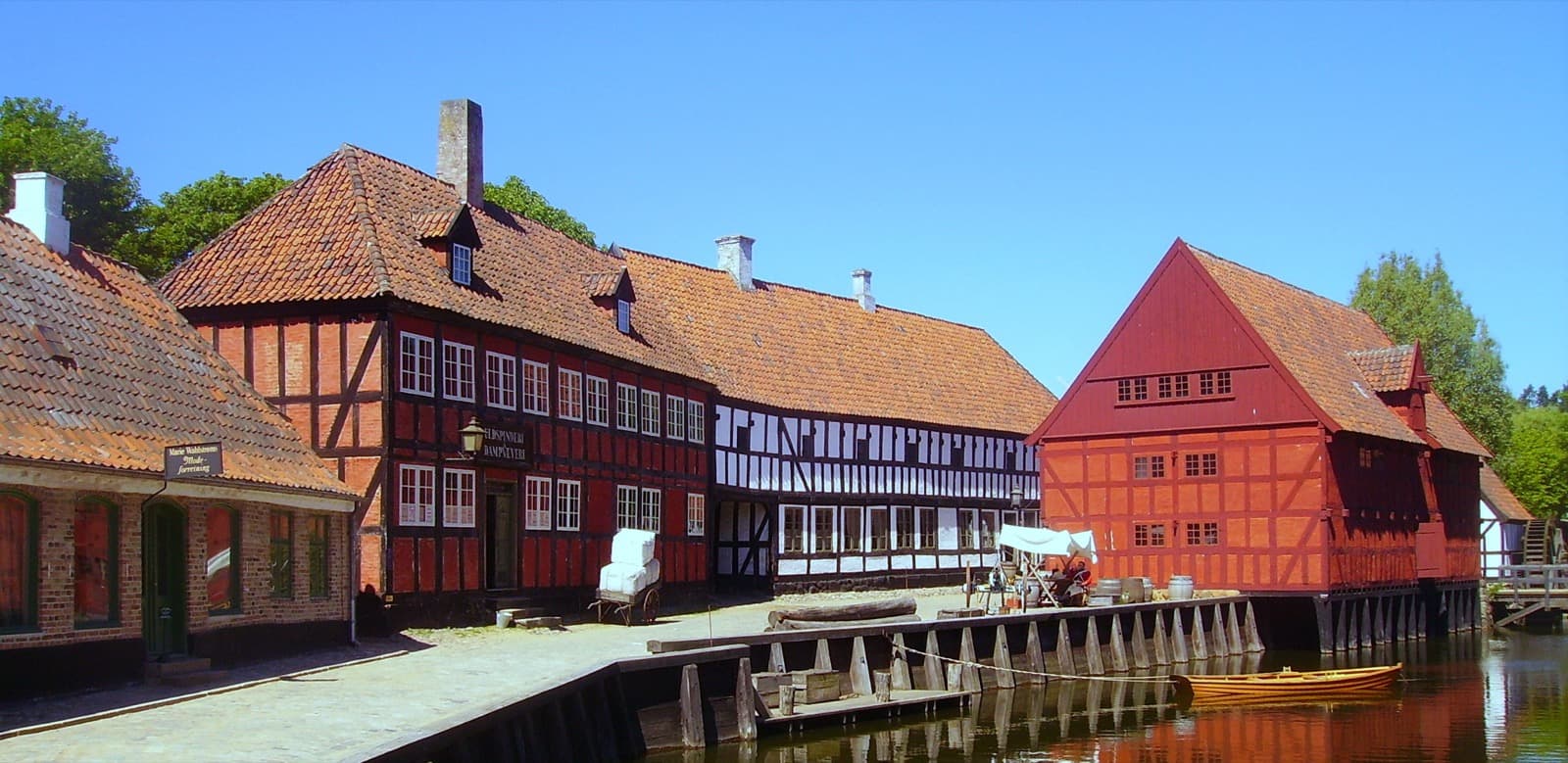
Then the walk turns its theme inside out at Den Gamle By, a modern museum that painstakingly rebuilt an old town. Founded in nineteen fourteen by the historian Peter Holm, it gathered some seventy-five timber-framed houses from about twenty Danish towns and rebuilt them plank by plank, Denmark's first open-air museum devoted to town life. A city that spent the nineteenth century as a working port later chose to reassemble the old Denmark that industry had swept past. From there the route climbs the terraced Botanical Gardens, founded in eighteen seventy-three, whose modern glass-and-steel tropical dome was rebuilt between twenty eleven and late twenty fourteen, into the University Park of Aarhus University, founded on the eleventh of September nineteen twenty-eight, the second oldest university in Denmark. Its yellow-brick functionalist pavilions, designed by Kay Fisker, C.F. Moeller and Povl Stegmann, opened in nineteen thirty-three and read as a single warm-toned work of architecture across a green slope.
The walk descends to the climax at Aarhus Oe, Aarhus Island, the former container port remade from the two thousands into a district for roughly ten to twelve thousand residents. Where cranes once loaded timber, the skyline now carries The Iceberg's jagged white towers and the Lighthouse tower, one hundred and forty-two metres tall and completed in twenty twenty-three, Denmark's tallest building. At Basin seven, harbour baths opened in the summer of twenty eighteen, so people swim where ships once berthed. It ends at Dokk1, the great cantilevered glass library inaugurated on the twentieth of June twenty fifteen, designed by the same firm behind ARoS, the largest public library in Scandinavia. Coloured glass in the sky at the start, clear glass over the water at the end.
Reading the two chapters as one
The through-line is continuity, not rupture. Aarhus never stopped being a real port; it chose, deliberately, to build culture and design where the industry used to work. The cathedral that meant to last, the crypt hidden beneath a later church, the rampart preserved in a street name, and the rainbow ring placed at the summit of a brick cube are all the same civic instinct across a thousand years. Walk the Aarhus walking tours in sequence and you can hold the whole span in an afternoon, from the Viking river mouth to the rainbow in the sky, on your own clock.
Sources
Frequently asked questions
- What was Aarhus called before, and how old is it?
- Aarhus began in the latter half of the eighth century, where a little river met the sea, and its early settlers called the place Aros, the old Danish word for a river mouth. It grew from that Viking trading place into a cathedral city. The street Volden in the Latin Quarter still follows the line of the westernmost earthen rampart that once defended early Aros.
- What is the oldest church in Aarhus?
- The oldest stone in the city lies beneath the Church of Our Lady, Vor Frue Kirke, in a crypt church built around ten sixty. The National Museum of Denmark records it as the oldest extant stone church in Scandinavia. It was lost for centuries, rediscovered in the nineteen fifties, and reopened on the tenth of November nineteen fifty-seven.
- How big is Aarhus Cathedral?
- Aarhus Cathedral is the longest and tallest church in Denmark, ninety-three metres long and ninety-six metres to the top of its tower. It is dedicated to Saint Clement, the patron saint of sailors. Inside it holds about two hundred and twenty square metres of frescoes, more than any other church in Denmark, painted roughly between fourteen seventy and fifteen twenty.
- What is the rainbow walkway on top of ARoS?
- It is Your Rainbow Panorama, a work by the Danish-Icelandic artist Olafur Eliasson, inaugurated on the twenty-eighth of May twenty eleven. It is a circular walkway about one hundred and fifty metres in circumference, glazed in every colour of the spectrum, mounted on slender columns above the museum roof. Walking its full circle carries you through the whole rainbow as the city outside changes colour.
- When was Aarhus a European Capital of Culture?
- Aarhus was European Capital of Culture in twenty seventeen, sharing the year with Paphos in Cyprus under the theme Rethink. The title marked a half-century in which the city rebuilt its identity around art, learning and design. Landmarks of that reinvention include ARoS, Den Gamle By, and the harbour district of Aarhus Oe.
Ready to experience it?
Latin Quarter: The Cathedral City in the Old Aarhus Streets
75 min · 2.7 km · easy
More from Aarhus
Explore more at your own pace.
Aarhus Travel Guide: Days, Transport, Safety, and Costs
One Day in Aarhus: A Walkable Itinerary From Cathedral to Harbour
Aarhus Cathedral and the Old Streets: Reading a City's Whole Story in a Few Hundred Metres
ARoS and the Rainbow Ring: How to Read Aarhus's Reinvention From the Roof Down
Aarhus City Hall: How a Plain Modernist Box Grew a Marble Tower