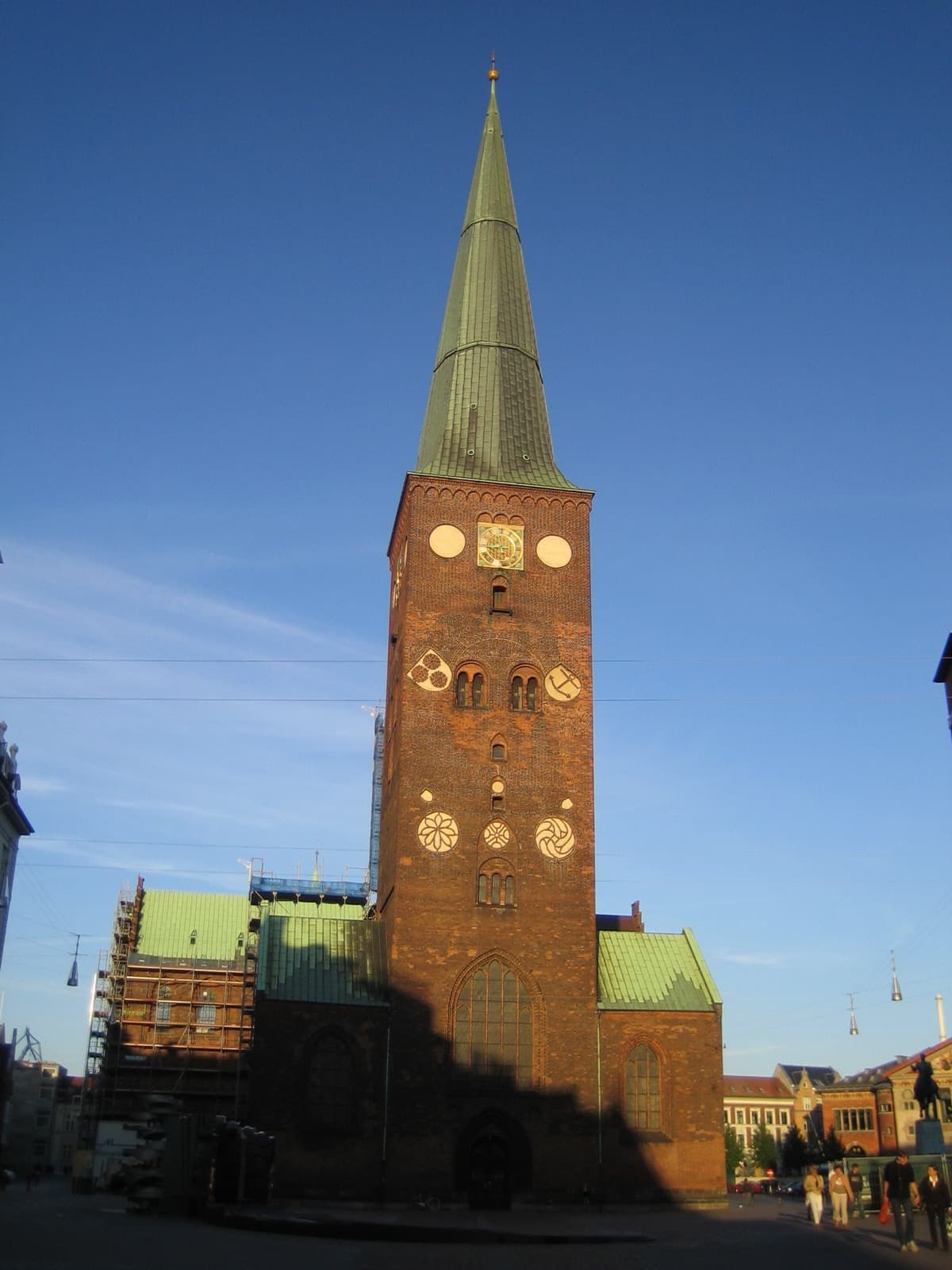
Aarhus Cathedral is the tallest and longest church in Denmark, but the more interesting fact about it is that you can read the whole story of the city from its doorstep. The cathedral rises over Store Torv in the oldest heart of Aarhus, and within a few hundred metres of cobbled lanes around it lie a Viking rampart line, an ancient crypt older than the cathedral itself, a lane of workers' cottages, and a cool marble City Hall from 1941. The settlement began in the latter half of the eighth century, where a little river met the sea, and the people who lived here called the place Aros, the old Danish word for a river mouth. This is the argument of a self-guided walk through that old core, and the cathedral is the way into it.
The marquee that opens the walk
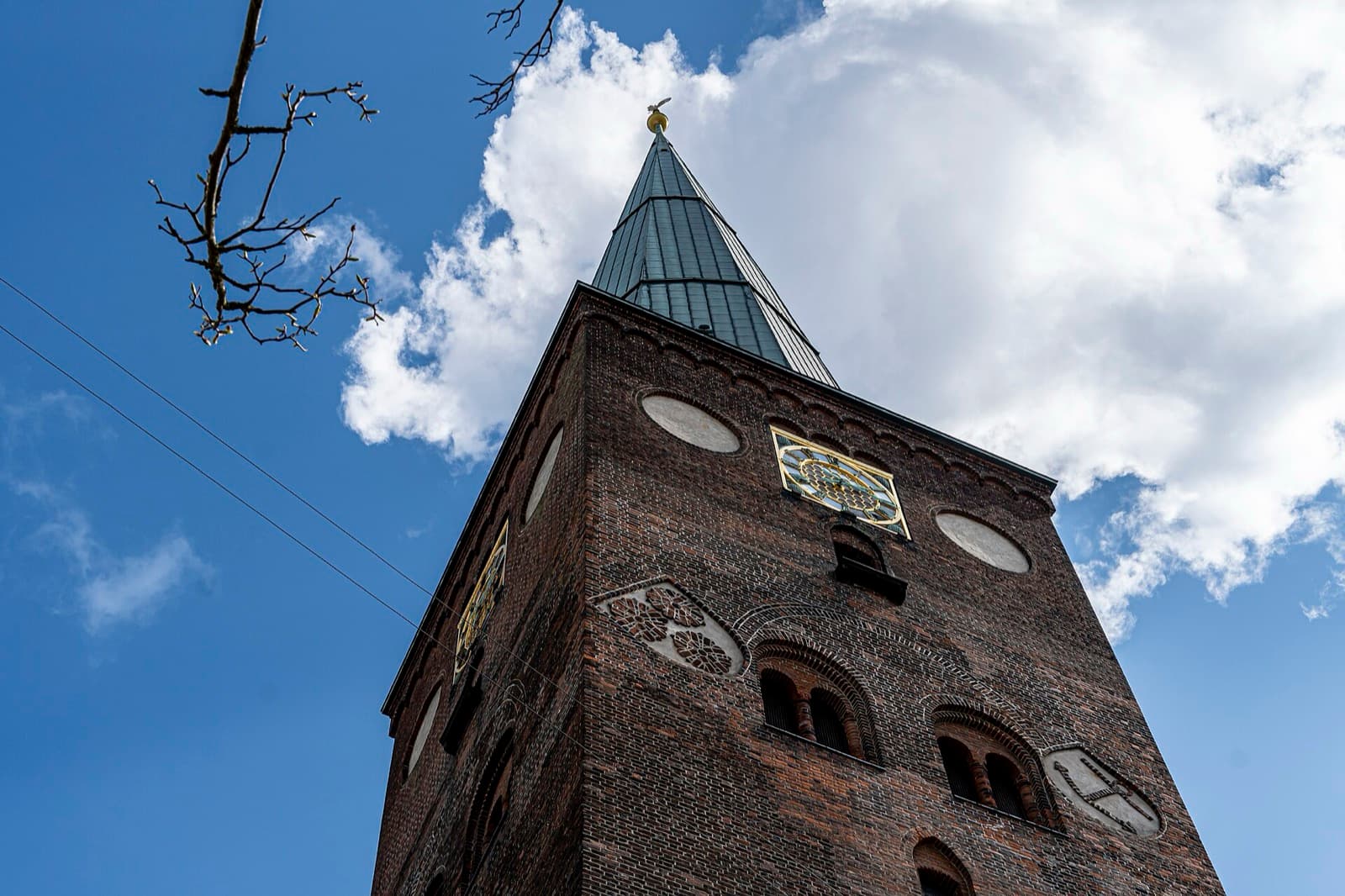
Start with the building itself. Aarhus Cathedral, the Domkirke, is dedicated to Saint Clement, the patron saint of sailors, a fitting patron for a town born at a river mouth. It is 93 metres long and 96 metres to the top of its tower, which makes it both the longest and the tallest church in the country. Its story comes in two chapters. Romanesque construction began after 1190 under Bishop Peder Vognsen, and the church was finished around 1300 in the round-arched Romanesque style, with a flat timber ceiling. Then fire changed everything. A Gothic brick reconstruction ran from 1449 to about 1500, giving the tall brick Gothic form you see today.
Step inside and the walls carry more history than the guidebooks usually mention. The cathedral holds about 220 square metres of frescoes, more than any other church in Denmark, painted roughly between 1470 and 1520. Among them you can find Saint Christopher, Saint Clement, Saint Michael, and Saint George with the dragon. At the far end stands the great carved altarpiece by the Luebeck master Bernt Notke, dedicated on Easter Sunday 1479 and given by Bishop Jens Iversen Lange. Its centre panel shows Saint Clement, and opposite him Saint John the Baptist. This is one of the longest churches in the country, and standing under its high brick vaults, you feel the ambition of a small coastal town that meant to build something to last.
That ambition is the thread the rest of the walk follows. Everything else in the old town is either older than the cathedral or an answer to it.
The squares and the medieval grid
Hear a stop from this walk
Aarhus City Hall: Jacobsen's Marble Landmark
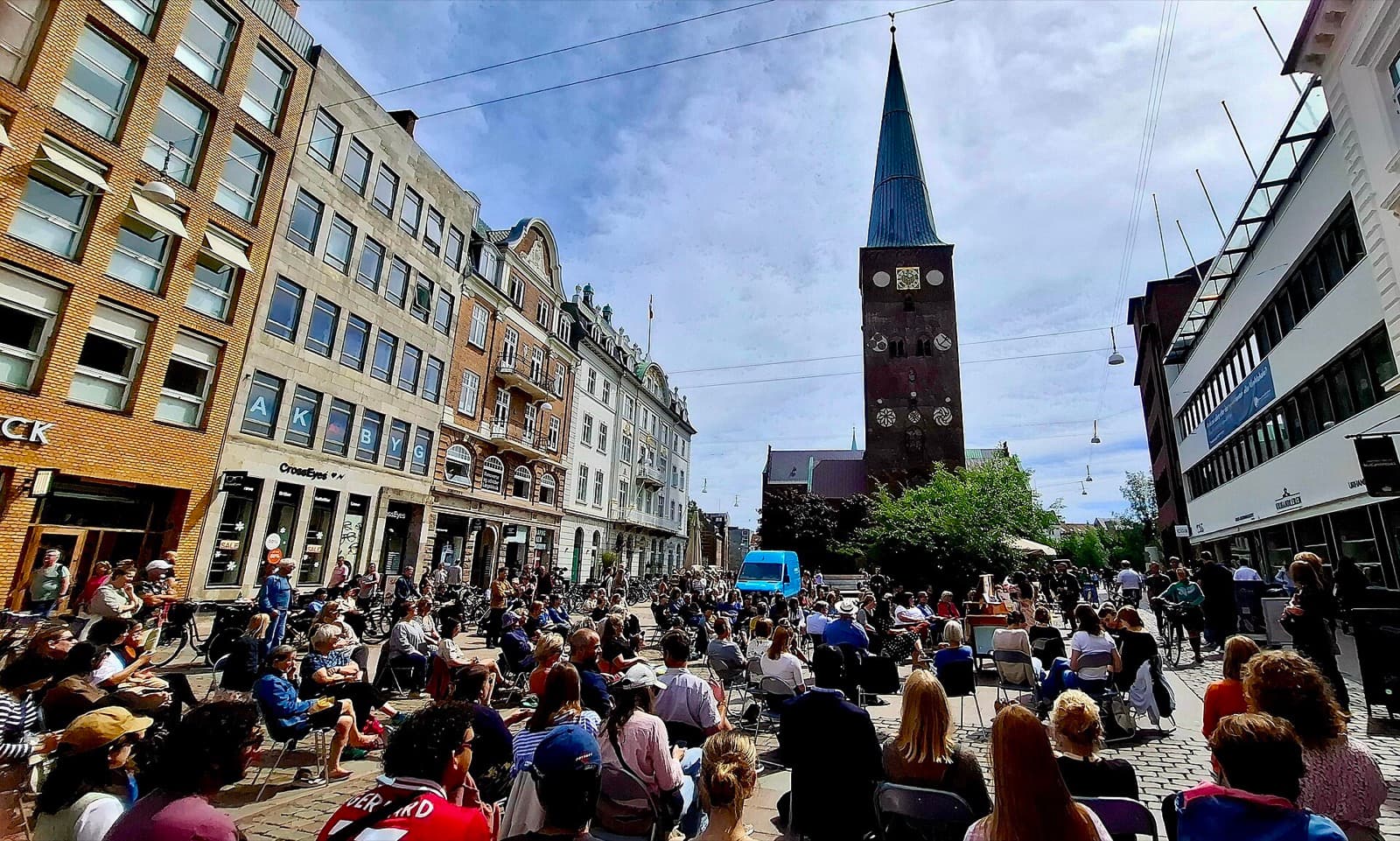
Step out of the cathedral and you are on Store Torv, the Big Square, the largest public square in Aarhus. In Danish, torv means a market square. Store Torv emerged about the year 1200, in connection with the cathedral's construction, first known as Torvegaden, the Square-street. Just to the west lies Lille Torv, the Little Square, which took shape around 1250 where major thoroughfares met. Both were primary markets from the twelve hundreds onward, where farmers and traders gathered right up into the eighteen hundreds. Store Torv historically hosted the markets for vegetables, fruit, and livestock. Around 1600, executions that had once been carried out here were moved out of the square to a gallows hill outside the town, a small sign of a place growing more orderly.
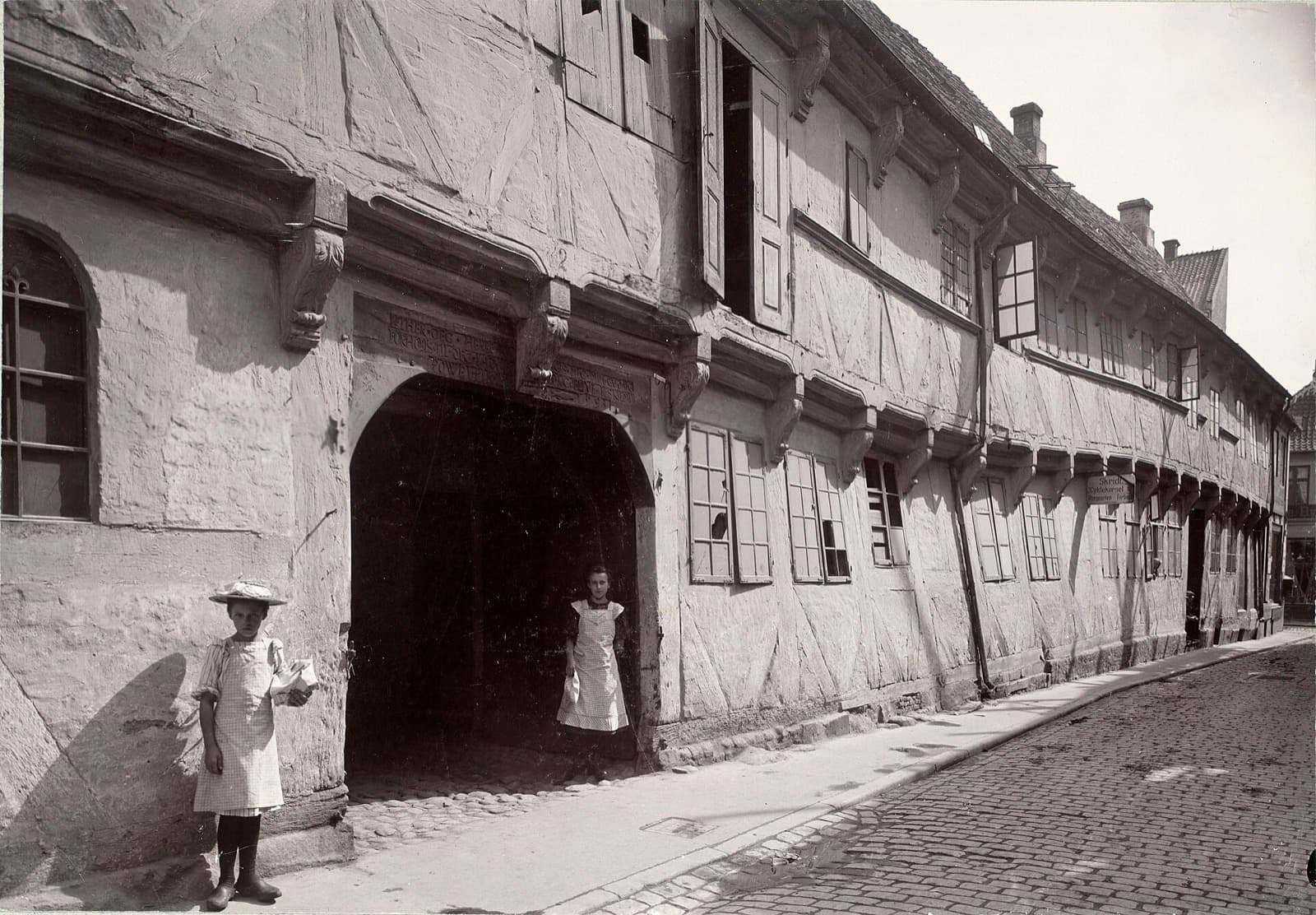
West of the squares is the grid of narrow cobbled lanes that is the oldest part of the city. Today it goes by Latinerkvarteret, the Latin Quarter, but that name is modern, adopted only in the 1990s in a nod to the Latin Quarter of Paris. What is ancient here is the ground, not the label. The old street names still carry the medieval town. Klostergade is Convent Street, Borggade is Castle Street, and Volden means the rampart. That last street was laid out before 1500 along the line of the westernmost earthen rampart that once defended early Aros, the Viking settlement. Beneath your feet runs the memory of a wall that guarded a town more than a thousand years ago. Some of the houses standing here date to the sixteenth century, their coloured fronts leaning close over the cobbles. For a fuller list of routes through this core, see the guide to Aarhus walking tours.
The humble town and the oldest stone
A block from the Gothic giant of the cathedral, the walk turns quiet at Moellestien, a short cobbled lane about 240 metres long. The name comes from moelle, meaning mill, and stien, meaning the path. It is a lane of small pastel cottages hung with hollyhocks and roses, and one of the most picturesque old streets in the city. The lane is far older than its cottages: it has existed since before 1300, and a dig in 2003 turned up early-medieval pottery here. The little houses, though, mostly went up between 1870 and 1885, modest one-storey rental cottages for workers and small craftsmen, often little more than a door, a kitchen, and a single living room. It is a lived-in residential street, so keep your voice low as you pass. This is the humble old town, the counterweight to the cathedral's grandeur.
Then comes the surprise. The Church of Our Lady, Vor Frue Kirke, stands on the site of the very first cathedral of Aarhus. Above ground it is a medieval church expanded between roughly 1250 and 1500, with a Dominican priory established here around 1240. But go down into the crypt and you step much further back. The crypt church below was built around 1060, after an earlier wooden church burned in an assault on the town, and it is recorded as the oldest extant stone church in Scandinavia. It was lost from memory for centuries, rediscovered only in the 1950s during renovations, and reopened on 10 November 1957. So the two churches of this walk are bound together: the great cathedral is the town's ambition made visible, and this quiet crypt is its beginning, hidden underground.
From Andersen's swans to Jacobsen's marble
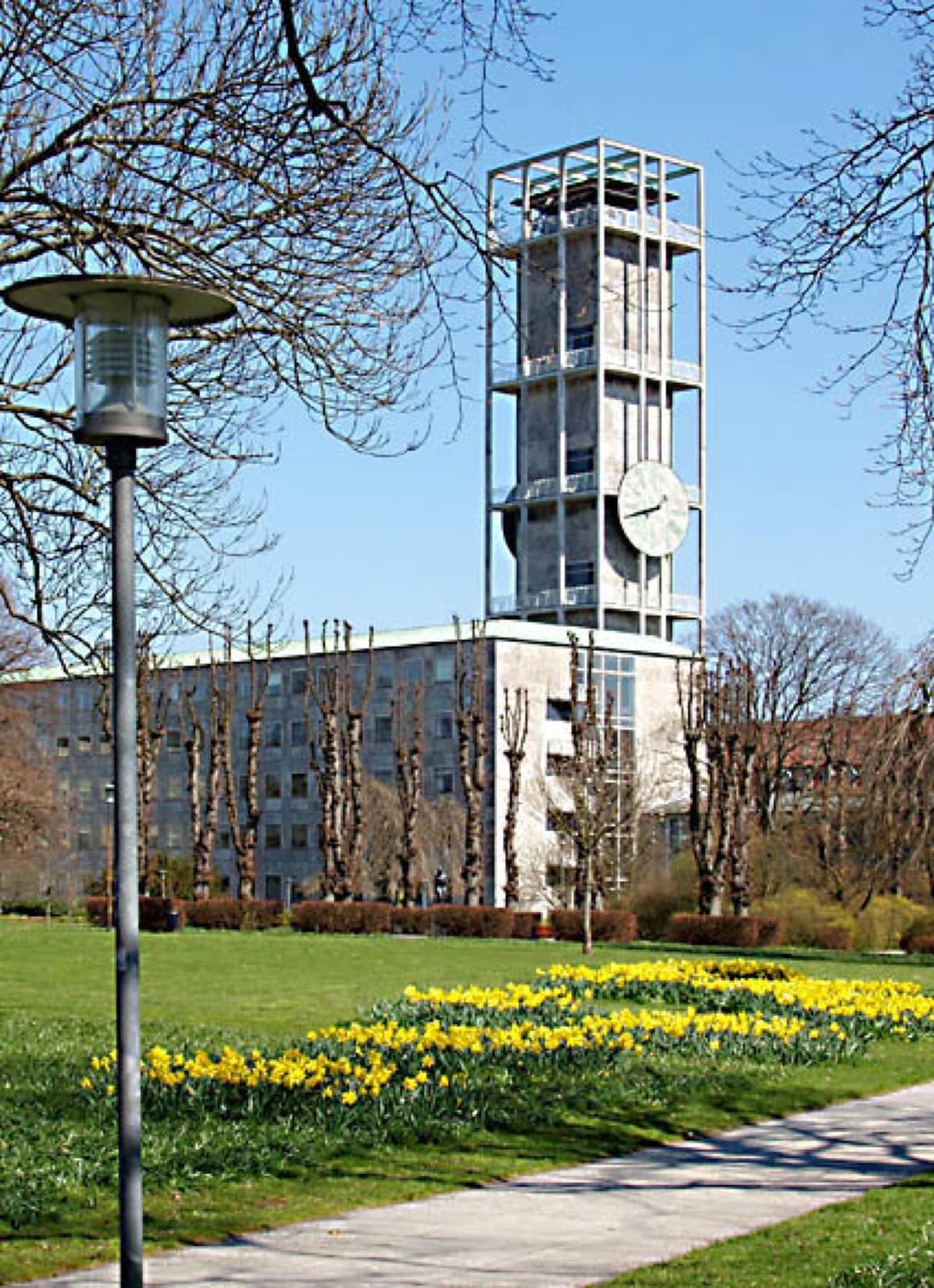
The last stretch carries the story into the modern era. Near the cathedral rises Aarhus Theatre, an ornate Art Nouveau building by the architect Hack Kampmann, inaugurated on 15 September 1900. It is Denmark's largest provincial theatre, funded by several hundred local citizens who bought shares to build it. Look up and you can pick out flying owls and eleven swans, a direct reference to the fairy tales of Hans Christian Andersen. The walk ends at the southern edge of the old town at Aarhus City Hall, by Arne Jacobsen and Erik Moeller, inaugurated on 2 June 1941. It is clad in about 6,000 square metres of grey Norwegian marble, with a slender clock tower 60 metres tall. Neither the tower nor the marble was in the first design; both were added after public pressure. It was controversial when new, then entered the Danish Culture Canon for architecture in 2006.
That is the full span, from the Viking river mouth to a marble tower, laid out in a compact loop you can walk at your own pace with no group and no clock but your own. Plan the route from the Aarhus city page and begin where the whole story does, at the cathedral on Store Torv.
Sources
- Aarhus Cathedral, Wikipedia. Dimensions, Romanesque and Gothic construction dates, frescoes, and the Bernt Notke altarpiece.
- Our Lady's Priory, Aarhus, Wikipedia. The crypt built around 1060, its rediscovery in the 1950s, and the 1957 reopening.
- Latin Quarter, Aarhus, Wikipedia. The street grid, the rampart line of Volden, and the modern adoption of the name Latinerkvarteret.
- Aarhus Theatre, Danish Architecture Center. Hack Kampmann's design, the 1900 opening, and the Andersen swans on the facade.
- Aarhus City Hall / Arne Jacobsen and Erik Moeller, ArchDaily. The 1941 building, its marble cladding, and the added clock tower.
Ready to experience it?
Latin Quarter: The Cathedral City in the Old Aarhus Streets
75 min · 2.7 km · easy
More from Aarhus
Explore more at your own pace.
Aarhus Travel Guide: Days, Transport, Safety, and Costs
One Day in Aarhus: A Walkable Itinerary From Cathedral to Harbour
Aarhus: From the Viking River Mouth to the Rainbow in the Sky
ARoS and the Rainbow Ring: How to Read Aarhus's Reinvention From the Roof Down
Aarhus City Hall: How a Plain Modernist Box Grew a Marble Tower