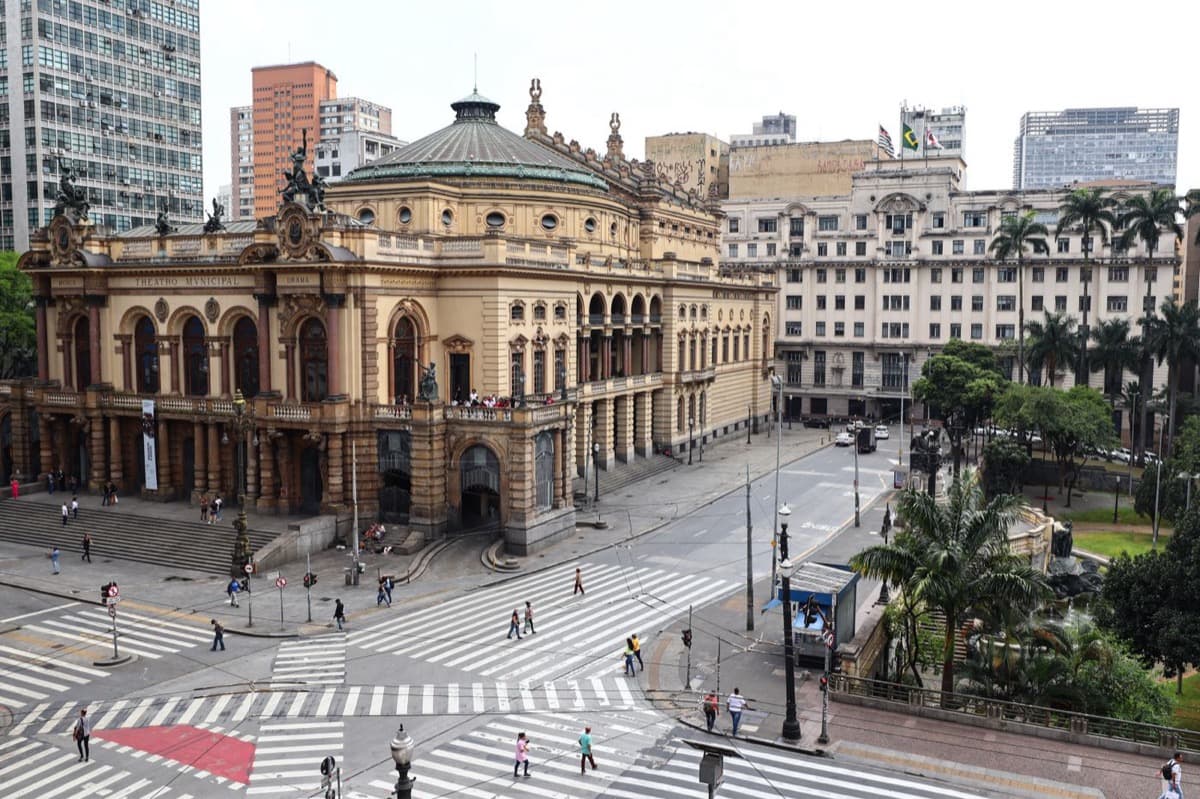
São Paulo's Theatro Municipal was built as a coffee-wealth opera palace and inaugurated in 1911, and eleven years later it became the stage where the 1922 Modern Art Week detonated Brazilian modernism. That is the fact most worth carrying into the building: the grandest room the coffee barons could buy turned into the room where their idea of good taste was booed off the program. Two stories live in one facade above the Anhangabaú valley. One is about money turning to stone. The other is about a single week in February when the country decided its art would sound like itself.
Coffee Turned to Stone
By the early twentieth century, São Paulo was one of the wealthiest cities in South America, and the fortune had one source: coffee. The state's plantations fed an export boom that made a colonial town suddenly, spectacularly rich, and rich cities build monuments to prove it. The Theatro Municipal was that proof. Construction began in 1903 and ran about eight years, and the house opened on September 12, 1911.
The design brought together the engineer Ramos de Azevedo with the Italian architects Cláudio Rossi and Domiziano Rossi. The style is a deliberate feast: Renaissance, Baroque, and Art Nouveau layered together, gilded and heavy and grand. The model was Paris. The building took its cue from the Palais Garnier, the opera house that set the standard for how a city announced its arrival through architecture. When the theatre finally opened, it staged the opera Hamlet by the French composer Ambroise Thomas, and the result satisfied the ambitions of the city's dominant class.
For a decade the building did what it was designed to do. It hosted opera and orchestral concerts for an audience that expected polite European taste and got exactly that. Then came 1922.
The Week That Booed Its Heroes
Hear a stop from this walk
Mosteiro de São Bento: The Living Hill
The most important thing that ever happened inside these walls was not an opera. It was a scandal. Over a week in February 1922, the theatre hosted the Semana de Arte Moderna, the Modern Art Week, with its key conference and concert sessions on the evenings of the 13th, 15th, and 17th. A generation of young artists came here specifically to shock a conservative establishment, and they succeeded so thoroughly that the reaction became part of the legend.
The names in that room have since become the spine of Brazilian culture. The writers Mário de Andrade and Oswald de Andrade. The painter Anita Malfatti. The sculptor Victor Brecheret. The composer Heitor Villa-Lobos, whose music was jeered by part of the audience as he presented it. They were booed. They were mocked. Reports from the week describe an audience that heckled and laughed at work it found ugly, foreign to its expectations, and deliberately raw. On the night of the 17th, the crowd even jeered Villa-Lobos for walking on wearing a dress shoe on one foot and a slipper on the other, reading it as futurist provocation, though he later explained it was an inflamed foot, not a statement.
That hostility is the point, not a footnote to it. The Modern Art Week was staged as a provocation. The artists wanted to break with the imported European models the theatre itself had been built to celebrate, and they chose the most European room in the city to do it. The irony was intentional. Stand inside a coffee-baron palace, in a hall modeled on a Paris opera house, and declare that Brazilian art should stop imitating Europe. The setting made the argument sharper than any manifesto could.
They lost the room and won the century. Villa-Lobos, jeered in 1922, became one of Brazil's most celebrated composers. Mário de Andrade's writing reshaped the national literature. The week is now widely treated as the founding moment of modernism across Brazilian literature, painting, and music, and a scattered set of heckled performances became a date scholars point to.
Why One Week Still Matters
It is easy to over-romanticize a riot, so here is the sober version. The Modern Art Week did not invent Brazilian modernism overnight, and not every artist in the room agreed on what they were doing. Some later scholarship even argues the event was largely an affair of the elite for the elite, and that its status as a single founding moment was inflated after the fact. What the week did was give a scattered movement a public event, a shared moment, and a founding story. Before February 1922 there were experimental painters and restless writers working separately. After it, there was a movement with a date and an address.
The address is what makes the Theatro Municipal worth standing in front of today. This is not a museum reconstruction of a lost thing. It is the actual building, still working. It now houses the city's municipal symphonic orchestra, its lyric choir, and its ballet, so music still fills the hall nightly. The confidence of the facade is the same confidence that paid for it, and the memory of 1922 sits inside that confidence like a fault line.
The building also fixes a common mix-up worth clearing up before you walk. The Theatro Municipal is the coffee-era opera house on the Anhangabaú. It is a separate landmark from the towers and skyscrapers that came after it in São Paulo's Centro, and it belongs to an earlier chapter than the concrete high-rises the city is now known for. Its story is the culture chapter, not the skyline chapter.
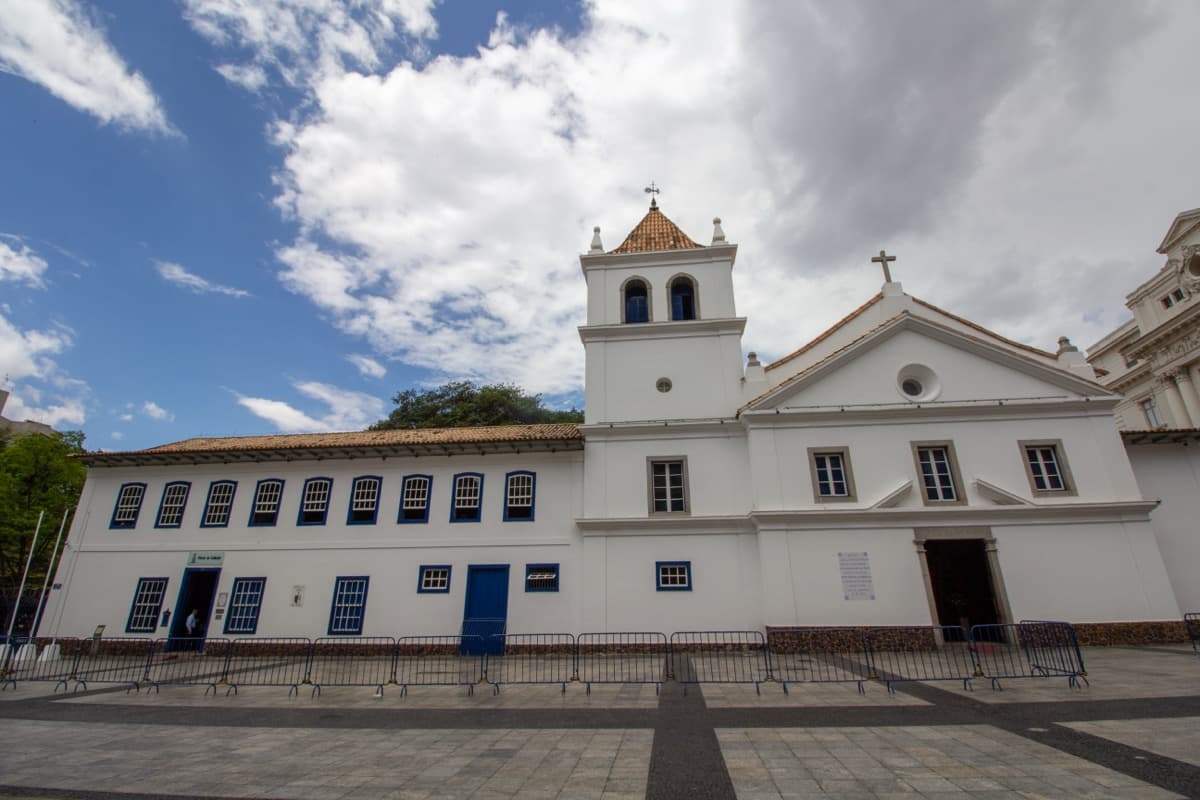
If you want to place it in the full growth of the city, the Theatro Municipal is one stop on a walk through São Paulo's founding ground, from the Jesuit courtyard where the town began to the Benedictine hill that still bakes its own bread. You can explore the surrounding Centro Histórico and the rest of the route from the São Paulo city page. But even on its own, the theatre earns the pause. Coffee wealth built a palace to look like Europe. A week of booing turned it into the place where Brazil decided to sound like itself.
Sources
- Theatro Municipal (São Paulo), Wikipedia. Inauguration date, construction timeline, architects, architectural styles, the Palais Garnier inspiration, the opening opera, and the resident musical companies.
- Semana de Arte Moderna, Wikipédia (Portuguese). Dates of the week, the evening sessions, the roster of participating artists, and the jeering of Villa-Lobos.
- Fundação Theatro Municipal de São Paulo, Google Arts & Culture data sheet. Building history and its role as the seat of the city's musical companies.
- Roamer tour transcript, "The Founding Hill: São Paulo's Centro." Fact-audited stop narration for the Theatro Municipal.
Brazil eSIM· 10% off with ROAMER10
Ready to experience it?
The Founding Hill: São Paulo's Centro
95 min · 2.8 km · moderate
More from Sao Paulo
Explore more at your own pace.
One Day in São Paulo: A Walkable Central Itinerary (2026)
São Paulo Travel Guide: How Many Days, Getting Around, When to Go, Is It Safe (2026)
The City That Rebuilds Itself: How to Read Sao Paulo's Buried History
What to Eat in São Paulo: A Food Guide (2026)
Edificio Martinelli: The Man Who Lived on His Own Skyscraper to Prove It Was Safe