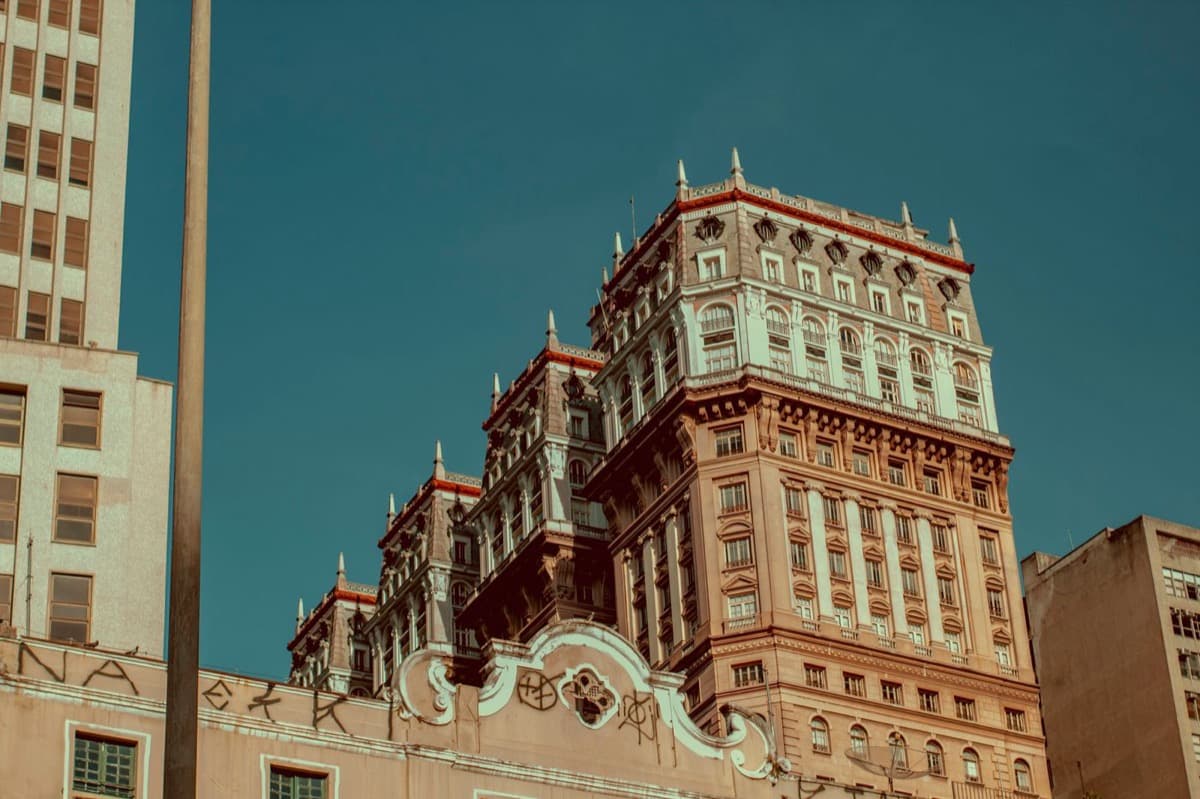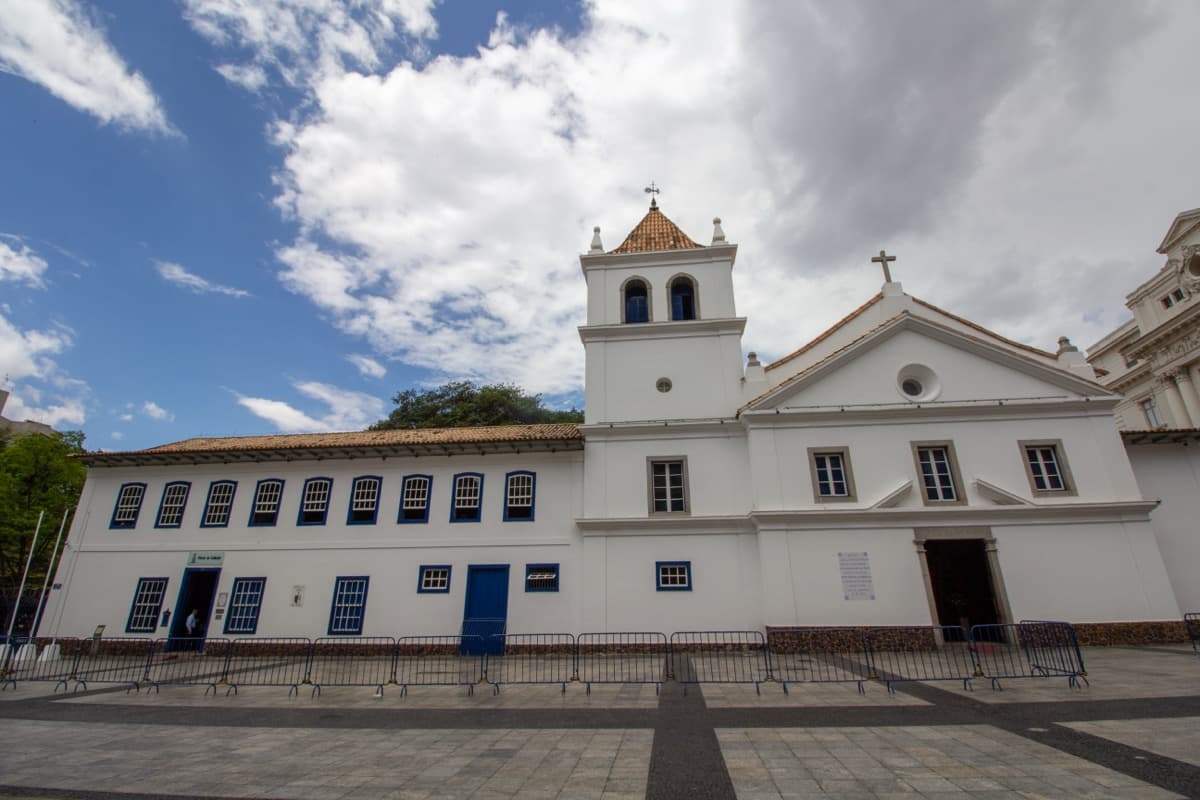
Sao Paulo has an exact birthplace and an exact birthday, which is rare for a city of twelve million people. On the twenty-fifth of January 1554, on a plateau between two small rivers, a handful of Jesuit priests founded a mission and school, and that spot is the Patio do Colegio in the modern historic center. Stand there and you are standing on the seed from which the largest city in the southern hemisphere grew. But there is a twist that tells you everything about Sao Paulo: the building you see is not the original. It is a reconstruction, because this city demolishes even its own cradle and builds it again.
The day a city began
The founders were Jesuit missionaries, among them Manuel da Nobrega, the leader of the Jesuits in the young colony, and Jose de Anchieta, a scholar and priest who would become one of the most important figures in colonial Brazil. On the feast day of the conversion of Saint Paul, the twenty-fifth of January 1554, they established a mission on the Piratininga plateau, inland from the coast and above the dangerous humidity of the lowlands. They named the settlement Sao Paulo dos Campos de Piratininga, the fields of Piratininga, and the date of the founding is why the city carries the name of Saint Paul.
The first structure was humble almost past belief for the origin of a megacity: a modest hut covered with palm leaves or straw, serving as church and school at once. Within two years, by 1556, the mission was rebuilt more solidly in taipa de pilao, rammed earth, the more durable colonial building technique. From that mission school, teaching and converting the local population, the settlement slowly grew into a town, and over centuries into the industrial giant that surrounds the spot today.
Why the founding site is a reconstruction
Hear a stop from this walk
Mosteiro de São Bento: The Living Hill
Here is the fact that ties the Patio do Colegio to the character of the whole city. The original Jesuit structures did not survive intact. They were demolished and rebuilt multiple times over the centuries, a fate entirely typical of Sao Paulo, a city that has knocked down and replaced its buildings for four and a half centuries. The site passed out of Jesuit hands and served other uses, and the mission that founded the city was, for long stretches, gone.
The turning point came in 1953, the year of Sao Paulo's four-hundredth anniversary, when the site was returned to the Jesuit order. The church and its tower were reconstructed in a sober Mannerist style, the restrained manner typical of Jesuit churches in colonial Brazil, so that the birthplace could once again be seen and understood. So what a visitor reads today is a twentieth-century recreation of the founding mission, built to mark four centuries of the city. This is not a flaw. It is the most Paulistano thing imaginable: even the cradle of the city has been demolished and rebuilt, which is exactly the pattern that defines the city that rebuilds itself.
Anchieta's museum and what it holds
Inside the reconstructed complex is the Anchieta Museum, opened in 1979, named for the priest who helped found the city. It holds more than six hundred items, colonial paintings, documents, and historical models of the original settlement, that let a visitor picture the palm-leaf hut and the rammed-earth mission that once stood where the towers now crowd. It is the closest thing Sao Paulo has to a window onto its own sixteenth-century beginning, in a downtown that has otherwise built over almost every trace of it.
Reading it in place
Come to the Patio do Colegio knowing that you are looking at a reconstruction, and let that sharpen rather than dull the visit. Picture the plateau in 1554, two rivers, a hut of straw, a few priests, and then look up at the wall of skyscrapers that grew from it. Step into the Anchieta Museum for the models and documents that make the founding concrete. The site is at its calmest on a weekday morning, before the business district fills the surrounding streets.
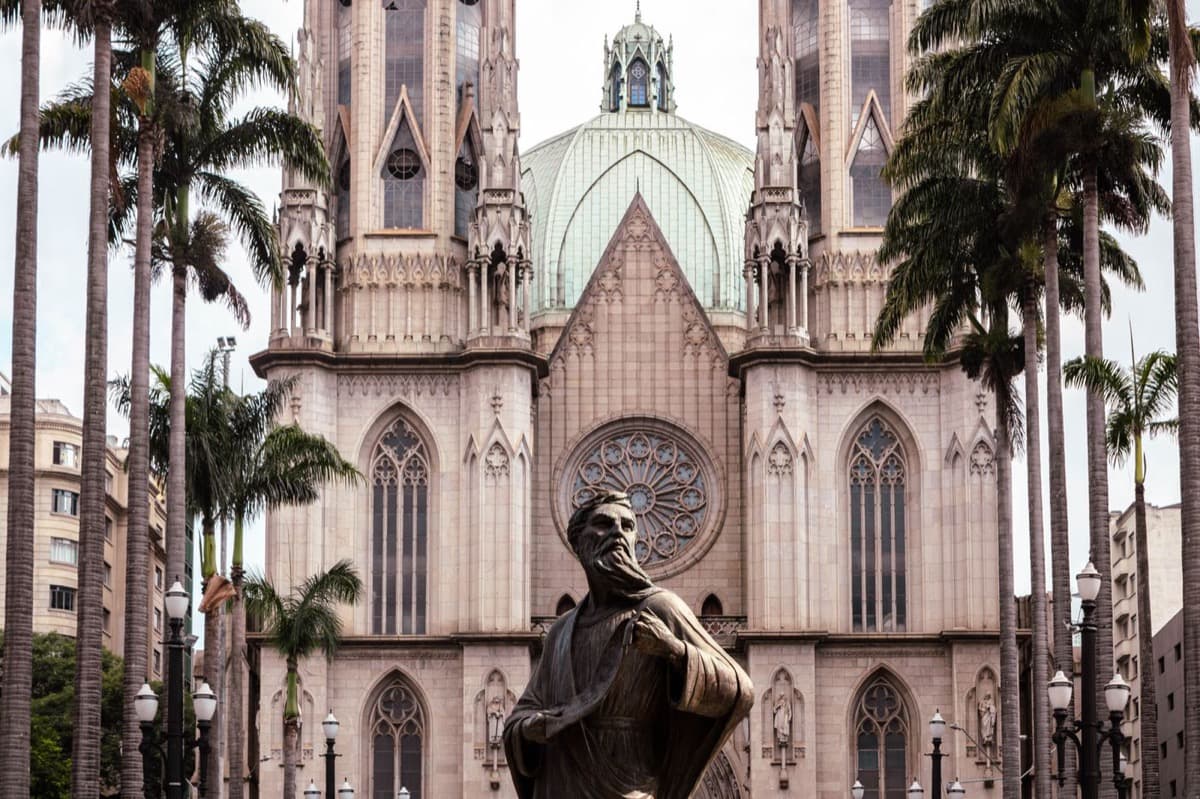
The Patio do Colegio is where Roamer's The Founding Hill: Sao Paulo's Centro begins, tracing the city from this founding mission to the coffee-era Martinelli skyscraper. For where the Centro fits in a day, see one day in Sao Paulo.
Sources
- Wikipedia, Patio do Colegio: the founding of Sao Paulo on 25 January 1554 by Jesuits including Manuel da Nobrega and Jose de Anchieta, the name Sao Paulo dos Campos de Piratininga on the Piratininga plateau, the palm-leaf hut and the 1556 rebuild in rammed earth, the repeated demolition and reconstruction of the site, the return to the Jesuit order in 1953 for the city's four-hundredth anniversary, the reconstruction of the church and tower in a sober Mannerist style, and the Anchieta Museum opened in 1979 with over six hundred items.
- Roamer tour transcript, The Founding Hill (sao-paulo-centro-historico), fact-audited: the Patio do Colegio as the seed of the city.
Brazil eSIM· 10% off with ROAMER10
Ready to experience it?
The Founding Hill: São Paulo's Centro
95 min · 2.8 km · moderate
More from Sao Paulo
Explore more at your own pace.
One Day in São Paulo: A Walkable Central Itinerary (2026)
São Paulo Travel Guide: How Many Days, Getting Around, When to Go, Is It Safe (2026)
The City That Rebuilds Itself: How to Read Sao Paulo's Buried History

What to Eat in São Paulo: A Food Guide (2026)
Beco do Batman: The São Paulo Alley That Repaints Itself Every Few Weeks