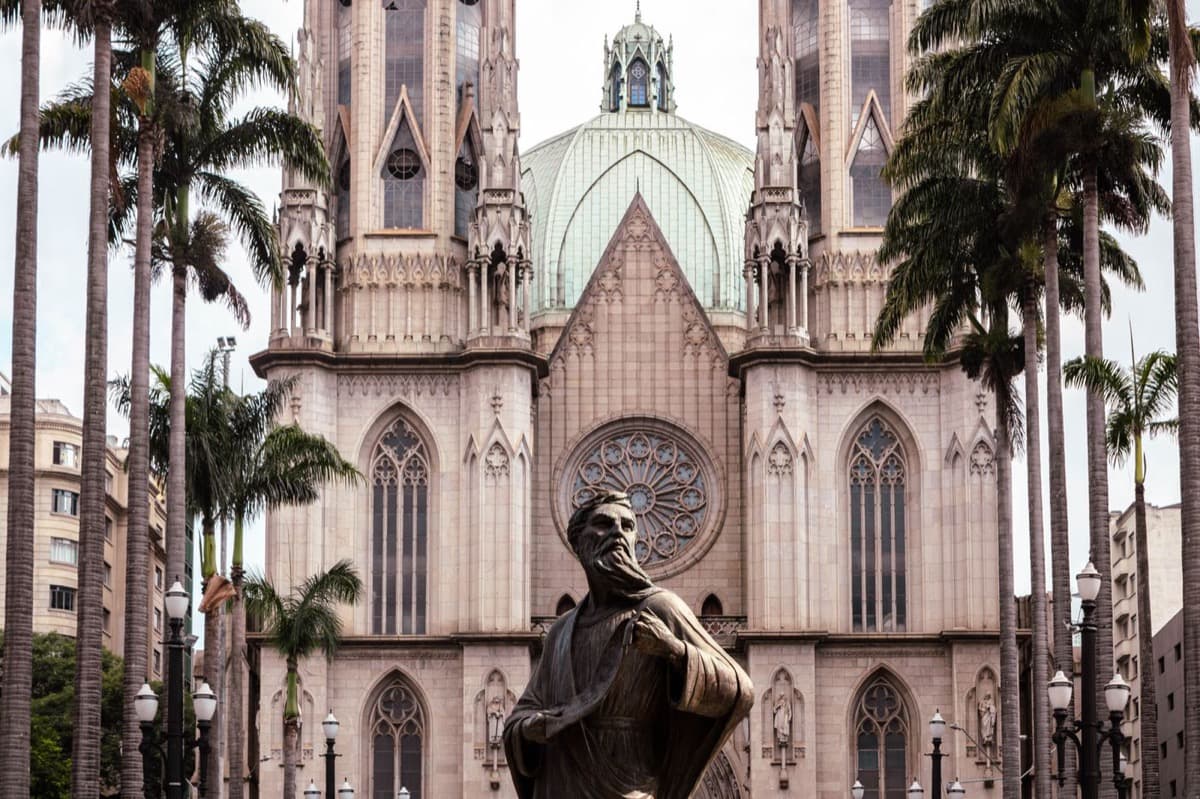
Walk Latin America's largest city back to the single hill between two rivers where it began, and watch four and a half centuries stack up on one founding ground.
Start · Pátio do Colégio: The Seed
DirectionsStops
- 1
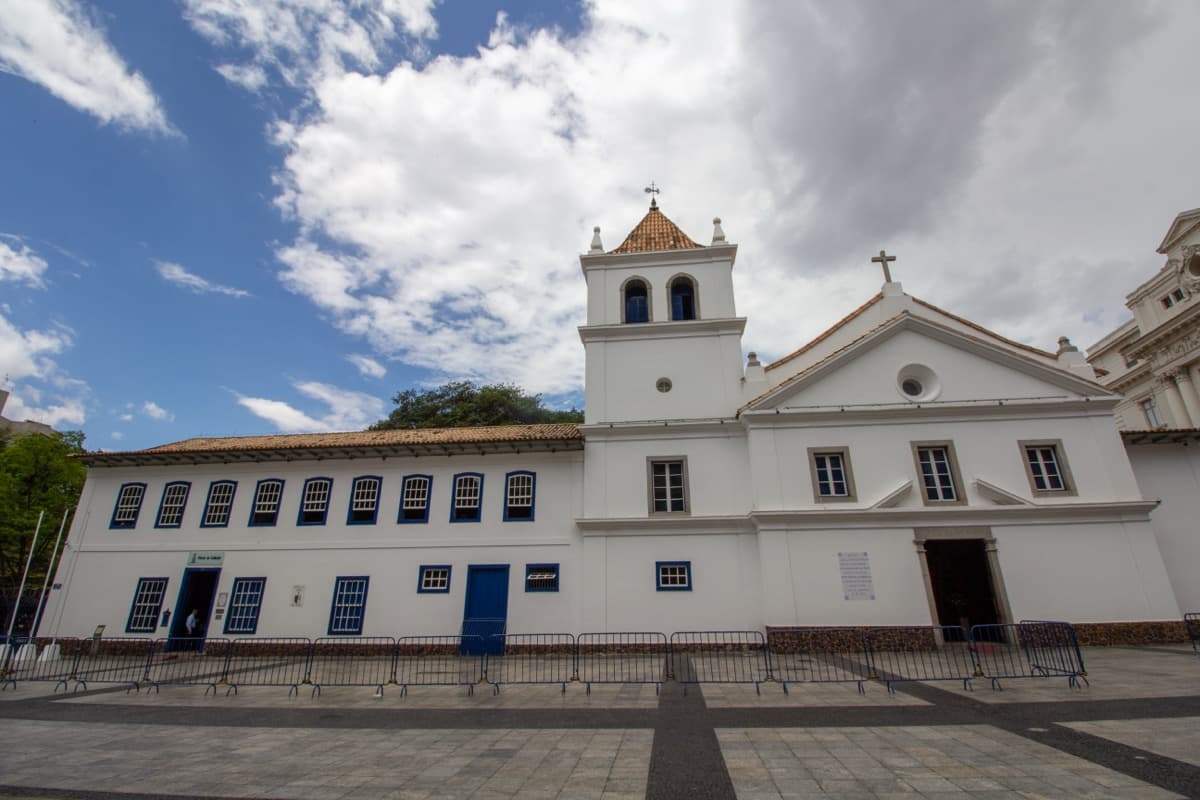
Pátio do Colégio: The Seed
The courtyard where Jesuit priests founded São Paulo in fifteen fifty-four, rebuilt in the twentieth century on the exact ground of the first Mass.
- 2
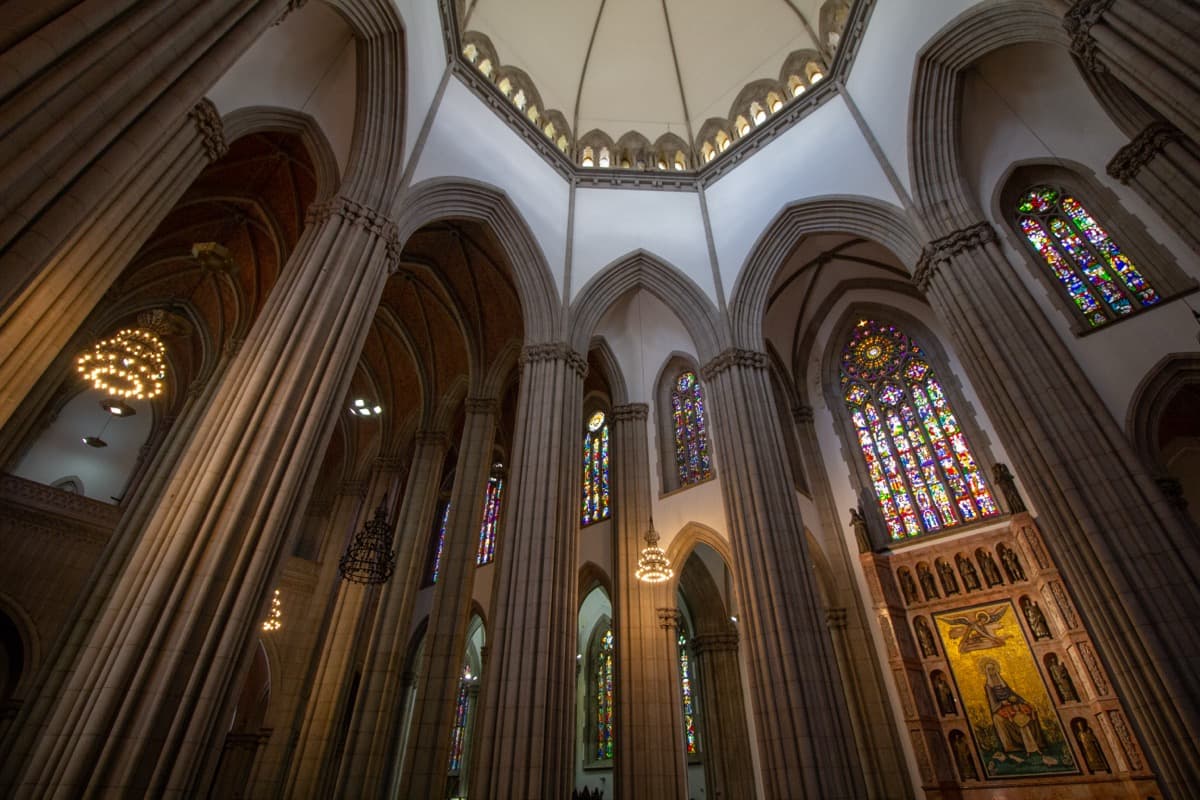
Catedral da Sé and the Marco Zero: The Heart
A vast neo-Gothic cathedral and, at its feet, the hexagonal marble point from which every road distance in São Paulo state is measured.
- 3
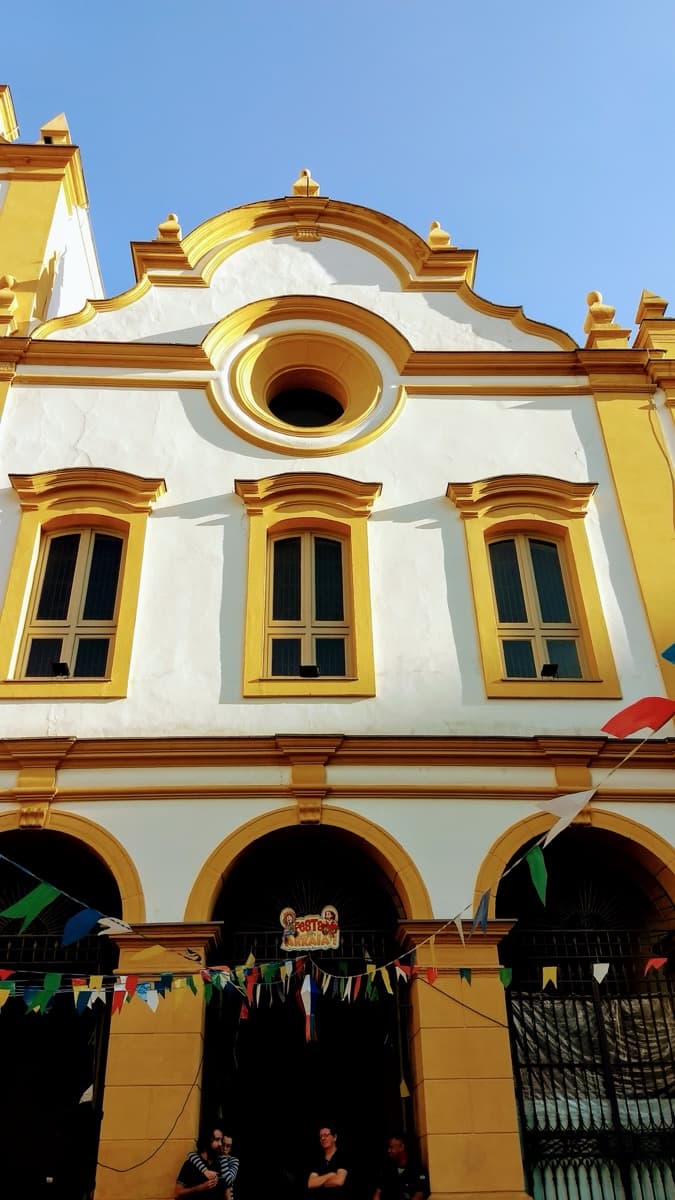
Largo São Francisco: The Law School
Brazil's oldest law school, founded in eighteen twenty-seven to train the jurists and politicians of a new empire, beside the Franciscan church that names the square.
- 4
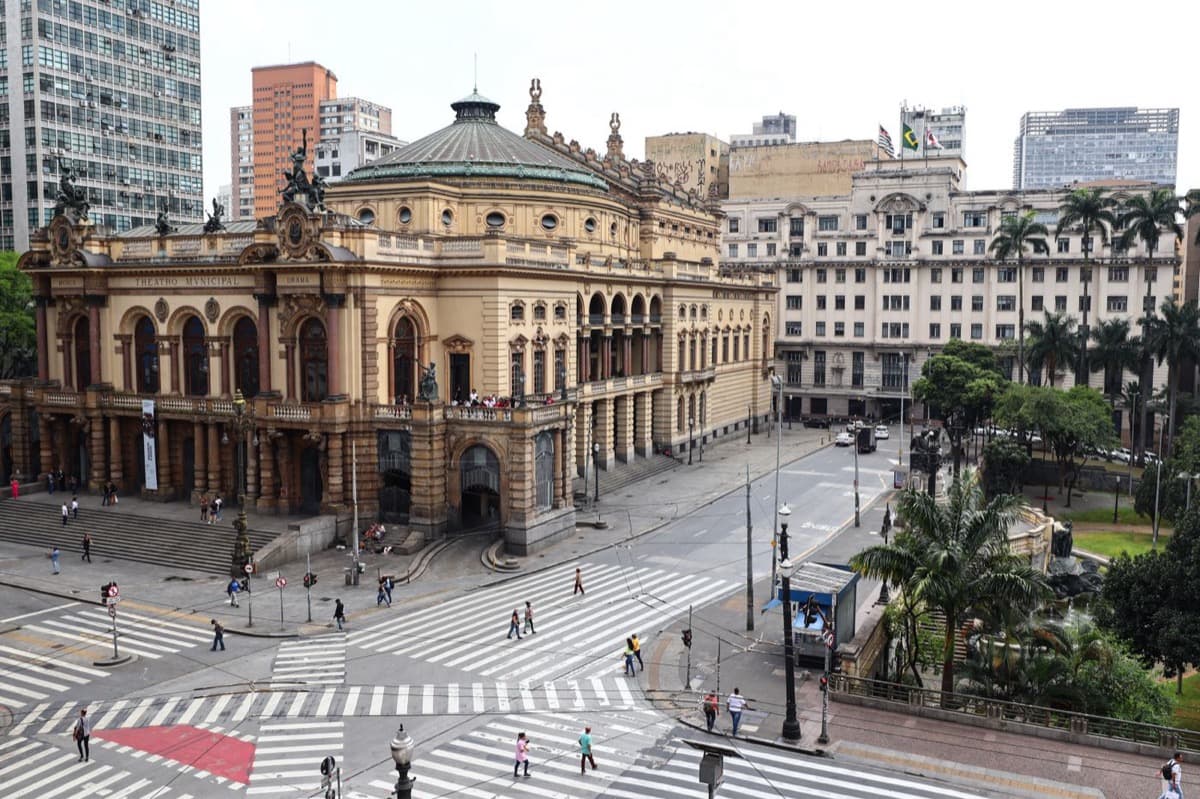
Theatro Municipal: The Coffee Palace
An opulent nineteen-eleven opera house built on coffee money, and the stage where Brazilian modernism erupted in nineteen twenty-two.
- 5
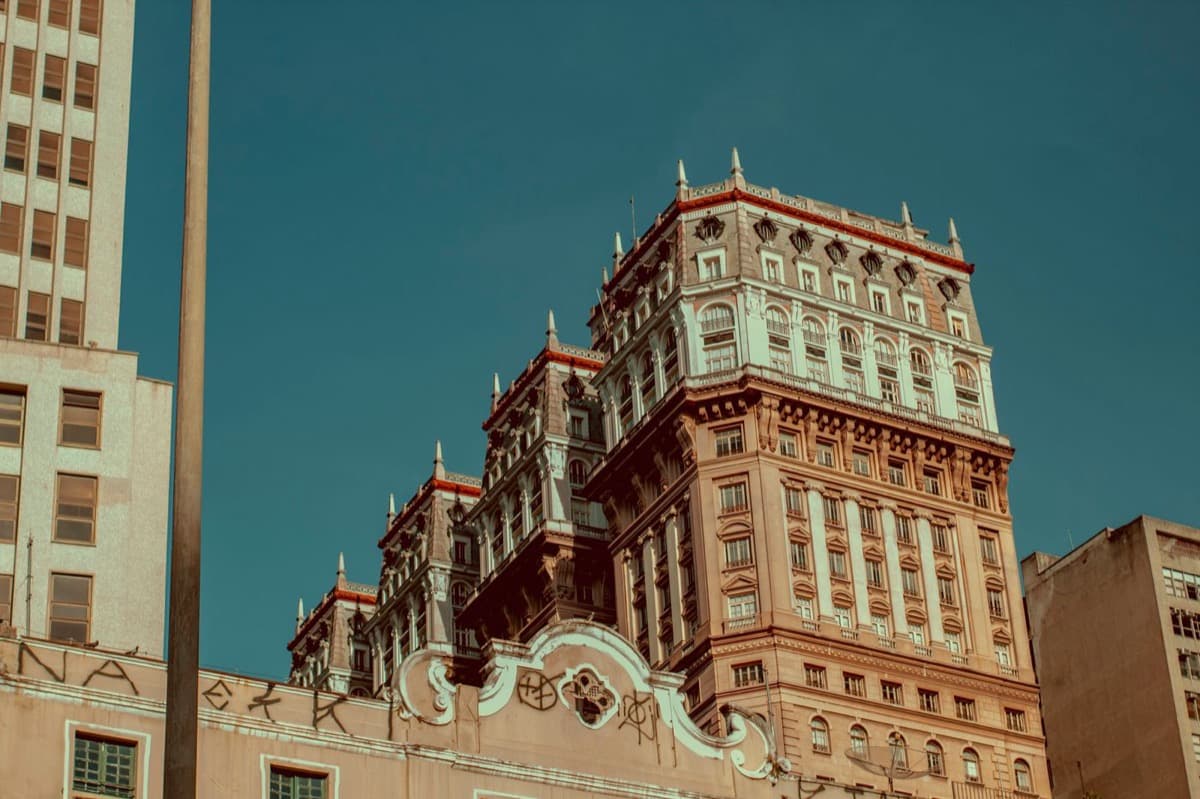
Edifício Martinelli: Brazil Goes Vertical
Completed in nineteen twenty-nine, twenty-eight floors, the first skyscraper built in Brazil, crowned by the developer's own rooftop mansion.
- 6
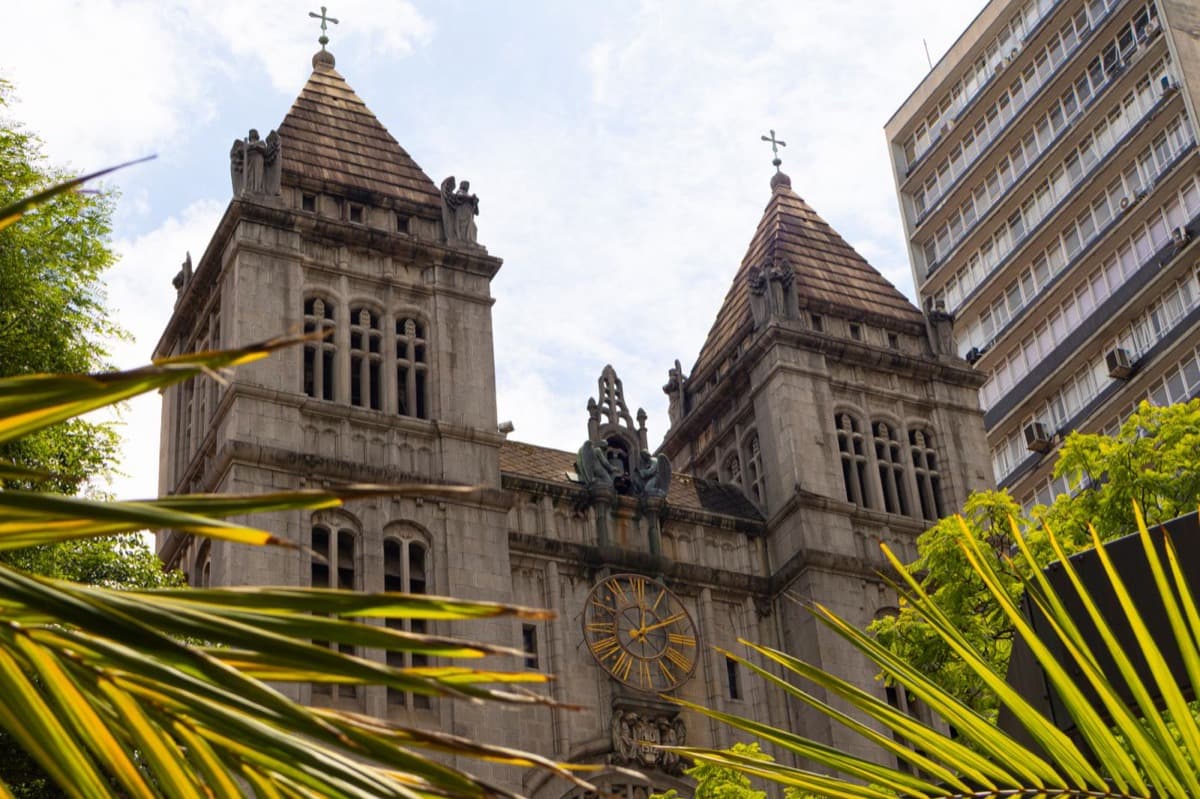
Mosteiro de São Bento: The Living Hill
A Benedictine community founded in fifteen ninety-eight, its neo-Romanesque basilica raised in the early twentieth century, still baking bread from centuries-old abbey recipes.
Details
Best Time to Visit
Weekday mornings are best. The Centro Histórico is busiest and most alive on business days from about nine to eleven in the morning, when churches and the monastery are open, the light on Praça da Sé is soft, and the streets feel purposeful rather than deserted. Sundays can leave the district quiet and shuttered. If you want to hear the Benedictine monks sing, aim for a morning Mass at the Mosteiro de São Bento, and avoid the fierce midday sun of the summer months from December to March.
Pro Tips
- •Start early and walk uphill through time. The route runs roughly from Pátio do Colégio to the Mosteiro de São Bento, so let the city's growth rings unfold in order.
- •Wear comfortable, closed shoes. The Centro has steep, uneven historic paving and long stretches of pavement, and you will be on your feet for a couple of hours.
- •Step inside the churches quietly and check opening hours locally. The cathedral, the Franciscan church, and the monastery are working places of worship, and access to crypts, museums, and rooftops varies, so treat any interior visit as check locally rather than guaranteed.
- •Time your finish for the monastery bread. The São Bento monks sell breads and cakes from their own archived recipes, a lovely and durable tradition to end on, but hours are limited, so plan your last stop around them.
- •Look down at Praça da Sé for the Marco Zero. It is easy to miss the hexagonal marble marker at the cathedral's feet, and it is the single point every road in the state is measured from.
- •Keep the two towers straight. The Martinelli is Brazil's first skyscraper, and the observation-deck tower many visitors think of is the separate Altino Arantes building nearby, so do not conflate them.
Safety & Precautions
- •The historic centre rewards street smarts. Keep your phone and valuables out of sight, stay aware on crowded squares and quieter side streets, and prefer daylight hours for this walk.
- •Dress and behave respectfully inside sacred spaces. The cathedral, the Franciscan church, and the Benedictine monastery are active places of worship, so keep voices low, cover shoulders where asked, and pause or skip if a service is underway.
- •São Paulo weather swings fast. Summer afternoons from December to March bring strong sun and sudden heavy downpours, so carry water, sun protection, and a compact umbrella or rain layer.
- •Mind the uneven ground. Steep cobbles, worn paving, and busy crossings run throughout the Centro, so watch your footing and take crossings carefully, especially if the stones are wet.
- •If you are not walking to your next stop, book a ride-hailing app or take a taxi from an authorized stand rather than flagging one on the street, and keep your card in sight when you pay.
Travel advisory: Exercise Increased Caution (Level 2).
Gallery
Related Reading
Go deeper on what you'll see, hear, and walk through.
Overview
Best Self-Guided Walking Tours in São Paulo (2026)
3 min
Overview
One Day in São Paulo: A Walkable Central Itinerary (2026)
6 min
Overview
São Paulo Travel Guide: How Many Days, Getting Around, When to Go, Is It Safe (2026)
6 min
Thematic
What to Eat in São Paulo: A Food Guide (2026)
5 min
Deep dive
Edificio Martinelli: The Man Who Lived on His Own Skyscraper to Prove It Was Safe
5 min
Deep dive
Patio do Colegio: The Exact Spot Where Sao Paulo Was Founded in 1554
5 min
Deep dive
Theatro Municipal: The São Paulo Stage Where Brazilian Modernism Was Born
6 min
Read the walk
The full story of The Founding Hill: São Paulo's Centro, in words. Prefer to listen? Play it narrated, from home or on location.
Introduction
São Paulo, Brazil, is the largest city in Latin America, and yet you can walk its entire beginning in a single afternoon. This is a tour of six stops through the Centro Histórico, covering roughly two and three quarter kilometres over about ninety minutes to two hours if you linger, less if you keep moving. Every stop is short, self-contained, and yours to skip. The idea is simple. Beneath one of the densest cities on earth there is a hill, set between two rivers, and on that hill in fifteen fifty-four a handful of Jesuit priests raised a mud-and-thatch college and said the first Mass of a town they called São Paulo de Piratininga. Everything you will see grew out of that one act. The mission became a town. The town became a coffee capital. The coffee capital became this megacity. So the walk climbs outward through time. You start at the founding courtyard, pass the cathedral and the marble point from which every road in the state is measured, reach the law school that trained an empire, then the opera house where Brazilian modernism was born and the building that first went vertical, and you finish at a monastery founded in fifteen ninety-eight that never left its hill. One honest note before you go. São Paulo is famous for demolishing its own past, so some of what you will stand before is reconstruction rather than original stone. That is part of the story, not a flaw in it. When you arrive at Pátio do Colégio, begin with stop one.
1. Pátio do Colégio: The Seed
You are standing on the spot where São Paulo began. On January twenty-fifth, fifteen fifty-four, the Feast of the Conversion of Saint Paul, a small group of Jesuit missionaries founded a college here, on a plateau caught between the Tamanduateí and Anhangabaú rivers. Father Manuel de Paiva said the first Mass, with the mission's leaders Manuel da Nóbrega and the teenage José de Anchieta among those present. They named their mission village São Paulo de Piratininga, and from that January morning the whole city takes its name and its birthday. What they built first was humble. A college of packed earth and thatch, a place to teach and to pray, perched on a defensible hill above the water. Now here is the honest part, and it matters. The walls around you are not the original ones. The first Jesuit college and church stood for centuries, then the structure fell into ruin and collapsed in eighteen ninety-six. In nineteen fifty-three, as the city prepared to celebrate four hundred years, the site was returned to the Jesuit order and rebuilt in the sober colonial manner of Brazil's seventeenth-century mission churches. So this is a reconstruction standing precisely where the real thing stood. That does not make it less moving. It makes it a perfect emblem of a city that keeps redrawing its own beginning. Inside, the Anchieta Museum opened in nineteen seventy-nine and holds more than six hundred colonial pieces, paintings, altar fragments, sculptures, and documents, if you want to step in. Or simply stand in the courtyard a moment. Every skyscraper crowding the horizon around you is, in a sense, a later floor built on top of this one room.
2. Catedral da Sé and the Marco Zero: The Heart
The town grew, and it grew around a heart, and this square, Praça da Sé, is it. Rising in front of you is the Catedral da Sé, a neo-Gothic giant designed by the architect Maximilian Emil Hehl. Its story is a lesson in São Paulo's patience and impatience at once. Construction ran, on and off, from roughly nineteen thirteen all the way to nineteen sixty-seven. The building was ready to be dedicated in nineteen fifty-four, the city's four-hundredth-anniversary year, but the two towers you see were only finished thirteen years after that, in nineteen sixty-seven. Inside it can hold around eight thousand people, which makes it one of the largest neo-Gothic churches anywhere, and in the crypt below there are marble sculptures worth the descent if it is open. Now look down at the pavement. Set into the square in front of the cathedral is a separate thing entirely, easy to walk past. It is a hexagonal, marble-clad monument called the Marco Zero, the city's zero-kilometre point. It was inaugurated on September eighteenth, nineteen thirty-four, at two in the afternoon, by Mayor Fábio da Silva Prado, and its six marble faces were carved by the French sculptor Jean Gabriel Villin. Every road distance in the state of São Paulo is measured from this exact spot, and the house numbers on the streets rise the farther they run from it. Each of its six faces points toward a major city or region, toward Santos, Rio de Janeiro, Minas Gerais, Paraná, Mato Grosso, and Goiás. So the cathedral is where the town prayed, and the marble hexagon at its feet is where the whole state agreed to start counting.
3. Largo São Francisco: The Law School
A young country needs people who can argue it into existence, and this quiet square, the Largo São Francisco, is where São Paulo took on that job. Here stands the Faculdade de Direito do Largo São Francisco, the oldest law school in Brazil. It was founded on August eleventh,…
Full narration for this stop unlocks with the tour.
4. Theatro Municipal: The Coffee Palace
Now the coffee money arrives, and it arrives singing. The Theatro Municipal de São Paulo, inaugurated on September twelfth, nineteen eleven, is what happens when a city grows suddenly, spectacularly rich and wants a palace to prove it. The design brought together the engineer…
Full narration for this stop unlocks with the tour.
5. Edifício Martinelli: Brazil Goes Vertical
By the late nineteen twenties, the coffee-and-industry boom had nowhere left to go but up, and this is where São Paulo first went there. The Edifício Martinelli, completed in nineteen twenty-nine, twenty-eight floors tall, was the first skyscraper built in Brazil. It was the…
Full narration for this stop unlocks with the tour.
6. Mosteiro de São Bento: The Living Hill
You end where the old city refuses to disappear. The Mosteiro de São Bento, the Benedictine monastery, has held this hill beside the modern São Bento metro since July fourteenth, fifteen ninety-eight. Think about that date against everything you have walked past today. This…
Full narration for this stop unlocks with the tour.