Stand at the mouth of Via della Conciliazione, at Piazza Pia, and the whole of Michelangelo's dome rises at the far end of a straight avenue. It is a grand view, and it is new. Until the 1930s the way to St. Peter's ran through a tight knot of narrow streets, the Borgo, and the square and the church opened up all at once at the last corner. The avenue gave Rome the long view and took away the surprise. The one thing to understand here is that the view you came for was bought by demolition.
The spine that was knocked down
Between the two old streets of the Borgo ran a long, narrow block of houses, nicknamed the spina, the spine, after the low wall down the middle of a Roman racetrack. Coming from Castel Sant'Angelo, you walked one of the narrow streets beside it, and the dome stayed out of sight until the end. Architects drew plans to knock it down from the late sixteen hundreds on. It happened after Italy and the Holy See signed the Lateran treaty in 1929; the avenue's name, Conciliazione, means reconciliation.
The dates are close to a drumbeat. The project was approved in June 1936, work began in October that year, and within a year the spine was gone. The architects were Piacentini and Attilio Spaccarelli. A journal study counts 1,236 families, 4,992 people, moved out of 729 apartments, the poorest of them to a new district on the edge of the city, and about 43,000 square metres razed. The avenue was finished for the Holy Year of 1950, when its two rows of obelisk-shaped lamp posts went up. Spaccarelli is also the architect who laid out the castle gardens on the other side of Piazza Pia, so the walk starts and ends in his work.
What survived
Hear a stop from this walk
Saint Peter's Basilica: The Dome Sinks Behind
The lanes that were left are how the old approach felt. Borgo Pio is a long, straight street that Pope Pius IV set up by a bull of 5 December 1565 as a small planned city between the castle and the Vatican. Vicolo del Campanile is a lane only a few metres wide with no pavement, and the high wall that crosses its end is the Passetto, the raised corridor the popes used to reach Castel Sant'Angelo. It runs about 800 metres, and the dates of its building are contested: one account gives the thirteenth century, another the fifteenth. In 1527 Pope Clement VII reached the castle by it during the Sack of Rome. The pope's private road went over the heads of the people of the Borgo, and it still does.
The square, and its trick
Bernini's colonnade, built from 1656 to 1667 under Alexander VII Chigi, has 284 columns in four rows and used more than 40,000 cubic metres of Tivoli travertine. Rome's tourism office records a trick: from one of the two marble disks in the paving that mark the foci of the ellipse, the four rows line up and the outer columns hide behind the inner ones, so the colonnade looks like a single row. Look for the round marker in the paving. Bernini also planned a third arm across the open end to close the oval, which was never built. The avenue is, in that sense, the opening he left.
The obelisk in the middle is over 25 metres tall, brought to Rome in the time of Caligula, and raised here in 1586 under Sixtus V. In the Middle Ages people believed its bronze globe held the ashes of Julius Caesar; the globe is now in the Capitoline Museums, and the top carries the emblem of the Chigi family.
Why the dome sinks
The last lesson is at the foot of the basilica steps. From the avenue you see the whole dome. From the front, only the top shows. Michelangelo designed the dome for a church laid out around a center. Between 1607 and 1614 the architect Carlo Maderno lengthened the nave toward the square and built the long flat front, and the dome now stands far behind it. The closer you come, the more the front hides. You meet the dome three ways on the walk: whole and far away from the avenue, as a burst of space at the end of a lane, and almost gone behind the front.
Visiting
Entry to the basilica is free after a security check, from 7:00 to 20:00 daily from 1 June 2026, and clothing appropriate for a place of worship is required. The square is Vatican territory that Italian police patrol, under the Lateran treaty. Castel Sant'Angelo is a ticketed museum, and its gardens close at sunset. The Passetto reopened to guided visits in December 2024 and runs on a calendar, so book ahead rather than expecting to walk it.
The full walk is Vatican and St. Peter's Square: The Lost Surprise, ten stops over just under two kilometres, about an hour and a quarter, with no real climbs. Find it alongside the other walks on the Rome walking tours hub and the Rome page.
Sources
- Roma Capitale, Turismo Roma: St. Peter's Square, the Passetto di Borgo and Via della Conciliazione. The colonnade, the foci markers, the obelisk and the Passetto.
- Selva journal article on the demolition of the spina di Borgo: the 1936 and 1937 dates, the people rehoused and the area razed.
- Polizia di Stato, on article 3 of the Lateran treaty and the policing of the square; basilicasanpietro.va for opening hours and the dress rules.
- Roamer tour dossier for "Vatican and St. Peter's Square: The Lost Surprise" (rome-vatican-borgo), fact-checked October 2026.
Ready to experience it?
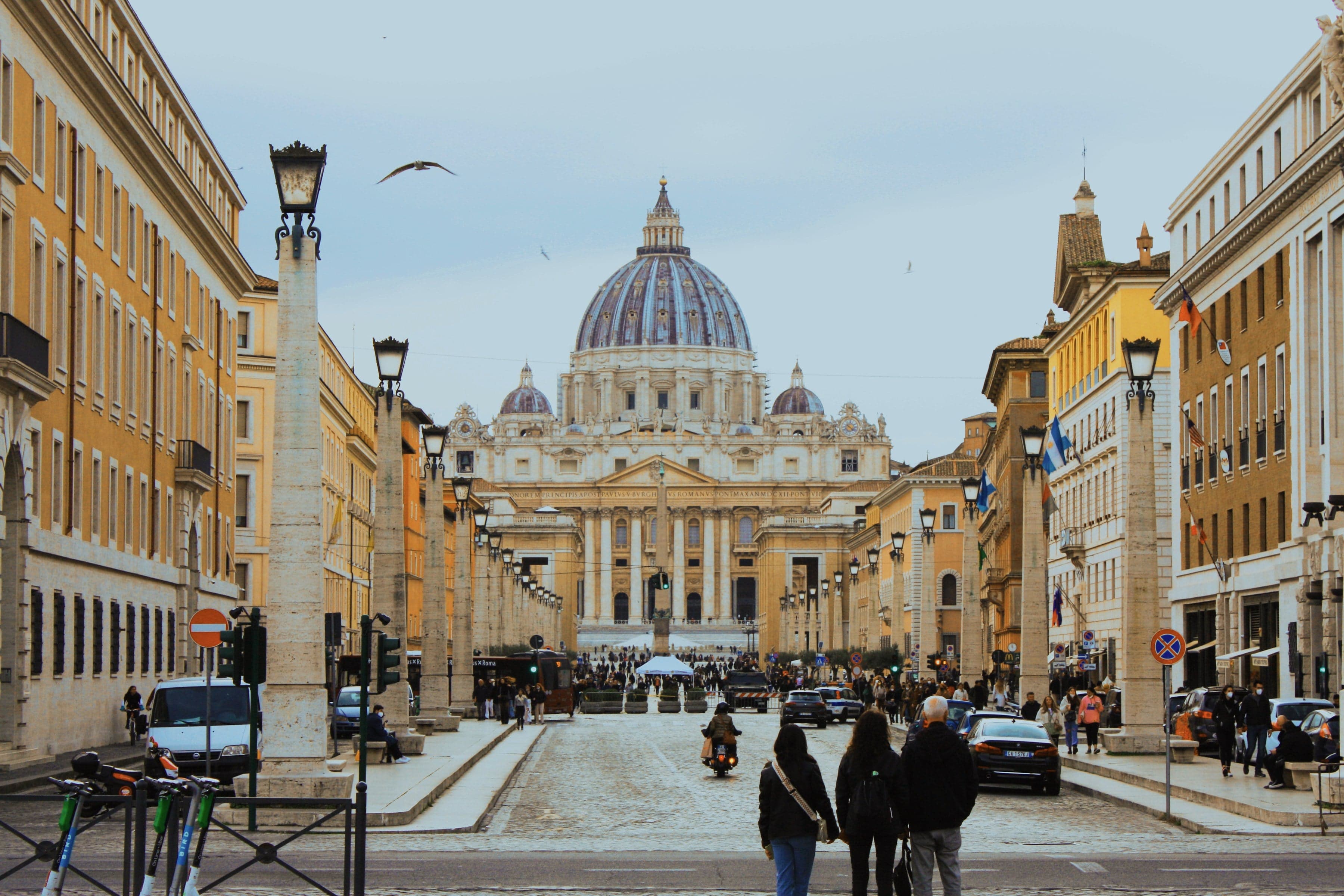
Vatican and St. Peter's Square: The Lost Surprise
75 min · 1.9 km · easy
More from Rome
Explore more at your own pace.
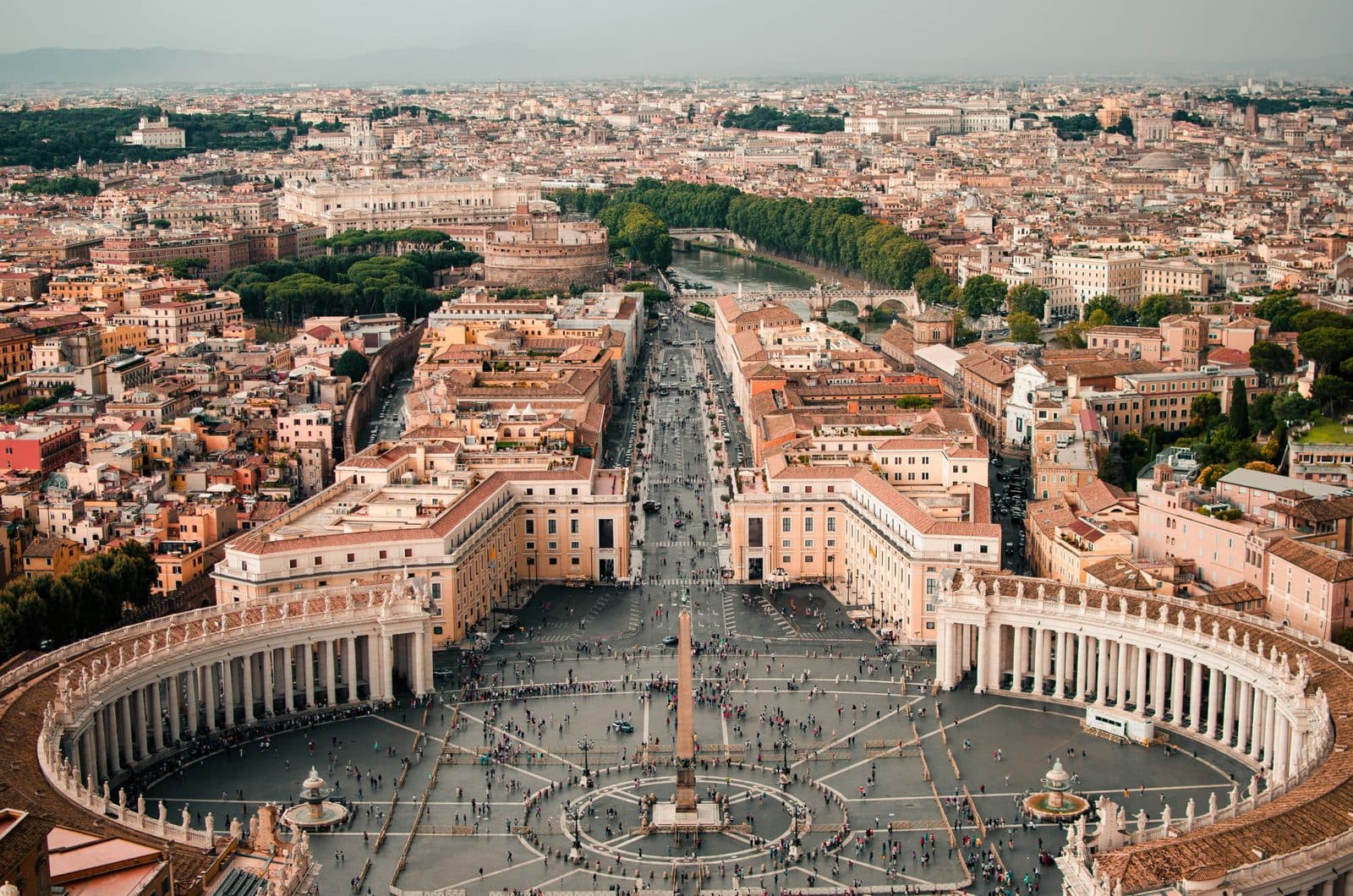
One Day in Rome on Foot: A Walkable Morning-to-Evening Itinerary
Best Architecture Walking Tours in Rome (2026)
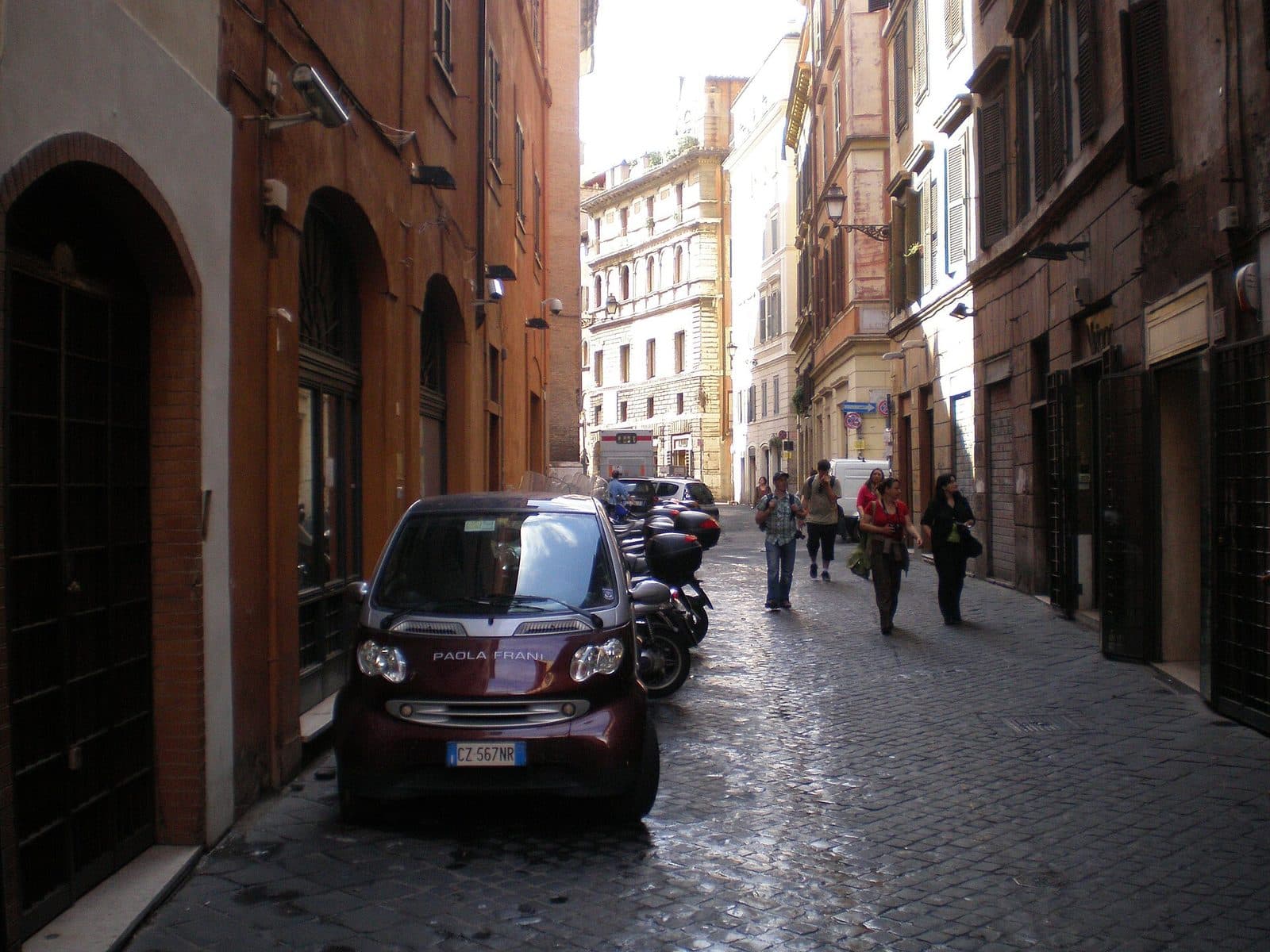
The Aventine's Orange Garden and Keyhole: A Fortress That Became a View
The Water Behind the Trevi Fountain: Following the Acqua Vergine to the Pincio
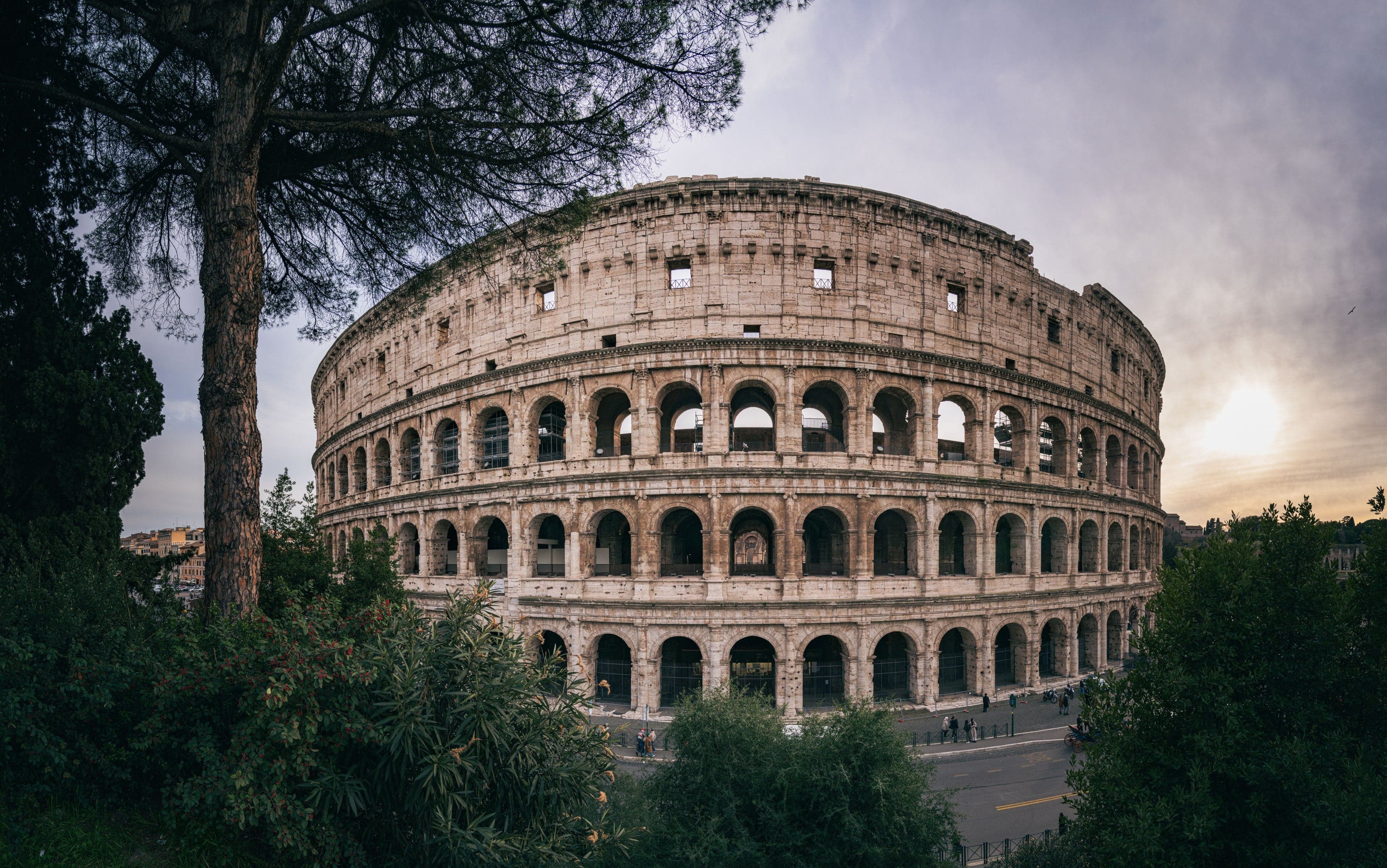
Palatine Hill: Where Rome Says It Was Born