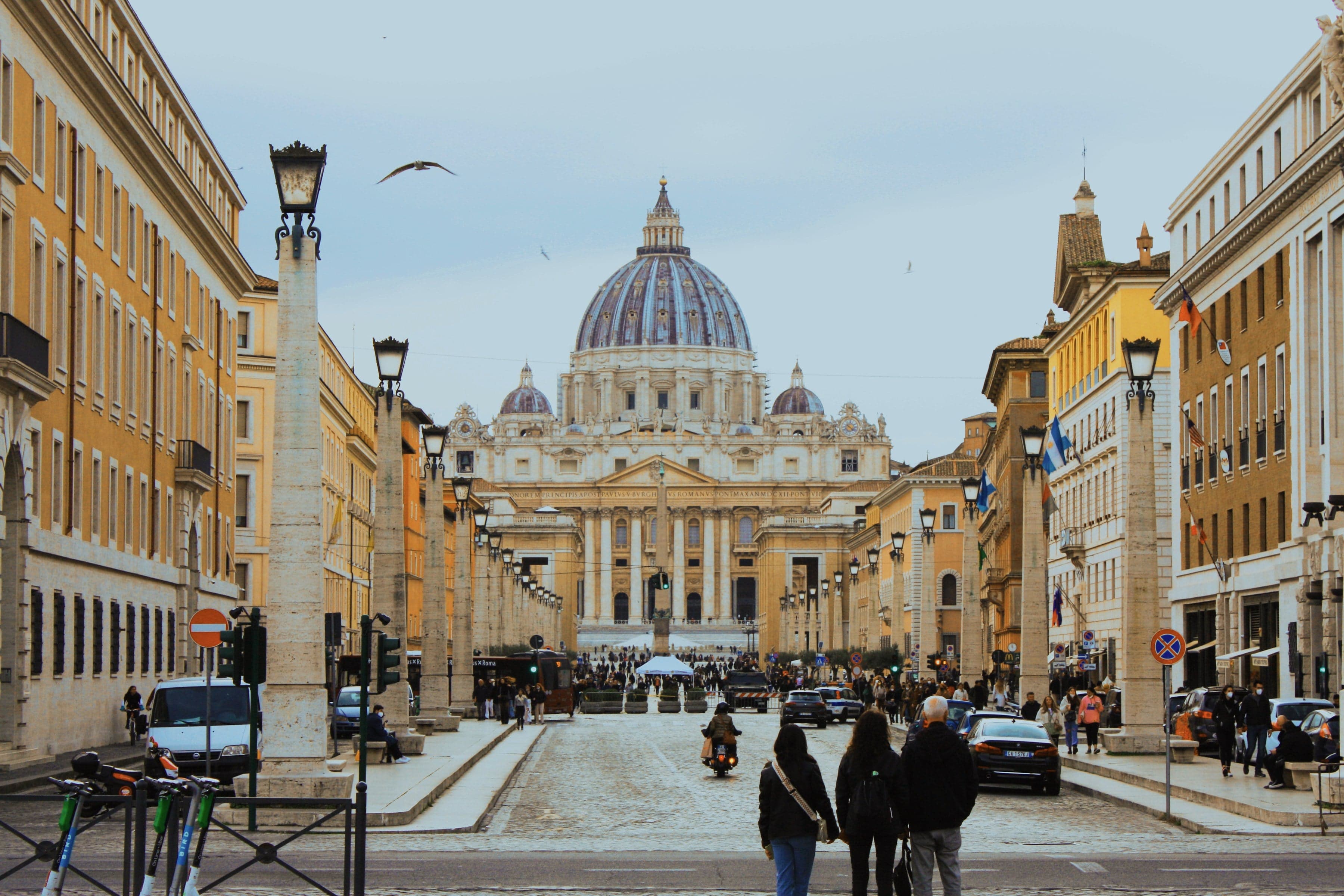
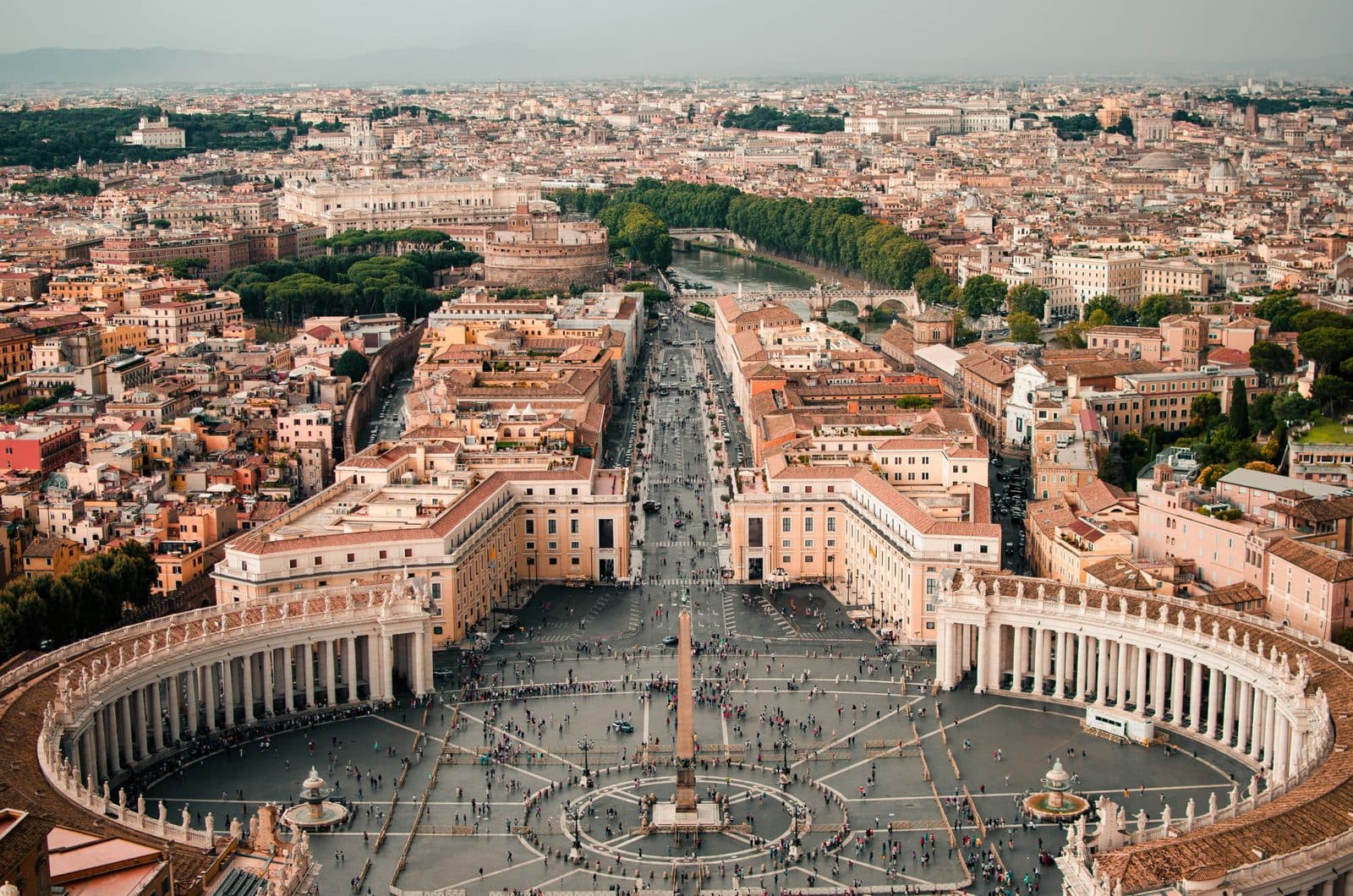
From the bridge of angels round Castel Sant'Angelo's gardens, along the popes' raised corridor, down the great avenue and through the Borgo's lanes into Saint Peter's Square.
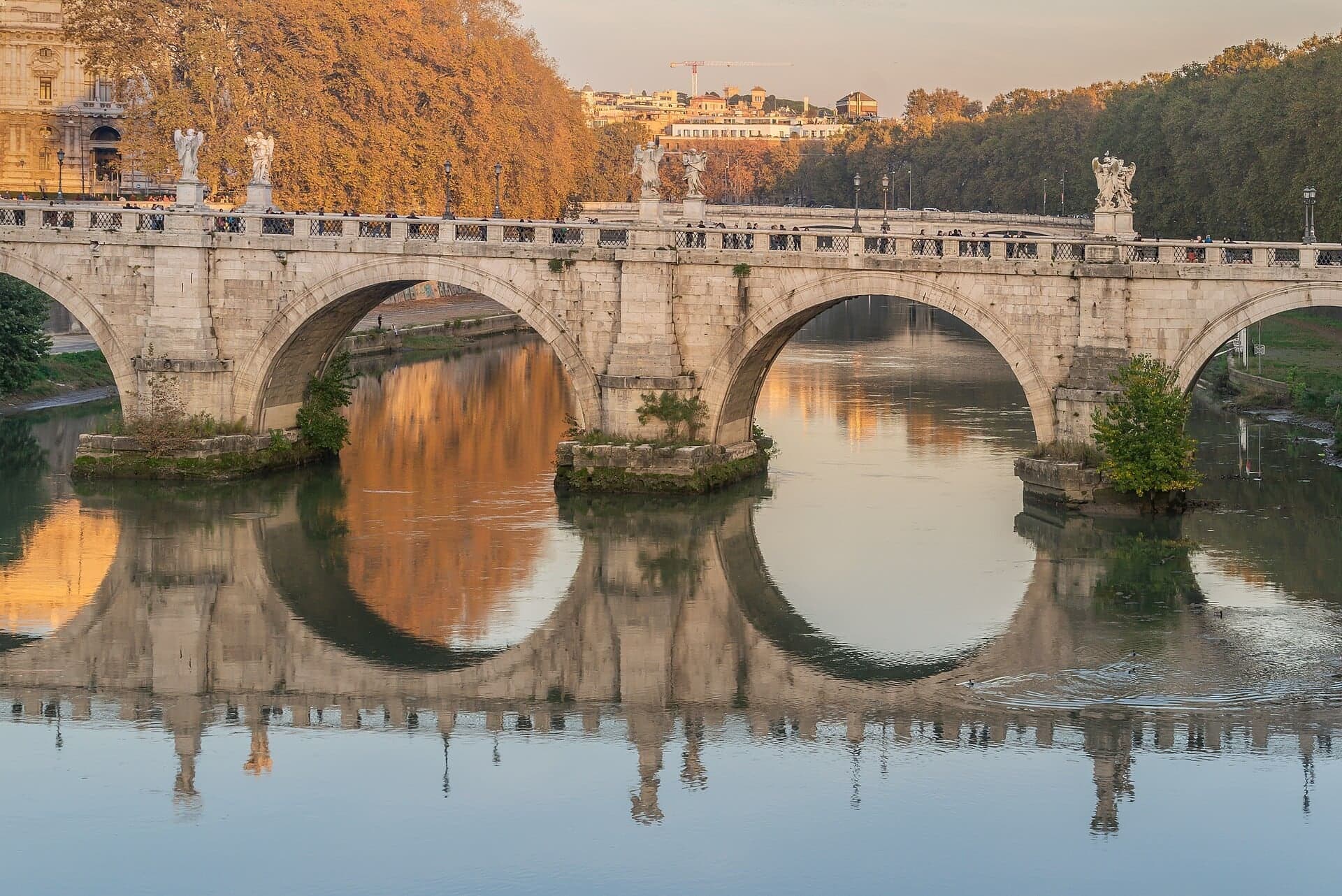
Start · Ponte Sant'Angelo: Bridge of Angels
DirectionsStops
- 1
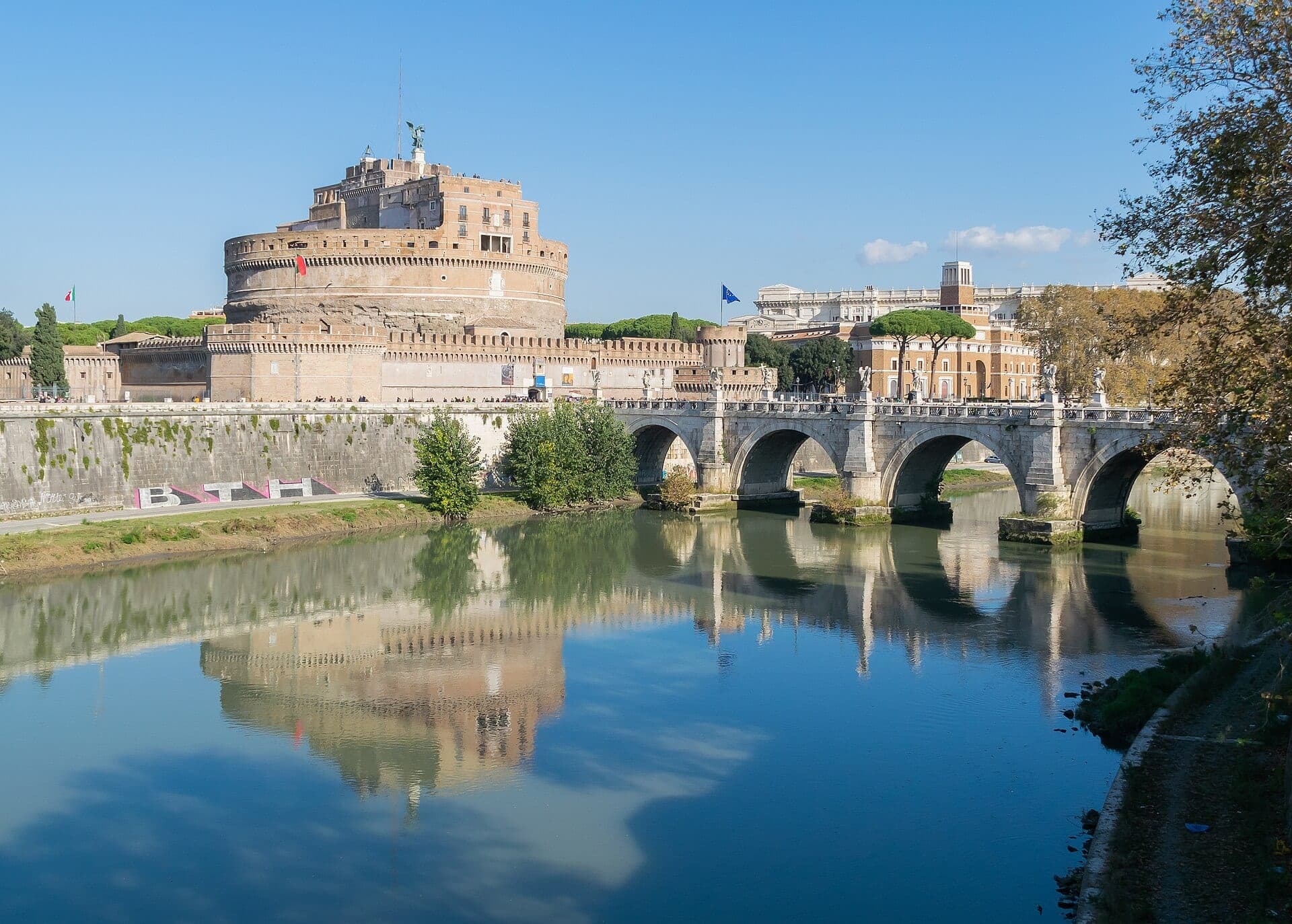
Ponte Sant'Angelo: Bridge of Angels
An emperor's bridge to his own tomb, lined with ten marble angels from Bernini's workshop, two of them copies of his own.
- 2
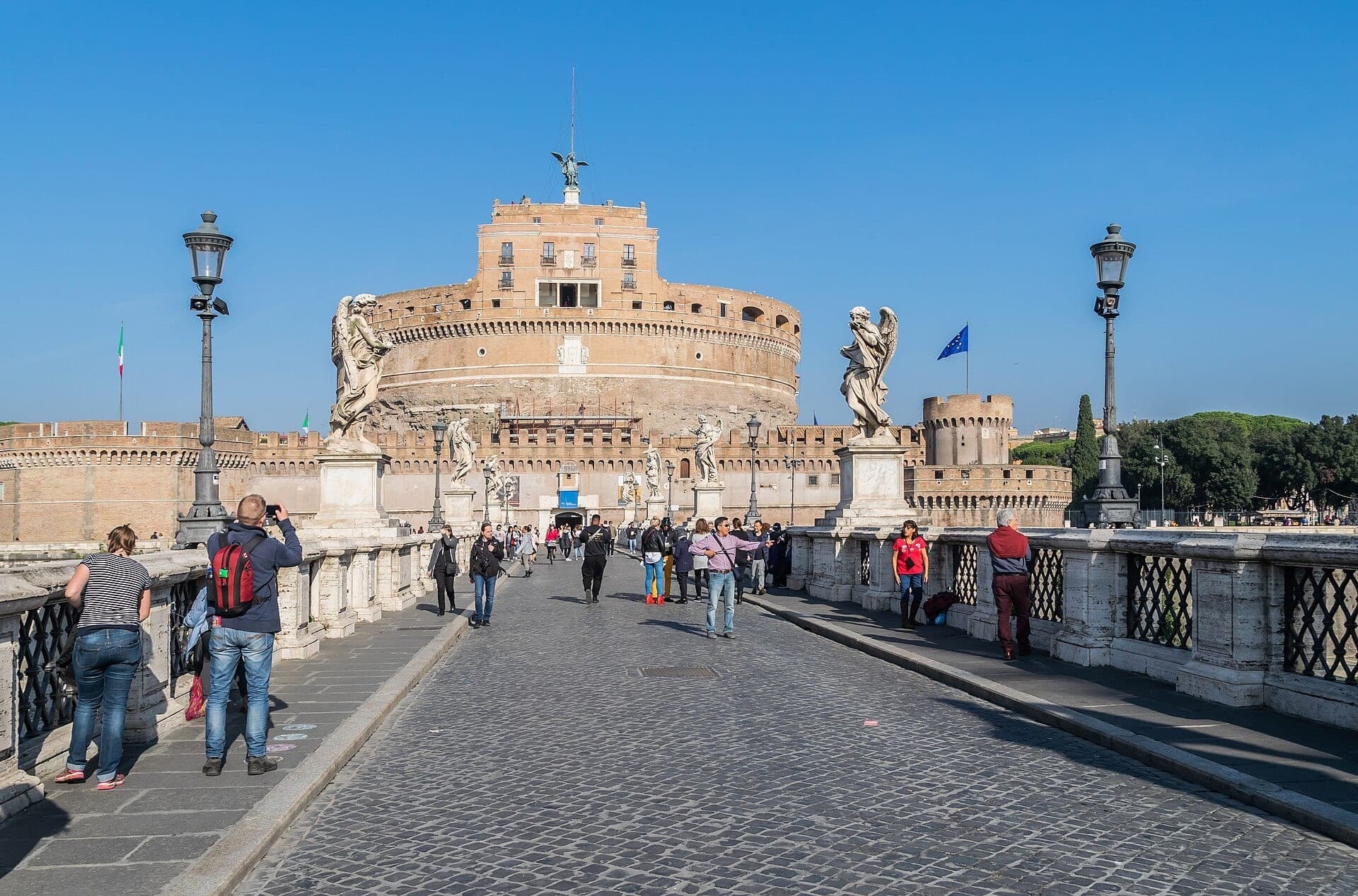
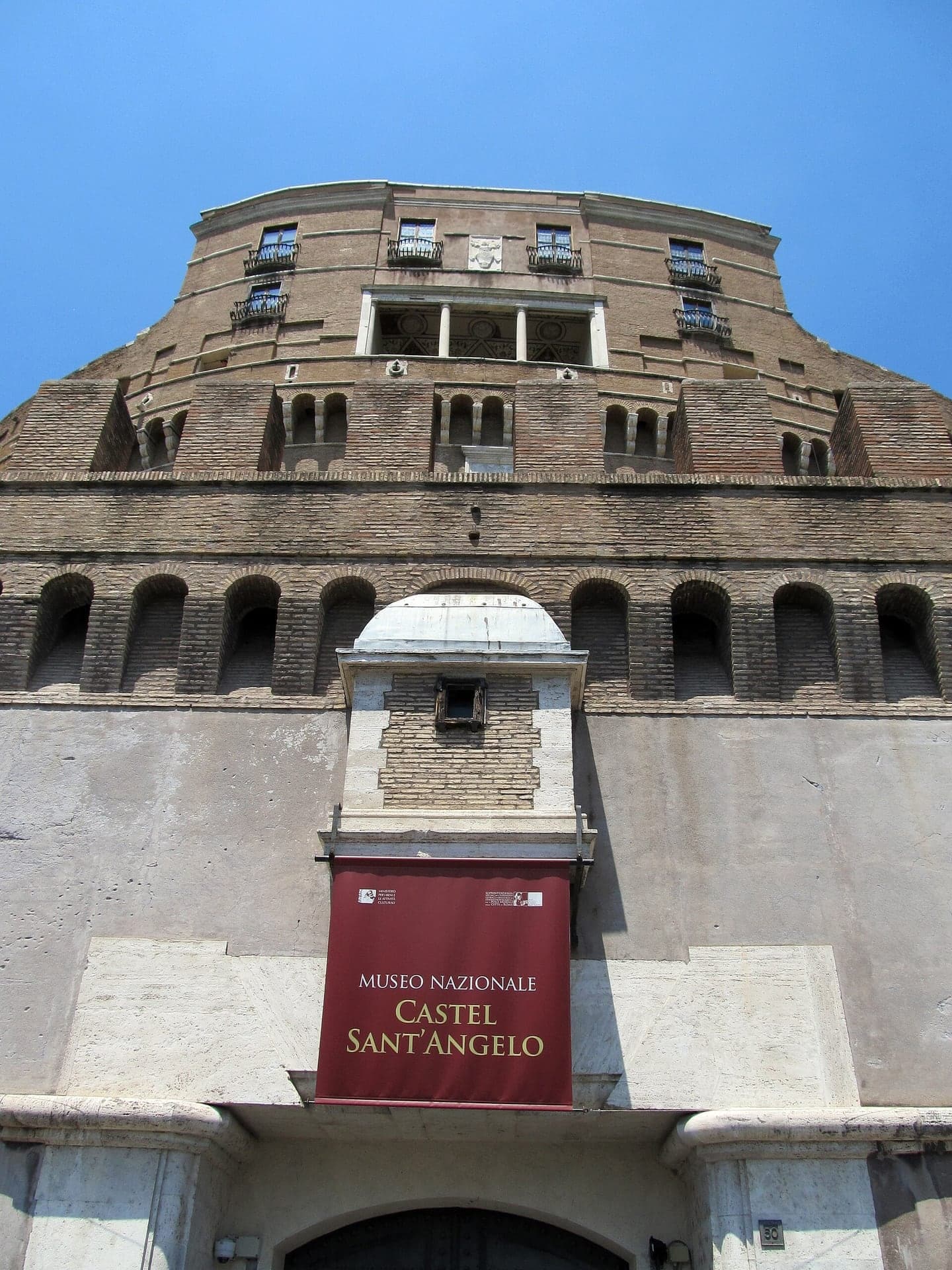
Castel Sant'Angelo: A Tomb Turned Fortress
Hadrian's round tomb on the Tiber, turned by the popes into a fortress, a prison and now a museum.
- 3
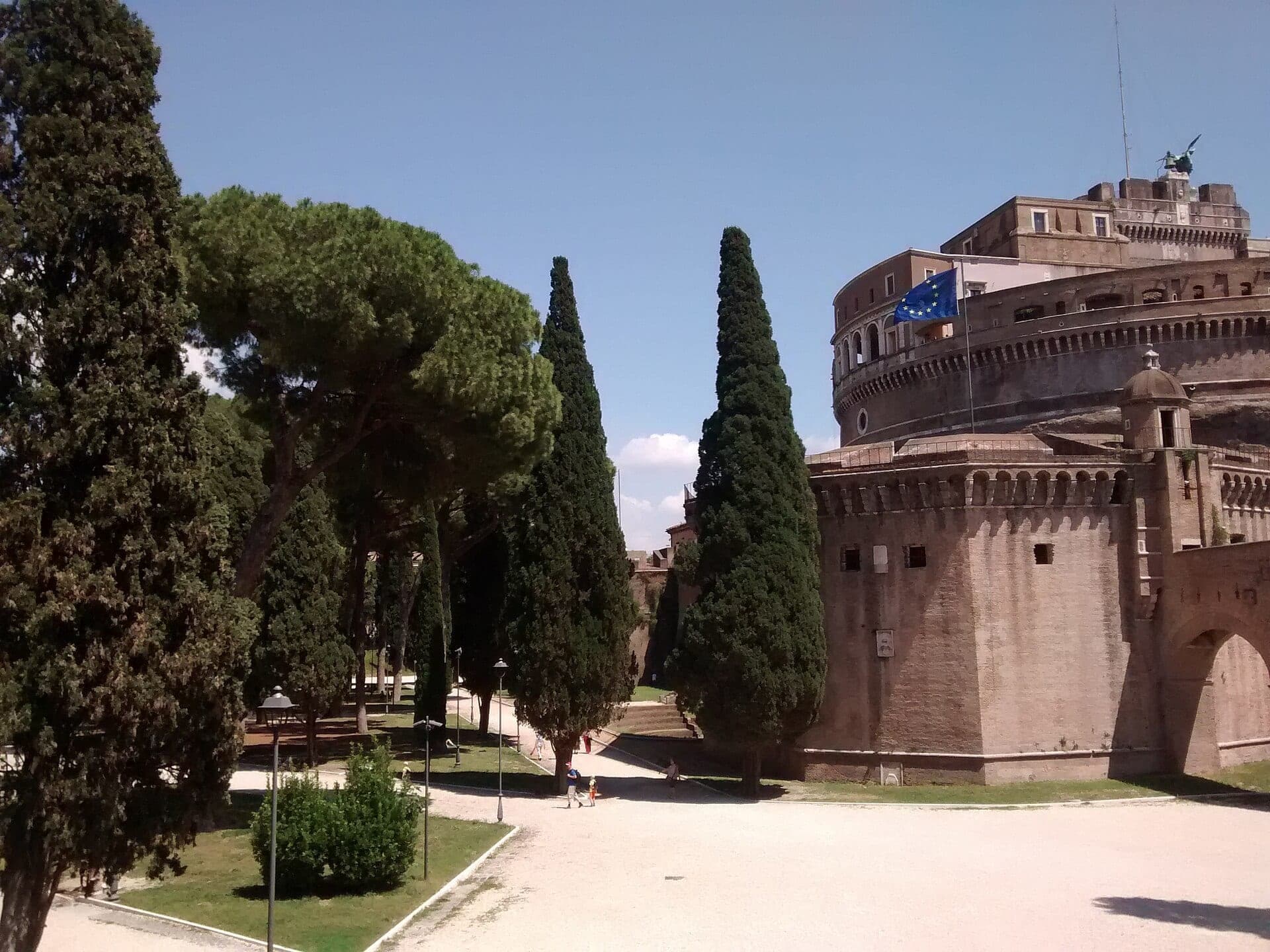
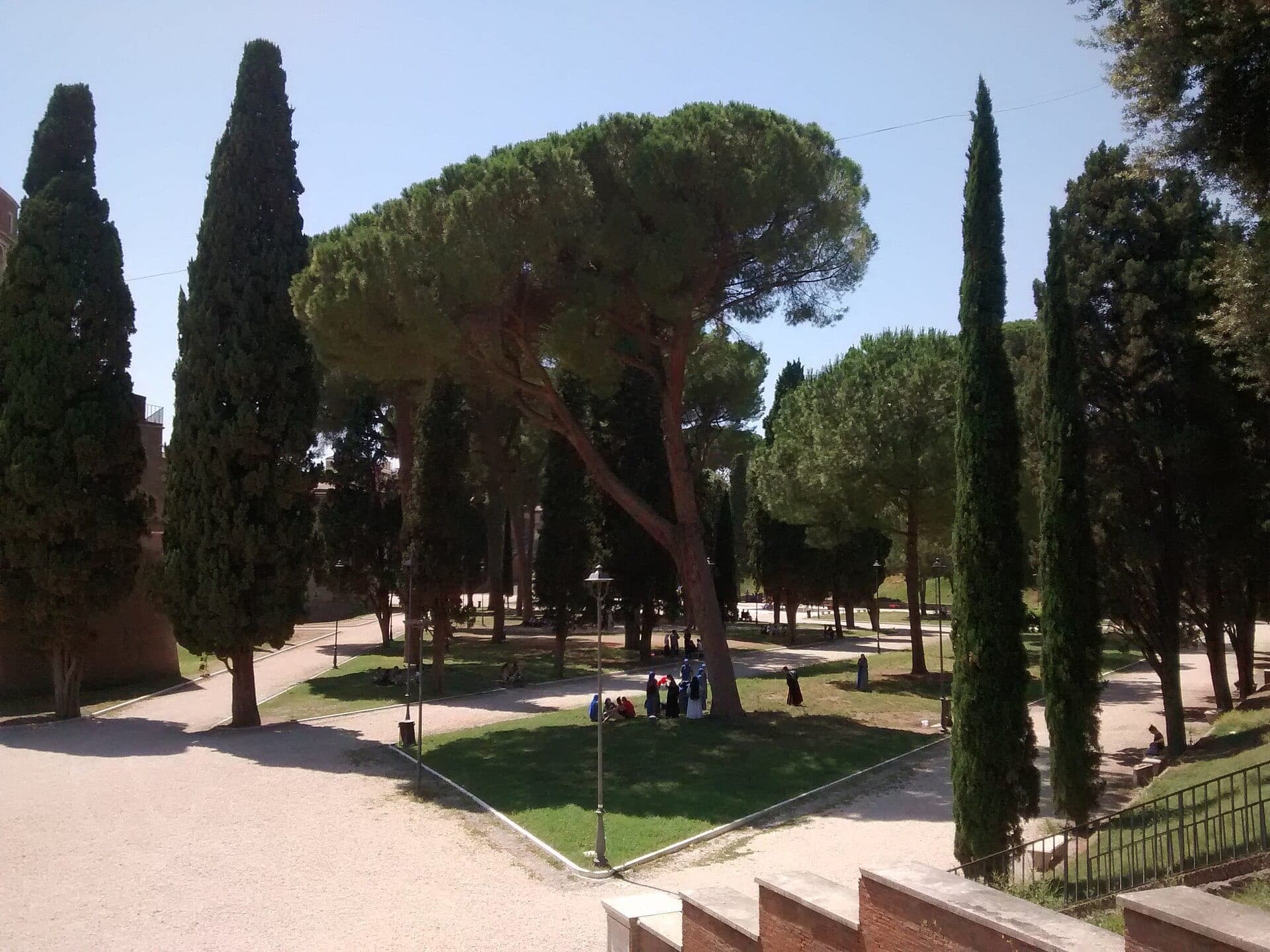
Parco Adriano: A Fortress Drawn in Grass
The castle's bastions and its old moat, laid out as public gardens with pines, holm oaks and lawns.
- 4
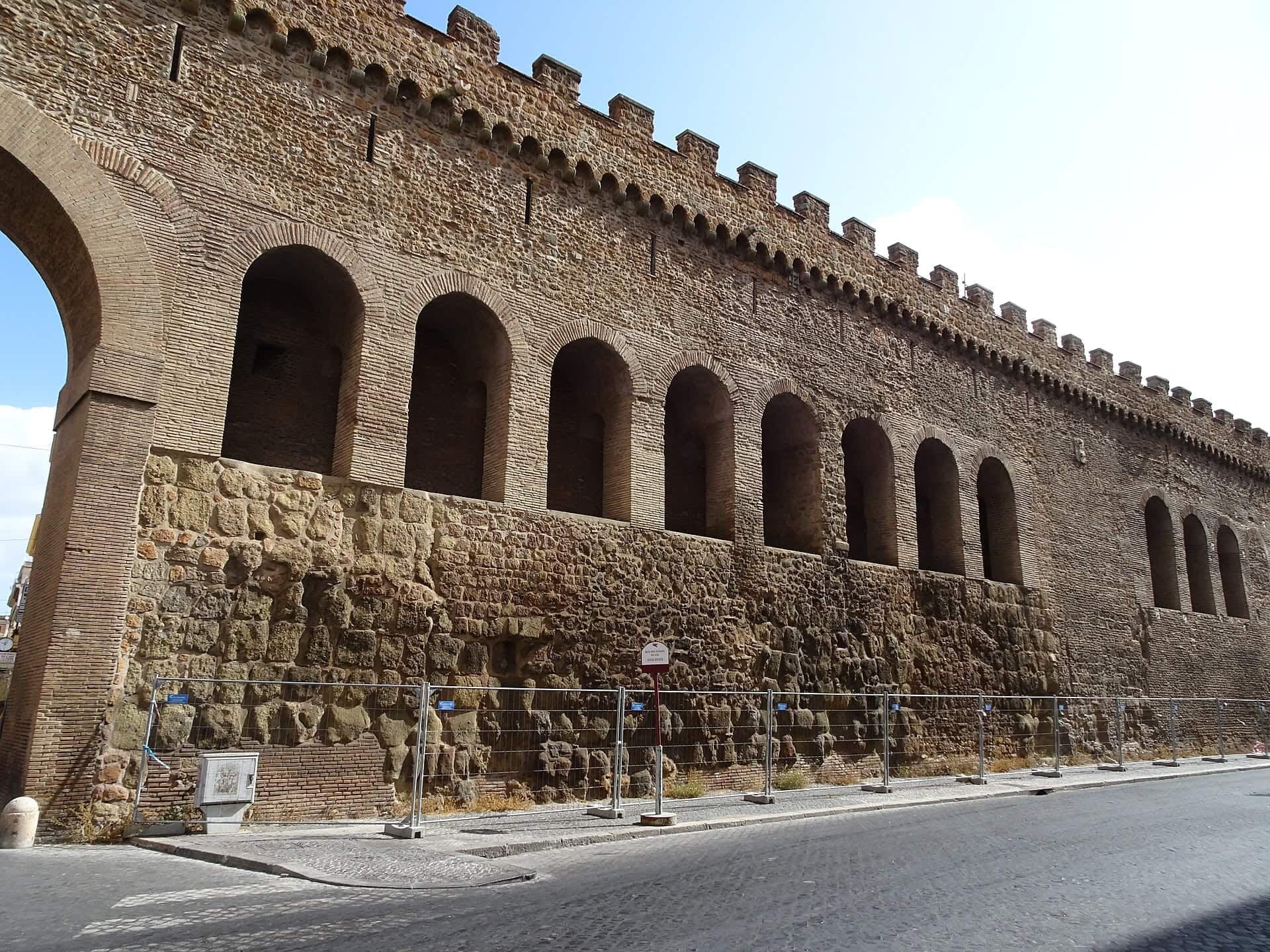
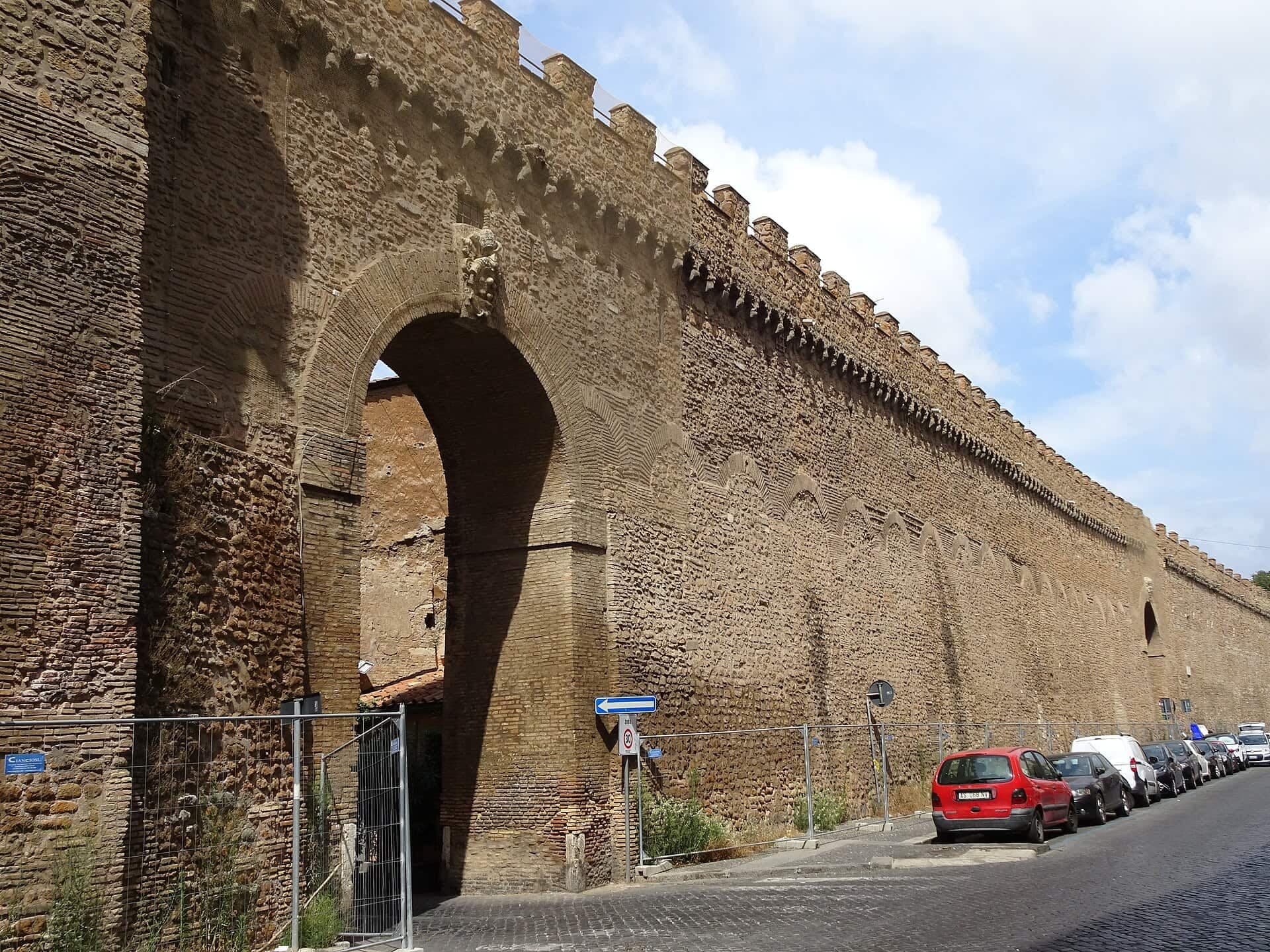
Passetto di Borgo: The Popes' Corridor
A raised corridor on an old wall, about 800 metres long, that carried popes in flight from the Vatican to the castle.
- 5
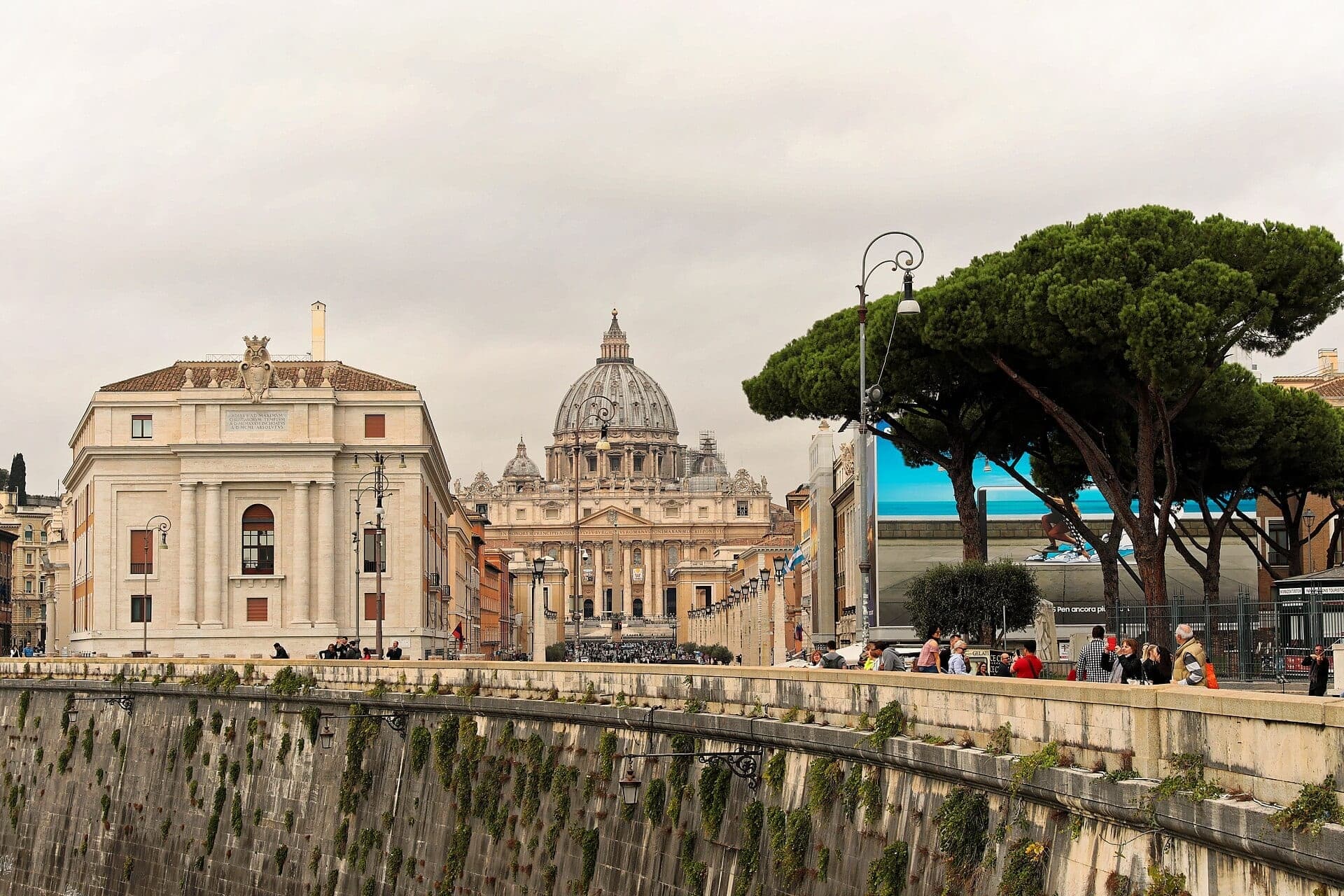
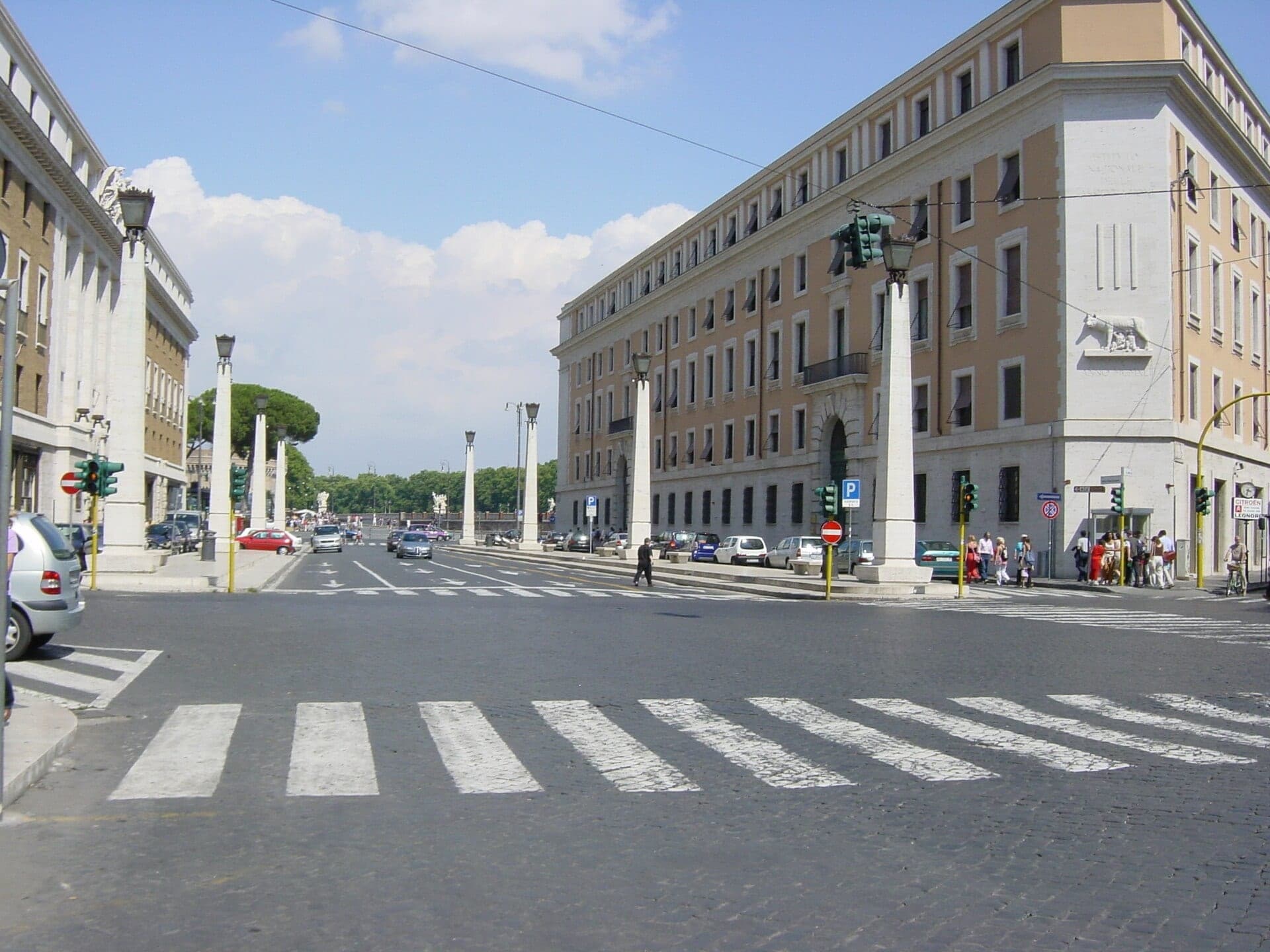
Piazza Pia: The Long View
The head of Via della Conciliazione, the avenue cut through the Borgo in 1936 to 1937 that frames the whole dome from far away.
- 6
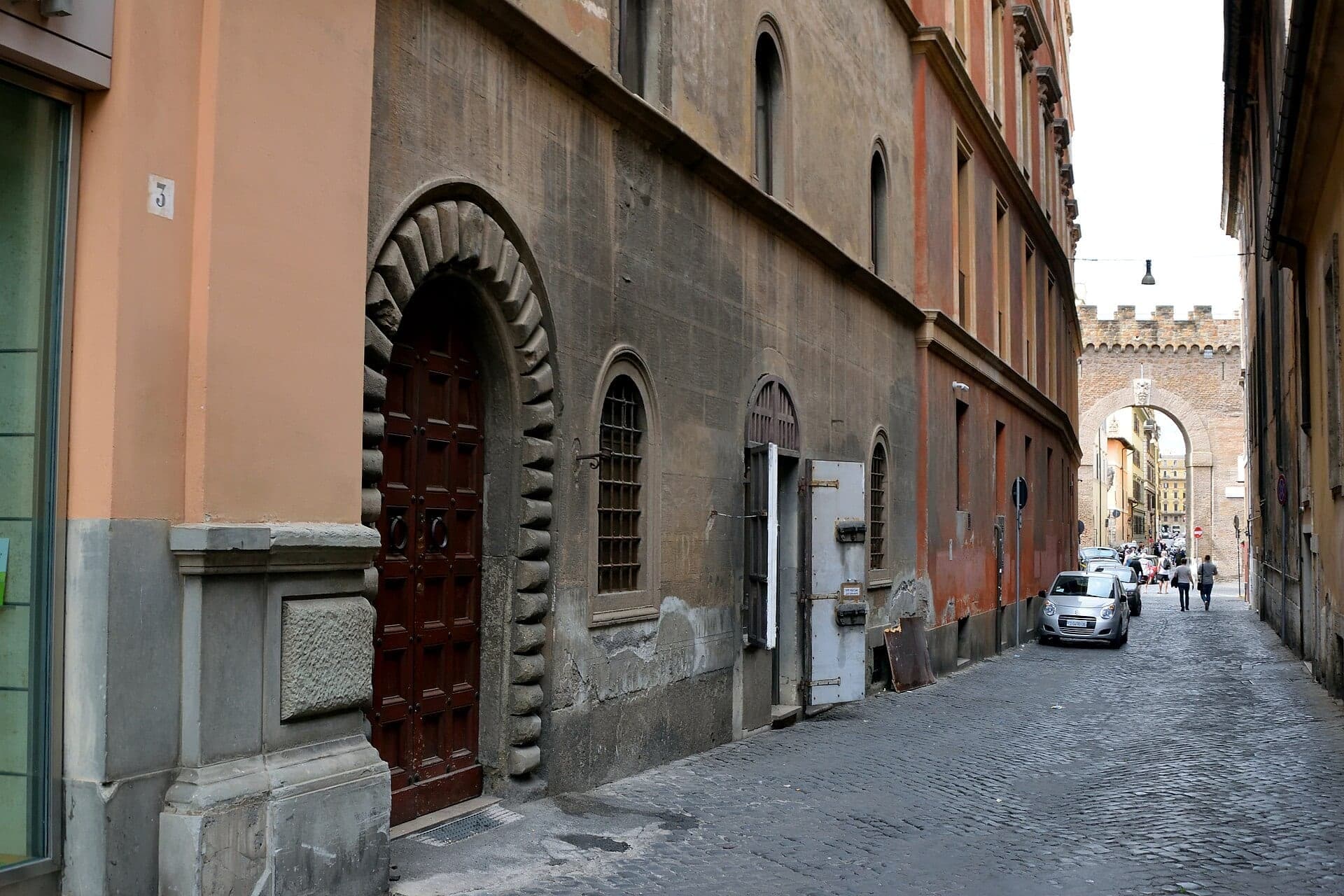
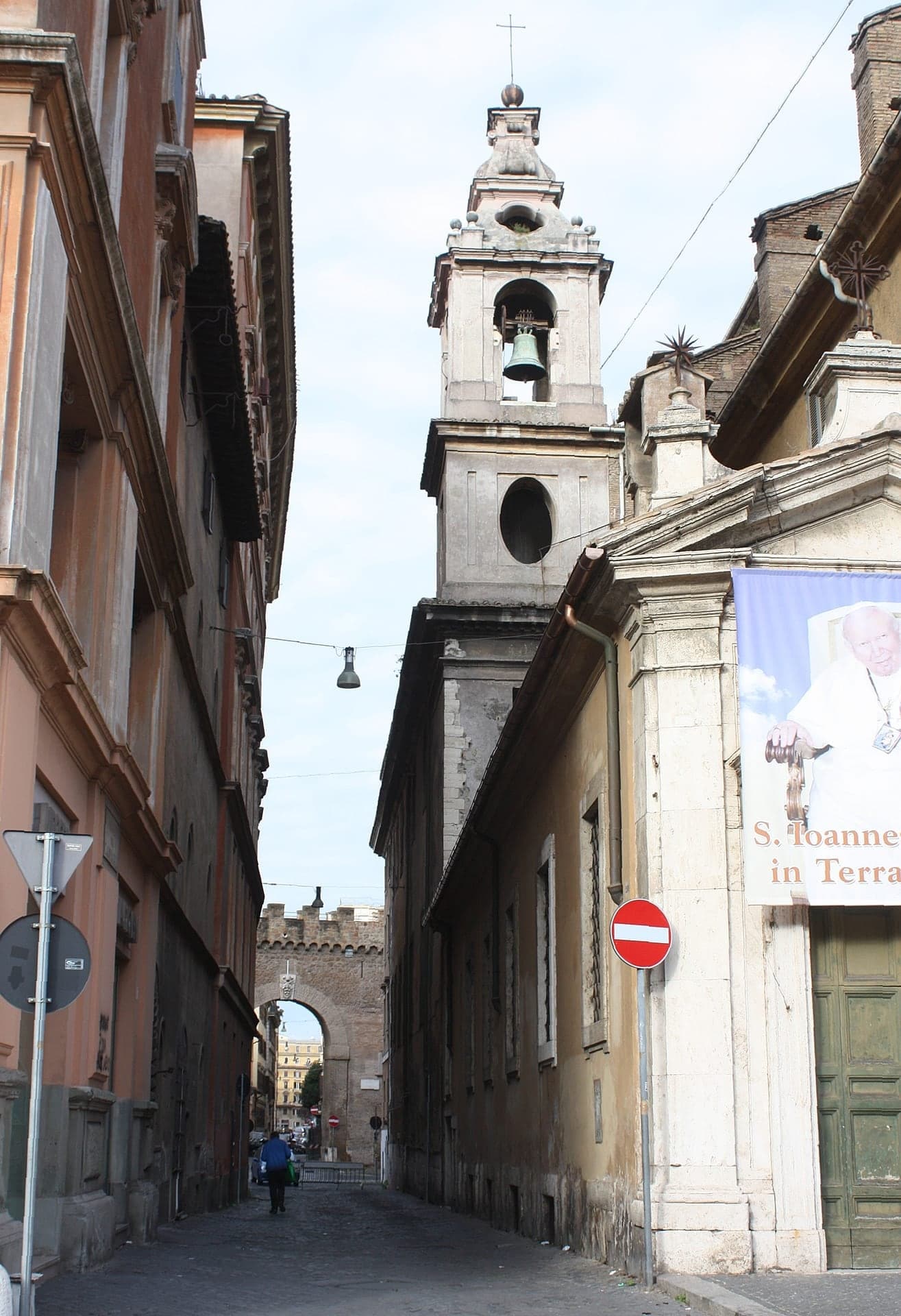
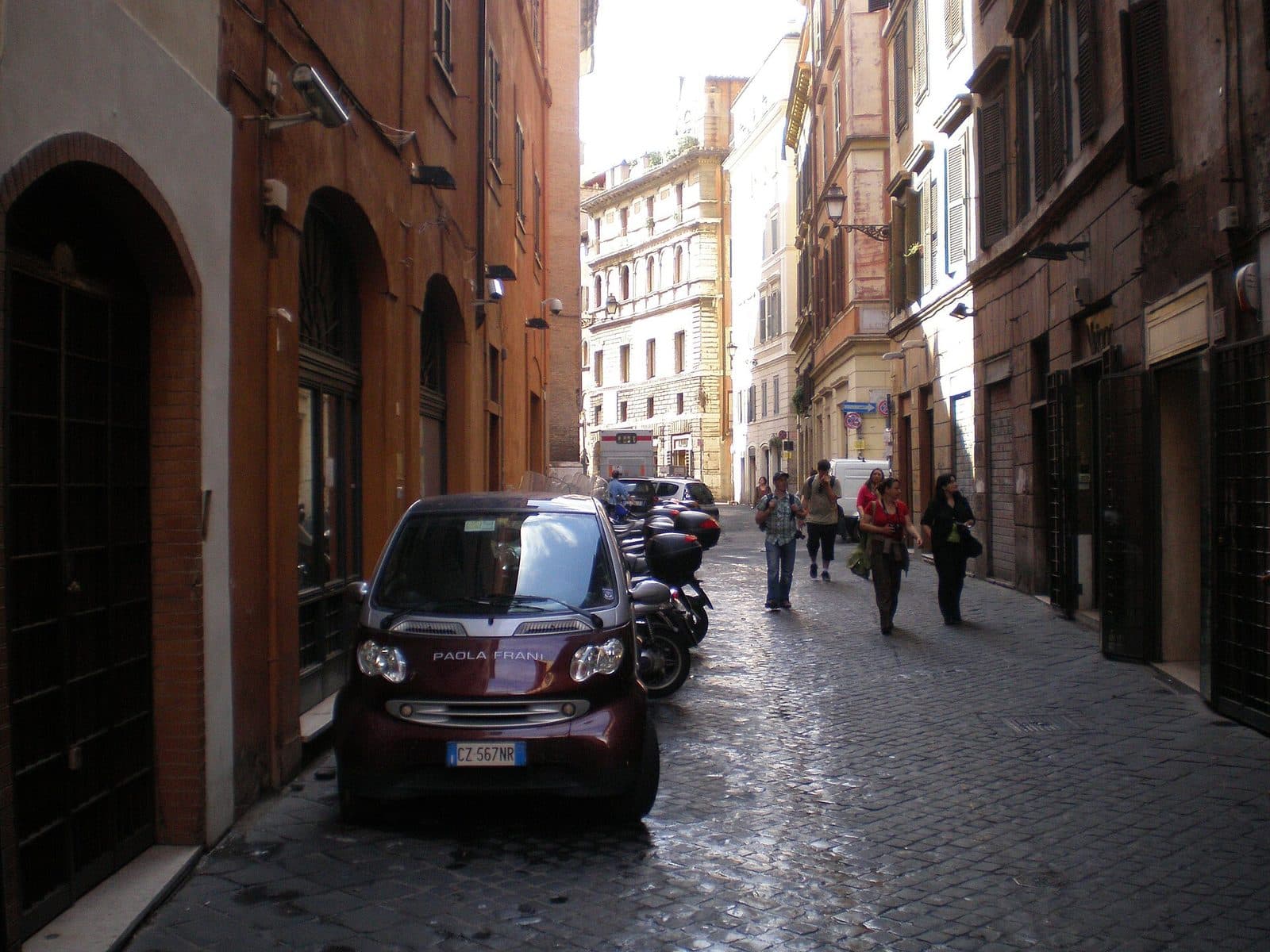
Vicolo del Campanile: The Old Scale
A narrow Borgo lane with no pavement, closed off by the popes' raised corridor: the scale of the approach before the avenue.
- 7
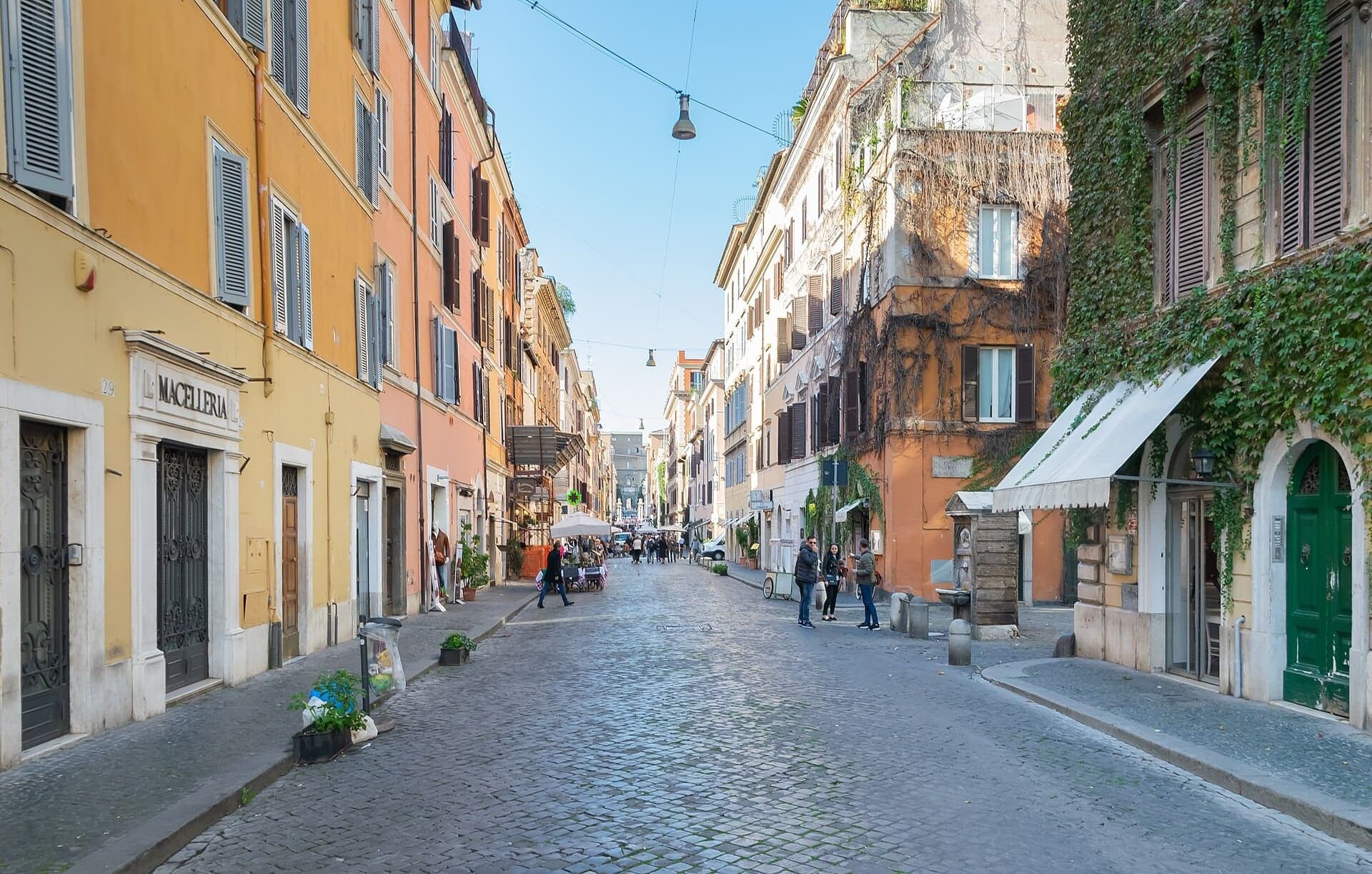
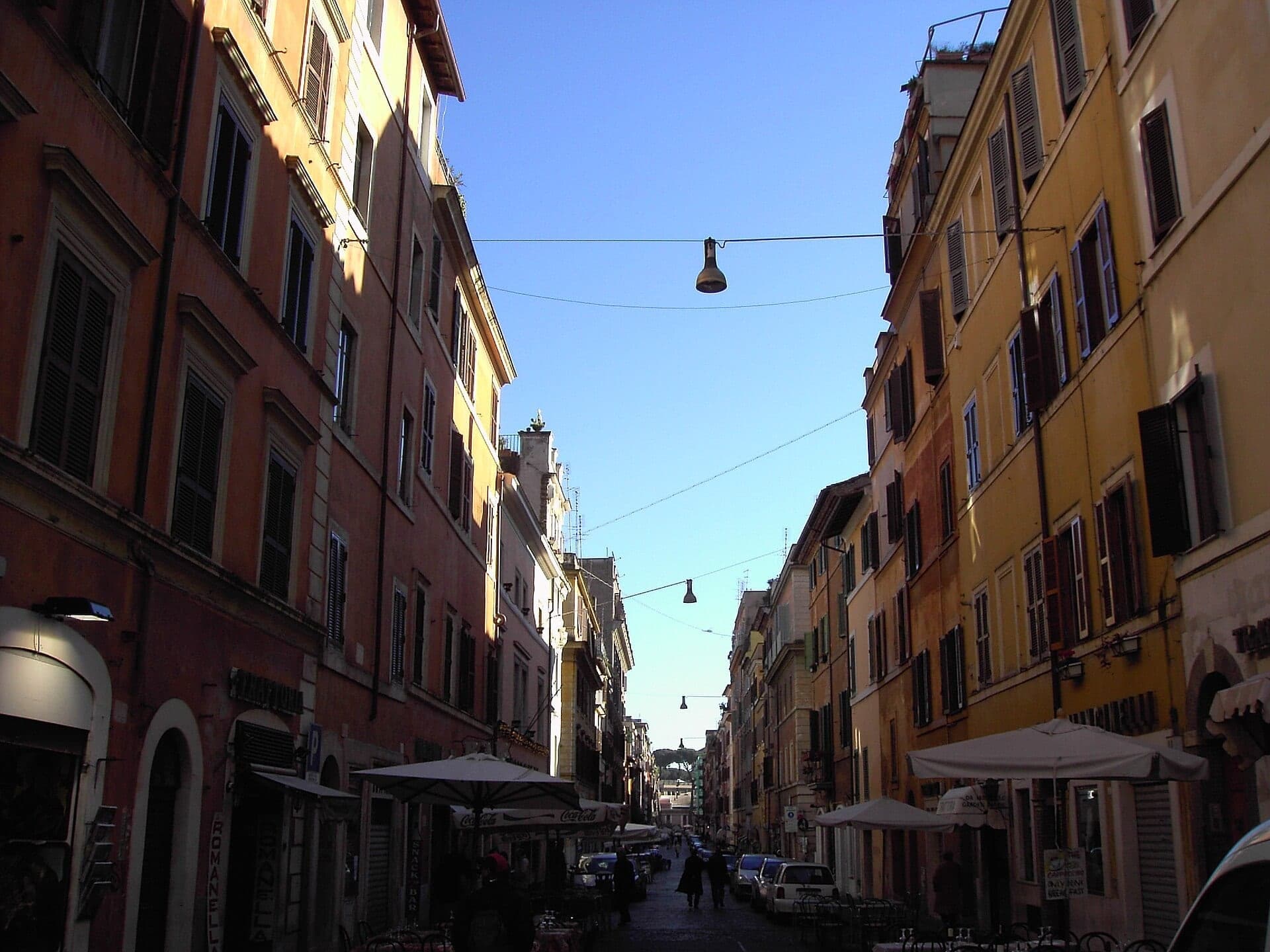
Borgo Pio: A Pope's Small City
Pope Pius IV's planned little city of 1565, a straight street between the castle and the Vatican.
- 8
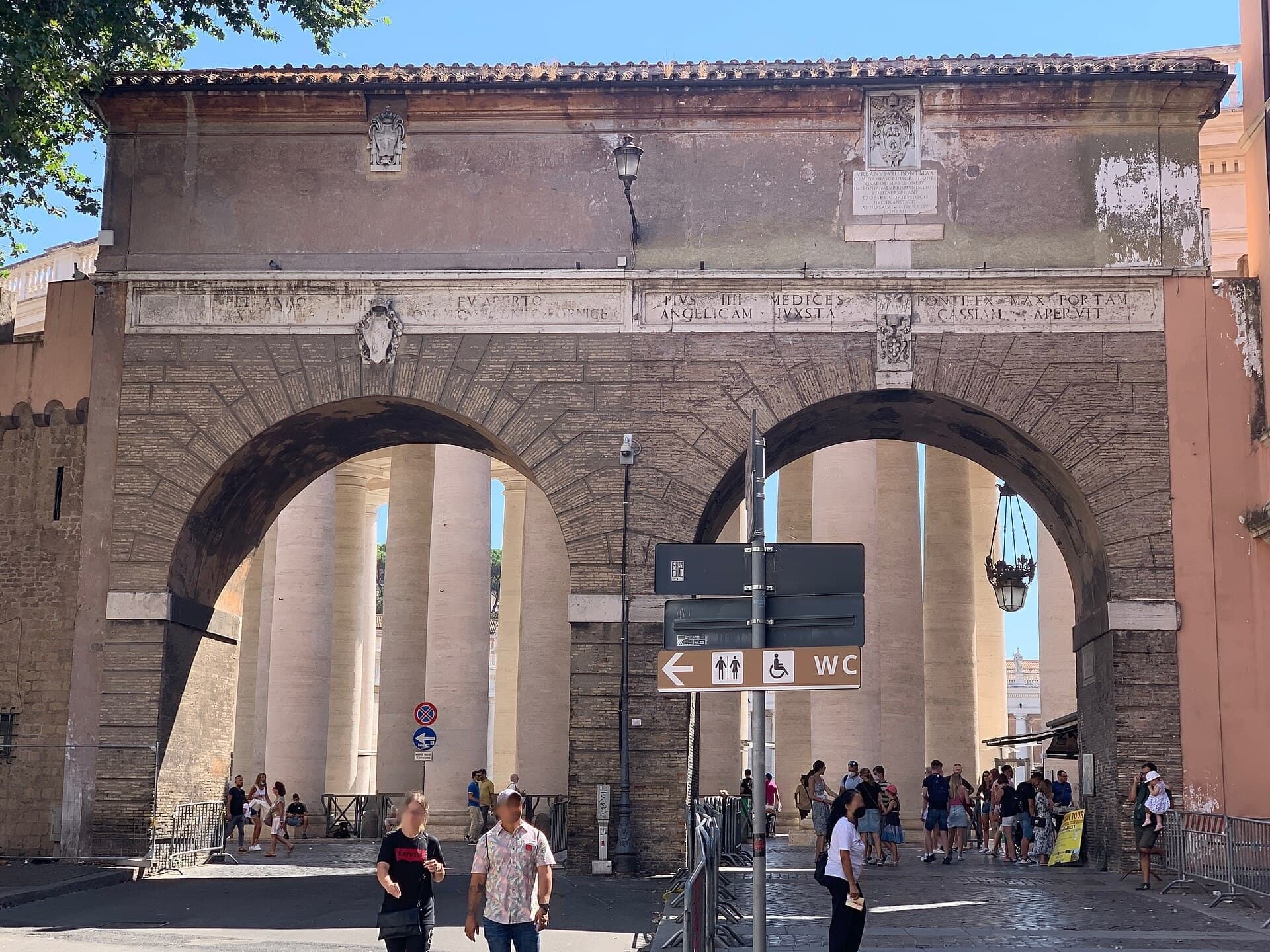
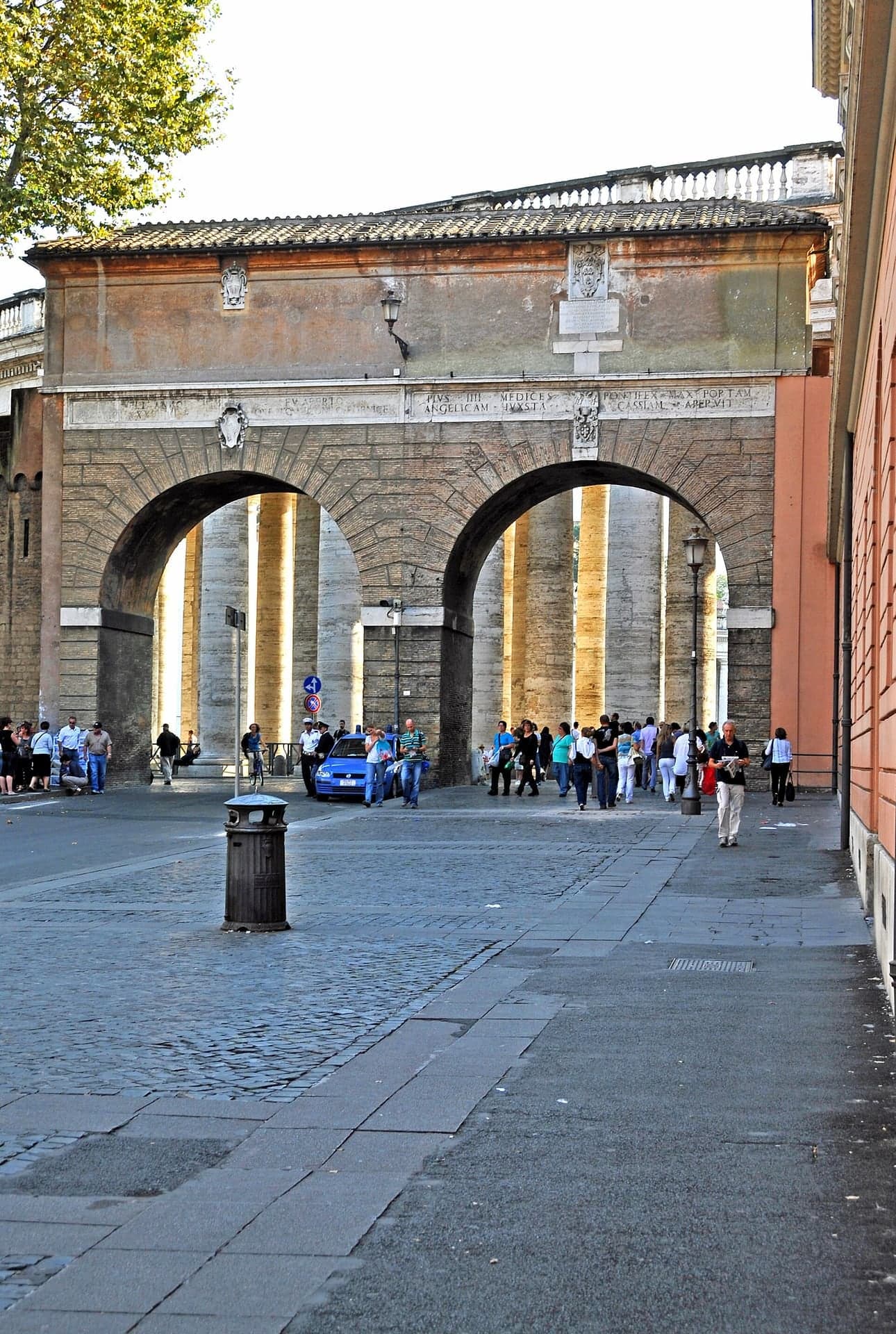
Porta Angelica: The Gate That Is Gone
The street named for Pius IV's gate, pulled down in 1888, beside the Swiss Guard barracks, a Vatican gate and the corridor's last arch.
- 9
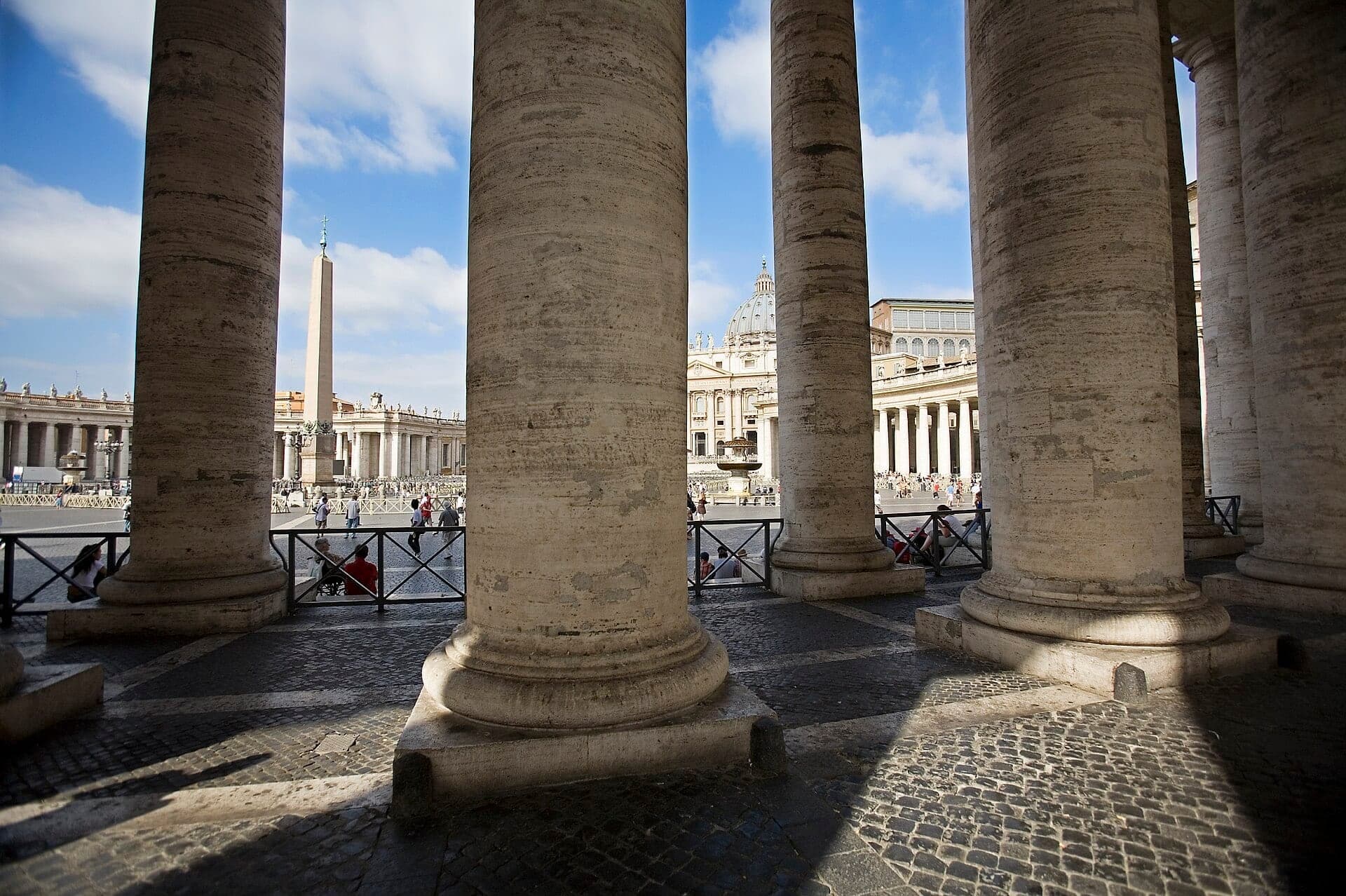
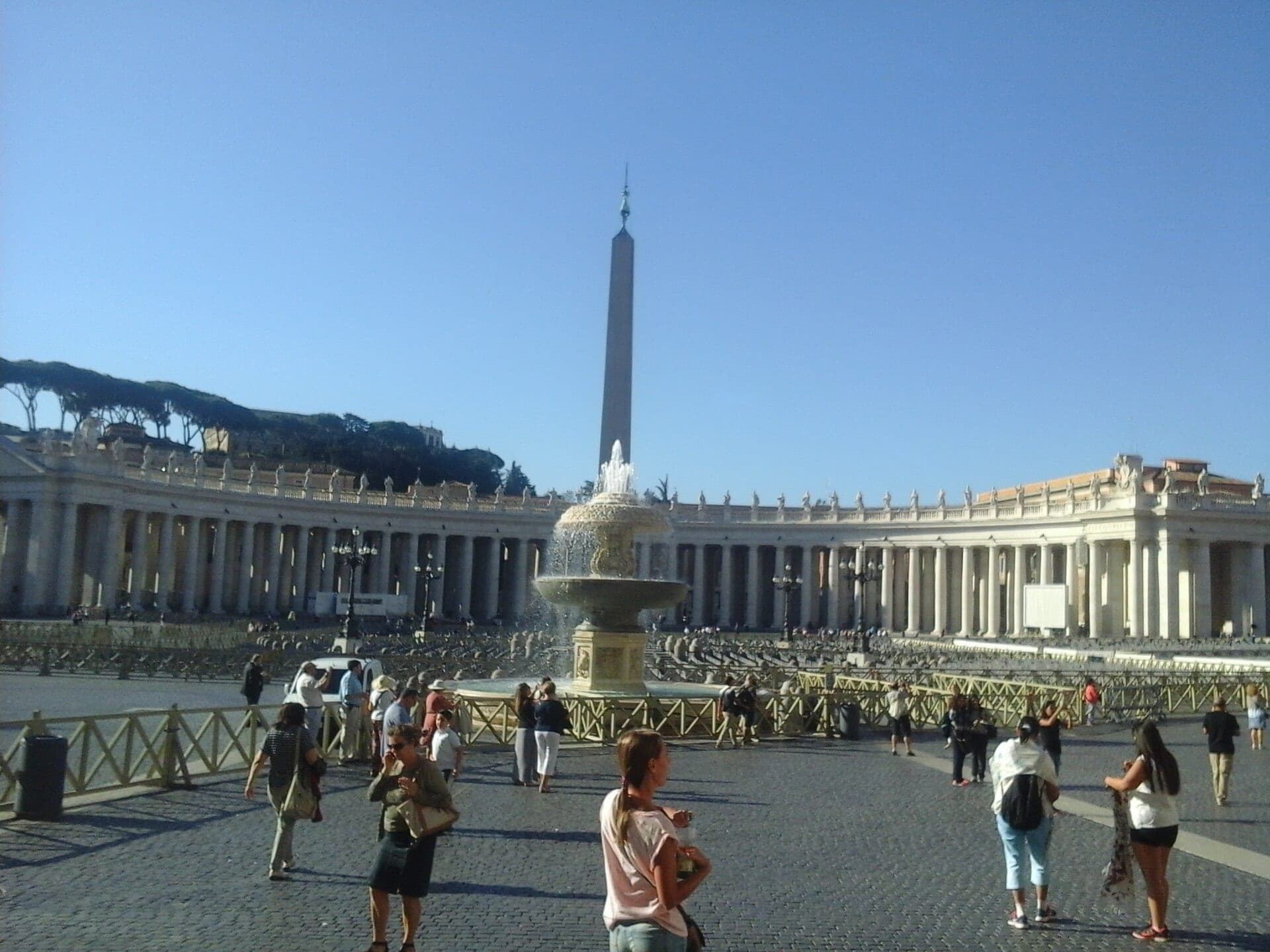
Colonnade and Obelisk: Four Rows Become One
The marker where four rows become one, beside the Egyptian obelisk in the middle of the square.
- 10
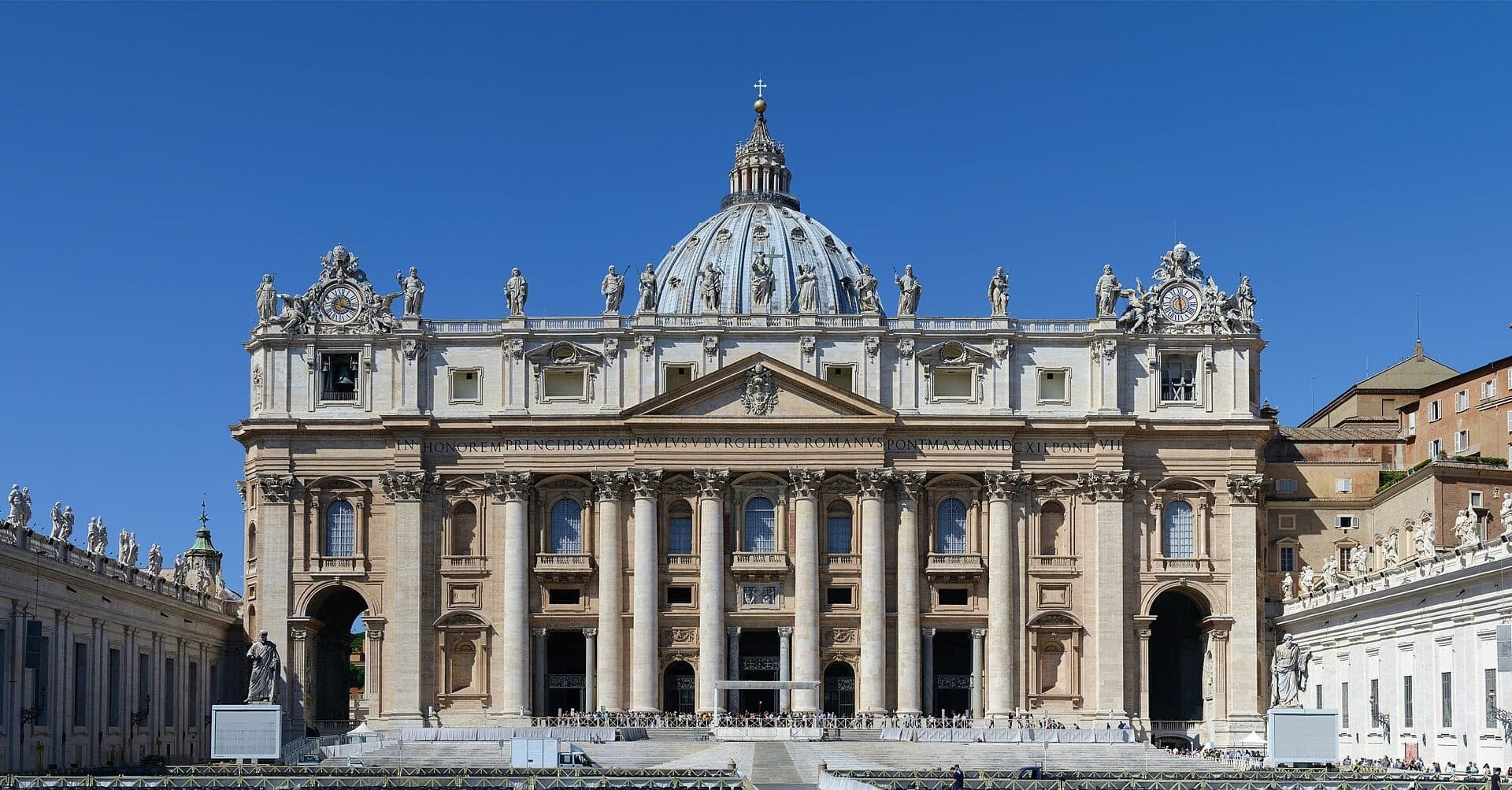
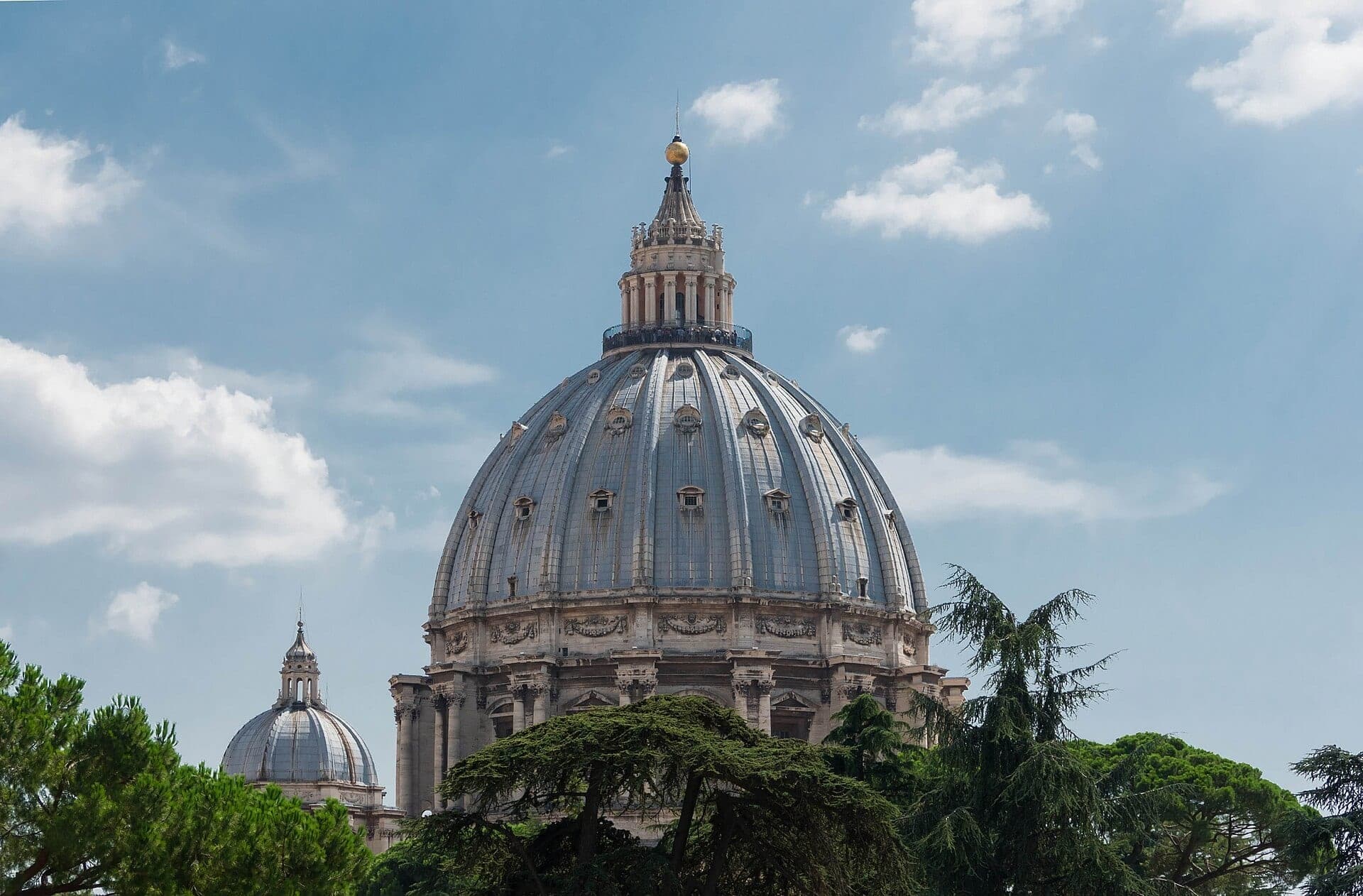
Saint Peter's Basilica: The Dome Sinks Behind
Maderno's broad front of Saint Peter's, which hides all but the top of Michelangelo's dome as you come close.
Details
Best Time to Visit
A weekday morning, not a Wednesday: the castle gardens open at 7am, the Borgo is quieter before the lunch crowds in Borgo Pio. A late afternoon start also works if you reach the gardens before sunset (about 6.40pm in early October, about 5.15pm after the clocks go back on 25 October 2026). On Wednesday mornings the square is usually fenced for the pope's general audience, and on Sundays at noon it fills for the Angelus.
Pro Tips
- •Getting to the start: the walk begins at the south end of Ponte Sant'Angelo, a short walk north of Piazza Navona. By public transport, Roma Capitale lists Lepanto (Metro line A) for the castle area, and buses 40, 62, 23, 271, 280 and 982 stop at Piazza Pia, at stop five; bus numbers as published by Roma Capitale, not rechecked against ATAC. Checked 8 October 2026.
- •The walk ends in Saint Peter's Square. The nearest Metro station is Ottaviano, line A, north of the square.
- •Castel Sant'Angelo (stop 2) is a ticketed museum, 18 EUR full price since 1 July 2026, Tuesday to Sunday 9am to 7.30pm; details on stop 2's card. Checked 8 October 2026 at cultura.gov.it.
- •The Passetto (stop 4) can be walked only on booked guided visits, on a calendar set by the castle's museum and sold through CoopCulture; they start at the Torre del Mascherino on Piazza della Città Leonina, by stop 8. The 2025 schedule ran Friday to Sunday mornings and Saturday evenings; we could not find the 2026 calendar. Checked 8 October 2026.
- •The surviving pieces of Porta Angelica (stop 8), its inscription, the arms of Pius IV and two angels, are set into the wall around the corner at the north end of Via di Porta Angelica, on Viale dei Bastioni di Michelangelo. The coat of arms on the corner itself is a later pope's, Pius XI's.
- •Saint Peter's Basilica (stop 10) is free, open 7am to 8pm every day since 1 June 2026, last entry 7.15pm. Cover shoulders and avoid very short clothing and hats. The security queue forms in the right-hand curve of the colonnade. Checked 8 October 2026 at basilicasanpietro.va.
- •For the best view of the whole dome, stand at the head of Via della Conciliazione (stop 5), or walk a little way back down the avenue after the walk.
- •Rome's free drinking fountains, the nasoni, are a real help on a hot day: there is one at Piazza del Catalone, at the east end of Borgo Pio. The avenue has little shade; the castle gardens have pines and holm oaks.
Safety & Precautions
- •The castle gardens (stops 3 and 4) are open from 7am until sunset, by Roma Capitale's official page (checked 8 October 2026), and close earlier in winter as the sun sets earlier. If they are shut, follow the riverside pavement from the north end of the bridge to Piazza Pia (stop 5) and go on from there.
- •Wednesday mornings: the pope's general audience is usually held in Saint Peter's Square at 10am (it was on 2 and 9 September 2026, by the Vatican Press Office), and the square is fenced and screened from early morning. We could not confirm whether the October audiences are in the square. On a Wednesday morning, end the walk at stop 8 or expect a security line to enter the square. Checked 8 October 2026.
- •Vicolo del Campanile (between stops 5 and 7) is a one-way lane with no pavement: residents' cars and scooters come toward you. Keep to the edge, in single file.
- •Leaving Piazza Pia, the route crosses Via della Traspontina at the lights, then the avenue's own north roadway twice on zebra crossings without lights. In the Borgo's lanes, cross on the zebras and watch for scooters.
- •Pickpockets work the bridge, Borgo Pio at lunchtime and Saint Peter's Square. Keep bags closed and in front of you.
- •In Saint Peter's Square, do not cut through the security queue under the right-hand colonnade; stay on the open paving. Stop 10 is at the foot of the basilica's steps, not on them.
- •Do not approach the Vatican's gates and checkpoints at stop 8, and keep a respectful distance from the Swiss Guards.
- •The streets are paved with sampietrini, uneven cobbles, for much of the walk; strollers do best on the avenue's central promenade.
Travel advisory: Exercise Increased Caution (Level 2).
Gallery
Related Reading
Go deeper on what you'll see, hear, and walk through.
Overview
Best Self-Guided Walking Tours in Rome (2026)
4 min
Overview
Rome Travel Guide 2026: How Many Days, Getting Around, Costs, and Safety
7 min
Thematic
Best History Walking Tours in Rome (2026)
2 min
Thematic
Rome Keeps Nothing New: The City Built by Reusing Itself
6 min
Companion
St. Peter's Square and the Surprise Rome Demolished: Borgo, the Spina and Via della Conciliazione
5 min
Read the walk
The full story of Vatican and St. Peter's Square: The Lost Surprise, in words. Prefer to listen? Play it narrated, from home or on location.
Introduction
Rome, the capital of Italy, has Saint Peter's just across the river, in the Vatican, a separate state. This walk takes you there the slow way.
Until the nineteen thirties, the way to Saint Peter's ran through a tight knot of narrow streets, the Borgo. At the last corner, the square and the church opened up all at once. Then the houses in the middle were knocked down for a wide avenue, and the surprise became a long view.
We walk both ways in: the bridge of angels, the castle that began as an emperor's tomb, the raised wall the popes used as an escape route, the avenue, and then the lanes that survive, so the square can still open up at the last corner.
Three people come back along the way. Hadrian, the emperor who built the tomb and its bridge. Gian Lorenzo Bernini, who designed the bridge's angels and the square's colonnade. And Michelangelo, whose dome you will watch appear and disappear.
The castle is a ticketed museum and the basilica is free behind a security check; the details are on those stops' cards. The castle gardens close at sunset.
The walk is ten stops over just under two kilometres, about a mile and a quarter, and takes about an hour and a quarter, with no real climbs. It begins at the south end of Ponte Sant'Angelo and ends in Saint Peter's Square, facing the basilica.
1. Ponte Sant'Angelo: Bridge of Angels
Welcome to Ponte Sant'Angelo, the bridge of the angel. Walk on past the two statues of Saint Peter and Saint Paul at its entrance, and stop where the line of angels begins.
This bridge was built in the one hundred and thirties A D by the emperor Hadrian, to carry a road across the Tiber to his own tomb: the great round castle at the far end. It is faced in travertine, the pale stone of Rome, and three of its original Roman arches still carry the middle of the bridge.
Now the angels. In the sixteen sixties a pope asked Bernini for a new parapet, and Bernini lined it with ten angels, each holding one of the objects from the story of the Crucifixion. Look along them, pair after pair, leading your eye to the castle. Two to look for: the angel with the crown of thorns, and the angel with the sign that was nailed above the cross.
The Vatican Museums' own catalogue sets out who made what. Bernini handed eight of the angels to his most skilled assistants and kept two for his own hands: exactly those two. They were judged too precious to stand out in the rain. The pope kept them in Bernini's workshop, and in seventeen twenty-nine Bernini's heirs gave them to the church near his house, Sant'Andrea delle Fratte, where they still stand. Our Trevi Fountain walk passes its door.
The two on this bridge are copies, carved by other sculptors. So the eight here are originals from Bernini's workshop, and the two he carved himself are somewhere else.
Follow the route along the bridge toward the castle, and stop about halfway across.
2. Castel Sant'Angelo: A Tomb Turned Fortress
Walk on along the bridge and stop past its middle, with the round castle filling the view ahead. This is Castel Sant'Angelo. It is a ticketed museum, worth a visit for the rooms the popes built inside, but everything on this stop is seen from the bridge, for free.
Look at its shape. Under the battlements and the later buildings is a great drum of stone, a cylinder, sitting on the river bank. That drum is the core of Hadrian's tomb. Rome's city government dates it to between one hundred and thirty-five and one hundred and thirty-nine A D, built in imitation of an older imperial tomb across the river. It was a decorated cylinder with a garden on top, crowned, by most accounts, with a gilded chariot. Hadrian's bridge was built to reach it.
From the thirteen hundreds the popes turned the tomb into their fortress. Over the centuries it served them as a refuge, as apartments, and as a prison, and today it is a museum.
Now look at the very top. The angel up there is bronze, set up in seventeen fifty-three in place of an older marble angel, which now stands inside the castle. The name comes from a legend. In a year of plague, the story goes, a pope saw an archangel above the tomb, putting away his sword, and took it as a sign the plague was over. It is a legend, and it gave the castle and the bridge their name.
Keep the drum in mind: from the gardens you will see it again, from below.
Follow the route off the bridge and into the castle gardens. If the gardens are already shut for the night, follow the riverside pavement instead, round to the head of the wide avenue, and pick up the walk at stop five.
3. Parco Adriano: A Fortress Drawn in Grass
Walk on into the gardens, along the path round the castle's outer walls, and stop where you can see the castle above them. This is Parco Adriano. Its official name is the Gardens of the Mole Adriana, Hadrian's great mass of stone. They are free, and open from seven in the morning until sunset.
Look at the walls beside you. They do not follow the round drum. They make a ring with five sides and pointed corners. The corners are bastions, added in the fourteen and fifteen hundreds, when the tomb had become the popes' fortress. The ditch inside them was its moat.
Rome's city government tells the gardens' history in two layers. In nineteen eleven, when Rome held a great international exhibition, this ground was turned into a park. In the nineteen thirties it was laid out again, by an architect who also helped design the avenue we reach at stop five. Keep him in mind.
The design follows the fortress. The gardens trace the castle's five-sided plan, on two levels. Up at street level stand umbrella pines and holm oaks. Down in the old moat it is mostly lawn, with pines and cypresses, and stairways connect the two, two of them grand ones, crowned by curved terraces, facing the bastions. A fortress, drawn in grass and trees.
Above the walls, if the trees allow, you can see the upper part of the round drum and the bronze angel on top.
Expect company: parts of the moat are fenced runs for dogs.
Follow the route round the castle's north side. It is the longest stretch of the walk, and all of it is in the gardens.
4. Passetto di Borgo: The Popes' Corridor
Walk on to the corner of the gardens where a long, high wall leaves the castle and runs off toward the Vatican, and stop there. This is the Passetto di Borgo, the little passage of the Borgo. It looks like a city wall, and it is one. But on top of it the popes made a raised…
Full narration for this stop unlocks with the tour.
5. Piazza Pia: The Long View
Walk on along the pavement to the start of the wide avenue, and stop there, looking down it. This is Piazza Pia, and the avenue is Via della Conciliazione. At its far end stands Saint Peter's, and from here you can see the whole of Michelangelo's dome, standing high above the…
Full narration for this stop unlocks with the tour.
6. Vicolo del Campanile: The Old Scale
Walk on up the narrow lane and stop at the corner, where the high wall crosses the end of it. This is Vicolo del Campanile, the lane of the bell tower, and the wall straight ahead is the Passetto again, the popes' corridor from the gardens. Take in the scale. After the avenue,…
Full narration for this stop unlocks with the tour.
7. Borgo Pio: A Pope's Small City
Walk on into Borgo Pio and stop on the paved street among the cafe tables and shop awnings. At lunchtime it is crowded, so keep an eye on your bag. It is easy to take this street for something medieval. It is not. It was planned. On the fifth of December, fifteen sixty-five,…
Full narration for this stop unlocks with the tour.
8. Porta Angelica: The Gate That Is Gone
Walk on to the wide, paved street along the Vatican's walls, and stop there, with the Swiss Guard barracks beside you and the popes' corridor crossing the street on an arch ahead. This is Via di Porta Angelica, named for a gate that is no longer there. Pius the Fourth, the pope…
Full narration for this stop unlocks with the tour.
9. Colonnade and Obelisk: Four Rows Become One
Walk on into the square and look for a round marker set into the paving, between the obelisk and the nearer fountain, with the words Centro del colonnato, center of the colonnade. Stop on or near it, and look at the curving colonnade beyond the fountain. You are in Saint…
Full narration for this stop unlocks with the tour.
10. Saint Peter's Basilica: The Dome Sinks Behind
Walk on toward the basilica and stop on the paving at the foot of the wide steps, not on them, facing the front of Saint Peter's. Entry to the basilica is free, after a security check, and the details are on this stop's card. Look up. Over the long, flat front, only the top of…
Full narration for this stop unlocks with the tour.
- Ponte Sant'Angelo in Rome, Lazio, Italy — Krzysztof Golik, CC BY-SA 4.0 · source
- Ponte Sant'Angelo in Rome, Lazio, Italy — Krzysztof Golik, CC BY-SA 4.0 · source
- Castel Sant'Angelo in Rome, Lazio, Italy — Krzysztof Golik, CC BY-SA 4.0 · source
- The museum entrance is through the defensive walls built during the tomb's conversion into a military fortress in 401. It was incorporated i — daryl_mitchell from Saskatoon, Saskatchewan, Canada, CC BY-SA 2.0 · source
- aan kruispunt Borgo Sant'Angelo - Via della Traspontina — Hugo DK, CC BY-SA 4.0 · source
- aan het kruispunt Via dei Corridori - Vicolo delle Palline — Hugo DK, CC BY-SA 4.0 · source
- Blick auf den Petersdom von der Engelsbrücke — Burkhard Mücke, CC BY-SA 4.0 · source
- Piazza Pia, between Castel Sant'Angelo and Via della Conciliazione, before its 2024 renovation, Rome (Italy). — ICOLEF / visualtravelguide.com, CC BY-SA 4.0 · source
- Das Anwesen Vico del Campanile 2 in Rom (Borgo) heute — Rabax63, CC BY-SA 4.0 · source
- Rome, Vicolo del Campanile — Dguendel, CC BY 3.0 · source
- Borgo Pio in Rome, Lazio, Italy — Krzysztof Golik, CC BY-SA 4.0 · source
- Porte Angelica, Rome. — Chabe01, CC BY-SA 4.0 · source
- Gateway under the Passetto, the route from the Vatican to Castel Saint Angelo. The Via dei Corridori begins in the Largo del Colonato, just — Dennis G. Jarvis, CC BY-SA 2.0 · source
- The Bernini Colonnade at St Peter's Square, San Pietro, Rome, Italy — Jorge Royan, CC BY-SA 3.0 · source
- Main facade of Saint Peter's Basilica, Rome — Alvesgaspar, CC BY-SA 4.0 · source
Images may be cropped or resized. Other photos via Unsplash and Pexels.