Rome grew upward, on top of itself. Over roughly two thousand years the ground level rose many metres, so temples ended up under houses, houses under churches, and the streets you walk are only the top floor of a much taller building. The Basilica di San Clemente, on Via Labicana below the Celian hill, about 400 metres east of the Colosseum, is the single clearest place in the city to see that stack. Three levels sit one under the other at a single address, and once your eye learns to read them downward here, it reads the rest of Rome the same way.
One church, three floors of time
From the street, San Clemente looks like one handsome medieval church. Its floor is inlaid with swirling coloured stone, and a golden mosaic glows in the apse. The basilica's own website calls this the basilica of the twelfth century. Call it the top floor.
Go down one level and the church you were standing in has an older twin beneath it. The basilica describes a church of the fourth century under the present one, with medieval frescoes dated from the eighth to the eleventh century. Some of the oldest painted storytelling in the city is down there. That lower church was buried, forgotten, and built over, its own roof becoming the floor of the church above. The basilica also notes that Saint Cyril was buried in this church in the ninth century.
Go down once more, to the first century, and you reach a level with a temple to the god Mithras. A natural stream still runs through the deepest part, and if you stand quietly you can hear it running through the dark under the church. The excavations that uncovered the lower levels were carried out in the nineteenth century under the Irish Dominican friars, whose order still looks after the church.
Three levels, one address, still stacked, and still holding everything above them up.
The visit
Hear a stop from this walk
Tarpeian Rock: The Cliff and the Church
The excavations are ticketed, and the church asks you to book your entry through its own website, where hours and prices are posted. We have not quoted a price here because it can change; check before you go.
The same lesson at giant scale
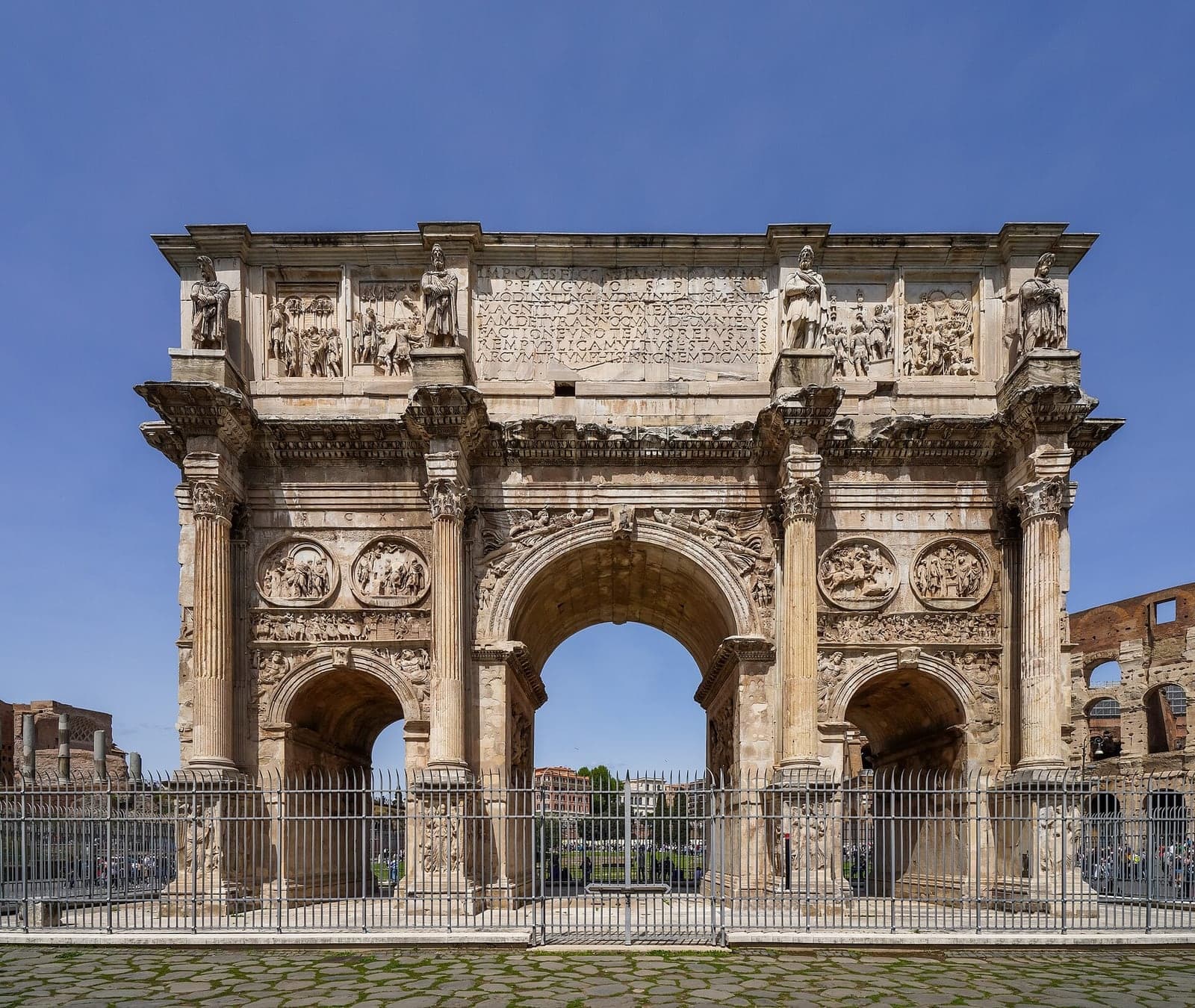
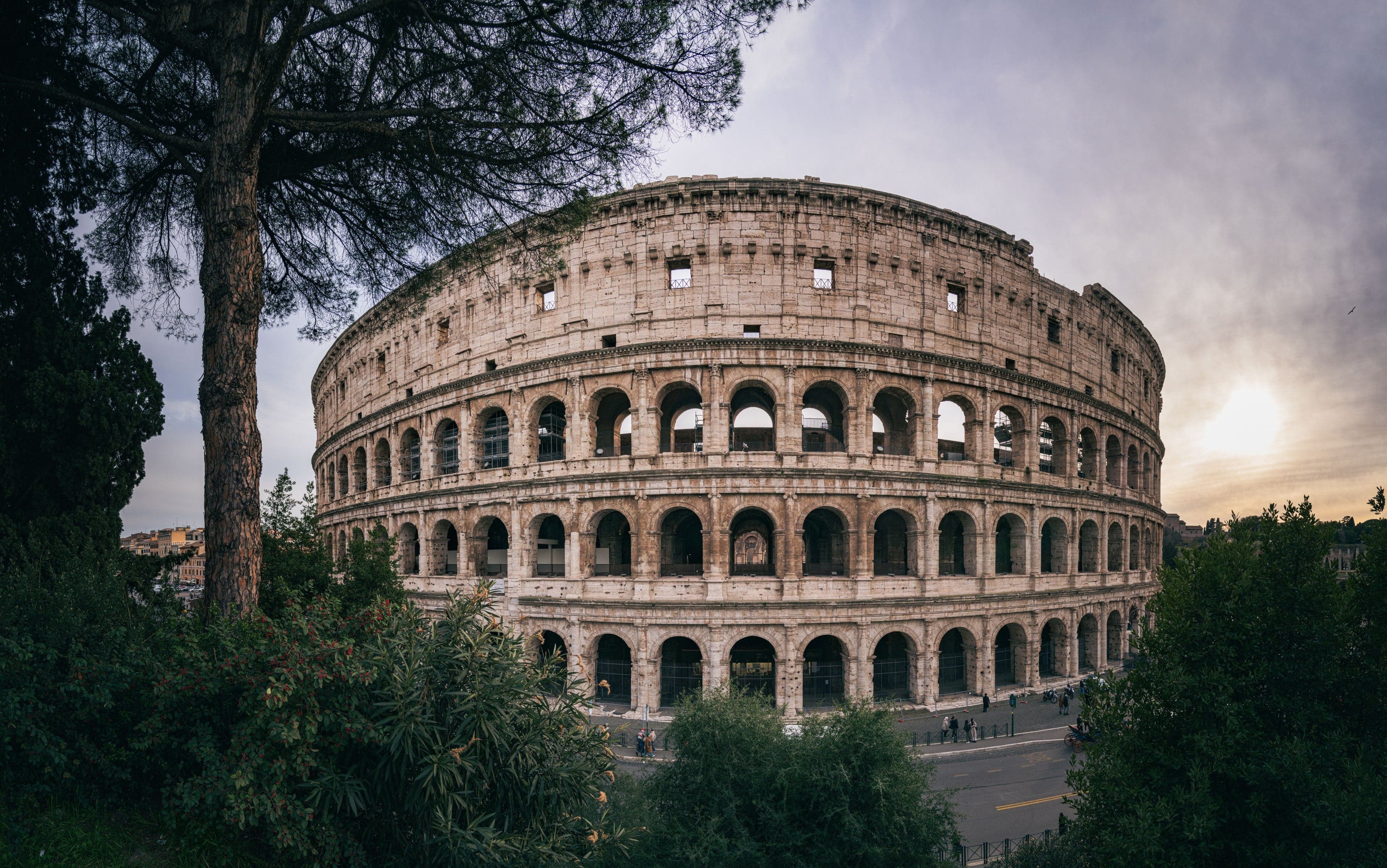
Walk back toward the Colosseum and the same lesson reappears at a larger scale. Rome's tourism office says the amphitheatre was built on the area previously occupied by the artificial lake of Nero's Golden House. In the Middle Ages and the Renaissance the building itself became a quarry. A few steps away the Arch of Constantine is assembled from sculpture lifted off older monuments, with the faces reworked. The city almost never started from a blank site, and it almost never threw anything away. Read more about how the Colosseum sits on the ground of Nero's lake.
Making it a walk
San Clemente is a detour from the walk that begins at that arch, Colosseum and Roman Forum: Rome Built From Rome, which stays on free ground around the amphitheatre and along Via dei Fori Imperiali. If you are mapping out how the neighbourhood fits together, the wider set of Rome walking tours puts the route in context.
That is the whole argument in miniature: each new city rising on the one it could not quite throw away. Start at San Clemente, learn to look down, and the rest of Rome opens floor by floor.
Sources
- Basilica di San Clemente official website (basilicasanclemente.com): the twelfth-century basilica, the fourth-century church below with frescoes of the eighth to eleventh century, the first-century level with the Mithraic temple, and booking for the excavations.
- Roma Capitale, Turismo Roma: the Colosseum and the Arch of Constantine. The site on Nero's lake, the quarry afterlife and the reused sculpture.
- Roamer tour dossier for "Colosseum and Roman Forum: Rome Built From Rome" (rome-colosseum-forum), fact-checked October 2026.
Ready to experience it?
Colosseum and Roman Forum: Rome Built From Rome
75 min · 1.9 km · moderate
More from Rome
Explore more at your own pace.
Best Architecture Walking Tours in Rome (2026)
St. Peter's Square and the Surprise Rome Demolished: Borgo, the Spina and Via della Conciliazione
The Aventine's Orange Garden and Keyhole: A Fortress That Became a View
The Water Behind the Trevi Fountain: Following the Acqua Vergine to the Pincio
Palatine Hill: Where Rome Says It Was Born