Church Square: The Heart of the Capital
120 min · 4 km · easy
Pretoria reads as a single story told twice: once on a paved square where a Boer republic began, and once on a green hill where a democratic country took its oath. South Africa's administrative capital grew outward from Church Square and looks up toward Herbert Baker's Union Buildings on the hill of Meintjieskop, and between those two places you can trace the whole layered sequence of Boer republic, British Empire, apartheid, and democracy at your own pace. The square holds the founding and the sentencing. The hill holds the union and the inauguration. Walk both, and you have walked the country.
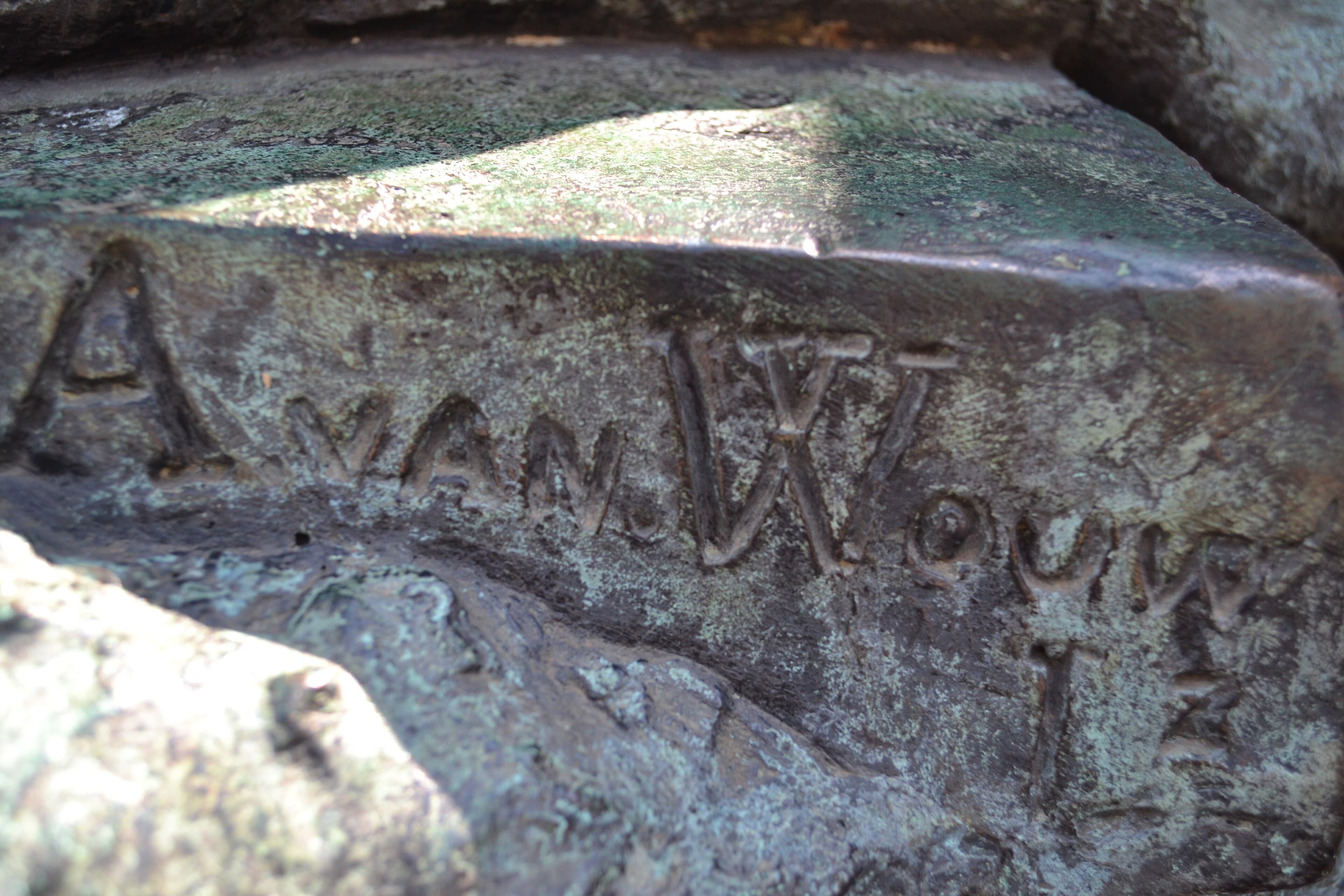
Start where the city started. Church Square is one open hectare that Pretoria's founder Marthinus Pretorius set aside as both marketplace and churchyard, first known as Market Square before church buildings from eighteen fifty-six gave it its lasting name. At its centre stands Paul Kruger, president of the South African Republic, cast in bronze by the Dutch-born sculptor Anton van Wouw and commissioned by the industrialist Sammy Marks. Kruger does not stand alone: four anonymous Boer citizen-soldiers guard the lower plinth, ordinary fighters rather than statesmen. The statue moved several times, standing in a park and near the railway station, before it was finally unveiled here in nineteen fifty-four. The Church Square tour treats this square as the historic core it is, and the buildings around it explain the man in the middle.
One square, four regimes
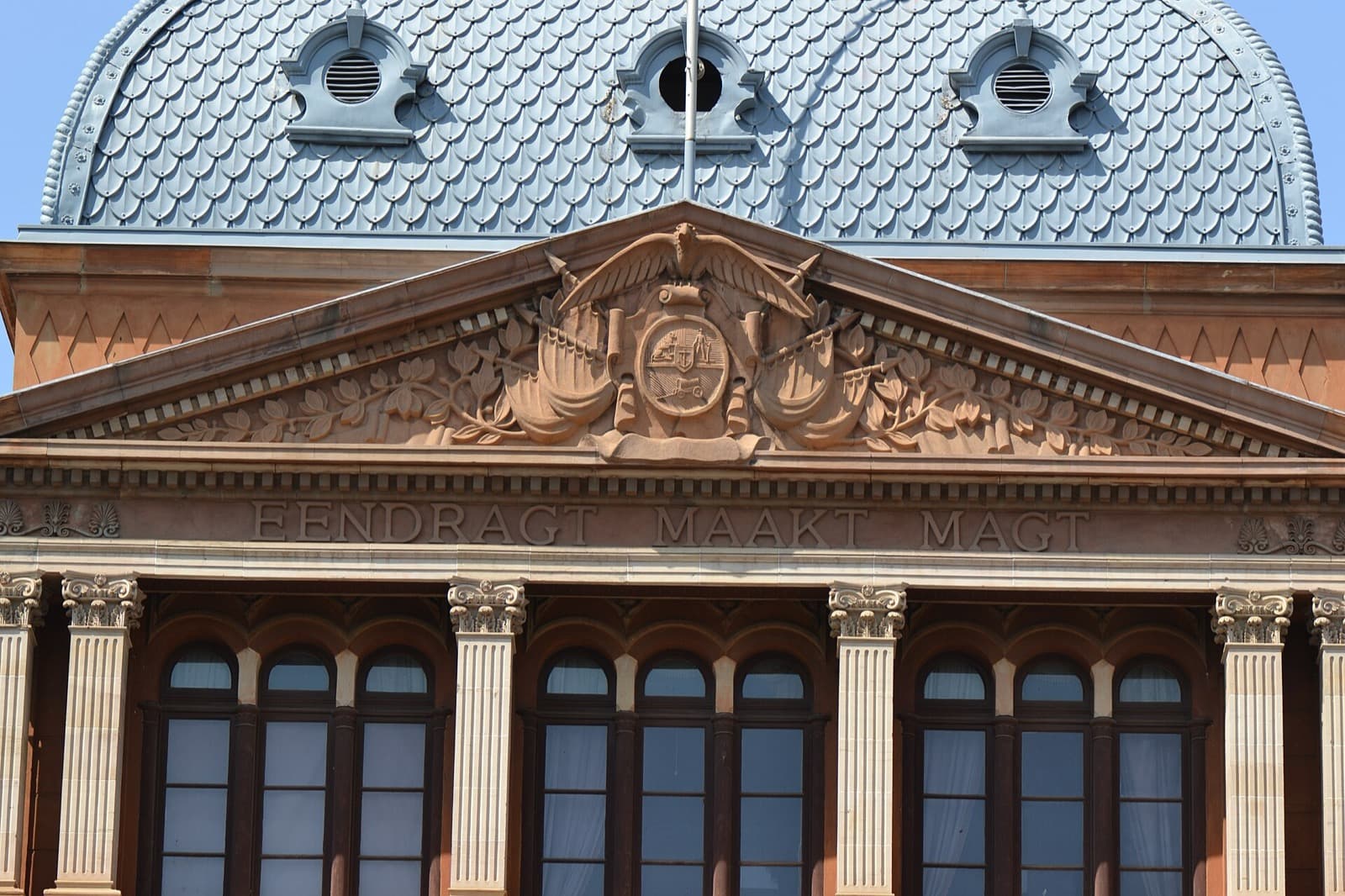
The genius of Church Square is that it kept its face. Its turn-of-the-century frame survives almost entirely intact, one of the most complete belle-epoque civic squares of its period. On the south side stands the Ou Raadsaal, the Old Council Chamber, which housed the Volksraad, the parliament of the South African Republic, from eighteen ninety-one to nineteen oh two. The Dutch architect Sytze Wierda designed it in a Renaissance Revival style, its cornerstone laid by President Kruger on the sixth of May, eighteen eighty-nine. A third storey was added mid-construction, in the era of the eighteen ninety reforms that split the Volksraad into two chambers. The republic whose laws were debated inside these walls had vanished within about eleven years of the building's completion, absorbed into the British Empire after the war.
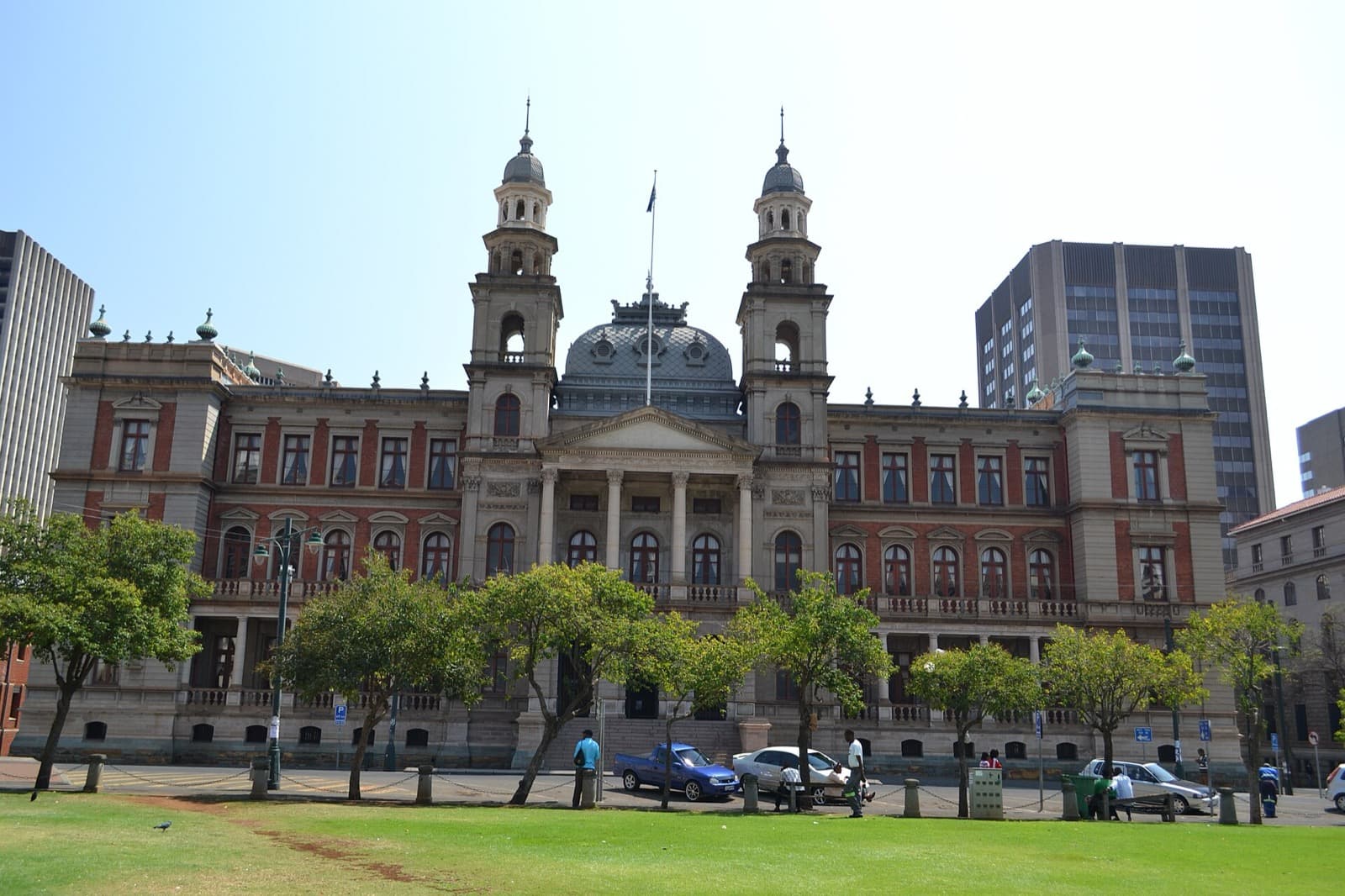
On the north side, directly across from that vanished parliament, stands the Palace of Justice, also by Wierda, its foundation stone laid by Kruger in eighteen ninety-seven. It briefly served as a hospital for British soldiers during the Second Boer War, and today houses the Gauteng Division of the High Court. But it is what happened here in the nineteen sixties that draws people. From October nineteen sixty-three to June nineteen sixty-four, this courtroom hosted the Rivonia Trial. In the dock stood Nelson Mandela, Walter Sisulu, Govan Mbeki, Ahmed Kathrada, Raymond Mhlaba, Denis Goldberg, Elias Motsoaledi, Andrew Mlangeni and others, facing charges that could carry the death penalty. On the twentieth of April, nineteen sixty-four, Mandela spoke from the dock for hours, describing a democratic and free society in which all persons lived together in harmony and with equal opportunities, an ideal for which he said he was prepared to die. On the twelfth of June nineteen sixty-four, Justice Quartus de Wet sentenced eight of them to life imprisonment, and most were taken to Robben Island. The movement that would end Kruger's world was sent to prison a few steps from his statue. That single sightline, the Boer president in bronze facing the court that jailed his eventual successor, is the whole argument of the walk.
Two stops sit slightly apart and close the loop. Melrose House, an ornate Victorian mansion built in eighteen eighty-six for the businessman George Heys, served as British military headquarters after Pretoria fell in nineteen hundred, and in its dining room, on the thirty-first of May, nineteen oh two, the Treaty of Vereeniging ended the Anglo-Boer War. West of the square, Kruger House at sixty Church Street West is a plain single-storey home where the president lived from about eighteen eighty-three until his exile in nineteen oh one. Because the republic provided no official presidential residence, this was Kruger's own private property, and its stoep, the front veranda, was where he received ordinary citizens who walked up to speak with him. A president within reach of anyone, in a house smaller than you expect.
The hill that changed its meaning
Hear a stop from this walk
The Kruger House Museum
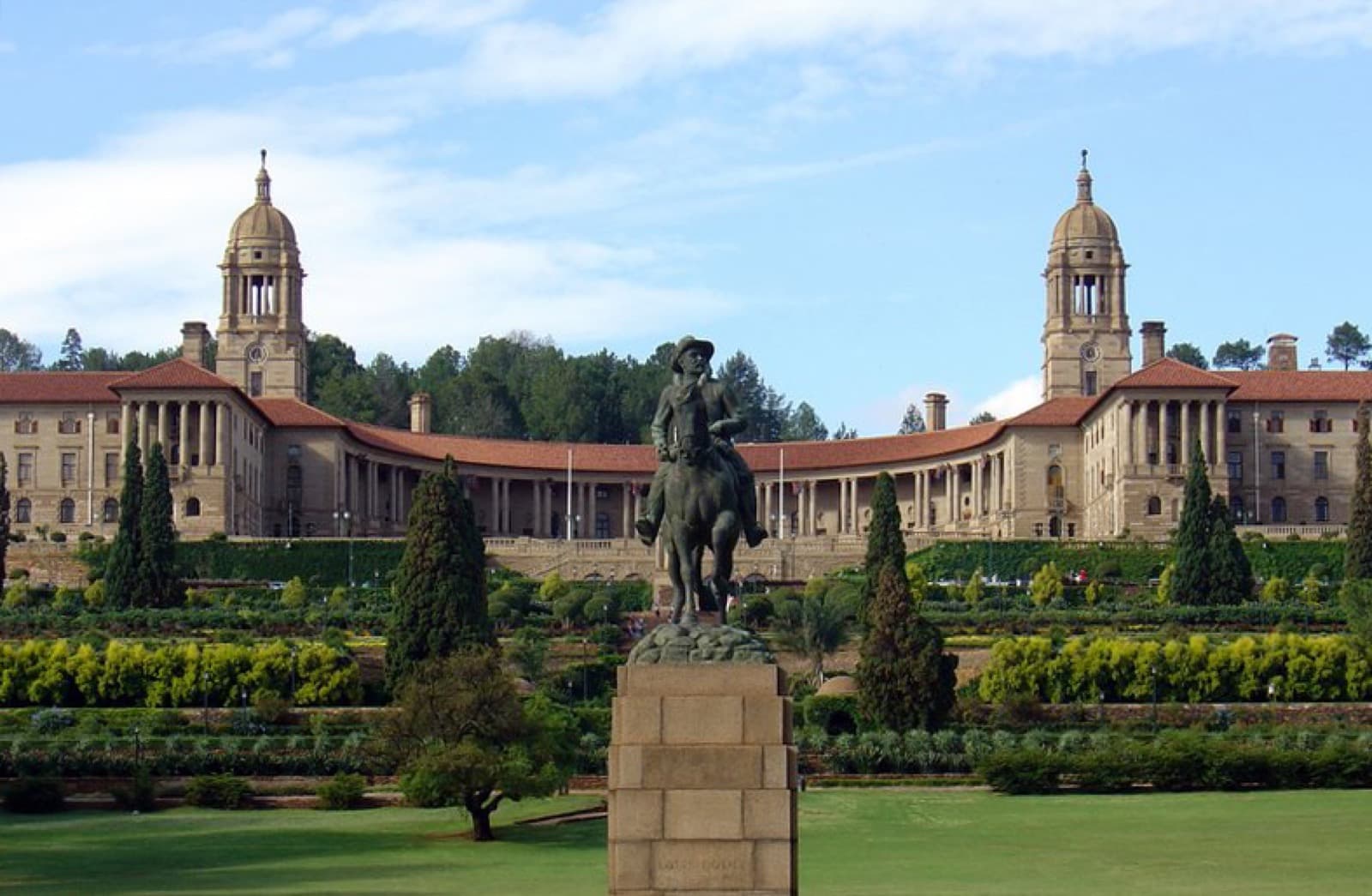
If the square holds the founding and the sentencing, the Union Buildings tour holds the union and its undoing. Sir Herbert Baker raised these buildings between nineteen oh nine and nineteen thirteen on the hill of Meintjieskop in the Arcadia district, a curved sandstone amphitheatre with two domed towers, stretching about two hundred and eighty-five metres from end to end. The two towers were designed to represent the English and Afrikaner white populations, and the colonnade joining them symbolised the union of the four colonies into the Union of South Africa in nineteen ten. Baker built a message in stone. The building forces an honest reading of it: this was a union of white English and Afrikaner South Africa that excluded the black majority by law. Baker went on to help design the imperial architecture of New Delhi with Edwin Lutyens, but this hill was his great South African statement.
The rewriting happened on the amphitheatre steps. The semicircular court, built within a former quarry and seating about nine thousand people, served the ceremonies of a state that excluded most of the country's people. Then, on the tenth of May nineteen ninety-four, Nelson Mandela was inaugurated here as South Africa's first democratically elected president. The stage of one South Africa became the place where a free country took the oath. The same steps carried a sadder duty in twenty thirteen, when Mandela's body lay in state from the eleventh to the thirteenth of December before his burial at Qunu.
Arms open over the capital
The clearest statement of the change stands on the lower terrace: a nine-metre bronze Mandela, weighing about three and a half tonnes, with an eight-metre fingertip-to-fingertip span, shown smiling with his arms outstretched. Sculpted by Andre Prinsloo and Ruhan Janse van Vuuren, it was unveiled on the sixteenth of December, twenty thirteen, the Day of Reconciliation and the day after Mandela's burial. It stands where a monument to former Prime Minister J.B.M. Hertzog was relocated to make way for it, so the open-armed figure literally replaced an emblem of the old order beneath the towers built for a union that had excluded him.
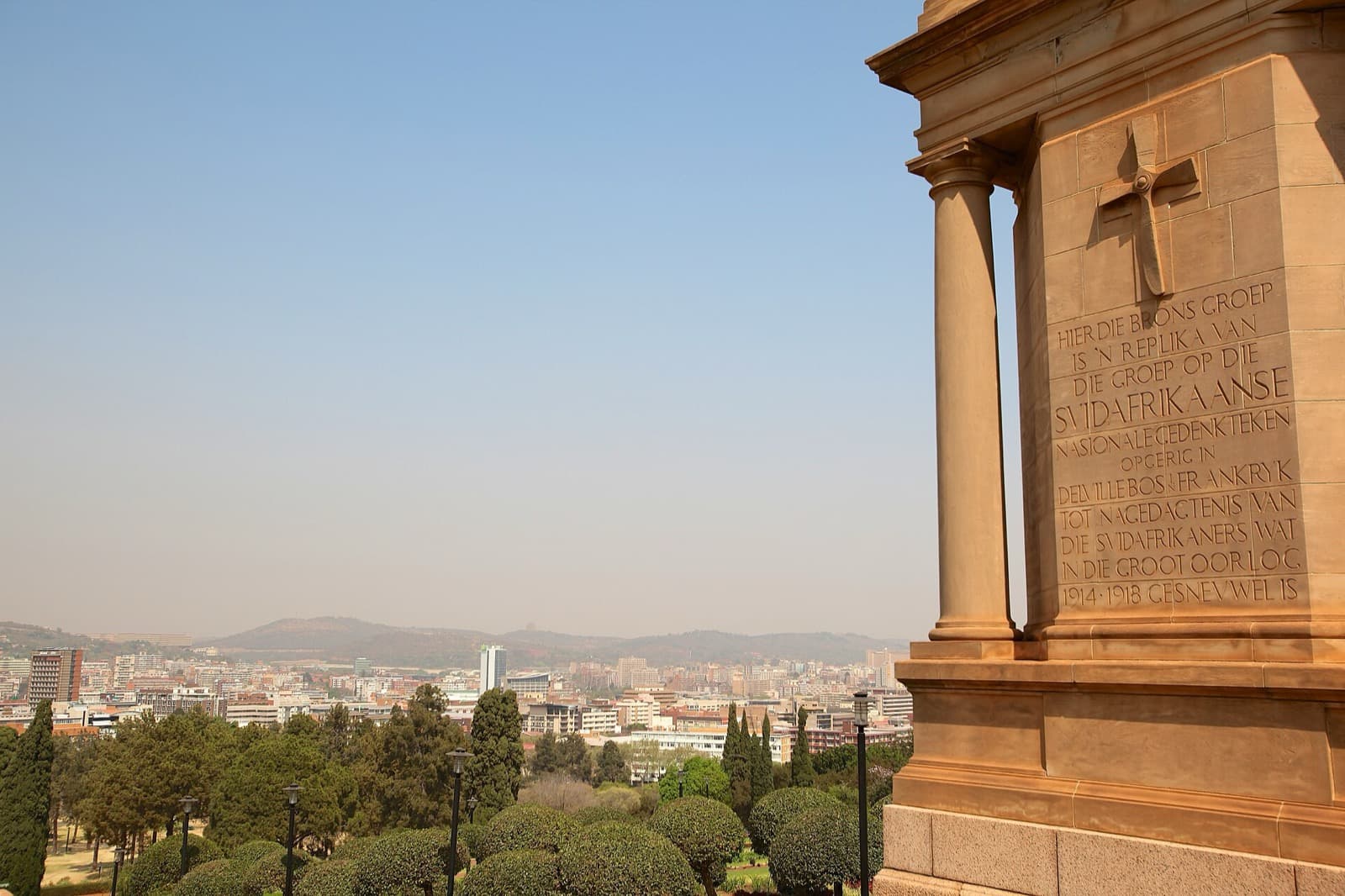
The terraces also carry two kinds of courage among the roses. A replica of Baker's Delville Wood memorial remembers the First South African Infantry Brigade, which fought near Longueval in France from the fifteenth to the twenty-first of July, nineteen sixteen, entering with about three thousand one hundred and fifty men and emerging with only around seven hundred and eighty. And a memorial marks the ninth of August nineteen fifty-six, when an estimated twenty thousand women, led by Lillian Ngoyi, Helen Joseph, Rahima Moosa and Sophia Williams-De Bruyn, climbed this same hill to protest the pass laws. From the upper terrace the whole city opens out toward Church Square, and in October the streets below turn purple: Pretoria is the Jacaranda City, with tens of thousands of jacaranda trees, by some counts as many as seventy thousand. In twenty twenty-four the Union Buildings were inscribed by UNESCO as part of the Human Rights, Liberation and Reconciliation: Nelson Mandela Legacy Sites.
Read the square and the hill together and the city stops being a set of monuments and becomes a single argument about who a country belongs to. That is the value of walking it slowly, at your own pace, with no group and no schedule: you can stand as long as you need at the courthouse where a man said he was prepared to die, then climb the hill where, thirty years later, he opened his arms over the capital. For the full set of routes, start with Pretoria walking tours.
Sources
- Church Square: The Heart of the Capital, Roamer self-guided tour transcript (fact-audited), covering the Ou Raadsaal, Palace of Justice, Rivonia Trial, Melrose House and Kruger House.
- Union Buildings: Herbert Baker's Amphitheatre of State, Roamer self-guided tour transcript (fact-audited), covering the terraced gardens, amphitheatre, twin towers, Mandela statue and war memorials.
- South African History Online, entries on the Union Buildings gardens, the Rivonia Trial, and the nineteen fifty-six Women's March.
- UNESCO World Heritage Centre, Human Rights, Liberation and Reconciliation: Nelson Mandela Legacy Sites (inscribed twenty twenty-four).
Frequently asked questions
- Where was Nelson Mandela sentenced in Pretoria?
- Mandela was sentenced at the Palace of Justice on the north side of Church Square, which hosted the Rivonia Trial from October nineteen sixty-three to June nineteen sixty-four. On the twelfth of June nineteen sixty-four, Justice Quartus de Wet sentenced eight of the accused to life imprisonment. Most were then taken to Robben Island. The building still functions today as the Gauteng Division of the High Court.
- What are the Union Buildings and why do they matter?
- The Union Buildings are the seat of the South African government, designed by Sir Herbert Baker and built between nineteen oh nine and nineteen thirteen on the hill of Meintjieskop in Pretoria. Their two towers were built to represent the English and Afrikaner white populations joined by the Union of nineteen ten, a union that excluded the black majority by law. On the tenth of May nineteen ninety-four, Nelson Mandela was inaugurated on the amphitheatre steps as South Africa's first democratically elected president.
- Can you go inside the Union Buildings?
- No. The building itself remains the working offices of the President and the government of South Africa and is not open to walk inside. The terraced gardens, amphitheatre and grounds are free and open to the public, so you can climb the terraces, sit on the amphitheatre steps, and view the nine-metre Mandela statue on the lower terrace.
- Who is the statue on Church Square?
- It is Paul Kruger, president of the South African Republic, the Boer state that governed the Transvaal. The bronze was sculpted by Anton van Wouw and commissioned by the industrialist Sammy Marks, and four anonymous Boer citizen-soldiers sit on the lower plinth. After standing in several other locations, the monument was finally unveiled on Church Square in nineteen fifty-four.
- When is the best time to see Pretoria's jacarandas?
- Pretoria is nicknamed the Jacaranda City for its jacaranda trees, numbering tens of thousands and by some counts as many as seventy thousand. They bloom purple in October, so that is the most spectacular time to visit. From the upper terraces of the Union Buildings you can take in the whole purple view over the city at once.
Ready to experience it?
Church Square: The Heart of the Capital
120 min · 4 km · easy
More from Pretoria
Explore more at your own pace.
One Day in Pretoria: A Walkable Morning-to-Evening Itinerary
Pretoria Travel Guide: Days, Transport, Safety, and Budget
The Palace of Justice: Where Pretoria's Whole Century Fits in One Courtroom
The Union Buildings Amphitheatre: Where One South Africa Ended and Another Took the Oath
Church Square and the Kruger Statue: How to Read Pretoria's Founding Ground