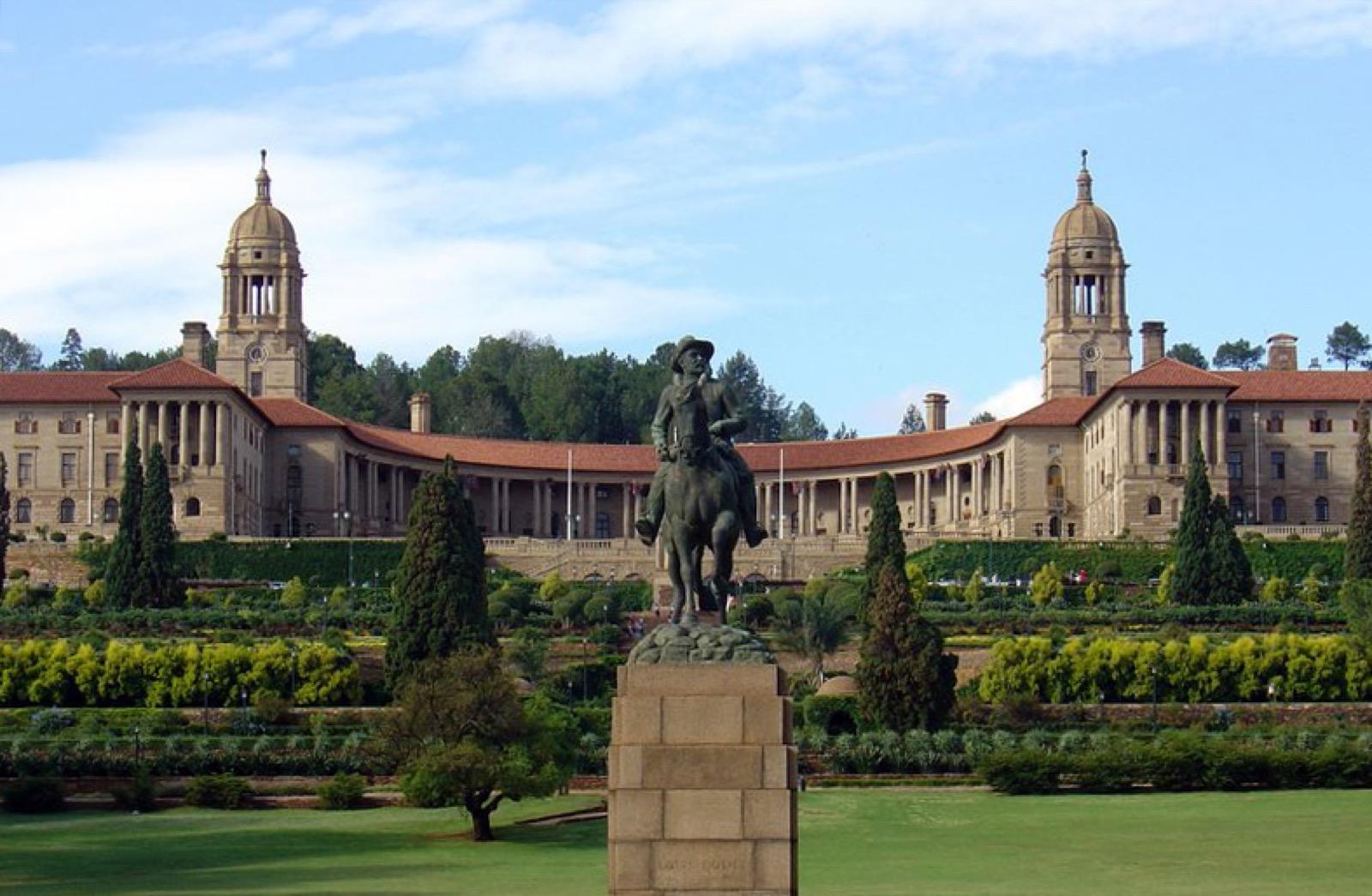
Climb the great green terraces to Herbert Baker's curved sandstone seat of the South African state, where Nelson Mandela took the oath and a nine-metre bronze figure now stands with open arms over the capital.
Start · The Terraced Gardens: The Green Stair to the State
DirectionsStops
- 1
The Terraced Gardens: The Green Stair to the State
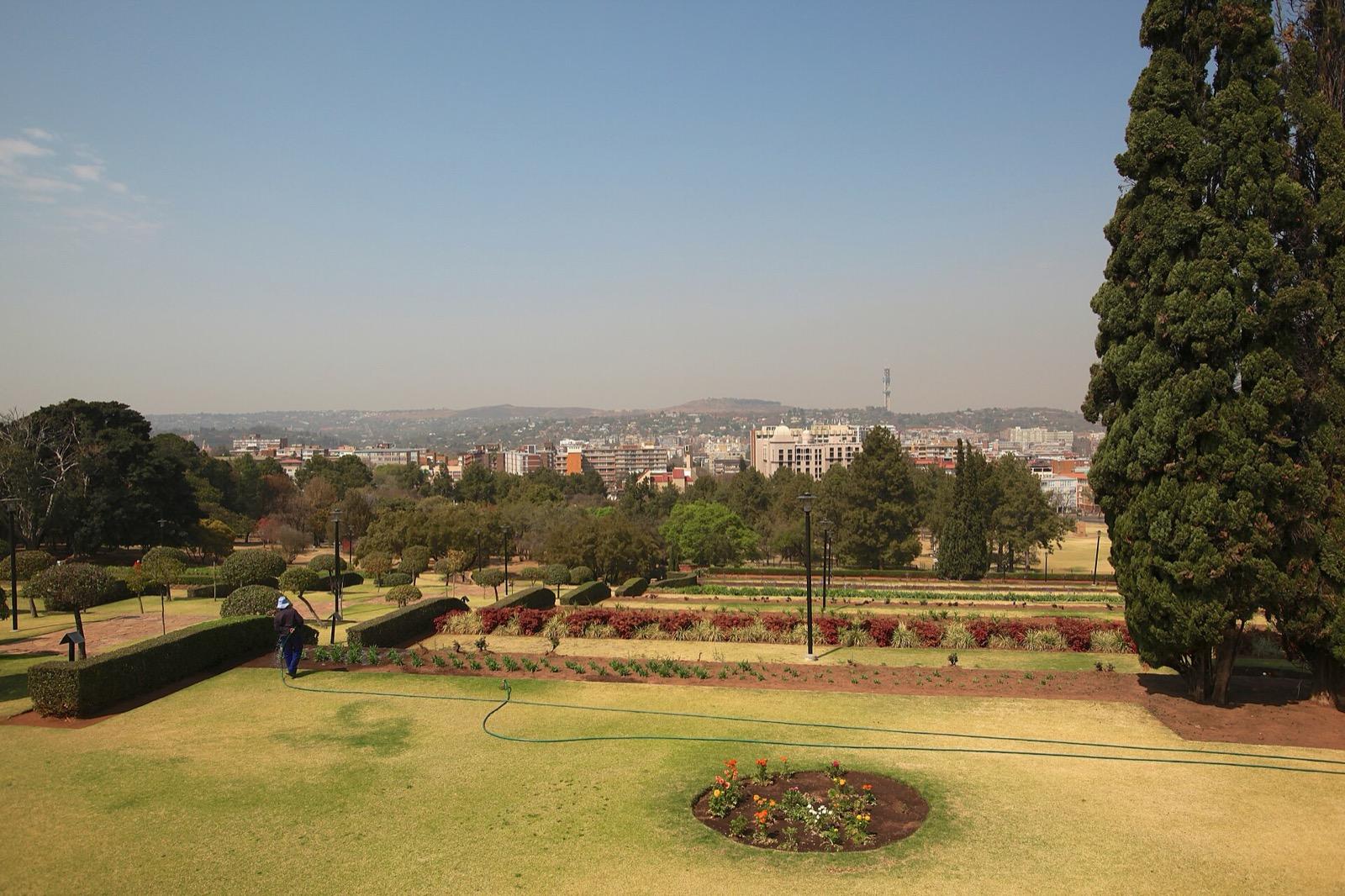
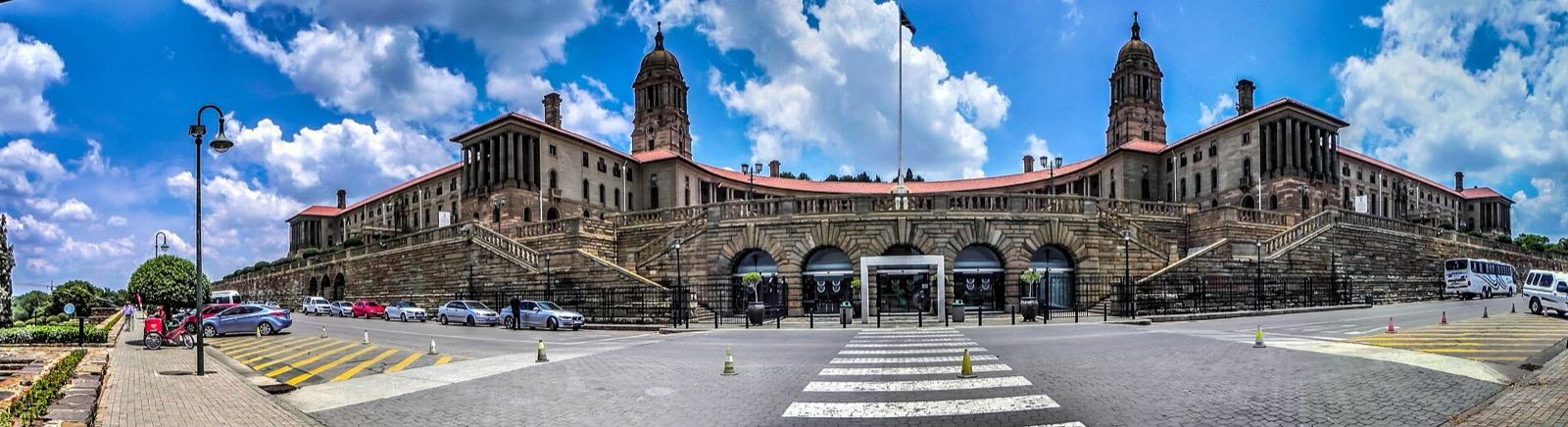
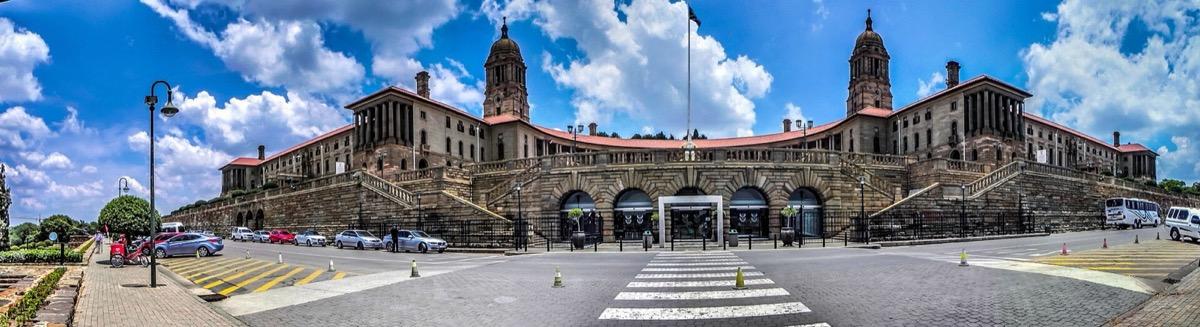
The formal terraced gardens climb the hillside of Meintjieskop. They are the ceremonial green stair rising to the seat of the South African government.
- 2
The Amphitheatre: Where a Free Country Took the Oath
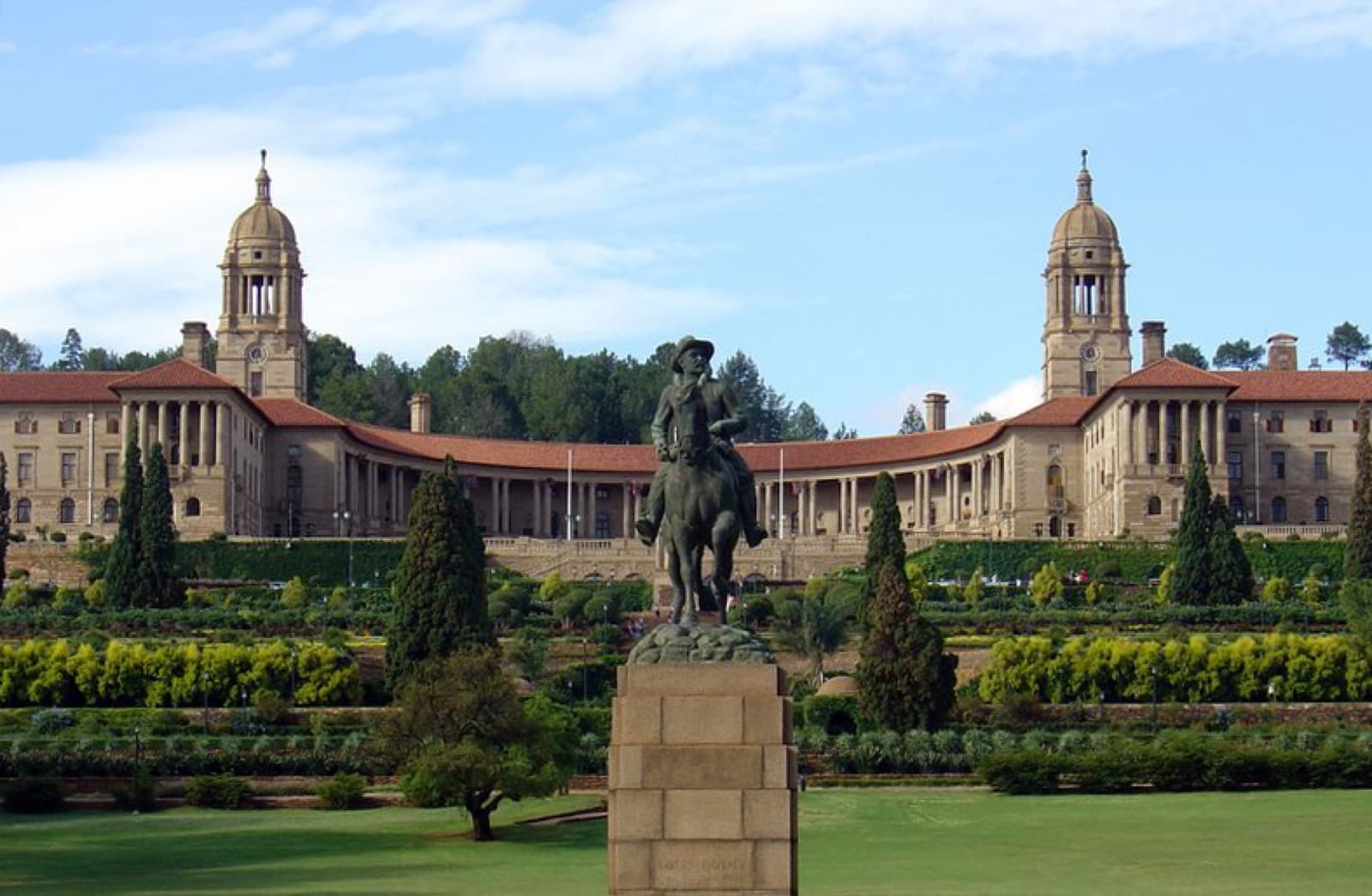
The semicircular ceremonial court at the heart of the Union Buildings, where Nelson Mandela was inaugurated in nineteen ninety-four and where his body later lay in state.
- 3
The Twin Towers: Baker's Union of Two, Not of All
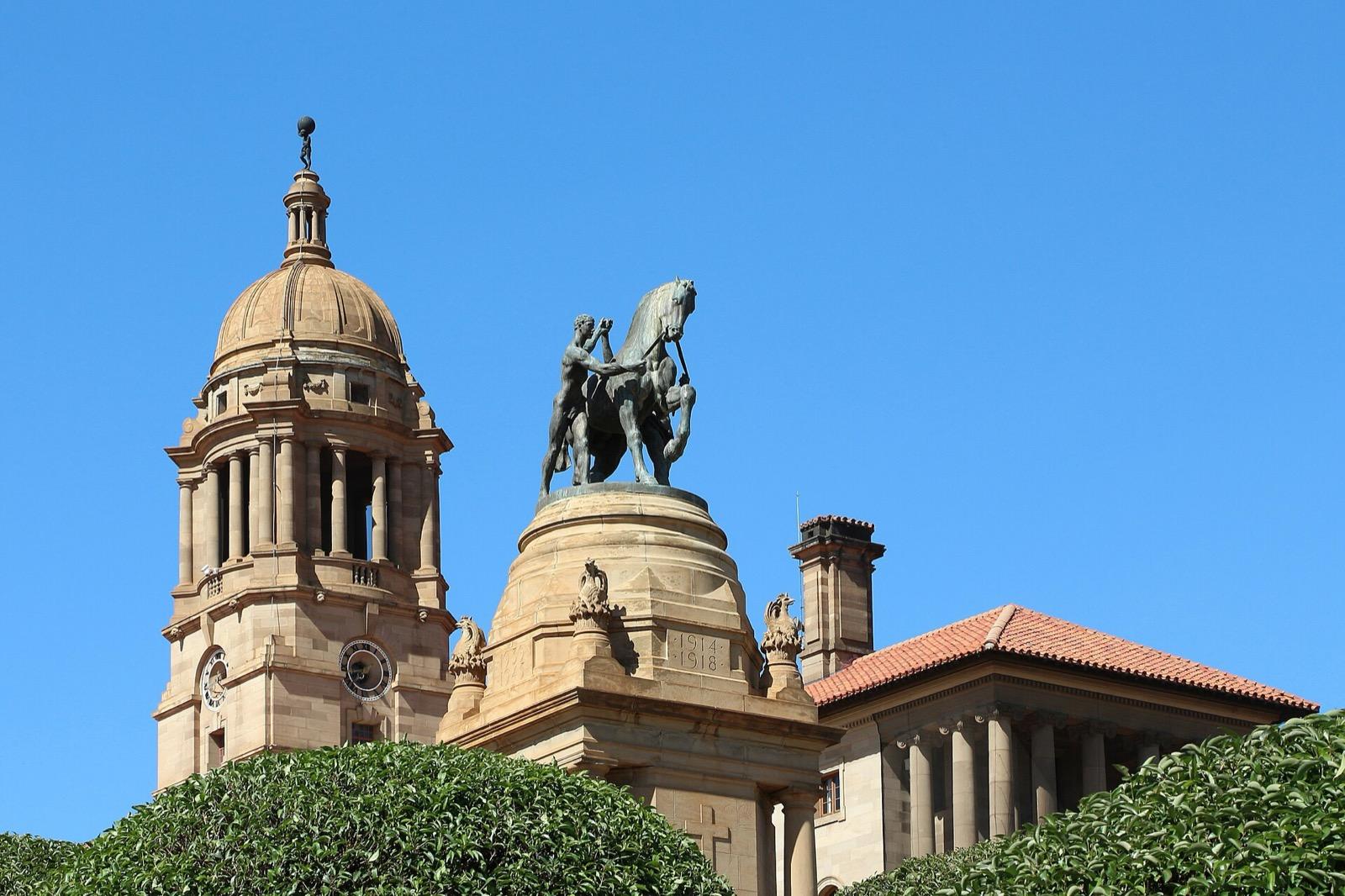
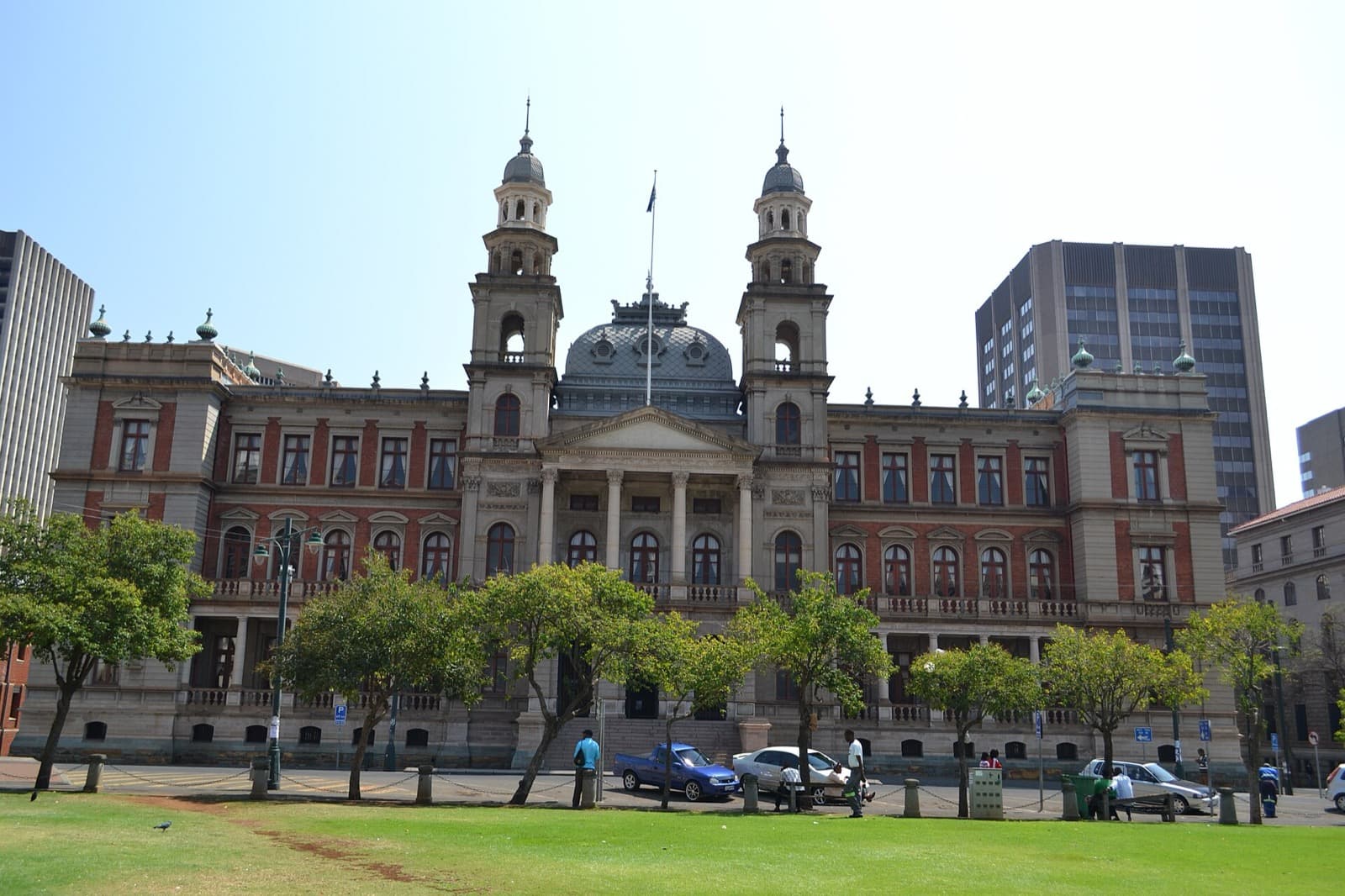
The two great sandstone wings and their domed towers, designed by Herbert Baker to represent the English and Afrikaner white populations and joined by a colonnade symbolising the union of nineteen ten.
- 4
The Mandela Statue: Nine Metres, Arms Open Over the City
The nine-metre bronze statue of Nelson Mandela on the lower terrace, arms outstretched over the capital, unveiled the day after his burial.
- 5
The War Memorials: Remembrance Among the Roses
The Delville Wood memorial and the memorial to the nineteen fifty-six Women's March, quiet places of remembrance set among the terraced gardens.
- 6
The Panorama: The Purple Capital Below the Seat of State
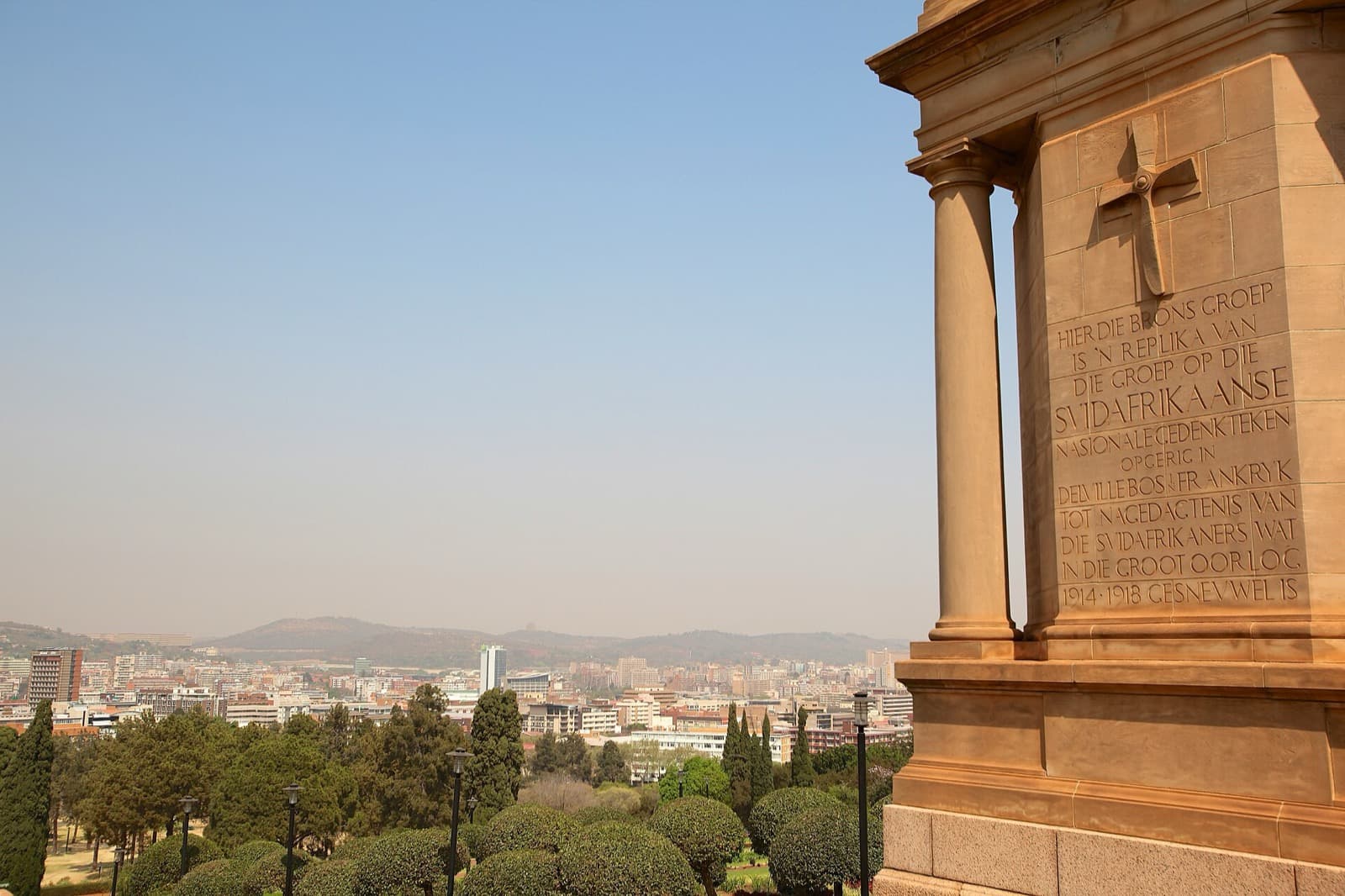
The view from the upper terraces over Pretoria, spread below the hill and toward Church Square, turning purple with jacaranda blossom in spring.
Details
Best Time to Visit
Come in the morning or the late afternoon, when the sandstone glows warm and the sun on the open terraces is gentler. October is the most spectacular time, when Pretoria's jacaranda trees bloom and the city below turns purple. The grounds are quietest on weekday mornings; weekends and public holidays bring more visitors to the amphitheatre and the Mandela statue.
Pro Tips
- •The gardens, terraces and amphitheatre are free and open to the public, so you can wander at your own pace, but remember the building itself is not open to walk inside.
- •Start at the lower terraces and climb, the way the gardens were designed to be approached; the ceremonial ascent is part of the experience.
- •Give yourself extra time at the amphitheatre and the Mandela statue; these are the emotional core of the hill and reward sitting quietly rather than rushing through.
- •Visit in October if you can, when the jacarandas bloom and the panorama over Pretoria fills with purple.
- •Wear comfortable shoes and bring a hat and water, since the walk is a series of open, sunny terraces with little shade.
- •Photograph the nine-metre Mandela statue from a distance to capture its full open-armed scale against the buildings behind it.
Safety & Precautions
- •The Union Buildings terraces are open and exposed, so the sun can be strong; carry water, wear a hat and sunscreen, and take breaks in the shaded corners of the gardens.
- •The route climbs the hillside on stepped terraces, so wear sturdy shoes and take the ascent at a comfortable pace, especially in the heat of midday.
- •Keep valuables discreet and stay aware of your surroundings with ordinary city street-awareness, as at any capital-city landmark.
- •The amphitheatre and Mandela statue carry deep emotional weight as places of inauguration and mourning; treat them, and other visitors there, with quiet respect.
- •The tour itself stays inside the traffic-free terraced gardens, but you reach them across the parking area and internal driveways that cars use; watch for moving vehicles as you arrive and leave, and cross the drive at a clear, unhurried moment rather than assuming traffic will stop.
Travel advisory: Exercise Increased Caution (Level 2).
Gallery
Related Reading
Go deeper on what you'll see, hear, and walk through.
Overview
Best Self-Guided Walking Tours in Pretoria (2026)
3 min
Overview
One Day in Pretoria: A Walkable Morning-to-Evening Itinerary
8 min
Overview
Pretoria Travel Guide: Days, Transport, Safety, and Budget
7 min
Thematic
Best History Walking Tours in Pretoria (2026)
2 min
Thematic
Pretoria's Square and Hill: How One City Holds Republic, Empire and Democracy
8 min
Companion
The Union Buildings Amphitheatre: Where One South Africa Ended and Another Took the Oath
6 min
Deep dive
The Twin Towers of the Union Buildings: A Union of Two, Not of All
6 min
Read
What to Eat in Pretoria: Pap, Biltong, Bunny Chow and Where to Find Them
7 min
Read the walk
The full story of Union Buildings: Herbert Baker's Amphitheatre of State, in words. Prefer to listen? Play it narrated, from home or on location.
Introduction
The Union Buildings crown the hill of Meintjieskop above Pretoria, South Africa, and this walk reads them as a building whose meaning was rewritten by the country that grew beyond it. Over about six stops and roughly ninety minutes, across about one and a half kilometres of terraced gardens and open court, you will follow the long arc of this place at your own pace. There is no group here, no schedule, no guide steering you and no tip expected. It is your own quiet map of a hill that carries the story of a whole nation. Herbert Baker raised these buildings between nineteen oh nine and nineteen thirteen as a curved sandstone amphitheatre with two domed towers, built to seal the union of the four colonies into one country in nineteen ten. On the amphitheatre steps, more than eighty years later, Nelson Mandela was inaugurated as South Africa's first democratically elected president in nineteen ninety-four. On the terraces below, a giant bronze Mandela now opens his arms over the city. The tour holds both truths on one hill: a monument built for one South Africa that became the stage for another. The grounds and gardens are free and open to the public, though the building itself, still the offices of the President and the government, is not open to walk inside. Move slowly, linger where you wish, and give the sober turns their quiet. When you arrive at the lower terraced gardens below the amphitheatre, begin with stop one.
1. The Terraced Gardens: The Green Stair to the State
You are standing at the foot of a great green stair. The terraced gardens of the Union Buildings climb the hillside of Meintjieskop, a hill in the Arcadia district just east of central Pretoria, and they were laid out as the ceremonial approach to the seat of the state. Terrace by terrace, lawns and roses and indigenous plantings rise toward the amphitheatre above, with fountains, statues and memorials set among them. South African History Online records that these gardens hold indigenous plants and war memorials, so the climb itself is part of the meaning. This is a place built to be approached slowly, on foot, from below. Take it at your own pace. There is no group moving you along and no fixed time to keep. Notice how the terraces frame the buildings as you climb, each level lifting you a little higher toward the sandstone wings you will reach shortly. Pretoria is known as the Jacaranda City, with tens of thousands of jacaranda trees, by some counts as many as seventy thousand, that turn purple when they bloom in October, and in spring these gardens sit inside that colour. The building at the top is not open to walk inside. It remains the working offices of the President and the government of South Africa. What is open is exactly this: the gardens, the terraces, the open court, and the long view. So begin here, at the green stair, and let the hill do what it was designed to do, which is to carry you upward toward the seat of a country's government one terrace at a time.
2. The Amphitheatre: Where a Free Country Took the Oath
This is the heart of the building, and the turning point of the whole tour. The semicircular amphitheatre is the open ceremonial court set between the two wings, and it was built within a former quarry cut into this hill. It seats about nine thousand people. For decades it served the ceremonies of a state that, by law, excluded most of the country's people. Then, on the tenth of May nineteen ninety-four, on these very steps, Nelson Mandela was inaugurated here as South Africa's first democratically elected president. The court that had been the stage of one South Africa became the place where a free country took the oath. Hold that quietly for a moment, because it is the whole meaning of this hill in a single open space. There is a second, sadder memory that belongs here too. When Nelson Mandela died in December of twenty thirteen, his body lay in state at the Union Buildings from the eleventh to the thirteenth of December, before he was buried at Qunu, in the countryside where he was born. For three days people came up this hill in long lines to stand where he had once been sworn in, and to say goodbye. So this open court carries both the beginning and the ending of that story. Sit on the steps if you like. There is no ceremony to catch and no crowd to move with today. It is simply an empty amphitheatre, curved and quiet, and it is one of the places where the modern country was made real.
3. The Twin Towers: Baker's Union of Two, Not of All
Above you rise the two great wings and the domed towers that crown them. This is the work of Sir Herbert Baker, and it is often called his masterpiece. Construction began in nineteen oh nine and the buildings were completed in nineteen thirteen, built of light sandstone and…
Full narration for this stop unlocks with the tour.
4. The Mandela Statue: Nine Metres, Arms Open Over the City
Here is the figure that rewrote the meaning of this whole hill. On the lower terrace stands a bronze statue of Nelson Mandela, nine metres tall, weighing about three and a half tonnes, with a fingertip-to-fingertip span of about eight metres. He is shown smiling, his arms…
Full narration for this stop unlocks with the tour.
5. The War Memorials: Remembrance Among the Roses
Among the roses and lawns of these terraces stand several quiet memorials, and they reward slowing down. One of them remembers the South African soldiers of the First World War at a place called Delville Wood. In July of nineteen sixteen, the First South African Infantry Brigade…
Full narration for this stop unlocks with the tour.
6. The Panorama: The Purple Capital Below the Seat of State
End your walk here, at the edge of the upper terrace, where the whole city opens out below you. From this height the Union Buildings look down over Pretoria, spread across the plain below the hill of Meintjieskop, with central Pretoria and the historic Church Square area laid…
Full narration for this stop unlocks with the tour.