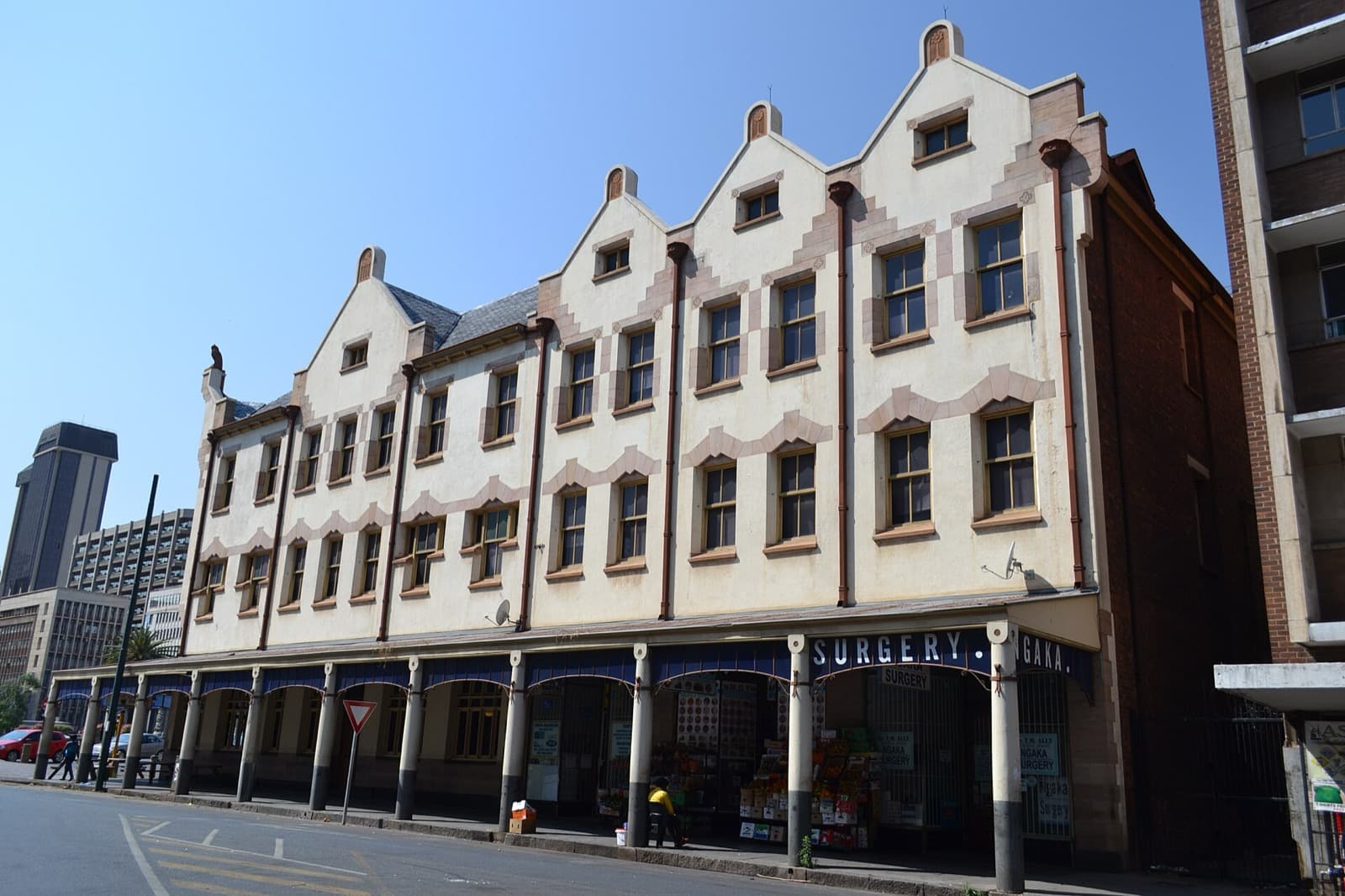
Church Square: The Heart of the Capital
120 min · 4 km · easy
Eat your way through Pretoria by working outward from three anchors: pap en vleis (maize porridge with grilled meat) at a Saturday market, biltong (air-dried, vinegar-cured, coriander-spiced meat) from any corner shop, and Cape-Indian curry including the bunny chow (a hollowed white loaf filled with curry) that traveled up from Durban. These are the dishes that actually define eating here, they each carry a specific origin, and each one has a place on or near the route of the Church Square: The Heart of the Capital walking tour. This is a braai-and-market city more than a fine-dining one, so the best food is often cooked over coals, sold from a stall, or handed to you in bread.
Start with pap en vleis, the everyday plate
If you eat one thing that says South Africa, make it pap en vleis. Pap is a porridge made from mielie-meal (ground maize), served either soft like breakfast porridge, stiff enough to hold in your hand, or dry and crumbly as phutu pap (also called krummelpap). Vleis is Afrikaans for meat, usually grilled over an open fire. The plate almost always arrives with two companions: boerewors, a coiled sausage of minced beef and pork bound with coriander and other spices, and chakalaka, a spicy vegetable relish of onions, tomatoes, carrots, peppers and beans.
The combination started as home food. Phutu pap served with boerewors became known as pap en wors, which broadened into pap en vleis once other braaied or stewed meats joined the plate. To order like a local, ask for pap, wors and chakalaka together. To eat it the traditional way, take a portion of stiff pap, press an indentation into it with your thumb, and use that hollow to scoop up the chakalaka. No cutlery required, and nobody will blink if you use your hands.
Biltong: the snack you carry, not the meal you sit for
Hear a stop from this walk
The Kruger House Museum
Biltong is Pretoria's pocket food, and it is not jerky. It is meat (usually beef, sometimes game) that has been cured with vinegar and salt, heavily seasoned with coriander, then air-dried rather than cooked or smoked. That vinegar cure and the coriander are the signature that separates it from American jerky, which is salted, often smoked, and made without vinegar.
The technique is old. Indigenous southern African communities, including the Khoikhoi, preserved leftover hunted meat by salting it and hanging it to dry in the region's dry climate. European settlers arriving from the seventeenth century added vinegar, spices and saltpetre. Biltong in its modern form is tied to the Voortrekkers, the wagon-traveling Afrikaner migrants of the Great Trek who needed durable food as they moved inland from the Cape Colony, drying salted, spiced meat over about a fortnight in the colder winter months. Buy it by weight from any biltong counter, ask for it "wet" (softer, redder) or "dry" (firmer), and eat it as you walk.
Bunny chow and Cape-Indian curry: bread you eat from the inside out
Do not leave without a bunny chow. It is a hollowed-out half or quarter loaf of white bread, the removed centre laid on top as a lid, the cavity filled with curry. It is an Indian South African dish that originated in Durban, and it reached tables across the country, Pretoria included.
The history sits in Durban's Indian community, which grew rapidly between 1860 and 1911 as indentured workers arrived from India to cut sugarcane. The dish itself is dated to roughly the 1940s, and its exact origin is disputed: one account credits a café called Kapitan's, another credits Patel's Vegetarian Refreshment Room, and a third traces it to Indian golf caddies at the Royal Durban Golf Course who needed a portable lunch and used cut loaves for lack of containers. The name is usually explained as an adaptation of "bania," the caste of the Indian traders who sold the curry, with "chow" meaning food.
In Pretoria, the deepest Indian food roots are in Marabastad, the historic bazaar quarter west of the city centre where the first Indian settlers established themselves in the early 1880s near the old market square, and where the Asiatic Bazaar was formally proclaimed in 1903. It is a working, sometimes rough-edged commercial area rather than a polished dining strip, so go in daylight, go for the samoosas and curry rather than atmosphere, and treat it as the ordinary busy city district it is.
Where to actually eat it: the Saturday market and the café on the square
For a single stop that puts most of this on one table, aim for the Hazel Food Market in the Greenlyn Village Centre, Menlo Park, in Pretoria's Old East. It runs every Saturday from 8am to 2pm, admission is free, and it holds more than 70 stalls. Alongside the fresh produce, cheeses and breads you can eat sosaties (skewered marinated meat), vetkoek (deep-fried dough with a filling), gourmet boerewors rolls, biltong, and koeksisters, plus Indian, Thai, Mexican, Portuguese and American-barbecue stalls. The catch is simple: it is Saturday-morning only, so plan around it.
If your walk lands on a weekday, the food and the tour converge at Café Riche on the corner of Church Square. Built in 1905 to a design by the Dutch architect Frans Soff in the Art Nouveau style, it is described as one of the oldest cafés in Pretoria and holds provincial heritage status. Some of its window frames and doors were reused from the demolished church that once stood at the square's centre. It is known for freshly baked pastries, croissants, baguettes, milkshakes and strong coffee, with the oven running from six in the morning. Café Riche is Stop 4 on the Church Square tour, so you can read the ring of belle-epoque buildings and eat inside one of them without leaving the route. See the full loop in Pretoria walking tours.
Save room for something sweet
Two desserts are worth learning to tell apart. The koeksister (Afrikaner tradition) is a braided ribbon of dough, deep-fried and plunged into ice-cold syrup, crisp and sticky. The koesister (Cape Malay tradition) is a softer, oval, spiced roll dunked in warm syrup and rolled in coconut, gently flavoured with cardamom, ginger, cinnamon and sometimes aniseed. Both are common at markets. There is also melktert (milk tart), a custard tart dusted with cinnamon, and vetkoek filled with jam or savoury mince if you want the dough without the syrup.
How to order like a local
Say "braai," not barbecue, for anything cooked over coals, and expect meat to be the centre of the plate. Ask for your biltong wet or dry and buy it by the gram. For pap, specify soft, stiff or krummel. A "wors roll" is a boerewors sausage in a bread roll, the South African hot dog, and it is everywhere. Carry some cash in rand, since market stalls, biltong counters and small curry shops do not all take cards. And if you are eating pap and chakalaka, use your thumb to make the scoop. That single gesture is the most local thing you can do at a Pretoria table.
Ready to walk it off between meals? Start on the paved hectare where the capital began at /south-africa/pretoria, then read the whole route in Pretoria walking tours.
Sources
Frequently asked questions
- What food is Pretoria known for?
- Pretoria's defining dishes are South African staples cooked and sold across the city: pap en vleis (maize porridge with grilled meat, boerewors sausage and chakalaka relish), biltong (vinegar-cured, coriander-spiced air-dried meat), and bunny chow (a hollowed white loaf filled with curry). It is a braai-and-market food culture more than a fine-dining scene, so much of the best eating happens over coals or from a stall.
- What is pap en vleis and how do you eat it?
- Pap en vleis is maize-meal porridge (pap) served with grilled meat (vleis), usually boerewors sausage and a spicy chakalaka relish of onions, tomatoes, carrots, peppers and beans. The traditional way to eat it is by hand: take a portion of stiff pap, press a hollow into it with your thumb, and use that hollow to scoop up the chakalaka. No cutlery needed.
- What is the difference between biltong and jerky?
- Biltong is cured with vinegar and salt, heavily seasoned with coriander, then air-dried and never smoked. American jerky is salted, often smoked, and made without vinegar. Biltong's modern form is tied to the Voortrekkers of the Great Trek, who needed durable food, though the underlying air-drying technique predates them among indigenous southern African communities like the Khoikhoi.
- Where does bunny chow come from?
- Bunny chow originated among Indian South Africans in Durban and is dated to roughly the 1940s. It is a hollowed-out loaf of white bread filled with curry. Its exact origin is disputed, with competing claims from Kapitan's restaurant, Patel's Vegetarian Refreshment Room, and Indian golf caddies at the Royal Durban Golf Course. The name likely adapts 'bania,' the caste of the Indian traders who sold the curry, with 'chow' meaning food.
- Where can I try traditional food in Pretoria?
- The Hazel Food Market in Menlo Park runs every Saturday from 8am to 2pm with free admission and more than 70 stalls, including boerewors rolls, biltong, sosaties, vetkoek and koeksisters. On weekdays, Café Riche on Church Square, described as one of the oldest cafés in Pretoria and built in 1905, serves pastries, coffee and light meals. Marabastad, west of the centre, is the historic Indian bazaar quarter for curry and samoosas.
- What is the difference between a koeksister and a koesister?
- A koeksister comes from Afrikaner tradition: a braided ribbon of dough, deep-fried and dunked in ice-cold syrup, crisp and sticky. A koesister comes from Cape Malay tradition: a softer, oval, spiced roll dunked in warm syrup and rolled in coconut, flavoured with cardamom, ginger, cinnamon and sometimes aniseed. Both are common at Pretoria markets.
Ready to experience it?
Church Square: The Heart of the Capital
120 min · 4 km · easy
More from Pretoria
Explore more at your own pace.
One Day in Pretoria: A Walkable Morning-to-Evening Itinerary
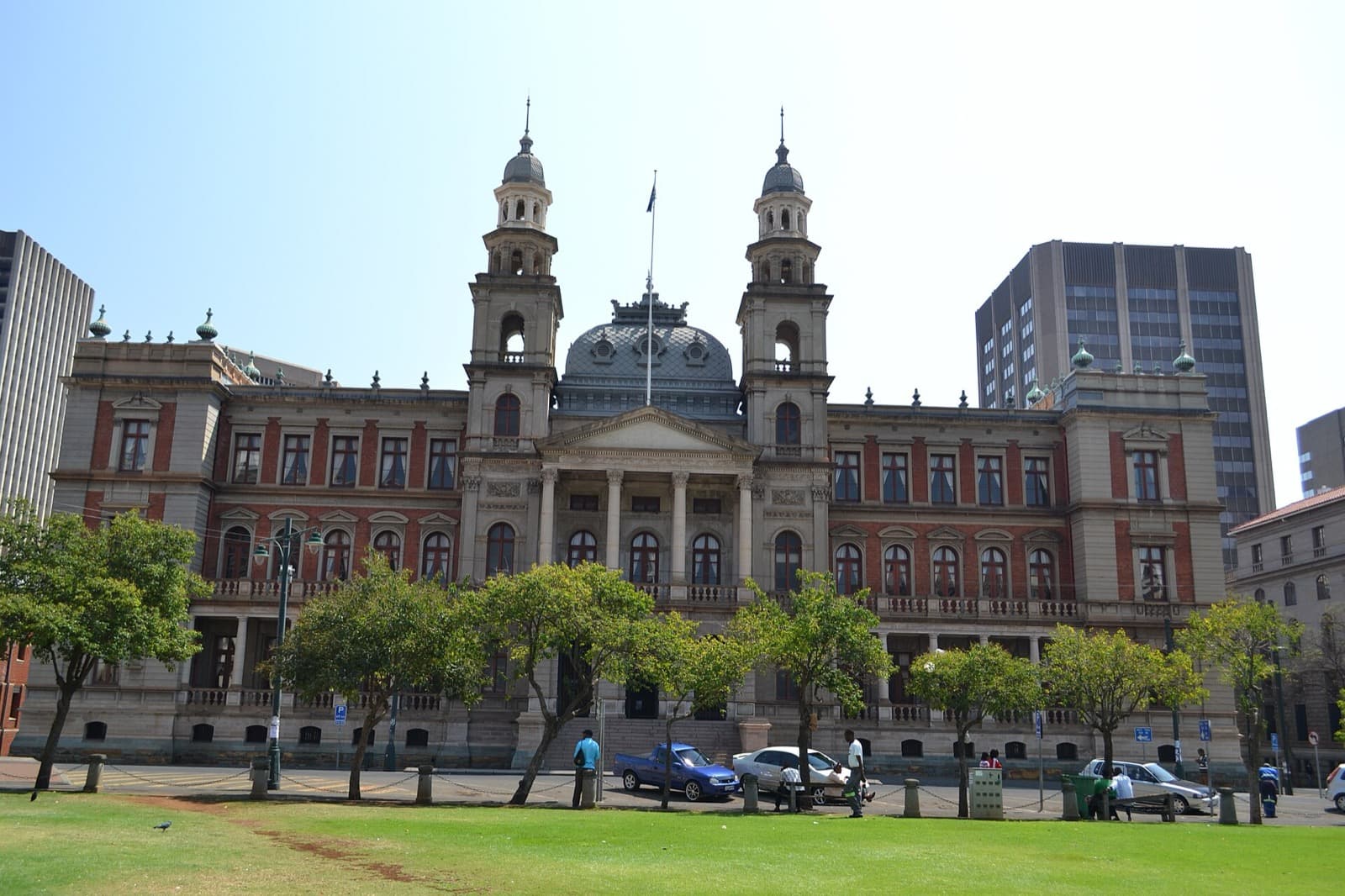
Pretoria Travel Guide: Days, Transport, Safety, and Budget
Pretoria's Square and Hill: How One City Holds Republic, Empire and Democracy
The Palace of Justice: Where Pretoria's Whole Century Fits in One Courtroom
The Union Buildings Amphitheatre: Where One South Africa Ended and Another Took the Oath