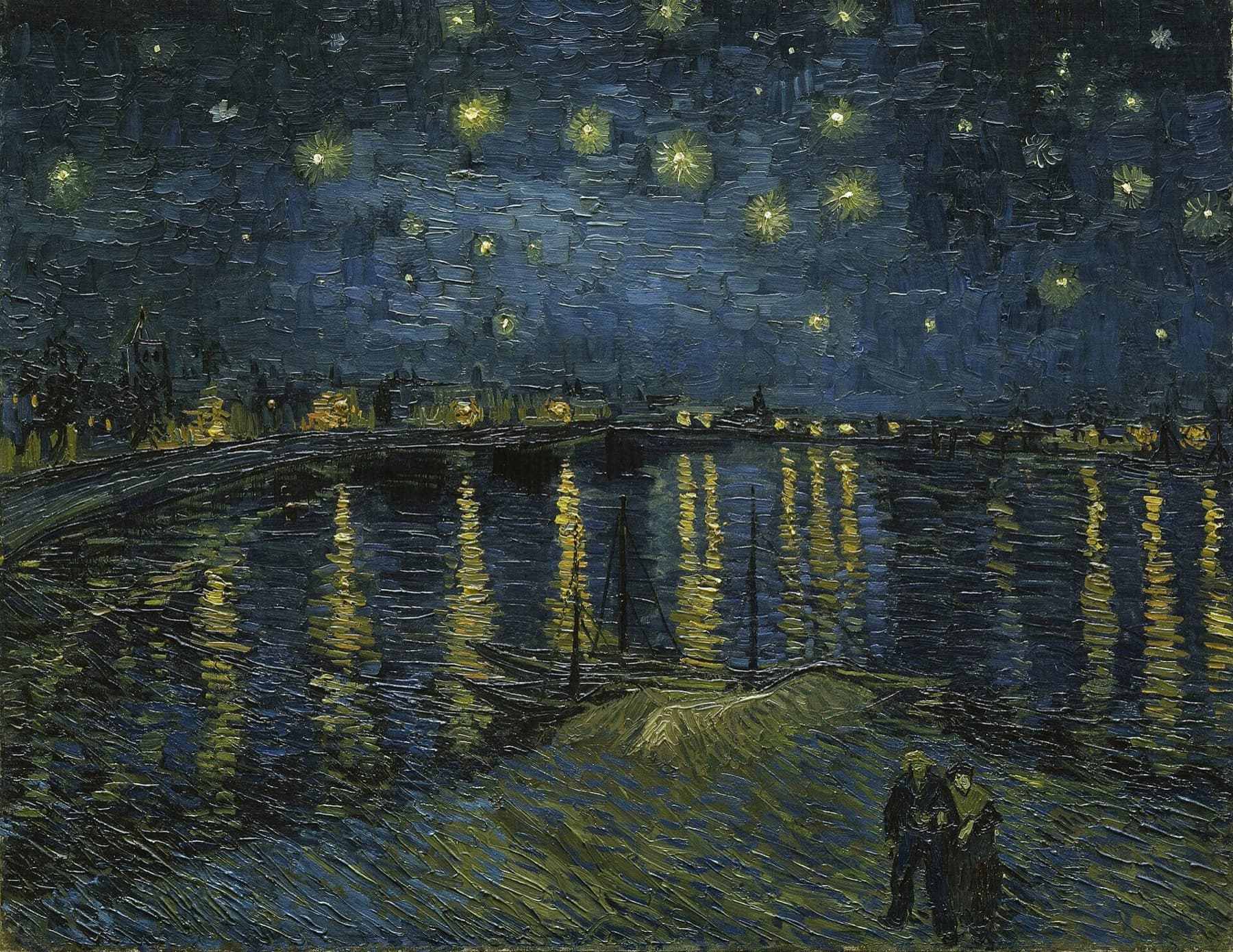
Starry Night over the Rhône is Vincent van Gogh's September 1888 painting of gas lamps reflected in the river at Arles, and it hangs in Room 36 on Level 5 of the Musée d'Orsay in Paris. It is not the swirling Starry Night, which he painted in June 1889 at Saint-Rémy and which is in New York.
If you are asking where Starry Night over the Rhône is: it is in Paris. Vincent van Gogh's painting hangs in Room 36 on Level 5 of the Musée d'Orsay, in the room given to his last years.
If you are asking which Starry Night this is: not the famous swirling one. That painting, with the spiralling sky, is in New York, and Van Gogh made it in June 1889 at the asylum in Saint-Rémy. The Orsay's picture is the calmer one, painted nine months earlier, in September 1888, on the bank of the Rhône at Arles.
What you see
Start with the water. The gas lamps of Arles run down it in long orange reflections, over a river painted in deep blues. At the bottom edge, two tiny figures, a couple, walk together. The painting measures 73 by 92 centimetres, a good deal smaller than its reputation.
Van Gogh painted it a minute or two on foot from the Yellow House where he lived, and he worked at night. He told his brother Theo that he painted it under a gas jet, and he named the colours: an aquamarine sky, royal blue water and a mauve ground. Compare that with the other starry night. This one is calm, even tender; the swirling one came out of the asylum.
How it got to Paris
Hear a stop from this walk
Quai d'Anjou and the Hôtel de Lauzun: A Plain Front, a Rich House
The painting's route into the museum is its own story. Van Gogh sent it to Theo shortly before 2 May 1889. After Theo's death it stayed with his widow, Johanna van Gogh-Bonger, who took about two hundred of Van Gogh's canvases to the Netherlands when almost nobody wanted them, and spent years building his name. She kept this painting until 1905. It then passed to Bas Veth, was sold at his Amsterdam sale in 1922, and by about 1930 was with Fernand Moch.
France accepted it in 1975, as a gift from Marguerite and Robert Kahn-Sriber, given in memory of the Mochs. The donors kept the right to hold it until 1995, and so it came to the Orsay after that. Paris had seen it before: it was shown at the Salon des Indépendants in 1889.
Where to find it in the museum
Room 36 is on Level 5, the top floor. It is the room where the colour changes with the place: short hatched strokes in the Paris pictures, flat bold colour in the Arles ones, curling lines from the asylum, and the rush of Auvers canvases in his last weeks. Three of the paintings in the room came to France through Johanna van Gogh-Bonger. Next to this one hang the Bedroom in Arles, the portrait of Doctor Gachet and the church at Auvers.
The neighbours matter, because they explain the picture. The Bedroom in Arles is the third and smallest of three versions of his room, finished in late September 1889 at Saint-Rémy as a smaller copy for his mother and sister. In it Van Gogh listed the colours for his brother: pale violet walls, red floor tiles, butter yellow bed and chairs, a scarlet blanket, and he wrote that he had removed shadows and coloured the picture in flat, plain tints, like Japanese prints. The church at Auvers, painted on 4 to 8 June 1890, comes from the last weeks of a life in which, between 21 May and 29 July 1890, he painted more than seventy canvases.
Works rotate and rooms are rehung, so check the museum's plan on the day. In the Roamer guide, Starry Night over the Rhône has its own story in Room 36, and it is a stop on the Orsay in an Hour route and the first stop of Van Gogh to Seurat. You can listen at your own pace, with no group, and skip any room you do not want. The full guide to the museum is here: Musée d'Orsay: what to see, floor by floor.
Cover: Starry Night over the Rhône, Vincent van Gogh, Musée d'Orsay. Photograph from Wikimedia Commons (Google Art Project), public domain.
Ready to experience it?
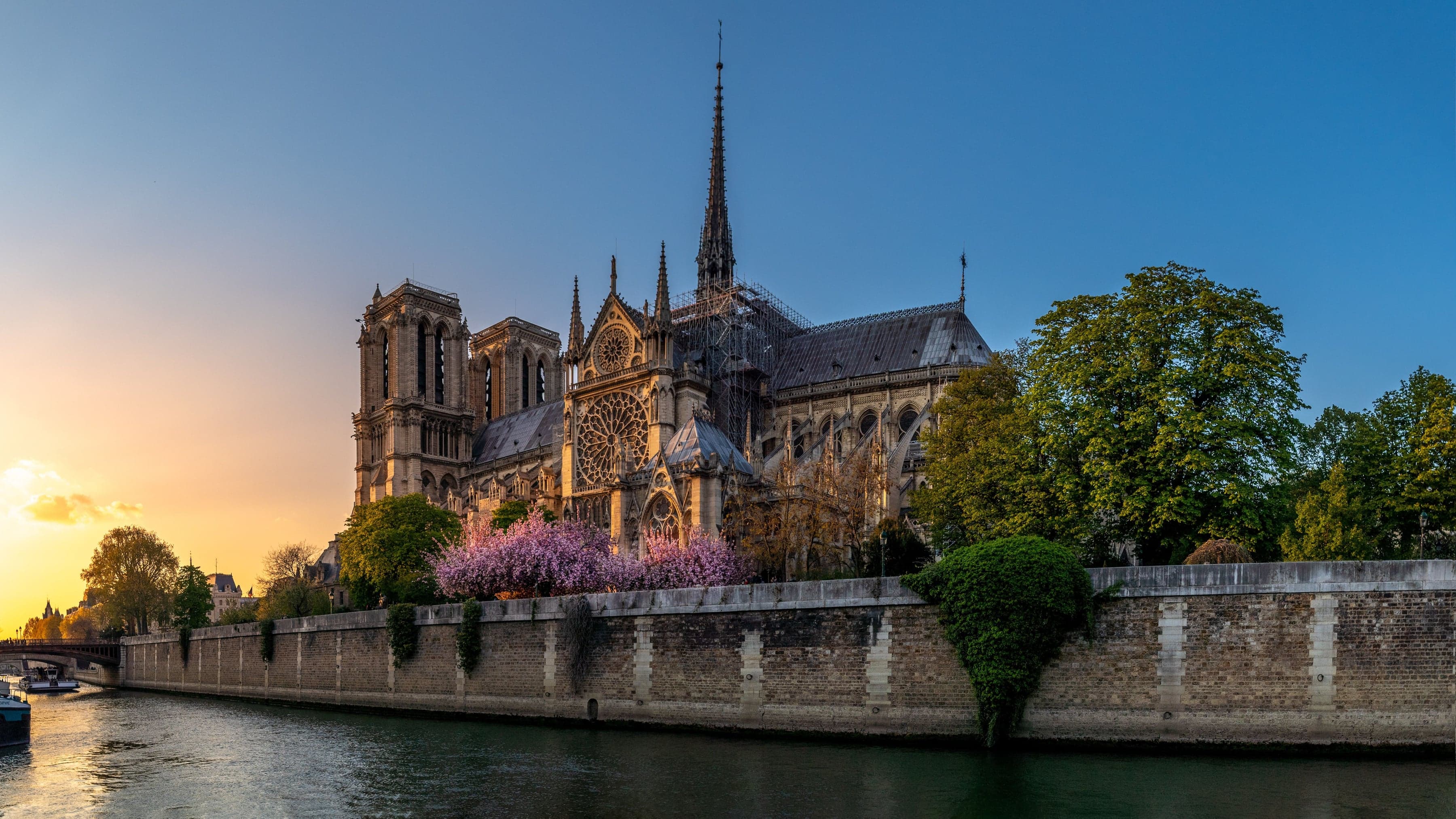
Notre-Dame and Île de la Cité: An Island Rebuilt Three Times
90 min · 2.1 km · easy
More from Paris
Explore more at your own pace.
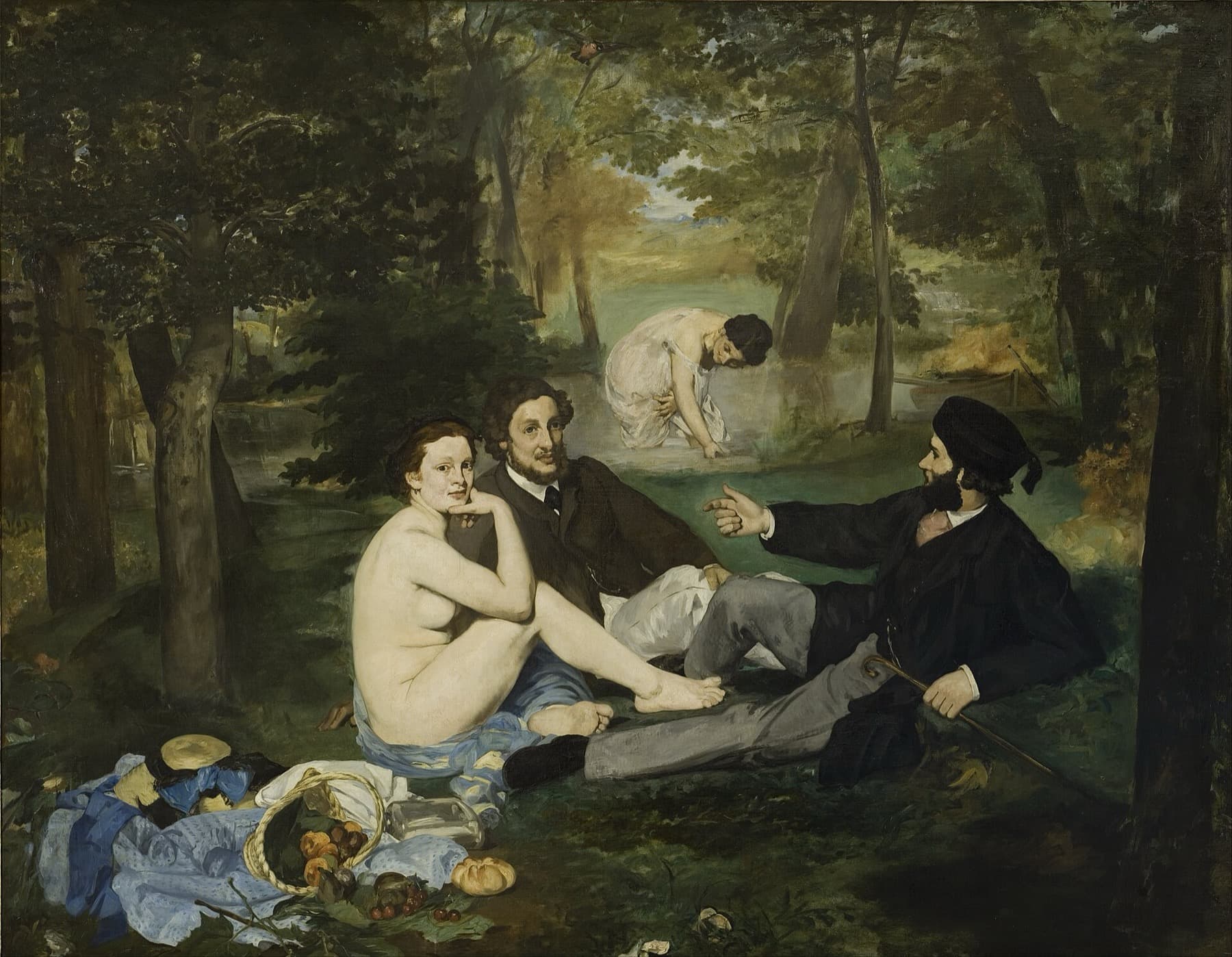
Manet's Luncheon on the Grass: The Picnic the Salon Refused
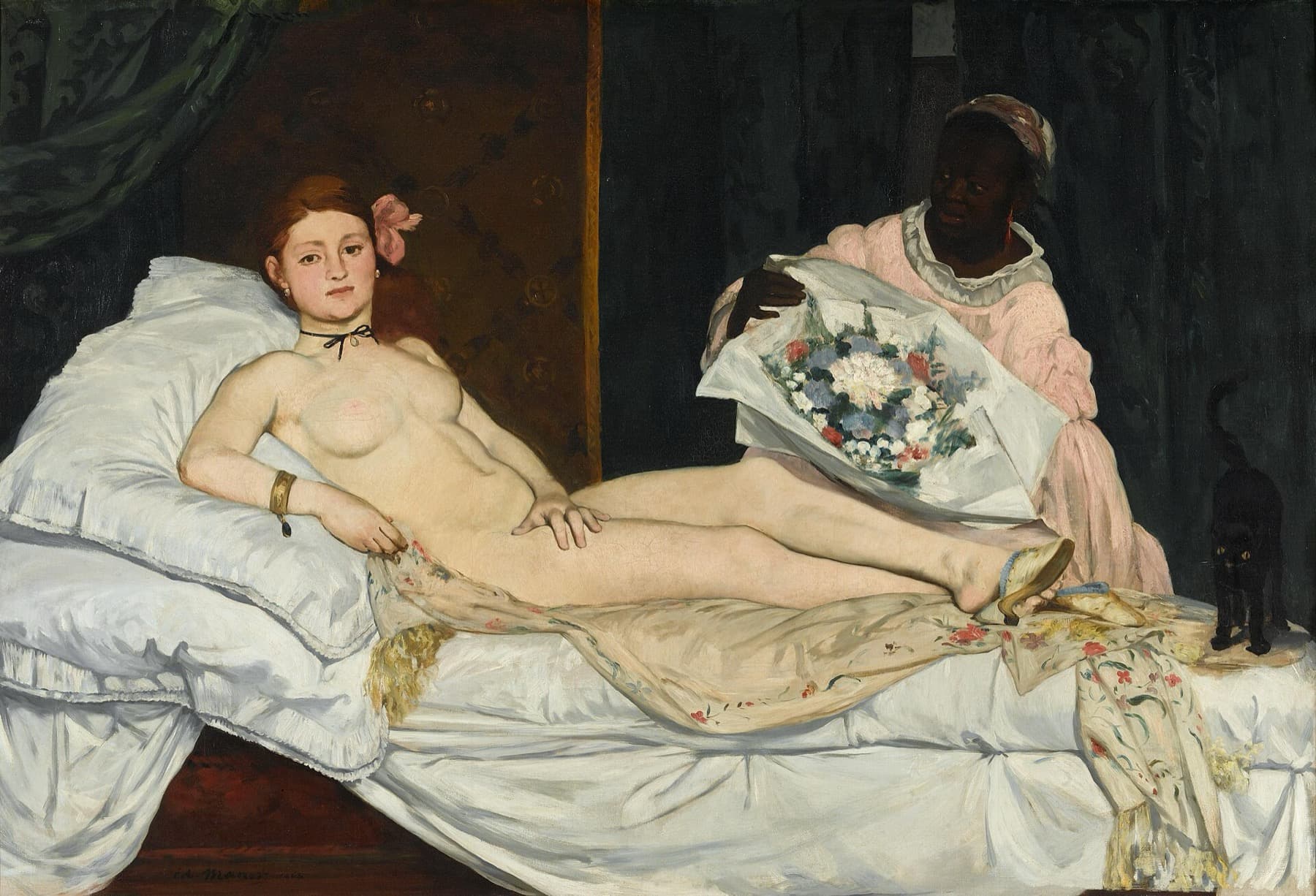
Manet's Olympia: The Stare That Shocked the Salon
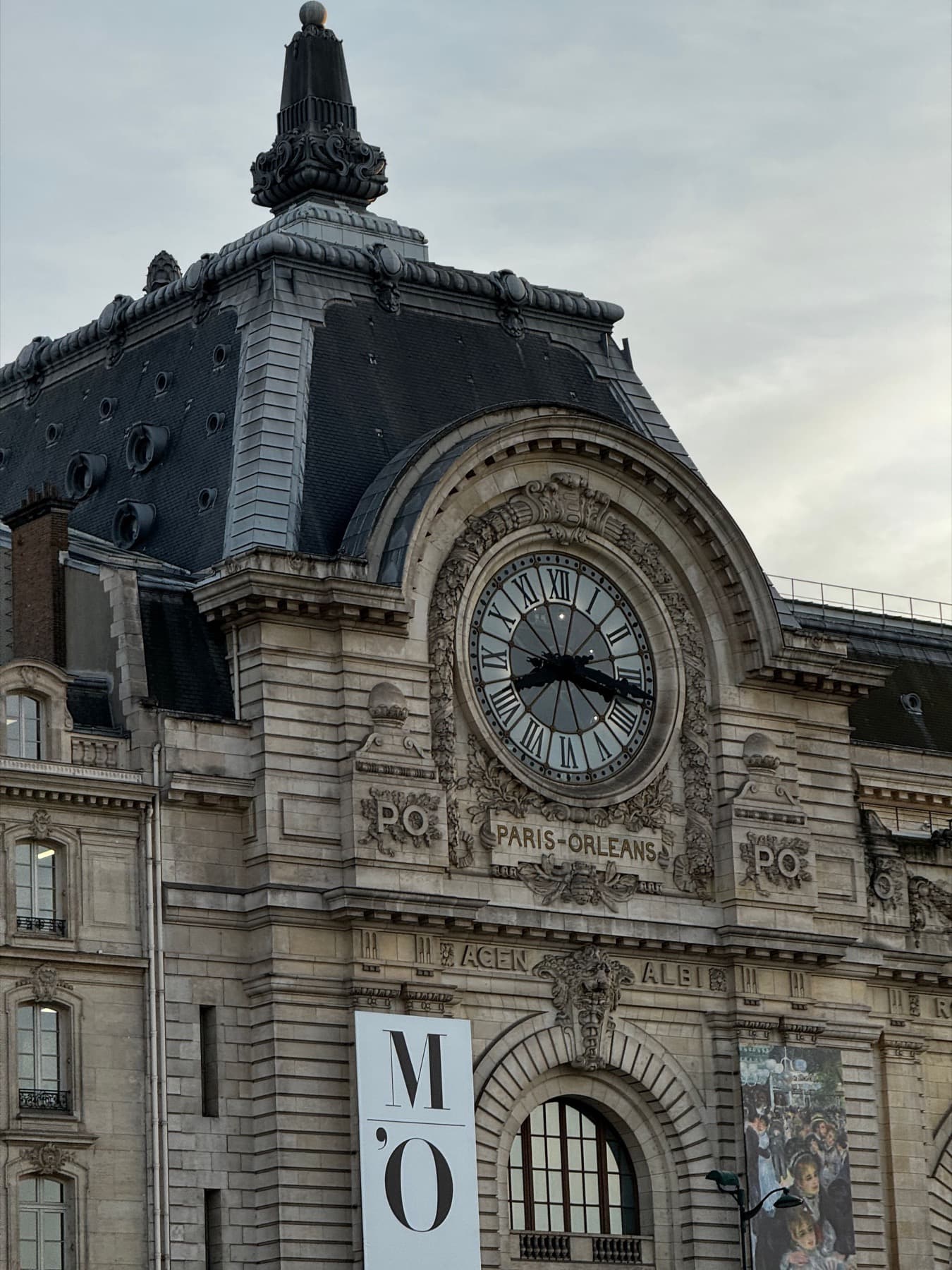
Musée d'Orsay: What to See, Floor by Floor
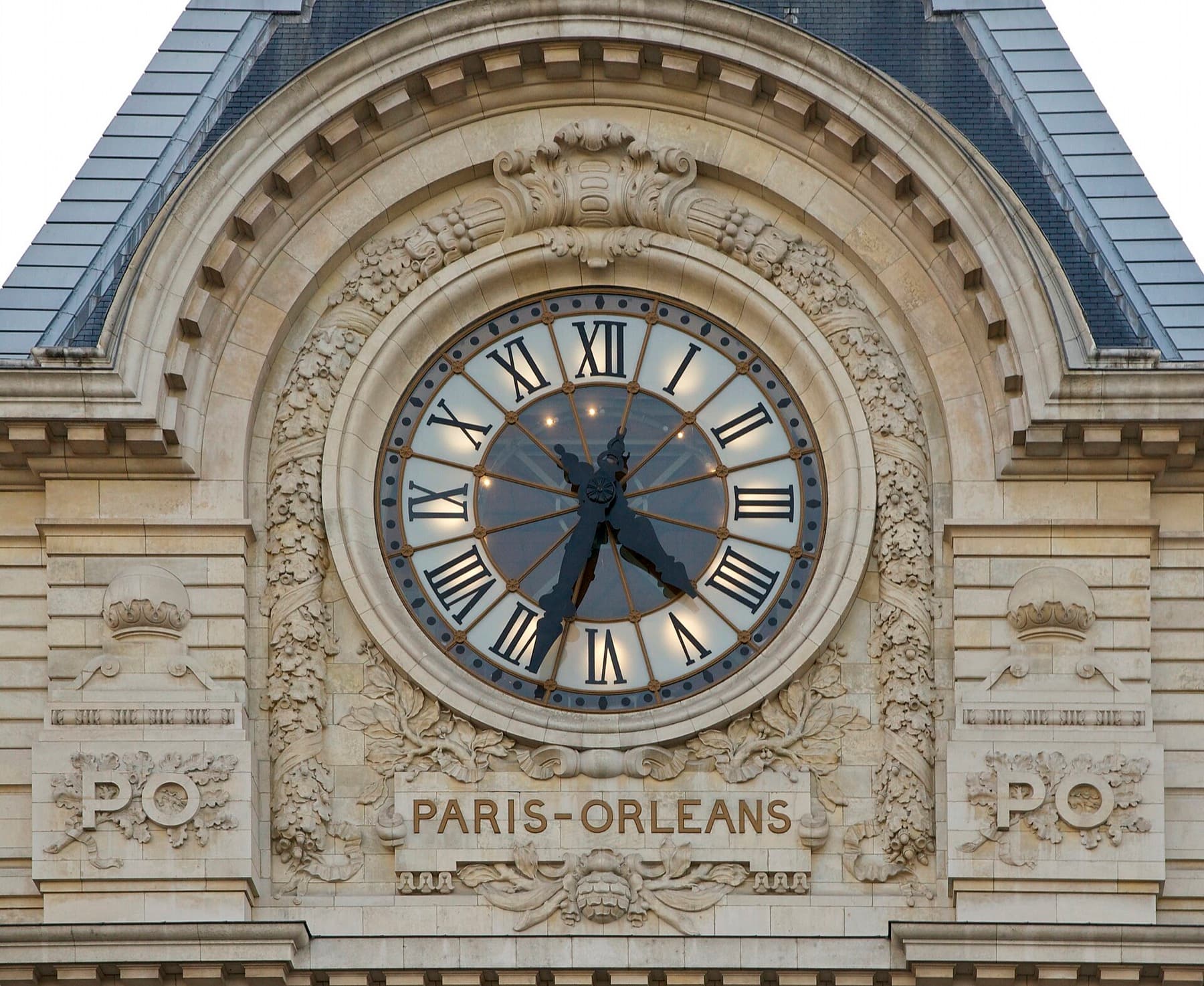
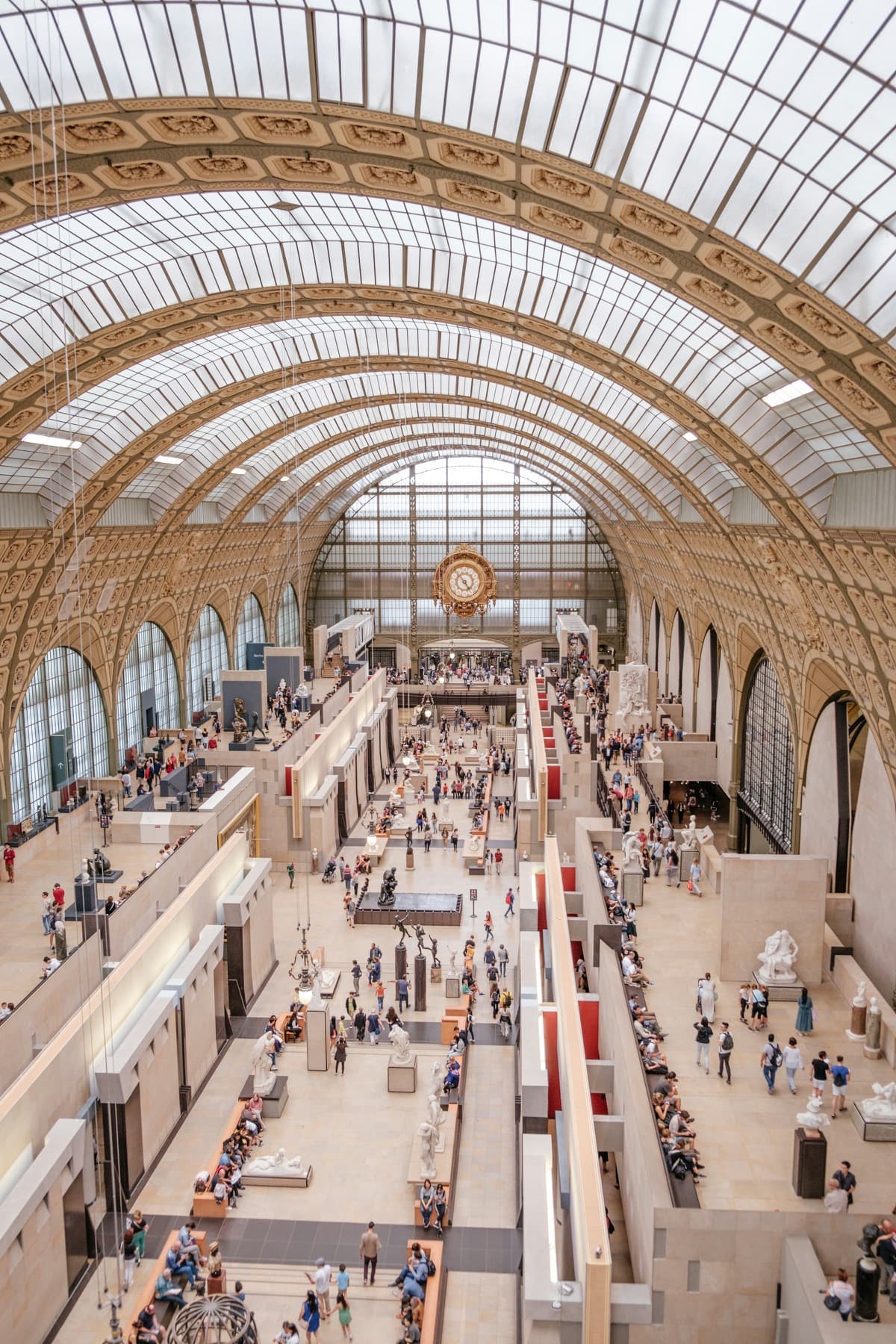
The Musée d'Orsay Was a Train Station: Fire, Laloux and the Clock
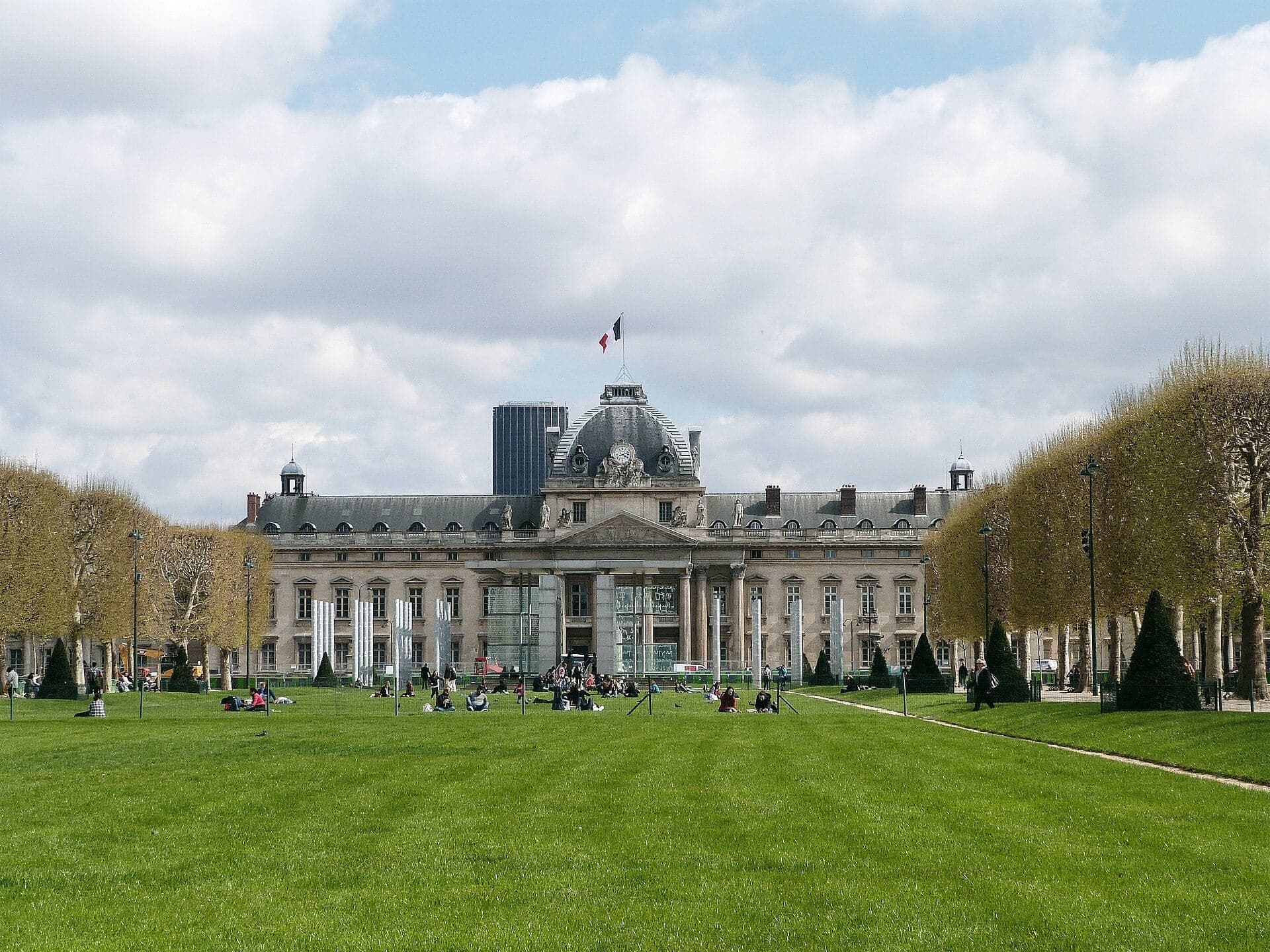
École Militaire: Where a Teenage Napoleon Learned His Trade