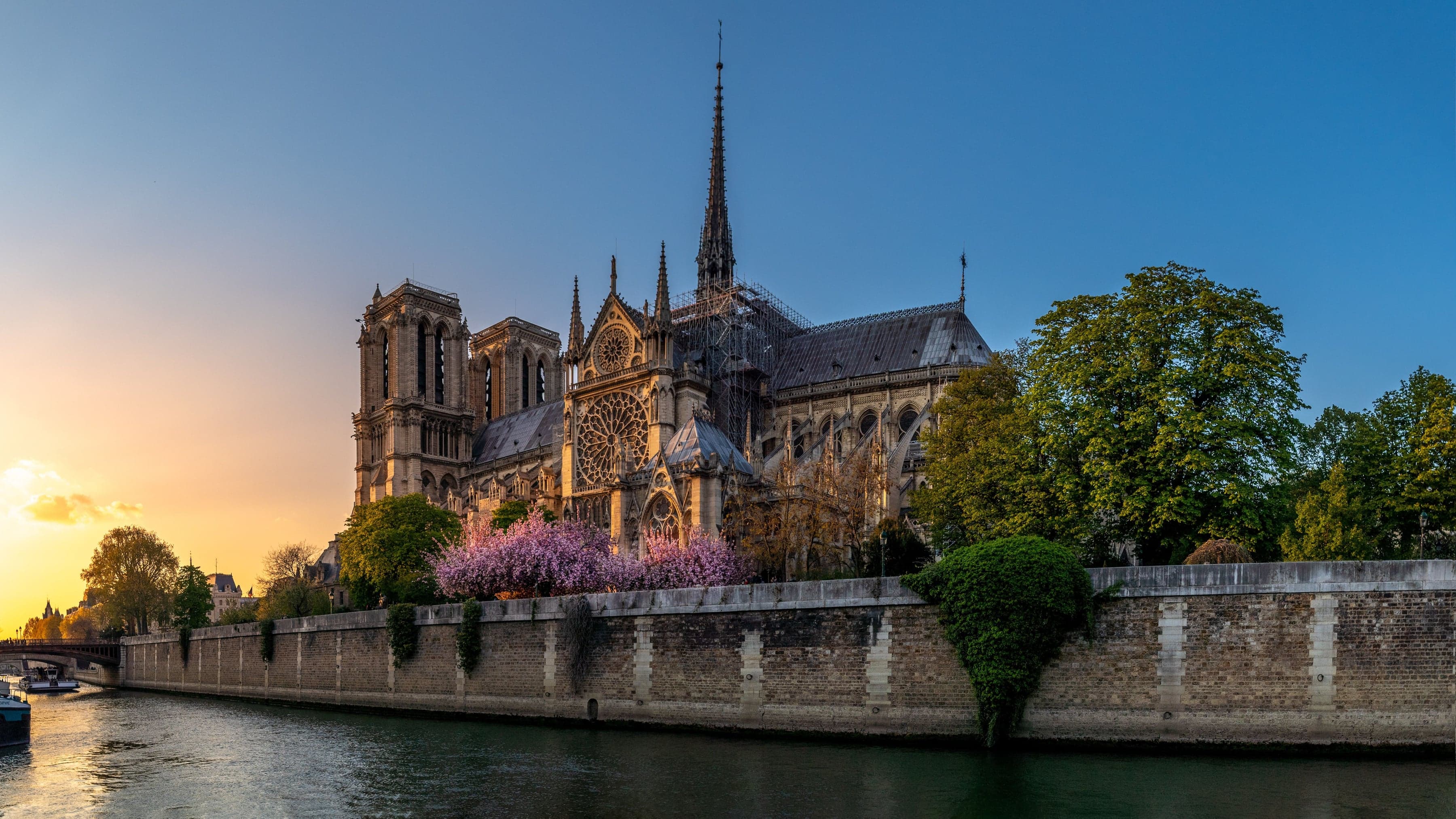
From the Pont Neuf and Place Dauphine past the Conciergerie, the Sainte-Chapelle and the flower market to Notre-Dame's front and side, then over the footbridge to the town houses and church of Île Saint-Louis.
Start · Pont Neuf and Henri IV: The Oldest New Bridge
DirectionsStops
- 1
Pont Neuf and Henri IV: The Oldest New Bridge
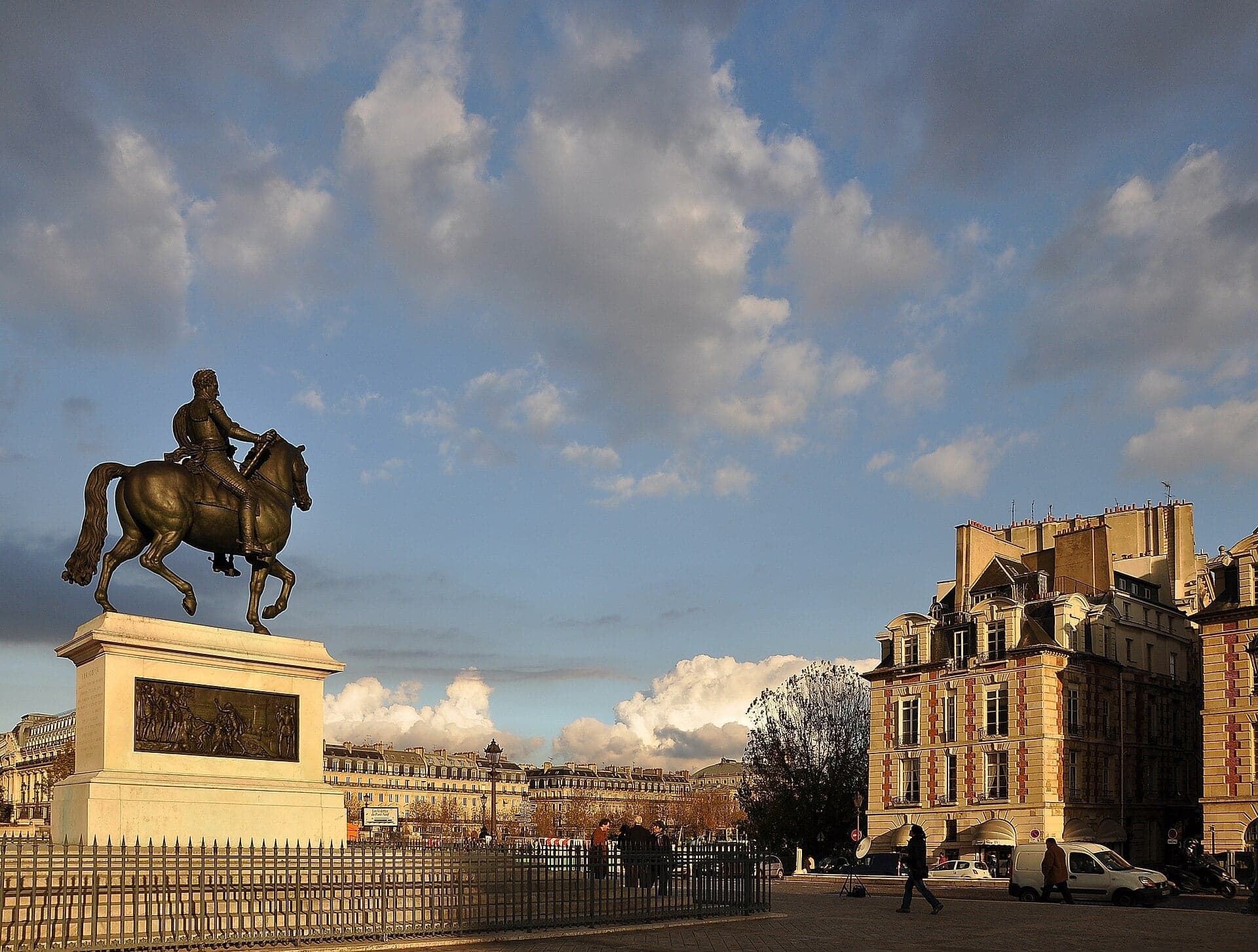
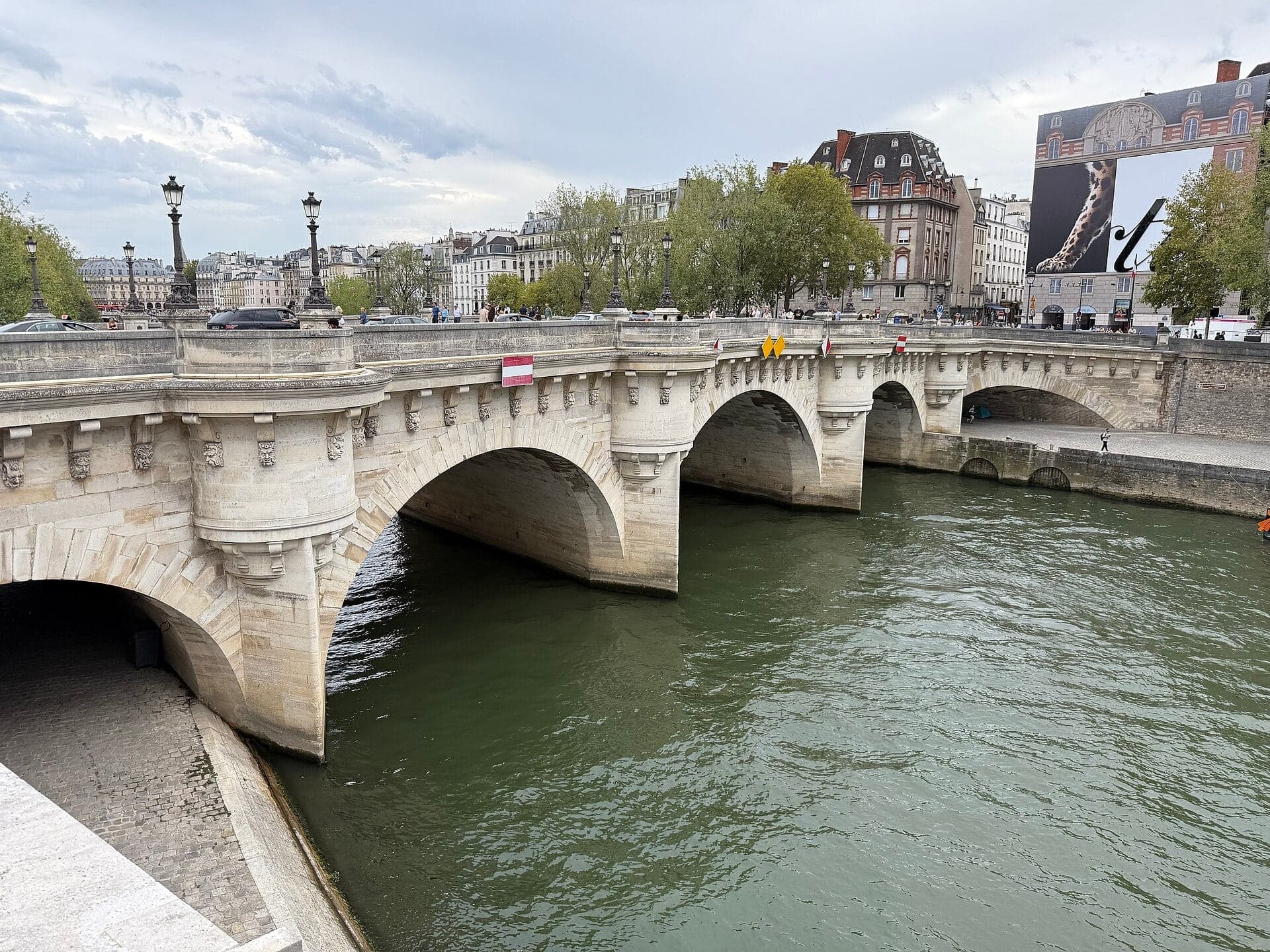
The oldest standing bridge over the Seine, begun in 1578 in stone, with no houses on it, and the bronze Henri IV that Parisians hauled into place in 1818.
- 2
Place Dauphine: The Square That Lost a Side
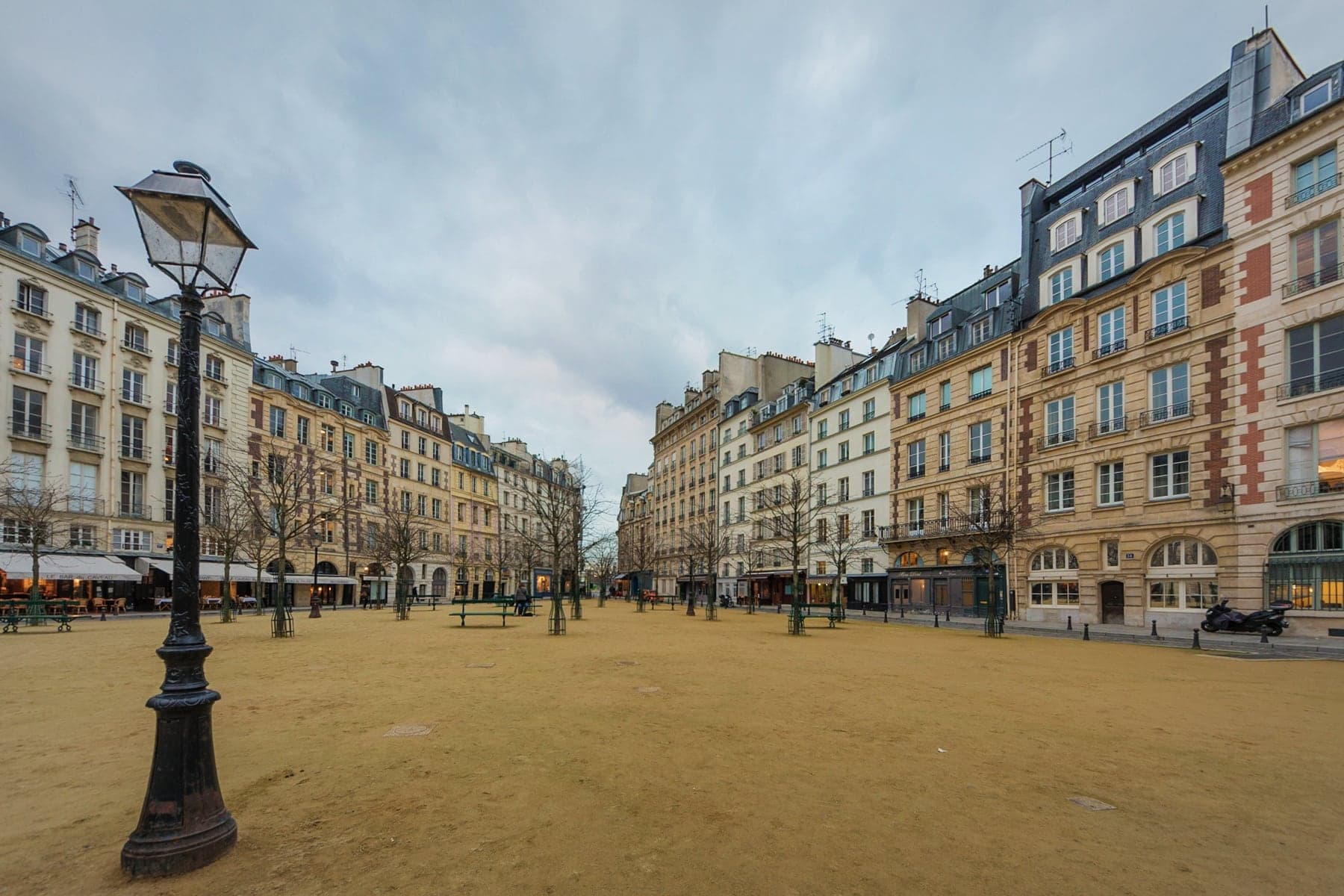
A triangle that lost a side, opened up in 1874 so that the law courts' new front could close its wide end.
- 3
Quai de l'Horloge and the Conciergerie: A Palace Turned Prison
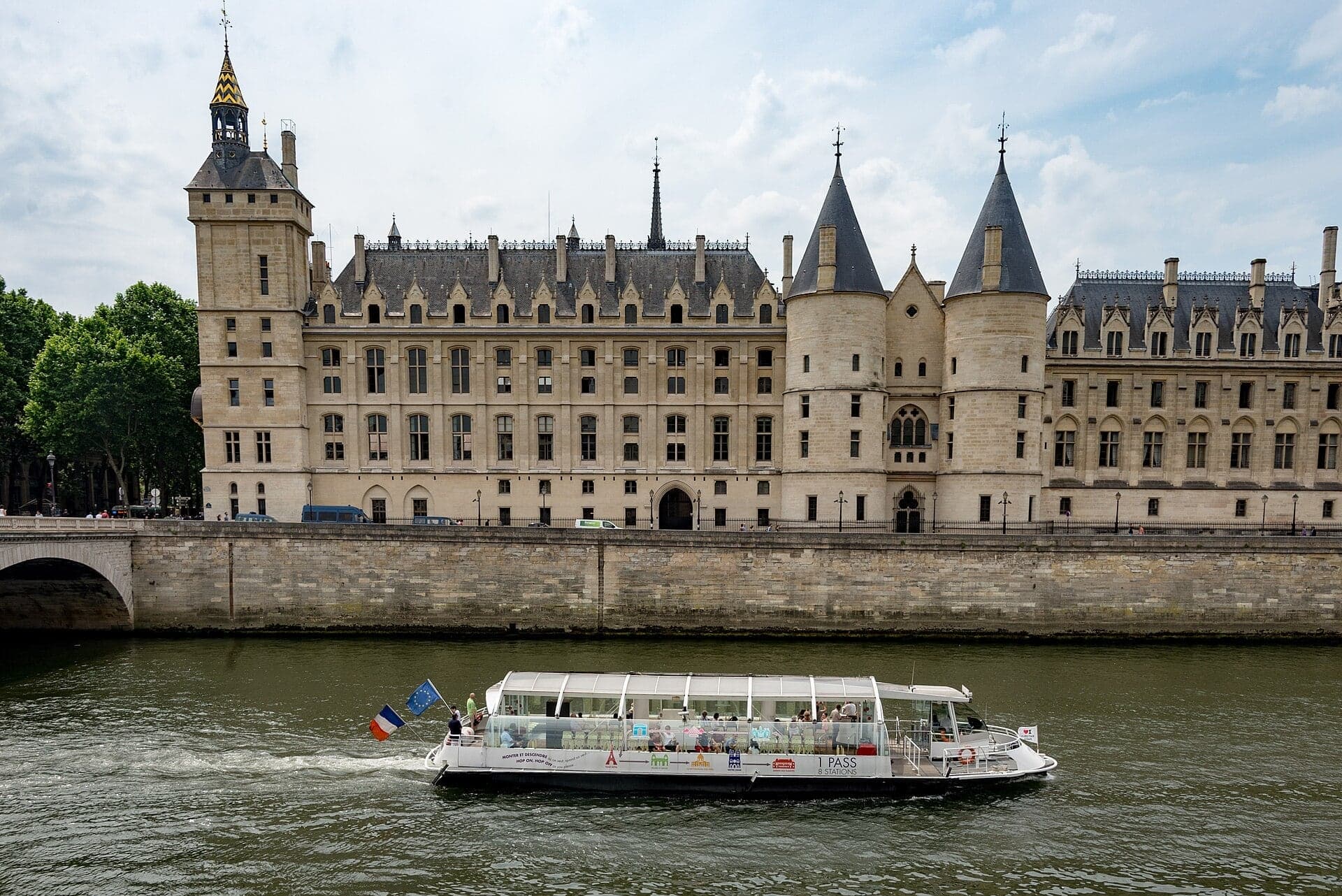
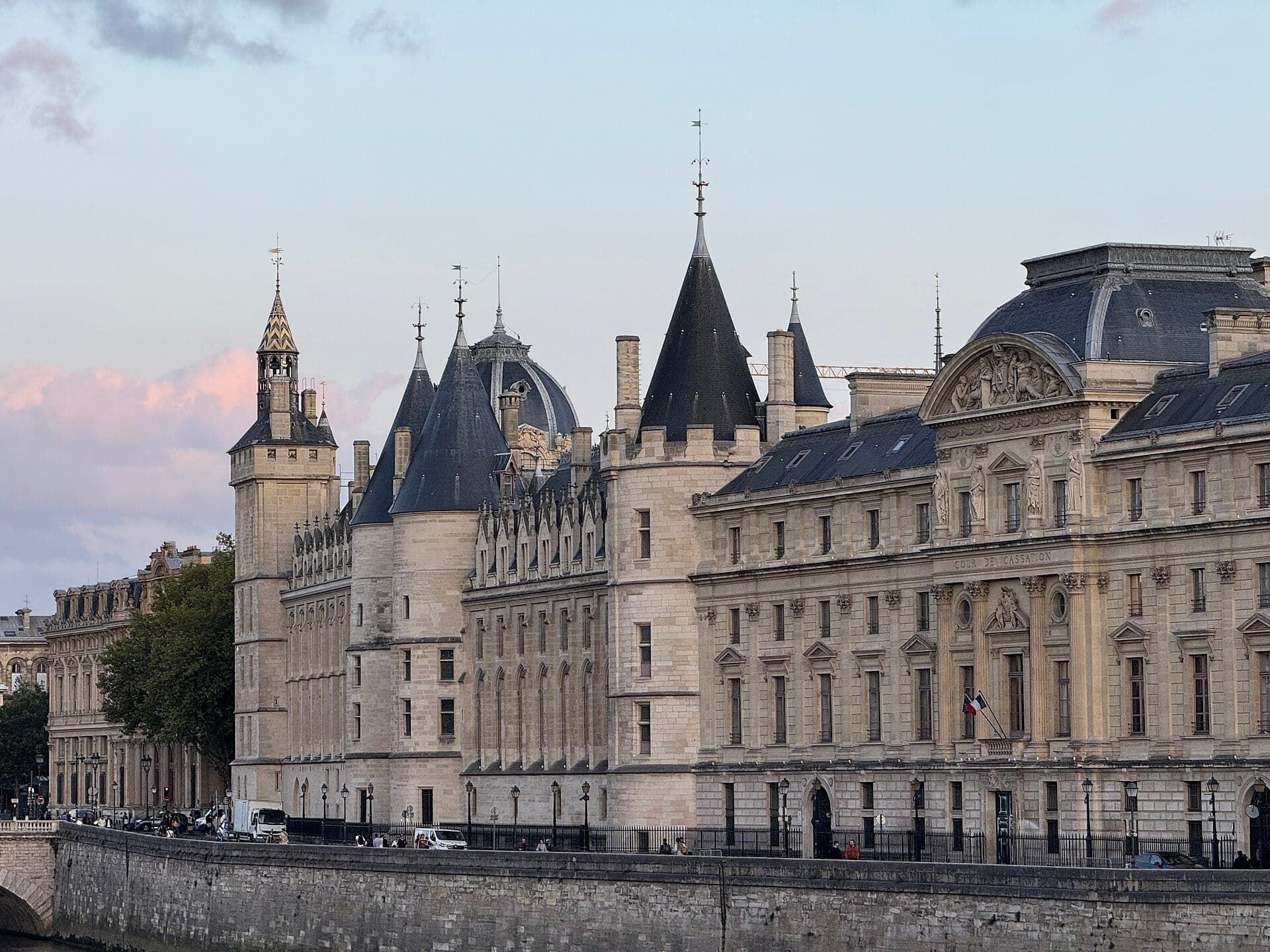
The first palace of the kings, seen from the river: a round tower in the long wall of a palace that became a prison and the Revolution's court.
- 4
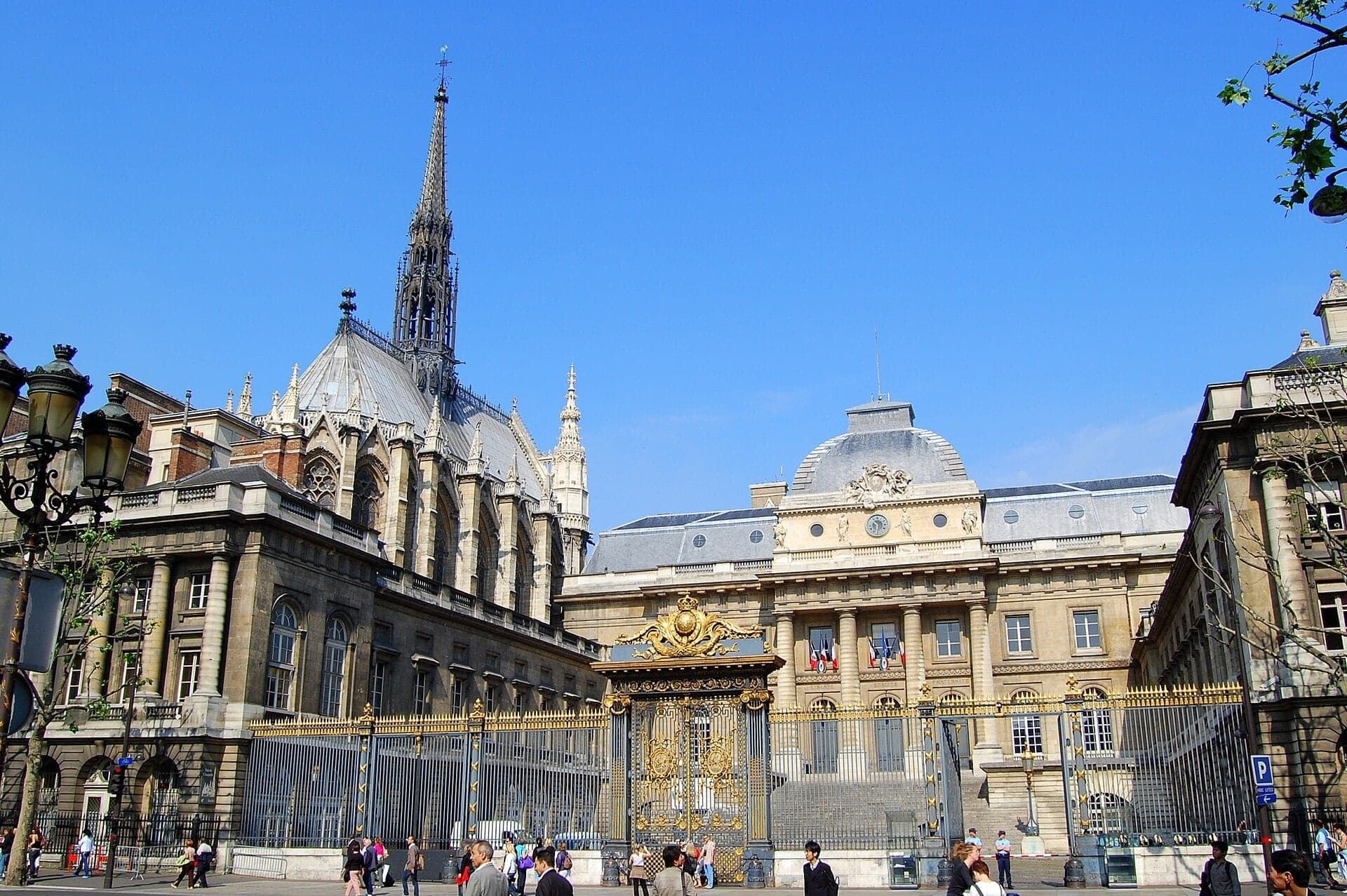
Sainte-Chapelle: A Chapel Hidden in the Law Courts
Saint Louis's chapel for the Crown of Thorns, hidden inside the law courts: from the street you see only its seventy-five-metre spire.
- 5
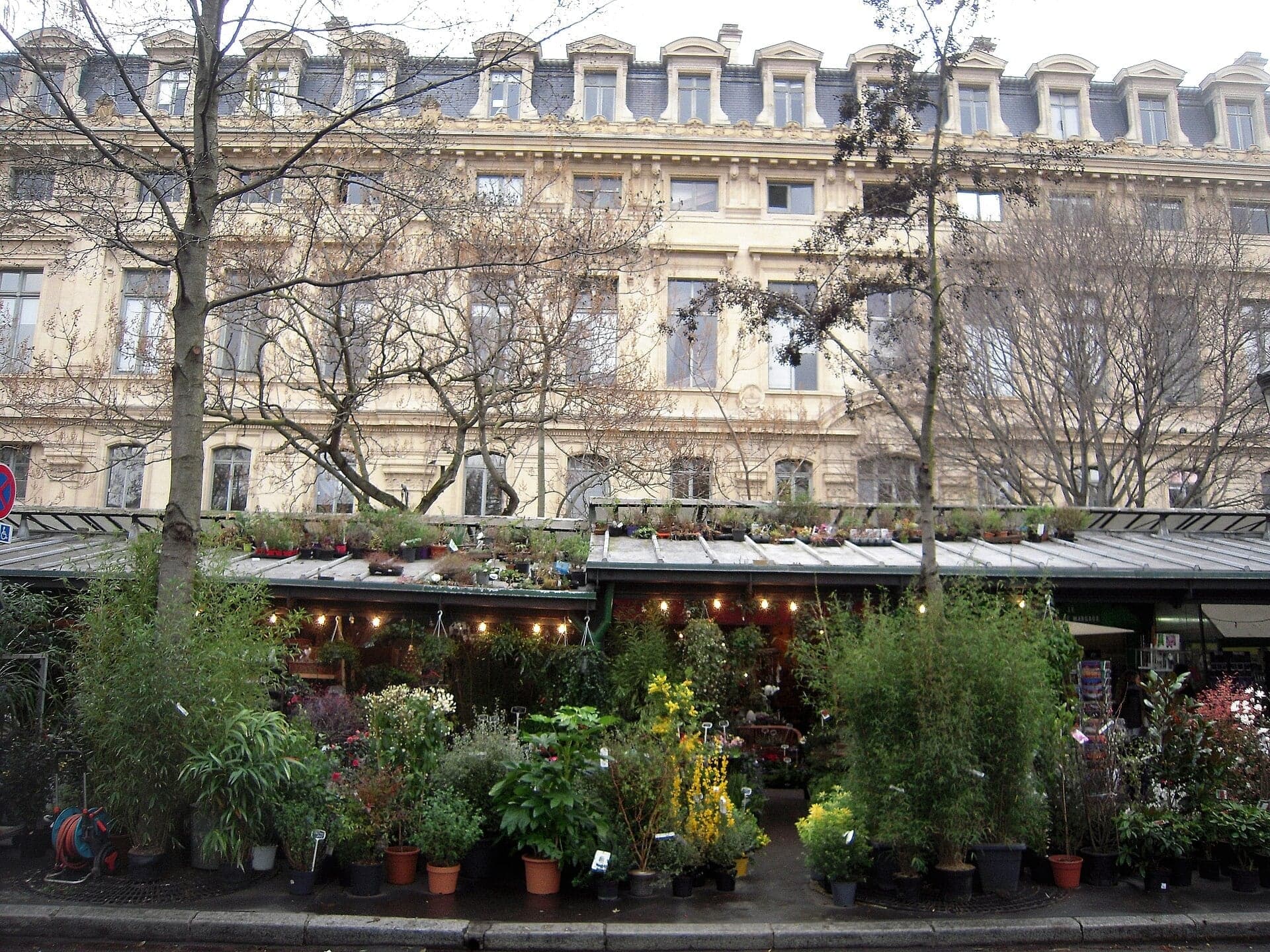
Place Louis-Lépine: Flowers Among the Courts
A flower market among the courts, where the island's nineteenth-century rebuilding shows in the commercial court's tall Second Empire roof.
- 6
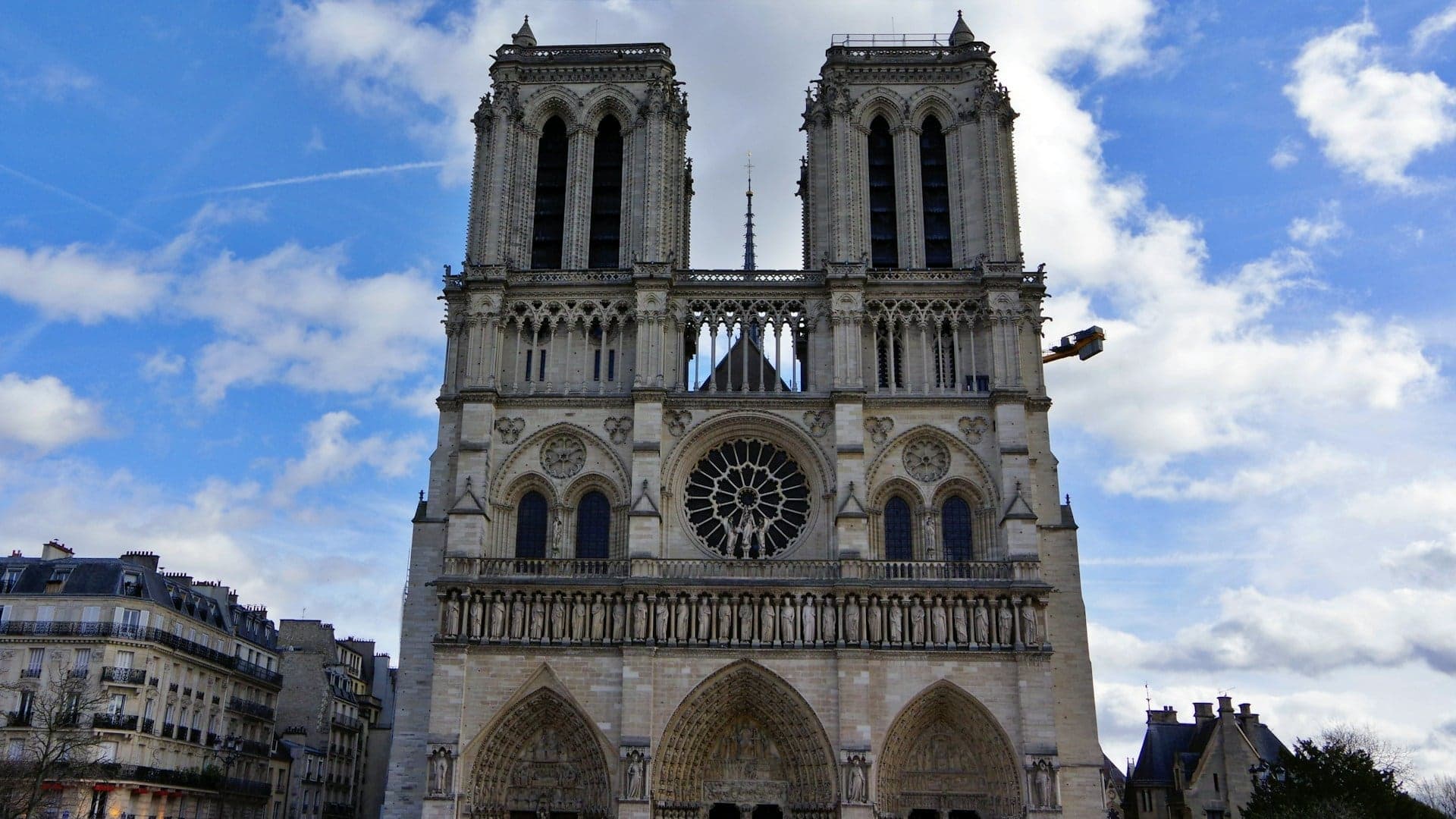
Notre-Dame: The Front That Was Remade
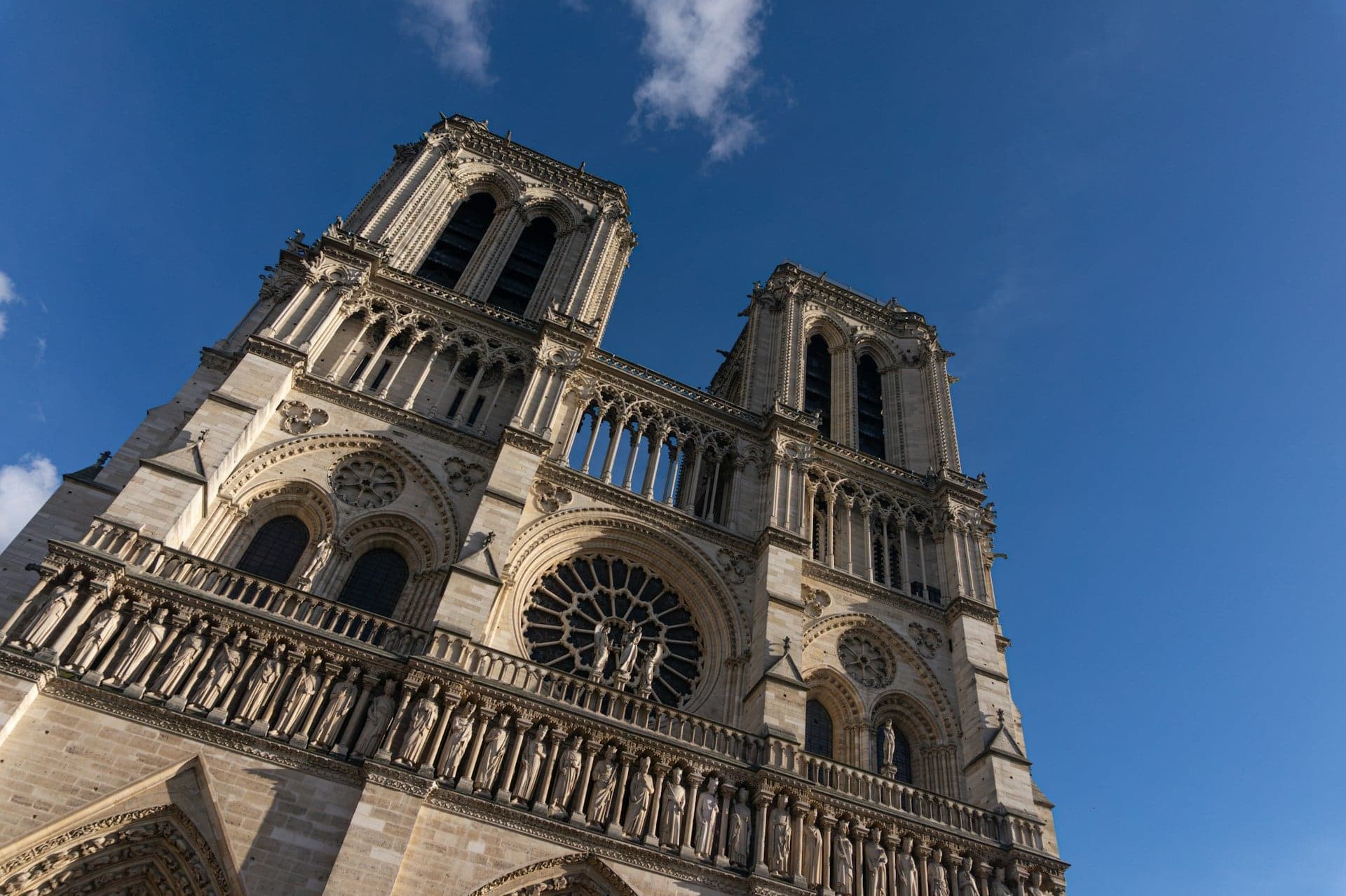
A west front begun in 1163. Free to enter, it reopened in December 2024 after the 2019 fire.
- 7
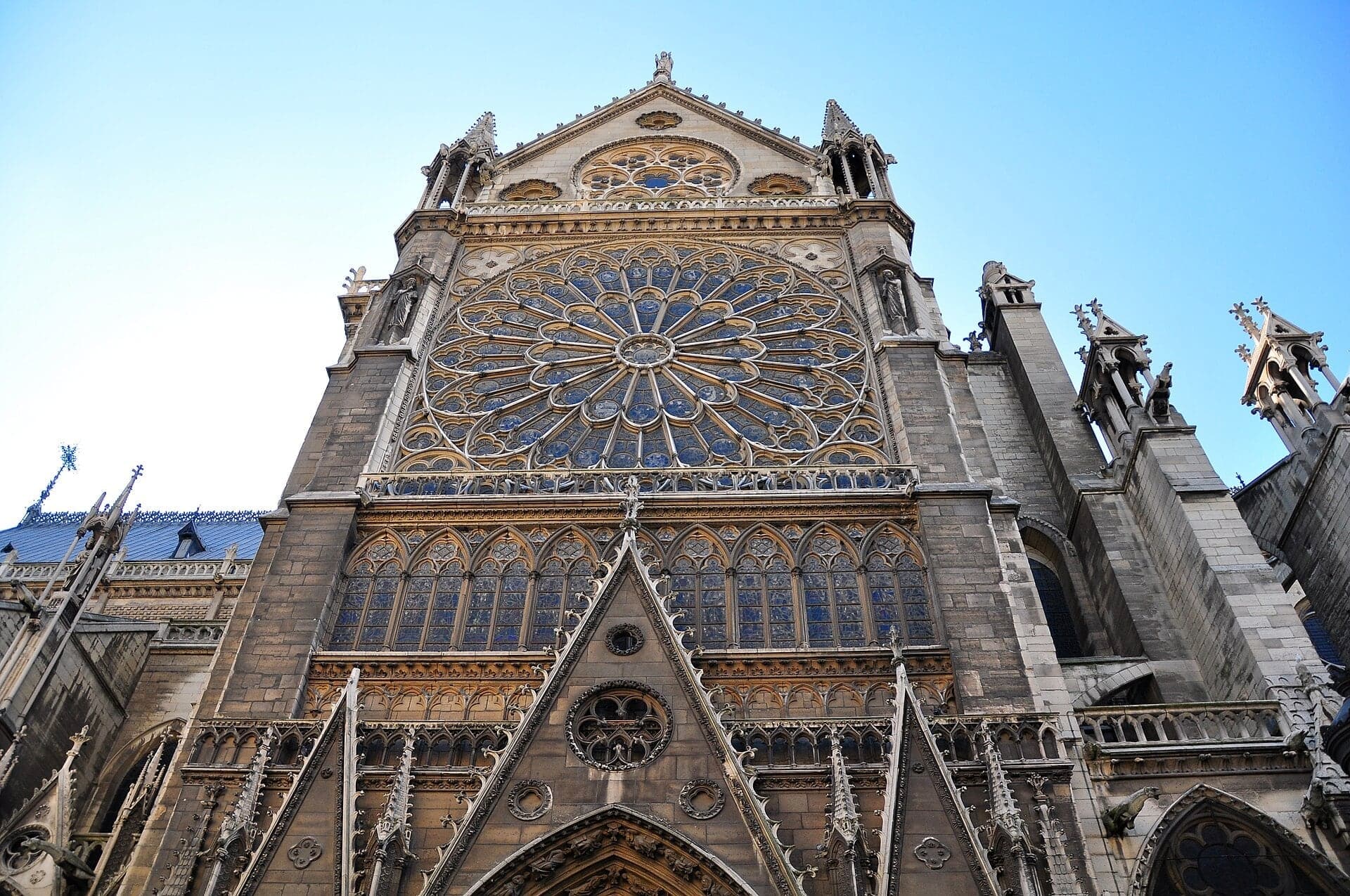
Notre-Dame's North Side: The Cathedral at Work
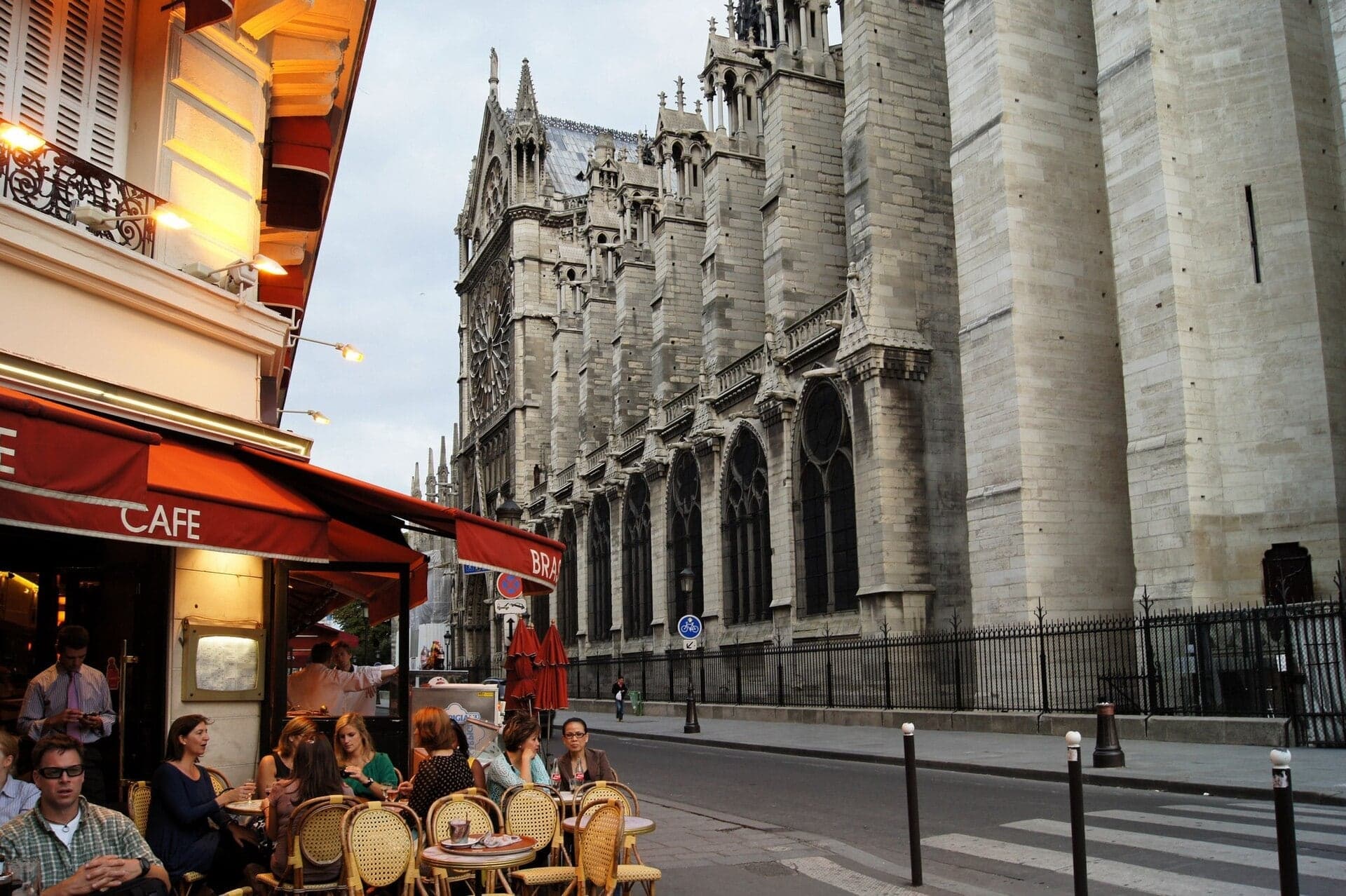
The north door and the great rose, seen close from Rue du Cloître-Notre-Dame, with the flying buttresses and the repairs still running along its side.
- 8
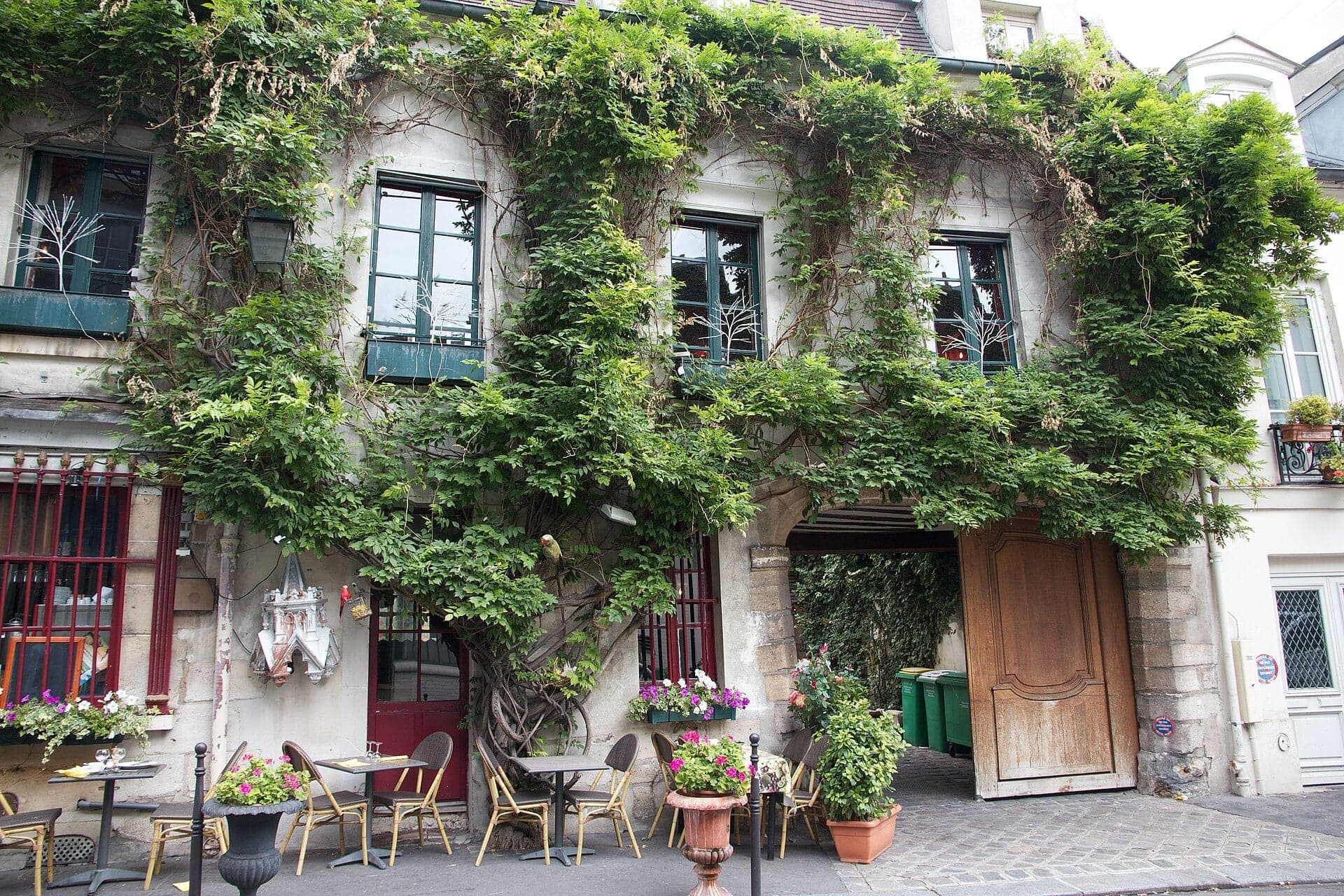
Rue Chanoinesse and the Quai aux Fleurs: Héloïse and Abélard
A plaque for Héloïse and Abélard. Behind it lie the lanes of the one block beside the cathedral that the nineteenth-century demolitions spared.
- 9
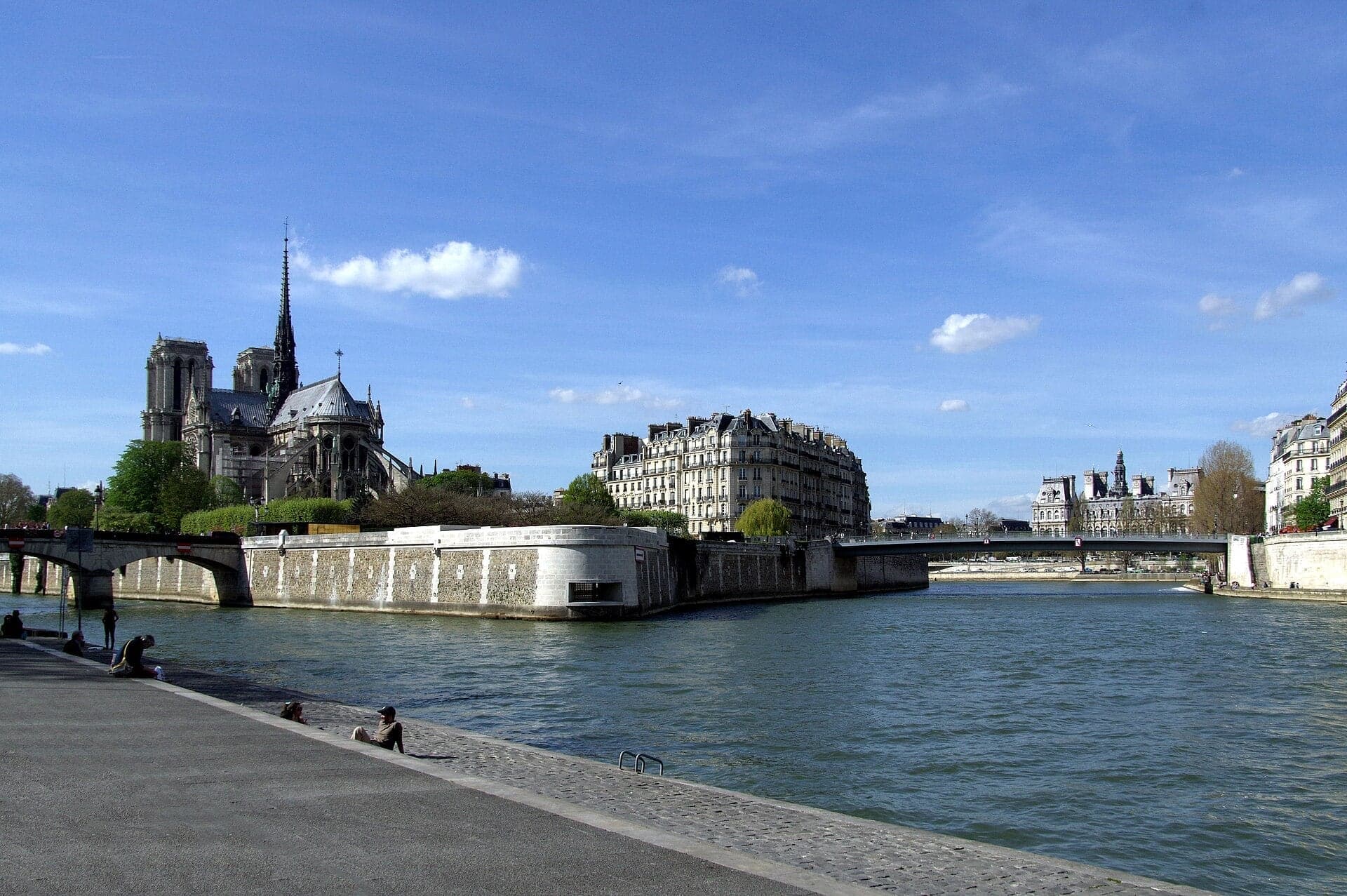
Pont Saint-Louis: The Cathedral from Behind
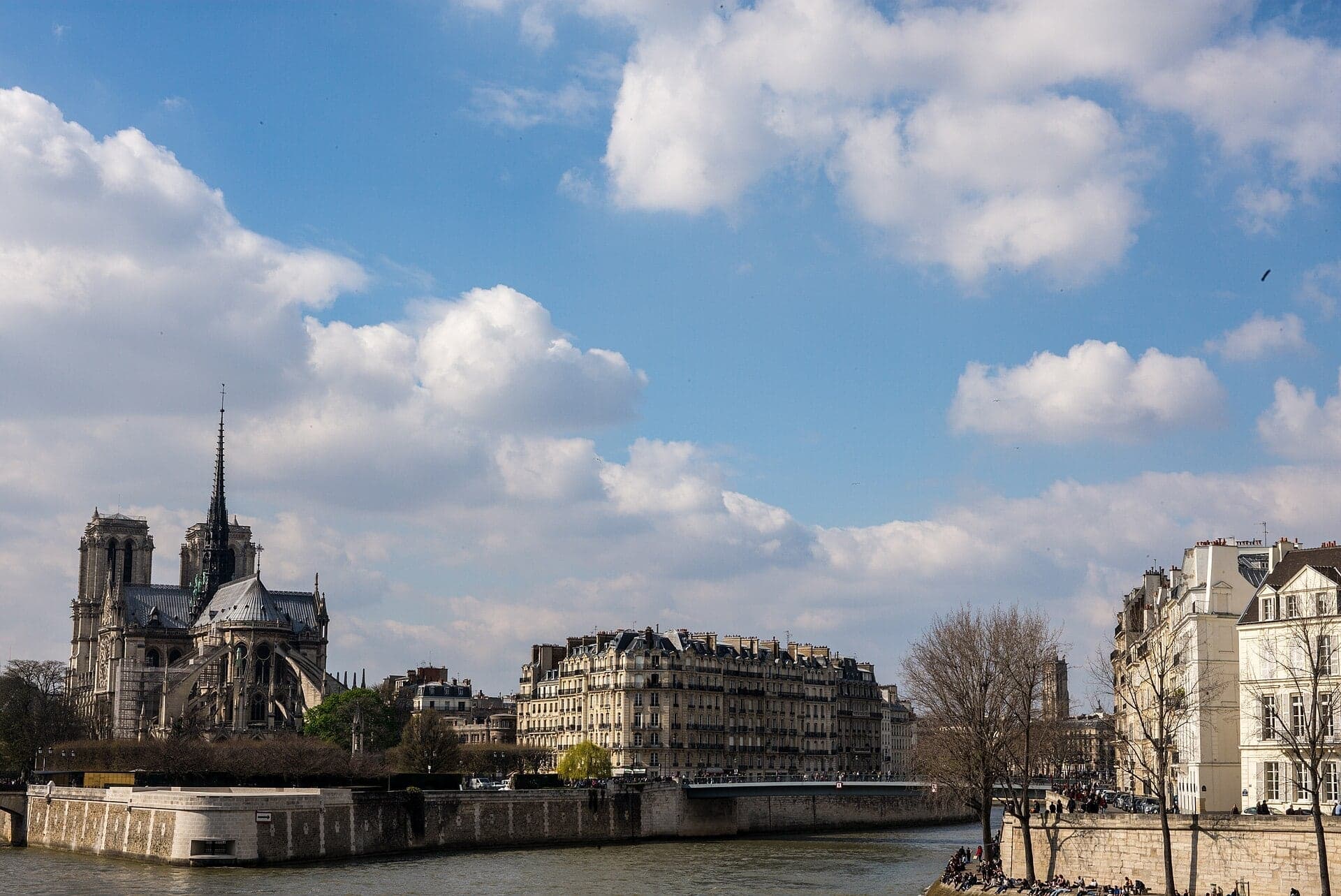
The east end seen from behind. Scaffolding there wraps the twenty-two flying buttresses under repair.
- 10
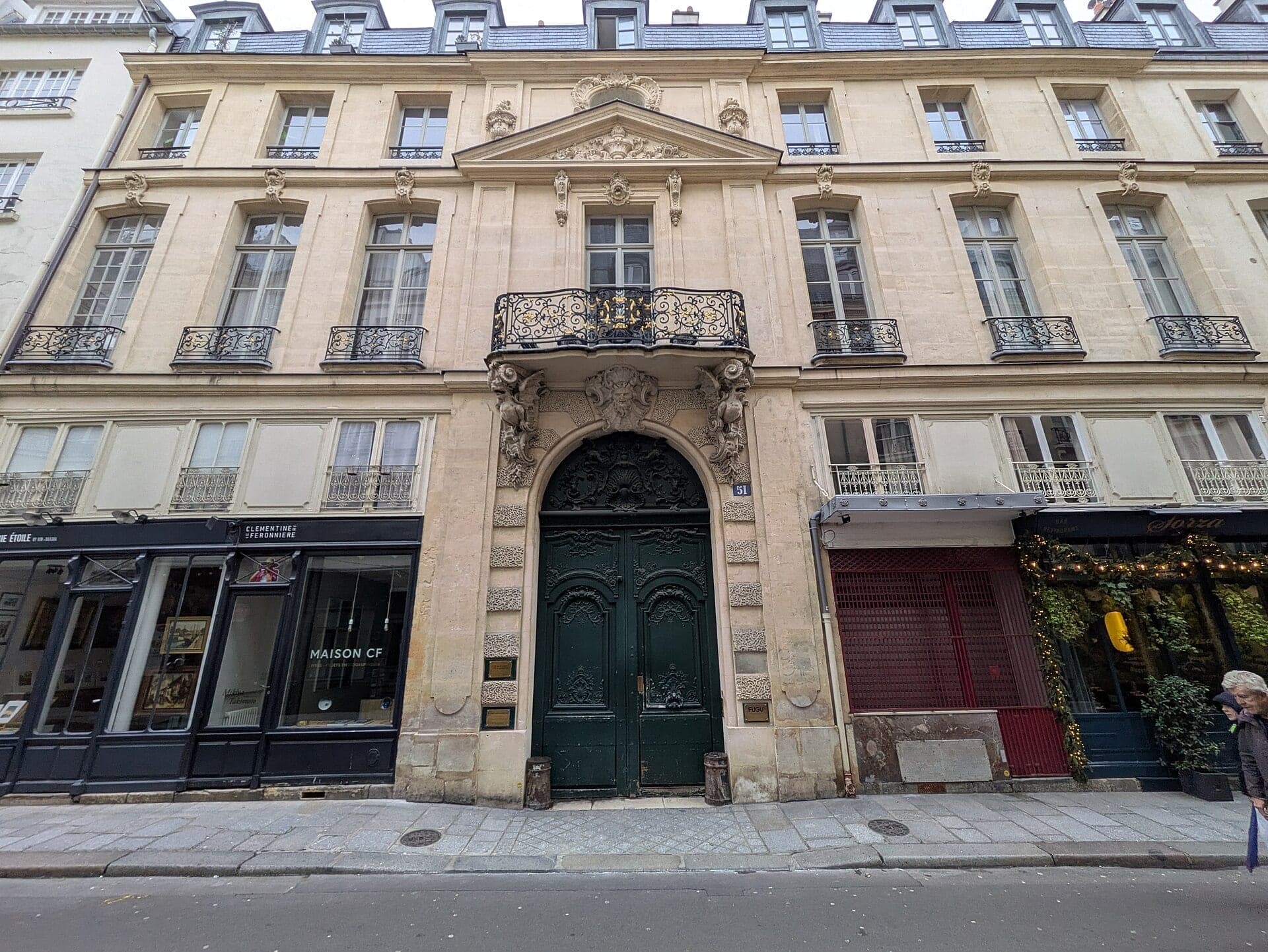
Hôtel de Chenizot: A Tax Collector's Balcony
A tax official gave it a balcony. It was later an archbishop's home, then a barracks, and is now private flats.
- 11
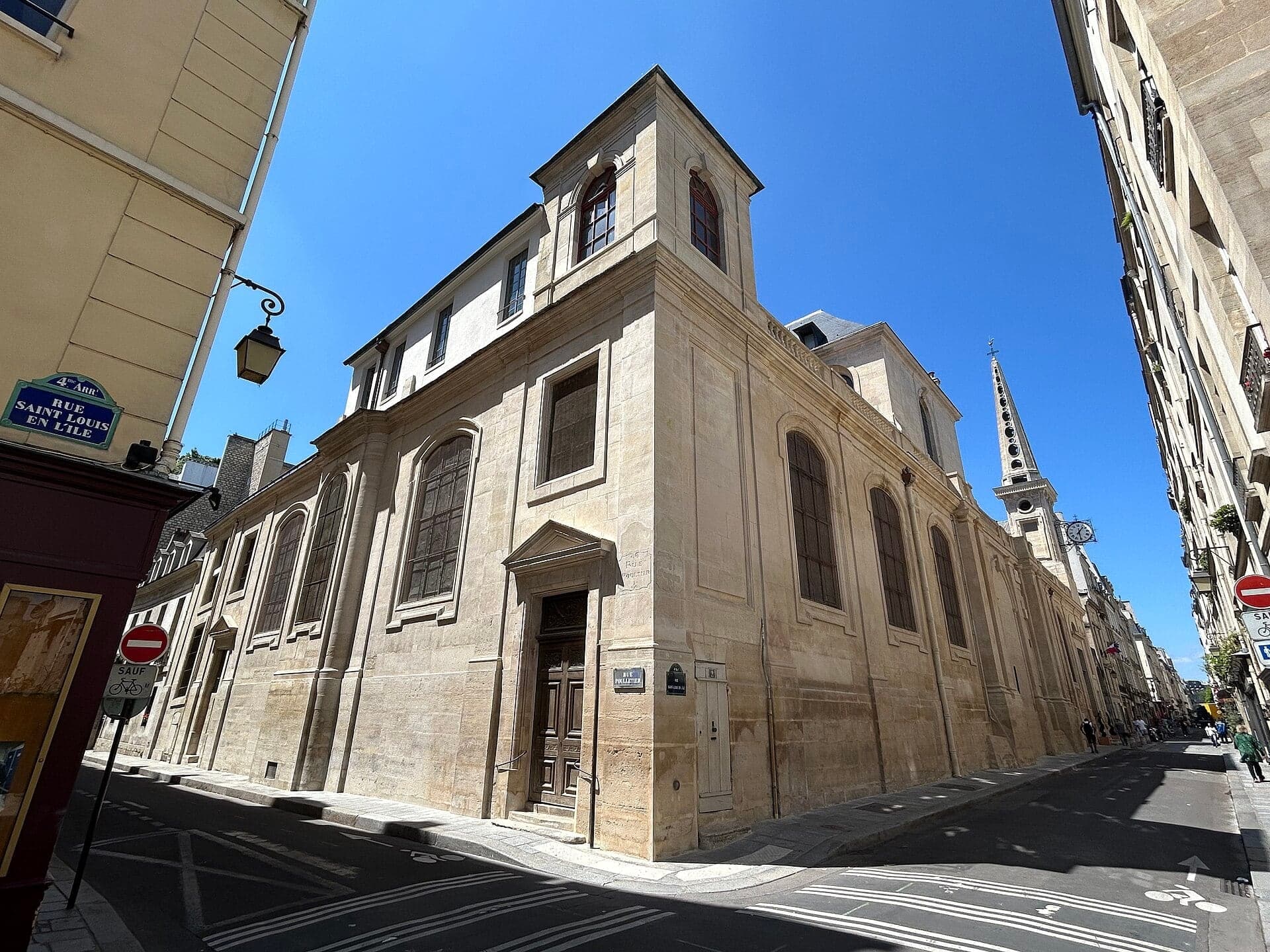
Saint-Louis-en-l'Île: The Church Without a Front
A church begun in 1664. It was built as the parishioners could pay, with a bare wall where a front was never built and an openwork spire of 1765.
- 12
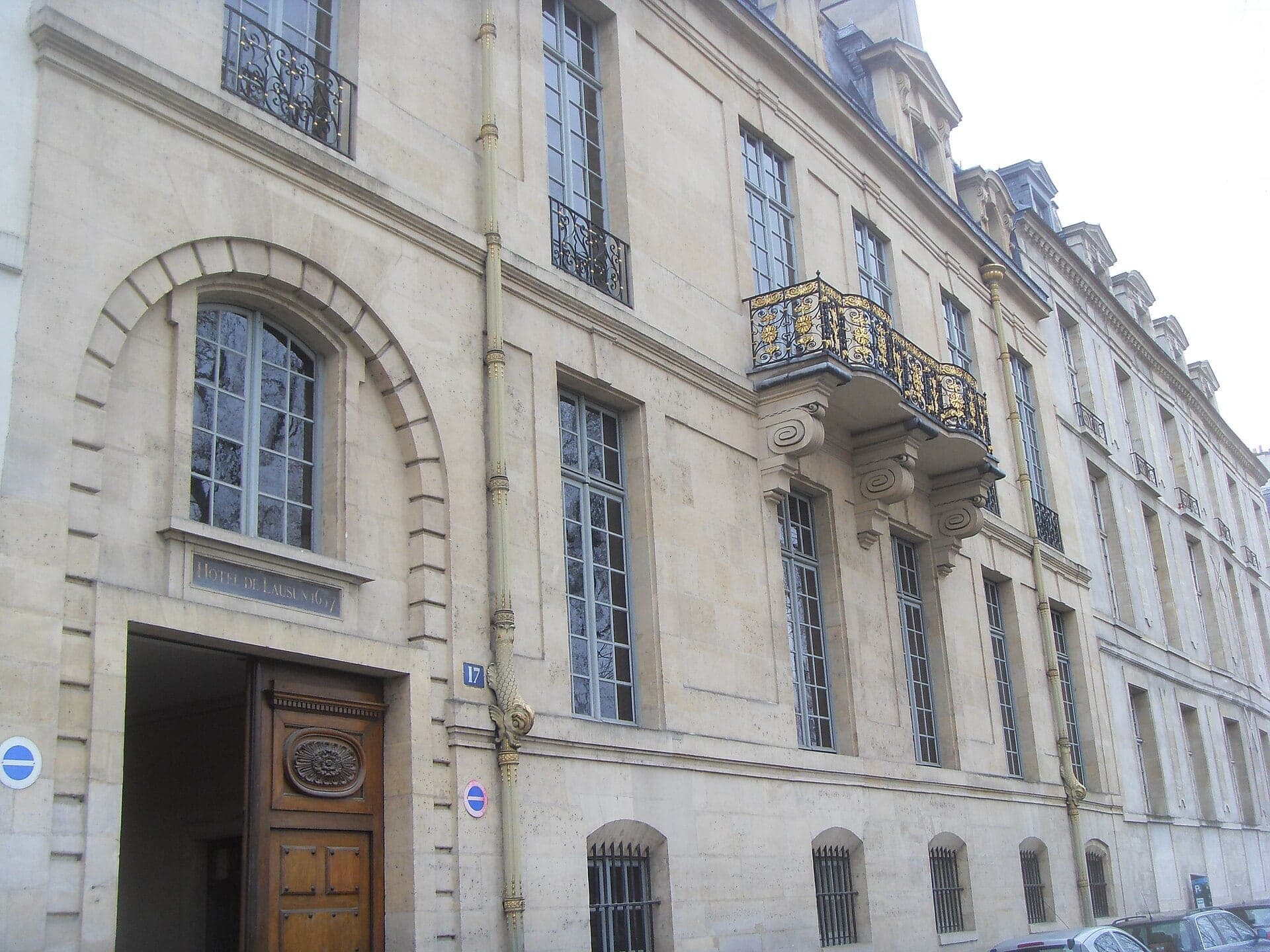
Quai d'Anjou and the Hôtel de Lauzun: A Plain Front, a Rich House
A sober front hiding a rich house. Built in the 1650s, it was later rented by Baudelaire and has been owned by the City since 1928.
Details
Best Time to Visit
A weekday morning, starting by about 9.30am. The Sainte-Chapelle and the Conciergerie open at 9am and 9.30am and close at 5pm and 6pm from October to March, and the Sainte-Chapelle's security queue grows through the day, so book a slot early. A free slot reserved on Notre-Dame's official site can shorten the wait. The walk is all on the street and works at any hour in daylight; the island's quays are quiet in the evening.
Pro Tips
- •Getting to the start: Pont Neuf Metro (line 7) is a short walk across the bridge; Cité (line 4) and Châtelet (lines 1, 4, 7, 11 and 14) are five to ten minutes away, and Saint-Michel Notre-Dame RER (B and C) a little more. The walk ends near Pont Marie Metro (line 7), with Saint-Paul (line 1) a little further. Checked 7 October 2026.
- •Sainte-Chapelle (stop 4): 22 EUR, 16 EUR for EEA nationals and residents; 9am to 5pm from 1 October to 31 March, last access 30 minutes before closing. Book a time slot: the entrance is the law courts' security check and can take a long time. Checked 7 October 2026 at sainte-chapelle.fr.
- •Conciergerie (stop 3): 13 EUR; daily 9.30am to 6pm, last access 5.30pm. A combined ticket with the Sainte-Chapelle costs 30 EUR (23 EUR EEA). Checked 7 October 2026 at paris-conciergerie.fr.
- •Notre-Dame (stop 6): free to enter since it reopened; the cathedral's official site offers an optional free time slot that can shorten the wait, so check it for current hours. Only the official site takes reservations. The towers cost 16 EUR, online only, with a reserved slot. Checked 7 October 2026.
- •The archaeological crypt under the Notre-Dame square (entrance on the square, passed after stop 6): Tuesday to Sunday 10am to 6pm, 11 EUR or 9 EUR reduced, free under 18. Checked 7 October 2026 at crypte.paris.fr.
- •Under 18s, and EU nationals and regular residents of France aged 18 to 25, enter the Sainte-Chapelle and the Conciergerie free; both are also free on the first Sunday of January, February, March and November. Checked 7 October 2026.
- •Saint-Louis-en-l'Île (stop 11) is free to enter when open; do not visit during a service.
Safety & Precautions
- •On the Pont Neuf (stop 1) the route crosses the bridge's own roadway, the Quai des Orfèvres and Rue Henri-Robert at zebra crossings with no traffic lights; traffic is busy, so wait for a clear gap.
- •The Sainte-Chapelle and Conciergerie queues stand on the Boulevard du Palais pavement at stop 4, and in late 2025 a works hoarding narrowed part of that pavement; keep to the kerb edge and do not block the line.
- •The Notre-Dame square is crowded. Pickpockets work the queues, and people offering bracelets or petitions to sign are a common scam: say no and keep walking. Nobody but the cathedral's official site sells or books entry.
- •The City of Paris plans to rebuild the Notre-Dame square from summer 2027 to the end of 2028. Expect fences and diversions on and around it; follow the signs.
- •Between stops 8 and 9, the crossings of the Rue du Cloître-Notre-Dame and the Quai de l'Archevêché are in a works zone until about June 2027, with narrowed roads and widened pavements. Cross only at the lights and follow any diversion.
- •Notre-Dame's east end is under scaffolding for the restoration of its flying buttresses, and the great rose windows are due to be scaffolded from early 2027, so views at stops 7 and 9 may be partly hidden.
- •The Square Jean XXIII behind the cathedral is closed for the works, and the Square de l'Île-de-France at the island's tip is closed from 24 August 2026 to June 2027; the Memorial to the Martyrs of the Deportation is meant to stay open except during particular works.
- •Rue Saint-Louis-en-l'Île (stops 10 and 11) is narrow, with cars and delivery vans and a long ice-cream queue near the church; keep to the pavement.
- •The Quai d'Anjou (stop 12) carries one-way traffic; keep to the house-side pavement the route uses. The Hôtel de Lauzun is closed to the public.
- •The Place Dauphine garden is closed by the City in high winds and storms; if it is, walk round its edge.
- •The Conciergerie and Sainte-Chapelle sometimes close early or all day at short notice; check their official sites before you go.
Travel advisory: Exercise Increased Caution (Level 2).
Gallery
Related Reading
Go deeper on what you'll see, hear, and walk through.
Overview
Best Self-Guided Walking Tours in Paris (2026)
4 min
Overview
One Day in Paris: A Walkable Right-Bank-to-Latin-Quarter Itinerary (2026)
5 min
Overview
Paris Travel Guide: How Many Days, Getting Around, When to Go (2026)
5 min
Thematic
Paris in Layers: How Five Centuries of Power Left the City We Walk
7 min
Companion
Reading Haussmann's Paris: A Field Guide to the Marks He Left
4 min
Read the walk
The full story of Notre-Dame and Île de la Cité: An Island Rebuilt Three Times, in words. Prefer to listen? Play it narrated, from home or on location.
Introduction
Paris, the capital of France, began on an island. The Île de la Cité, in the middle of the Seine, is where the city started, and it still holds Notre-Dame, the Sainte-Chapelle and the old royal palace. Beside it lies a smaller island, Île Saint-Louis.
You can read three rebuildings here. The first was a king's: a new stone bridge and a triangular square of red brick and white stone. The second filled the island next door with town houses for rich Parisians in the sixteen hundreds. The third came in the Haussmann years of the eighteen hundreds, when most of the old Cité was demolished for law courts and a hospital. Apart from Notre-Dame and the Conciergerie, the City of Paris says, only Place Dauphine and one block of lanes beside the cathedral came through.
Three people come back along the way. Henri the Fourth, the king who finished the bridge. Louis the Ninth, Saint Louis, who built the Sainte-Chapelle. And Eugène Viollet-le-Duc, who restored Notre-Dame in the eighteen hundreds, and whose spire the new one copies.
Notre-Dame is free to enter since it reopened. The Sainte-Chapelle and the Conciergerie are ticketed; the details are on their stops' cards.
The walk is twelve stops over just over two kilometres, about a mile and a third, and takes about ninety minutes. It runs from the Pont Neuf, past the law courts and Notre-Dame, and over a footbridge onto Île Saint-Louis.
1. Pont Neuf and Henri IV: The Oldest New Bridge
Welcome to the Pont Neuf, at the western tip of the Île de la Cité. Beside you, on a tall stone base, a bronze king sits on his horse. That is Henri the Fourth, and this bridge, and the square you enter next, are his.
Pont Neuf means New Bridge, and it is the oldest standing bridge over the Seine in Paris. Its first stone was laid in fifteen seventy-eight, under the king before him. Wars and money troubles slowed the work, and it was finished in the early sixteen hundreds, under Henri.
Look along it. It is stone, not wood. The bridges of Paris before it were lined with houses: narrow, dark lanes, and the City of Paris says they could not stand up to the river's floods or to the weight of the buildings on them. On this one no houses were built. Merchants were allowed for a time, in shops on the half-moon bays along its sides. It was the longest bridge in the city when it was built, and the first in Paris with a raised pavement, keeping walkers out of the splashes of the carts.
Along its outer sides, best seen from the riverbank, runs a row of carved stone faces, three hundred and eighty-one of them.
Now the statue. It is not the first. The original, set up in sixteen fourteen, was melted down in the Revolution. This one was unveiled on the twenty-fifth of August, eighteen eighteen, Saint Louis's day. The City says its bronze came from a Napoleon monument at Boulogne, on the Channel coast, and a general's statue, and that Parisians took the place of the oxen and hauled it most of the way here from the workshop, a journey of three days.
Follow the route along the bridge pavement, crossing at the zebra crossings, which have no lights, into a narrow street that opens into a triangle of trees.
2. Place Dauphine: The Square That Lost a Side
Walk on through the triangle to its wide end, and stop where the rows of trees give way and a broad stone front with a double stair fills the view ahead. This is Place Dauphine.
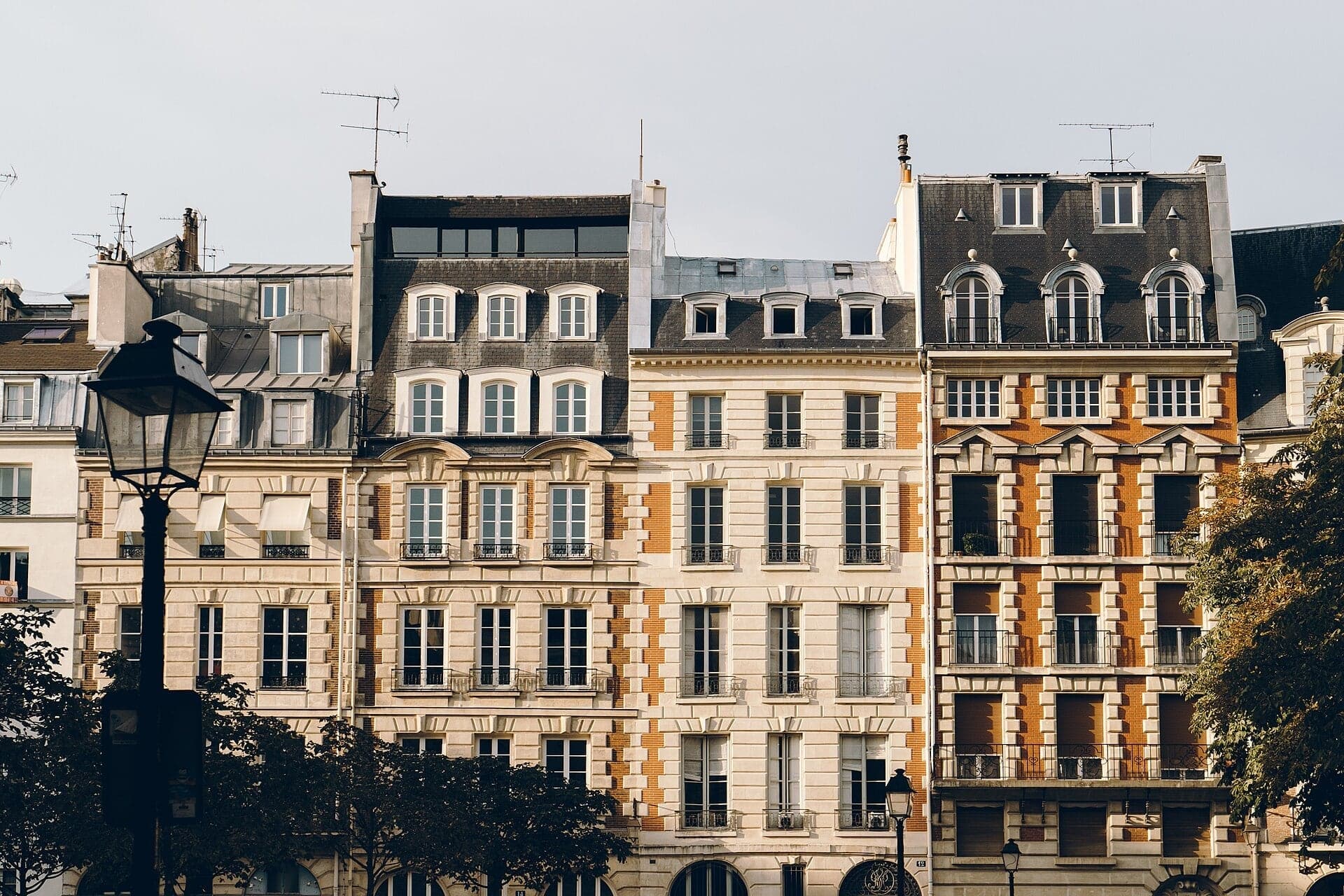
Henri the Fourth laid it out along with the bridge: a triangle of houses whose fronts were all the same, in red brick and white stone, the fashion of the day, on the model of the royal square that is now the Place des Vosges. It is named for his son, the dauphin, the heir to the throne.
As you came in at the narrow end, by the bridge, the pair of corner houses in brick framed with pale stone showed what the whole square once looked like. Keep those two colors in mind.
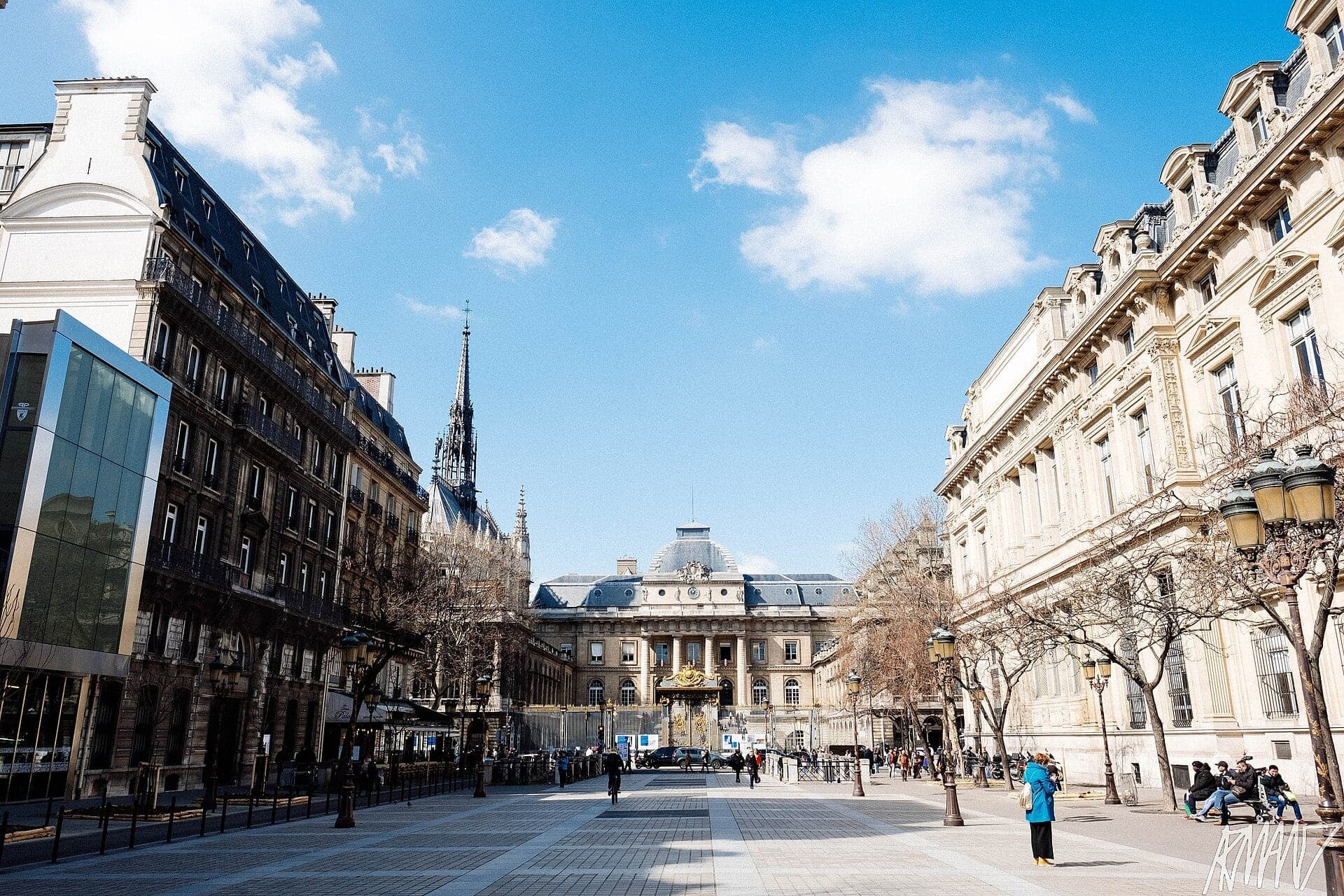
Now look at what closes the triangle ahead. It was not always there. The square had a third side, a row of houses along its base. In eighteen seventy-four, the City of Paris says, those houses were pulled down to open up a view of the Palais de Justice, the law courts, and ten years later a garden was laid out. What you face is the law courts' Harlay front, planned in eighteen sixty-nine, interrupted by war, and opened in eighteen seventy-five.
So one square holds two of the island's rebuildings: the king's brick at the narrow end, the nineteenth century's stone at the wide one, put where the houses stood. The City says that apart from Notre-Dame and the Conciergerie, this square and one block of lanes beside the cathedral are all that came through the great demolitions of the eighteen hundreds. You will walk through that block later.
Follow the route across the street at the end of the square, to the riverside pavement along the palace wall.
3. Quai de l'Horloge and the Conciergerie: A Palace Turned Prison
Walk on to the riverside pavement and stop where the long wall of the law courts begins, with the Seine beside you. Look along the wall: set into it stands a round tower under a pointed, cone-shaped roof. Beyond it, harder to pick out from here, stand more towers, and at the far corner a square one, the clock tower.
Behind this wall is the Conciergerie. It is ticketed and worth it, for a great hall built around thirteen hundred and for the prison rooms of the Revolution; the details are on this stop's card, and the entrance is on the boulevard round the corner.
This was the first palace of the kings of France. Around thirteen hundred a king enlarged it into the palace whose hall you can still visit. When the kings moved out, later in the thirteen hundreds, part of it became a prison, run by an officer called the concierge, the keeper. That is where the name Conciergerie comes from.
In the Revolution, a court sat here: the Revolutionary Tribunal. The Paris court of appeal's own history says it sent two thousand six hundred and twenty-five people to the guillotine between April seventeen ninety-three and July seventeen ninety-four. Queen Marie-Antoinette was tried by that court in October seventeen ninety-three. Inside, a chapel built in eighteen sixteen stands partly where her cell is thought to have been. But nobody was executed here. The carts left from a courtyard nearby for the guillotine across the city.
Look again at the round tower. It reads as medieval, and the palace is, but the court's own history lists work on these towers in the eighteen fifties, and much of what you see here is nineteenth-century.
Follow the route along the quay to the clock tower at the corner, and round it onto the boulevard.
4. Sainte-Chapelle: A Chapel Hidden in the Law Courts
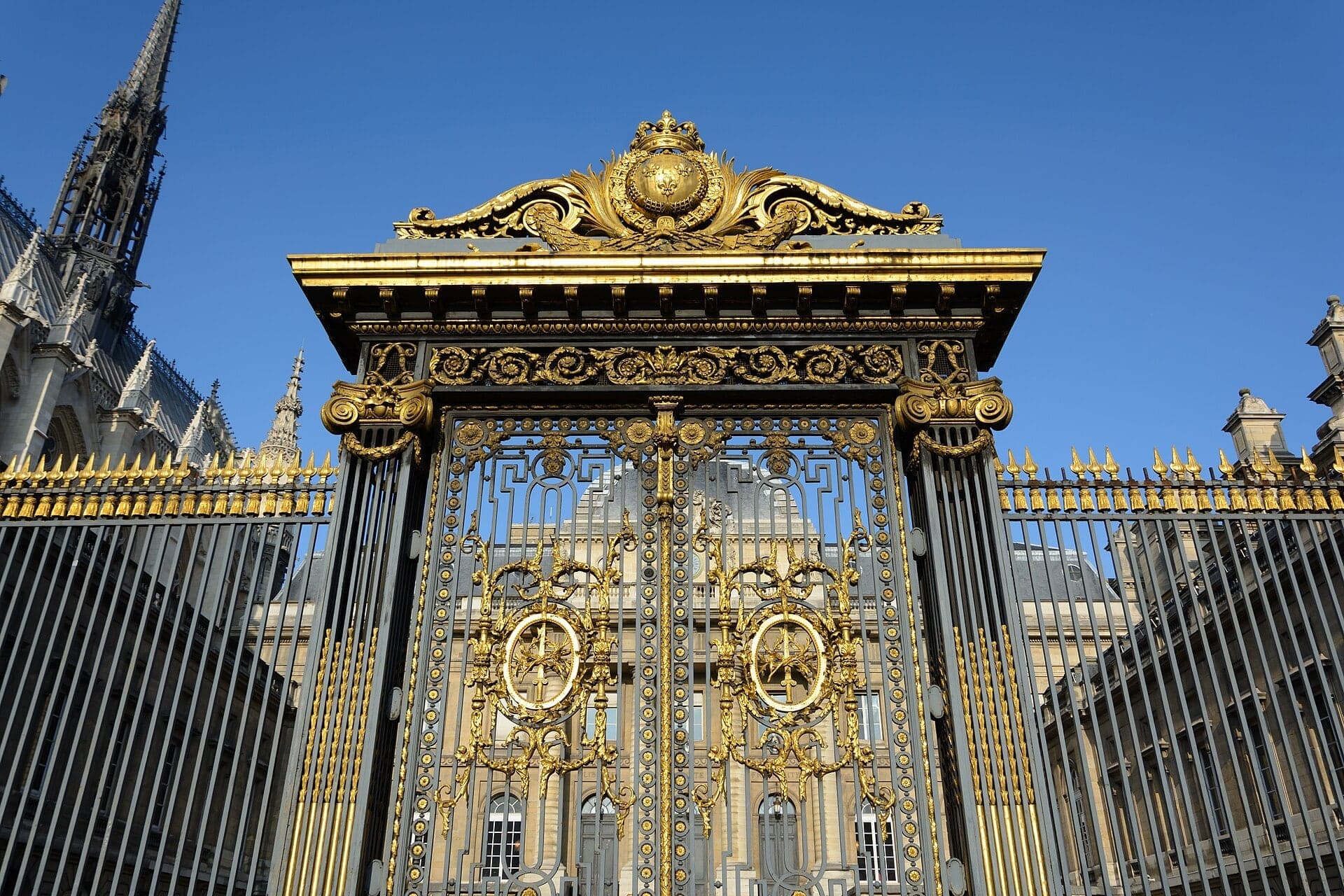
Walk on down the boulevard pavement and stop at the kerb edge of this pavement, opposite the tall iron railings of the law courts. Hidden among the court buildings behind them is the Sainte-Chapelle. It is ticketed and well worth it, but book a time slot: the way in is the law courts' own security check on this boulevard, and the queue can be long.
Look up above the roofs: a slender, pointed spire. That is the chapel's. From the street, the spire and a glimpse of roof are all you see. The glass is inside.
Louis the Ninth, the king the Church later made Saint Louis, built it in the middle of the twelve hundreds, in less than seven years, as a shrine for a relic believed to be Christ's Crown of Thorns. He bought it in twelve thirty-nine. The relics, the monument says, cost a hundred and thirty-five thousand livres, half the kingdom's income for a year.
The chapel has two levels: a low chapel below for the palace's staff, and above it the king's chapel, with walls that are almost all glass. Fifteen windows, up to fifteen metres tall, tell more than eleven hundred scenes from the Bible, and two thirds of the glass is original. In the Revolution the reliquaries were melted down. The crown survived, and since eighteen oh six it has belonged to the treasury of Notre-Dame, a few minutes from here.
The spire, seventy-five metres high, is the fifth, rebuilt in the eighteen hundreds.
Before you go, look back up the boulevard at the square tower on the corner you just passed. About thirteen seventy, the Paris law courts' history says, the king of the day installed the first public clock in Paris, and this tower is still called the Clock Tower.
Follow the route along this pavement and cross the boulevard at the lights, to a small square of flower stalls.
5. Place Louis-Lépine: Flowers Among the Courts
Walk on into the small square and stop there. Find the large stone building with the tall roof at the square's edge. That is the Paris commercial court, the Tribunal de commerce. It went up between eighteen sixty and eighteen sixty-five, designed by the city's chief architect,…
Full narration for this stop unlocks with the tour.
6. Notre-Dame: The Front That Was Remade
Walk on onto the cathedral square and stop well back from the cathedral, where you can take in the whole front, then turn to face the two square towers. This is Notre-Dame. It is free to enter since it reopened; the details, and the ticketed towers and crypt, are on this stop's…
Full narration for this stop unlocks with the tour.
7. Notre-Dame's North Side: The Cathedral at Work
Walk on along the cathedral's side and stop facing a tall pointed doorway with a great round window high above it. This is the end of one arm of the transept, the part of the cathedral that crosses the nave to make the shape of a cross. The government's heritage record says the…
Full narration for this stop unlocks with the tour.
8. Rue Chanoinesse and the Quai aux Fleurs: Héloïse and Abélard
Walk on down Rue des Chantres, the street of the cathedral's singers, to the riverside, and stop at the corner house with a stone plaque on its wall. The lanes you have just walked belong to the block of the old Cité that, the City of Paris says, came through the nineteenth…
Full narration for this stop unlocks with the tour.
9. Pont Saint-Louis: The Cathedral from Behind
Walk on onto the footbridge and stop just after you step onto it. Then turn round and look back at the cathedral's east end, the rounded end behind the altar. What you see first may be a worksite: fences, cabins, a crane, the trees of a closed garden, and scaffolding round the…
Full narration for this stop unlocks with the tour.
10. Hôtel de Chenizot: A Tax Collector's Balcony
Walk on along the island's main street and stop across from number fifty-one, a carved stone front with an iron balcony. This is the second rebuilding. Île Saint-Louis was built up in the sixteen hundreds, a new neighborhood of fine town houses, and the parish's own history…
Full narration for this stop unlocks with the tour.
11. Saint-Louis-en-l'Île: The Church Without a Front
Walk on until an iron clock juts out over the street ahead, and stop there. This is the church of Saint-Louis-en-l'Île, dedicated to Saint Louis, the king of the Sainte-Chapelle, made a saint in twelve ninety-seven. The island filled up quickly, the parish says. An architect…
Full narration for this stop unlocks with the tour.
12. Quai d'Anjou and the Hôtel de Lauzun: A Plain Front, a Rich House
Walk on along the quay and stop in front of number seventeen, beside the wall, and look up at a plain stone front with an iron balcony. This is the Hôtel de Lauzun, the last stop. The City of Paris said in twenty twenty-five that it is closed to the public until further notice,…
Full narration for this stop unlocks with the tour.
- Statue of Henri IV in Paris in the 1st arrondissement, France. — Moonik, CC BY-SA 3.0 · source
- Pont Neuf, Paris. — Chabe01, CC BY-SA 4.0 · source
- Place Dauphine — Xavier D'ABRIGEON, CC BY-SA 4.0 · source
- Conciergerie — xiquinhosilva, CC BY 2.0 · source
- Conciergerie, Paris. — Chabe01, CC BY-SA 4.0 · source
- "Palais de Justice" of Paris wihet left "Sainte Chapelle" and on the middle the "Cour du Mai" — Pline, CC BY-SA 3.0 · source
- Gate at the Cour de Mai of the Palais de Justice in Paris, France — Uoaei1, CC BY-SA 4.0 · source
- Marché spécialisé fleurs, oiseaux, autres petits animaux d'agrément. — patrick janicek from Courbevoie, France, CC BY 2.0 · source
- _DSF2128 — Armand, CC BY 2.0 · source
- DSC_0272 — Kimberly Vardeman from Lubbock, TX, USA, CC BY 2.0 · source
- Les lumières s'allument pour annoncer la fin de journée sur Paris. Café - salon de thé "Aux Tours de Notre-Dame, angle rue d'Arcole / rue du — besopha, CC BY-SA 2.0 · source
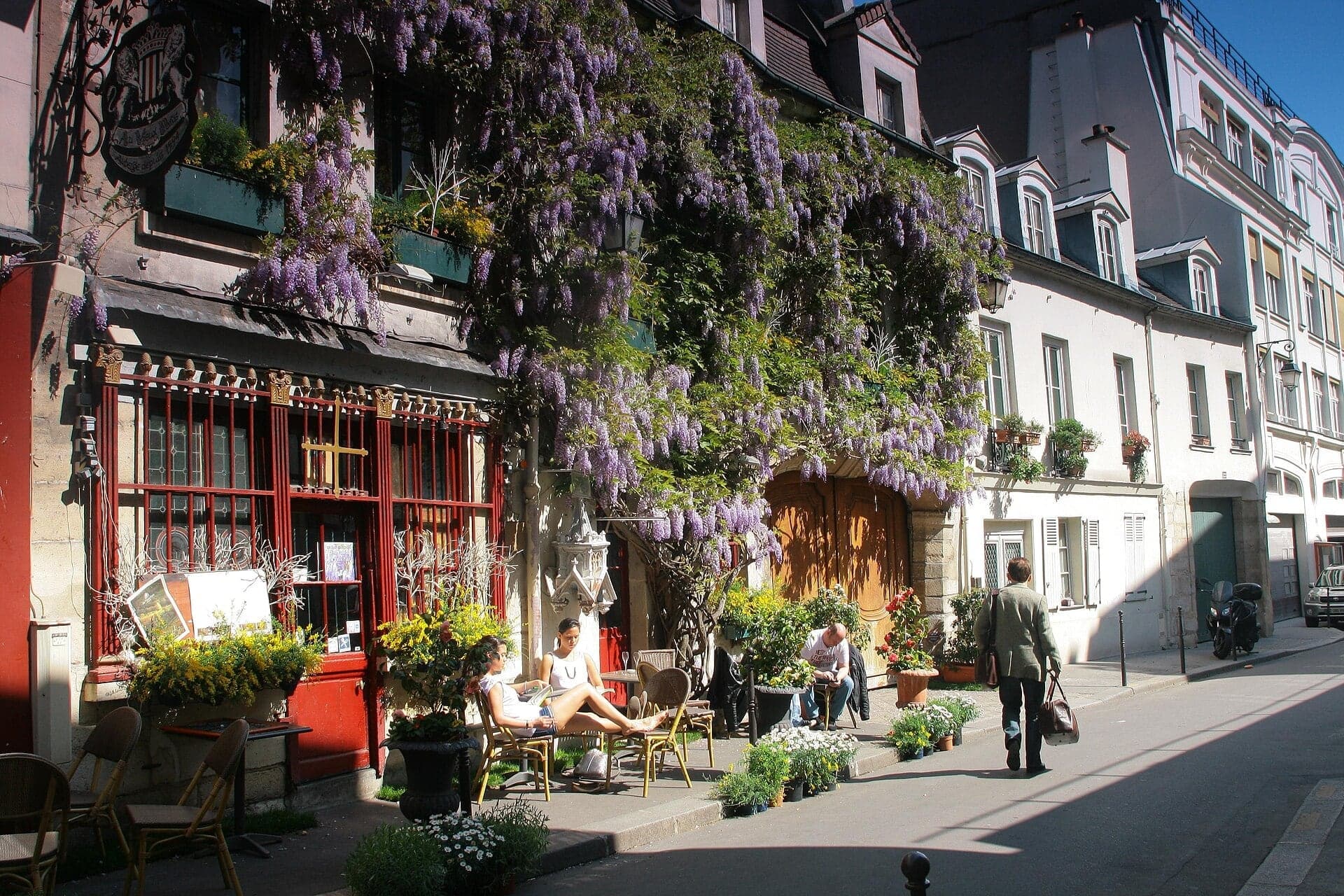
- Glycine sur un mur, Rue Chanoinesse, Île de la Cité, Paris. — Marko Kudjerski from Toronto, Canada, CC BY 2.0 · source
- Notre Dame, Paris, France — Michal Gorski, CC BY-SA 3.0 · source
- Notre-Dame and Pont Saint-Louis, Paris. — Donald Judge from England, CC BY 2.0 · source
- Notre Dame and Pont Saint-Louis, Paris. — Greg Hanson from Seattle, USA, CC BY 2.0 · source
- Hôtel de Chenizot, janvier 2025. — Artvill, CC BY-SA 4.0 · source
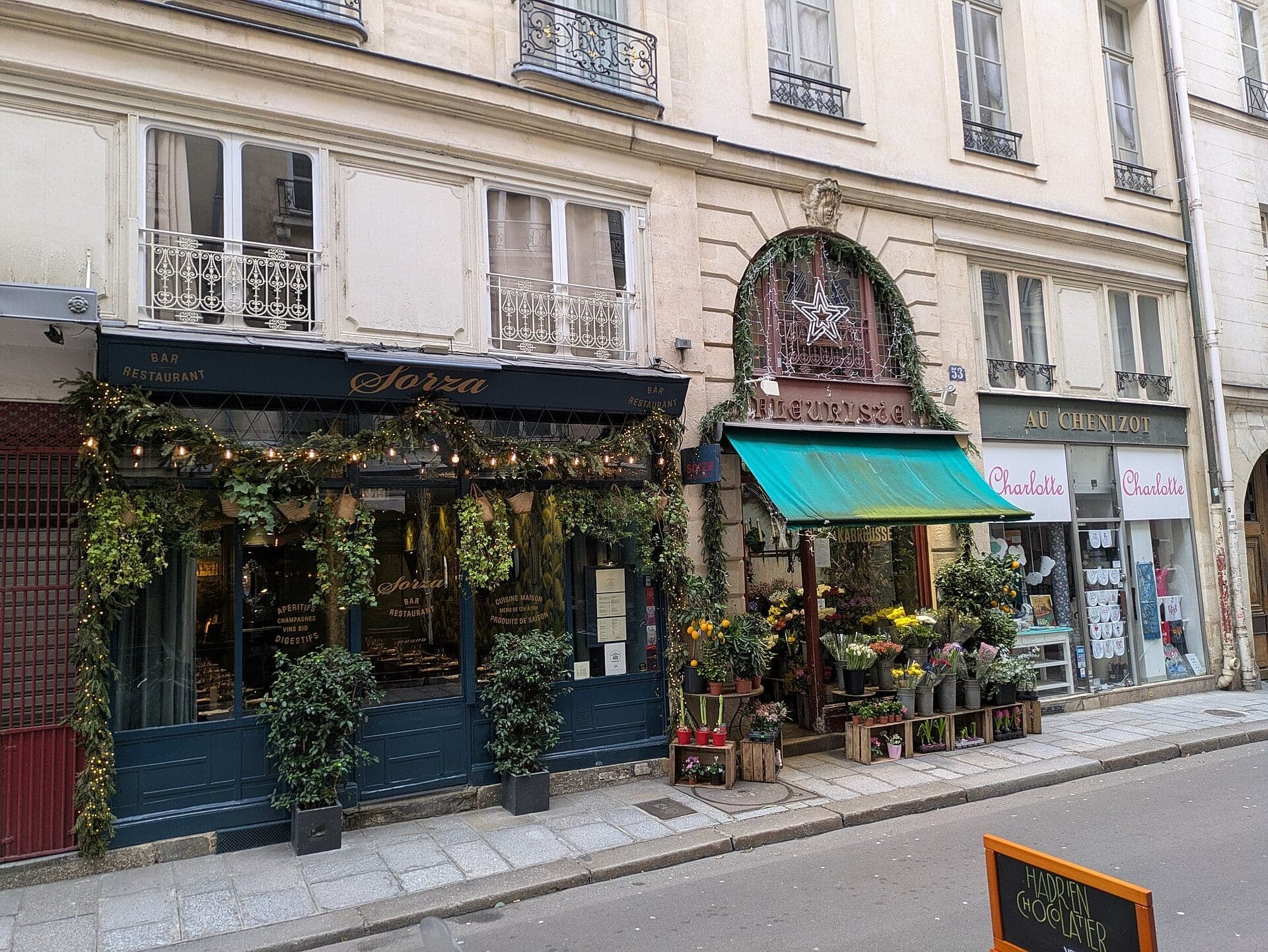
- 51 et 53 rue Saint-Louis-en-l'Île, Paris, janvier 2025. — Artvill, CC BY-SA 4.0 · source
- Église Saint-Louis-en-l'Île, après rénovation, en juin 2024. — Artvill, CC BY-SA 4.0 · source
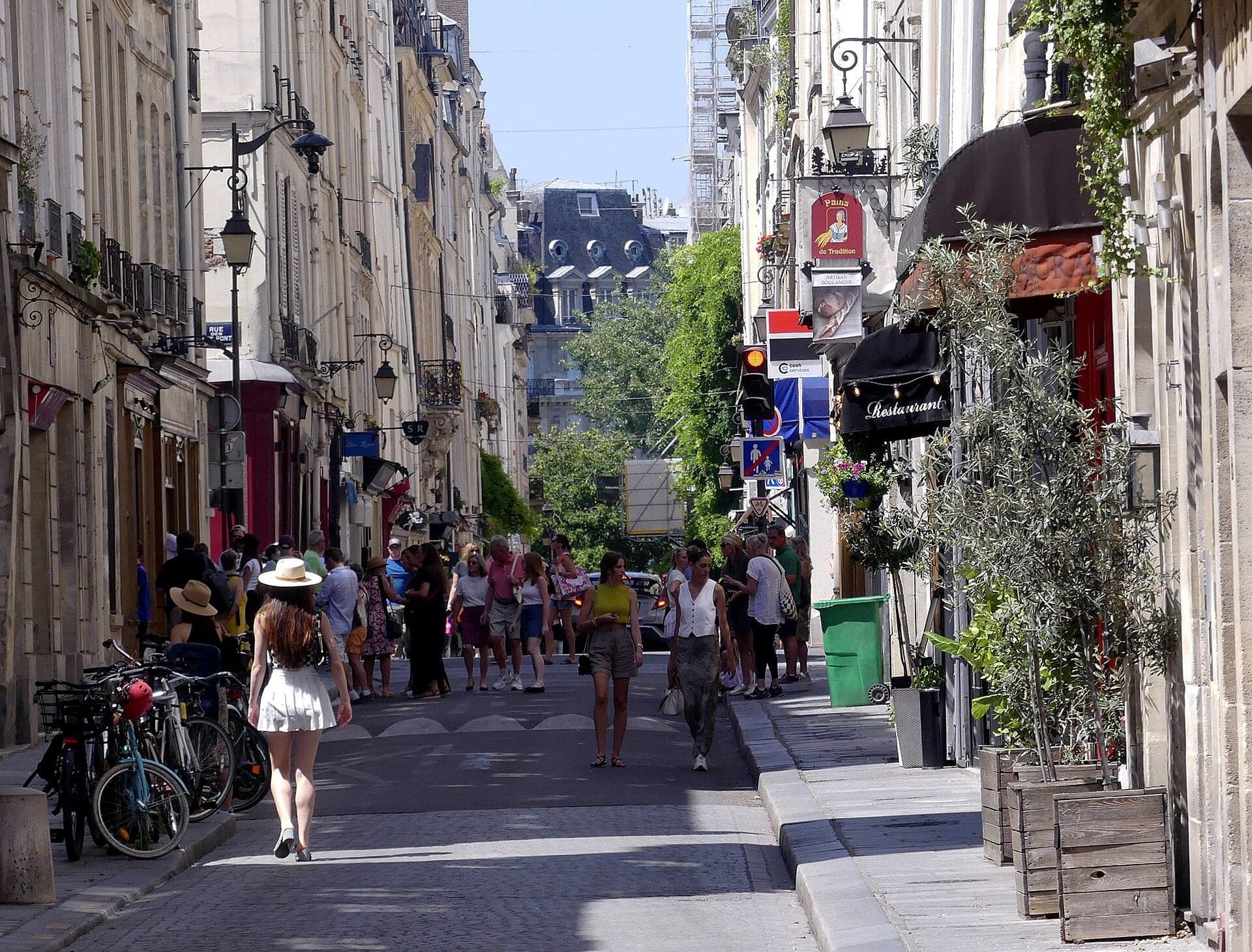
- Sight of Rue Saint-Louis en l'île on Saint-Louis island, in Paris. — Florian Pépellin, CC BY-SA 4.0 · source
- Hôtel de Lauzun, 17 quai d'Anjou (Paris, IV) — Georgot, CC BY-SA 4.0 · source
- Ile Saint-Louis @ Seine @ Paris — Guilhem Vellut from Paris, France, CC BY 2.0 · source
Images may be cropped or resized. Other photos via Unsplash and Pexels.