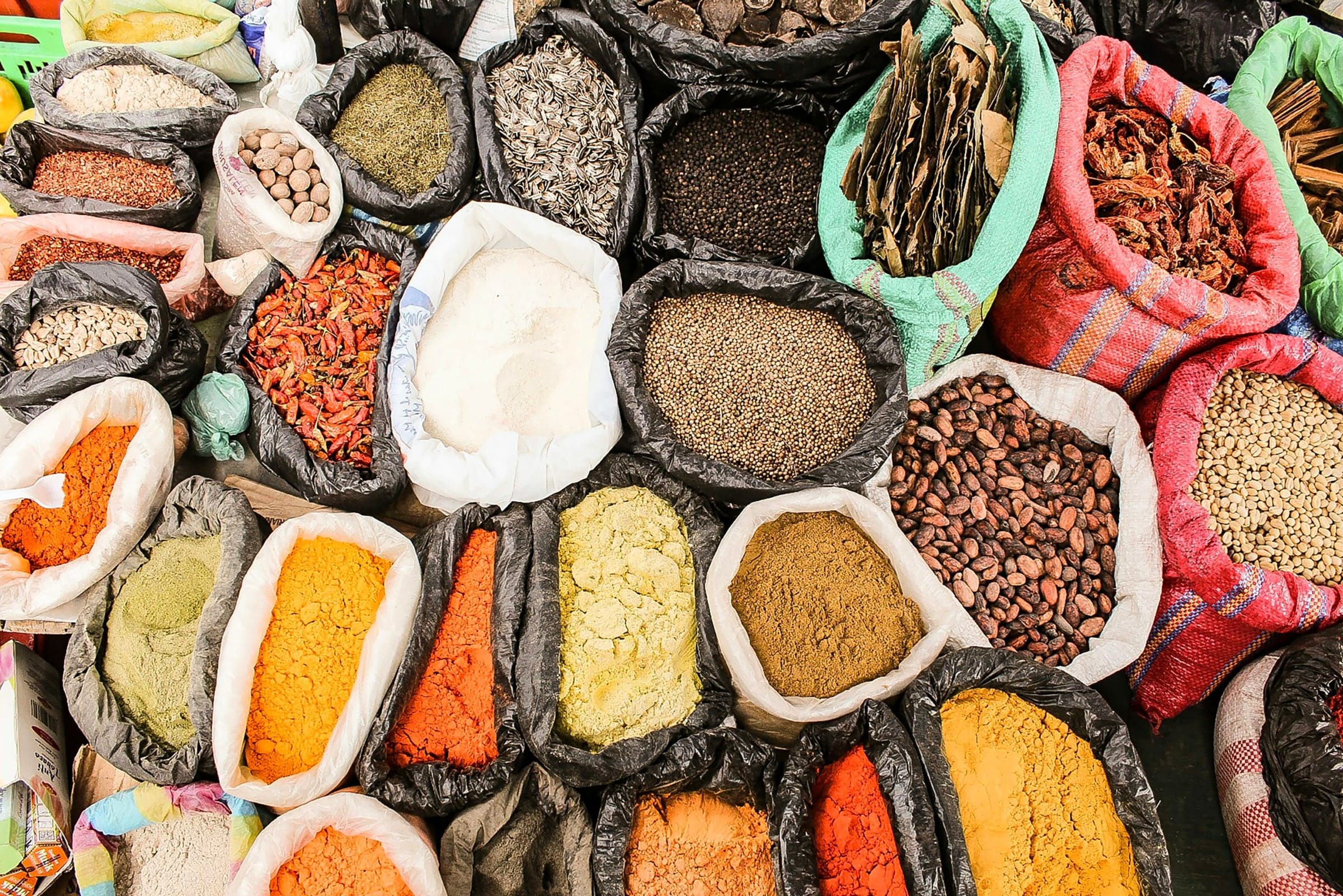
Otavalo is a market town, and the market is the reason to come. Kichwa Otavalo weavers and traders sell the cloth of this valley across the Americas and Europe, and the Plaza de los Ponchos in the middle of town is where much of it is laid out for visitors. This guide answers the practical questions travelers actually search, answer first, then the detail. It is the Otavalo chapter of our wider guide to self-guided walking tours in Ecuador.
Which day to visit the Otavalo market
Short answer: Saturday for the full market, any weekday morning for a calmer one.
- The market is daily. The craft market at the Plaza de los Ponchos is open every day, from early morning until mid to late afternoon. Traders arrive early and start packing up from about four in the afternoon on ordinary days.
- Saturday is the big day. The stalls spill out of the plaza into the streets around it and run down Calle Sucre toward the old food market blocks. It is spectacular, and it is also the most crowded day of the week.
- Wednesday is the second fair day, busier than an ordinary weekday and calmer than Saturday.
- Other weekdays are quiet. Many stalls are bare frames, but the plaza, its concrete umbrellas and the old town are all still there to see.
It was not always Saturday. An American diplomat, Friedrich Hassaurek, who rode through in the 1860s, described the fair here as a Sunday affair, with sellers squatting on the ground under screens of cloth on poles. He also wrote of the town, "Stores there are but few, as the town has no commerce." By the twentieth century the big fair was Saturday's, and the town had become one of the largest craft markets in the Andes.
The market that keeps moving
Hear a stop from this walk
Mercado 24 de Mayo: The Market Across the Ravine
The most interesting thing about the Otavalo market is that it has never stayed in one place. According to the town's own historians, the fair was first held in what is now Parque Bolívar, the main square, then in the small Parque González Suárez in front of the church of El Jordán, and later in the plaza of 24 de Mayo, before the craft trade took over its own square.
That square is the Plaza de los Ponchos, officially the Mercado Centenario. In the early 1970s a young Dutch architect, Tonny Zwollo, redesigned it as a market, replacing a children's playground, with funding from the Dutch government. The town's historians say the plaza came out of the struggle of the valley's Kichwa artisans to win a place of their own to sell. Zwollo roofed the stalls with concrete umbrellas, each on a single stem, and the stallholders call them hongos, mushrooms.
The food market moved too. For decades it filled the blocks around the old 24 de Mayo market, until the municipality built a new hall on the old municipal stadium across the ravine on the west side of town. Building began in 2012, and the Mercado 24 de Mayo opened there at the end of 2016. The institution goes back to around 1900; the building is new.
Trade here is far older than any of these squares. Spanish records from the 1500s describe the mindalaes, long-distance traders of this region who carried cotton, coca and cloth to Quito and to the fairs at Pasto. Today Otavalo families sell their weaving in more than thirty countries on six continents. What is on the tables ranges widely too: some families still weave a couple of ponchos a month on a backstrap loom, while others run electric looms that turn out hundreds of acrylic shawls a day.
Our Plaza de los Ponchos self-guided tour follows that story on foot: eight stops and about 1.7 km, roughly an hour and ten minutes, from the concrete mushrooms down Calle Sucre to El Jordán, Parque Bolívar and San Luis, then across the ravine to the food market's new hall.
Getting to Otavalo and getting around
From Quito. Otavalo is about 80 km north of Quito, in Imbabura province. Buses run frequently from Quito's northern bus terminal, Terminal Carcelén, and the trip takes roughly two hours. Check current times and fares at the terminal. If you are already in the north, Ibarra, the white city, is close by in the same province; see our Ibarra travel guide for that side of the trip, and our Quito travel guide for planning time in the capital.
Arriving. Otavalo's bus terminal is a few blocks east of the Plaza de los Ponchos, an easy walk. By taxi, ask for the Plaza de los Ponchos by the tourist office at the corner of Quiroga and Modesto Jaramillo, which is also where our walk begins.
Around town. The old center is a compact Spanish grid and almost flat, so walking is the way to see it. The market square, the churches and the main park are all a few blocks apart, and the food market is just across the ravine on the far side of the grid.
Altitude in Otavalo
Otavalo sits at about 2,550 m (roughly 8,400 ft). That is a little lower than Quito at about 2,850 m, so travelers coming up from the capital are already acclimatized. The town center is nearly level, and our walk climbs less than twenty metres from start to finish. If you arrive straight from the coast, take the first afternoon slowly, drink water and go easy on alcohol.
How long to stay in Otavalo
Most visitors come for a day, and that is enough to see the market and walk the old town. Arrive in the morning, browse the Plaza de los Ponchos, walk the center, and finish with lunch at the Mercado 24 de Mayo. Stay overnight if you want to be in the plaza early on a Saturday, before the crowds build. Many travelers pair Otavalo with Ibarra on a trip north from Quito.
Is Otavalo safe?
Otavalo is a busy, welcoming market town, and most visits go without a hitch. A few practical points:
- Pickpockets work crowded markets. On Saturdays the plaza, Calle Sucre and the side streets are packed, so keep valuables close and low-key.
- Strikes can close the market. In the national strike of September 2025, Otavalo's shops closed and the Plaza de los Ponchos stood empty of vendors. Road blockades can also cut the highway from Quito, so check local news before you travel.
- Walk the quiet edges by day. The streets near the ravine are residential and quieter, and the last part of our walk follows one-way streets with buses, so keep to the side of the road.
As anywhere in Ecuador, check your government's current travel advisory before you go, since regional guidance can change.
What to eat in Otavalo
Head for the Mercado 24 de Mayo. On the first of May, 2024, Ecuador's tourism ministry named it the country's first gastronomic market. At that ceremony the market showed off dishes from the valley and the country, including hornado, fritada, yahuarlocro (a potato soup), caldo de patas, chochos with toasted corn and runa tanda, a bread. Treat that as a sample of what the market does well, not a fixed daily menu. It is free to enter and makes a natural lunch stop after a morning in the plaza.
Otavalo on a budget
Ecuador uses the US dollar, so travelers from the United States need no currency exchange.
- The market is free. There is no ticket for the Plaza de los Ponchos or the Mercado 24 de Mayo.
- Walk instead of riding. Everything in the center is within a few blocks.
- Carry small cash. Many market stalls work in cash.
- Skip the guide fee: Roamer self-guided audio tours are free to start, so you get the story of the market without hiring a private guide, booking a start time or leaving a tip.
Start planning your walk
Ready for the market? Walk the Plaza de los Ponchos self-guided tour, see all Otavalo tours, or plan the rest of the north with our Ibarra travel guide and Quito travel guide. Every tour is free to start: the introduction and first stop play in full, and every later stop plays a short preview before an optional purchase. Tours can also be downloaded in advance for offline listening.
Frequently asked questions
- What day is the Otavalo market?
- Every day. The craft market at the Plaza de los Ponchos is open daily, from early morning until mid to late afternoon. Saturday is the big day, when the stalls spread out of the plaza into the streets around it and down Calle Sucre, and it is also the most crowded. Wednesday is the second fair day. On other weekdays the plaza is quieter and many stalls are bare frames, which suits a calmer walk.
- How do you get to Otavalo from Quito?
- Otavalo is about 80 km north of Quito. Buses run frequently from Quito's northern bus terminal, Terminal Carcelén, to Otavalo, and the trip takes roughly two hours. Check times and fares at the terminal. Otavalo's own bus terminal is a few blocks east of the Plaza de los Ponchos, so you can walk straight to the market.
- How high is Otavalo, and will the altitude affect me?
- Otavalo sits at about 2,550 m (roughly 8,400 ft), a little lower than Quito at about 2,850 m. If you are coming from Quito you will already be used to the height. The town center is almost flat, so walking it is easy, but take your first afternoon slowly if you have just arrived from the coast.
- Who built the Plaza de los Ponchos?
- The square was redesigned as a market in the early 1970s by a young Dutch architect, Tonny Zwollo, with money from the Dutch government. Her design gave the stalls roofs of concrete umbrellas on single stems, which the stallholders call hongos, mushrooms. The town's historians say the plaza came out of the struggle of the valley's Kichwa artisans to win a place of their own to sell.
- Is Otavalo safe for tourists?
- Otavalo is a busy, friendly market town and most visits are trouble free. The main risk is pickpocketing in the Saturday crowds, so keep valuables close in the plaza and on Calle Sucre. The market can also close during national strikes or road blockades: in the national strike of September 2025 the Plaza de los Ponchos stood empty of vendors. Check local news and your government's travel advisory before you go, and walk the quieter streets near the ravine in daylight.
- Where should you eat in Otavalo?
- The Mercado 24 de Mayo, the town's food market. It moved into a new hall across the ravine at the end of 2016, and in May 2024 Ecuador's tourism ministry named it the country's first gastronomic market. Look for hornado, fritada and yahuarlocro, a potato soup. It is free to enter and makes a natural lunch stop after the morning market.
Ready to experience it?
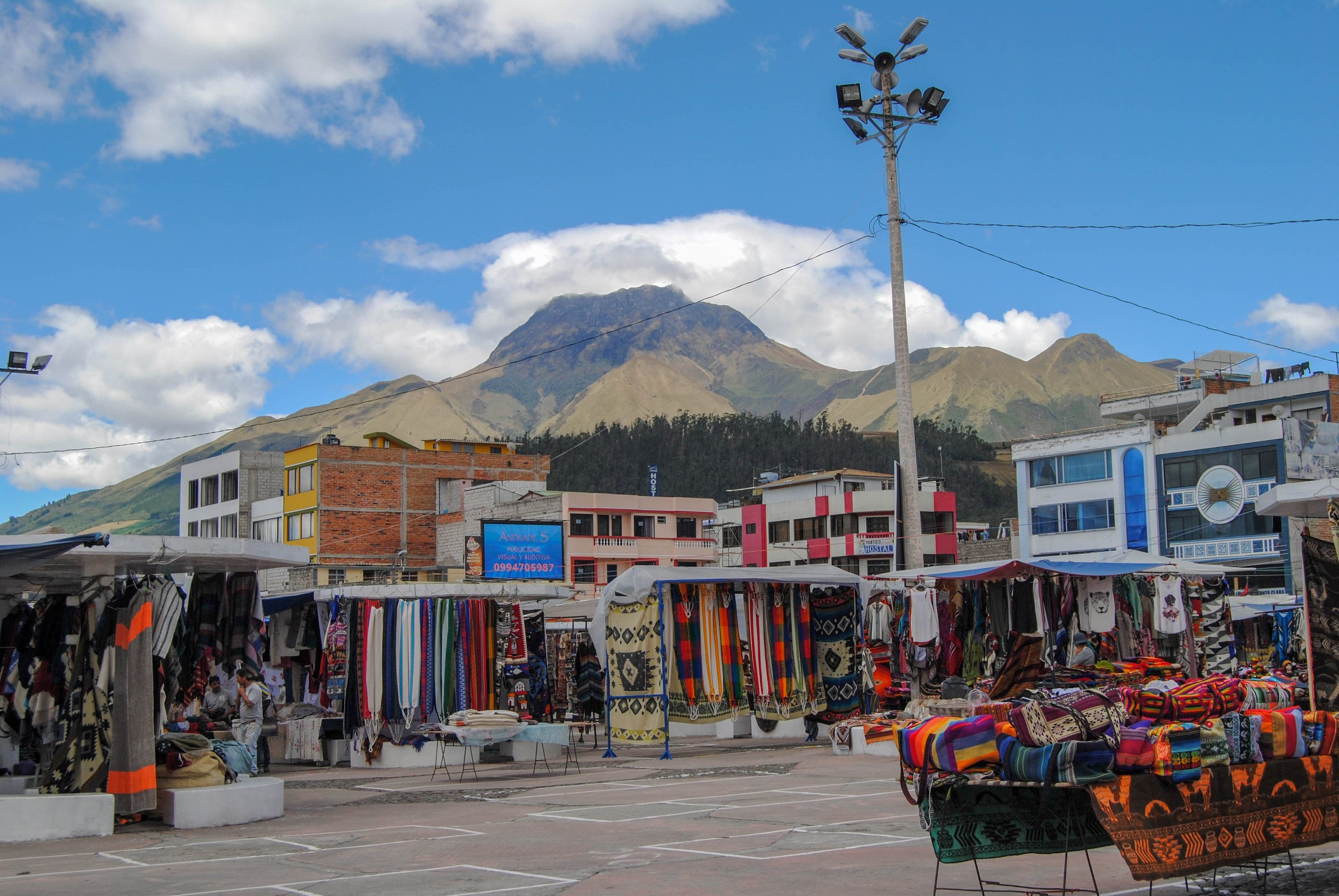
Plaza de los Ponchos: The Market That Keeps Moving
70 min · 1.7 km · easy
More from Otavalo
Explore more at your own pace.
Cuenca Travel Guide: How Many Days, Altitude, Getting Around, Safety (2026)
Ibarra Travel Guide: How Many Days, Getting There, When to Go (2026)
One Day in Cuenca: A Walkable UNESCO Itinerary (2026)
One Day in Ibarra: A Walkable White-City Itinerary (2026)
One Day in Quito: A Walkable Old-Town Itinerary (2026)